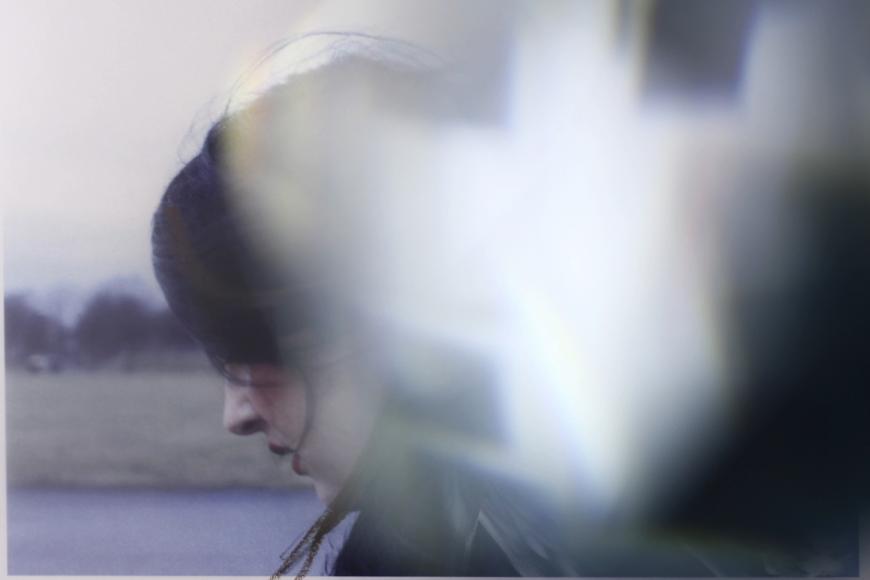
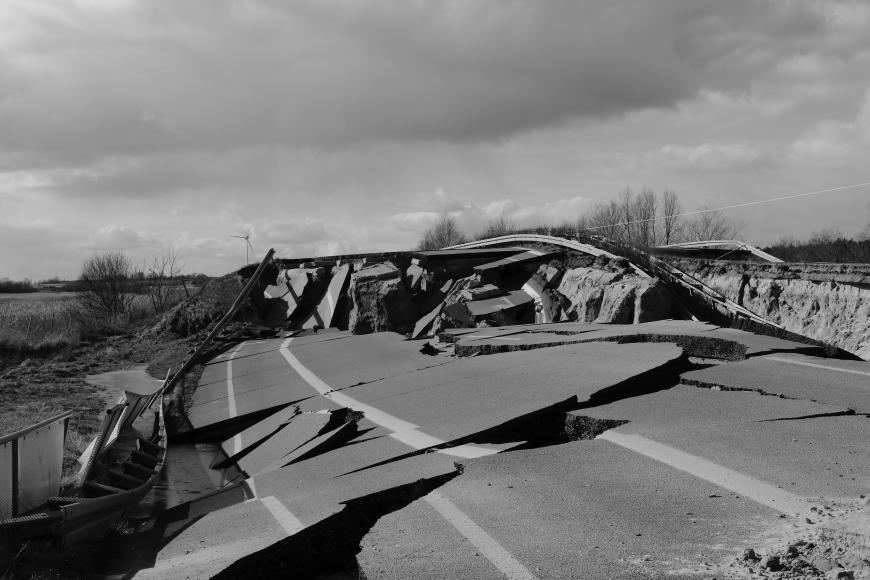
This film examines the question of the boundaries between analogue and digital images in a haunting, sometimes challenging way. Aesthetical elements of techno culture are reflected here.
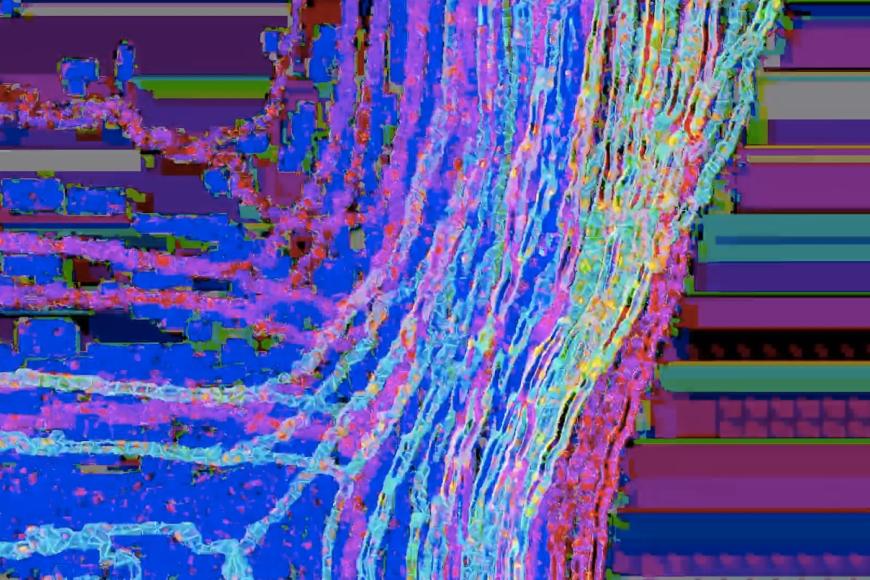
Coarse pixelated lines burst into our field of vision. They seem to communicate, but in a strange language. A little later they explode in a blaze of colours, while old-fashioned test patterns sneak into the background. Memories of a not-too-distant era come to mind, when everything was analogue and pixels could only dream of their big future.
A woman in love ventures out of her cocoon to go out into the mundane world of “dead language.” Two universes meet in raw, intimate drawings, shimmering stones and overpainted video sequences.
The truth is hidden behind blurs, but the allure of secrecy fades as the clarity increases. A woman in love ventures out of her cocoon to go out into the mundane world of “dead language.” Accompanied by a restless musical motif by Marian Mentrup, “Achill” boldly balances on the thin line between two universes – with raw, intimate drawings, shimmering stones and overpainted video sequences.
Among the Palms the Bomb, Or: Looking for Reflections in the Toxic Field of Plenty
Lukas Marxt, Vanja Smiljanić
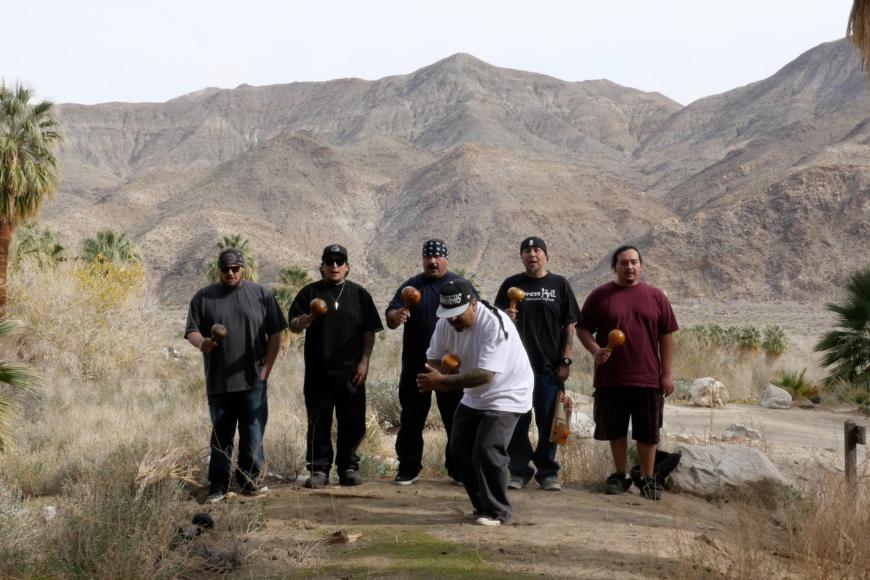
The Salton Sea, a former nuclear testing ground on the brink of ecological collapse. The few people who still live here are campaigning to protect the abandoned area.
Among the Palms the Bomb, Or: Looking for Reflections in the Toxic Field of Plenty
Lukas Marxt, Vanja Smiljanić
Camera Lucida 2024
Documentary Film
Austria,
Germany
2024
86 minutes
English
Subtitles: 
English
Where the sandy beach of the Salton Sea, the biggest lake in California, begins to crunch harder, it does not even consist of sand any more: Millions of dead fish, plants and insects pile up on the shore to form a highly toxic substance. This is how Derek explains it, a member of a Cahuilla tribe that managed to escape an attempted genocide in the 19th century to the Salton Sea and now sees itself as a protective force for the once flourishing but increasingly deserted area and its outcasts. Derek is one of the many locals whose trails Lukas Marxt and Vanja Smiljanić calmly follow, gliding with them through the desolate landscapes. In the process, they pick up slivers of nuclear history time and again: During the Second World War, the area was a test site for the bombs that were dropped on Hiroshima and Nagasaki. The experiments continued through the Cold War; the armed forces are still training here. The film finds its starting point and end two states away: The nuclear devices were sent on their way from Wendover, Utah. The local Airfield Museum pays tribute to their development. Once, the camera performs an almost weightless dance around a model of the Hiroshima bomb “Little Boy” on display there, to the sounds of the indestructible World War classic “We’ll Meet Again.”
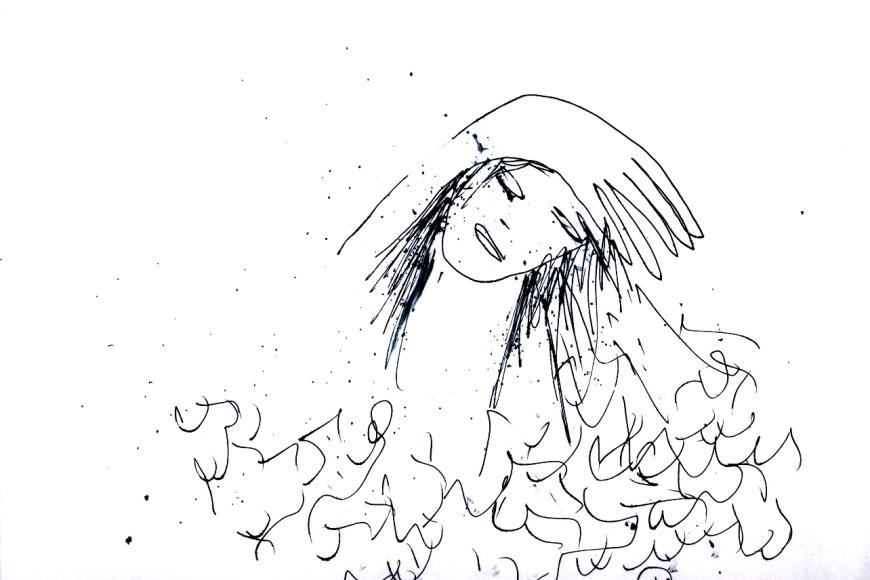
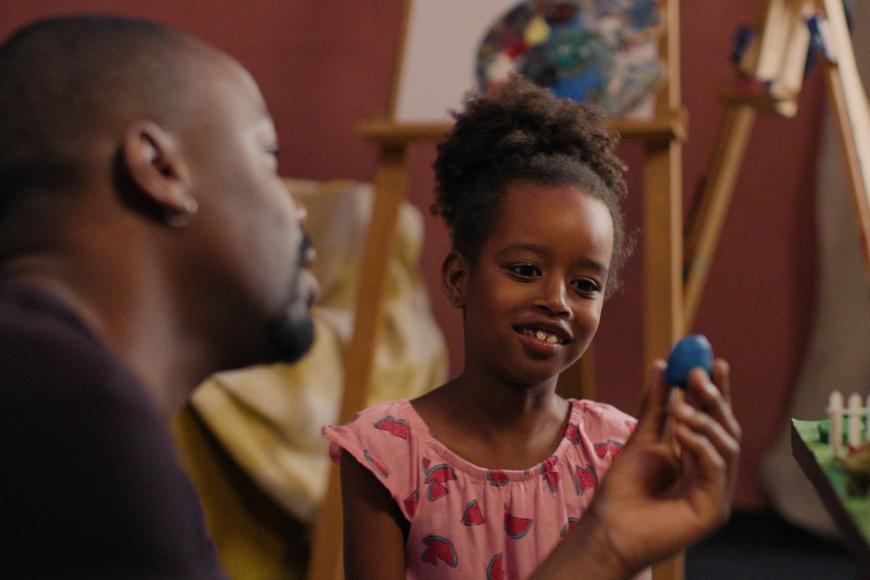
All creatures in Greenland are green, except Bluekid. In this partly animated handicraft world, Mwita Mataro reflects on experiences of racism in Austria with children and experts.
In his early twenties, Mwita Mataro set himself three big goals: become a rock star, make a film, and then found an art school in Tanzania. He has already accomplished the rock star part – he is the frontman of a band. And this film is his directorial debut. There was a choice of many subjects, something beautiful like friendship, for example. But there is one thing that bothers him more than his white film colleagues, and that is the colour of his skin. So what does it mean to grow up as a Salzburg native with Tanzanian roots, as a Black Person of Colour in predominantly white Austria? To investigate this, he has teamed up with young BPoCs to create the animated fantasy world Greenland: a place where all the potato creatures are green except Bluekid and his blue family. They paint themselves green to be less conspicuous, but since this does not always work out, Bluekid experiences rejection and marginalisation.
In his documentary essay, Mataro reflects on a daily reality based on colours: racism, alien attributions, otherness, blues experiences in Greenland. He listens to children and adults, lets the audience participate in talks with pedagogues, psychologists and politicians and opens up in front of the camera at home. With “Austroschwarz”, Mataro also comes one step closer to his third goal.
Tina Jany
Credits
Director
Mwita Mataro, Helmut Karner
Script
Mwita Mataro, Helmut Karner
Cinematographer
Jasmin Schwendinger
Editor
Christin Veith
Producer
Stephan Herzog, Andrea Elaiza Arnold
Sound
Cristi Iorga
Sound Design
Eli Frauscher
Score
Nicola Mpunga
Animation
Vladimir Savić
Nominated for:
Gedanken Aufschluss Prize,
Young Eyes Film Award,
Leipziger Ring
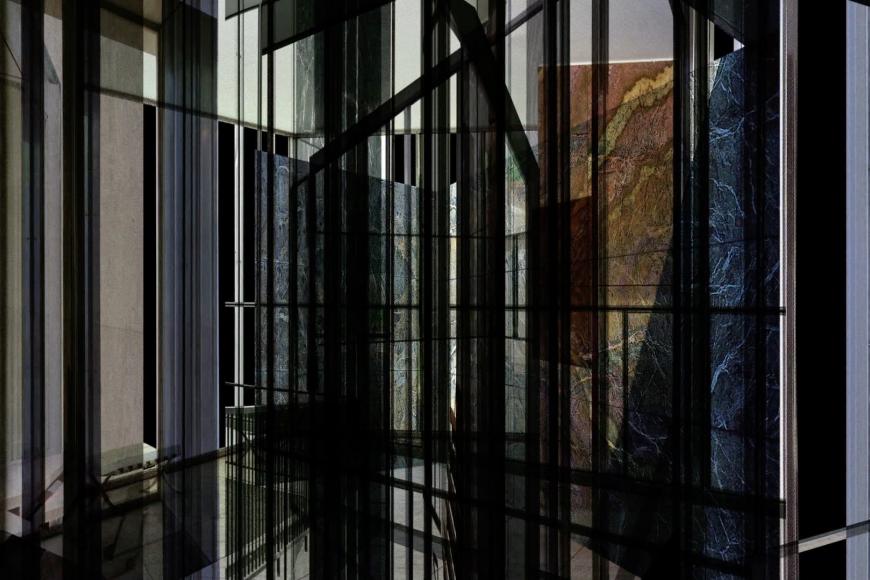
Mies van der Rohe, the architect of transparency: Here his building elements rotate, multiply and are superimposed on each other until the dizzying compression supplants the enclosed space.
Mies van der Rohe revolutionized architecture with his radically reduced formal language of clear lines and transparency. Claudia Larcher pieces together his building elements – frames, columns, banisters –, makes them rotate around their vertical axes, multiplies and superimposes them until a dizzying compression is achieved which supplants the enclosed space and thus transparency.
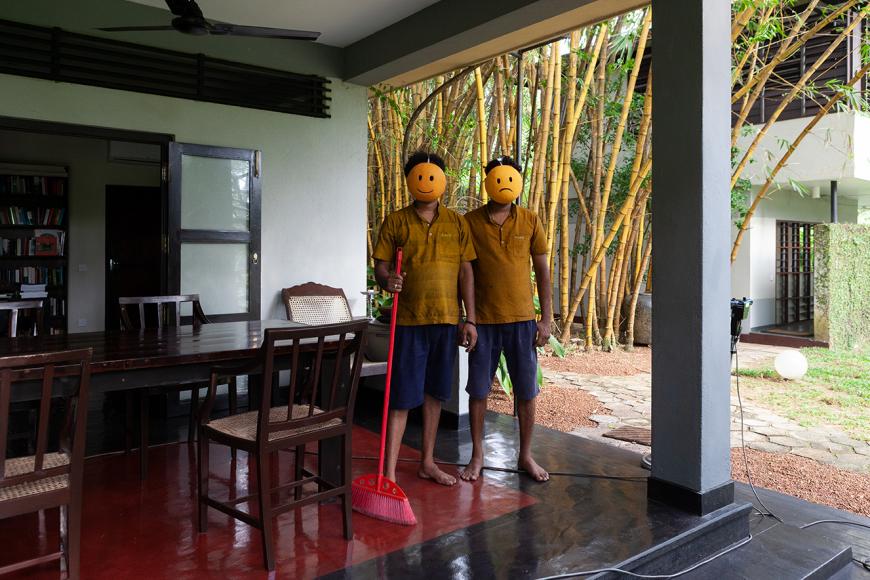
A real-life tropical holiday resort as a stage where staff and guests play their roles in tableaux vivants, hiding their faces behind carved emoji masks.
A real-life tropical holiday resort becomes a stage where staff and guests play their roles in tableaux vivants. They hide their faces behind carved emoji masks that serve – in the digital world – to express emotions and rate things. The result is a superficial and at the same time subversive semi-reality of linguistic, social and cultural levels of (mis-)communication.
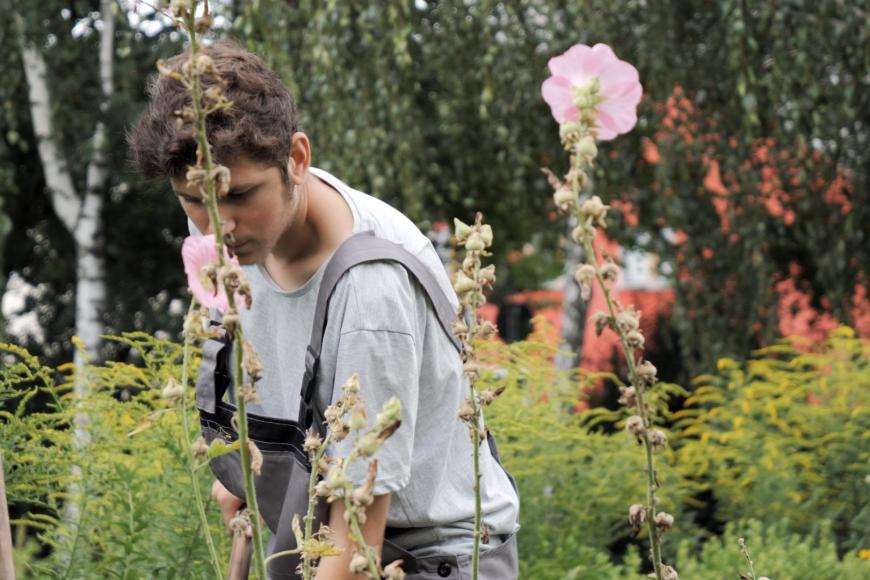
A school in Berlin that offers subjects like horticulture and animal care. The film portrays a group of young people between lessons, childhood and adulthood.
Can school be exciting and even fun? The integrative pre-vocational August Sander school in Berlin-Friedrichshain at least seems the perfect place for this. The noise of the cars of the big city can be heard from the distance, birds are singing on the lush green grounds. Lessons here include horticulture, agriculture and animal care. And when you watch the students weed garden plots and feed rabbits, things look extremely enviable at first glance. But of course, even in this paradisiacal place there are conflicts, annoying teachers and the anxious question: What comes after graduation? This documentary follows the school life of a group of pupils with different learning disorders and other impairments over one school year. At its focus are young people who are on the way from training to work, from childhood to adulthood, and struggle to find their place in the narrow regulatory system of school and in society.

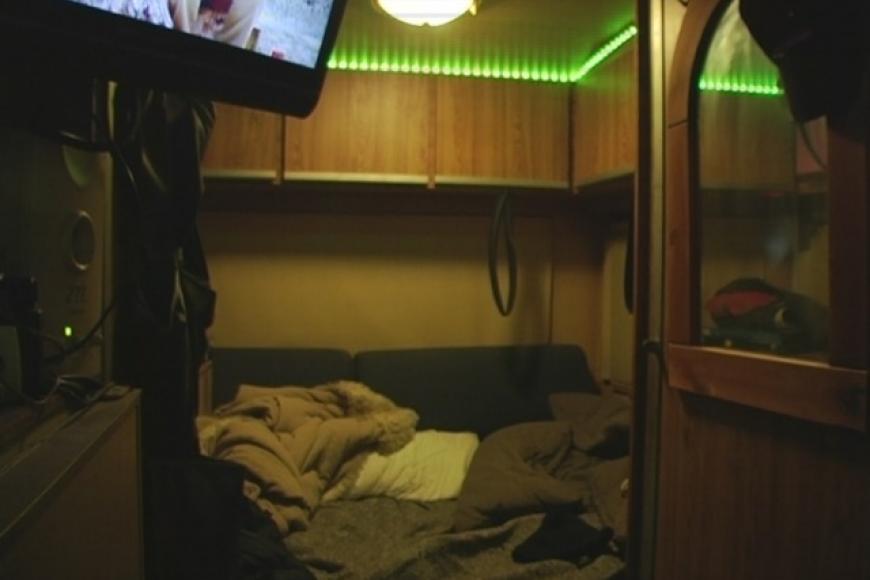
A mobile home in his front garden is Erwin’s refuge. Here he drinks his coffee and writes applications, here he satisfies his desire for men. Jan Soldat comes to visit.
58-year-old Erwin introduces himself as “old but horny”. He has declared the mobile home in his front garden his favourite refuge, where he has everything he needs: a computer, a bed, a coffee machine. Two webcams link Erwin to other men who satisfy his carnal desires. In this tiny space, Jan Soldat comes close to him, of course. He learns of love affairs, as great as extinguished, of a complicated family web and worries about the future.
Carolin Weidner
Credits
Director
Jan Soldat
Cinematographer
Jan Soldat
Editor
Jan Soldat
Producer
Jan Soldat
Winner of:
Silver Dove (German Competition Short Film)
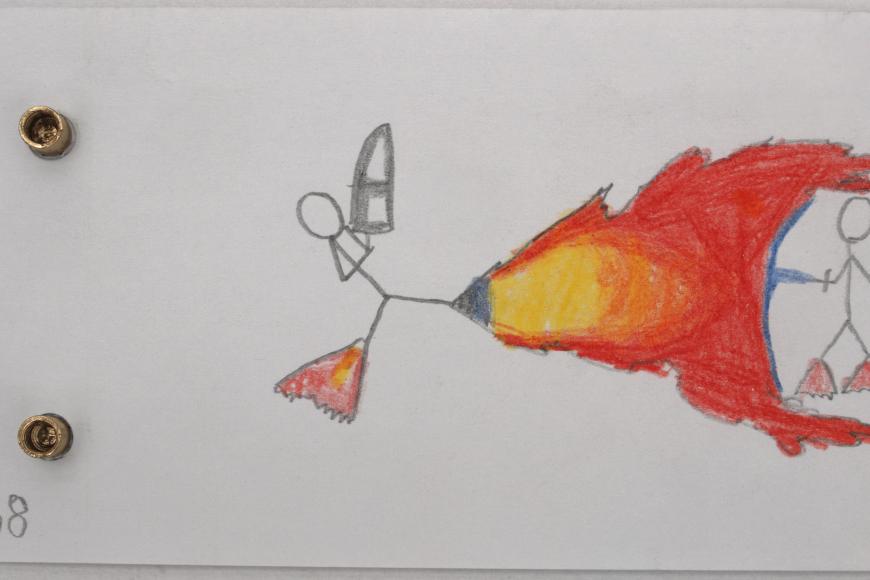
The filmmaker’s son was killed in an accident. He was working on a flip book that his father finishes. The proximity of happiness and loss in the most succinct form.
Competition for the Audience Award Short Film 2021
Animated Film
Austria
2021
2 minutes
German
Subtitles: 
English
A very short film, infinitely sad and at the same time mischievous and playful. The opening credits tell us the devastating news: The filmmaker’s son was killed in an accident and left behind an unfinished flip book. The father resumes work on it and continues drawing the superhero tale, creating an animated film between deep mourning and carefree children’s logic. Capturing the proximity of happiness and loss in the most succinct form.
The longing for something to finally happen is fulfilled by a kiss. Not the romantic kind, however, but a monstrous one, a kiss the world will talk about.
The longing for something to finally happen is fulfilled by a kiss. Not the romantic kind, however, but a monstrous one, a kiss the world will talk about. Thus Dodi plods vigilantly through everyday life and parties, in a cloud of other people’s voices. “EXOMOON” follows her confident path: like a kaleidoscope with creative fractures.
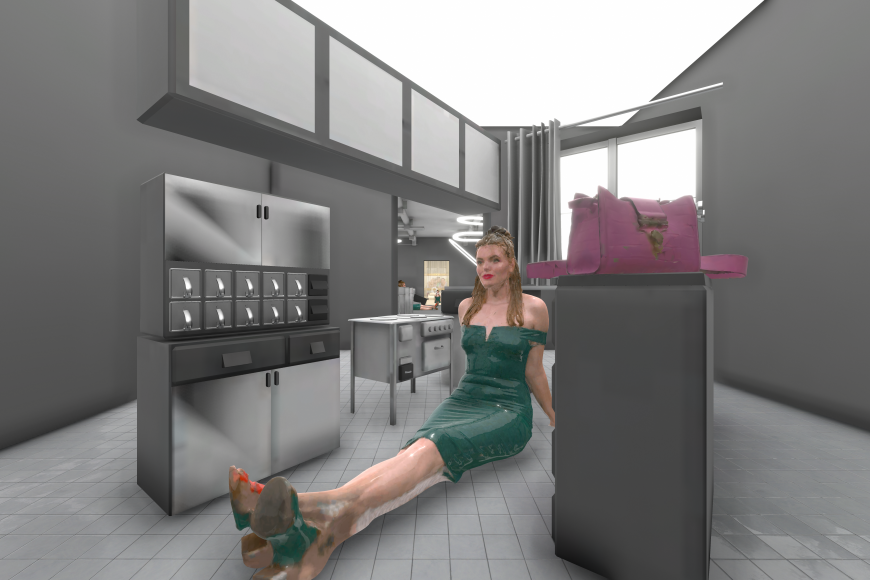
What is inclusive representation in the virtual world? This game presents 59 protagonists from across the globe and gender spectrum in dreamy and surreal landscapes.
Welcome to the Glitchbodies-verse, a virtual space where everyone is in charge of their own image. This game lets the player roam different environments and meet 59 protagonists from around the world. Inclusive and collaborative in nature, “Glitchbodies” stands in bold opposition to heteronormative conglomerates of the internet era, and does so in distinctive style.
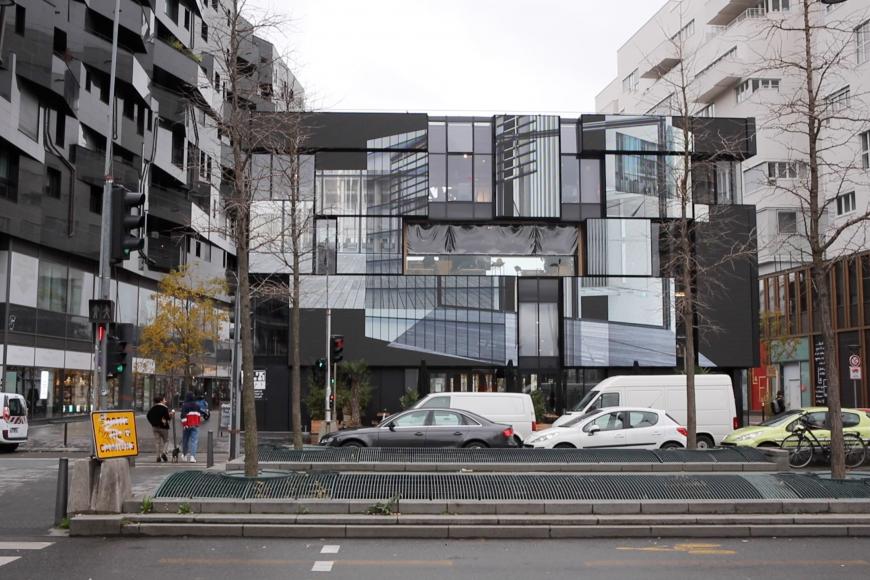
An animated architectural collage on the façade of the Paris cultural restaurant EP7 invites us to an irritating game of deception of lines of sight, angles and geometries in the life of the city.
The façade of the Paris cultural restaurant EP7 forms the presentation surface for an animated architectural collage. Staggered exterior views of buildings rotate. The game of deception of lines of sight, angles and geometries has an irritating effect. The spatial depths lure the eye into the supposed interior of the body behind the skin of the façade, which is at the same time the mirror of an urban architecture of restlessness.
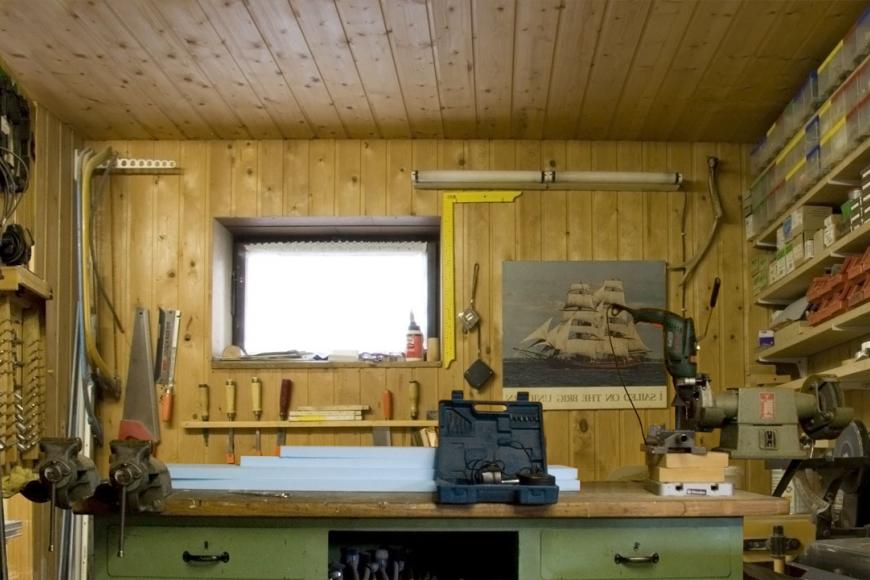
A home in the middle of the day, only the electrical appliances are whirring. The camera gaze glides through rooms unfolded by the editing and captures uncanny, bizarre moments.
A home in the middle of the day, only the electrical appliances are whirring. The camera gaze glides through the rooms and floors which are unfolded and seamlessly joined by the editing. Small oddities proliferate in the bourgeois habitat: an unanswered doorbell, an open freezer emitting light. Normality, perhaps unintentionally, whispers something uncanny.
Heise’s last film deals with his family’s archive and brings contradictions from more than 100 years of German history into focus. A monumental arrangement of fragments.
Thomas Heise’s last film deals with his family archive, initiated by the deaths of his mother and brother. With suggestive comments and inserted into contemporary images, he appropriates the term “Heimat” by bringing the contradictions of more than a hundred years of German history to the fore. The counter-programme is formulated in a hit song by Marika Rökk: “Don’t look hither, don’t look thither, just look forward.” Heise’s monumental arrangement of fragments is at the same time open and insistent, devastated and hungry for life, never straightforward. Historiography and self-observation, never completely belonging: a touch in the dark cinema, a crack in the autobahn, lists, biographies, après-ski. Watching what happens (to them).
Jan Künemund
Credits
Director
Thomas Heise
Script
Thomas Heise
Cinematographer
Stefan Neuberger, Börres Weiffenbach, Peter Badel
Editor
Chris Wright
Producer
Heino Deckert, Johannes Rosenberger, Constantin Wulff, Johannes Holzhausen
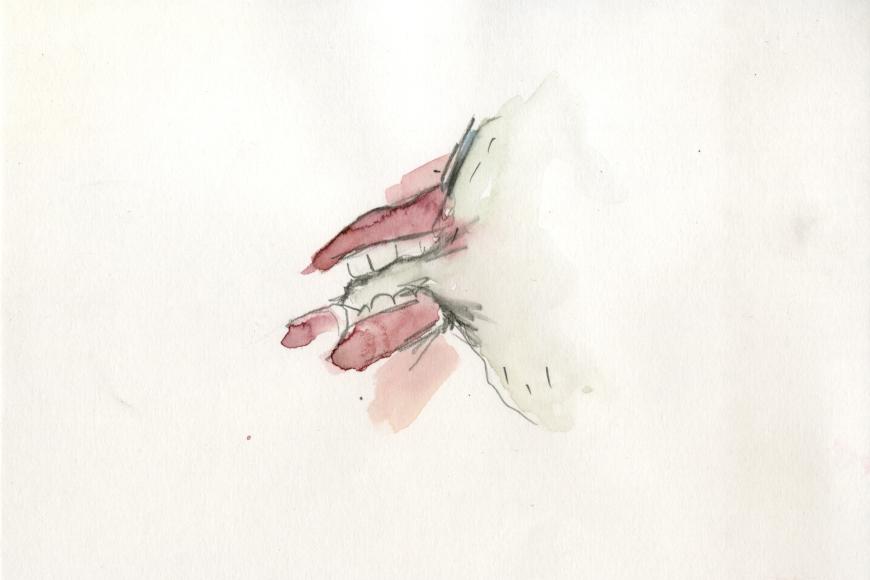
Someone probes their own fear in a childlike voice and sketchy images. There are certain pieces of evidence, like the shovel and that black thing that grabs the soul like a spider.
“I know you” is easier said than “I know myself.” Here, someone probes their own fear in a childlike voice and sketchy images. There are certain pieces of evidence, like the shovel used by a young woman to dig a deep hole. And there is that black thing that grabs her soul like a spider. A cautious and curious mutual approach in sometimes concrete, sometimes abstract ink drawings.
Design as a political act? In this animated collage, a contemporary advertising graphic designer explores the uncompromising work of the photomontage pioneer and anti-fascist John Heartfield.
As she visits an exhibition, a graphic designer is mesmerised by the photocollages of the anti-fascist John Heartfield, who became known as the “montage dada.” Stefanie falls through a vortex of paper and photo snippets into an old-fashioned looking studio. A pair of scissors – an analogue tool she herself hardly uses – attracts her attention. She begins to cut a figure out of cardboard, a miniature version of the artist who at once addresses her and explores his life and works with her. The studio turns out to be a living archive that ceaselessly produces documents and information about Johnny. The research gives Stefanie, stressed and disappointed by her job, new motivation, and the courage to choose a different path as a designer.
Both protagonists have the same profession and find themselves facing the same questions about the significance and recognition of their work. Both are struggling in their own way with frustration and fears, caused by the different social and political circumstances of their generations. The different elements of this animated documentary come together in a dialogic collage that reflects on the mission of art, its educative and critical power, and its potential to bring about changes in our society.
Franka Sachse
Credits
Director
Katrin Rothe
Script
Katrin Rothe
Cinematographer
Thomas Eirich-Schneider, Richard Marx, Manon Pichón
Editor
Hannes Starz
Producer
Gunter Hanfgarn, Andrea Ufer, Ralph Wieser, Sereina Gabathuler, Werner Schweizer