A gripping documentary thriller about a group of Filipino activists who prevent illegal clearances in the rainforest by stealing the loggers’ chainsaws.
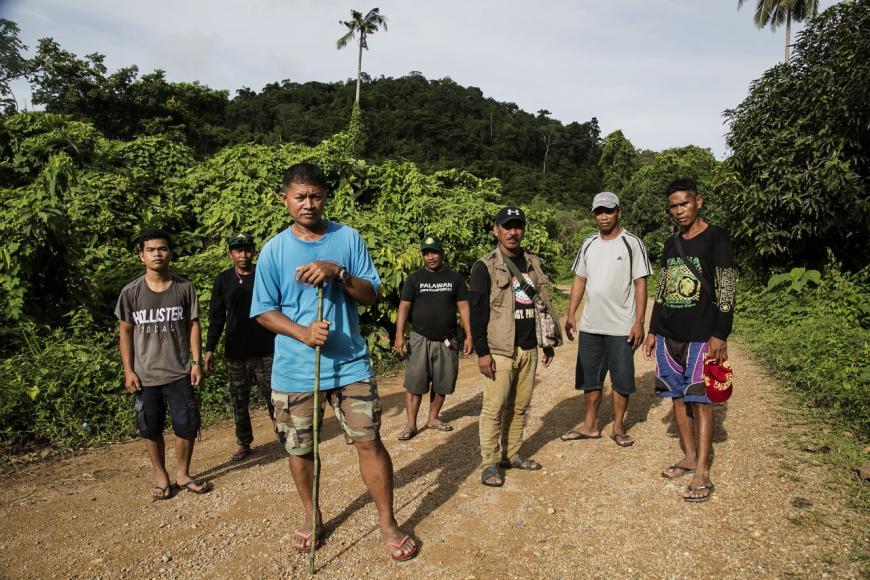
On the island of Palawan in the Philippine archipelago, more and more rainforest is falling victim to the saws. The clearances have long been illegal but are protected and even initiated by President Duterte’s corrupt regime. Local resistance is forming. A group of courageous men around a determined human rights lawyer decide to react. They sneak into the forests to take away the logging teams’ chainsaws, cars and boats. This exciting film, constructed like a thriller, follows them on their dangerous missions, which they call “meta-legal”. But the price is high: Some of the activists pay for their resistance with their lives.
Luc-Carolin Ziemann
Credits
Director
Karl Malakunas
Cinematographer
Tom Bannigan
Editor
Michael Collins, Eric Daniel Metzgar
Producer
Marty Syjuco, Michael Collins, Kara Magsanoc-Alikpala
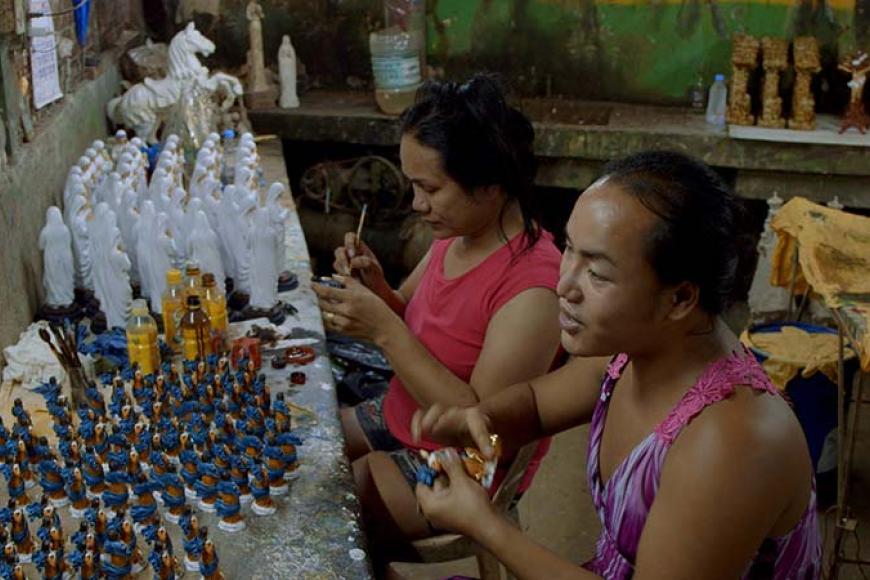
A factory for statues of Catholic saints in a city near Manila, portrayed as a microcosm of economic, social and religious conditions on the Philippines.
When the time “when St. Joseph came” is mentioned in this film, it doesn’t refer to a religious phenomenon, but to the most popular product of TML Holy Crafts Incorporated. In the factory on the Philippines, the country with the third-largest Catholic population in the world, the employees manufacture statues of saints under exploitative conditions. Joseph Mangat portrays this place with a focus on the workers, including some from the LGBTQI community.
In the first scene, a plaster bust is uncovered layer by layer. This image could also serve to describe the approach of “Divine Factory”: From the shop to the workshop, from the entrepreneur to the simple worker, from the production to the uses made of the religious articles, this film reveals the social and economic facets of this institution. The Filipino director not only observes precisely how people work and trade there, he also involves the participants in frank conversations about love, wages and living conditions. The employees’ profit-oriented payment model reveals how economical and religious ideas interlock. The success of the company in the city of Antipolo near Manila, desirable for all, thus appears as nothing short of a divine blessing.
Jan-Philipp Kohlmann
Credits
Director
Joseph Mangat
Cinematographer
Albert Banzon
Editor
Ilsa Malsi, Joseph Mangat
Producer
Alemberg Ang, Stefano Centini
Sound
Duu-Chih Tu
World Sales
Lya Li
Nominated for:
FIPRESCI Prize,
Prize of the Interreligious Jury
Nature is out of joint. It is raining frogs. A young woman is back in her childhood home but no longer feels at home there. The loneliness turns into a physical nightmare experience.
Nature is out of joint. Frogs are raining from the sky. A young woman has returned to her childhood home but no longer feels at home there. The loneliness on a few square metres makes her fall into a kind of twilight state. The anguish erupts in nightmares that leave marks on her body. The past tugs at her, insects take possession of her, her body shell dissolves.
The director, a stateless Filipino, returns to his native country. For more than twenty years, he lived without papers in the USA and feels trapped in a world full of borders.
English, German Subtitles for deaf and hard-of-hearing
How does an undocumented individual document themself? This is the question the Filipino filmmaker who grew up illegally in Los Angeles asks himself. His extended family live scattered across the USA and the Philippines. Now he embarks on a journey to his estranged native country, driven by the desire to overcome a curse that has profoundly disturbed the family history over generations. The colonial past is a heavy burden even today, even in the diaspora. Filipino itself, the official language with its countless loanwords from Spanish and English, is nothing but a linguistic by-product of the colonial era.
By re-locating Miko Revereza tries to come to terms with the experience of distance and loss of identity with a remarkably idiosyncratic and creative approach. His psychogeographical filmic journey is dense and meandering, the camera sometimes literally destabilised as if by the curse. By means of superimpositions and improvised music a melancholic but never accusing memoir is created that lingers in our minds. The filmmaker, who showed “The Still Side” at DOK Leipzig in 2021, lives in Mexico today.
Annina Wettstein
Credits
Director
Miko Revereza
Script
Miko Revereza
Cinematographer
Miko Revereza
Editor
Miko Revereza
Producer
Shireen Seno
Sound Design
Miko Revereza, Kevin T. Allen
Score
Vincent Yuen Ruiz
Nominated for:
Prize of the Interreligious Jury,
FIPRESCI Prize
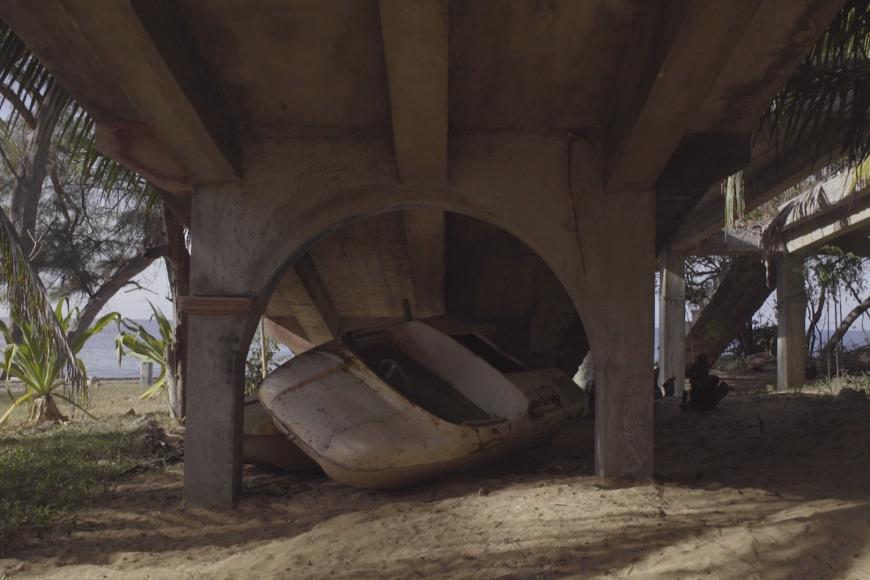
The Mexican island of Capaluco was once home to a flourishing holiday resort. Now it is deserted. The tides are chipping away at the ruins of the amusement park and hotel complex. Sensory explorations of the terrain meet tales of a mythical sea monster from the Philippines that ended up here. Beguiling science fiction in the mirror of post-humanist theory.
“Welcome to Capaluco, the only all-inclusive island in the world! A place where fun is guaranteed for the whole family,” echoes from the loudspeakers. Gaudy dolphin sculptures stare into space. A crumbling Nestlé emblem reminds us of the glory days of an out-of-date civilization. Miko Revereza and Carolina Fusilier stage their location as an in-between place where the past reverberates and the future pushes its way in. In the meticulous observation of formations and textures, architecture and nature begin to converge. Is that still the droning of a radio mast or is it the ocean? The two directors speculate from offscreen who will be next to make use of the relics of the human empire in the relay race of the species.
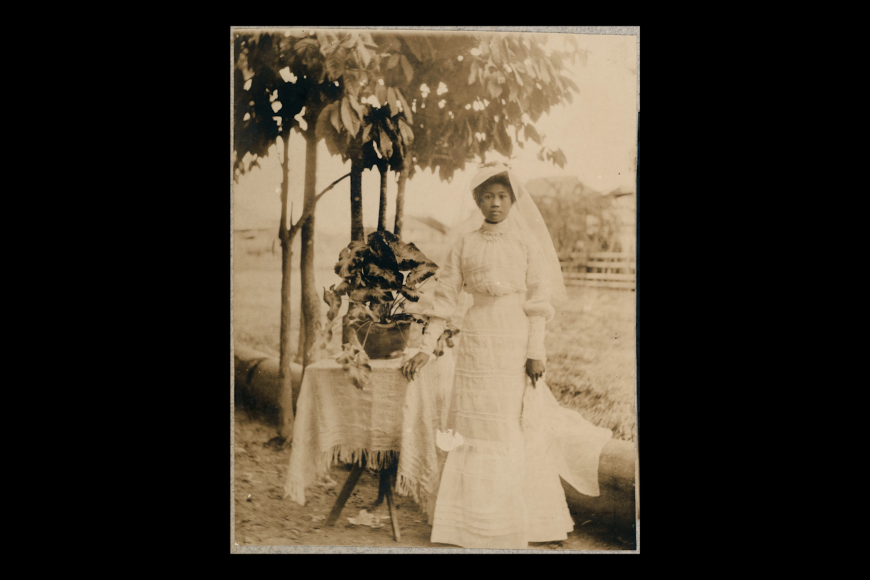
Seno’s botanical essay takes us from photos from the American colonial period on the Philippines – of humans and nature – to the connection between photography and colonialism.
Competition for the Audience Award Short Film 2021
Documentary Film
Philippines
2021
17 minutes
English
Subtitles:
German Subtitles for deaf and hard-of-hearing
Trees and other plants during the period of American colonial rule in the Philippines, photographed from the perspective of those in power. The images not only document the rich flora, they categorize and classify the resources of the colony. The forest becomes inventory. From potted plants to sawmills, from logging to reforestation: In her essay Shireen Seno takes us to the essence of photography itself – and to its relationship with colonialism. Because both are trying to pick something.