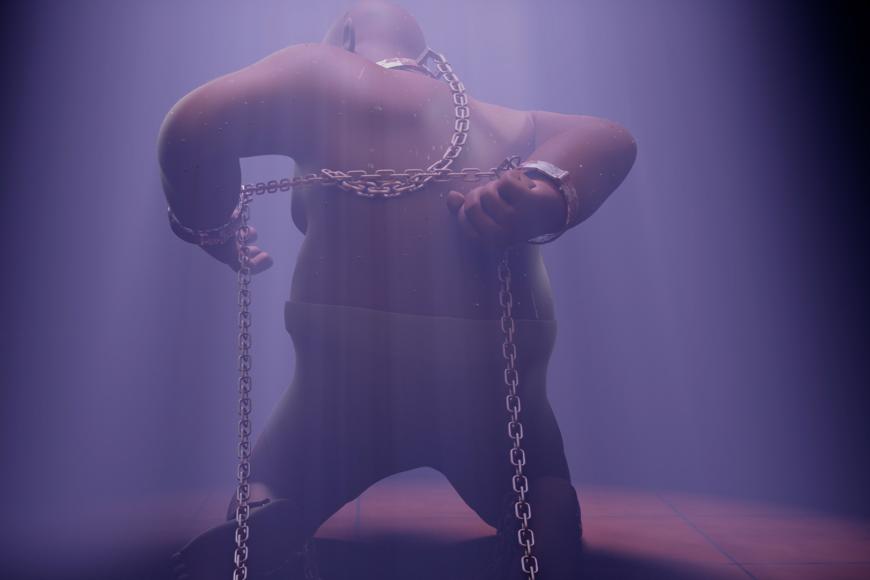
A man throws off the shackles of slavery, lays the traditional Kente cloth aside, puts on a business suit – and starts to walk towards the future. Or towards what he thinks is the future, because this is not a pleasant walk: To the cheers of the people, the man pushes into the backroom of an Asian restaurant where he flogs plots of land, moves to the next backroom, money case in hand, to bribe the pastor and ultimately ends up on stage to give a state-supporting speech as President – against corruption, of course. The career of our nameless protagonist – whose sunglasses-covered face, interestingly, we get to see only in the limelight – takes him right through the streets of an African metropolis, past protests being suppressed, through a dilapidated infrastructure, criminal gangs, and even natural disasters. Nobody has thrown off the shackles of slavery in Francis Yushau Brown’s relentlessly critical film. Instead, a few individuals have chained themselves to nepotism and keep the rest of the population poor and backwards. His film is a 3D indictment brimming with rage, including of the Western and Far Eastern (neo) colonizers. And far above hover the enraged gods, waiting for the people to put an end to this situation at last.
Marie Ketzscher
Credits
Director
Francis Yushau Brown
Script
Francis Yushau Brown
Editor
Charles Sam
Producer
Ruth Ojougboh
Sound
Gomez Beatx
Sound Design
Gomez Beatx
Score
Gomez Beatx
Animation
Francis Yushau Brown, Charles Seyi Kilanko, Kingsford Appiah, Jason Bonsu Sarpong
A change of perspective on migration to Europe: Having returned because she missed her children, Fati meets with little understanding in her Ghanaian home village.
A beach reminds us of Fati’s recent past. She came to Italy by sea, without papers, pregnant for the fifth time. Longing for her children, she returned to Ghana six months later – without her husband. The people around her can’t understand this decision. “You’ve created a mess,” a friend says. “How do I tell people?” a sister asks. But Fati wants to provide for her family, even though she still has to liberate three of her children from the custody of her in-laws.
Numerous recent documentaries have been dedicated to the experiences of people who arrive in the EU and get caught in the degrading conditions of asylum politics, but this work by Ghanaian director Fatimah Dadzie offers a change of perspective. In Fati’s hometown, Europe is considered a paradise – and what fool would voluntarily run away from there? The decision has lost the returnee all prestige. Her social exclusion is shown here by relatives as talking heads, directly in front of the camera. But when the film overlays everyday images of care work or street hawking with Fati’s voiceover, it gives a voice to its steadfast protagonist.