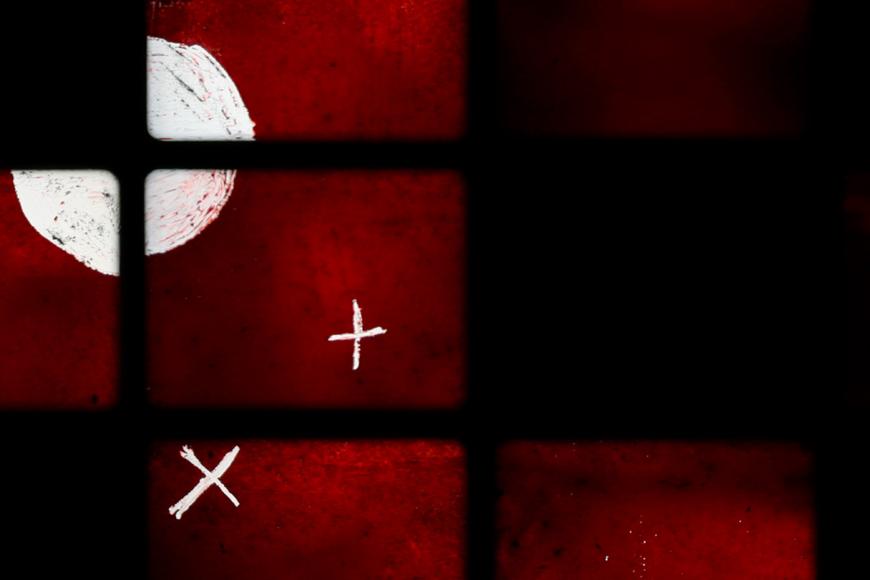
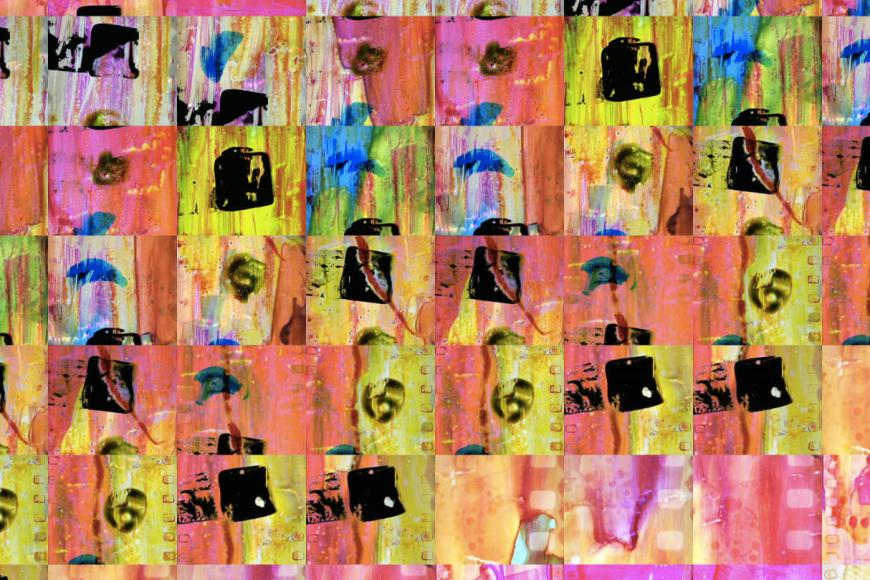
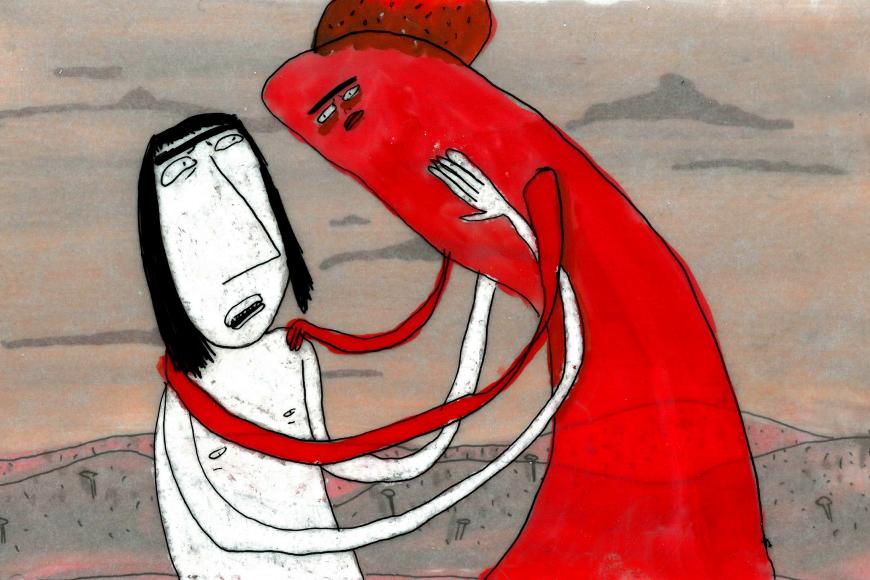
Twelve animated projection tiles combine to develop a rhythmic dialogue that, using 16 mm film, paint and a projector, examines the intrinsic relationship between sound and image.
Twelve image tiles merge in a rhythmic dance that explores the intrinsic relationship between sound and image. The elements in the tiles, created by painting and scratching directly on the 16mm film strip, respond to the hand-drawn soundtrack and engage in a surprising and surreal dialogue. Their language cannot be understood, only felt.
Dwindling membership, a crumbling club house, penniless coffers: The “Bradford Movie Makers” have seen better days. The funny and touching portrait of a band of film buffs.
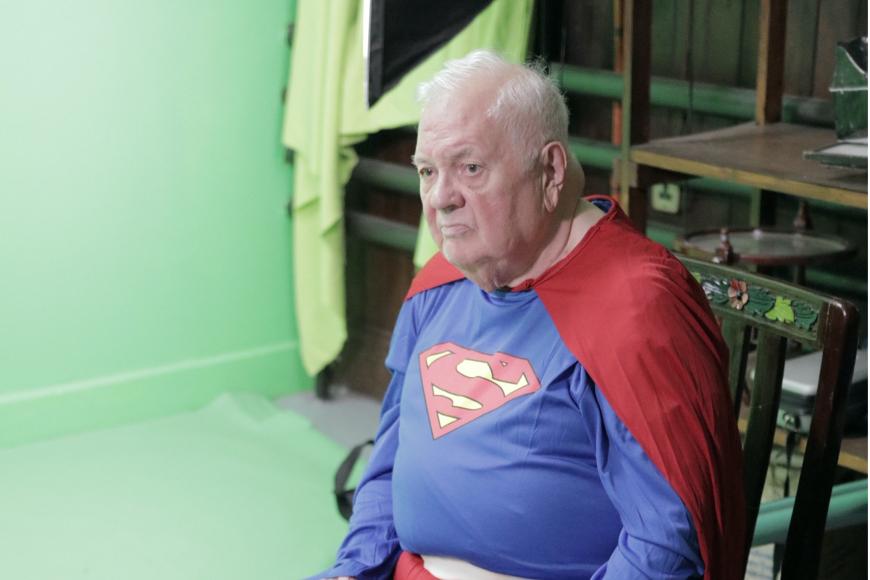
Dwindling membership, a crumbling club house, penniless coffers: The “Bradford Movie Makers” have seen better days. The active club members, most of them fairly advanced in years, sit there, basking in blissful memories and not mincing their words when they pick at the others’ film ideas over multiple cups of tea. Cineastes have met here every Monday since 1932 and can be proud of a ninety-year history including countless amateur films of all genres.
The “club”, as insiders call it, is a typical British working class film club: watching films together on a regular basis and spending every free minute on elaborate shoots including stunt riders and green screens. But the old veterans are beginning to get frail, the occasional death must be mourned. And then the pandemic comes on top of all this, darkening the only bright spot of the week. But it also brings unexpected surprises … Kim Hopkins manages the feat, despite a number of tragic-sad occasions, of avoiding the tear-jerker trap and gives us equally astonishing and funny insights into this pastime that’s far more than just a hobby. This quiet, funny and touching portrait of a band of film buffs – male and female – pays tribute to the need we all have to spend time together.
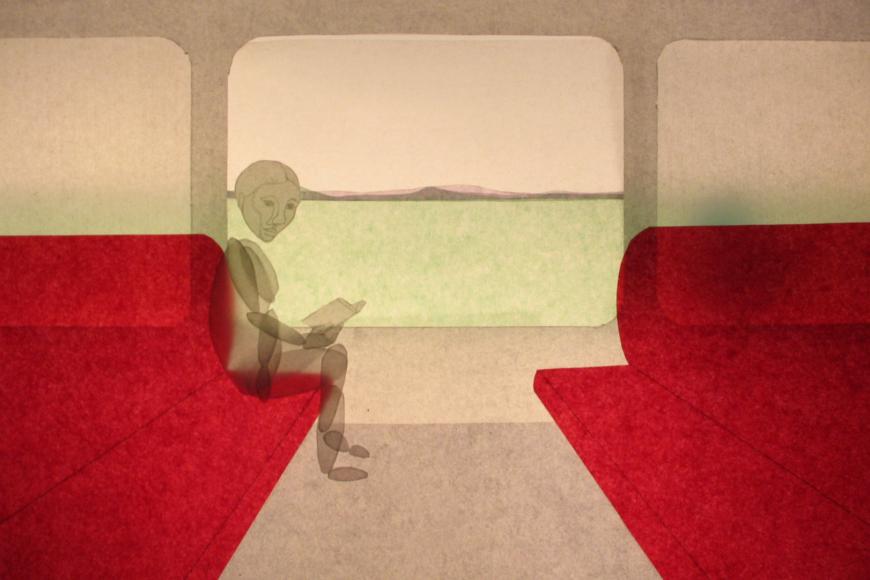
A train leaves the station, carrying a person whose thoughts begin to drift while reading a book. A surreal journey through memory fragments, sounds and textures begins.
A train journey begins. On board is a reader whose thoughts begin to move. The letters change and flow from the pages of the book, carrying us into a world of memories and associations. We meet the letters again: swimming in a tea cup. Shot, they bleed to death on a sheet of paper and at last evaporate into the night sky.
Family discussions flare up against the backdrop of the “Woman, Life, Freedom” protest movement in Iran: Elahe does not want to wear a hijab. An intimate and honest discussion.
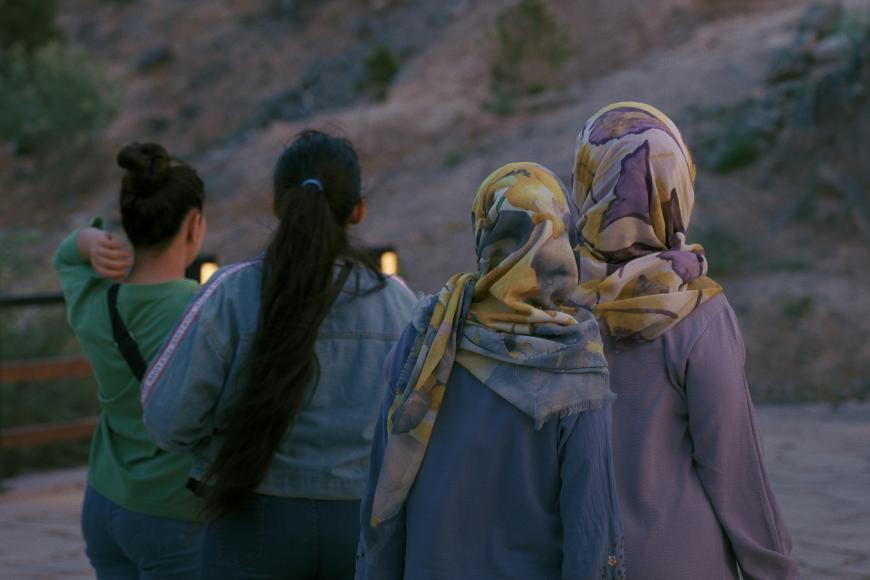
Filmmaker Elahe returns to her hometown of Mashhad in Iran to help her parents move house. Boxes must be packed, old stuff must be rummaged through together. Meanwhile everyone involved discusses what Elahe should wear at the upcoming big party, because Mr. Hossein, the respected and devout patriarch of the extended family, has invited his relatives to his garden. Elahe will not wear a headscarf, nor a hat, not even a borrowed baseball cap for this occasion. On previous visits, she was willing to make a lot of compromises in order not to shame anybody at home. But those days are over. The “Woman, Life, Freedom” movement encourages her to force a change. In Hossein’s garden the director has intimate and moving conversations with sisters and cousins. They have all had similar experiences with hijab and chador but found different ways of dealing with it. Elahe boldly confronts her family’s fears and wishes and films the honest discussions.
Single frames from a direct animation appear on the screen in staggered repetition. The shapes painted, printed and scratched on 35mm material evolve, with minimal time lapses, from one edge of the frame to the other. A trace is left, telling of time itself and asking: When exactly is “now”? The past, present and future are spinning in the chaos of moments.
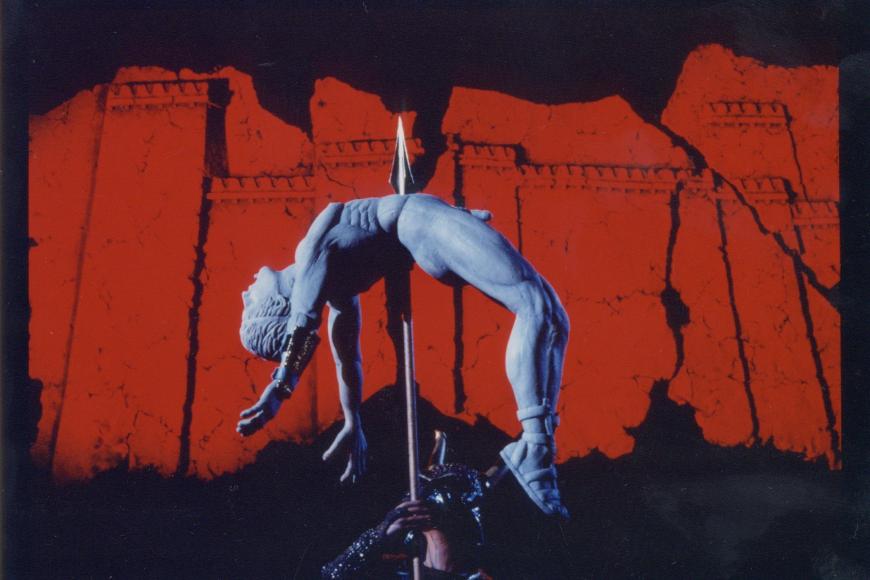
Trench warfare around Troy, the heroes are well-known. This adaptation of a classical myth, inspired by antique designs, dares to show explicit images for adults.
The winner of the first golden “Animation Dove”: nine years of war between Greeks and Trojans have gone past. The impulsive Patroclus, comrade in arms and bed mate of the rather battle-weary Achilles, thinks that victory can be achieved by other means. The tragedy takes its course – just as it was passed down in the classical myths but supplemented by what they left unspoken.
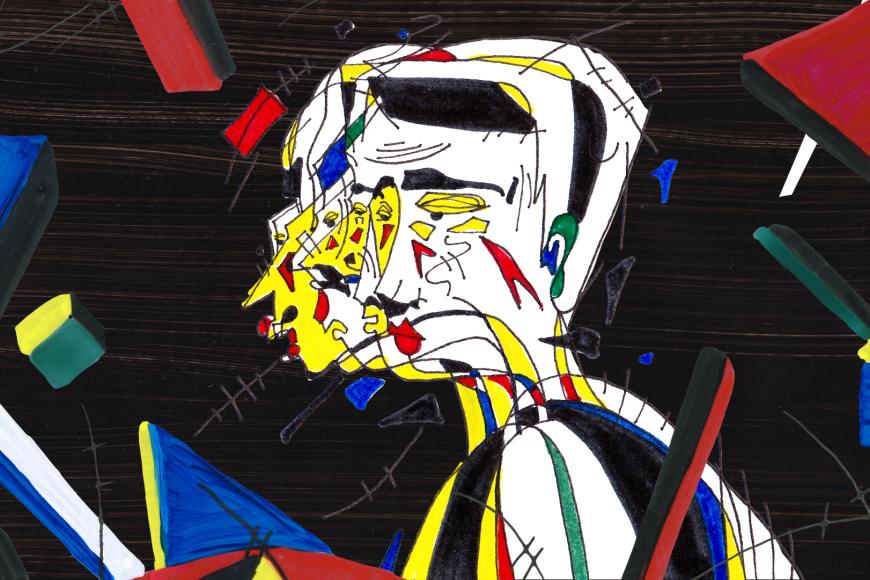
A person at a table. Time makes its usual rounds – until there is a hiccup. Normality slips. The table becomes a wild combination of constantly changing perspectives.
A person sits at a plain table. Time makes its usual rounds – until there is a hiccup. Moments fall into each other, angles of vision diverge, normality slips. The table becomes an unmanageable combination of constantly changing perspectives. The troubled person is transformed into a distorted temporal body. The world atomises itself in basic shapes and colours.
Nail polish, a general, a mule. John Smith recites from a text by the linguist Herbert H. Clark. The words evoke appropriate images, but mean something different.
It was only long after the end of the GDR that the Leipzig audiences had an opportunity to get to know the work of John Smith, the British master of the trenchant, short artist film that continues to expand enormously in the mind. The ideas of conceptual art and structural minimalism prevalent in the 1970s have influenced his works, which he sees as documentary films according to John Grierson’s definition, as “creative treatment of actuality.” In his view of the world details are highlighted which then cease to be taken for granted. In “Associations”, he recites a text by the linguist Herbert H. Clark. Words conjure up matching images, but mean something different. An experience that could also be had in the “actually existing socialism” of the GDR.
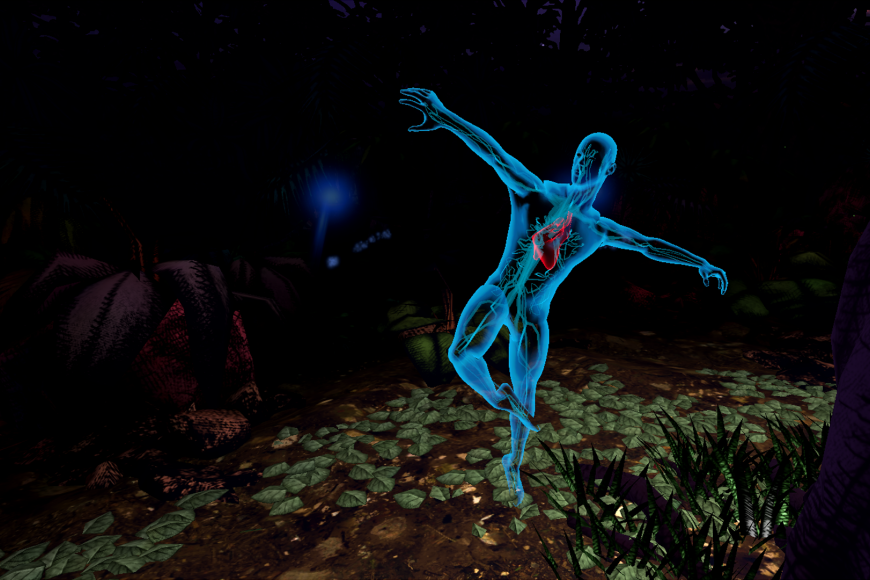
This multiplayer VR experience invites us to witness a sacred ritual of the Kenyan Kikuyu community, in which a man can turn into a woman and a woman into a man.
In the mythology of the Kikuyu community the Mugumo, the Kenyan fig tree, represents transformation and rebirth. This multiplayer VR experience invites us to witness a sacred ritual: Dancing around the Mugumo can turn a man into a woman and a woman into a man. We follow Waicici, a genderless person, in the quest for the most honest version of themselves.
Lars Rummel
Credits
Producer
Antoine Cayrol, Steve Jelly
Co-Producer
Steve Jelly, Arnaud Colinart, Opeyemi Olukemi, Rafael Pavon, Annick Jakobowicz, Simon Windsor
Production Company
POV Spark, France Télévisions, Dimension, Atlas V
Choreographer
Stephen Buescher
Key Collaborator
Andrew Orkin, Banna Dasta, Toby Coffey, Steve Jelly, Simon Windsor, Akash Kushwaha, Annick Jakobowicz, Stephen Buescher, Opeyemi Olukemi, Arnaud Colinart, Rafael Pavon, Antoine Cayrol, Derren Sinnott
Saddled with one of the most generic names in the English language, British filmmaker John Smith takes a wry, deceptively straightforward look at how this has affected his life and career.
“What’s in a name? That which we call a rose by any other name would smell as sweet.” The Bard’s canonical quote looms large over British experimental filmmaker John Smith’s latest short; one of the film’s opening gags even has Smith assert that one of his schoolmates, a certain William Shakespeare Smith, was allegedly bullied as much as he was. Saddled with one of the most generic monikers in the English language, the director talks about how this has affected his life and career over the last seven decades, pairing his deadpan voiceover with photographs, documents, snippets from his films and other pertinent images to often hilarious effect. His wry cataloguing of name-related humiliations also takes great pleasure in the tangential, as class, the state of the world today and mortality come to the fore again and again, with the intertitles providing an extra layer of self-deprecation that pushes the whole endeavour towards autofiction. Political, bracingly witty and quietly moving, “Being John Smith” ultimately suggests that humour combined with rigour and intelligence can transcend even the most fixed of categories; what could be sweeter than that?
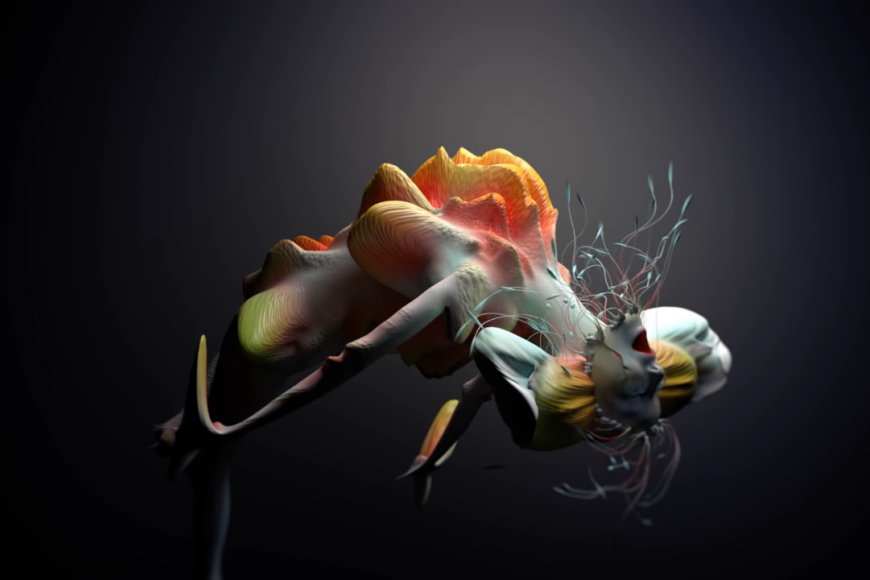
Icelandic musician Björk composes electronic music from natural sounds. In the video clip for “Hunter”, her head morphs into that of an artificial polar bear.
Icelandic musician Björk has always merged natural and technoid creativeness. She samples and loops environmental sounds and transforms them by means of electronic effects. Paul White translates this approach and aesthetics in the video clip for “Hunter”, morphing the singing Björk’s head and human features into an artificial polar bear that seems to be made of liquid plastic.
Björk’s figure seamlessly transforms into fantastic organic shapes, while her singing wipes the slate clean: tabula rasa, a free space for children to blossom and make their own mistakes.
The figure of the singer Björk seamlessly transforms into petals, into underwater creatures with delicate tentacles and other fantastic organic manifestations impossible to classify. Accompanying Tobias Gremmler’s graceful computer animation, Björk’s singing wipes the slate clean: tabula rasa, a free, unencumbered space for later-born children to blossom and make their own mistakes.
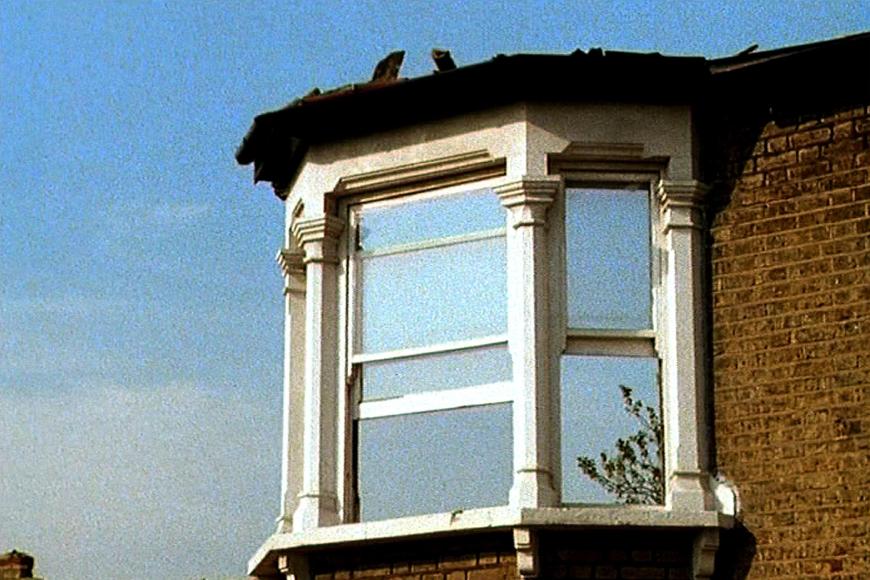
A rhythmic collage of sounds and film images accompanies the demolition of a house in East London and becomes a protest piece against the motorway network that destroys the neighbourhood.
A rhythmic collage of sounds and filmed sequences accompanies the demolition of a house. People from a neighbourhood in East London report in interview fragments: The living conditions were not comfortable – ugh, those spiders! – but the families had a home that had grown over generations. Now the community protests against being squeezed out by a motorway network.
In the middle of the night, Bobby is lured to the hospital by her mother, where terrifying horror bunnies anaesthetize her without her consent. A cryptic nightmare in sombre drawings.
Bobby’s stomach is upset. She is ravenous. Normally, dinner should be on the table by now. But today everything is different. Mum lures her teenage daughter out of the house with a lie and takes her to hospital, where her relatives are already waiting. All dressed in black, with tears in their eyes, expressing their sympathy. But sympathy for what? Before Bobby realises what is going on, she is dragged into the endless corridors of the clinic by rude nurses, undressed and prepared for an operation she knew nothing about and never consented to. Behind the scenes of this nocturnal horror trip, a disturbing tale about the relationship of trust between parents and children is revealed. Mansi Maheshwari’s genre mix of thriller, scary vision and educational satire is fascinating. Its dynamic design, dramatic animation and mesmerising soundtrack send us deep into a terrifyingly exquisite nightmare that lingers on.
Franka Sachse
Credits
Director
Mansi Maheshwari
Script
Anna Moore, James Davis
Cinematographer
Adam Pietkiewicz
Editor
Kaupo Muuli
Producer
Ashionye Ogene
Sound
Alexander Faingold
Sound Design
Alexander Faingold
Score
Marcin Mazurek
Animation
Mansi Maheshwari, Ryan Power, Elizabeth Fraser, Paula Gonsalez, Kathryn Haddow, Beatrice Babbo, Lucas Fruen
Tomoko from Japan travels to London. She is well-prepared, works hard on a language course and has brought her goldfish to fight homesickness. But she still feels lonely.
Who hasn’t?! You arrive in a foreign land, ready to embrace the world, but the world refuses to be embraced. Tomoko from Japan travels to London. She is well-prepared, works hard on a language course and has brought her goldfish to fight homesickness. And yet she feels lonely and unable to utter a word when spoken to. What to do? How about a slight change of perspective?
By examining different zoological facilities across Argentina, this experimental documentary crafts an intricate portrait of all the many facets that make up a zoo.
Jessica Sarah Rinland visits zoological gardens across Argentina to craft a portrait not of a single institution, but rather its underlying concept: an observational, yet still ever-probing exploration of zoo itself. The different types of image and their textures she collects to this end—the silky 16mm that comprises the bulk of the film, the crisp surveillance footage, the grainy black-and-white cameras that capture creatures roving “undisturbed”, the yellowing photographs that pin down Indigenous people and animals alike – perfectly correspond to the varying perspectives she gathers on her subject: a place of imprisonment and colonial legacy, but now also one of everyday routine, conservation and even tenderness. For all the ambivalence of its central theme, this is, like all of Rinland’s work, a film of extraordinary tactility: Human hands that clean, catalogue and caress, leathery trunks and furry fingers that reach between iron bars in search of comfort, plumage glistening in the sun. Jean Piaget coined the term collective monologue to refer to the developmental phase in which the child believes nature is created for them alone and can be controlled as such. It is so strangely moving to see control give way to care.