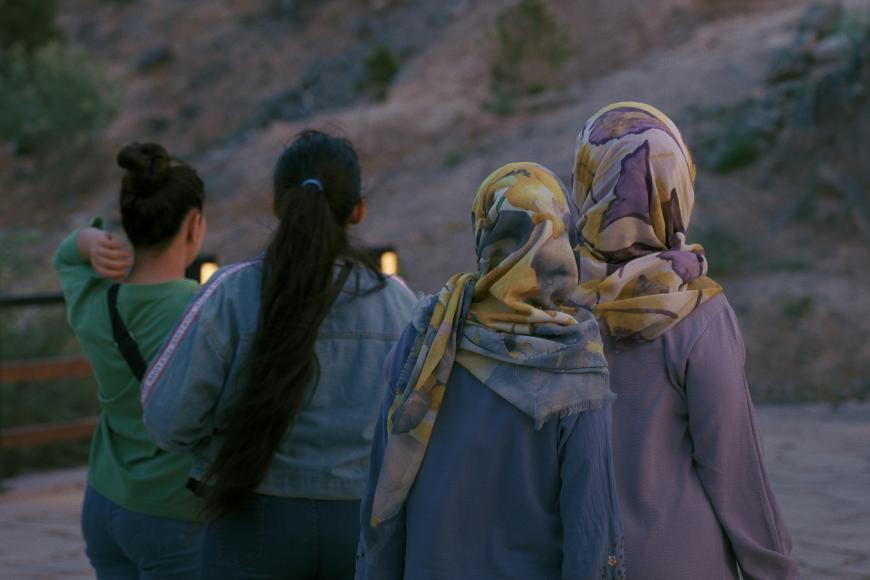
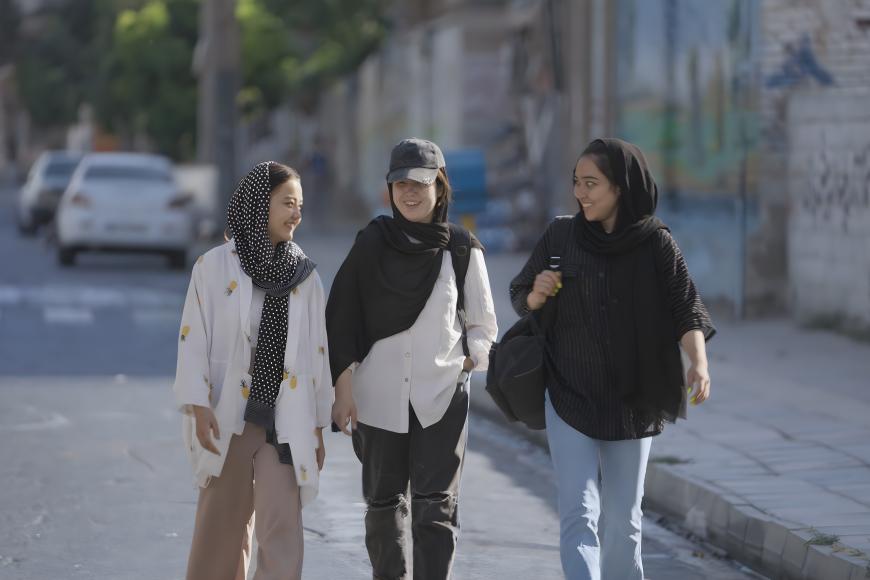
Family discussions flare up against the backdrop of the “Woman, Life, Freedom” protest movement in Iran: Elahe does not want to wear a hijab. An intimate and honest discussion.
Filmmaker Elahe returns to her hometown of Mashhad in Iran to help her parents move house. Boxes must be packed, old stuff must be rummaged through together. Meanwhile everyone involved discusses what Elahe should wear at the upcoming big party, because Mr. Hossein, the respected and devout patriarch of the extended family, has invited his relatives to his garden. Elahe will not wear a headscarf, nor a hat, not even a borrowed baseball cap for this occasion. On previous visits, she was willing to make a lot of compromises in order not to shame anybody at home. But those days are over. The “Woman, Life, Freedom” movement encourages her to force a change. In Hossein’s garden the director has intimate and moving conversations with sisters and cousins. They have all had similar experiences with hijab and chador but found different ways of dealing with it. Elahe boldly confronts her family’s fears and wishes and films the honest discussions.
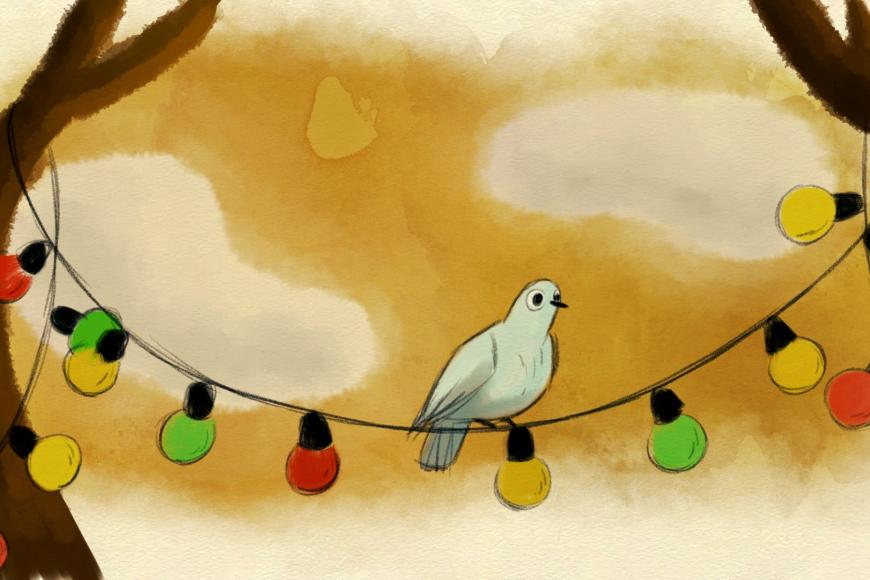
A poetic journey based on an Iranian children’s book. A boy and a girl are far apart and miss each other. He wants to go to her by ship, but the autumn storm upsets everything. The dove doesn’t wait until spring and helps the boy and girl find each other. The horse also tries to reunite the two.
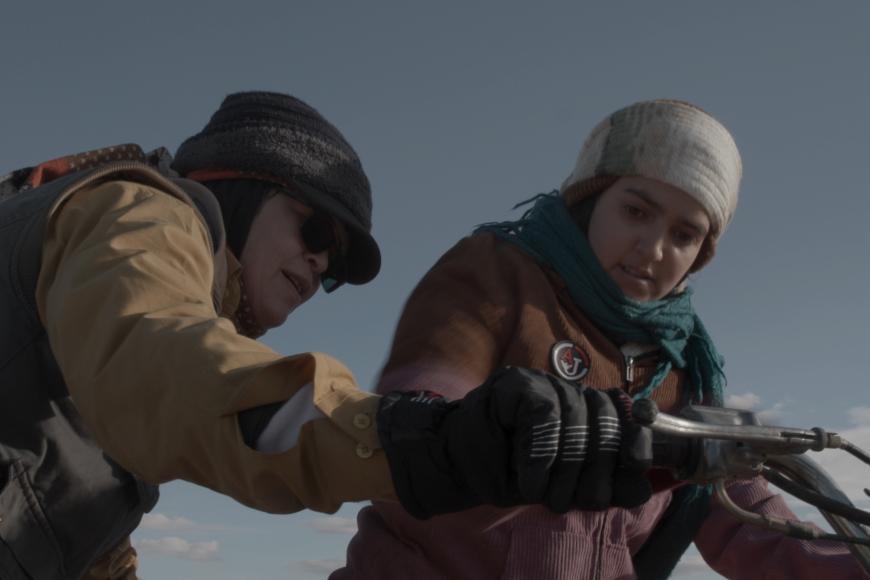
Fighting patriarchy on a motorcycle: A female local politician in rural north-western Iran is campaigning for the self-determination of the women and girls in her community.
The “Woman, Life, Freedom” protests in Tehran and other major cities seem far away from the place where Sara lives. But in her rural community in northwestern Iran, the protagonist of this film advocates the same feminist values in a practical, everyday way. Again and again, we are reminded by the images that her father once taught her to ride a motorbike – to the disapproval of the whole village. A small favour with big consequences: For Sara, it paved a way outside patriarchal marriage. Mobile on two wheels, she works as a midwife and has delivered many girls for whom she now wants to fight: At the start of the film and in middle age, Sara decides to be the first woman in the history of her community to run for the local council. A step which earns her enthusiastic support on the one hand; on the other, she must endure open hostilities and an interrogation by the moral enforcers of the Islamic Republic. In “Cutting Through Rocks”, Sara Khaki and Mohammadreza Eyni capture these power structures and their individual impact as precisely as the gestures of solidarity and self-determination.
We are guided through a speculative posthumanist scenario revolving around the relationship between humans, machines and nature. An AI helps with the transition into the digital.
We meet an artificial intelligence designed to ease our transition into the digital. Life in the analogue world is no longer possible, not even necessary. The VR experience guides us through a speculative scenario that illuminates the relationship between humans, machines and nature in posthumanism. Texts, images and sounds were created by means of AI and algorithms.
Generation Z in the Middle East: An Afghan teenage girl fights for her dream of becoming a professional boxer. Outside the ring, she confidently stands up to social injustice.
19-year-old Maydegol fled from Afghanistan to Iran with her family. Here she tries to make her big dream come true: She wants to be a professional Muay Thai boxer. The sport not only gives her strength for her gruelling daily life, but is also meant to help her get out of this inhospitable exile at last and work towards social change in Afghanistan. In order to be able to afford the training, Maydegol works every spare minute without her parents’ knowledge, including on fruit and vegetable plantations. She reflects on her apparently hopeless situation with friends from her boxing club: stuck in a foreign country, without documents and without prospects. The young women do not give up, though; they state clearly what they think, what they demand and what they expect from life. Maydegol’s expectations are as special as she is. The likeable, captivating protagonist not only impresses with her persistence, but also with her authentic personality, which shines through in this documentary – even in the dark moments.
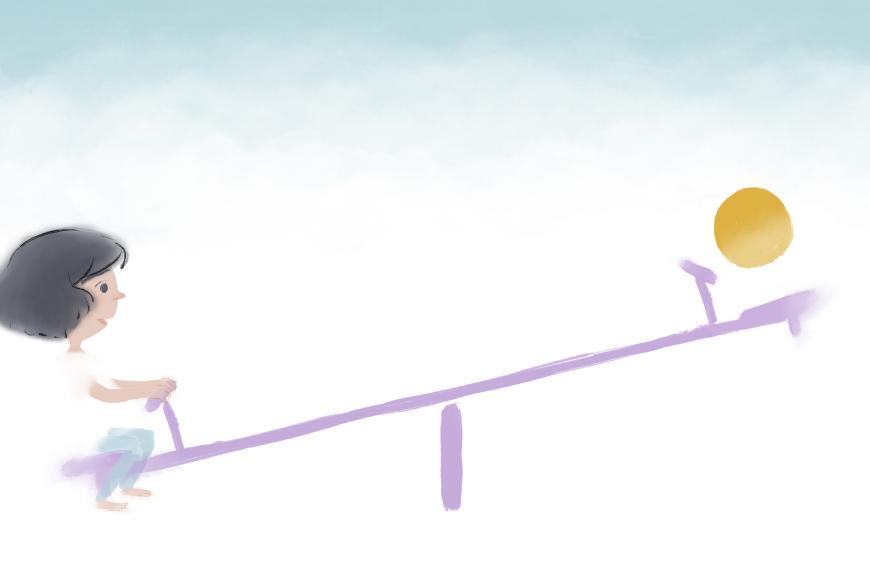
The days in the hospital are boring, the monotony only interrupted by parents’ visits. Listlessly, the girl lies in bed, staring out of the window for hours. But one day she gets a very special present. She slowly recovers and her injuries heal … This story, animated in soft, bright colours, shows that faith can help us get better.
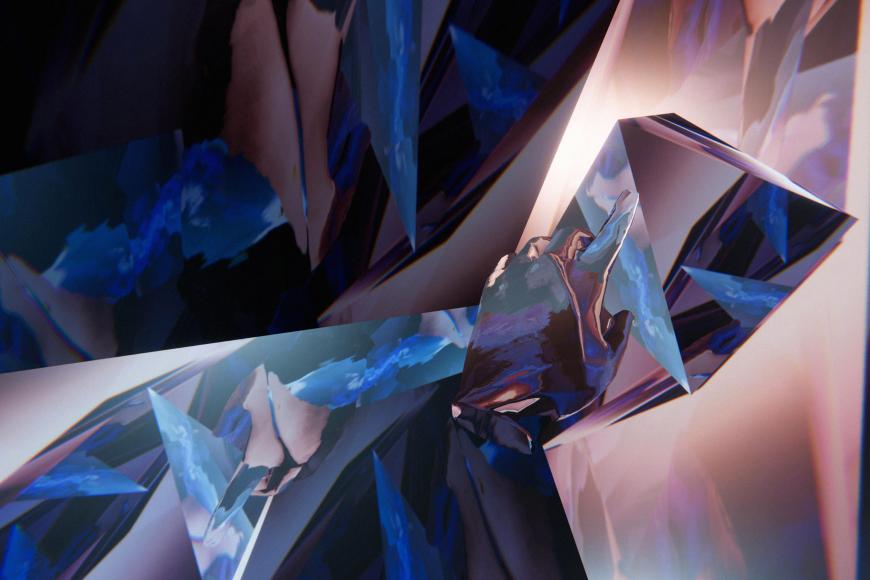
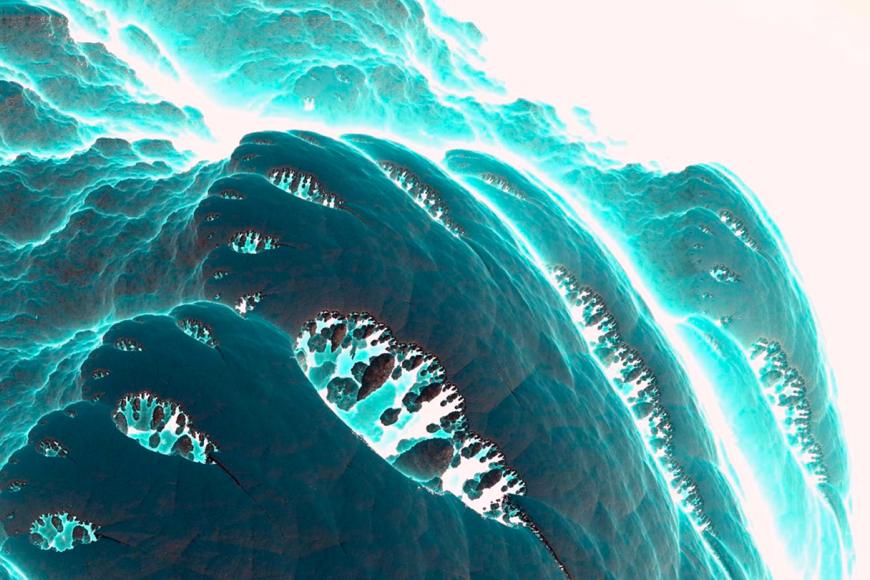
This film is a dive into the depths of fractal structures. Familiar and yet unknown, a landscape emerges that seems to have come from a parallel universe.
An infinitely growing fractal evolves into a hybrid shape that seems to consist of seawater frozen in time and liquid stone. Watching this, you find yourself in a field of tension: between an organic swirling that evokes repetitive movement sequences in nature and sterile, cold materials and patterns.
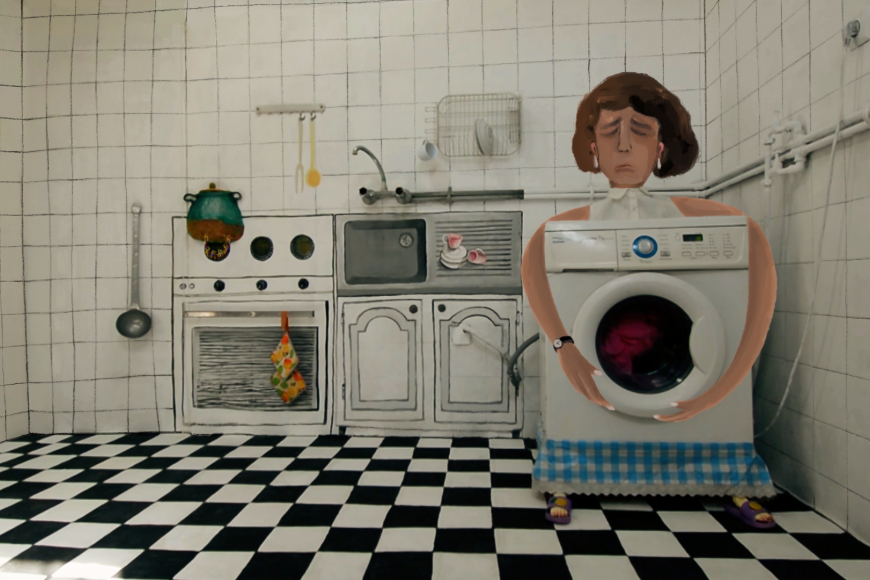
A stuttering boy transforms an Iranian kitchen into a fantastic world, and an exuberant animation dotted with real-life elements ironizes ingrained family patterns.
A stuttering boy transforms an Iranian kitchen into a fantastic cosmos. The father’s body becomes a refrigerator, the mother's belly a washing machine whose spin cycle gives birth to a screaming baby. Even birds on tiles and detergents have a surprising life of their own. This exuberant animation, dotted with real-life elements – fried eggs, broken plates, chess pieces – develops a subtle wit, ironizing ingrained family patterns.