Our everyday digital life is unthinkable without mobile phones. But what natural and human resources does the tech industry require for this innovation?
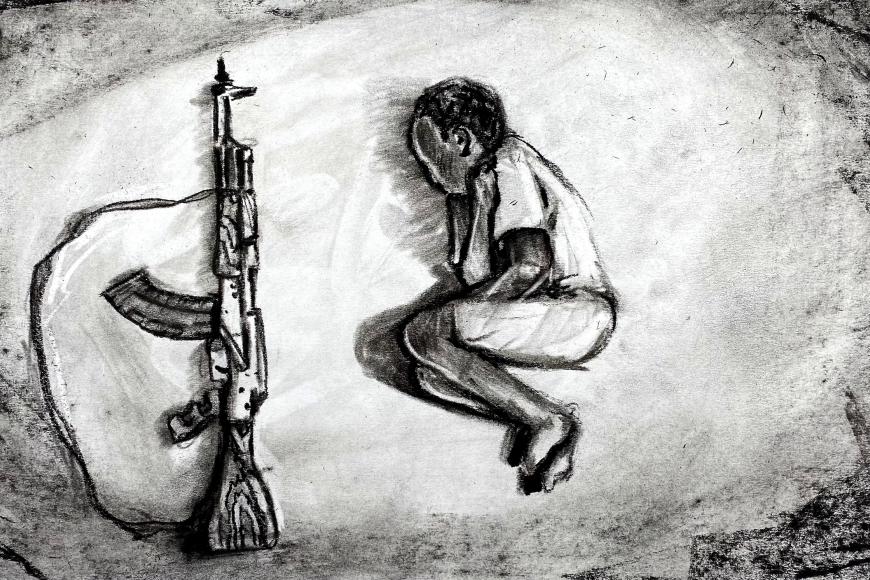
Our everyday digital life is unthinkable without smartphones. Across the world, more than five billion such devices are in circulation. Each one of those is even touched more than 2,600 times per day. This AR experience takes us through the hidden history of this technology and thus into the Democratic Republic of the Congo. What natural and human resources does the tech industry require for its innovations?
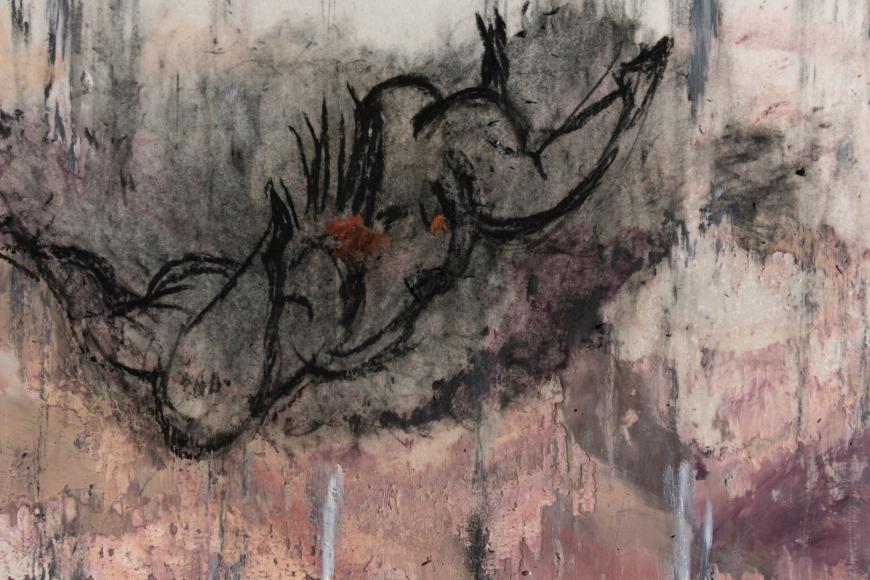
Using different techniques and materials – from charcoal pencils via watercolour to oil paints, against the backdrop of a photo – Chinese-American animation artist Renee Zhan has created a sensual, impressive and extremely original visualization of a well-known piece of wisdom: “Sex with an ex is the best.” The chance encounter of two former lovers at a station seems to trigger not only memories but also unsuppressible lust: anima porn in top form!
Waiting people in the noise of the city. They begin to move. For a fleeting moment their lifelines are entwined and they unconsciously take part in a choreography of chance.
Waiting people in the noise of the city. They begin to move, passing each other. Their portraits overlap, their bodies briefly collapse and for a fleeting moment form abstract time-space shapes. From the repetition and multiplication of the encounters emerges a daily accidental choreography of lifelines in urban space: delicate, intransparent and widely ramified.
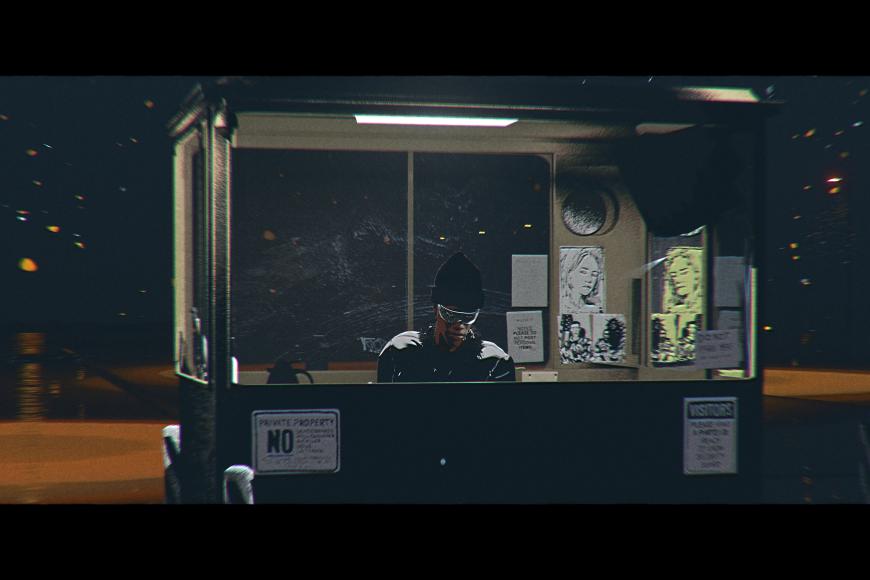
A cold winter’s night. Armoured in coolness, Nobody makes his lonely security guard rounds in the square, engrossed in his meandering reflections of life – melancholy of the streets.
The winter’s night draws its last breaths in the milky amber glow of the street lights. Snowflakes trickle down, the camera slowly circles a small guardroom in a driveway. Night after night, this lonely island is occupied by: Nobody. As a security guard in the cold, he guarantees the safety of the warm homes and their owners. He passes the time with a recalcitrant oil radiator, a calendar girl on a green meadow and his meandering thoughts. His security logs serve as a seismograph of reflections on life and nightly rounds of the square. Nobody is wrapped in a shell of coolness grown over a long time, which makes it hard for him to react to a rare smile the way he would like to in his heart. Nadia Hallgren and Jamie-James Medina condense an autobiographical short story by artist and musician Willis Earl Beal aka “Nobody”. The actor Michael K. Williams, who died in 2021, lent his voice to this inner monologue and gives it a sleepy, melodious sound. In this very cinematic, melancholy piece in a state of limbo, casual observations open a philosophical cosmos. But every time the journey of the mind crashes on the tarmac of the carpark in front of the block of flats.
André Eckardt
Credits
Director
Nadia Hallgren, Jamie-James Medina
Script
Willis Earl Beal
Editor
Spencer Campbell
Producer
Michael Stirton, Jamie-James Medina, Nadia Hallgren
A young woman asks a hyena to take her place at a dinner and dance given in her honour. The plan requires skill and some violence, too. The posh company is portrayed in bold calligraphic brush-strokes, the vibrant animation is supplied by the heroine’s temperament. This mischievous farce confronts a class frozen in tradition and etiquette with a scavenging animal that gleefully celebrates anarchy.
Two filmmakers – brother and sister – hire a chef to play their father. The boundaries between the film and the reality of the single father’s life become increasingly blurred.
Lines scrawled on white paper with a ballpoint pen. Everything looks like a hastily drawn scribble – a sketch of ideas rather than a finished film, possibly only a quick storyboard. The jerkily connected images show a food stall somewhere in the middle of nowhere. Something extraordinary happens here: Two filmmakers – brother and sister – hire the chef as the leading actor of their project. They are planning a biopic about their father. The fast-food expert is not only the spitting image of the famous man, he is just like him! The casting could not be more apt, the film business newcomer lets them convince him. But the task turns out to be difficult. Though the cook does everything to do justice to this demanding role, he seems less and less suited for the job every day. Completely engrossed in the preparations for the part, he becomes increasingly distant from his own children. The boundaries between the film and the single father’s real life begin to blur. Is it possible that shooting has already begun?
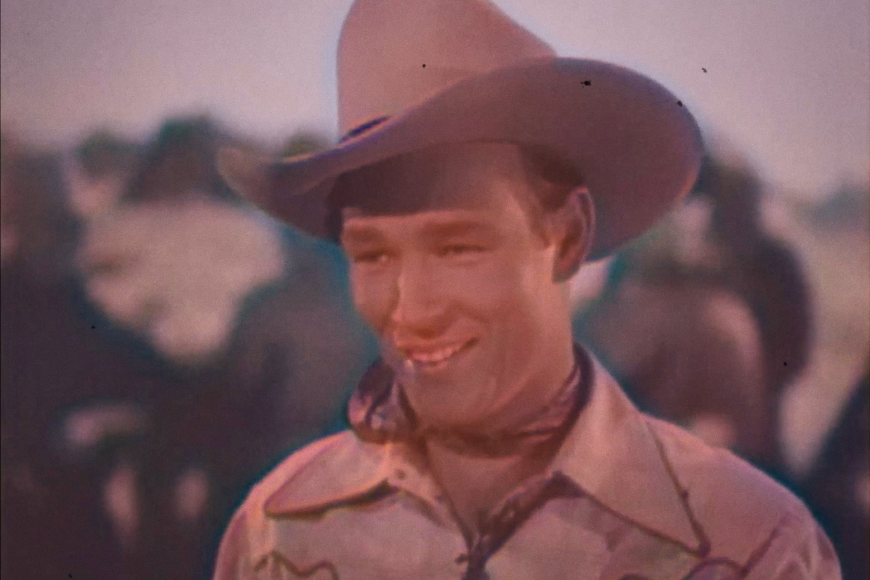
When the West was still wild there was room there for gay love stories that are missing in today’s history books. A queer rewriting of U.S. pioneer tales.
Before photography and film were invented and constructed the “Wild West”, the famous explorer Meriwether Lewis, whose travels made the westwards expansion of the still young USA possible, died under mysterious circumstances. The present-day narrator of this film, a distant descendant, portrays him as the tragic hero of a speculative gay love story. The potential lover, Meriwether’s “Louisiana Creole” servant John Pernia, is historically documented. But the archive material, which favoured the white folklore of the so-called age of pioneers, lays no trail to this romance.
Ben Young wilds the early Western imagery and queers the nationalist historiography from the perspective of people who are missing in the tales of glory and whose originally free space was occupied by the settler movement and its subsequent legend formation. He uses associative montage and gossip to rehabilitate John and Meriwether, the undocumented romantic couple, as the real pioneers. And they have a score to settle with the U.S.
Accompanied by a vibrant guitar, the animation and noise machine “Thrum IX” enchants with snail shells and poppy capsules growing and shrinking on bicycle spokes.
Will Bishop-Stephens has been working on kinetic sculptures he calls “Thrum” since 2020. Version IX links a bicycle wheel to a guitar. Butterfly wings, snail shells, poppy seed capsules and feathers grow and shrink on the spokes, the guitar strings produce a vibrating drone. The animation and sound machine takes us to a state of floating.
What happens when we digitize our consciousness? We explore a virtual refuge of three-dimensional pixels. Gradually the outlines of a city unfold before our eyes. A choir of memories of its (digital) population is heard, tracing the past. The subjective knowledge of history fades away in a jumble of voices and pixels.
Without light, there would be no cinema – and no life. Searching for the origin of images, this film delves into two worlds that explore the magic of light: physics and art.
Light is a fascinating phenomenon. Without light, there would be no cinema, no film – and no life. So light is at the origin of everything, and yet it remains invisible to the eye until it hits matter. This moment is – quite literally – the starting point of Thomas Riedelsheimer’s latest work, for the springtime spectacle of rainbow shreds in the cinematographer and documentary filmmaker’s flat became the starting point of a search for the origin of the images we form of this world. For this quest he dived deep into two spheres that seem to follow different laws but always strive to fathom the magical: physics and art. An intellectual and poetic ping pong game evolves between researchers from the Max Planck Institute in Erlangen and the “Extreme Light Group” of the University of Glasgow as well as internationally renowned artists such as Ruth Jarman, Joe Gerhardt, Julie Brook, Johannes Brunner and Raimund Ritz. In its course, the various perspectives on light lead to new insights on all sides that would hardly have been achieved without this methodical cross-over: about laser power and colour pigments, about black holes and floating sculptures. In brief moments, the uninitiated may even get some idea of the laws of quantum physics, generally considered impossible to visualise.
Luc-Carolin Ziemann
Credits
Director
Thomas Riedelsheimer
Cinematographer
Thomas Riedelsheimer
Editor
Thomas Riedelsheimer
Producer
Sonja Henrici, Stefan Tolz, Leslie Hills
Sound
Hubertus Rath
Sound Design
Christoph von Schönburg
Score
Fred Frith, gabby fluke-mogul
World Sales
Elina Kewitz
German Distributor
Piffl Medien GmbH
Broadcaster
3sat
Nominated for:
VER.DI Prize for Solidarity, Humanity and Fairness
A mother, a daughter, their close relationship and the question why sex does strange things to people. The cinematic reappraisal of a trauma, complete with a few show numbers.
“Sex does strange things to people!” This sentence reverberates from her childhood. What did her mother mean? What fears did she pass on to Emma? The budding filmmaker sets up the camera in her mother’s apartment, invites mum’s friends, creates an open atmosphere. Coby opens up more and more, talks about a repressed topic. At the same time, she gets to show a wholly different side of herself, performing song and dance numbers in front of her daughter’s lens.
Aesthetically inspired by the fragmenting of the 1990s, Young (de-)constructs the image of a controversial political figure who is about to enter history for good.
An inventive examination of the legacy of the 1990s: In his experimental short film, Ben Young portrays the figure of the then U.S. president – whom he is said to have met once in person in Louisville, Kentucky – as a foil for the questionable political developments, the beginnings of a globalised world and a society marked by collective amnesia. The director’s intelligent, witty and very personal reckoning with Bill Clinton.
At first everything in this music video by the London duo Sculpture is two-dimensional. But better duck down while watching! On intricately composed levels of space, graphic elements whiz wildly past your eyes and broken beats whistle violently past your ears. Zyprazol is medicinal, a mind-expanding drug – just like the animation records made by Sculpture.