Made at the start of the pandemic, Lee Anne Schmitt’s most recent short contrasts the tranquillity of nature with a sense of underlying dread at the state of the world.
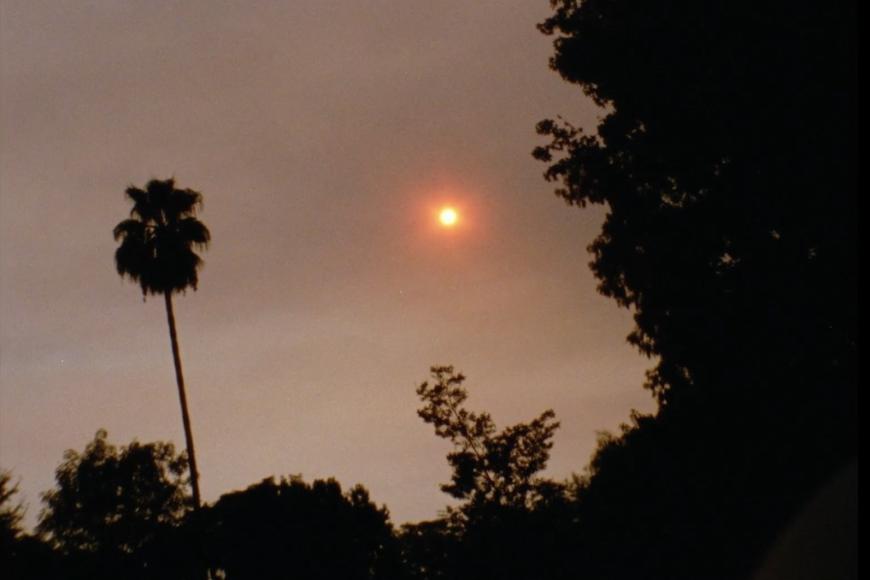
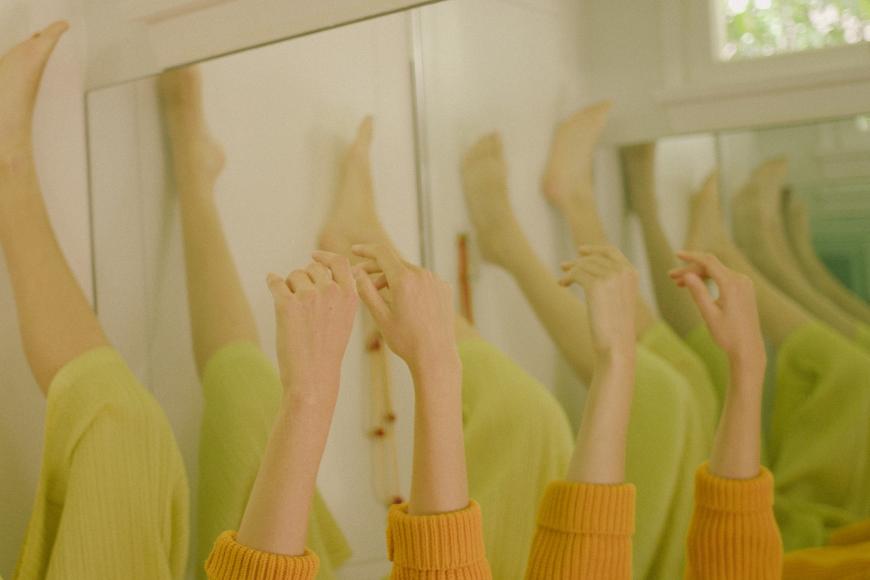
Made at the start of the pandemic, Lee Anne Schmitt’s most recent short contrasts the tranquillity of nature with a sense of underlying dread at the state of the world, even if the former is hardly immune from the latter. The lush leaves, lithe stems and blooms of all shapes and colours seen through frames both round and rectangular feel in perfect harmony with the gentle clang of the wind chimes, until Schmitt’s voice interrupts the calm to tell of how they decided to pack the car and leave. The recurring shot of a forest, with clouds slowly billowing forth in the gap between the trees. Fog or smoke? “Nothing’s where it’s supposed to be”.
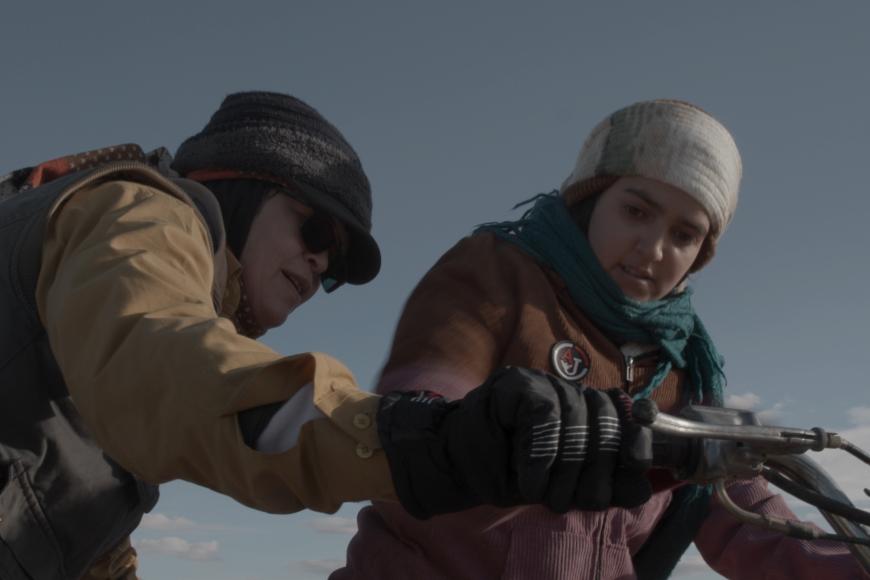
Fighting patriarchy on a motorcycle: A female local politician in rural north-western Iran is campaigning for the self-determination of the women and girls in her community.
The “Woman, Life, Freedom” protests in Tehran and other major cities seem far away from the place where Sara lives. But in her rural community in northwestern Iran, the protagonist of this film advocates the same feminist values in a practical, everyday way. Again and again, we are reminded by the images that her father once taught her to ride a motorbike – to the disapproval of the whole village. A small favour with big consequences: For Sara, it paved a way outside patriarchal marriage. Mobile on two wheels, she works as a midwife and has delivered many girls for whom she now wants to fight: At the start of the film and in middle age, Sara decides to be the first woman in the history of her community to run for the local council. A step which earns her enthusiastic support on the one hand; on the other, she must endure open hostilities and an interrogation by the moral enforcers of the Islamic Republic. In “Cutting Through Rocks”, Sara Khaki and Mohammadreza Eyni capture these power structures and their individual impact as precisely as the gestures of solidarity and self-determination.
A union of two artists and their two mediums of expression: celluloid film and synthesized video. A deeply psychedelic and meditative cycle of transformations in the weightlessness of light.
A union between two artists and their respective mediums of expression: celluloid film and electronic video. Stephen Beck, inventor of his own video synthesizer, and Jordan Belson, a famed abstract filmmaker and animation artist twice Beck’s age, spent two years working together on this journey through spheres of thought, mysticism and form. Deeply psychedelic and yet with all the weightlessness of light.
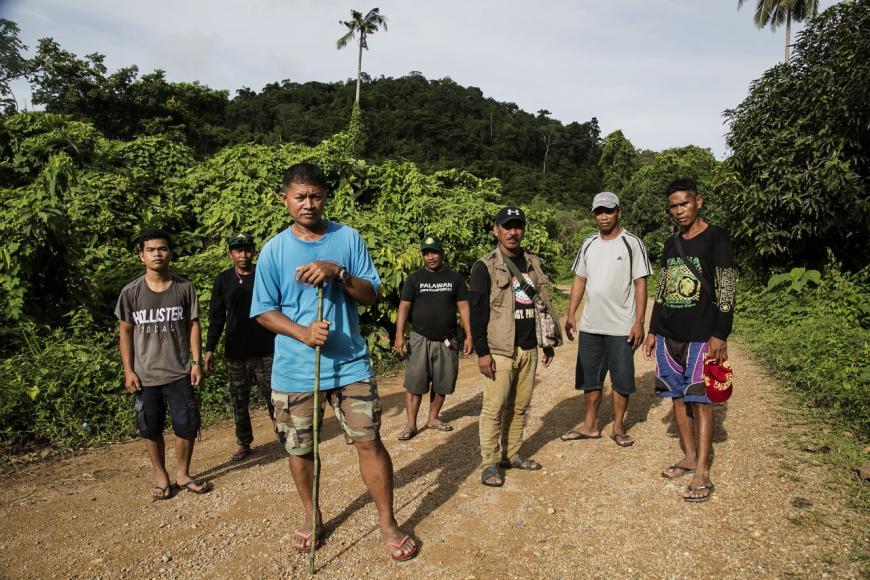
A gripping documentary thriller about a group of Filipino activists who prevent illegal clearances in the rainforest by stealing the loggers’ chainsaws.
On the island of Palawan in the Philippine archipelago, more and more rainforest is falling victim to the saws. The clearances have long been illegal but are protected and even initiated by President Duterte’s corrupt regime. Local resistance is forming. A group of courageous men around a determined human rights lawyer decide to react. They sneak into the forests to take away the logging teams’ chainsaws, cars and boats. This exciting film, constructed like a thriller, follows them on their dangerous missions, which they call “meta-legal”. But the price is high: Some of the activists pay for their resistance with their lives.
Luc-Carolin Ziemann
Credits
Director
Karl Malakunas
Cinematographer
Tom Bannigan
Editor
Michael Collins, Eric Daniel Metzgar
Producer
Marty Syjuco, Michael Collins, Kara Magsanoc-Alikpala
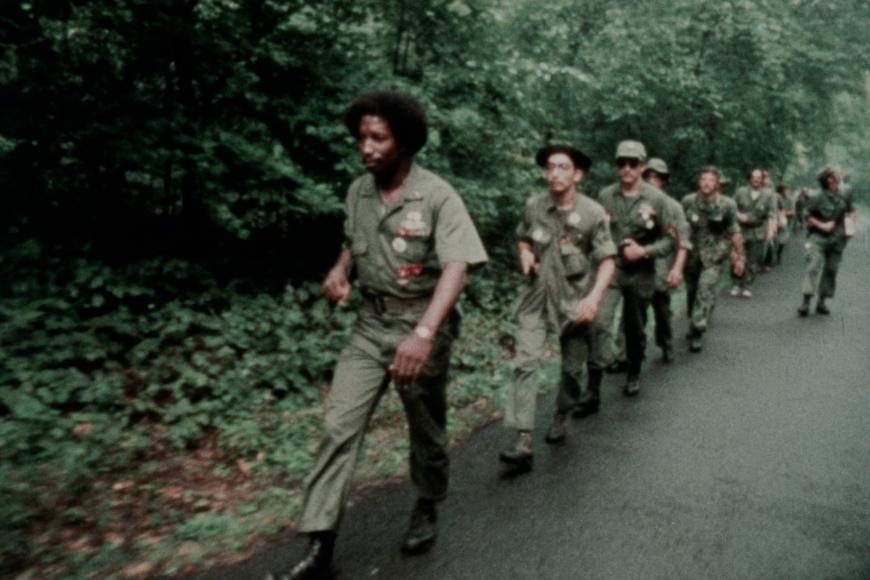
In 1970, a group of Vietnam veterans set out on a long march. They want to confront the local population with the shocking injustices that have been going on in Vietnam for years.
On 4 September 1970, a group of Vietnam veterans set out on a long march from Morristown, New Jersey, to Valley Forge, Pennsylvania. Their goal: to convince the local population along the way of the injustice that has been going on in Vietnam for years. They did this not just with speeches by the wayside, but with shocking, unannounced and publicly performed re-enactments. Complete with uniforms and plastic machine guns, supported by extras, they thus draw attention to their own war crimes in Indochina. Both camera and tape recorder stay close to all this, capturing the reactions of passers-by and city residents. Solidarity on the one hand, vicious insults on the other. A deep divide runs through the “home front”.
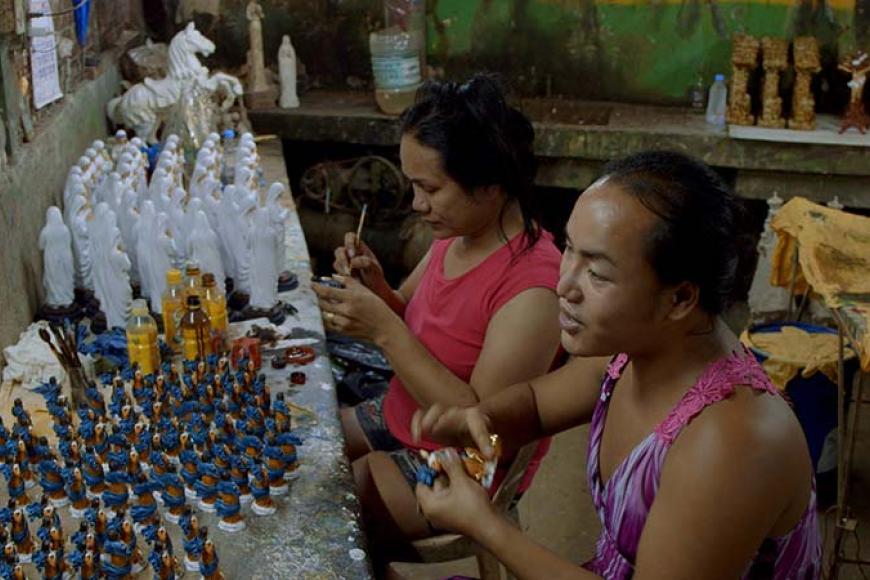
A factory for statues of Catholic saints in a city near Manila, portrayed as a microcosm of economic, social and religious conditions on the Philippines.
When the time “when St. Joseph came” is mentioned in this film, it doesn’t refer to a religious phenomenon, but to the most popular product of TML Holy Crafts Incorporated. In the factory on the Philippines, the country with the third-largest Catholic population in the world, the employees manufacture statues of saints under exploitative conditions. Joseph Mangat portrays this place with a focus on the workers, including some from the LGBTQI community.
In the first scene, a plaster bust is uncovered layer by layer. This image could also serve to describe the approach of “Divine Factory”: From the shop to the workshop, from the entrepreneur to the simple worker, from the production to the uses made of the religious articles, this film reveals the social and economic facets of this institution. The Filipino director not only observes precisely how people work and trade there, he also involves the participants in frank conversations about love, wages and living conditions. The employees’ profit-oriented payment model reveals how economical and religious ideas interlock. The success of the company in the city of Antipolo near Manila, desirable for all, thus appears as nothing short of a divine blessing.
Jan-Philipp Kohlmann
Credits
Director
Joseph Mangat
Cinematographer
Albert Banzon
Editor
Ilsa Malsi, Joseph Mangat
Producer
Alemberg Ang, Stefano Centini
Sound
Duu-Chih Tu
World Sales
Lya Li
Nominated for:
FIPRESCI Prize,
Prize of the Interreligious Jury
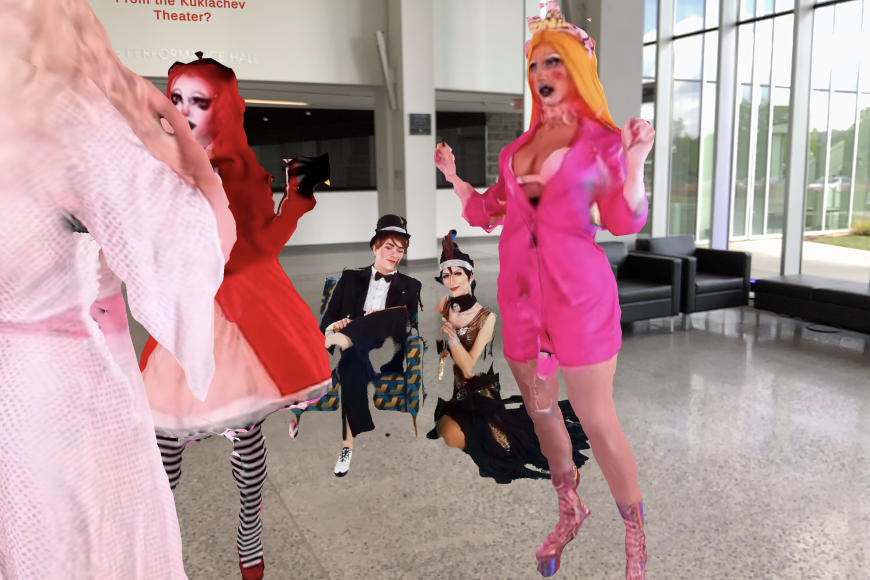
Where are the spaces for the LGBTQIA2S+ culture in Russia? This AR experience opens a digital safe space for the drag scene where they can perform without fear of violence.
The LGBTQIA2S+ community in Russia is facing an increasingly hostile social climate, is tabooed and criminalised. The AR experience opens a digital safe space for the local drag scene where they can perform without fear of violence. At the same time, this artistic occupation of heteronormatively dominated places is a political intervention.
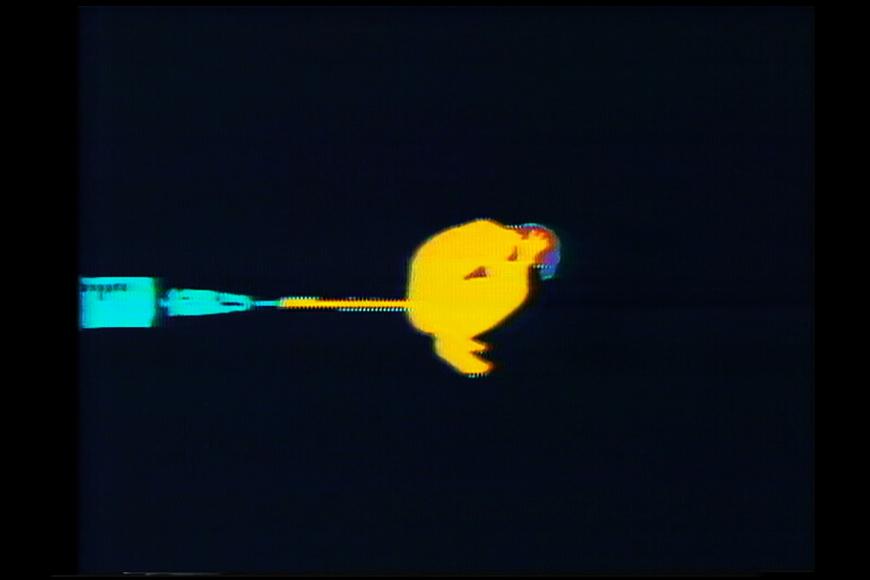
Originally made as an anti-drug film for TV, Lehman takes us on a trippy ride through day-glo colours and pop-art visuals, all melted together with the Scanimate video synthesizer.
Originally intended as an anti-drug public service announcement for local television, this 60-second film instead takes us on a trippy ride through Day-Glo colours and pop-art visuals, all melting into each other with the help of the Scanimate video synthesizer. Although one of her earliest films, it was also one of Pat Lehman’s most successful, going on to be shown at the Cannes Film Festival.
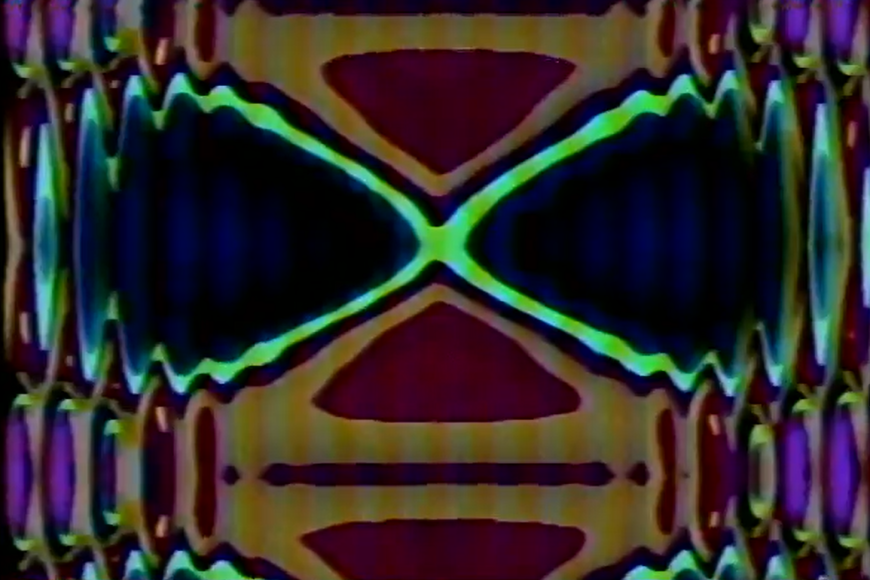
Sykes wrangles the abstract into the familiar, bending the raw colours and shapes of the Sandin Image Processor into a stream of figures that seem to emanate from some ancient subconscious.
Barbara Sykes, a master craftswoman of electronic visuals, manages to wrangle the abstract into the familiar. Bending and warping the raw colours and shapes of the Sandin Image Processor, she creates a series of images that seem to emanate from some ancient subconscious. Mixed together tightly with its percussive soundtrack, the film is a vibrant experiment in visual music.
How does the climate crisis affect our mind? How to go on in the midst of disaster? A personal essay about “climate anxiety”, guilt-rage spirals and radical self-care.
Heatwaves, melting polar caps, rising sea levels, mass extinction of species. The climate crisis is threatening life on earth, and our peace of mind, too, because if you become aware of where we stand, you’ll find it hard to sleep well. Sindha Agha, too, is suffering from “climate anxiety”, the all-consuming fear of the consequences of the climate emergency, and seeks out a climate psychologist to learn how to cope with it. This cinematic portrait shows how – representative of countless others – she is torn between panic, helplessness, guilt and rage, but still finds ways to overcome the paralysis to actively tackle the climate crisis.
An autobiographically-informed look at the legacy of infamous American chemical company the Olin Corporation, whose profits funded the racist, classist Neoconservative movement.
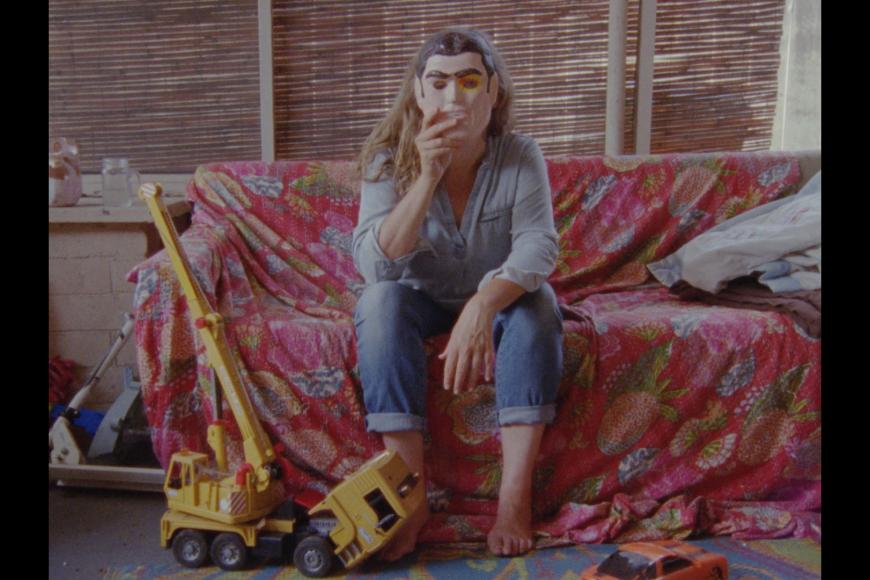
It’s hard to imagine a more thorough, trenchant and disturbingly compelling account of how the US arrived at its current state than Lee Anne Schmitt’s formidable fourth feature. Her starting point is personal: Her father worked for infamous American chemical company the Olin Corporation, the dolls he used to send her from his business trips forming one of the film’s leitmotifs. While wreaking environmental havoc across the nation, Olin also birthed its own foundation, whose deep pockets helped the racist, classist neoconservative movement gain the necessary traction. Sites of significance, archive material, intertitle quotes, shots of salient literature and snatches of domesticity: the building blocks of a comprehensive political takedown.
The last syllable on the lips of a dying man is “da”. Koji Yamamura translates a short story by author Hideo Furukawa into a thrilling and highly dynamic film.
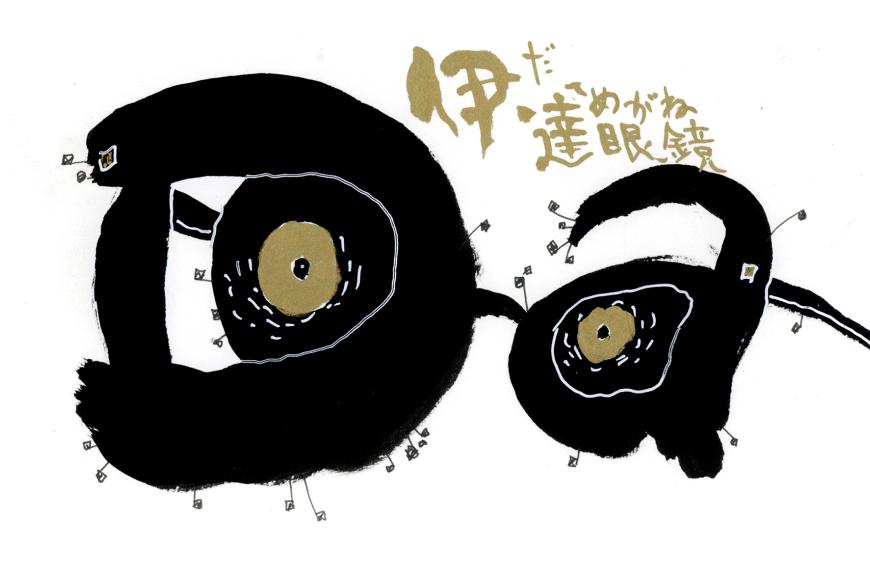
Life is short, extremely short. The time between birth and death seems to fly by. Snip your finger – and it’s all over. The last seconds are just long enough to pronounce the syllable “da”. It is precisely this syllable, spoken with someone’s last dying breath, that is picked up by a man who looks for the shortest of all things in the streets of Tokyo. The syllable whirls through his thoughts, triggering a torrent of reflections on the Japanese language that he gets more and more worked up about. In a dadaist manner, the “da” words hurtle at us like notes in jazz. Bold ink drawings move across the white background, sometimes fluidly, sometimes explosively. A last “da” completes the extemporisation and brings to a standstill all the energetic circling and vibrating that dominated the image before. The dying man closes his eyes. But the end is followed by a new beginning. “Extremely Short” marks the start of the series “Bungaku Bideo” – literature videos – which, commissioned by the Yanai Initiative, makes innovative accomplices of contemporary Japanese literature and international animation. In this case, Koji Yamamura encounters a piece of prose by Hideo Furukawa, listens to the monologue recited by the author himself and translates his linguistic furor into an exciting visual form.
Daughter, mother and grandmother in Covid lockdown in New York. Three strong characters at close quarters having outspoken arguments and hilarious verbal duels. Delightful!
Take: three generations of women in Covid lockdown in New York, enough white wine, vodka and time to talk about the really important issues. Dana Reilly makes the best of the pandemic restrictions and films what happens when her mother Janet and 90-year-old grandmother Sylvia decide to move in together. The result is a funny and at the same time lovingly raw tribute to two strong personalities, their not uncomplicated closeness and completely different worlds.
In southern California, date palms from the Middle East grow, tales from One Thousand and One Nights are told and a volcanic eruption is expected. A document of enchanting simultaneity.
Not a single cloud ever seems to drift across this sky, the sun never ceases to send its powerful rays down. Here, in southern California, where the San Andreas Fault has created an unmistakable topography and invisible water currents run under the barren soil, date palms thrive best: feet in water, head on fire. Terra Long has looked around, traced the history of the plants which originally came to North America from the Middle East, and visited the parades and festivities dedicated to the sugary fruit. Layer by layer, she constructs her very own perspective on the landscape and the people, translates her haptic impressions into magnificent 16mm shots and designs a complex soundtrack.
Long manages to join the past and present and produce a concise, quasi sensual extract. The laborious manual pollination of the date palms plays a role in it, as do the collapsed ecosystem of the Salton Sea, archived dresses of Arabian Nights beauty queens and interviews that testify only to what is now historical; as do elderly white couples floating in their pools and walking across the lawns of golf courses. “Feet in Water, Head on Fire” is a document of simultaneity that captivates from the first minute to the last.
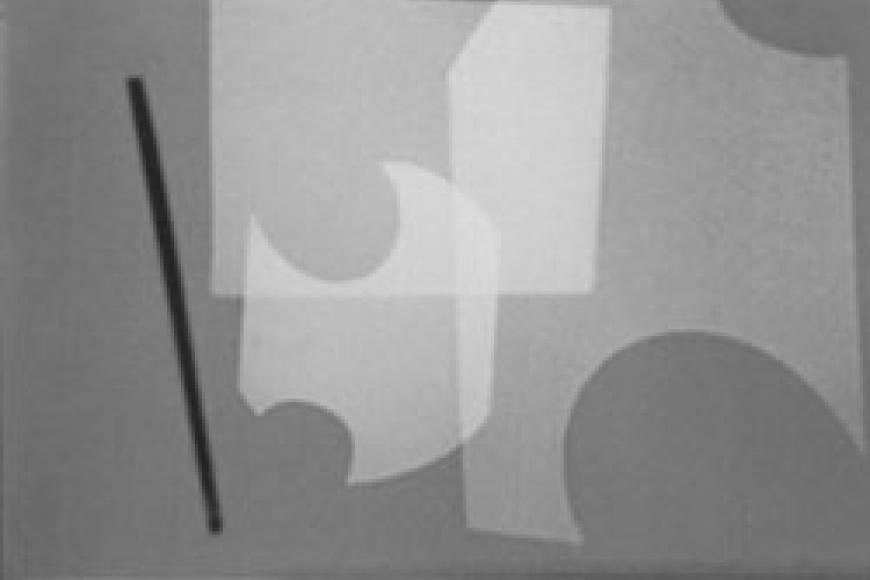
An impact pendulum writes directly on the soundtrack of the film, producing analogue bleeps and bits. In alternating coloured light, shades change their shape.
The Whitney brothers are pioneers of abstract animation. In 1943/1944, they experimented in five film exercises with modernist form and a device of their own that wrote directly on the soundtrack of the film by means of an impact pendulum. The resulting analogue electronic bleeps and bits are accompanied by moving stencils in constantly alternating coloured backlight whose shadows change their geometrical shape.
Sandin introduces his Image Processor (IP), a modular video synthesizer that he invented, talking about its design and demonstrating some of its hallucinatory colours and effects.
Video artist and physics graduate Dan Sandin takes the viewer on a short tour of the Sandin Image Processor (IP), a modular video synthesizer that he invented. What starts as a serious technical introduction to the synthesizer slowly spaces out into a visual experiment in colour and effects, as Dan Sandin, wearing what appears to be a Catholic cardinal’s hat, tries to remain focused.