Film Archive

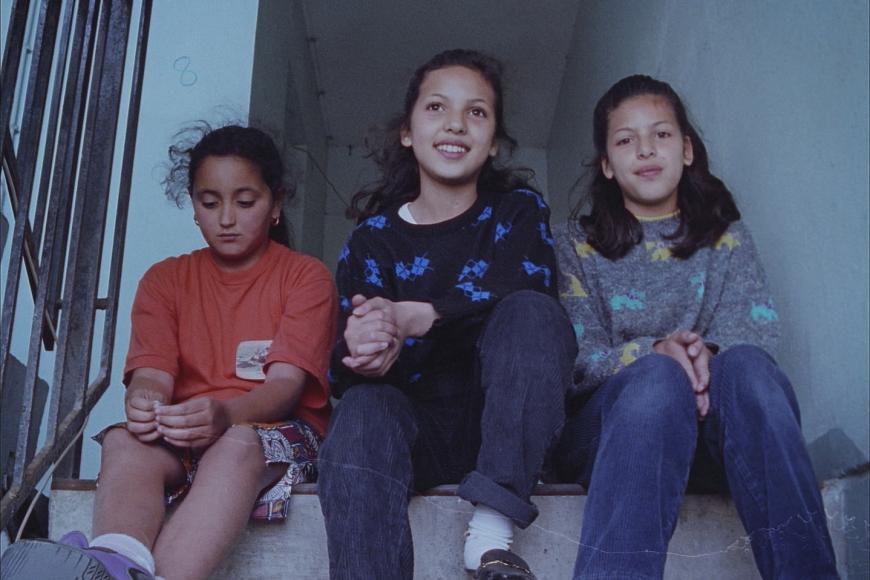
Filmstill Bye Bye Tiberias

Bye Bye Tiberias

Bye Bye Tibériade
Lina Soualem
Audience Competition 2023
Documentary Film
France,
Palestine,
Belgium,
Qatar
2023
82 minutes
French,
Arabic
Subtitles: 
English
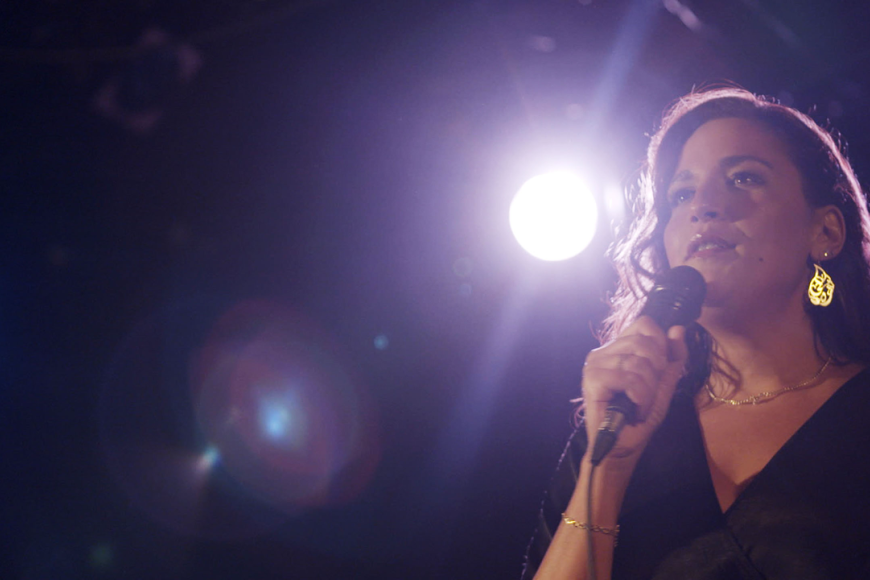
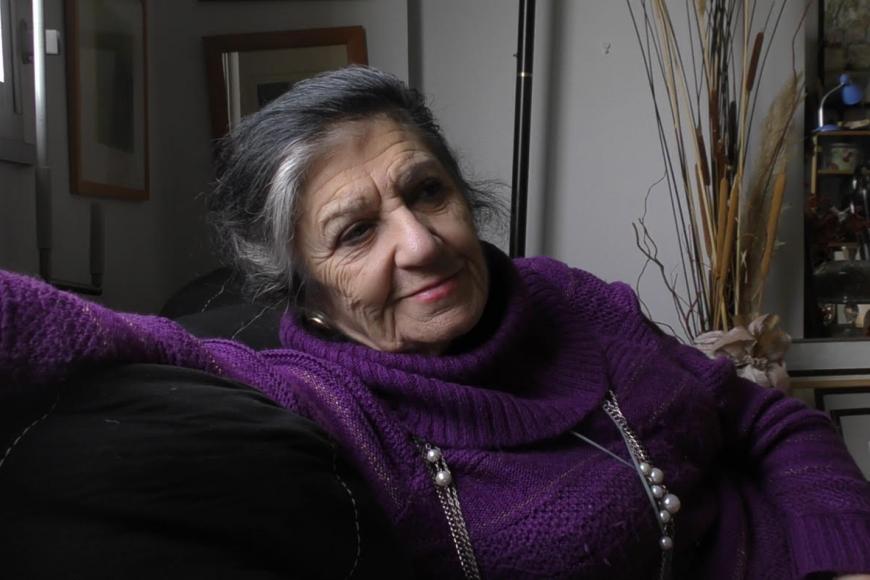
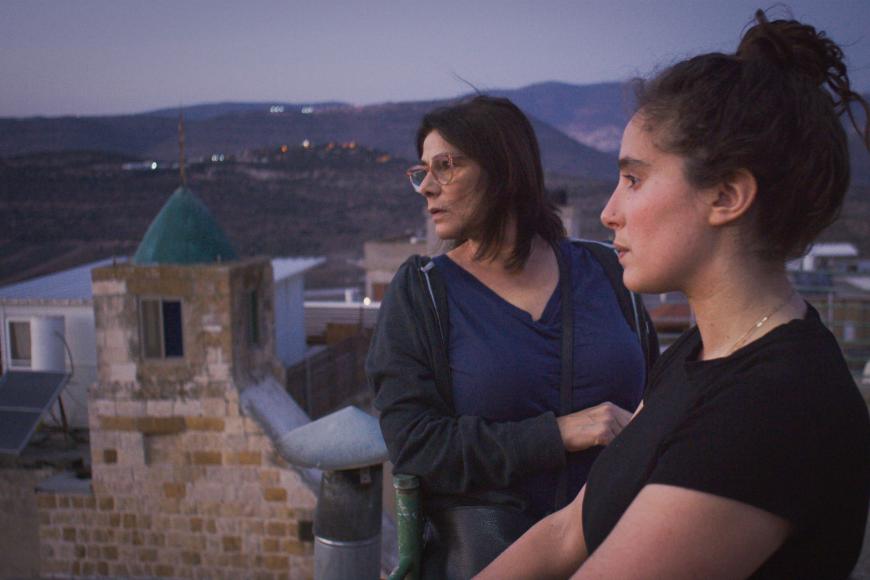
The actor Hiam Abbass, who lives in France, is one of the greatest movie stars from the Middle East. She played leading roles in the award-winning films of Israeli director Eran Riklis, acted in Steven Spielberg’s “Munich” and recently in the U.S. hit series “Succession.” She served on the juries of the big Festivals in Cannes and Berlin, presented her own directing debut in Venice. But she is also a mother, daughter and sister in a large Palestinian family full of resourceful women. In this real role she steps in front of the camera in her daughter Lina Soualem’s work and travels back to her hometown of Deir Hanna in northern Israel – an Arab village in the Jewish state.

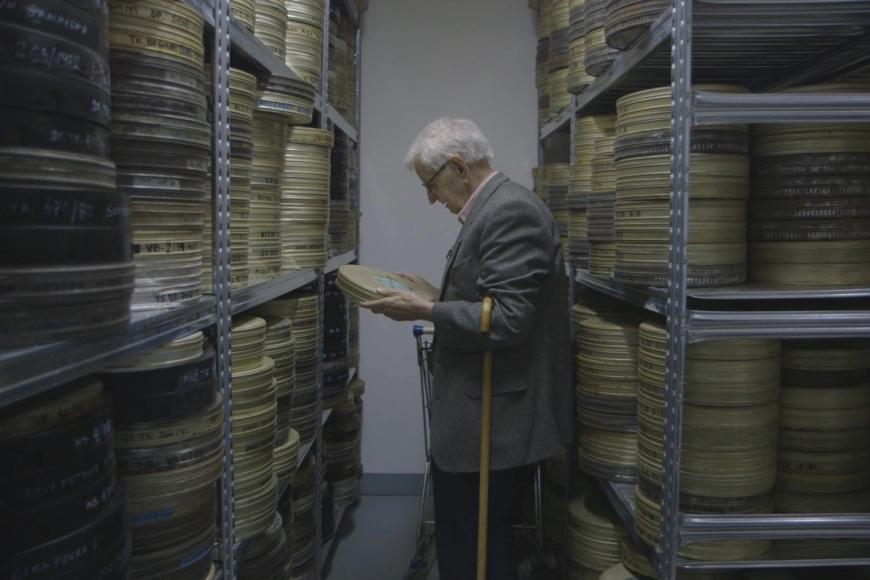
“Don’t open the gate to past sorrows,” the director quotes a kind of family dogma. It refers, among other things, to the family’s traumatic expulsion from Tiberias, the city on the Sea of Galilee, in the 1948 Palestine War. But with her confrontation of the family history, Soualem also opens gates to past joys and allegedly discarded identities. Between home videos, historical archive footage, photos and letters, Abbass is a touching and approachable screen presence as she returns to her roots. The long shadow of her origins also falls on a woman of the world.
Jan-Philipp Kohlmann

Credits DOK Leipzig Logo

Director
Lina Soualem
Script
Lina Soualem, Nadine Naous, Gladys Joujou
Cinematographer
Frida Marzouk
Editor
Gladys Joujou
Producer
Jean-Marie Nizan
Co-Producer
Guillaume Malandrin, Ossama Bawardi
Sound
Ludovic Escallier, Lina Soualem
Sound Design
Julie Tribout, Benoit Biral, Rémi Durel
Score
Amine Bouhafa
World Sales
Anna Berthollet
Commissioning Editor
Rasha Salti
Animation Perspectives 2021

Ceuta’s Gate

Randa Maroufi
A performative reconstruction sketches and condenses daily life at the border between the Spanish exclave of Ceuta and Morocco, which is crossed illegally by all kinds of goods.
Media Name: 0d1f38ea-94d8-4963-b890-69e121d8cb82.jpg

Ceuta’s Gate

Bab Septa
Randa Maroufi
Animation Perspectives 2021
Documentary Film
France,
Morocco
2019
19 minutes
Spanish,
Arabic
Subtitles: 
English
Everything seems neat at first in Randa Maroufi’s performative reconstruction. Cars form orderly queues; market women tie up their baggage. On the monotonous grey background, the scenes appear schematic, like a blueprint where suddenly everything becomes graphically condensed. Everyday life at the border between the Spanish exclave of Ceuta and Morocco, which is crossed illegally by all kinds of goods.
André Eckardt

Credits DOK Leipzig Logo

Director
Randa Maroufi
Script
Randa Maroufi
Cinematographer
Luca Coassin
Editor
Randa Maroufi, Ismael Joffroy Chandoutis
Producer
Saïd Hamich
Sound
Mohamed Bounouar, Léonore Mercier
Homage: Dominique Cabrera 2024

Chronicle of an Ordinary Suburb

Dominique Cabrera
A story about the demolition of tower blocks in a Parisian suburb, about the fond memories of former residents and the inexorable decline of a flawed utopia.
Filmstill Chronicle of an Ordinary Suburb

Chronicle of an Ordinary Suburb

Chronique d’une banlieue ordinaire
Dominique Cabrera
Homage: Dominique Cabrera 2024
Documentary Film
France
1992
56 minutes
French
Subtitles: 
English
In September 1992, four tower blocks in the town of Mantes-la-Jolie, not far from Paris, were demolished. They were part of the Val Fourré district, which was celebrated as a flagship social housing project in the 1960s, as archive footage reminds us at the beginning of the film. But filmmaker Dominique Cabrera, who grew up in a similar housing project herself, is not concerned with urban planning or architectural failures. Instead, she is interested in the residents’ memories: remembrances of the poor and the wealthy living together, of insidious but persistent decline, but above all of the beautiful things that make up a life, the variety, the emotions, the personal happiness.
Christoph Terhechte

Credits DOK Leipzig Logo

Director
Dominique Cabrera
Script
Edmée Doroszlaï
Editor
Dominique Greussay, Estelle Altman
Producer
Viviane Akili
Sound
Xavier Griette, Raoul Frühauf
Score
Jean-Jacques Birgé
International Competition 2022

Ciné-Guerrillas: Scenes from the Labudović Reels

Mila Turajlić
Yugoslav cinematographer Stevan Labudović travelled to Algeria in 1959. His footage provided valuable assistance to independence from French colonial rule.
Filmstill Ciné-Guerillas: Scenes from the Labudović Reels

Ciné-Guerrillas: Scenes from the Labudović Reels

Ciné-Guerrillas: Scenes from the Labudović Reels
Mila Turajlić
International Competition 2022
Documentary Film
Serbia,
France
2022
94 minutes
Serbian,
French,
Arabic,
English
Subtitles: 
English
What do the Algerian war of liberation and Yugoslavia have in common? Stevan Labudović. In 1959, Tito himself sent his favourite cinematographer to Algeria. The resistance against the French colonial rule needed the eyes of the world, and the experienced partisan Labudović helped open them: His images gave the lie to the propaganda of the occupiers and their Western allies. This is a portrait of the man, the mission and the age – as film, ideological and personal history.
For three years, until the Democratic Republic of Algeria was proclaimed, Labudović put himself and his camera at the service of the people fighting for independence. Mila Turajlić found the newsreel footage shot at the time in the Filmske Novosti archive in Belgrade, got in touch with the aged pensioner and followed his trail. From a wealth of archive material, diary entries by and interviews with Labudović, with contemporary witnesses from Yugoslavia, Algeria and New York, where the young Maghreb state, like many other former colonies, struggled for admission to the United Nations, she distils the promising origins of an alliance that stood at the beginning of the Non-Aligned Movement, which was to oppose the dichotomy of the superpowers. Thus the bow to her compatriot also gains global political topicality.
Christoph Terhechte

Credits DOK Leipzig Logo

Director
Mila Turajlić
Cinematographer
Mila Turajlić
Editor
Sylvie Gadmer, Anne Renardet, Mila Turajlić
Producer
Carine Chichkowsky, Mila Turajlić
Sound
Aleksandar Protić
Score
Troy Herion
Nominated for: MDR Film Prize, Prize of the Interreligious Jury, FIPRESCI Prize
Audience Competition 2025

Coexistence, My Ass!

Amber Fares
Noam Shuster-Eliassi grew up in a Jewish-Arab peace village in Israel, worked for the UN and is doing stand-up comedy on the Middle East conflict in English, Hebrew and Arabic.  
Filmstill Coexistence, My Ass!

Coexistence, My Ass!

Coexistence, My Ass!
Amber Fares
Audience Competition 2025
Documentary Film
USA,
France
2025
93 minutes
English,
Hebrew,
Arabic
Subtitles: 
English
The name of her village stands for a utopia that has shaped Noam Shuster Eliassi from childhood: Newe Shalom (Hebrew) or Wahat al-Salām (Arabic) roughly translates as “Oasis of Peace.” This small community of 300 people from Jewish and Arab families which was founded in 1969, located in Israel at the border with the West Bank, is a test of solidarity in practice. Thus, Noam, who is Jewish, and her Palestinian friend Ranin become ambassadors of mutual understanding even as children, for example when Hillary Clinton or Jane Fonda come to visit. They seem predestined for a career in the United Nations.
In her comedy show “Coexistence, My Ass!”, which director Amber Fares uses as a leitmotif, Shuster Eliassi strikes a harsher tone. Her career shift from diplomacy to political comedy – in English, Hebrew or Arabic, depending on the audience – shows her as a critic of the Netanyahu government, both before and after the Hamas terrorist attack on 7 October 2023. Her example also reflects the division in parts of the Israeli left: Shuster Eliassi’s deep pain of having lost loved ones herself is followed by anger about the Gaza war. What is humour able, what is it allowed to do in this situation? Perhaps help us mourn the suffering of two nations and, despite everything, not give up the utopia of peace.
Jan-Philipp Kohlmann

Credits DOK Leipzig Logo

Director
Amber Fares
Cinematographer
Amber Fares, Philippe Bellaiche, Amit Chachamov
Editor
Rabab Haj Yahya
Producer
Amber Fares, Rachel Leah Jones, Valérie Montmartin
Sound
Rachel Leah Jones, Ibrahim Zaher, Sharon Luzon
World Sales
Stephanie Fuchs
Nominated for: Leipziger Ring
International Competition 2020

Considering the Ends

Elsa Maury
Shepherdess Nathalie learns what it means to kill with one’s own hands. Her process of development turns out to be a holistic learning experience: about responsibility, care and knives.
Media Name: 12a18577-68f0-4090-bd0a-069821a4a770.jpg

Considering the Ends

Nous la mangerons, c’est la moindre des choses
Elsa Maury
International Competition 2020
Documentary Film
Belgium,
France
2020
67 minutes
French
Subtitles: 
English, German Subtitles for deaf and hard-of-hearing
The vultures are circling over the Cevennes, the south-eastern part of the French Massif Central. They are part of the holistic cycle of becoming and passing away which shepherdess Nathalie seeks to come closer to. Because the vultures are gnawing at the remains of her beloved animals. She considers herself responsible not only for their lives, but also for their death. Elsa Maury’s film is an unequivocal testimony to what it means to wield the fatal knife oneself.
The sounds made by a ewe when a lamb is born seem almost human. And when a little later the newborn turns out to be unwilling to live it seems as if one could detect pain in the mother’s eyes. The shepherdess Nathalie’s empathic look at her flock was transferred directly to the viewer. Each animal here has its own name, each has a biography that Nathalie knows by heart. And it’s ultimately up to her to finally decide when the end of a sheep is near. In diary-like sequences we learn about her feelings, take part in a difficult process of development which results in new self-confidence, perhaps even new wisdom. Elsa Maury shows a perennial school of killing and death. She leaves the events uncommented, but achieves an intensity through images and editing that stays with us for a long time.
Carolin Weidner

Credits DOK Leipzig Logo

Director
Elsa Maury
Cinematographer
Christian Tessier, Martin Flament, Elsa Maury
Editor
Geoffroy Cernaix, Pauline Piris-Nury
Producer
Cyril Bibas
Co-Producer
Luc Reder, Olivier Burlet, Javier Packer-Comyn
Sound
Marc Siffert, Loïc Villiot, Galaad Germa, Willy Boutet, Elsa Maury
World Sales
Philippe Cotte
Narrator
Nathalie Savalois
Nominated for: Prize of the Interreligious Jury, FIPRESCI Prize
Media Name: db390b6f-607c-4480-bfe4-a0c2865fa1d2.jpeg

Conversations with Siro

Conversations avec Siro
Dima El-Horr
International Competition 2021
Documentary Film
Lebanon,
France
2021
52 minutes
Arabic,
French
Subtitles: 
French, English
Lebanese filmmaker Dima El-Horr moved to Paris several years ago. Among the friends who stayed at home is the artist Sirvat Fazlian, whom she regularly visits in Beirut until the failed revolution of 2019, the COVID lockdown, the devastating port explosion and finally the dramatic economic crisis put a temporary end to their meetings. So the director decides to give her conversations with Siro a cinematic form.
Ever since the death of her husband, the well-known Armenian actor Berj Fazlian, Siro has lived alone in a flat filled with souvenirs and devoted most of her time to music and painting. In this film, footage from the years before 2019 blends with recorded phone calls between Siro and Dima and recent scenes from Paris, coming together in a densely woven portrait of life in exile. While snow falls in Paris, Siro talks about warm days on the Mediterranean coast and sings Armenian songs. She rails against the permanent crisis in Lebanon, but her nature is not affected. For one thing, Siro personifies the legendary Lebanese resilience. Yet for the filmmaker she represents that part of the heart that people in exile leave behind. So almost inevitably, “Conversations with Siro” becomes the director’s dialogue with herself.
Christoph Terhechte

Credits DOK Leipzig Logo

Director
Dima El-Horr
Cinematographer
Dima El-Horr
Editor
Catherine Zins
Producer
Paul Rognoni, Sabine Sidawi
Sound
Jean-Pierre Dussardier
Nominated for: FIPRESCI Prize, Prize of the Interreligious Jury
Animation and Musique concrète 2021

Court-circuit n° 180 – Interview with Michèle Bokanowski

Lorenzo Recio
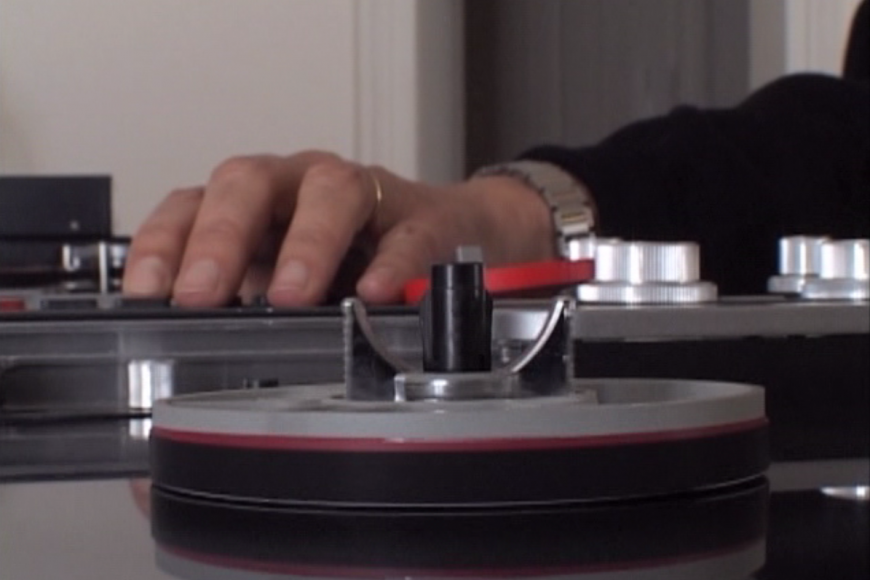
Michèle Bokanowski’s sounds have been a distinct part of Patrick Bokanowski’s film images since 1972. Between tape loops she talks about her work with material that’s often quite unlike music.
Media Name: f92acd70-b6d3-4e7f-b087-a4dd2e7044ed.png

Court-circuit n° 180 – Interview with Michèle Bokanowski

Court-circuit n° 180 – Interview de Michèle Bokanowski
Lorenzo Recio
Animation and Musique concrète 2021
Documentary Film
France
2004
10 minutes
French
Subtitles: 
English
Michèle Bokanowski’s sounds have been a distinct part of Patrick Bokanowski’s film images since 1972. The origin of her soundtracks often lies in noises that are quite unlike music. Thus, she uses the clacking of billiard balls to describe people working on a field in the distance. Between tape loops and electronic devices, the composer talks about her craft of shaping sonorous material.
André Eckardt

Credits DOK Leipzig Logo

Director
Lorenzo Recio
Producer
ARTE France, MK2TV
Filmstill Death Does Not Exist

Death Does Not Exist

La mort n’existe pas
Félix Dufour-Laperrière
International Competition Animated Film 2025
Animated Film
Canada,
France
2025
72 minutes
French
Subtitles: 
English
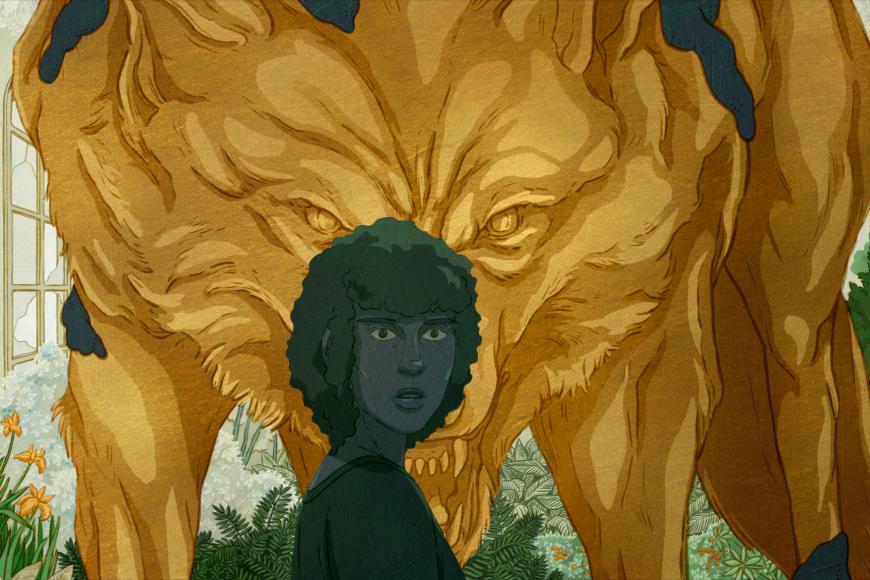
When Marc confesses his love to his girlfriend Hélène, all she answers is “Later!” The timing of his confession could not be worse, as there is a whole other dimension to Hélène’s reply. Both belong to a group of activists who have just burned their mobile phones and tackled the ultimate important questions in the forest. Questions of fear, power, courage, loyalty, and doubts. Following this, they attack a rich and influential retired couple in their posh mansion, representing those guilty of the dilemma of this world in their eyes. The armed attack ends in a bloodbath. In the midst of the shootout, though, Hélène is struck with a strange kind of paralysis and soon afterwards sucked into the surrealistic maelstrom of a fatal second chance.
Canadian director and writer Félix Dufour-Laperrière says, he writes “with colours in mind, with transformations, dreamlike sequences, mental images that take shape on screen.” Hand-drawn templates unfold in a powerful symbolic 2D animation of flowing figures and silhouettes that neither shrinks from aggressively formulated messages nor from the exuberant magic of the format.
Andreas Körner

Credits DOK Leipzig Logo

Director
Félix Dufour-Laperrière
Producer
Nicolas Dufour-Laperrière
Animation
Félix Dufour-Laperrière
Media Name: 015d9fd0-c362-46a8-bf95-c2fda2faceaa.jpg

Deep in Time’s Crevasse

Au fond de la crevasse des temps
Romulus Balazs
International Competition Short Film 2020
Documentary Film
France
2020
29 minutes
French,
Romanian
Subtitles: 
English
How can we visualise the past without perceiving it too much as a historical fact? This film uses a clever combination of archival material and oral history to bring memories of a transgenerative trauma and the associated pain to the surface. What seems to be the past becomes visible in countless points of contact with the present. It’s a simple, touching treatment of the incomprehensible consequences of a historical crime.
Luc-Carolin Ziemann

Credits DOK Leipzig Logo

Director
Romulus Balazs
Producer
Romulus Balazs
Media Name: 5d71a81f-2675-4892-8137-18ed51cff031.jpg

The Crossing

Die Odyssee
Florence Miailhe
Competition for the Audience Award 2021
Animated Film
Czech Republic,
France,
Germany
2020
84 minutes
German
Subtitles: 
English
A country that could be anywhere, not precisely localized and yet everywhere. It’s a beautiful summer’s day when the life of siblings Kyona and Adriel changes forever. Their village is raided, destroyed and set on fire. The whole family is forced to flee and experiences many real and surreal situations on their tracks across a whole continent to finally arrive, perhaps, at a more peaceful place.
At the start of the film, Kyona leafs through a sketchbook, takes stock of her life and talks about the end of her childhood. It is only later that the siblings even realize that they are refugees, that like many others they are making their way to the border for a variety of reasons: natural disasters, the consequences of climate change, war, persecution. The two children come across dangerous and helpful people, are separated and find each other again. This feature-length animation, realized in oil on glass, relies on the rapid interplay between fantasy and reality, taking us, on the one hand, into a fictitious, non-real world. But on the other hand, the places, names, situations remind us of familiar things. They show fleeing, exile, setting out as a universal experience.
Lina Dinkla

Credits DOK Leipzig Logo

Director
Florence Miailhe
Script
Florence Miailhe, Marie Desplechin
Editor
Nassim Gordji Tehrani, Julie Dupré
Producer
Dora Benoussilio
Co-Producer
Luc Camilli, Ralf Kukula, Martin Vandas, Alena Vandasoá
Sound
Florian Marquardt
Score
Andreas Moisa, Philipp Kümpel
Animation
Marta Szymańska, Zuzana Studená, Anna Paděrová, Eva Skurská, Polina Kazak, Lucie Sunková, Urte Zintler, Paola de Sousa, Ewa Łuczków, Anita Brüvere, Aurore Peuffier, David Martin, Marie Juin, Valentine Delqueux, Aline Helmcke
Winner of: Gedanken Aufschluss Prize
Media Name: 6a96c856-13fa-4c23-be5c-cdc45e2dd7a5.jpg

Downstream to Kinshasa

En route pour le milliard
Dieudo Hamadi
International Competition 2020
Documentary Film
Belgium,
DR Congo,
France
2020
90 minutes
Lingala,
Swahili
Subtitles: 
English
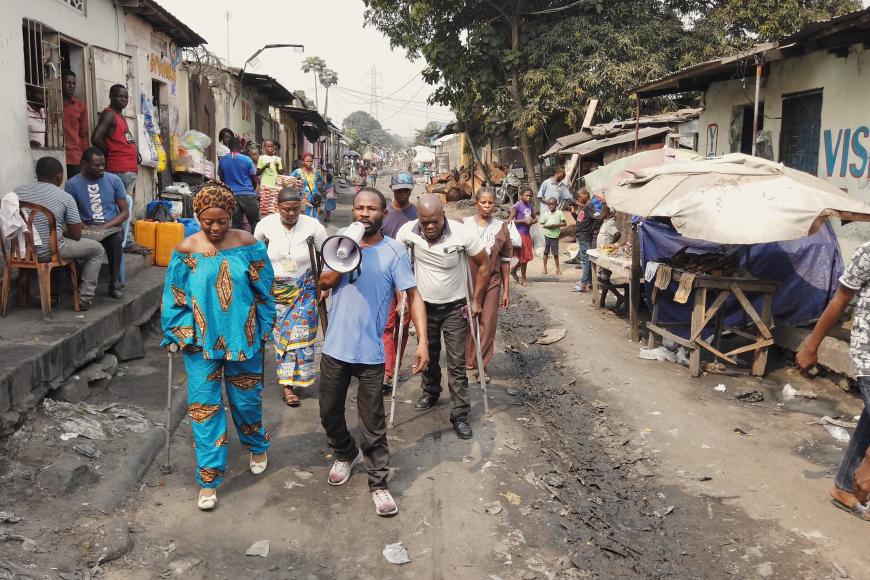
In the summer of 2000 Ugandan and Rwandan troops fought a devastating battle in Kisangani. The International Court of Justice sentenced Uganda to pay one billion U.S. dollars to the civilian victims. After almost twenty years of waiting in vain, some of them set out for Kinshasa to enforce their legal claim. The physical and theatrical power of their mission both drives and radiates from this film.
Dieudo Hamadi has given the women and men he is about to follow down the Congo a visually confident and assured exposition. Gathered on an inky black stage, they look at us and sing: of blood spilled, of money forgotten. Then the march of the maimed sets itself in motion, on crutches, with prostheses, past the nearby pits of the dead and out into the country. Every metre covered is an act of rebellion. When the procession of beggars, who rightly won’t tolerate this designation, finally climbs the stairs of the National Parliament, iconic scenes of Soviet revolutionary cinema seem to shine through. But the crowd that is moving here is different. Its individual bodies push back with all their weight both against the casual shrug of the shoulders of political routine and the carelessly rounded calculations of loss and equivalent value of the arithmetic of war.
Sylvia Görke

Credits DOK Leipzig Logo

Director
Dieudo Hamadi
Cinematographer
Dieudo Hamadi
Editor
Hélène Ballis, Catherine Catella
Producer
Quentin Laurent, Frédéric Féraud, Dieudo Hamadi
Co-Producer
Aurelien Bodinaux
Sound
Sylvain Aketi, Dieudo Hamadi
Score
Les Zombies de Kisangani
World Sales
Stephan Riguet
Winner of: Golden Dove (International Competition), Prize of the Interreligious Jury
Audience Competition 2024

Elementary

Claire Simon
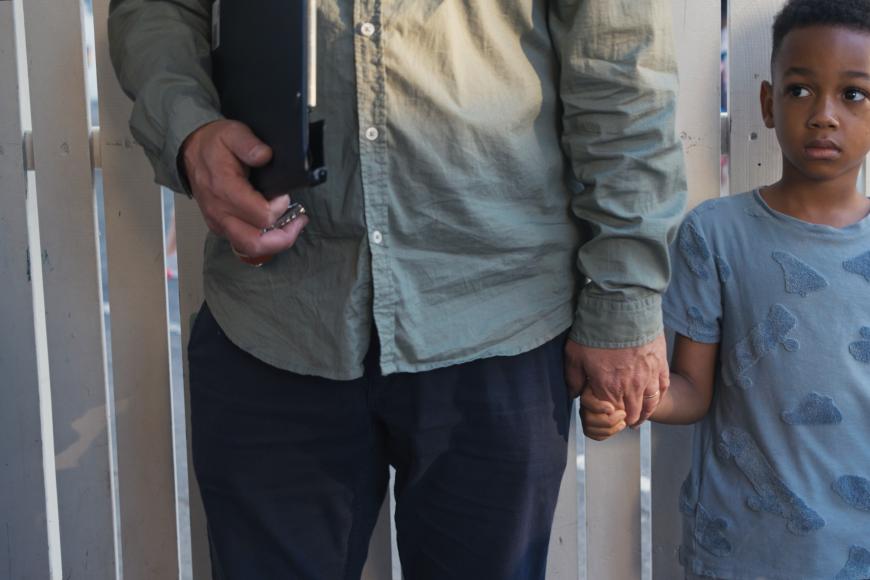
A primary school on the outskirts of Paris. With persistence and dedication, the children are encouraged to be responsible and empathetic. Successful pedagogy at eye level.
Filmstill Elementary

Elementary

Apprendre
Claire Simon
Audience Competition 2024
Documentary Film
France
2024
105 minutes
French
Subtitles: 
English
Claire Simon’s filmic observation focuses on the institution of school. But instead of a systematic analysis of the objectives and workings of this place of education, her emphasis is on the daily interactions between children and teachers. How are disputes resolved? How do you teach consideration, forbearance, empathy? The film explores these questions calmly and with an unobtrusive camera, using as example the Anton Makarenko primary school in Ivry-sur-Seine, just outside the south-eastern outskirts of Paris.
Parents arrive with their children. The teacher shakes hands with a newcomer – a gesture of encouragement. In class, the instructors seldom raise their voices, authoritarian shouting is out of place here. The staff rely on dialogue instead, which in turn depends on trust and mutual respect. Claire Simon immerses herself in the life of this school and lets the captured moments between children and adults speak for themselves. A sensitive mosaic unfolds: moments of deeply felt learning and teaching bliss, boat trips on the Seine, turmoil in the schoolyard. All these details feed into the vibrant image of a pedagogical mission carried by small and big shoulders.
Em Johrden

Credits DOK Leipzig Logo

Director
Claire Simon
Cinematographer
Claire Simon
Editor
Luc Forveille
Producer
Michel Klein
Sound
Nathalie Vidal, Pierre Bompy, Jules Jasko, Elias Boughedir
World Sales
Rūta Švedkauskaitė
Performer
Sophie Axus
Filmstill Fantastique

Fantastique

Fantastique
Marjolijn Prins
Young Eyes 2025
Documentary Film
Belgium,
France,
Netherlands
2025
71 minutes
Susu,
French
Subtitles: 
English, German
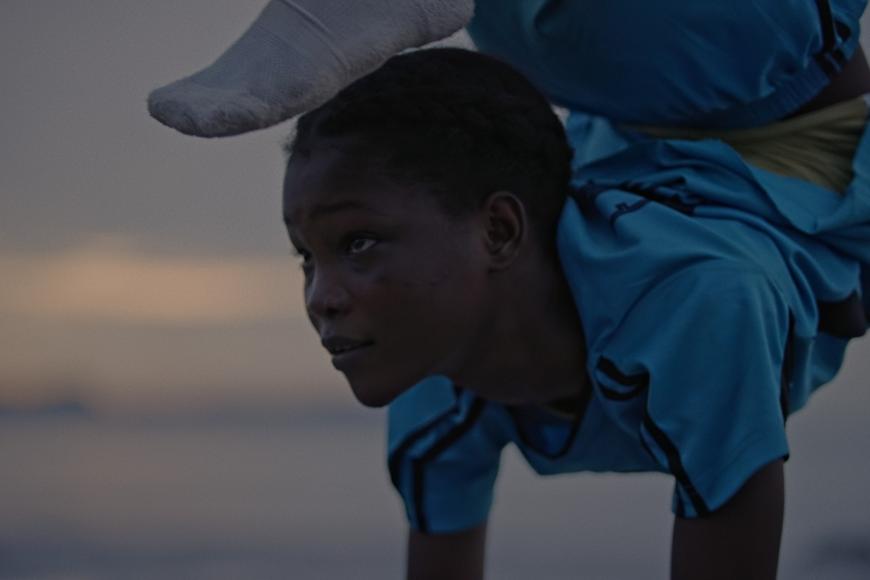
Fanta is 14 years old and lives in Conakry, the capital of Guinea in West Africa. Besides school and her household chores, she spends every free minute training at the acrobatics circus. One day, the return of the country’s big star is announced. Balla Moussa Bangoura, founder of the Amoukanama Circus Company, is returning from an international tour and now plans to rehearse a new show with his troupe. Training gets harder, because only the best will be in it at the end.
Of course, Fanta is determined to give everything to be one of the few girls travelling the country with Balla Moussa Bangoura. Every day, she is torn between caring for her sick mother, housework, schoolwork and what she thinks she loves best. Supported by her family on the one hand, striving to fulfil all expectations on the other, Fanta begins to doubt: What does she really want? Marjolijn Prins delivers the atmospherically dense portrait of an extraordinary girl, connected by rousing musical numbers, spectacular acrobatics and dream-like acting sequences.
Lina Dinkla

Credits DOK Leipzig Logo

Director
Marjolijn Prins
Cinematographer
Johan Legraie
Editor
Ciska Slowack
Producer
Ellen De Waele, Mirna Everhard
Co-Producer
Florent Coulon, Felix Salgado, Ineke Kanters, Lisette Kelders, Anton Iffland Stettner, Eva Kuperman
Score
Johanna Beaussart
Nominated for: Young Eyes Film Award
Winner of: Young Eyes Film Award
Kids DOK 2024

Filante

Marion Jamault
Every night, Paulette observes the same shooting star in the sky. Wishing that she will find her mysteriously missing pet rat, she learns that the shooting star can actually help her.
Filmstill Filante
Filmstill Filante

Filante

Filante
Marion Jamault
Kids DOK 2024
Animated Film
France
2024
9 minutes
without dialogue
Subtitles: 
None
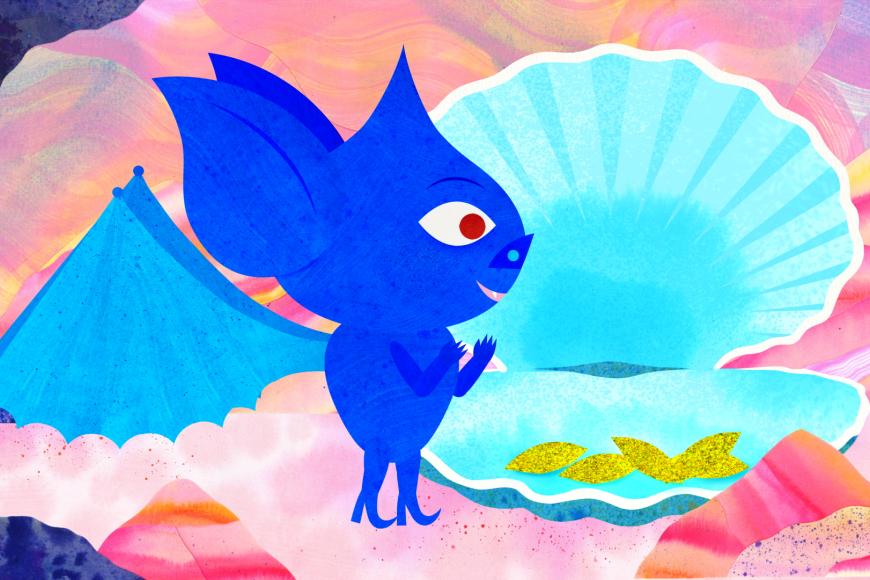
Every night, Paulette stands on the lookout of her lighthouse and observes the same shooting star. Her pet rat has mysteriously disappeared, so she sends her wish for a reunion up to the night sky. The apparent celestial body turns out to be a bat with a fondness for glitter. It helps Pauline in her search. A magical, fantastical fairytale with a happy ending.
Lina Dinkla
Credits DOK Leipzig Logo

Director
Marion Jamault
Script
Marion Jamault
Cinematographer
Marion Jamault
Editor
Marion Jamault
Producer
Lisa Verhaverbeke, Marin Dalmier
Sound
Antoine Martin, Lucien Richardson
Sound Design
Antoine Martin
Score
CHAMAYE
Animation
Susie-Lou Chetcuti, Marion Jamault, Chloë Soudat
World Sales
Annabel Sebag
Media Name: 8118c87d-9881-4d24-a0bb-34038c0389ed.jpg

Flammes

Flammes
Patrick Bokanowski
Animation and Musique concrète 2021
Experimental Film
France
1998
4 minutes
without dialogue
Subtitles: 
None
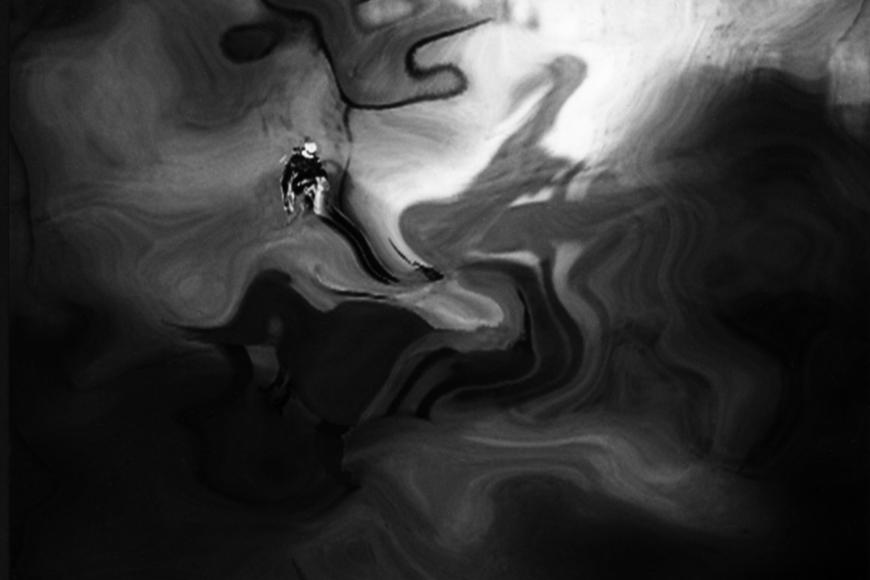
Dark percussive sounds call forth anthropomorphic creatures. They come to life in short dance etudes. Optically manipulated, they stretch into gaunt shapes, unfold in a thousand layers like exotic animals, dissolve into abstract paintings. They are pure creatures of light: fleeting, immaterial. The rhythmic sound motif colours their movements with sometimes pithy, sometimes breathy variations.
André Eckardt

Credits DOK Leipzig Logo

Director
Patrick Bokanowski
Script
Patrick Bokanowski
Cinematographer
Daniel Borenstein
Editor
Eric Castera, Patrick Bokanowski
Producer
Patrick Bokanowski
Score
Michèle Bokanowski