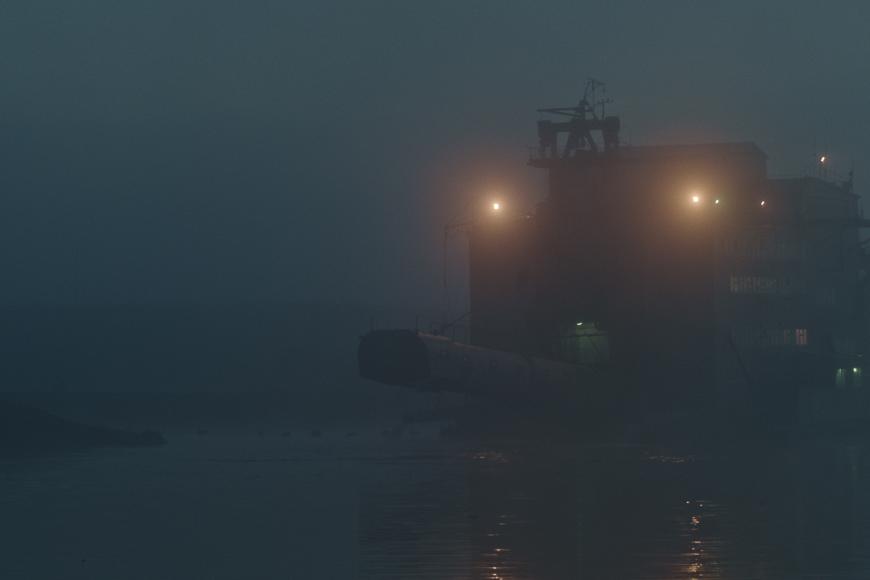
The technological and ideological traces of humans have transformed the earth from dark matter to a dark affair which despite everything brings forth new forms.
Quiet, dark shots of nocturnal fog, of a mine, a dump truck or a wreck, of huge earth craters and new surface contours created by excavation. Raw material extraction, economisation and exploitation of nature are the themes of this visual study. It’s accompanied by an unobtrusive, but threatening and assertive sound that underlines the mystic quality of the images. Post-industrial landscapes become post-apocalyptic.
Five young people from Ukraine talk about their lives after the Maidan Revolution of 2014. Not all of them fought in the Russian-Ukrainian war, but the war, however, shattered their life plans. Representing “Generation Maidan”, they face the question of how to cope with experiences of violence, how to go on. Theatre director Roza Sarkisian produces a Hamlet adaptation with them in which they can use Shakespeare’s tragic character as a mirror and face their traumas on stage again.
For them Hamlet’s question “to be or not to be” is not just a historical text, but a current and existential dilemma that has no clear answer. The film follows the rehearsals where different biographies, self-images and political positions clash: A soldier meets his first LGBT person, the feminist quarrels with the fact that the war has undone hard-won emancipatory achievements. Frictions and differences are exposed, compromises are strenuously negotiated. Eventually the film’s focus widens and leaves the stage to introduce the five as individuals with their own inner struggles. The result is a many-layered, dense portrait of a torn and yet powerful Ukrainian generation who, due to the Russian invasion, find themselves at war again, only a few months after their production premiered.
Luc-Carolin Ziemann
Credits
Director
Elwira Niewiera, Piotr Rosołowski
Cinematographer
Piotr Rosołowski
Editor
Agata Ciernak
Producer
Andreas Banz, Matthias Miegel, Magdalena Kaminska, Agata Szymanska, Robert Thalheim
Sound
Marcin Lenarczyk, Jaroslaw Sadowski, Andrii Nidzelskyi
Sound Design
Jonathan Schorr
Score
John Gürtler, Jan Miserre
World Sales
Katarzyna Wilk
Broadcaster
Eva Witte-Toetzke, Beata Ryczkowska, Alicja Gancarz
After reunification the Israelite Religious Community Leipzig grows – and needs room. But their new residence remains empty for the time being: neighbouring land owners sue.
After reunification, immigration made the Israelite Religious Community of Leipzig grow to considerable size, too big for its old rooms. The Ariowitsch House, built in the 1920s as an Israelite old people’s home, is to become the home of a generously dimensioned cultural and community centre – and at the same time commemorate the residents of the home who were deported to Theresienstadt in 1942. But the start of the development is delayed: neighbouring land owners file a lawsuit. Miriam Pfeiffer intervenes in the ongoing public debate, asking citizens of the city about their suspicions concerning reasons of the refusal that the competent court may not be aware of.
Sylvia Görke
Credits
Director
Miriam Pfeiffer
Cinematographer
Miriam Pfeiffer, Alexandra Czok
Editor
Maurice Hünsni
Producer
Schulmuseum Leipzig
Sound
Anja Hempel, Gert Blumhagen
Score
Chor der Israelitischen Religionsgemeinschaft zu Leipzig
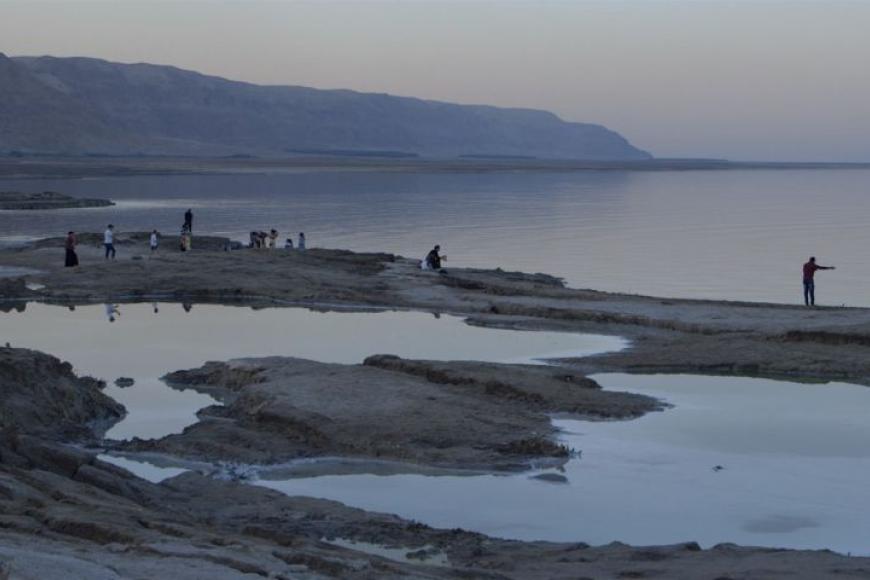
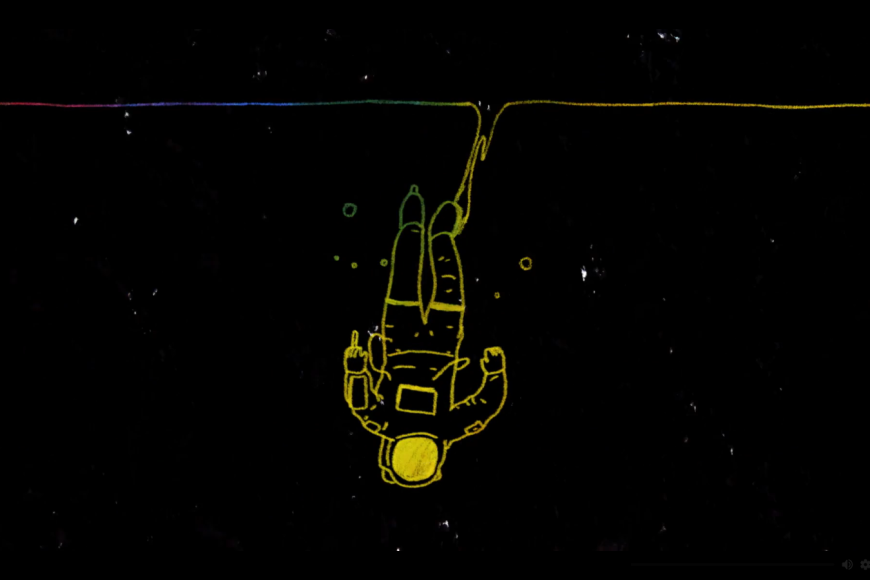
A visually powerful dystopian parable about a society that seems to be paralysed with shock as it faces the imminent destruction of its natural resources.
A cinematic journey to the lowest point on earth, in the course of which the universal story of creation, responsibility and doom unfolds. The film was shot at the shores of the Dead Sea, where God once destroyed Sodom and Gomorra to punish the sins of humanity. The waters of the lake have been receding for decades. What’s left are salty crusts, deserted spas and dangerous sinkholes. The ambiguous but never obtrusive montage interweaves the biblical tale of Lot’s wife, who turned into a pillar of salt, with the disconcerting question of why we, as allegedly rational beings, react to the current crises by going into a state of shock instead of taking action.
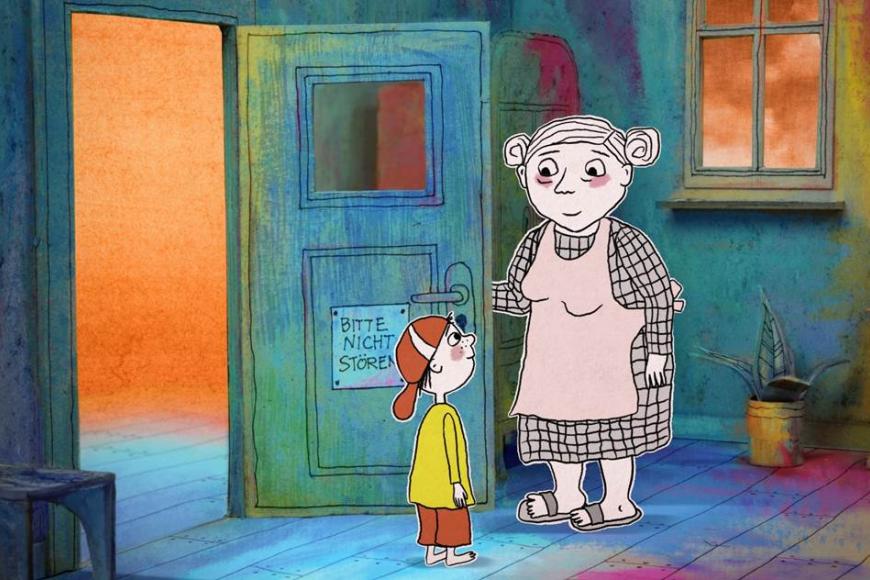
Elise is a timid woman. She’s even afraid of trees. When one day a paper plane sails through her window, she’s so agitated that she hardly sleeps a wink that night. The next morning Emil, a boy in a baseball cap, knocks on her door. He’s looking for his plane and also needs to go to the loo. Suddenly Elise’s life changes in a wonderful way.
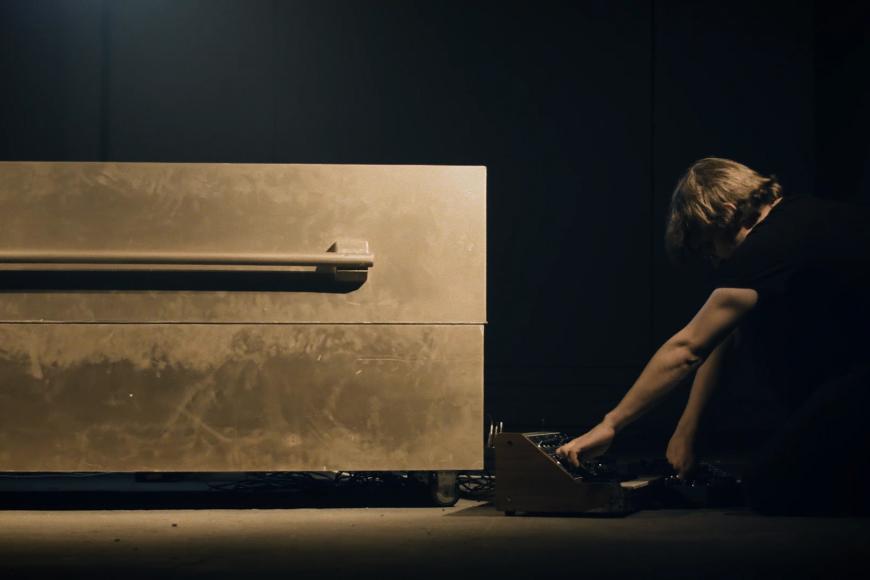
Complete darkness. Our concentration turns to the spherical sounds around us. Basses wander through our body, triggering images, emotions. The sensory overload which usually has us so firmly in its grip is turned off. Sound – improvised and modulated interactively – takes the lead. Stories emerge. And all this exclusively in our own heads.
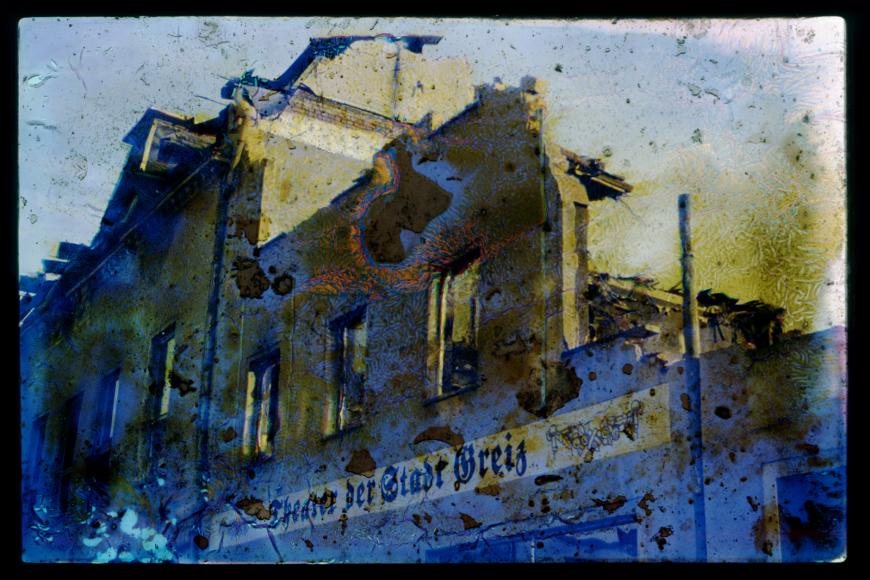
The theatre of the city of Greiz has been closed for years. A cultural home where visions were built with language is dissolving. A farewell echoes through the empty rooms.
The theatre of the city of Greiz was closed for years in 2011. For generations of spectators, worlds and visions were built with language here. Now this cultural home is dissolving. The long-silenced singing of local choirs echoes in the decrepit, empty rooms. Diapositives are slowly corroded by mould and chemicals. A farewell.
A young man seems to get lost between his family home, Berlin darkrooms and a shared flat in Madrid. The clinical psychiatry reports are juxtaposed with heart-wrenching diary entries.
A young man apparently gets lost between his parental home in Lower Saxony, Berlin darkrooms and a flat share in Madrid. The clinical chill of the psychiatry reports is juxtaposed with a heart-wrenching diary text that resists being categorised too quickly. The images, too, speak a different language than the diagnosis: “Disoriented and not responding to his environment,” the initial anamnesis reads. But we see the film sequences trace and re-cast photographic evidence of getting lost, re-connect the narrator persona striving for self-empowerment with his environment. The protocol of a story of illness and treatment expands into an auto-socio-biographical document of self-location by artistic work – on life as lived.
Jan Künemund
Credits
Director
Leonard Volkmer
Cinematographer
Leonard Volkmer
Producer
Leonard Volkmer
Winner of:
Golden Dove Short Film (German Competition)
England, mid-19th century: children keep the flow of air going in narrow, sooty chimney flues. The report of a chimney sweep of the time is brought to life by pencil drawings.
In the mid-19th century, a massive fireplace was the centrepiece of every stately home in England. Children are agile enough to keep the flow of air going in the narrow and dark flues. Their young skin is scraped raw by the sooty stone walls. Their fear of falling is as strong as their fear of the master’s punishment. Black-brown-red cross hatching and unusual camera perspectives bring to life the report of a chimney sweep of the time.
Dominik Graf contributed a reflection on West German post-1945 urban architecture to the anthology film “Germany 09”: improvisations decoratively arranged after 1990.
The project “Germany 09” brought the upper league of German auteur filmmakers together to take stock of the Berlin Republic in individual film contributions. Dominik Graf contributed to this collage of the German image a reflection about post-1945 urban architecture shot on old Super8 stock: provisional, slipshod ensembles of pretty-ugly public buildings, fenced-in urban wasteland, draughty storefronts and uninhabited housing blocks in Munich, Duisburg, Frankfurt am Main, West Berlin, all of them testimonies to an unplanned through traffic for social and migrant milieus. A thorn in the side of the reunited mania for cleaning up, renovating and decorating.
The big bang, tardigrades, humanity as a dying breed: A child researcher on a farm by the Baltic Sea has some astonishing thoughts about these things – and his curiosity about the present is infectious.
It is a stroke of luck when a film manages to simply observe the flow of life and almost casually show us the miracles found in life’s corners. Ann Carolin Renninger approaches people and things with great serenity and a palpable joy of searching for and finding images.
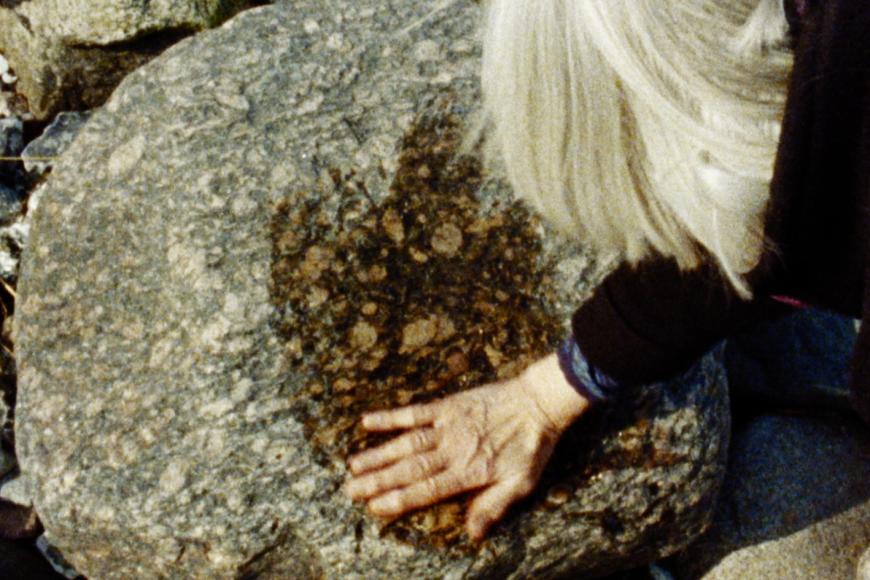
Rovin lives on a remote farm on the Baltic Sea and explores his surroundings with insatiable curiosity. He is interested in the universe, planets, unknown creatures – and in tardigrades, those tiny multicellular organisms that look like dust bags on legs and are real survival artists. Quite unlike humans, as Rovin points out, because the latter are sure to die out one day. He sees this as a logical fact, not a threat. And when you open yourself up to the grainy, earthy images and the calm narrative, you eventually stop wondering, too, why that should be a problem. After all, as long as the wind blows through the trees and scatters the tardigrades, everything is in good order. In addition to the captivatingly alert boy, Renninger meets Marie, who knows everything about rocks, and Christopher, who decorates a place with these rocks. They are all on a quest and every day find a piece of what one cannot hold onto: the present.
Katrin Hauser, Lenia Friedrich, Arjun Patel, Milan Haupt, Dexin Yin, Quingqi Ren, Tianyi Zhang, Diego Herguera, Raquel Gálvez Soto, Toni Planas Portas, César García Villafaina, Inés Gonzáles, Candela Carroceda, Agata Tracevič, Justinas Erminas, Eva Rodz, Žilvinas Baranauskas, Margarita Valionytė
Hommage: Isabel Herguera 2024
Animated Film
Germany,
Switzerland,
China,
India,
Mexico,
Colombia
2020
16 minutes
English,
Hindi,
Chinese,
Italian,
Spanish,
Albanian,
Portuguese (Portugal)
Subtitles:
English
In early 2020, the lockdown has brought the world to a halt. Homes become space stations, hermetically sealed off from the outside world. Nobody goes out, only the thoughts go wandering. Students of seven international universities exchange personal impressions of and reflections on this forced isolation online and get to know each other through this joint project.
Franka Sachse
Credits
Director
Katrin Hauser, Lenia Friedrich, Arjun Patel, Milan Haupt, Dexin Yin, Quingqi Ren, Tianyi Zhang, Diego Herguera, Raquel Gálvez Soto, Toni Planas Portas, César García Villafaina, Inés Gonzáles, Candela Carroceda, Agata Tracevič, Justinas Erminas, Eva Rodz, Žilvinas Baranauskas, Margarita Valionytė
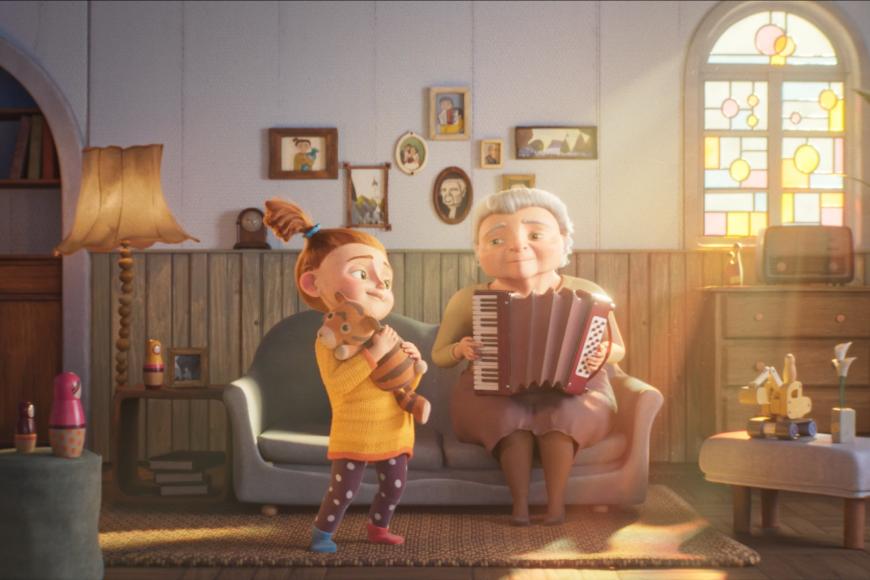
When her boring grandma takes a nap, Greta comes up with the idea of playing funeral. When grandma wakes up, they realise: For good memories, one must create beautiful moments.
Phew, it’s so boring. Nothing is allowed at grandma’s! No touching anything, no painting on anything, always being quiet. But when grandma is taking her nap, Greta comes up with the idea of playing funeral with her. The stuffed animals mourn around the sofa grave, Greta gives a speech in a trembling voice. That’s when grandma wakes up and they both realise: For good memories, one must create beautiful moments together.
Lina Dinkla
Credits
Director
Damaris Zielke
Cinematographer
Michael Throne
Editor
Damaris Zielke
Producer
Jiayan Chen
Sound
Max Hartstang, Marieke Czogalla
Sound Design
Marieke Czogalla
Score
Hannes Binder
Animation
Damaris Zielke, Lukas von Berg, Ferdinand Ehrhardt, Patrik Knittel, Sarah Schulz , Tanja Gruber, Laura Staab
The objects in a film prop warehouse trigger stories in our minds. But what stories are told by African objects and racist figures? Which shelf do you put them in?
A tracking shot along the objects on the shelves of a film prop warehouse will trigger stories in our minds. The orange-coloured telephone takes us to the futuristic 1970s, plastic salmon canapés on artificial lemon slices invite us to a party, cut and thrust weapons herald mortal danger.
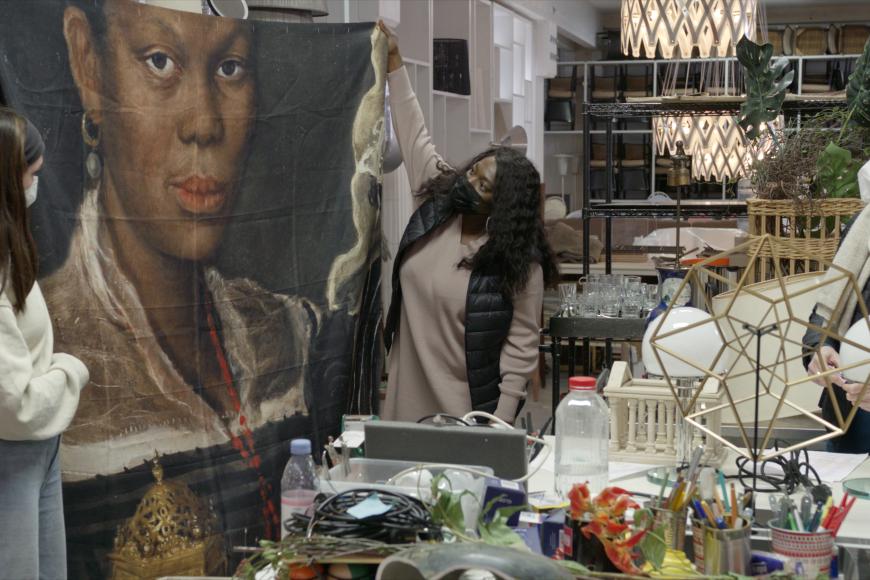
Experts from various prop companies explain their craft of storing and archiving. But under which keyword are folkloristic masks, African or pseudo-African objects to be catalogued? Enter Thelma Buabeng: The German actor and BIPoC activist slips into the documentary-like role of a doctoral student in Postcolonial Studies who does research for her thesis in the Prop Department Studio Babelsberg. From her perspective the objects take on a different context, enter into a dialogue and raise questions of their own. Meanwhile, a staff member is looking for a suitable frame for the Baroque painting “Portrait of an African Woman Holding a Clock” by Annibale Carracci. But can this frame even exist?
Anke Leweke
Credits
Director
Susanne Weirich, Robert Bramkamp
Script
Susanne Weirich, Robert Bramkamp
Cinematographer
Markus Koob
Editor
Janine Dauterich
Producer
Robert Bramkamp, Susanne Weirich
Co-Producer
Doris Hepp, Anne-Kathrin Brinkmann
Sound
Angelo Wemmje, Stefan Bück, David Jahn, Silvio Naumann, Robert Bramkamp
Sound Design
Silvio Naumann
Score
Georg Friedrich Händel
German Distributor
Inka Milke
Commissioning Editor
Doris Hepp
Funder
Medienboard Berlin-Brandenburg GmbH, MOIN Filmförderung Hamburg Schleswig-Holstein
Narrator
Thelma Buabeng
-
Janine Dauterich, Robert Bramkamp, Elena Friedrich, Susanne Weirich
Nominated for:
Goethe-Institut Documentary Film Prize,
VER.DI Prize for Solidarity, Humanity and Fairness
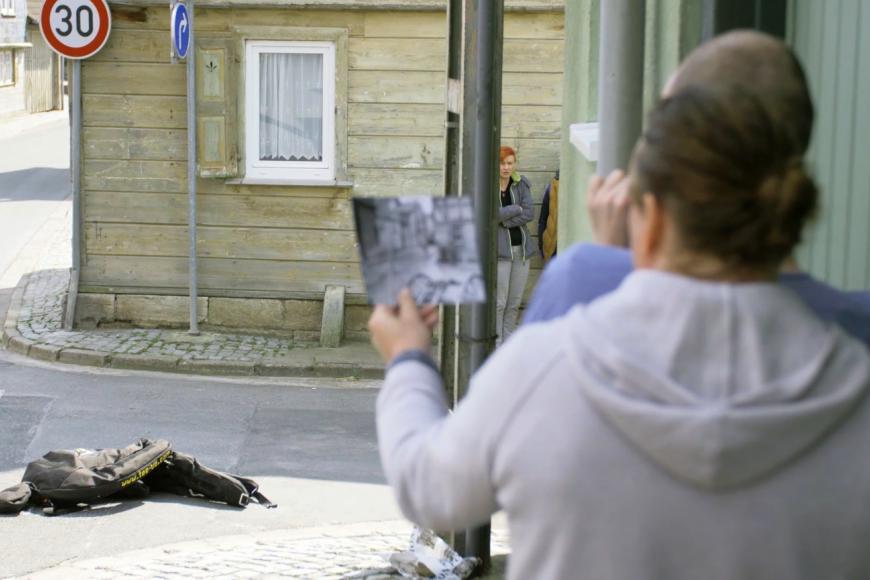
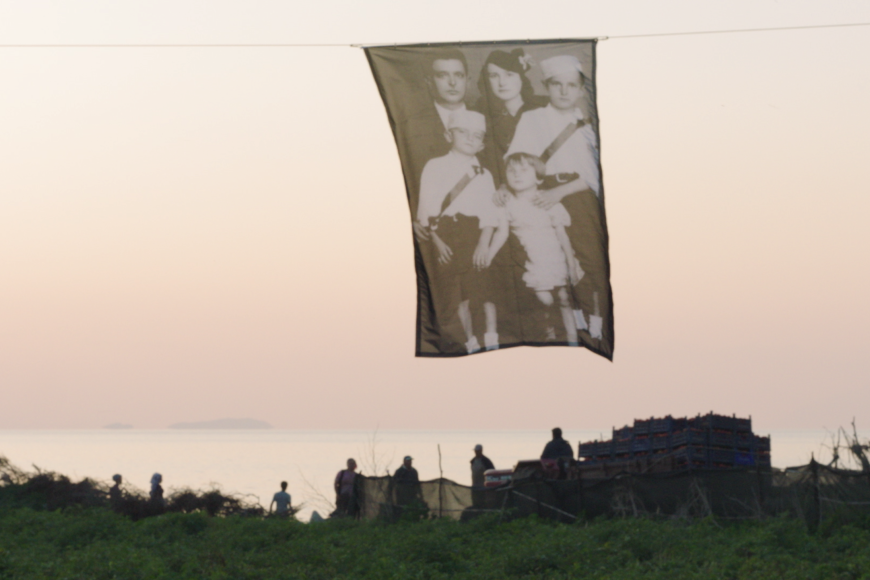
World history meets local history on the street corner of Sperlingsberg in Oberdorla, Thuringia. In 1945, an American soldier was shot here. Decades later, a photo of him is circulating on the internet. Director Christa Pfafferott places this picture at the beginning of her research.
World history meets local history on the street corner of Sperlingsberg in Oberdorla, Thuringia. In 1945, an American soldier was shot here. A photo of him became famous and, decades later, is circulating on the internet. Director Christa Pfafferott places this picture at the beginning of her research.
You feel welcome on Güler Yücel’s terrace. The temperamental artist presents colourful paintings of the life she knows intimately. Yücel lives and paints on the Turkish Datça peninsula. Her paintings are a chronicler’s narrative. They capture the exuberance of a wedding, follow labourers during the olive harvest, show a flock of goats. They also tell of her marriage to Can, a politically persecuted poet now dead.
When Güler Yücel feels too hot, she laughingly hoses herself down. Even her latest works must withstand the water test. We meet an unconventional woman who, though old, explores her surroundings with a beautiful joy of life. Inspired by the conversations and by Yücel’s works, the camera goes on a journey of discovery, resting on other women who confidently look and talk into its lens, like the goat herd about her time in the city, where she felt other-directed. Now she has found herself. Later, at a wedding party, the young bride proudly strides towards her future. Güler Yücel, too, has lived her life and known love. One of her paintings shows Can and her sitting naked in the sun. She remembers her husband, the political battles they fought together.
Anke Leweke
Credits
Director
Helke Misselwitz
Script
Helke Misselwitz
Cinematographer
Ferhat Yunus Topraklar, Yunus Roy Imer, Thomas Plenert