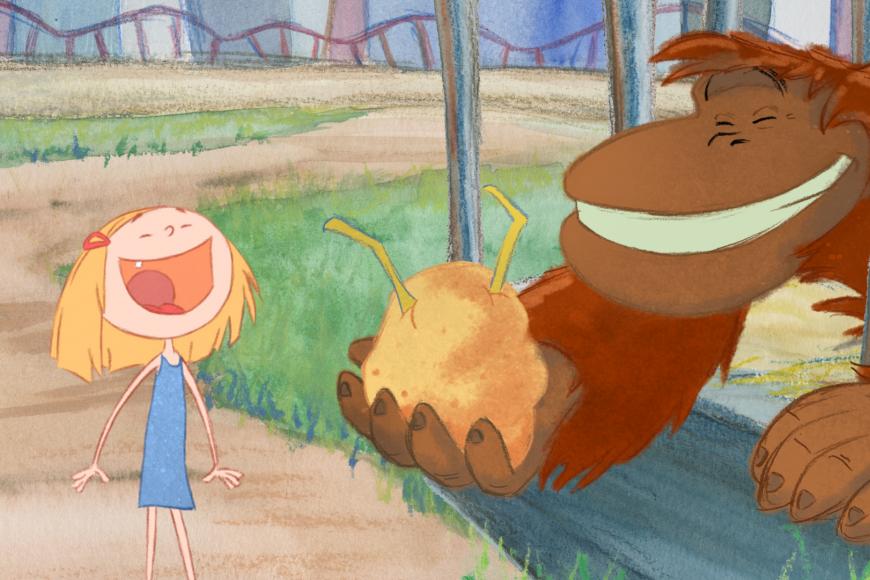
A day at the zoo. An orangutan and a girl have fun fooling around. Until the father’s business dealings trigger a chain of events that changes everything.
A day at the zoo, the orangutan sits in his cage and dreams of his life in the jungle when a girl comes by and brightens his dull afternoon. Her father doesn’t notice anything because he is on his mobile and laptop all the time to do important business. So important that the orangutan has to intervene, and a chain of event changes everything.
Lina Dinkla
Credits
Director
Ulf Grenzer
Script
Ulf Grenzer, Franka Sachse
Editor
Ulf Grenzer
Producer
Ulf Grenzer, Filmuniversität Babelsberg KONRAD WOLF
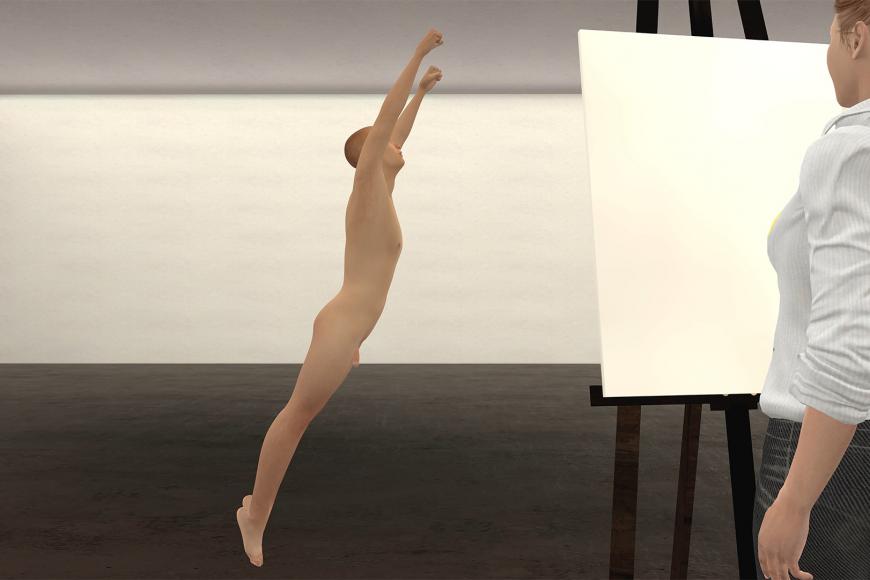
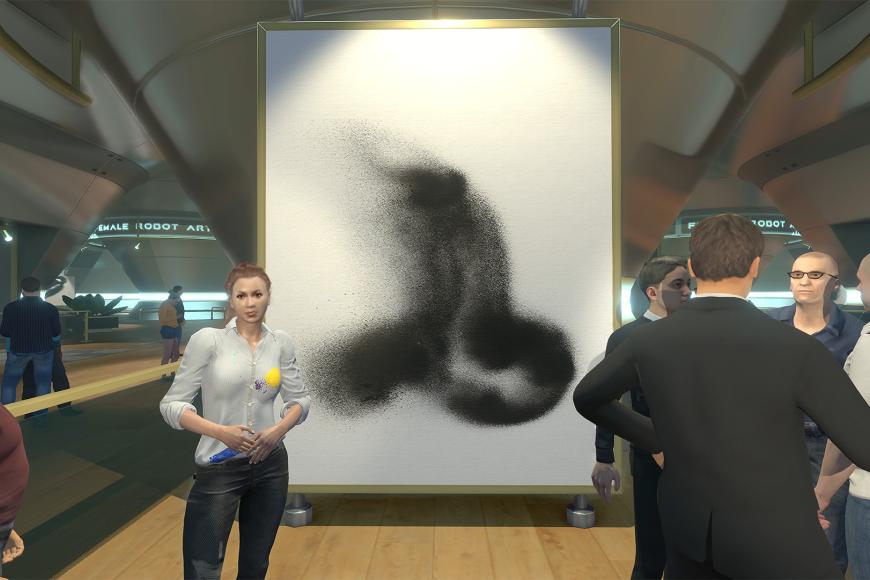
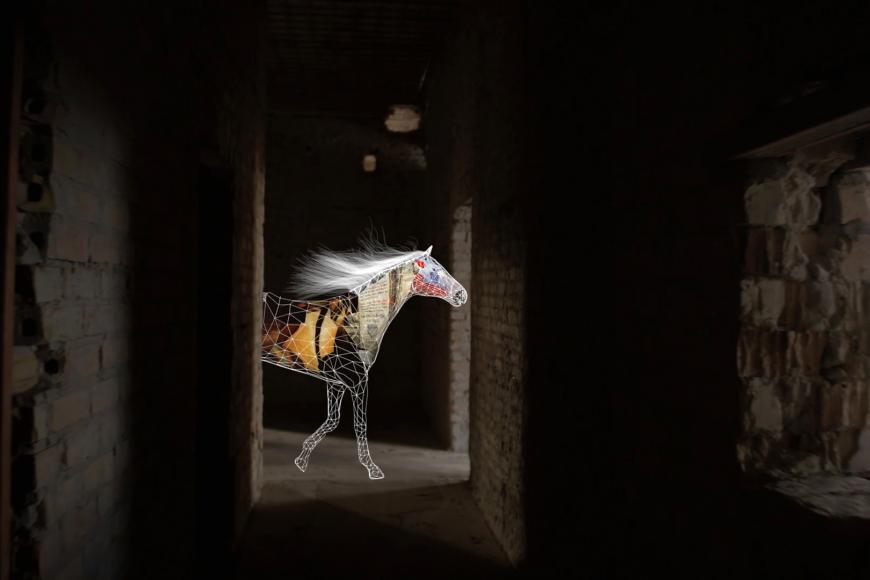
AIVA is an artist, animated by algorithms. But above all she is the soberingly limited male tech vision of what more diversity in the arts could look like.
AIVA is an artist, animated by algorithms. But above all she is the soberingly limited male tech vision of what more diversity in the arts could look like. In her paintings AIVA prefers the vertical, to some acclaim. A naive and cliché-ridden “art documentary” lets us participate in her work. Precisely observed, with sparse gestures and trenchant wit, Veneta Androva reflects a current status quo in her computer-animated future fiction.
AIVA is an artist animated by algorithms. But first and foremost, she is the chillingly limited male tech vision of what more diversity in the arts could look like.
AIVA is an artist animated by algorithms. But first and foremost, she is the tech vision of male IT commitment to more diversity in the arts. Which is why AIVA prefers the “portrait” format in her paintings. An “art documentary” lets us share her creative process and fulfils every stereotype at hand. With unerring wit, Veneta Androva mirrors actual conditions in her computer animated science fiction.
Among the Palms the Bomb, Or: Looking for Reflections in the Toxic Field of Plenty
Lukas Marxt, Vanja Smiljanić
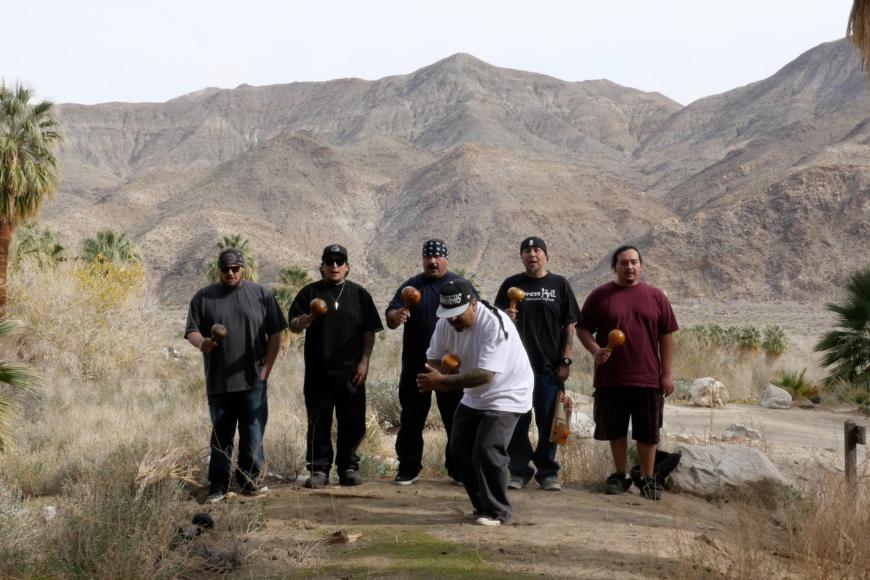
The Salton Sea, a former nuclear testing ground on the brink of ecological collapse. The few people who still live here are campaigning to protect the abandoned area.
Among the Palms the Bomb, Or: Looking for Reflections in the Toxic Field of Plenty
Among the Palms the Bomb, Or: Looking for Reflections in the Toxic Field of Plenty
Lukas Marxt, Vanja Smiljanić
Camera Lucida 2024
Documentary Film
Austria,
Germany
2024
86 minutes
English
Subtitles:
English
Where the sandy beach of the Salton Sea, the biggest lake in California, begins to crunch harder, it does not even consist of sand any more: Millions of dead fish, plants and insects pile up on the shore to form a highly toxic substance. This is how Derek explains it, a member of a Cahuilla tribe that managed to escape an attempted genocide in the 19th century to the Salton Sea and now sees itself as a protective force for the once flourishing but increasingly deserted area and its outcasts. Derek is one of the many locals whose trails Lukas Marxt and Vanja Smiljanić calmly follow, gliding with them through the desolate landscapes. In the process, they pick up slivers of nuclear history time and again: During the Second World War, the area was a test site for the bombs that were dropped on Hiroshima and Nagasaki. The experiments continued through the Cold War; the armed forces are still training here. The film finds its starting point and end two states away: The nuclear devices were sent on their way from Wendover, Utah. The local Airfield Museum pays tribute to their development. Once, the camera performs an almost weightless dance around a model of the Hiroshima bomb “Little Boy” on display there, to the sounds of the indestructible World War classic “We’ll Meet Again.”
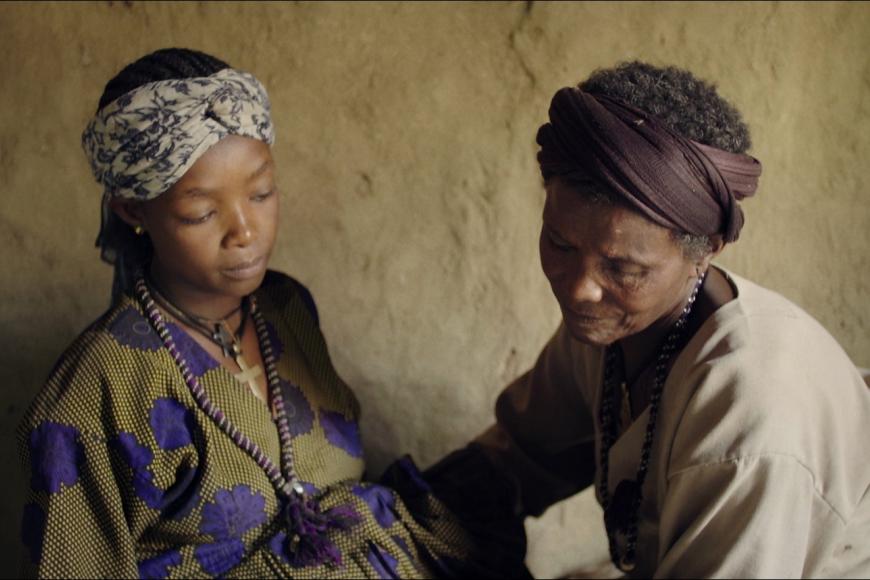
Home birth or clinic? In the field of tension between traditional and modern midwifery, the conflicts of women in Ethiopia’s changing society come to light.
In rural Ethiopia the staff of a health centre are fighting maternal mortality. They tirelessly appeal to women to give birth in the clinic. But reservations are strong, and so are the practical obstacles. How are heavily pregnant women supposed to arrive in time when the ambulance comes hours later or not at all? Against medical advice, Hulu Ager decides to give birth at home, assisted by a traditional midwife.
With palpable familiarity, the film crew captures moments of intimate communion between Hulu Ager, the midwives and other women. On the margins of the central conflict, the many challenges they face in a patriarchal society emerge. The debates are most lively under the hood dryer at the hairdresser’s: She doesn’t enjoy sex because of her circumcision, the medical professional Welela reports. “Sometimes you have to prepare yourself for sex,” another customer advises. Sometimes it helps to get drunk. But the perky hairdresser is sure: Bad sex is grounds for divorce. The women share their desires and woes with each other, experience solidarity and gather courage for small and great acts of departure and resistance. Men are relegated to the role of extras, if at all.
Sarina Lacaf
Credits
Director
Sarah Noa Bozenhardt, Daniel Abate Tilahun
Script
Sarah Noa Bozenhardt
Cinematographer
Bernarda Cornejo Pinto
Editor
Andrea Munoz
Producer
Sonja Kilbertus
Co-Producer
Hiwot Admasu, Beza Hailu Lemma
Sound
Alex Praet
Score
Anna-Marlene Bicking
Winner of:
Honourable Mendtion (International Competition)
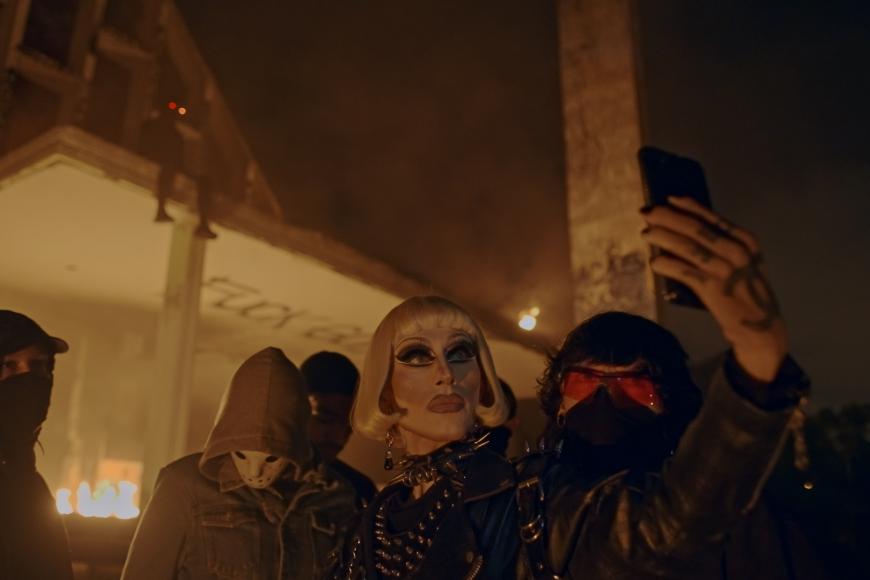
The portrait of a young, queer generation in a Colombia marked by violence and repression, told as a real-life ghost story in atmospheric and morbid images.
Theo Montoya draws on casting outtakes, melancholy observations of daily life and decadent party impressions from his friends to create a morbid and yet tender portrait of a young, queer generation in Colombia. In a country marked by violence and repression they can hardly imagine their future, but maintain a close, almost loving relationship with death.
This was meant to be a fiction film: a ghost story in which the dead no longer find cemetery space and consequently coexist with the living, including having sexual relationships – which the state rigorously forbids and persecutes. A clandestine nocturnal subculture emerges where erotic desires for which daylight means annihilation can be acted out. A week after Montoya found his leading actor for the project, the latter died of a heroin overdose. More deaths among his friends follow. They are the ghosts haunting the film that was ultimately made. It retains its dystopian character, but the dangers it portrays are quite real: For these young people, they are part of everyday life in Medellín, which is still deep in the shadow of Pablo Escobar and where the search for pleasure and human warmth takes one through labyrinthine abysses.
Carolin Weidner
Credits
Director
Theo Montoya
Script
Theo Montoya
Cinematographer
Theo Montoya
Editor
Matthieu Taponier, Delia Oniga, Theo Montoya
Producer
Theo Montoya, Juan Pablo Castrillón, Bianca Oana, David Hurst
Co-Producer
Balthasar Busmann, Maximilian Haslberger
Sound
Eloisa Arcila Fernandez, Estephany Cano
Sound Design
Marius Leftărache, Victor Miu
Score
Vlad Feneșan, Marius Leftărache
Winner of:
Golden Dove (International Competition)
A media-historical interrogation of the German fascination with the colonialist construct of “Red Indians” which leads right up to its instrumentalization by the “New Right”.
Partly rhetorical, partly ironic and partly profound, the film deals with the Germans’ strange, three-hundred-year-old relationship to their stereotypical ideas of America’s native population. This includes the question of how the audience themselves feel about this ominous object of fascination. The backdrop and starting point of a floating journey through the history of various stereotypes are the ruins of the former U.S. embassy in East Berlin, where an exhibition on the subject took place in 1986.
Motion is the art that binds the changing characters of this AR-project, which are drawn by exhibition visitors. An artwork created by all, always fluctuating.
Art is often in the unseen, and in this AR project art is in the motion. Motion is what brings together the changing characters, drawn by exhibition visitors and updated daily. By bringing anyone and everyone’s artwork to the Museum der bildenden Künste Leipzig, this piece challenges the notion of authorship in the art space. Come draw!
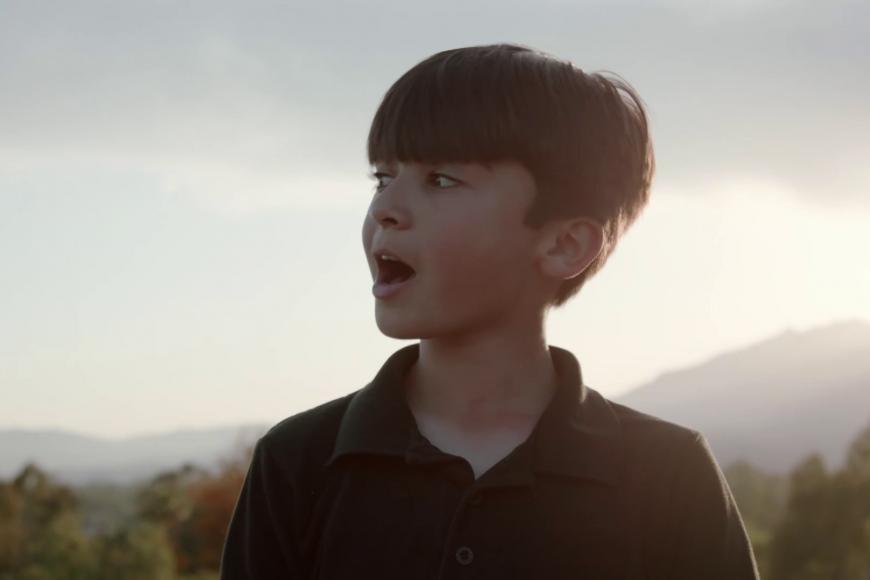
Arshan is ten years old and dreams of becoming an opera singer. When rehearsals for an opera production start in his town, he anxiously goes to the casting.
Classical music is great, says ten-year-old Arshan. He lives with his family on a ranch in California, helps to feed the cows and does household chores. But he uses every spare minute to train his voice. Arshan’s big dream is to become an opera singer. When performers for an opera production are sought in town, he anxiously goes to the casting.
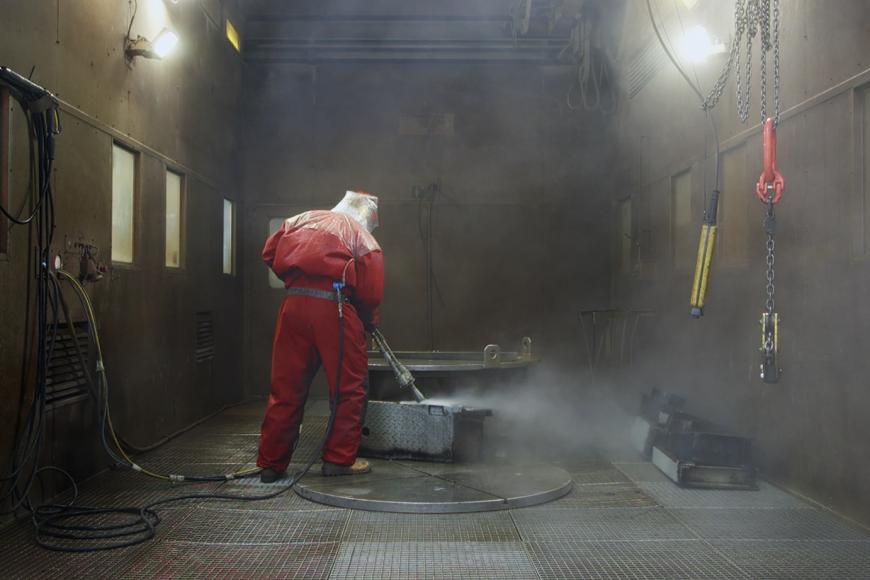
A visually stunning and at the same time sober reckoning of the zero sum game between climate change and nuclear disaster: no dramatisation at all and yet deeply disturbing.
This detailed and sober look at the issue of nuclear power begins where Germany is currently standing: with shutting it off. It’s precisely because the film is anything but alarmist that the alarming aspect of the situation becomes clear. The nuclear nightmare is not over; a safe final nuclear waste repository is not in sight. And yet, boosted by the coal phase-out, many people seem to see “clean” nuclear energy as an option again. The terror of climate change trumps the terror of the nuclear worst case scenario. A zero sum game.
Carsten Rau succeeds masterfully in calmly probing the heated controversy. He talks to people who live with and off nuclear power. Engineer, scientist or innkeeper, he very deliberately frames them all with the same mixture of seriousness and nonchalance. The story is told without dramatisation, but with stunningly “beautiful” images that make the fascination with this technology quite comprehensible. When hip French nuclear engineers finally try to join the front line of climate protesters, we realise how false the talk of an “unavoidable option” is and always has been. The portrait of a society emerges that walked into a blind alley with open eyes and is slowly coming to realise that with every step it takes it is moving further away from the exit.
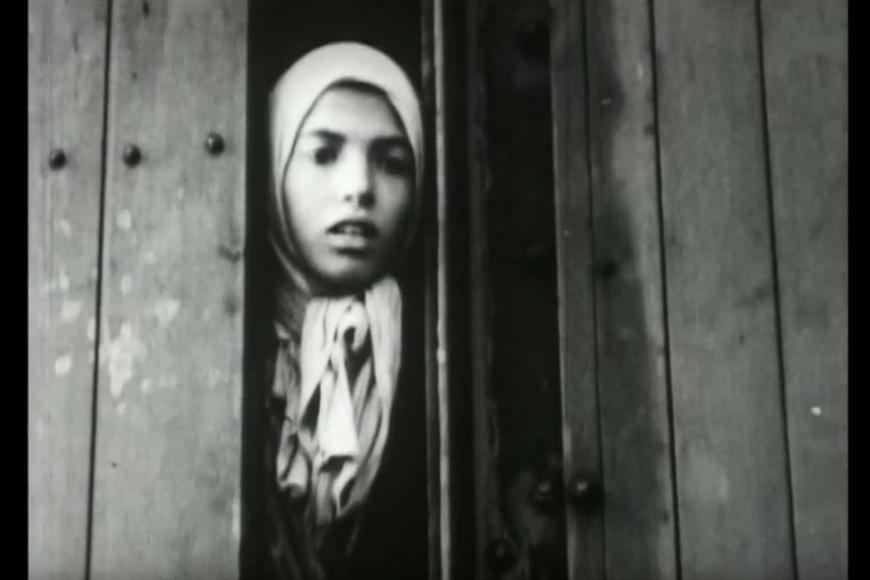
Material from the Nazi Jewish transit camp Westerbork. Every road from here lead to death, including for the cameraman. Farocki analyzes the silent sequences: surgery on the narrative.
Anyone interned in the Nazi Jewish transit and collection camp Westerbork in the occupied Netherlands faced death: The trains left to Auschwitz from here, to Sobibór. In 1944, the camp commander ordered the prisoner and cameraman Rudolf Breslauer, who was murdered shortly afterwards, to film the camp, presumably as visual evidence of his own “work performance”. Harun Farocki, West German doyen of essayistic image criticism, used the surviving silent material to compose an equally silent sequence analysis commented only in title cards. It is surgery on the hidden narrative, not open heart surgery.
Punta, a moustachioed Maltese, weaves a traditional fish trap. As always, waves crash on the rocks, but the times when you could earn a living by fishing here are long gone.
The camera calmly explores the holes and fissures of a cliff face, the traces of the ocean. The austere landscape seems to have fallen out of time. Only a few decades ago, fishermen threw their trap baskets into the water from here. Today, the sea around Malta has long been fished dry. Punta, a moustachioed islander, wants to have one more go. A weir is woven from the hairs of a horsetail, a forgotten craft is demonstrated. An intercut Super 8 film documents the diversity of marine life in the past; its grainy images radiate something irretrievable. An octopus curls around a foot, a jellyfish floats through the eternal blue. Punta gazes melancholically at the sea, far beneath him the waves are crashing against the rock as they have always done. And yet the sight is deceptive, because he and we know that no fish will ever stray into his weir. The rough singing of a woman’s voice begins.
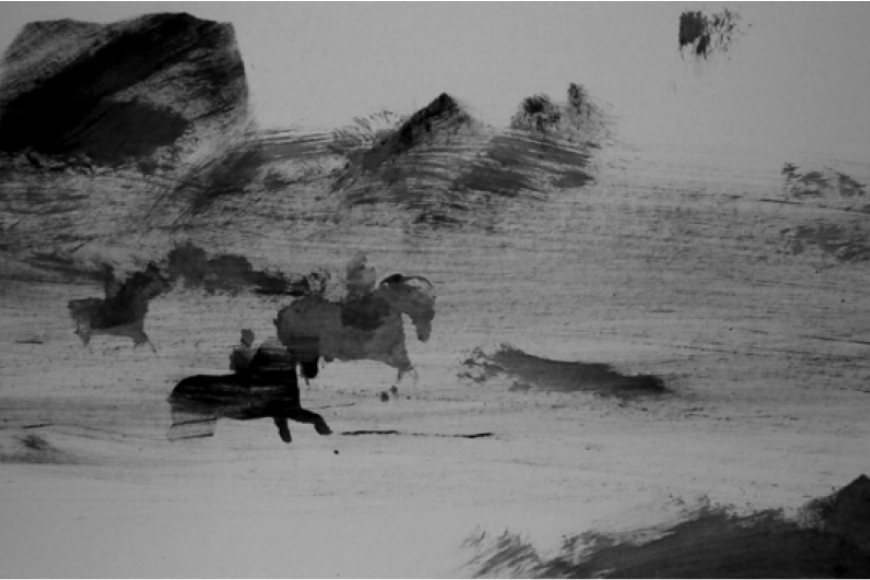
In 1940, two friends who grow up like brothers rescue horses destined for war in Sardinia. Only one of them will survive. An equally dark and poetic animation.
Sardinia, 1940. The harmless term “horsing around” takes on a very serious and ultimately tragic meaning for 14-year-old Michele and his 11-year-old friend Ventura. When they learn that the peasants have sold their best horses for serious money to the state and thus to the military for the approaching war, the two boys take a decision that is as naïve as it is intuitive: They free the herd in a daring nighttime operation. Their happiness is short-lived. Betrayed by a villager, they are caught on the way home and Ventura is shot dead. A senseless death? Or a sign of special bravery, as the ambiguous Sardinian film title suggests? Director Giovanni Columbu, a Sardinian himself, has dedicated his late animation debut to his grandmother who once told him the story. He took the liberty of adapting it with brushstrokes on paper, his style drawing primarily on the charms of historical painting schools, animation techniques and cinema genres. Columbu’s associative visual language, marked by shades of black, white, and grey, is animated by impulsive hatchings, countless dots, and generous elisions. The soundtrack, too, sets rather sparse nuances – subtle illustrations that draw on Sardinian cultural traditions while opening a space for universal metaphors.
Andreas Körner
Credits
Director
Giovanni Columbu
Script
Giovanni Columbu
Editor
Giovanni Columbu
Producer
Giovanni Columbu
Co-Producer
Flavia Oertwig
Score
André Feldhaus, Filippo Ripamonti, Alessandro Olla, Hans Zeller, Pietro Mascagni
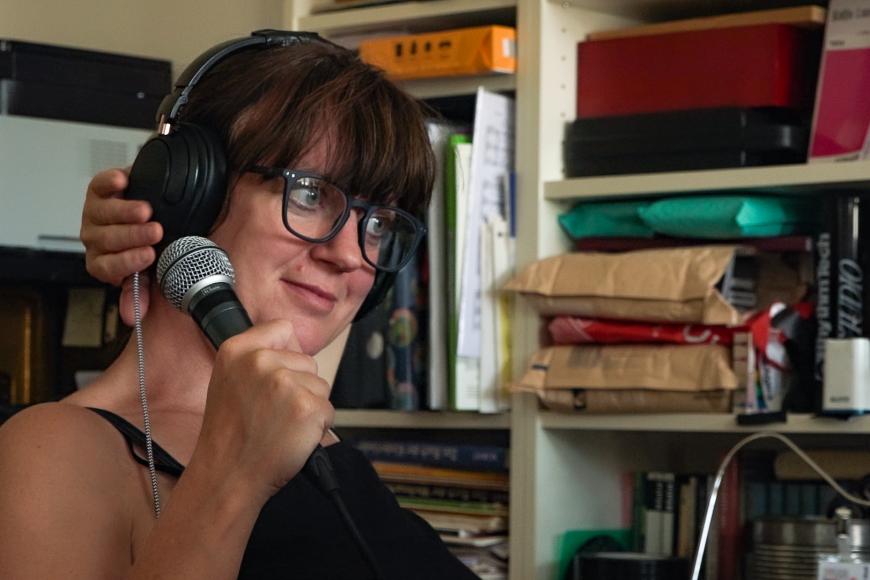
The pioneer of electronic living-room pop works on her new album. Step by step, the intimate experiment goes public. Music becomes a shared safe space.
For the first time in six years, Barbara Morgenstern, pioneer of German-style electronic intimate pop, works on a new album. Her laptop sits on a shoebox, in the privacy of her home she finds first lines and harmonies: “I like to be alone,” one song begins. One by one, musicians join her. Intuitive ideas take shape. A window has opened. Arrangements, rehearsals, recordings follow. Step by step, the music enters public space, images are produced, videos, narratives. Questions arise: New beginning or back to the roots? New Biedermeier or tough political comment? The bigger the band, the riskier the booking. The more crisis-ridden the environment, the more comforting the music-making. Sabine Herpich shows the creation of a pop album as a working process. Her view is as unpretentious as her protagonist, her quiet observation not interested in story and glamour, but in closeness and comprehension. We understand why someone works as an artist, even if it is never explained. Barbara Morgenstern shares what moves her: “Labour of love / for the rest of the earth / I’m more than certain / that this still has worth.”
Jan Künemund
Credits
Director
Sabine Herpich
Script
Sabine Herpich
Cinematographer
Sabine Herpich
Editor
Sabine Herpich
Producer
Tobias Büchner
Sound
Sabine Herpich, Tobias Büchner
Sound Design
Dominik Avenwedde
German Distributor
Jürgen Pohl
Nominated for:
VER.DI Prize for Solidarity, Humanity and Fairness
The spy who came in from Mittenwalde: Berthold Barluschke, employed by both the East and West German secret service, arms dealer, family man and professional impostor in a psychogram about identity and morals.
Identity is a myth. Berthold Barluschke, an ambitious cog in the GDR foreign trade system, has changed names and roles multiple times. Thomas Heise follows him as he moves house. He once went from Mittenwalde to New York, now he is leaving his family in Paris. A polyglot secret agent with a petty bourgeois background. Barluschke worked for the GDR secret service and the West German Federal Intelligence Service, always anxious to get the most out of it for himself. “What should really be talked about?” the filmmaker asks. The impossible endeavour of getting to the professional impostor using the means of documentary film results in one of the freest, most fragmented works in Heise’s oeuvre. Awarded the Silver Dove at DOK Leipzig but rarely screened since.
In 2019, alliances between anarchic and civil resistance groups were formed in Dannenröder Forst in Hesse. Together they defended trees against the police.
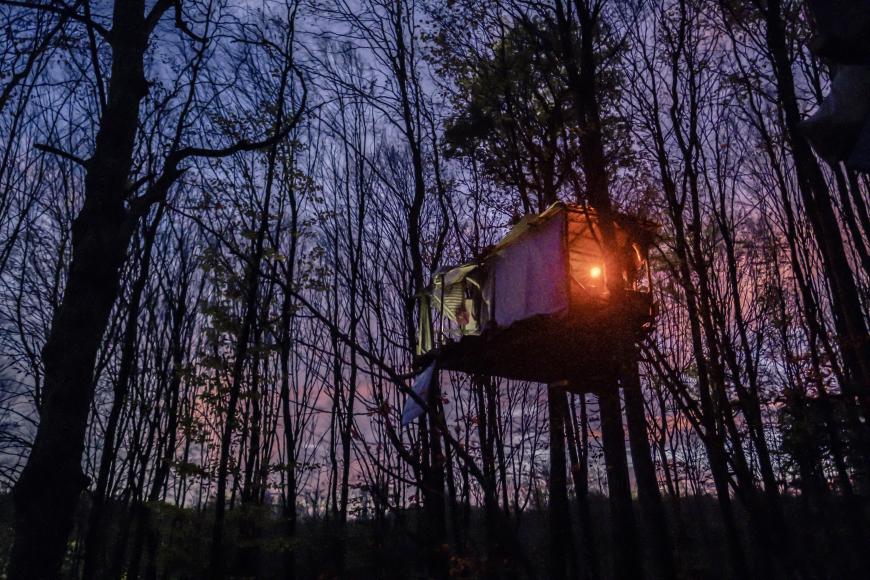
Tree sitting is an important part of climate activism. The “occupation” of Dannenröder Forst in 2019 was meant to prevent its clearance for a highway. The people holding out in the airy heights of their tree houses were dependent on support and supplies from the ground. This help came from locals who would never have dreamed of being part of a resistance movement before. David Klammer’s film shows how brand-new alliances are formed in the face of environmental and climate destruction while realising how powerless words are. These alliances could last – even if the trees, like those in the “Danni”, fall victim to the chainsaws in the end.