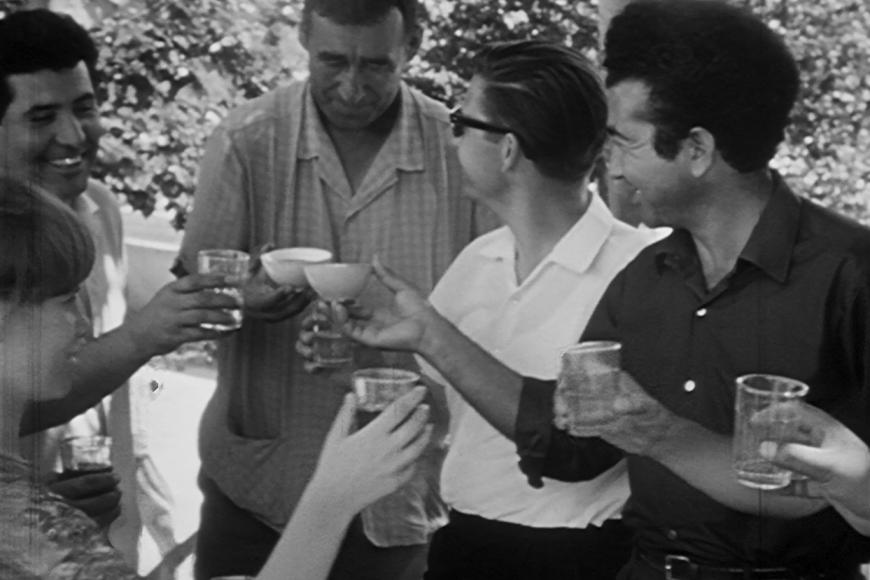
Lenin’s long shadow reaches until 1970: The citizens of the Soviet Union pay their respects to Lenin, the founder of their state – at the mausoleum on Moscow’s Red Square.
A quote by the Soviet futurist Vladimir Mayakovsky about Lenin frames the plot of this film: A dead man who is “more alive than the living” today. On a tour through the Union of Soviet Republics, the film team meet friends “in the full sense of the word” without mentioning their names: encounters with people in the Soviet Union in 1970.
Educational Attainment of West German Pupils in the 1950s
Jürgen Neven du Mont
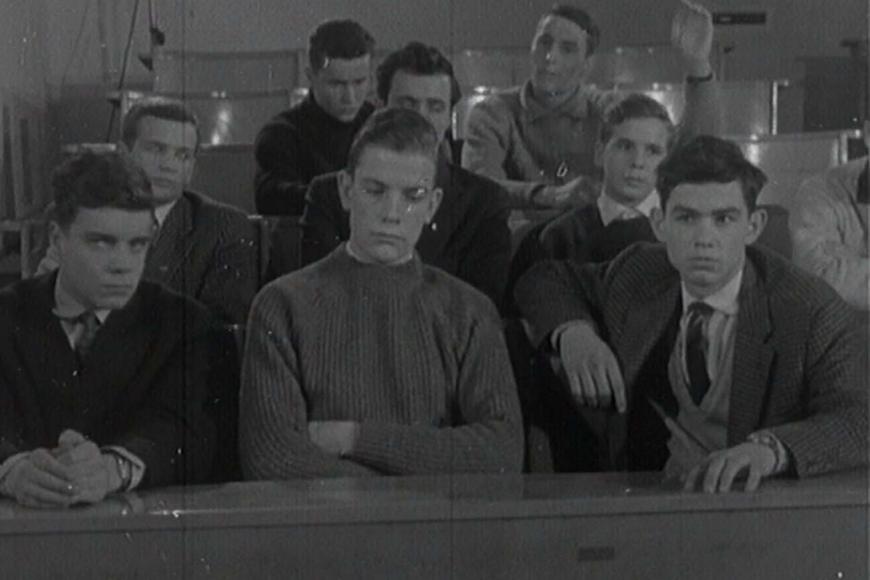
Hitler sold badges to come to power? And really six million murdered Jews? A knowledge test among FRG secondary school pupils where it’s actually the parents that fail.
Educational Attainment of West German Pupils in the 1950s
Bildungsstand westdeutscher Schüler in den 50er Jahren
Jürgen Neven du Mont
Retrospective 2021
Documentary Film
FRG
1959
44 minutes
German
Subtitles:
None
On 29 April 1959, Hessian Broadcasting transmitted an alarming survey of the Federal German school system. The first of three parts of the report “Focus on Our Youth” investigates the question of what has stuck in the minds of higher form students about Hitler’s and Ulbricht’s Germanies. Hesse under Polish administration? Hitler sold badges to come to power? At least they are about right concerning the number of murdered Jews – that is, the third who could think of anything to say about this at all. One television critic rightly pointed out that this represented the sum total of all parental table talk. But were these parents watching television on 29 April 1959?
A reflective approach to observations during the spring 2020 Corona lockdown in London: the virus as a warning sign for the future of investor-friendly urban spaces.
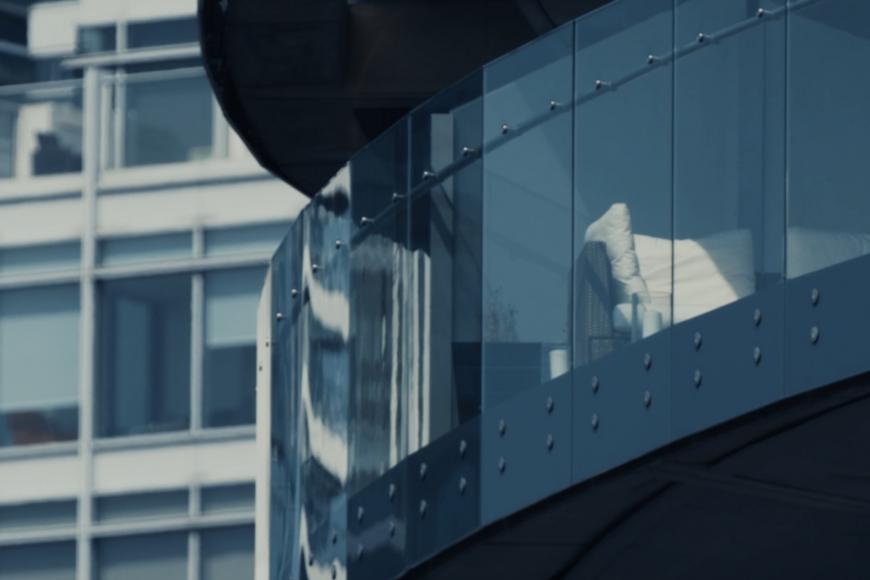
What did the Corona lockdown look like from a window in the residential towers of posh East London in the spring of 2020? The reflective two-week observation shows serious shifts in the everyday coordinate system of a privileged urban population at an immediate level. Meanwhile, the vacant apartments in the district, which were deliberately caused by speculation, represent a warning sign for the future of investor-friendly urban spaces.
A huge, luminous band of morphing layers of colours and strange sounds captivate the eyes and ears. An installation impressively brings geological history to life.
The earth never sleeps. The duo Semiconductor distils research data on earth movements and animates them in a five-channel installation. In a dark hall, visitors to the Sónar Barcelona 2016 festival are captivated by a huge, luminous band of ceaselessly morphing layers of colours and strange sounds, experiencing a cut through both landscape and time.
Creaking, rumbling and trickling, earth movements leave traces of sound. The duo Semiconductor animates research data and conveys geological processes in a fascinating way.
Geologically, layers of earth form over thousands of years. The processes are almost imperceptible to humans. A research project in a Spanish quarry reconstructs earth movements, models them and records them acoustically. Creaking, rumbling and trickling, the layers leave traces of sounds animated in an audiovisual five-channel installation by the duo Semiconductor.
A construction site in the Central African Republic, two career dreams: The double portrait of a native day labourer and a Chinese construction manager becomes a parable of globalisation.
German Subtitles for deaf and hard-of-hearing, English
A man on a river at dawn. He prays, dives into the water, and comes back up with a bucket of sand. The single father Thomas Boa toils away as a sand diver in Bangui, the capital of the Central African Republic. The sand eventually ends up at the construction site of Jianmin Luan, a Chinese construction manager who went to Africa to further his career. Luan pays a price for this opportunity: He lives very simply, plagued by power failures and fears of malaria, typhoid, and civil war. After years abroad, he has become estranged from his family in China; his wife is mentally unwell.
Directors Ningyi Sun and Pascale Appora-Gnekindy tell a story of globalisation, poverty, and labour, asking how life can be lived with dignity. Instead of perpetuating clichés they introduce us to two men (and their families) who are tiny cogs in the gears of a global competition machine. There is a lot of inequality in this system and next to no winners. But there are also moments when it all seems worthwhile: when Luan’s wife visits Africa and intimacy is suddenly rekindled, or when Thomas cultivates a field and is finally able to look ahead. A visually powerful, enthralling and horizon-expanding film that skilfully evades stereotypes.
A refugee camp built in Egypt in 1944 becomes the social model for Tito’s Yugoslavia. Archive material and contemporary witnesses tell a lived social-utopian origin story.
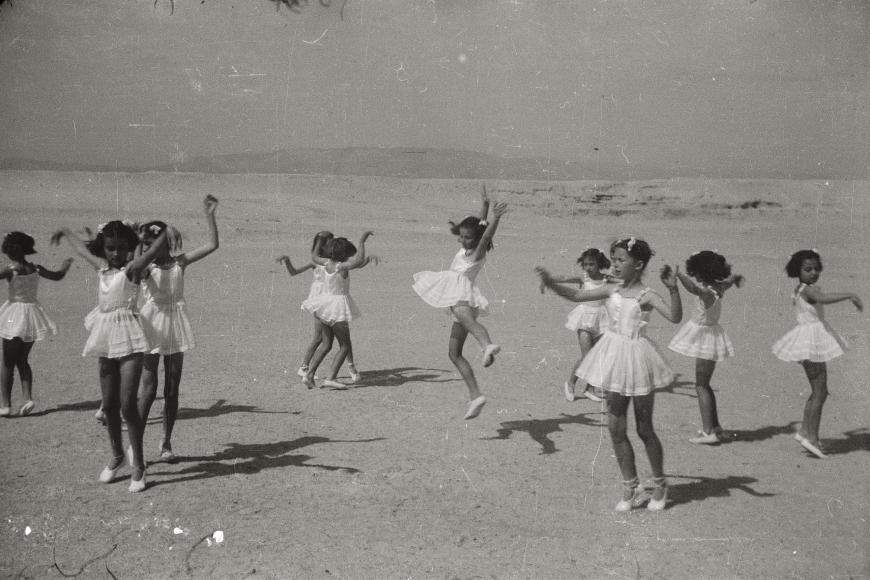
El Shatt in Egypt, in the middle of the desert, was both a haven and a projection. This is where in 1944, based on a deal between the Yugoslavian partisans led by Tito and the British allies, not only a refugee camp for the families of anti-fascist fighters from Dalmatia was built. This is where a model was created for the future Socialist Federal Republic of Yugoslavia – a state that was to build its founding narrative on the people’s liberation fight against fascism and declare collectively organised self-administration its social ideal.
Director Ivan Ramljak offers us multifaceted insights into this long-forgotten piece of primordial communist history spelled out in reality. After painstaking research, he combines hundreds of historical photographs and some (few) film recordings of interviews with contemporary witnesses. The lively voices of those who were children back then and are over 80 today tell their stories offscreen: of the struggle for survival, solidarity and lived ideology, in short, of a daily life that included self-organised schools, workshops, canteen kitchens, even a newspaper. Ramljak, tongue firmly in cheek, takes up the thread of history and juxtaposes his skilfully arranged archive material with staged scenes played by the ensemble of a theatre that was founded in El Shatt at the time.
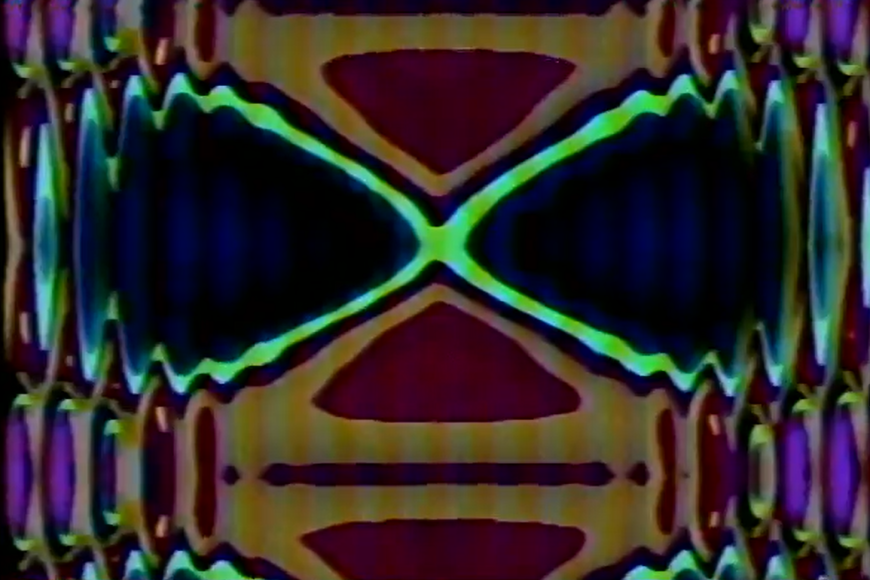
Sykes wrangles the abstract into the familiar, bending the raw colours and shapes of the Sandin Image Processor into a stream of figures that seem to emanate from some ancient subconscious.
Barbara Sykes, a master craftswoman of electronic visuals, manages to wrangle the abstract into the familiar. Bending and warping the raw colours and shapes of the Sandin Image Processor, she creates a series of images that seem to emanate from some ancient subconscious. Mixed together tightly with its percussive soundtrack, the film is a vibrant experiment in visual music.
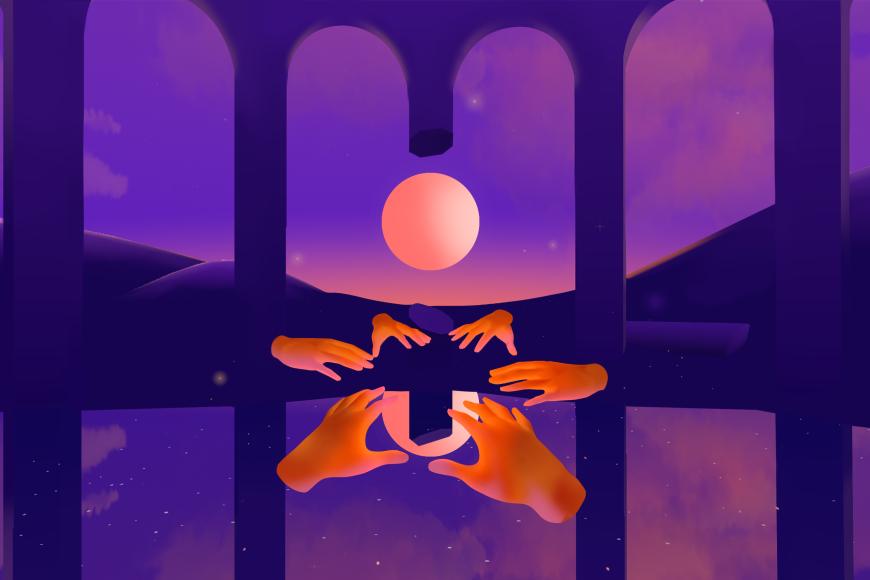
In the midst of a blue-violet tinted mountain range are the remains of a lonely pavilion. Accompanied by the music of Max Cooper, this setting becomes the stage of a dance performance – in which our hands play the leading roles. Intuitively we let the rhythm take them over, move them playfully, form graceful gestures. At this hypnotic place everything is possible for the dancers.
A primary school on the outskirts of Paris. With persistence and dedication, the children are encouraged to be responsible and empathetic. Successful pedagogy at eye level.
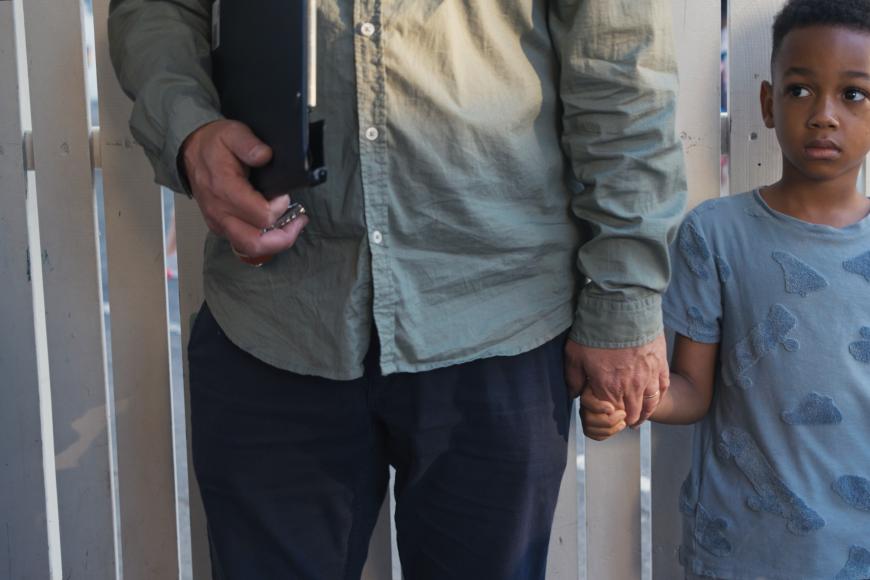
Claire Simon’s filmic observation focuses on the institution of school. But instead of a systematic analysis of the objectives and workings of this place of education, her emphasis is on the daily interactions between children and teachers. How are disputes resolved? How do you teach consideration, forbearance, empathy? The film explores these questions calmly and with an unobtrusive camera, using as example the Anton Makarenko primary school in Ivry-sur-Seine, just outside the south-eastern outskirts of Paris. Parents arrive with their children. The teacher shakes hands with a newcomer – a gesture of encouragement. In class, the instructors seldom raise their voices, authoritarian shouting is out of place here. The staff rely on dialogue instead, which in turn depends on trust and mutual respect. Claire Simon immerses herself in the life of this school and lets the captured moments between children and adults speak for themselves. A sensitive mosaic unfolds: moments of deeply felt learning and teaching bliss, boat trips on the Seine, turmoil in the schoolyard. All these details feed into the vibrant image of a pedagogical mission carried by small and big shoulders.
Em Johrden
Credits
Director
Claire Simon
Cinematographer
Claire Simon
Editor
Luc Forveille
Producer
Michel Klein
Sound
Nathalie Vidal, Pierre Bompy, Jules Jasko, Elias Boughedir
This exceptionally rich cookie contains a load of Canadian Indigenous history, served up as an incredibly funny family chronicle. And it tastes delicious!
“The past is an endless cookie.” The past is omnipresent in this fabulously original family portrait. We feel it in the very first minutes, when filmmaker Seth from Toronto calls his half-brother Pete, who is a member of the Indigenous Cree people: The globe on which the distance between the two is visualised snips away the little sign “Dominion of Canada” to reveal the world Shamattawa underneath – the name of the First Nations community where Pete lives. The past is still present because of the injuries the Cree suffer(ed) from the white majority, including police violence and land grabbing. Nonetheless, humour is the Scrivers’ defining stylistic tool – from subtle jokes to self-irony to the detailed, lovingly surreal look of all the characters which they bestow even on racist police officers. The brothers initially wanted to tell seven stories. At the end there are hundreds – because every sound recording is interrupted by the daily life of an extended family, every anecdote leads to the next. No matter whether the subject is building a teepee, supermarket shopping or butchering animals. This never-ending family chronicle, which also proposes a special chronicle of Canada, was produced over nine years. The result is a distinctive cookie one can chew on for a long time.
Marie Ketzscher
Credits
Director
Seth Scriver, Peter Scriver
Script
Seth Scriver, Peter Scriver
Editor
Sydney Cowper
Producer
Daniel Bekerman, Chris Yurkovich, Alex Ordanis, Jason Ryle, Seth Scriver
Sound Design
Andrew Zukerman
Animation
Seth Scriver
World Sales
Phoebe Liebling
Winner of:
Golden Dove Feature-Length Film (International Competition Animated Film)
The Tunisian censors used “Error 404” to block unwanted websites. The situation changed only after Mohamed Bouazizi burned himself in public on 17 December 2010.
What’s growing in that empty space there? On 17 December 2010, the Tunisian grocer Mohamed Bouazizi burns himself to death in public – the Arab Spring begins, the fire spreads through the Internet. A fast-forward trip through the interior architecture of a modern revolution, right into the dispersed character of the event: from the planet’s surfaces to digital de-spatialization.
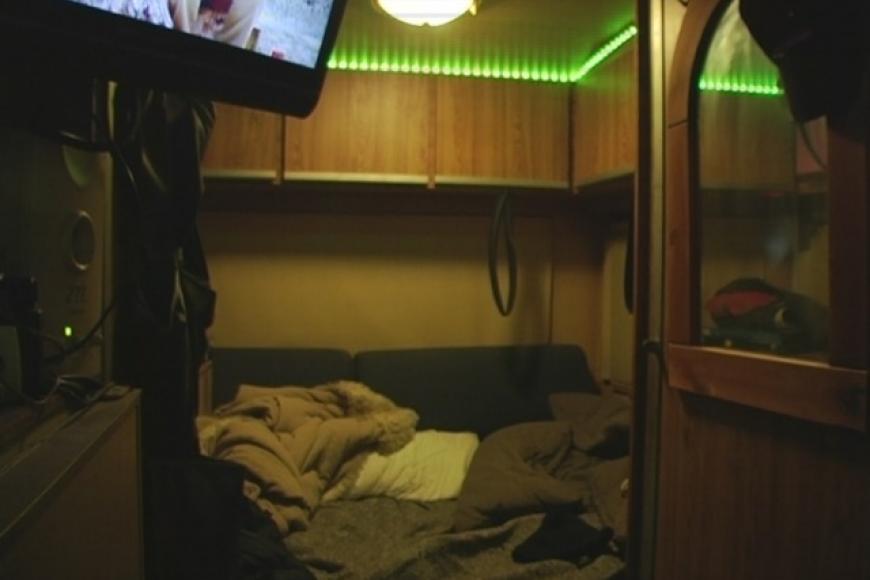
A mobile home in his front garden is Erwin’s refuge. Here he drinks his coffee and writes applications, here he satisfies his desire for men. Jan Soldat comes to visit.
58-year-old Erwin introduces himself as “old but horny”. He has declared the mobile home in his front garden his favourite refuge, where he has everything he needs: a computer, a bed, a coffee machine. Two webcams link Erwin to other men who satisfy his carnal desires. In this tiny space, Jan Soldat comes close to him, of course. He learns of love affairs, as great as extinguished, of a complicated family web and worries about the future.
Carolin Weidner
Credits
Director
Jan Soldat
Cinematographer
Jan Soldat
Editor
Jan Soldat
Producer
Jan Soldat
Winner of:
Silver Dove (German Competition Short Film)
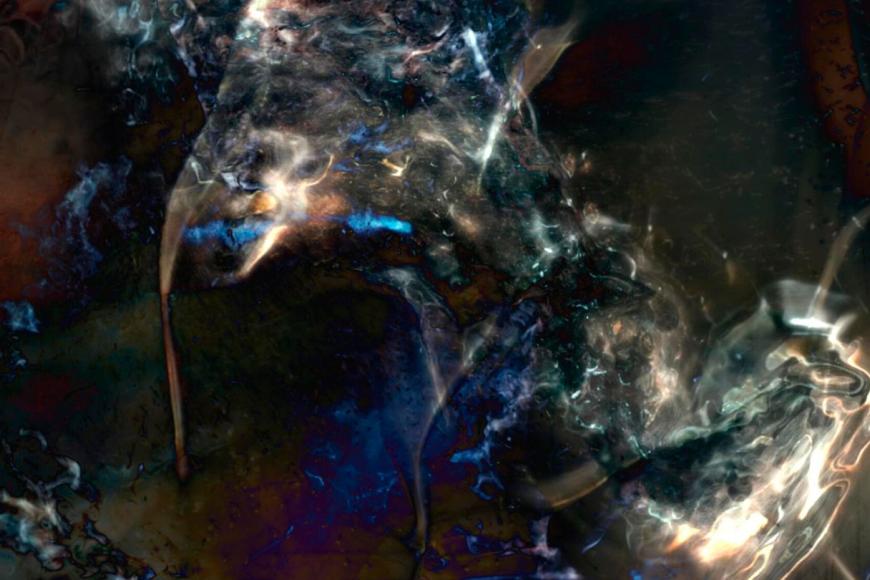
This video artwork is dedicated to the fleeting nature of colours, textures, and shapes. The constantly evolving sound emphasizes the transient character of the images.
An abstract video artwork that explores the fleeting nature of colours, textures and shapes. The images are reminiscent of the rough surface of a damp cave wall on which the light of a distant torch is refracted. Time loses meaning, shadowy crystal structures emerge and fade. An opalescent colour apparition tries to assert itself in this space.
The director argues with her mother about her strict upbringing, which was marked by power and discipline, and questions the educational system in modern Georgia as such.
In her childhood, Maka attended her hated piano lessons in tears. When she asks her mother about it, she is told that this torment is extremely important for discipline. The conversation prompts an examination of whether current pedagogical routine in Georgia has strayed far from such a concept of education. A music school in which brutal emotional and verbal pressure is part of the curriculum; a ballet school where little girls must endure intense pain while stretching; a primary school class where even the most passionate recitation of a patriotic poem about the heroes of the motherland is cause for criticism. We plunge into a somewhat surreal, at times hilariously rigid world, reminiscent of a Palaeolithic dinosaur desperately trying to save itself in the present day. “Steel is tempered by fire,” says the mother. Her words express the burden of responsibility for her beloved daughter and convey many warm, previously unspoken feelings. “But I am a human being first,” Maka replies. The loving daughter insists that the idea of humanity based on authoritarian power structures must be overcome, because it is still reproduced in the most private relationships, including those between parents and children.
Maimed, (ill-)defined fragments of images. Prayer-like musical sounds. Broken letters. A vision of the self – or a self-restoration from the debris of memory.
Thoughts, sometimes just numbers, reach us from offscreen almost like music, like a mantra or a prayer. What we see are circular fragments from familiar spaces: a mirror, a magnifying glass. A day like any other day: without medication, or perhaps better with? A film like the investigation of an uncertainty principle: do we really see better with a magnifying glass? A face scratched out of the family album: the gap is draped with flowers and cut-out pictures of clothes and finally filled again by a drawing.
Borjana Gaković
Credits
Director
Alberto Dexeus
Cinematographer
Alberto Dexeus
Editor
Alberto Dexeus
Producer
Bernat Manzano, Miguel Ángel Blanca, Montse Pujol Solà