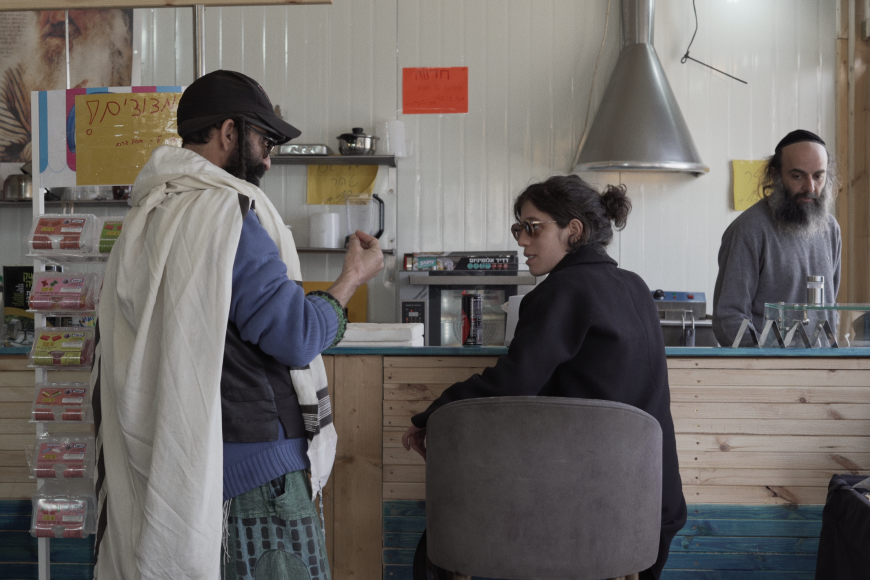
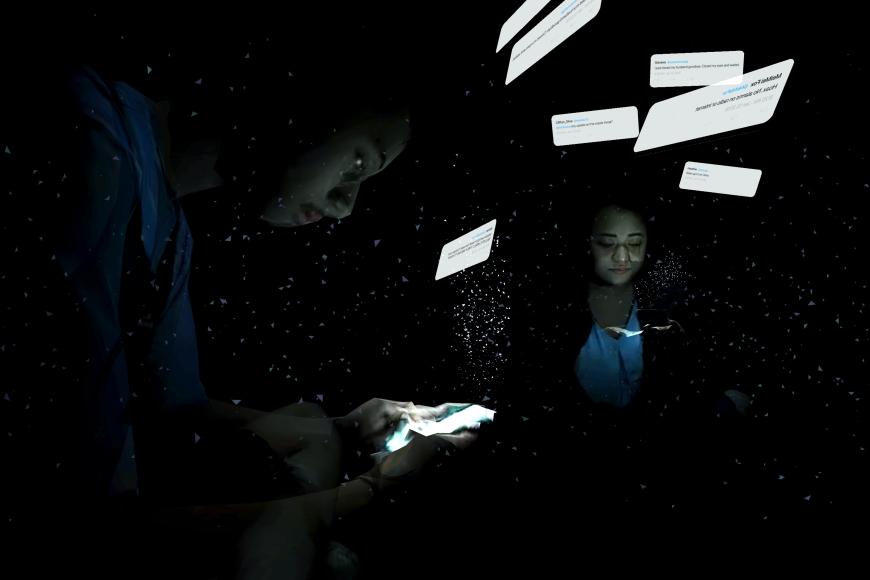
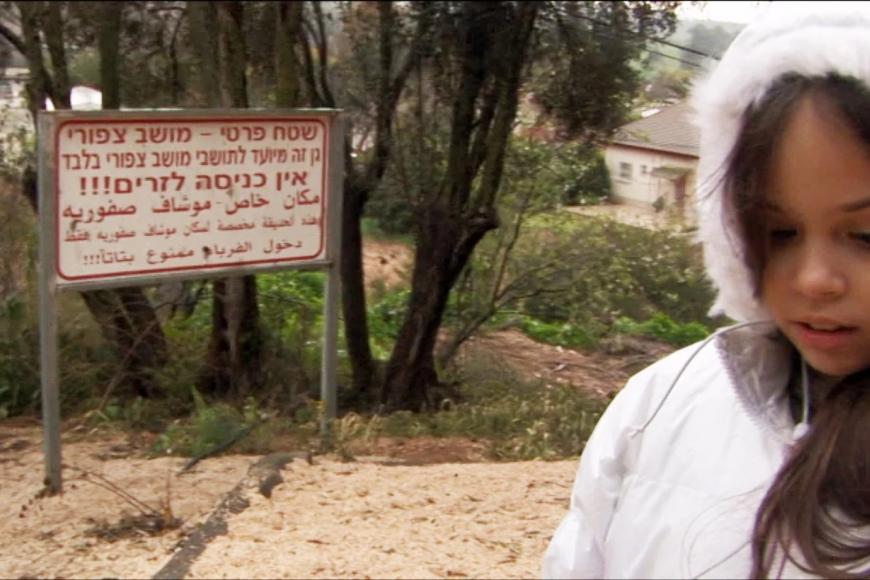
Maya Steinberg is a secular Israeli. Her father, however, had a late religious awakening. He will not appear in her film. Instead, the young director approaches his faith and her lack of understanding for it through a visit to the gravesite of rabbi Shimon bar Yochai in Galilee, where she spends a few weeks, observing believers, Orthodox and ultra-Orthodox, and wondering: Is there a place here for women? And can there be a place for queer women?
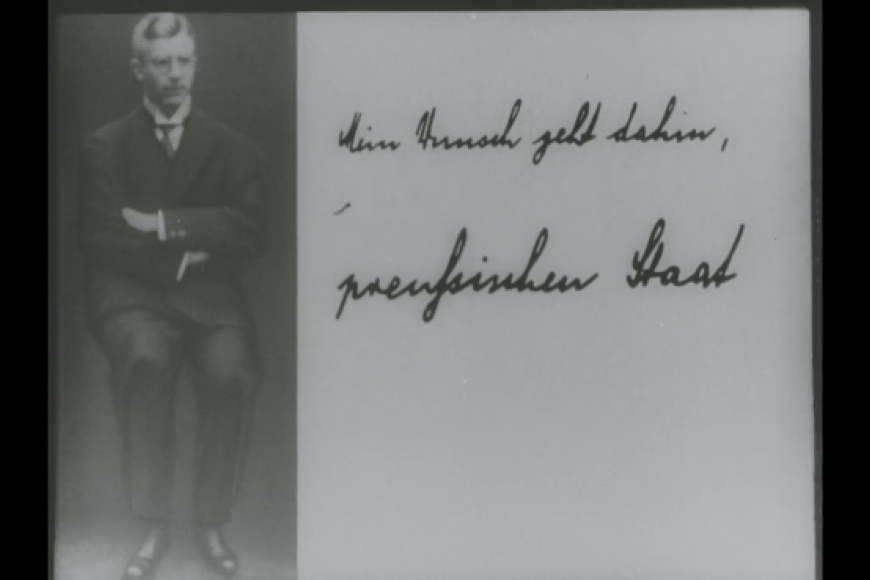
A polemical biographical research of Adenauer’s Chief of Staff of the Chancellery Globke: Nazi administrative lawyer, Eichmann confidant, accomplice to the racist declassification of Jews.
Heynowski’s biographical research in the guise of an exposé film was part of a campaign coordinated by SED functionary Albert Norden to unmask the FRG as a fascist state. Documents and commentaries trace the career of Adenauer’s Chief of Staff of the Chancellery, Hans Globke, who had collaborated in the systematic marking and racist declassification of Jews as a Nazi administrative lawyer and Eichmann confidant. The facts had been on the table for some time, but acquired new propaganda value in view of the impending Eichmann trial. In 1961, “Operation J” was awarded a main prize at the International Leipzig Documentary and Short Film Week.
One Wednesday in June – 20 Years Ago: People’s Uprising, Workers’ Revolt or Secret Services Putsch?
Lutz Lehmann
Workers’ revolt or popular uprising? Or an attempted Western coup after all? 20 years after 17 June 1953, a television report looks for answers. The interpretations remain open.
One Wednesday in June – 20 Years Ago: People’s Uprising, Workers’ Revolt or Secret Services Putsch?
Ein Mittwoch im Juni – Vor 20 Jahren: Volksaufstand, Arbeiterrevolte oder Agentenputsch?
Lutz Lehmann
Retrospective 2023
Documentary Film
FRG
1973
60 minutes
German
Subtitles:
None
What happened in the GDR on 17 June 1953? Using a lot of original footage, Norddeutscher Rundfunk looks back on the events in a detailed report marking their 20th anniversary and shows different interpretations and explanations. Agent coup? Workers’ revolt? Popular uprising? The interpretations were controversial, even among contemporary witnesses and Western historians.
Katharina Franck, Andreas Kötzing
Credits
Director
Lutz Lehmann
Cinematographer
Hans Jacob
Editor
Elke Düring
Producer
NDR Norddeutscher Rundfunk / German TV ARD Network
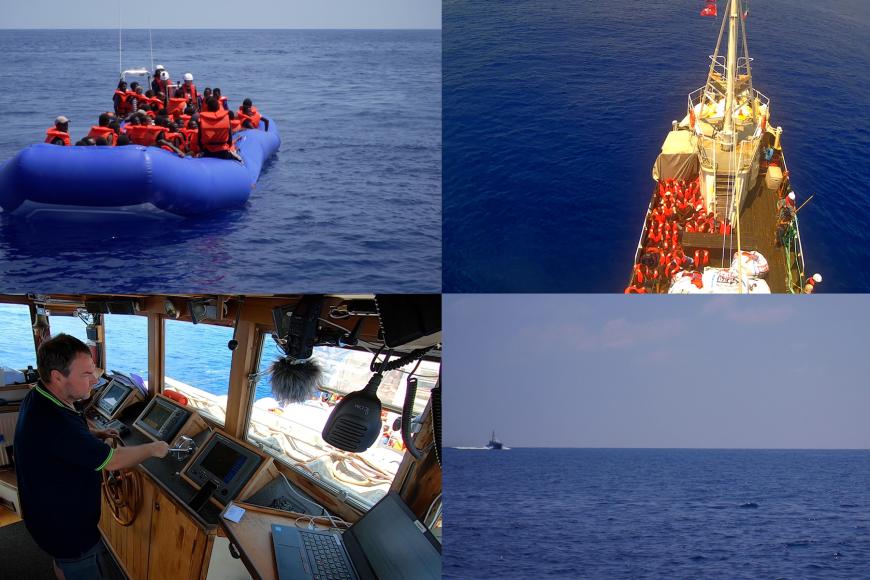
The rescue of 104 castaways in the Mediterranean, person by person, step by step, in a real time documentary. Help against the clock – and the organised ignorance of the authorities.
The deadliest refugee route in the world claims thousands of lives every year. In the first half of 2023 alone, almost 2,000 people died in the Mediterranean because the European Union’s border policy systematically violates existing laws. Instead of helping shipwrecked persons, Frontex practices illegal pushbacks, finances the violent operations of the Libyan coast guard and takes massive action against private sea rescue missions that act where the EU fails. All this has been documented in the media and yet remains incomprehensible to all who were never forced to live through this situation themselves: How can one deny assistance to hundreds of people in peril of life, even threaten and criminalise the civilian helpers?
Jonathan Schörnig was concerned with this dilemma of lack of perception and decided to bring a sea rescue to the screen as a real time documentary to show how agonisingly long it takes to rescue 104 persons from a sinking rubber boat. One by one, step by step, the film follows the action with several parallel cameras. When the Libyan coast guard turn up, the situation comes to a head. The rescued persons and the crew are stuck on the high seas for days because no Mediterranean country gives them permission to dock. It is only after a heavy storm that one port takes pity on them. What sounds like a bad script is actually – daily – reality.
Luc-Carolin Ziemann
Credits
Director
Jonathan Schörnig
Cinematographer
Jonathan Schörnig, Johannes Filous
Editor
Jonathan Schörnig, Moritz Petzold
Producer
Uwe Nitschke
Co-Producer
Adrian Then
Winner of:
Goethe-Institut Documentary Film Prize,
Golden Dove Feature-Length Film (German Competition),
Leipziger Ring,
ver.di Prize for Solidarity, Humanity and Fairness
An equally delicate and lucid observation of life in a kindergarten: the childish joy of storytelling between free development and integration into the social norms.
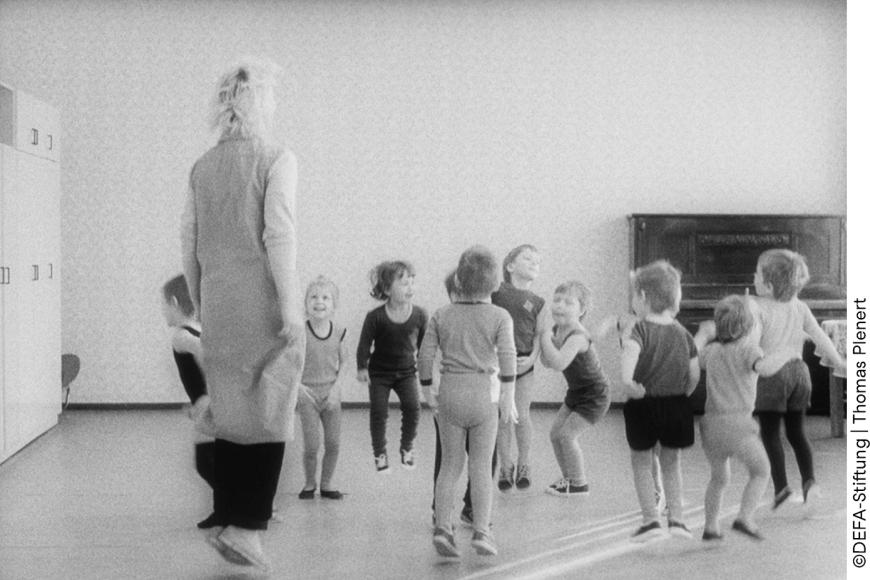
The interviews conducted by Tamara Trampe in a Pankow kindergarten testify to a rare attempt to enter the world of the young interviewees completely, to give their stories a space where reality and fantasy, worries and wishes can mix freely. A space that’s not always provided in the daily life of the kindergarten, as the film casually suggests even after it was toned down by the DEFA censors: toilets without doors, ghastly birthday parties and friendly but unmistakable reprimands when the children let too much dialect slip into the grammar exercise or when their pictures of soldiers are not realistic enough.
The image as an optical soundtrack: Movements become sounds, what you hear is what you see. – A tribute to the European avant-garde of the 20th century.
A contemporary answer to the avant-garde experiments of the 20th century. Once, artists like Oskar Fischinger drew graphic elements on the optical soundtrack of film strips to produce unexpected tones. Max Hattler turns the whole image into an optical soundtrack that directly translates into audio. Abstract movement becomes noise. What you hear is what you see.
Raphaël and Rémi are twins who spend their holidays by the lake. But this is a time of farewell, because Raphaël will soon transfer to a school for children with disabilities.
Raphaël and Rémi are twins and very close. They spend their time in the skate park and their holidays by the lake. There’s always something to do: boating, catching frogs, bathing in the rain. This could go on forever. But we slowly realise that these holidays are also a farewell, because Raphaël will soon transfer to a school for children with disabilities.
A tour of a computer-generated desert landscape and a story of failure: The first casino in Palestine opened in 1998, only to close down again very soon.
A virtual tour of a computer-generated desert landscape and a story of failure: In 1998, the “Oasis”, Palestine’s first casino, opened. The peace-making idea associated with this development project lost out against political reality. Game over – the oasis becomes a multifaceted fata morgana of interviews with employees, operators and guests.
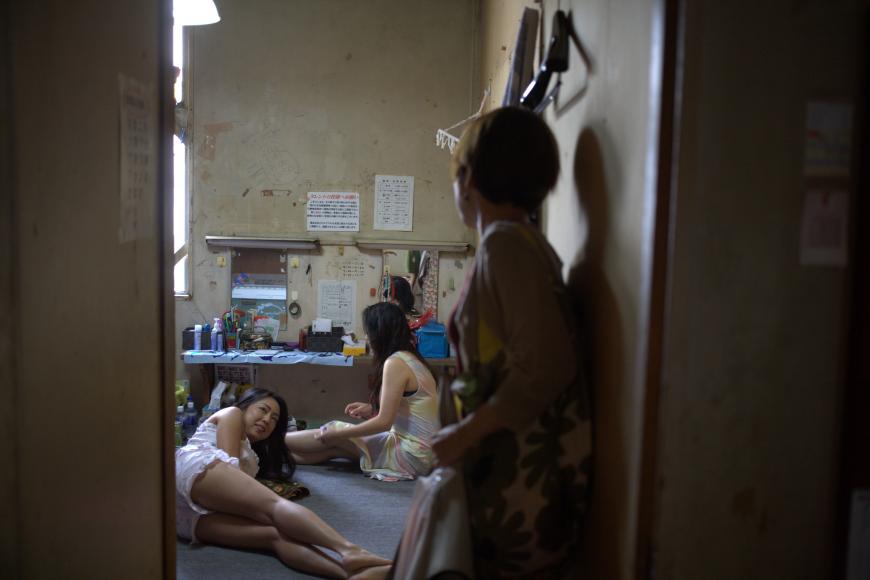
A background study of a dying amusement culture, filmed in slovenly dressing rooms in front of badly polished make-up mirrors. – Director Yoichiro Okutani follows the Odoriko, the Japanese strippers, through their daily routine between dressing and undressing, between pragmatic approaches to life and eroticism made fit for the stage. Okutani’s cut begins naked: A nude woman descends a staircase, filmed not to advantage but with the brutal ordinariness of routine. One production year and five minutes lie between this – Okutani’s – director’s cut and Mary Stephen’s editor’s cut “Nude at Heart”. But how much more?
Sylvia Görke
Credits
Director
Yoichiro Okutani
Script
Yoichiro Okutani
Cinematographer
Yoichiro Okutani
Editor
Yoichiro Okutani, Keiko Okawa
Producer
Asako Fujioka, Eric Nyari, Yoichiro Okutani, Annie Ohayon-Dekel
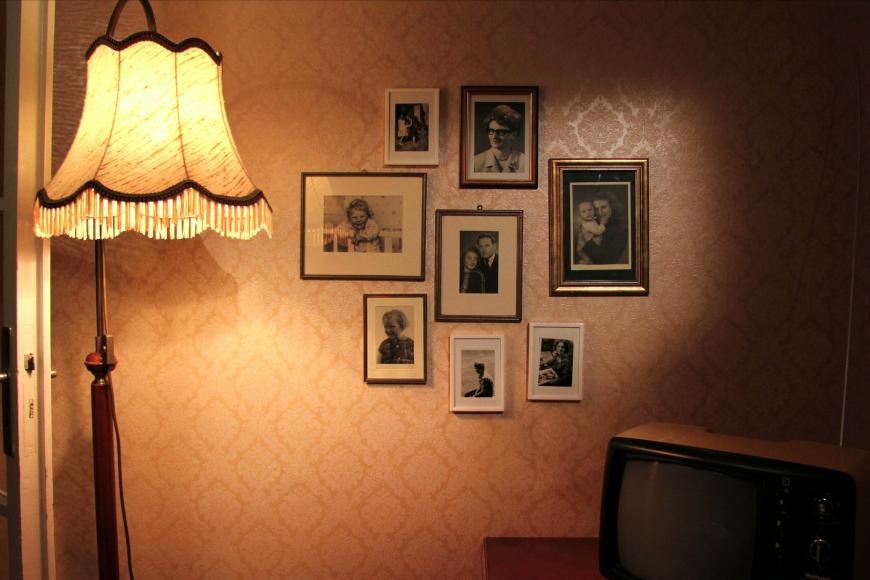
A camera roams incessantly through an apartment and a life without any particular hallmarks. Sound and animated interventions portray family bliss and unhappiness, quarrels and separation, age and death. Radio news open the window a little to what is going on in the world outside. The constantly changing interiors tell of people who were at home here without ever showing them.
A film about the complexity of human relationships and overlapping love stories – narrated in a variety of ways: stop motion technique, cartoon animation and experimental film.
The ghost of a former lover lives under Olivia’s bed. Barbara invents fantastic stories to cope with Mauricio’s rejection. Mauricio sinks into the ground with remorse. Ramón develops a deep affection for a talking houseplant that bears Olivia’s features. This film approaches its thematic core in circles as we are invited to ponder the complexity of human relationships from different perspectives. The twists of glances and emotions of the characters entangled in this round dance are not only reflected in the episodic, cleverly intertwined dramaturgy, but also in the visual design. “Olivia & the Clouds” explores a rich garden of artistic techniques. Figures and places we first encounter as drawings go through transformations and reappear as cardboard collages, watercolours or oil paintings. A multilayered narrative of attraction and revulsion unfolds, revealing new facets of form and content with every change of style. Music light as clouds, brilliant sound design, vibrant colours and not least the occasional digressions towards experimental film enchant us and carry us deep into this surreal story that couldn’t be closer to life.
Franka Sachse
Credits
Director
Tomás Pichardo Espaillat
Script
Tomás Pichardo Espaillat
Producer
Amelia del Mar Hernández, Fernando Santos Díaz
Sound
Homer Mora, Denis Godoy
Sound Design
Homer Mora, Denis Godoy
Score
Cem Misirlioglu
Animation
Tomás Pichardo Espaillat, Nika Zhukova, Vicky Medina, Freddy Guerrero, Martina Zena, Joery Santos Gomez, Randy Morales, Carmela Peña, Gia Zapata, Erik Alfredo Martínez, Samuel Zapata, Ottmar Suero
Johannes Weigelt, pioneer of taphonomy, was a palaeontologist, a dilettante photographer and Nazi. This essay makes his biography, fossilised in images, shimmer.
Competition for the Audience Award Short Film 2022
Documentary Film
Netherlands
2021
9 minutes
English
Subtitles:
English
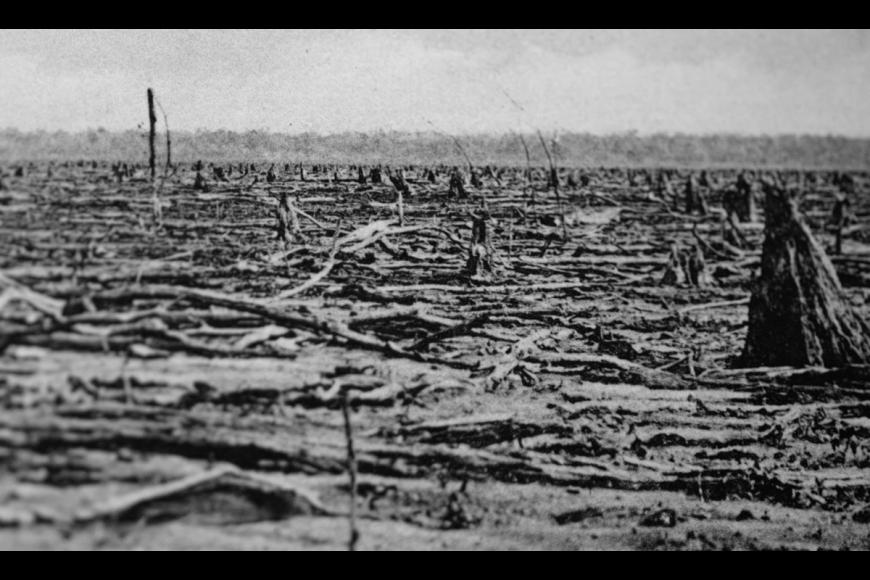
A life dedicated to decay. Johannes Weigelt (1890–1948) was a palaeontologist, a dilettante photographer, a Nazi, all of it fervent. This essay is dedicated to the pioneer of taphonomy – sober and at the same time exciting in form. Three image fields are filled with changing content: black and white documents of fields of animal carcasses, a snapshot with Göring, text panels, artful photomontages. They all charge one another, containing a vibrantly shimmering biography fossilised in images.
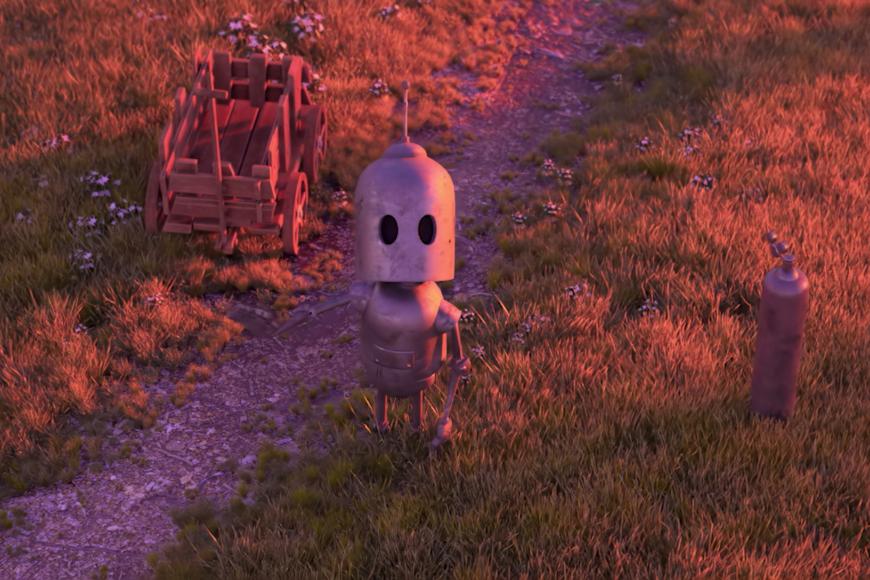
The little robot lives in the forest. One night, a star falls from the sky, to his great joy. Because the star fades more and more, it must be put back. But how?
The little robot lives alone in a house on the hill in the forest. One night, kaboom, a star falls from the sky. The little robot likes the star and decides to keep it. But he realizes that something is now missing from the sky and the star on earth fades more and more. It must be put back! But that’s easier said than done.
Mike Brett, Steve Jamison, Pierre Zandrowicz, Arnaud Colinart
The nuclear threat became real for 1.4 million people on Hawaii. On 13 January 2018, a text message warned them of a missile. The message was false, its consequences momentous.
Mike Brett, Steve Jamison, Pierre Zandrowicz, Arnaud Colinart
Extended Reality 2022
XR
France,
UK,
USA
2022
42 minutes
English,
French,
German,
Korean,
Japanese,
Norwegian
Subtitles:
English
The peace of the superpowers is based on “mutual assured destruction”. States can annihilate each other completely with their arsenals. On 13 January 2018, 1.4 million people on Hawaii got a taste of this: A false missile alert text message brought their lives to a standstill that lasted 38 minutes, panic broke out and the nuclear threat suddenly became real.
Lars Rummel
Credits
Producer
Arnaud Colinart, Jo-Jo Ellison, Mike Brett, Steve Jamison
Executive Producer
Paul Mezier, Susanna Pollack
Production Company
Atlas V, Archer’s Mark
Animation
Alan Sorio
3D Artist
Renaud de Bellefon, Anthony Rubier
VFX Artist
Yasuyuki Otsuki
Script
Dr. Jamaica Heolimeleikalani Osorio
Score
Bobby Krlic
Key Collaborator
Games for Change, Princeton University, British Film Institute, VR for Good, ARTE France, CNC
Director
Mike Brett, Steve Jamison, Pierre Zandrowicz, Arnaud Colinart
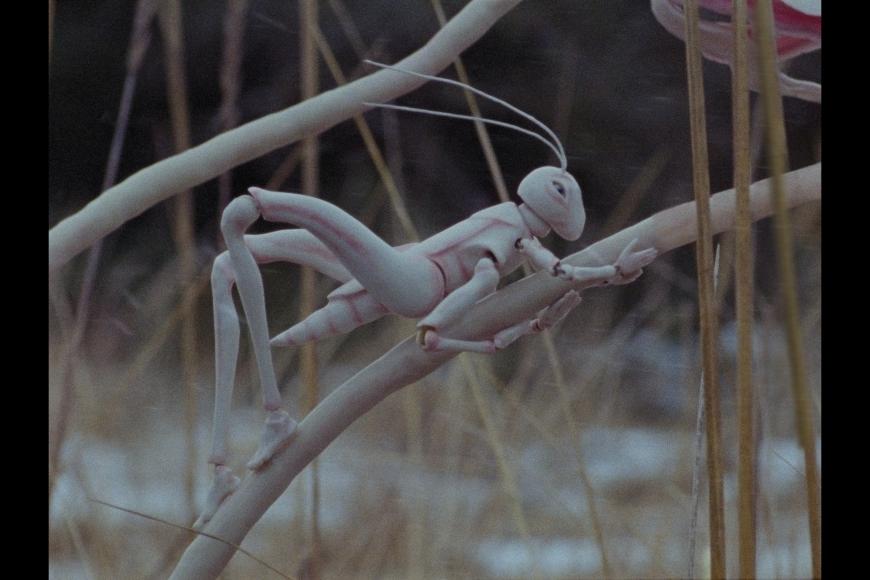
A tiny girl made of delicate porcelain observes the onset of winter, which freezes the natural paradise where she lives and everything in it. Nobody escapes its frosty grip.
A tired sun creeps across the horizon for the last time. A cold wind is already blowing over the lake. The migrant birds depart for warmer climes and leave the Nordic natural paradise. Heavy snow showers cover the land with a white coat. The animals condemned to stay – fragile creatures of delicate porcelain – cling to branches, looking for shelter. None of them will escape the frosty grip of the spreading winter. They are observed by a tiny girl, also made of wafer-thin, translucent white ceramics, who is the only one left in the freezing landscape in the end. Anu-Laura Tuttelberg’s symbolic story is touchingly beautiful and at the same time full of inspiring irritations, because she makes her art run up against the reality of nature. She did not animate her puppets in a warm studio but exposed them to the elements, on location in northern Estonia and an island in the Norwegian Sea. In her film, cruel forces, disturbing fragility and the renewing force of the cold meet – ambivalently and elegantly.
Franka Sachse
Credits
Director
Anu-Laura Tuttelberg
Script
Anu-Laura Tuttelberg
Cinematographer
Anu-Laura Tuttelberg, Francesco Rosso
Editor
Daniel Irabien Peniche, Silvija Vilkaitė
Producer
Marianne Ostrat
Co-Producer
Agnė Adomėnė
Sound Design
Olga Bulygo
Score
Maarja Nuut
Animation
Anu-Laura Tuttelberg
World Sales
Flavio Armone
Nominated for:
mephisto 97.6 Audience Award
Winner of:
Golden Dove Short Film (International Competition Animated Film)
Avi Mograbi met his grandfather in a dream. The setting: Damascus, 1920. Would the two have spoken Arabic or Hebrew at this impossible encounter? It’s amazing that they were able to communicate at all! For Mograbi barely speaks Arabic, and his grandfather only learned Ivrit later. Another impossible conversation begins in his friend Ali Al-Azhari’s flat: between Avi, the Jew, and Ali, the Palestinian. Their lively, affectionate exchange about ancestors, vocabularies and dreams is supposed to prepare for a film that ends up not being made. But since the footage has already been shot, why not use it to tackle a new Israeli-Palestine reality?