An ex-soldier of the Israeli army declares himself complicit in the killing of Palestinians. He faces a filmic cross examination which Avi Mograbi comments on in song.
Under file entry Z32, the testimony of a former elite soldier of the Israeli army is preserved. He confesses to having participated in the killing of Palestinians. Was it a breach of duty resulting from high spirits, collateral damage of the Israeli-Palestinian conflict or the self-fulfilling prophecy of every military training? Avi Mograbi uses the testimony and his own disturbance as an occasion to re-interrogate the confessor who is made anonymous by image manipulation. He calls his cross examination a “documentary musical tragedy”, because he sings his comments right into the experimental interrogation room: “Oy, I’m harbouring a murderer, oy, inside my film.”
“Zaho Zay!”, it’s me. This is the daily salute of the prisoners in a crowded Madagascan prison whose guard looks for her lost father in each new prisoner. Her projections and fantasies let the mystical, murderous father figure roam the island in simultaneously dreamlike and nightmarish sequences, accompanied by a poetic voiceover. A hybrid narrative, speculating about the mysterious paths and profound traumas of its landscapes and all who walk in them.
A pair of dice, a quiet murderer and his victims, traces of history and magic realism. Rituals and riddles, revenge, remorse and imprisonment are unravelled and re-interlaced between the brutal reality of a detention centre, the fantasies of the fictionalised narrator and the vast natural spaces of an island – slowly and poetically. Crises, colonial violence and its continuities are suggested and condensed. The montage of documentary material and staged sequences references western and film noir and develops an intense visual and narrative pull. An almost lyrical text and the precisely framed images bear witness to an impossible quest that’s actually a haunting, referring to individual and collective traumas and the strange forces with which such shocks inscribe themselves into narratives and places.
Djamila Grandits
Credits
Director
Maéva Ranaïvojaona, Georg Tiller
Script
Maéva Ranaïvojaona, Georg Tiller
Cinematographer
Georg Tiller
Editor
Barbara Bossuet
Producer
Georg Tiller, Maéva Ranaïvojaona
Co-Producer
Thomas Lambert
Sound
André Fèvre, Térence Meunier, Herimandresy Randriambololona
A Polish fishing village in deceptive winter silence … This expressively designed everyday mosaic of a village community talks of Anka, Jesus, warmth of heart and coldness of feeling.
German Subtitles for deaf and hard-of-hearing, English
Going under or a lonely island life – there is not exactly a surfeit of options in this Polish village by the sea. The community functions, but social intercourse is rough, alcohol present. Archaic-seeming rituals and social patterns are handed down from the old to the young men. Winter envelops the village in white silence which every now and then betrays its deceptive appearance in small things. At midnight on Christmas Eve the voices of the dead and tortured souls ring out. Anka lives in the middle of this. The young woman takes hits, gets up, struggles through with her love of Jesus.
“Zima” portrays a state of suspension with occasional rollercoaster rides and builds up to tremendous emotional power. Colours are rare in the black and white drawings of the winter landscape and the dark houses, but when they appear, they lend great intensity to the events. Scenes of daily routines and village life are associatively interwoven both on the sound and graphic level. They burst with excess and expressive design, transforming into mystical dream images.
André Eckardt
Credits
Director
Tomek Popakul, Kasumi Ozeki
Script
Tomek Popakul
Cinematographer
Tomek Popakul
Editor
Tomek Popakul
Producer
Marcin Podolec, Wiktoria Podolec
Sound
Michał Fojcik
Sound Design
Michał Fojcik
Animation
Tomek Popakul, Jakub Baniak, Alicja Błaszczyńska, Michał Orzechowski, Olga Kłyszewicz
World Sales
Marta Świętek
Artistic Design
Magdalena Basińska, Magdalena Botor, Agnieszka Czachór, Jagoda Czarnowska, Alicja Grotuz, Karolina Kajetanowicz, Marcin Kotliński, Adrianna Matwiejczuk, Katarzyna Melnyk, Michalina Musialik, Maria Nitek, Marcin Podolec, Weronika Szyma, Marcjanna Urbańska, Pola Włodarczyk, Agata Mianowska-Zamarło, Patrycja Ćmak
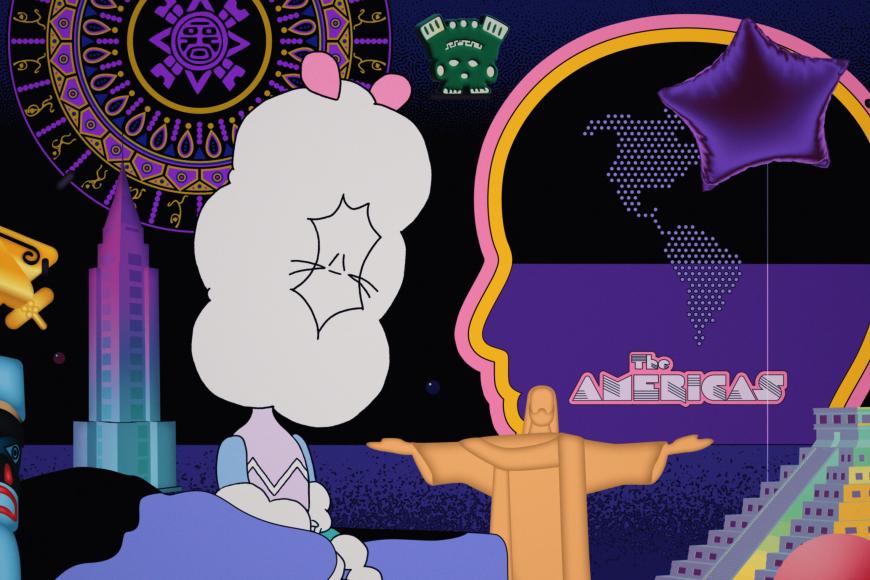
In 2043, humanity launches the spaceship Zoopticon to send a greeting to distant galaxies. An extraterrestrial opera with cheering colours and radiant pop charm in the darkness of space.
In 2043, humanity launches a spaceship called Zoopticon to send a greeting to distant galaxies. Lightyears later, the once proud – loaded with valuable cultural artefacts and lots of hope, after all – ambassador’s spirits sink in the infinite expanse. Loneliness leads to a blundering suicide attempt which jolts the spaceship’s body awake, whereupon the genetic material of five animals from five continents stored in petri dishes unexpectedly comes to life.
Jon Frickey, Sandra Trostel and Thies Mynther brush the science fiction classic “2001” against the grain. Their Zoopticon, a benevolent relative of Stanley Kubrick’s supercomputer HAL 9000, takes a surprising route on its odyssey through space. Their extraordinarily stylish animation starts with a moving monologue of the sensitive protagonist and finds its perfect orbit as a grandiose opera gradually begins to unfold – complete with soulful drama, brightly coloured radiant pop charm and tongue-in-cheek cathartic confidence.
André Eckardt
Credits
Director
Jon Frickey, Thies Mynther, Sandra Trostel
Script
Jon Frickey, Thies Mynther, Sandra Trostel, Christoph Mathieu
Michaela Schwentner looks into the phenomenon of autism spectrum disorder (also called Asperger syndrome) in a refreshingly understanding and perceptive way.
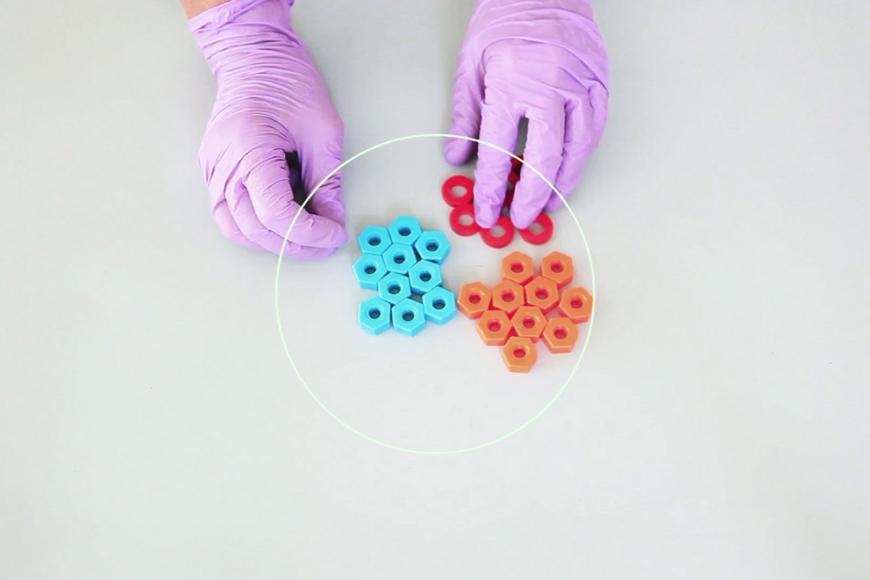
Set theory, one of the cornerstones of mathematics, serves as a metaphor for “social structures as spatial arrangement”, as the first sequence of the film reveals. The visual playfulness first becomes an exploration of two- and three-dimensionality and then turns out to be a well-founded reflection of social power relations. The search for a supposedly correct “order of things” triggers the compulsive element in many viewers. Who’s (not) afraid of being different?
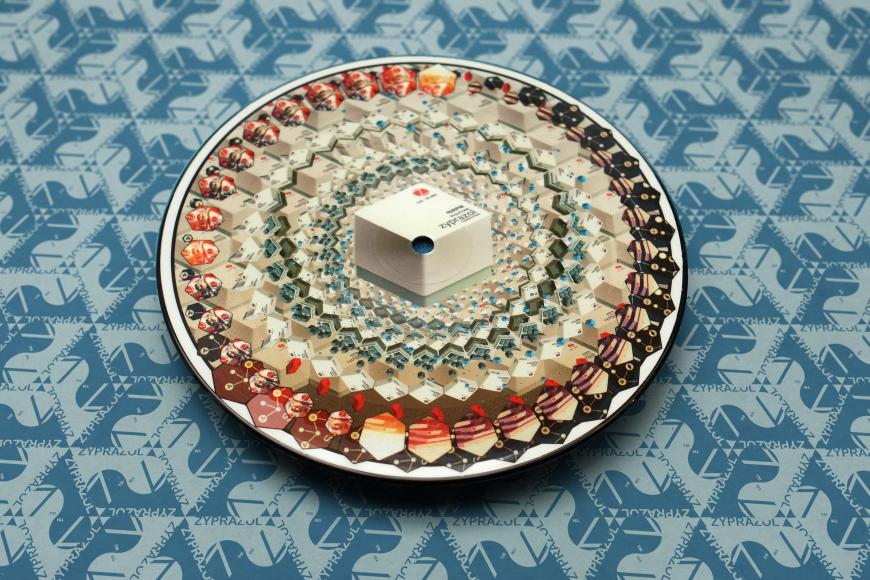
At first everything in this music video by the London duo Sculpture is two-dimensional. But better duck down while watching! On intricately composed levels of space, graphic elements whiz wildly past your eyes and broken beats whistle violently past your ears. Zyprazol is medicinal, a mind-expanding drug – just like the animation records made by Sculpture.