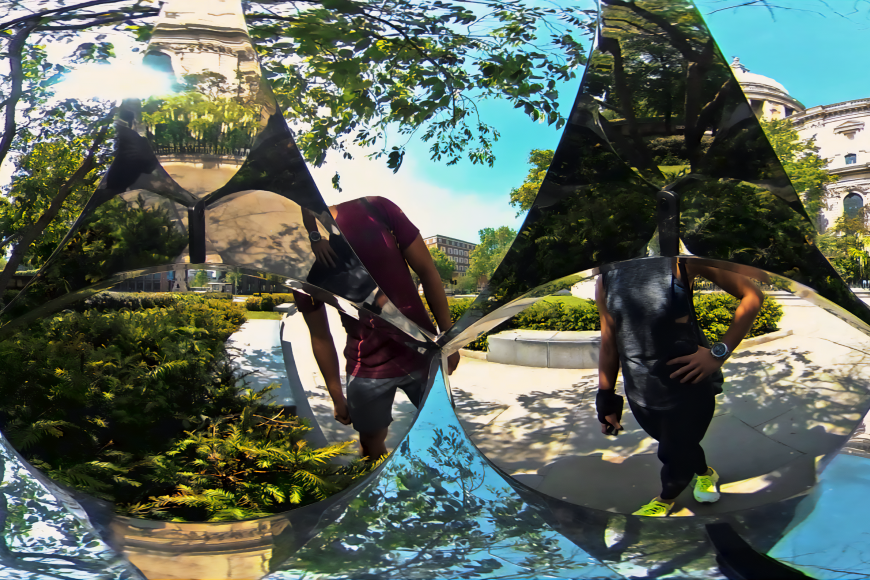
A mirror sculpture at St. Paul’s Cathedral in London: There seems to be nothing there. Or is there? The limits of our imagination become the true narrative.
Nothing meets everything in a digital moment of limbo. We find ourselves in the middle of a mirror sculpture at St. Paul’s Cathedral in London. There seems to be nothing there, but we are repeatedly asked to see more. The limits of our imagination and orientation become the true narrative. We could escape it at any time. But what would we be missing then?
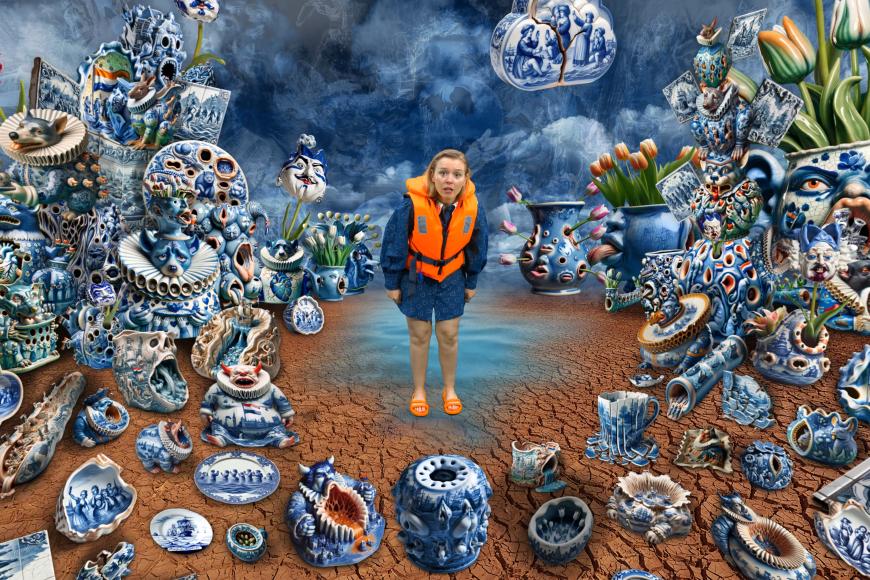
17th-century explorer Abel Tasman has returned to colonize new lands for Dutch climate refugees, in a hyper-collage of epic proportions where audio follows gaze.
Set in a future museum, the work is an extravagantly sardonic look at the colonial machine through historical and imagined objects, pop-up ads and Easter eggs. At its heart is a painting of 17th-century explorer Abel Tasman, who has returned to colonise new lands for Dutch climate refugees. A hyper-collage of epic proportions where audio follows gaze.
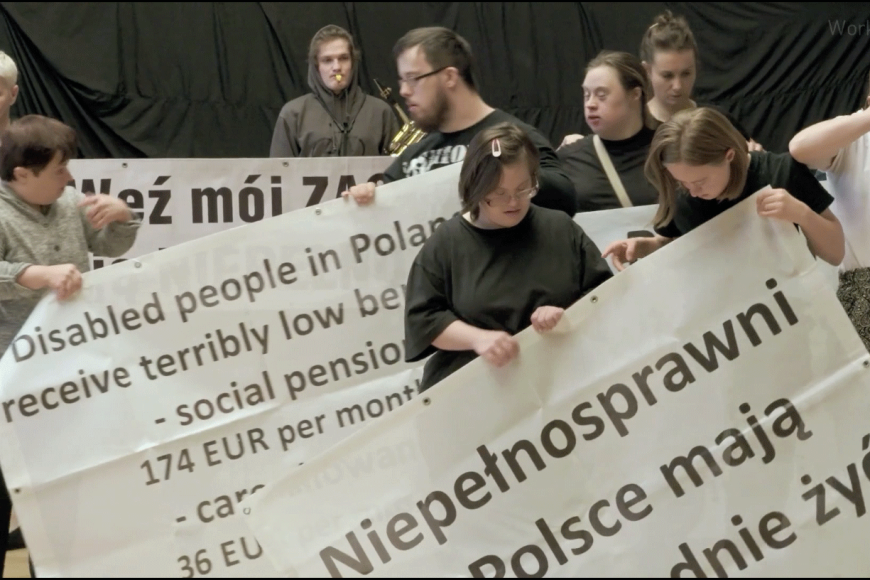
Via joyfully spacy performances and intellectual controversies, the Teatr 21, which consists of acting enthusiasts with Down’s syndrome, develops an idea of the autonomy they long for.
Inspired by a political protest movement, the Teatr 21 – a theatre company of acting enthusiasts with Down’s syndrome – develops a play in which the participants articulate their wishes and demands and at the same time get to abandon themselves with great joy to creative development. Martyna Peszko attentively follows the creation process as it unfolds in a productively bustling rehearsal atmosphere, with musical accents provided by the improvisations of a free jazz trio.
In 2018, people with handicaps occupied the government building in Warsaw for forty days to demonstrate for more support and recognition. The protest had almost no political consequences, and yet: The revolutionary spark ignited the public. The Teatr 21 project takes up the events, draws strength from the disappointment about the failed insurgence. That leads to discussions about their artistic craft: What does professional acting mean? What has nudity to do with revolution? And why do you always have to understand the lyrics to songs? In exploring the relationship between performance and politics, they reclaim an autonomy they are often denied in life: over their own body, their own stories. The stage direction and dramaturgy provide an unobtrusive and intelligent framework, which is extended by Peszko’s judiciously observant workshop report.
Carolin Weidner
Credits
Director
Martyna Peszko
Script
Martyna Peszko
Cinematographer
Magda Mosiewicz
Editor
Olga Kalagate
Producer
Justyna Sobczyk
Co-Producer
Katarzyna Tymusz
Sound
Adam Buka, Martyna Peszko, Konrad Wosik
Score
Zespol Pokusa
World Sales
Katarzyna Wilk
Nominated for:
Young Eyes Film Award,
MDR Film Prize,
Leipziger Ring
Flickering images produce irritating illusions, assault the eye, and attack the mind. A film that is generated in the brain. Best to just sit back and enjoy!
Be warned: This film consists of flashing images. It happens not only on the screen, but is generated in the brain. Flickering circles in complementary colours move, overlap, creating new shapes and colours. Interacting with the general structures of our eyes and nervous system, they trigger individually different irritations.
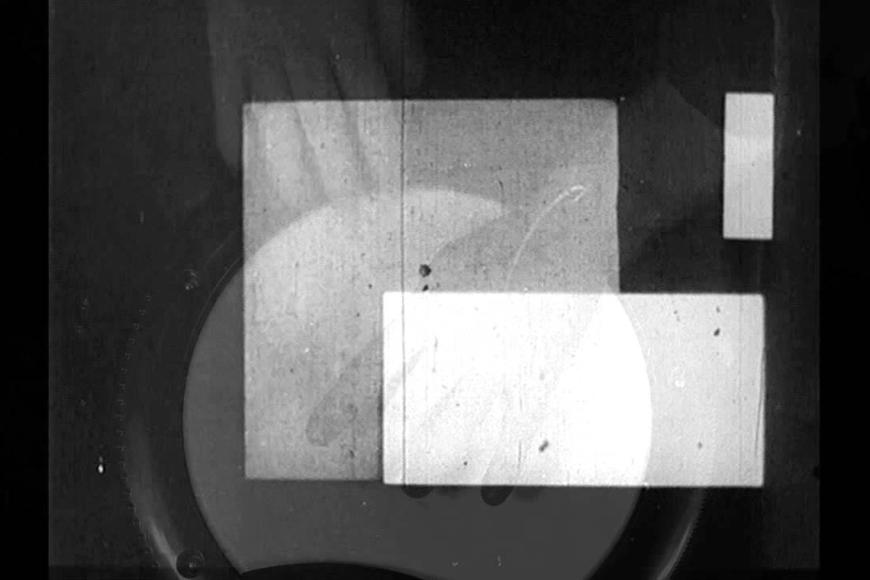
The figure 21 in the title of Hans Richter’s film is not necessarily indicative of the date of origin of this milestone in abstract moving images, which has been lost in the mists of history. The fact that “Rhythmus 21” was screened at the matinee “The Absolute Film” in Berlin in 1925, however, is documented. Rectangles move through space on fixed paths, growing and shrinking to create an illusion of depth.
This originally soundless film generates sound in our mind: Geometrical forms break free from their strict paths of movement and arrange themselves into a complex rhythm.
Delicate lines complement the rectangles that dominate Hans Richter’s film experiment “Rhythmus 21”. It almost seems as if a nod to Viking Eggeling had sneaked into the visual worlds of this important masterpiece. The shapes break free from their rigid paths of movement, boldly slanting away from their right angles. The rhythm of the visual elements is impetuous and self-determined.
Socio-geographic explorations on the periphery of Addis Ababa, run through by a variety of borders and rifts – between agrarian and urban spatial practices, between economic and linguistic floes, between perspective and dilemma. A polyphonic audiovisual narrative of people who are forced to experience the impetuous urbanisation of African societies the hard way, recorded as a case study that expands into a complex allegory.
Addis Ababa (Finfinnee in the language of the rural Oromo people) is a rapidly growing East African metropolis. “Rift Finfinnee” evolves from the concrete observation of main and side effects of urbanisation in four extremely different settlements, located within sight of each other on the eastern outskirts of the Ethiopian capital, to an expansive composition about the dynamics of an urban turbo modernisation. The Great Rift Valley currently still (!) constitutes a both natural and symbolic barrier to limit the further tentacle-like expansion of the megacity into agricultural territory – across this and other rifts. This interim report on the situation at the rifts probes the field of tension created by unstable pasts, unreliable futures and a contested present.
Robin, president of the Vienna football club RSV, loves his “dirty rotten bunch”. Passion is his recipe. That goes for moral courage, discipline and parties.
Fluctuation at the Vienna football club RSV is high. Coach Robin, who once hosted parties at the Prater sauna, sees his club as a political project, too: Players from various birth nations come together in his “dirty rotten bunch”. Athletic highlights are quite often followed by relegation, discipline and excess are cheek by jowl at RSV. Director Jasmin Baumgartner has followed Robin and his team over several years.
“My players are like my kids”, Robin says. And kids can be exhausting. They are caught with joints by the police on their way to the Slovenian training camp or prefer to go to the casino instead of completing their training units. But even president Robin isn’t averse to parties. On the sidelines of the amateur league it can get boozy and often rough: Opposing fans insult and discriminate against black athletes in particular. A behaviour for which Robin has no patience at all. He sees it this way: “If we integrate the super sweet Muslim fraction in our club, with our Serbian nationalists, uneducated Austrians and our Muslim-hating Congolese players, then we’ll not only be promoted to the fourth division. We’ll even stop the rise of the right-wing nationalists.”
A snapshot of a wealth of relationships and resilience at a precarious place. In humorous tableaus and light-drenched exterior shots a childhood summer unfolds.
English, German Subtitles for deaf and hard-of-hearing
Romanas, his parents Aivaras and Diana and their little dog live in a cramped place in the Lithuanian harbour town of Klaipėda. Linas Mikuta takes an unprejudiced look at a loving family structure where dreams are interpreted, worries are shared and news negotiated over cigarettes and cake, while at the same time the narrative of a timeless childhood summer full of headstands by the side of the road, somersaults on the beach and afternoons in box houses unfolds.
With his friends Romanas roams through ruins, neighbourhoods and along the coast. The eight-year-old conquers his own worlds, lives in his own time. The result is a portrait of a wealth of relationships and resilience at a precarious place that’s completely of the moment. Everyday rituals, care and community are captured in humorous, warm tableaus and light-drenched exterior shots. This film knows about the great love in small things. It knows about pop songs that hit you right in the heart, about tears you are not left alone with, and that playing with the waves between the green sea and the white sand means all the world.
In a shamanic ritual set to Intelligent House beats, half-human creatures bundle bubbling energy and seem to direct the universe with their dance movements.
In an infinite expanse of black, a white nuclear entity emerges and is invoked by a woman. She triggers a big bang and a shamanic dance ritual set to Intelligent House beats. Bubbling energy is bundled into a ball of pulsating lightning by women with antlers. Their movements seem to direct the course of the universe.
Having a child is a heavy new responsibility. When Ethan Barrett becomes a stay-at-home dad and suddenly finds himself in charge of the welfare of his little daughter, he realises abruptly that his every action will influence her life – whether he wants it or not. Charming, ironical and witty, he explores how to be least in the way of her perfect development. The next little masterpiece of tongue-in-cheek humour after “Burp” (DOK Leipzig 2020).
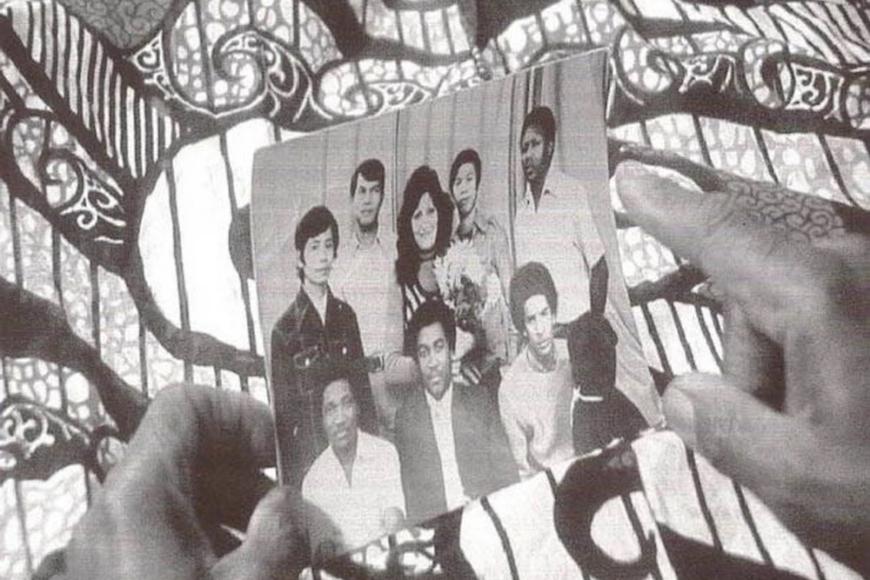
In 1980, Mauritanian-Malian film student Sissako meets an Angolan on the train to Rostov-on-Don. Years later, the USSR has passed, he searches for him in his homeland – and finds traces of colonial and world history.
On a train to Rostov-on-Don in 1980, Malian-Mauritanian bursary holder Abderrahmane Sissako met the Angolan Afonso Baribanga, who had also been sent to the USSR. Both are supposed to learn Russian. Sissako studied film directing at the WGIK in Moscow, while Baribanga pursued a different career and eventually returned to Angola, where a post-colonial civil war was raging. Years later, Sissako sets off in search of his vanished friend, travelling to his own and Baribanga’s African homelands, where the old and new world powers have left devastating traces. In 1997, in a side section, DOK Leipzig presented the feature-length version of Sissako’s travelogue, which is steeped in contemporary and colonial history. The 2024 Retrospective presents an abridged version.
Restitution of the Art Treasures to the Green Vault
anonymous
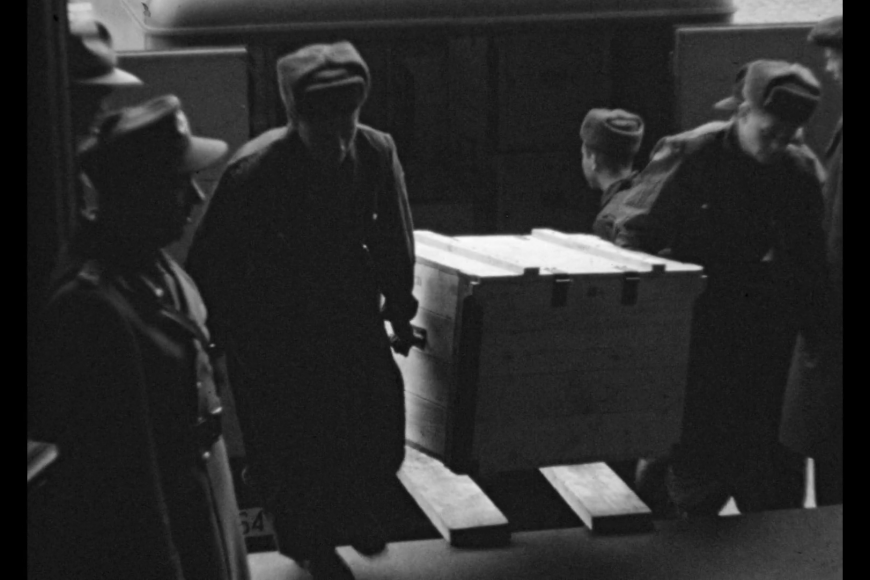
After the defeat of the Nazi regime, the Soviet occupiers – later friends – were anxious to establish good relationships: They returned “evacuated” art treasures amidst great media attention.
Restitution of the Art Treasures to the Green Vault
Rückgabe der Kunstschätze an das Grüne Gewölbe
anonymous
Matinee Saxon State Archive 2023
Documentary Film
GDR
1958
5 minutes
without dialogue
Opening the film is a highly visible Soviet coat of arms with translations of Marx’s call “Workers of the world, unite!” into several languages. In the middle of a media circus, representatives of the Soviet Union restituted art treasures to the GDR. The highlight was the return of “evacuated” objects to the Green Vault in Dresden.
A critical analysis of the final report of the official Warren Commission on the assassination of John F. Kennedy, based on research by lawyer and co-author of the film, Mark Lane.
This critical analysis of the final report of the Warren Commission, who investigated the assassination of John F. Kennedy, is based on research by lawyer Mark Lane. Lane co-authored this film and published his eponymous book at almost the same time. De Antonio had studied with Kennedy at Harvard, which gave his film a personal dimension, despite his political distance to Kennedy. This may account for the argumentative, occasionally factual rigour that he and his editor Dan Drasin brought to the film. Ultimately, “Rush to Judgment” is a piece of belated legal assistance for Lee Harvey Oswald, who was declared to have acted alone and shot only two days after the assassination while in police custody, and whose legal interests were not adequately represented before the Warren Commission.
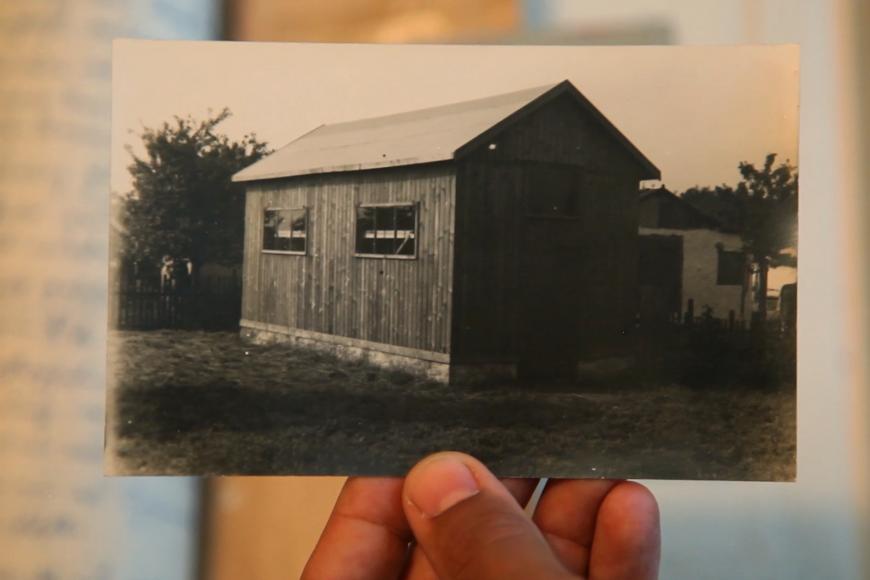
This cinematic search for traces takes us from silkworm breeding in a Leipzig allotment garden to the island of Crete. Idyll and war begin to converge – historical, scenic, complex, surprising.
What’s the parallel between a Leipzig allotment club and the Wehrmacht’s invasion of Greece? Alert to historical lines of connection, outstanding archive material and enchanting images of the austere Cretan landscape, the complex links between silkworm breeding here and German war crimes there are laid bare. The focus is less on settling questions of guilt than on depicting the inner dynamics of war, resistance and forgetting.
Luc-Carolin Ziemann
Credits
Director
Deborah Jeromin
Script
Deborah Jeromin
Editor
Deborah Jeromin, Sofia Hernández
Producer
Deborah Jeromin
Sound
Pedro de Sousa Pereira
Funder
Kulturstiftung des Freistaates Sachsen, Stiftung Maecenia