Film Archive

German Competition 2021

Los cuatro vientos

Anna-Sophia Richard
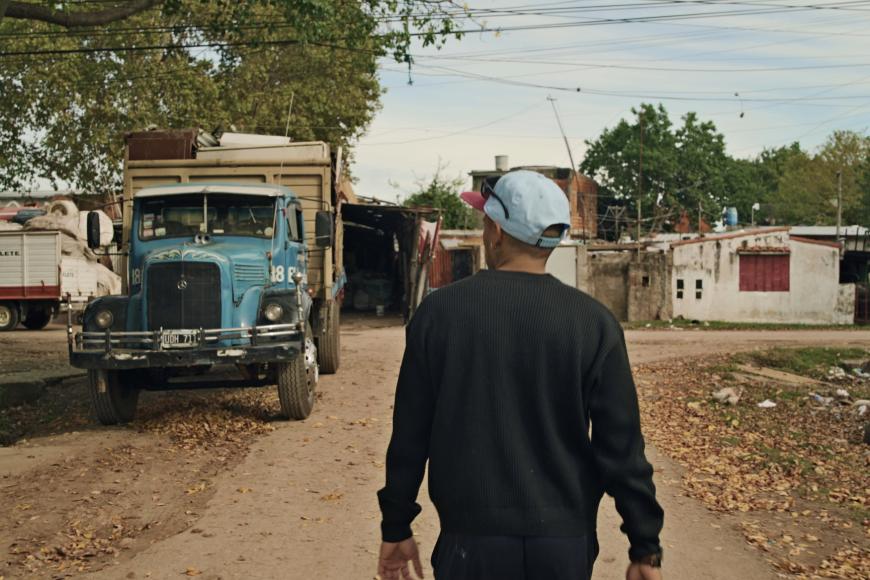
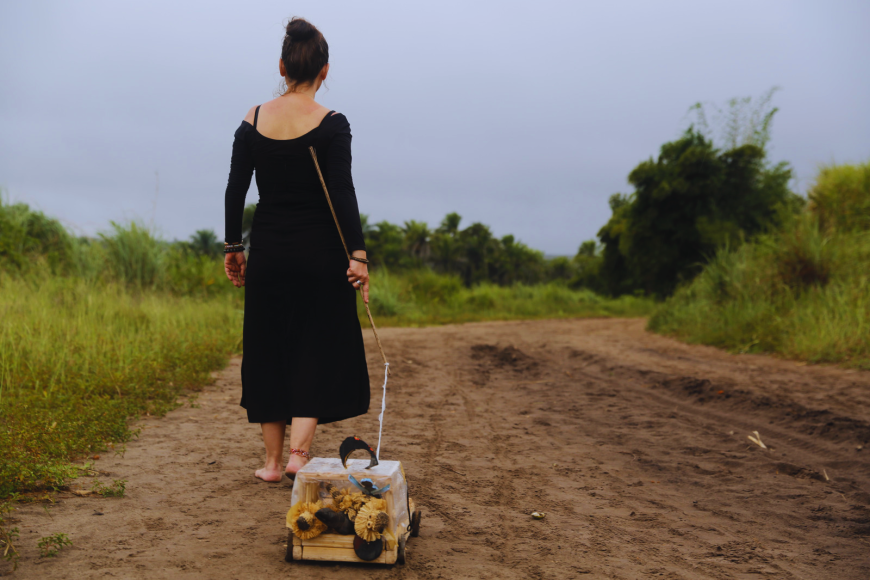
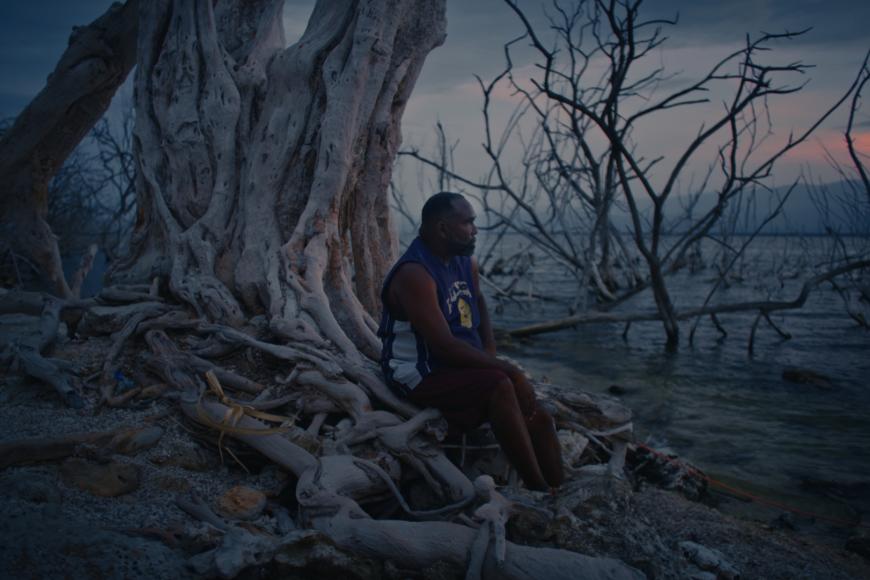
A region in the Dominican Republic lives on job migration, on money from afar. Impressions of estranged families in search of happiness – in dreamy images.
Media Name: b9f05756-ed40-4fea-a032-1c5170df112a.jpg

Los cuatro vientos

Los cuatro vientos
Anna-Sophia Richard
German Competition 2021
Documentary Film
Germany
2021
98 minutes
English,
German,
Spanish
Subtitles: 
English
Almost every inhabitant of Fondo Negro has relatives abroad. Since the 1980s, job migration, meaning wages shared with the residents from afar, has been one of the most important sources of income in this region in the southwest of the Dominican Republic. Young women in particular go to Europe or the U.S. to support their families by unskilled labour. In her enchantingly beautiful film, director Anna-Sophia Richard shows how this affects the ones who stay behind.
When she set out on the journey to Europe, she didn’t know what to expect, says one of the seven people portrayed. It was as if she was going on a holiday: a holiday that’s now lasted more than thirty years. Others haven’t seen their families in over fifteen years, their only contact being by phone or video chat. The mayor of Fondo Negro, herself the first job migrant from the region, tries to keep the women in the village. But the pull of jobs elsewhere is powerful. What’s left are separated families, children who grow up without parents and couples who become estranged. Almost in passing, the director shows in colourful, dreamy images how provisional solutions manifest themselves and permanently shape the reality of people’s lives. Happiness is only an eight-hour flight away – and still unattainable.
Kim Busch

Credits DOK Leipzig Logo

Director
Anna-Sophia Richard
Cinematographer
Jonas Schneider
Editor
Felix Schmerbeck, Anselm Koneffke, David Kuruc
Producer
Gerrit Klein, Adrian Goiginger
Co-Producer
Südwestrundfunk, Filmakademie Baden-Württemberg
Sound
Claudio Demel
Score
Berend Intelmann
Broadcaster
Marcus Vetter
Hommage: Isabel Herguera 2024

Los Muertitos

Isabel Herguera
The spirits of the dead from a Mexican cemetery rise and set out to cross the wall to the USA. The topicality of this ghost story from 1994 gives you goose-bumps.
Filmstill Los Muertitos

Los Muertitos

Los Muertitos
Isabel Herguera
Hommage: Isabel Herguera 2024
Animated Film
Spain,
USA
1994
11 minutes
Spanish,
English
Subtitles: 
English
Spurred by an extremely convincing young man with an American accent, the spirits of the dead rise from their graves in a Mexican cemetery and set out to cross the wall to the United States. This ghost story from 1994 gives us goosebumps with its topicality and enchants with its wit, shimmering colours and vibrant shapes.
Franka Sachse

Credits DOK Leipzig Logo

Director
Isabel Herguera
Script
Isabel Herguera
Cinematographer
Satinder Singh, Carmela Castrejon
Editor
Debdoot Das
Producer
Isabel Herguera
Sound
Craig Smith, Otmaro Ruiz, Rosalía Royo, Bernardo Feldman
Kids DOK 2022

Lost Brain

Isabelle Favez
One day the crocodile loses her mind by sneezing and finds herself unable to do the simplest tasks. Meanwhile, everything around her goes black and white. Who can help?
Filmstill Lost Brain

Lost Brain

Lost Brain
Isabelle Favez
Kids DOK 2022
Animated Film
Switzerland
2021
6 minutes
without dialogue
Subtitles: 
None
Louise the crocodile lives in a pretty flat in the city. The elevated train rattles, the coffee hisses on the stove and the walk takes her to a green park. But what is this? When Louise sneezes, all the colours fade away one by one! The crocodile also seems to lose her mind, because suddenly Louise can’t do the simplest tasks. Who can help her?
Lina Dinkla

Credits DOK Leipzig Logo

Director
Isabelle Favez
Cinematographer
Isabelle Favez
Editor
Jérôme Vittoz
Producer
Nicolas Burlet
Sound
Jérôme Vittoz
Score
Jérôme Vittoz
Animation
Isabelle Favez, Camille Müller
Kids DOK 2021

Louis’ Shoes

Théo Jamin, Kayu Leung, Marion Philippe, Jean-Géraud Blanc
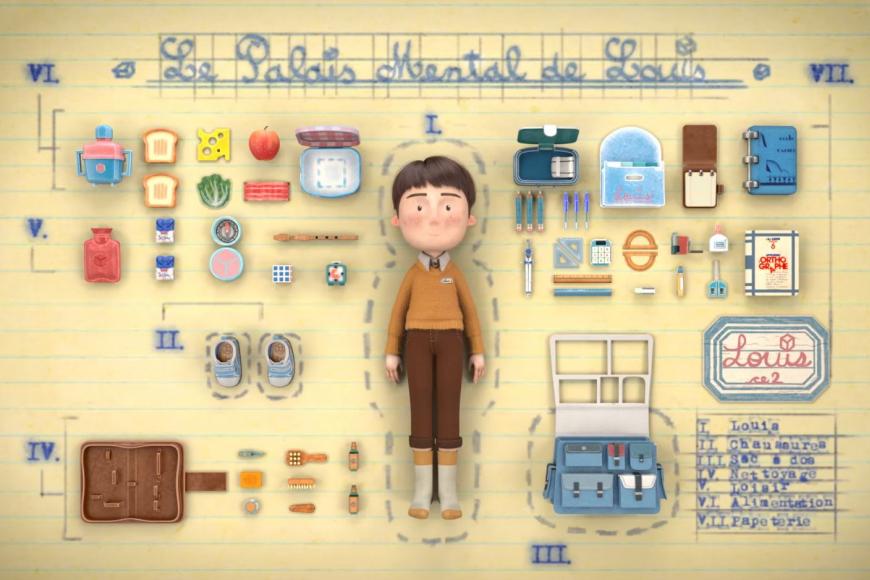
Louis, a boy with autism, introduces himself to his new class and tells them about his peculiarities. But the other children don’t seem to have a problem with it.
Media Name: 02944952-e7e5-417b-969e-1538ffe4c2f0.JPG

Louis’ Shoes

Les chaussures de Louis
Théo Jamin, Kayu Leung, Marion Philippe, Jean-Géraud Blanc
Kids DOK 2021
Animated Film
France
2020
5 minutes
French
Subtitles: 
English
Louis, eight years old, has autism and is starting at a new school. He steps in front of the class to introduce himself and his peculiarities, which can occasionally lead to misunderstandings. And anyway, sometimes things are really complicated in Louis’ mind. But it seems that his new class doesn’t have a problem with this at all.
Lina Dinkla

Credits DOK Leipzig Logo

Director
Théo Jamin, Kayu Leung, Marion Philippe, Jean-Géraud Blanc
Producer
Anne Brotot Brotot
Score
Lolita del Pino
World Sales
François Heiser
Filmstill Love Is Not an Orange

Love Is Not an Orange

Love Is Not an Orange
Otilia Babara
Panorama Middle and Eastern Europe 2022
Documentary Film
Belgium,
Moldova,
Netherlands,
France
2022
73 minutes
Romanian
Subtitles: 
English
“Imagine this camera is your mother”, a father tells his daughter. In the 1990s, scores of families from the Republic of Moldova began a ritualised mail exchange between the mothers, who had emigrated for economic reasons, and their relatives back home. The former sent money and goods; the latter sent videotapes. These amateur recordings are the material of this film. They testify to the painful gaps the absent persons left in the lives of those who stayed behind.
Migration is a big factor in post-socialist states buffeted by recession and inflation after the end of the Soviet Union – and in this case, also by the civil war over Transnistria. According to data from 2011/2012, about a third of Moldovan children had one parent abroad. In this small country between Romania and the Ukraine, too, a higher percentage of fathers choose work migration. Otilia Babara, however, is specifically interested in the consequences of long absent mothers, who work for nursing services in Italy, for example, to earn their family’s livelihood, and who express their love through care packages. The loss of connection to their mother – all of whom stay out of the frame –, which affects girls in particular, emerges in the cracks of the staged home videos, when wandering glances reveal that the children no longer believe in their return.
Jan-Philipp Kohlmann

Credits DOK Leipzig Logo

Director
Otilia Babara
Script
Otilia Babara
Editor
Pierpaolo Filomeno
Producer
Hanne Phlypo
Co-Producer
Christine Camdessus, Simone van den Broek, Otilia Babara
Sound
Mark Glynne
Sound Design
Olmo van Straalen
Nominated for: MDR Film Prize
Media Name: a26dfae8-0011-4ce8-9420-463bbcc3a319.jpg

Love, Dad

Love, Dad
Diana Cam Van Nguyen
Competition for the Audience Award Short Film 2021
Animated Film
Czech Republic,
Slovakia
2021
13 minutes
Czech
Subtitles: 
English
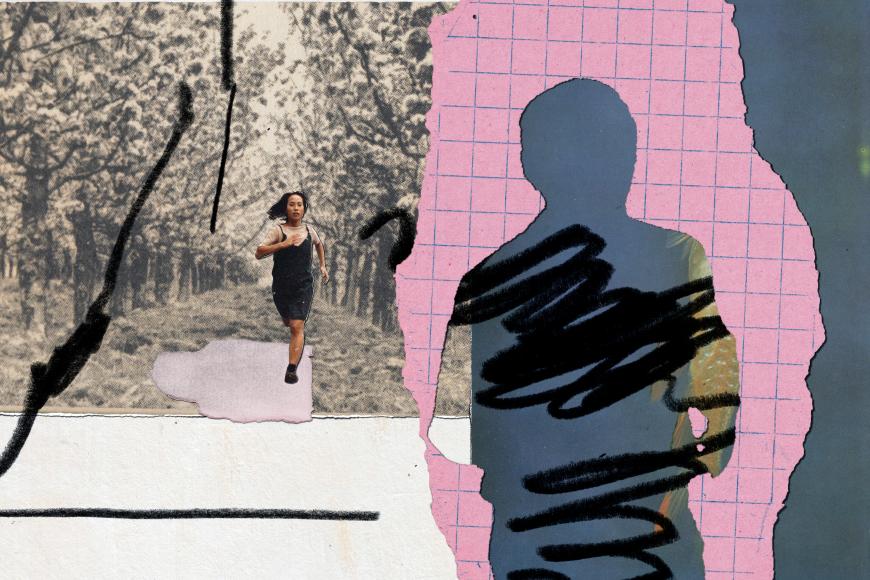
After a long time, a young woman once again holds letters in her hand that her father wrote her fifteen years ago when he was in prison. His words are full of love and affection: Never again were they to be that close, the daughter sums up today. What happened? This is what she tries to answer in a letter to him, writing down what couldn’t be said until now. The complex relationship between father and daughter in the form of a fragmentary animation.
Lina Dinkla

Credits DOK Leipzig Logo

Director
Diana Cam Van Nguyen
Script
Diana Cam Van Nguyen, Lukáš Janičík
Cinematographer
Matěj Piňos, Kryštof Melka
Editor
Lukáš Janičík
Producer
Karolína Davidová
Co-Producer
Jakub Viktorín, Tomáš Šimon
Sound
Viera Marinová
Score
Viera Marinová
Animation
Vojtěch Domlátil, David Štumpf, Barbora Halířová, Diana Cam Van Nguyen
World Sales
Luce Grosjean
Winner of: Silver Dove (Competition for the Audience Award Short Film)
Filmstill Lovesick

Lovesick

Lovesick
Špela Čadež
Slowenian Animation 2022
Animated Film
Germany,
Slovenia
2007
9 minutes
without dialogue
Subtitles: 
None
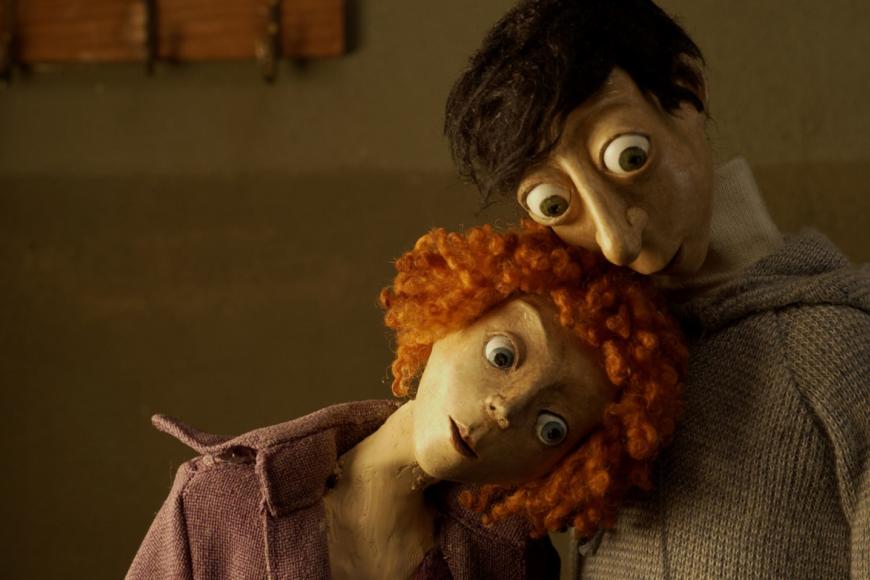
A pain in the heart, never-drying tears and turned heads are hard to treat, but fortunately not incurable. In X-ray images and tissue samples, on examination couches and in waiting rooms, always under medical supervision, Špela Čadež’s puppet animation studies the difficult-to-diagnose lovesickness. An animated physiological case study.
Lina Dinkla

Credits DOK Leipzig Logo

Director
Špela Čadež
Script
Christina Zimmermann
Cinematographer
Špela Čadež
Editor
Eli Cortina Hidalgo
Producer
Kunsthochschule für Medien Köln
Score
Mateja Starić
Animation
Špela Čadež, Matej Lavrenčič, Oliver Thorm
Filmstill Loving in Between

Loving in Between

Loving in Between
Jyoti Mistry
International Competition Documentary Film 2023
Documentary Film
Austria,
South Africa
2023
18 minutes
English
Subtitles: 
None
“Folks, I’m telling you, birthing is hard and dying is mean – so get yourself a little loving in between.” This advice of the African-American civil rights activist and jazz poet Langston Hughes precedes Jyoti Mistry’s found footage storm of images and runs like a guiding line through the archive material, a panopticon of revelries: parties, boxing matches, visits to the beach and above all, time and again, testimonies of lived queer sexuality. Sometimes clandestine, sometimes quite public.

Mistry mirrors the uninhibitedness of her sources in the way she arranges them – not neatly staggered but boldly mixed. The associative editing often virtually leaps into the images, linking them with purple colour explosions and three-dimensional animations of shoals of fish. On the soundtrack, a spoken word performance joins multi-channel dubbed noises and countless variations of the jazz standard “Diga Diga Doo.” This is how the film wrests its testimonies from the past and returns them to their inherent liveliness and transgressive explosive power.
Felix Mende

Credits DOK Leipzig Logo

Director
Jyoti Mistry
Script
Jyoti Mistry, Napo Masheane, Kgafela oa Magogodi
Editor
Nikki Comninos
Producer
Florian Schattauer
Sound Design
Peter Cornell
Score
Nishlyn Ramanna
Animation
The Kinetic
World Sales
Gerald Weber
Filmstill Luciano

Luciano

Luciano
Manuel Besedovsky
International Competition Documentary Film 2024
Documentary Film
Argentina
2024
95 minutes
Spanish
Subtitles: 
English
Luciano cuts a slight figure as he wanders through the narrow streets of the improvised Barrio Tablada on the edge of Rosario, taking care of his mother and sister and the makeshift home they share, finding occasional work on building sites as the search for a proper job continues, lifting weights at the gym. Manuel Besedovsky lays out the different episodes of this precarious, if not atypical existence with such deliberate deemphasis that it feels almost like a plot twist when Luciano meets with a consultant to talk about the various options for constructing a penis. And yet this part of Luciano’s experience has actually been there all along – another thread woven often imperceptibly into the fabric of the film with gentleness and care.
Handing CVs out, hormone injections, smoking joints with buddies from the neighbourhood, talking to his mother about the daughter that is no longer there, some slightly awkward rapping, thinking about having children – the most radical thing about this portrait is how each challenge, each diversion, each encounter is presented with the same sense of normality with which Luciano experiences it. Class, gender identity and their seldom-seen intersection shown as nothing more than getting on with life.
James Lattimer

Credits DOK Leipzig Logo

Director
Manuel Besedovsky
Script
Manuel Besedovsky
Cinematographer
Tomás Pasini
Editor
Marina Sain (EDA)
Producer
Pablo Romano, Juan Diego Kantor, Guillermo Willy Berman, Nicolás Capola, José Salvia
Sound
Verónica Brunello, Jimena Chaves
Sound Design
Fernando Romero de Toma (ASA)
Score
Guillermo Pesoa
World Sales
Alfredo Calvino
Nominated for: Silver Dove, Prize of the Interreligious Jury, FIPRESCI Prize
Filmstill Lumene : Privatisation

Lumene : Privatisation

Lumene : Privatisation
David Shongo
International Competition Documentary Film 2023
Documentary Film
DR Congo
2022
30 minutes
French,
Lingala
Subtitles: 
English
In this documentary essay, Congolese artist David Shongo addresses the problems of knowledge production and asks the important question of how it was influenced permanently and systematically by colonialist power. Analysing historical photographs, he exposes the perfidious mechanisms of colonial historiography and contrasts them with conversations with traditional scholars. They represent an exploited culture confronted not only with the theft of economic goods. It was also robbed – in a historical dimension, too – of self-perception and self-determination.

The starting point of his analysis is the examination of the photo archive of the German ethnographer and anthropologist Hans Himmelheber at the Museum Rietberg in Zürich. But Shongo’s critique of colonial historical fictions – poetic and meticulously precise at the same time – goes far beyond this. Combining specially produced and expressive images of present-day Congo with staged scenes, an offscreen commentary and documentary recordings, he manages to penetrate extremely complex contexts. A film essay that denounces the “privatisation of memory” – and contributes a long overdue, extremely important political and aesthetic position to the virulent restitution debate.
Borjana Gaković

Credits DOK Leipzig Logo

Director
David Shongo
Script
David Shongo
Cinematographer
Peter Miyalu
Editor
Derek Simba, David Shongo
Producer
David Shongo
Co-Producer
Nanina Guyer
Animation
Derek Simba