When the artist duo Karnapke and Johnson are separated by Covid-19 in the middle of a project, the result is a correspondence about the constant change we live in.
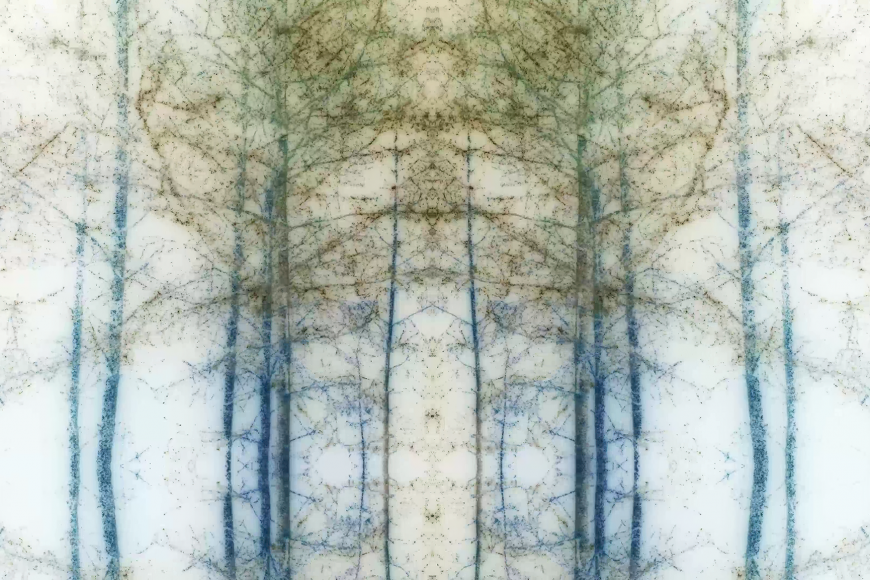
When the artist duo Karnapke and Johnson are separated by Covid-19 in the middle of a project, the result is a correspondence about the constant change we live in. The VR experience based on this is a walk-in meditation: about reality, about normality and about the signs that distinguish the rule from the exception, visualized in a space made of countless particles.
Between March 1989 and March 1990, Kurt Tetzlaff follows the critical Potsdam high school graduate and pastor’s son Alexander Schulz through a time of personal and political upheaval.
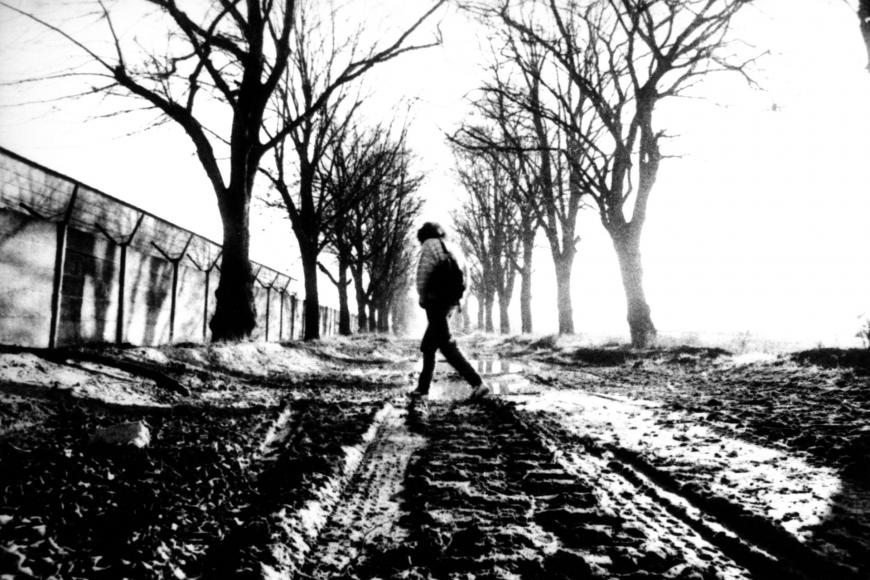
“Whoever has discovered a truth must also bear witness to it and make it known,” says the critical Potsdam high school graduate and pastor’s son Alexander Schulz at the start of the film and adds: “You must also endure the personal disadvantages.” Between March 1989 and March 1990, Kurt Tetzlaff follows the intelligent boy through a time of upheaval. At their graduation, Alexander and his class perform the play “Dictatorship of Conscience” by Mikhail Shatrov. He takes part in the demonstrations in autumn 1989 and refuses to serve in the army. Sequences from the GDR news demonstrate how far removed from the citizens the state leadership had become.
A reencounter with Alexander, Tetzlaff’s protagonist of “In Transit”. The mood of departure of the autumn of 1989 gives way to disappointment and resignation only a short time later.
Once again Kurt Tetzlaff portrays Alexander, who in 1990 works as a nurse and is active in the “Action Reconciliation”. The sense of departure of the autumn of 1989 slowly gives way to disappointments about the outcome of the People’s Chamber elections in 1990, the currency reform and the Unification Treaty. The political and social changes took place at a rapid pace that many found hard to follow. The sense of community that carried people through 1989 is fading. “Now it’s every man for himself”, Alexander states. He has no use for capitalism: “I feel just as lied to and cheated as before.” Resignation spreads.
Philip Zengel
Credits
Director
Kurt Tetzlaff
Script
Kurt Tetzlaff, Eckard Mieder
Cinematographer
Ingo Bahr, Jürgen Partzsch, Claus Mühle, Karl Faber, Hans Borrmann, Andreas Bergmann
Editor
Monika Schäfer
Producer
DEFA-Studio für Dokumentarfilme
Sound
Dietmar Falkenthal, Hartmut Haase, Lutz Laschet, Rainer Pape
Déni’s mother has bought him a piece of land in the Chechen settlement in Georgia. He could at last build a treehouse there, but he is expected to marry. Can he start a new life here?
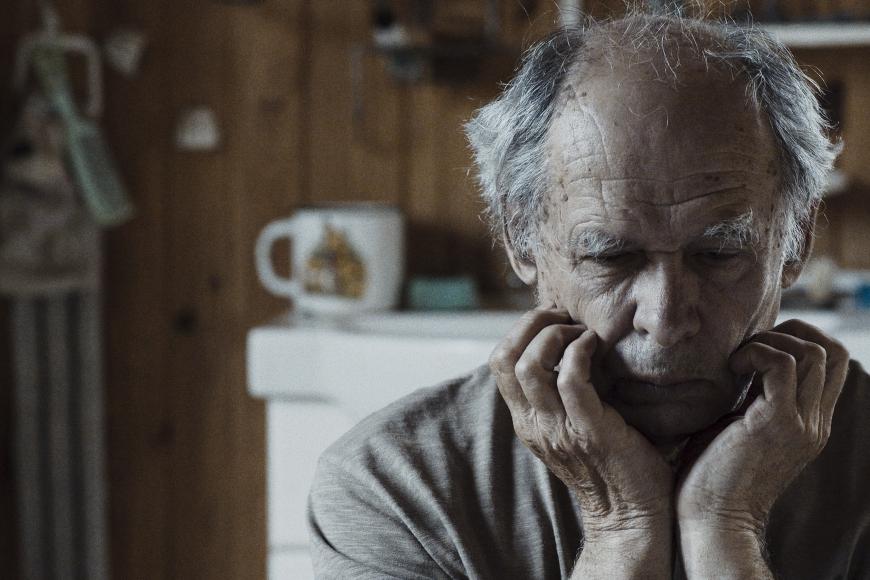
A piece of land awaits Déni Oumar Pitsaev in the Pankisi Gorge, a Chechen enclave in the Georgian part of the Caucasus. His mother bought it for him, hoping to bring her son, who was socialised in Western Europe, back to his Chechen roots. When he arrives, he realises that the gift comes with strings attached: Relatives and friends from the neighbourhood constantly ask when the 40-year-old Déni with his receding hair intends to start a family. When he counters with his own vision – building a treehouse for adults ten metres from the ground, a childhood dream – he triggers complex debates about the relationship between the individual and society and what historical conditions it is subject to: The region is deeply scarred by the effects of the Chechen War, the wounds extending even to his estranged relationship with his father. In all this, Pitsaev’s manner of confrontation is always extremely delicate, never turning into an attack. With expert curiosity, he approaches a world that is both completely alien and home to him.
Felix Mende
Credits
Director
Déni Oumar Pitsaev
Cinematographer
Sylvain Verdet, Joachim Philippe
Editor
Laurent Sénéchal, Dounia Sichov
Producer
Alexandra Mélot
Co-Producer
Anne-Laure Guégan, Géraldine Sprimont
Sound
Marie Paulus, André Rigaut, Joseph Squire
Sound Design
Marie Paulus, André Rigaut, Joseph Squire, Hélène Clerc-Denizot, Emmanuel De Boissieu
A complex exploration of transience, life and death, created by minimalist means and in animated form. Atmospheric, subtle and at the same time apocalyptic.
Marta Pajek (digitally) created a complex, atmospheric universe – with minimalist means and yet rich in detail. References to contemporary history meet visions of an intuited, dystopian future. We are made aware of (our own) transience in subtle, but almost brutal ways. Ageing bodies, ageing ideas. In the end, the grande dame of Polish cinema, actor Anna Polony, sings: “… when will we ever learn?”
Borjana Gaković
Credits
Director
Marta Pajek
Script
Marta Pajek
Editor
Marta Pajek
Producer
Piotr Szczepanowicz, Grzegorz Wacławek
Co-Producer
Maral Mohammadian
Sound
Michał Jankowski, Piotr Knop
Score
Aleksandra Gryka
Animation
Marta Pajek, Alex Boya
World Sales
Luce Grosjean
Winner of:
Golden Dove Short Animated Film (International Competition Short Film)
The six-decade transformation of a block of houses, shown by means of artfully featured archival shots, highlights the beauty and sadness of human-made decay.
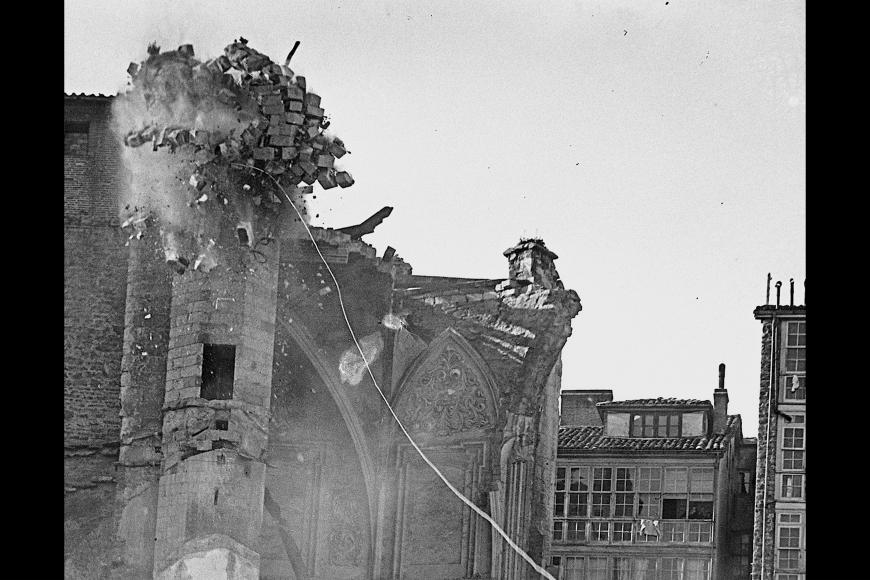
In the blink of an eye – as the film is titled – 66 years pass by, seven centuries of stone crumble and a savings bank replaces a church. In six and two half chapters, Jorge Moneo Quintana succeeds in a feat of archival work, montage and sound design. The organic merging of images that show the site’s transformation submerge the audience into a pleasantly sober reflection on the beauty and sadness of decay.
Ukraine, February 2022. The filmmaker flees to her parents’ house on the outskirts of Kyiv, where they live in an unbearable and inherently self-destructive limbo.
February 2022, the beginning of the Russian war of aggression on Ukraine. When the fighting comes closer, director Alina Maksimenko flees from the district capital of Irpin north-west of Kyiv to her parents’ home in the countryside, where she gets stranded with her cat and her camera. It would be better to move even farther away, beyond the border, to be really safe, the daughter urges. Nonetheless, they decide to stay – hoping for the situation to get calmer on the one hand, trusting in the remoteness of their village refuge on the other. The three of them hold out in an increasingly empty village. Fear spreads, tiredness. The parents refuse to change anything about their usual routines. It is an unbearable limbo that is inherently self-destructive. They try to hold on to their everyday life as best they can. Father Tolya takes care of the animals in the neighbourhood; dozens of abandoned cats gather at the front door every day. Meanwhile, mother Tetyana gives piano lessons over the phone, unless the mains is down again. And Alina, the daughter, makes a film. She is not interested in the fighting. Rather, her documentary of those first weeks of war is a minutely detailed portrait of waiting. The eye is on a microcosm where survival is in question, which makes it universal.
Marcel Barelli went stalking, observing and listening closely. Briskly animated and wittily narrated, he tells of zoological caprices in matters of gender and sexuality.
Competition for the Audience Award Short Film 2021
Animated Film
Switzerland
2021
5 minutes
French
Subtitles:
English
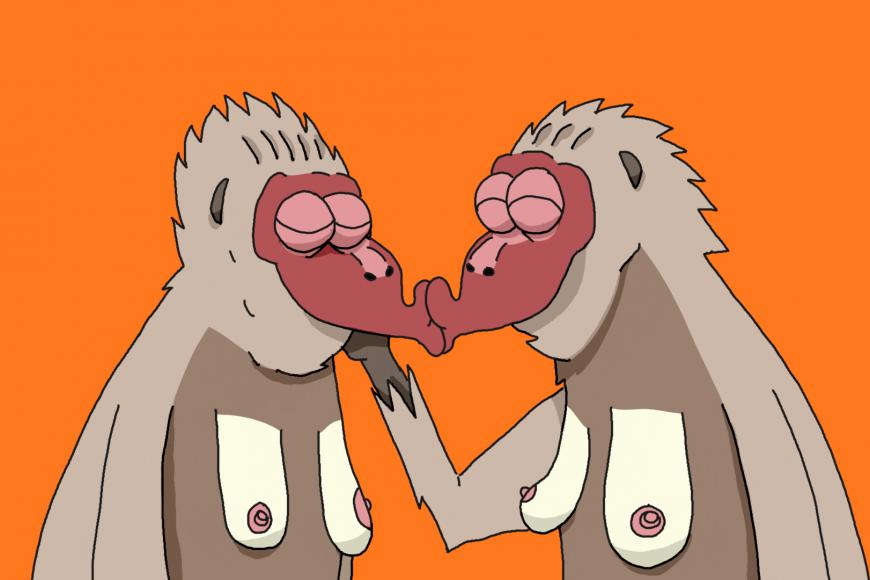
Animals have no “LGBTQIA*”, they simply are and do, practicing gender, sexuality and family constellations according to desire and necessity. There is still a lot to discover here, as Marcel Barelli reports. He went stalking, observing and listening closely. Briskly animated and wittily narrated, he tells of fantastic zoological caprices and miraculous relationships.
Prison inmates breeding carp reflect on freedom and missed Christmas dinners. Artful black and white film with anonymous protagonists in a dreary landscape.
Competition for the Audience Award Short Film 2021
Documentary Film
Slovakia
2020
10 minutes
Slovak
Subtitles:
English
Standing in the water in fishing gear, catching fish and taking in the rugged winter landscape. What at first sounds like a dream for outdoor fans is part of the working routine of prison inmates in the East Slovakian town of Perín-Chym. Their job is to breed carp, which are primarily consumed at Christmas dinners. Marek Moučka anonymizes the prisoners by erasing their eyes in his artful black and white film. He talks to them about freedom and missed holidays.
In 1980, a group of radical pacifists break into a factory where nuclear weapons are produced. The film focuses on the trial against the activists which takes the form of a re-enactment.
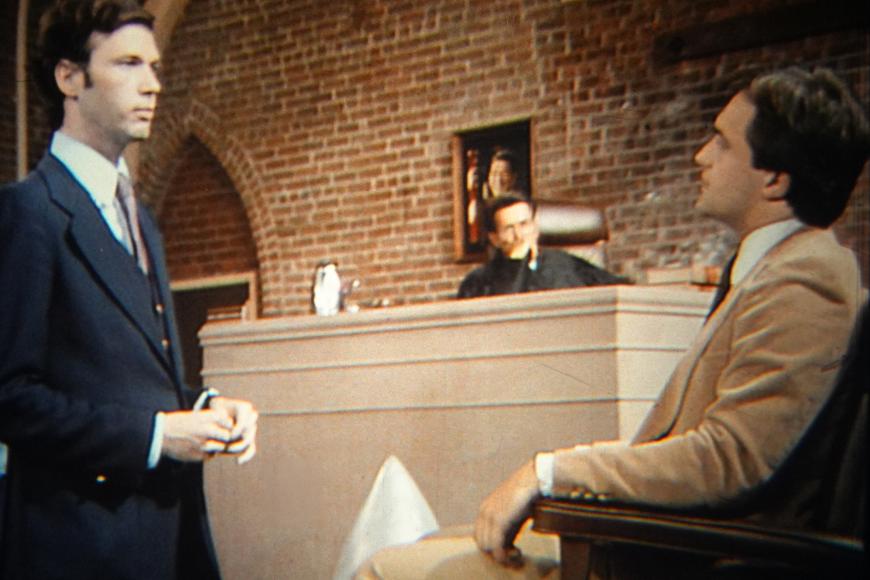
To put it bluntly, one could say that most of de Antonio’s films are courtroom dramas. In this sense, “In the King of Prussia” is typical – and at the same time unusual, starting with the title. King of Prussia is a small town in Pennsylvania which became the scene of an action by radical Christian pacifists in September 1980. They broke into a factory where, unbeknownst to the public, parts of the nuclear missile Mark 12A were produced, and held a happening inspired by the Sermon on the Mount and Fluxus. The film is a re-enactment, but not of the action, rather of the trial against the so-called Plowshares Eight. In de Antonio’s first video production, shot in the trial breaks, the defendants played themselves. The role of the judge was played by New Hollywood star Martin Sheen.
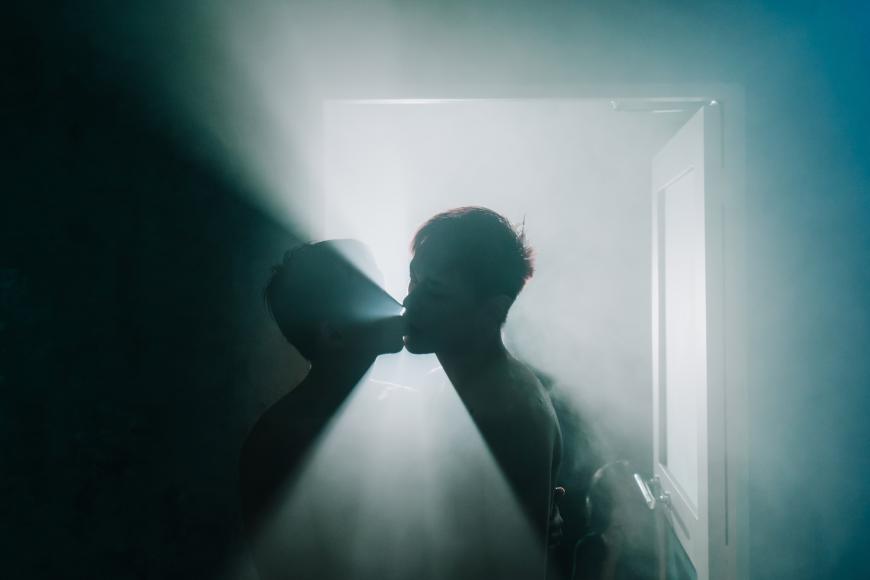
A group sex scene in a gay sauna becomes a real-surreal stage for desire and reflection: on sex positive spaces, our own lust and our own sense of morality.
We find ourselves in the middle of a gay sauna. In search of physical contact outside ideas of bourgeois romantic love, we are part of a group sex scene. We look at the protagonists, just as they look at us. The space becomes a stage, both real and surreal, that provokes reflections: about sex positive spaces, our own lust and our own sense of morality.
The hot button issue of pre-war Kyiv: the power of developers. Florian Yuryev’s architectural visions contrasts with the stubbornness of a businessman inspired by Donald Trump.
The hot button issue of pre-war Kyiv: the power of developers. Oleksiy Radynski explores the opposition of an architect who designed one of the most significant buildings in Kyiv and the capitalistic cynicism that ruins the city’s uniqueness. Florian Yuryev’s philosophy of a galaxy’s mortality, of a “beautiful zero” we all are going to return to, contrasts with the ridiculous and dangerous stubbornness of a businessman inspired by Donald Trump.
We are guided through a speculative posthumanist scenario revolving around the relationship between humans, machines and nature. An AI helps with the transition into the digital.
We meet an artificial intelligence designed to ease our transition into the digital. Life in the analogue world is no longer possible, not even necessary. The VR experience guides us through a speculative scenario that illuminates the relationship between humans, machines and nature in posthumanism. Texts, images and sounds were created by means of AI and algorithms.
Like little dots, people appear in the depths and at the periphery of stunning panoramic shots. The colossal landscape turns into an infinite space of fear.
Stunning panoramic shots of natural landscapes are cut through by swathes of traffic. People appear like little dots in the depths and at the periphery. Only gradually do we realise that they are fleeing. Great dramas grow out of this micro world, the colossal landscape becomes increasingly merciless and begins to resemble an infinite space of fear.
The first Yugoslavian sound film from 1941: re-edited, supplemented and modified by Nazi newsreels and footage from 1968, ironically transformed from feature film to documentary.
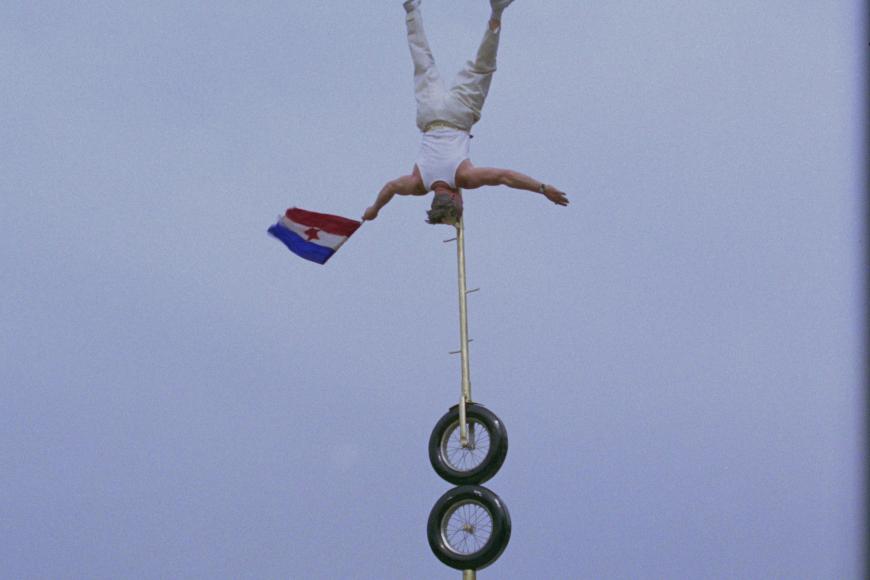
The feature film “Innocence Unprotected” by Dragoljub Aleksić tells the story of a young woman who’s to be forcibly married to a horrible rich man while her true love is for a daring acrobat. This first Yugoslavian sound film was made in 1941 in occupied Belgrade and never released because of Nazi censorship. Dušan Makavejev’s deconstruction of this bizarre work, which he re-edited, partly hand-coloured, supplemented with German newsreels and current footage of former participants and thus turned into an eponymous documentary film in 1968, was awarded a Silver Bear at the Berlinale.
International Book Art Exhibition Leipzig 1977 [excerpt]
Jan Hempel
Leipzig’s tradition as a city of books, polygraphic firms, publishing houses and, last but not least, the Book Fair and its audience are captured by one of the few private filmmakers.
International Book Art Exhibition Leipzig 1977 [excerpt]
Internationale Buchkunst-Ausstellung 1977 [Ausschnitt]
Jan Hempel
Matinee Saxon State Archive 2025
Documentary Film
GDR
1977
7 minutes
German
Subtitles:
None
Following a quarrel with the DEFA, the Sorbian animation and documentary filmmaker Jan Hempel established the independent IWT-Film studio in Dresden. Commissioned by the German Book Traders’ Association, these impressions of the 1977 International Book Art Exhibition were created there. Referencing Leipzig’s century-old tradition as a book city, the film presents production companies, publishers and, last but not least, the IBA itself.









![Filmstill Internationale Buchkunst-Ausstellung 1977 [Ausschnitt]](https://www.dok-leipzig.de/sites/default/files/styles/stepped_teaser_/public/fiona/films/stills/e48262c7-c12a-4dea-b4bc-96679d872fbf.jpg?h=346bc062&itok=xR-_bdxg)



![Filmstill Internationale Buchkunst-Ausstellung 1977 [Ausschnitt]](https://www.dok-leipzig.de/sites/default/files/styles/film_stills_full_content_view/public/fiona/films/stills/e48262c7-c12a-4dea-b4bc-96679d872fbf.jpg?h=346bc062&itok=MQ_gHboE)