Film Archive

Media Name: 580543f5-0a8f-48bb-86e7-9d85bff73e2c.jpg

Everything That Is Forgotten in an Instant

Todo lo que se olvida en un instante
Richard Shpuntoff
Camera Lucida – Out of Competition 2020
Documentary Film
Argentina
2020
71 minutes
Spanish,
English
Subtitles: 
English, Spanish
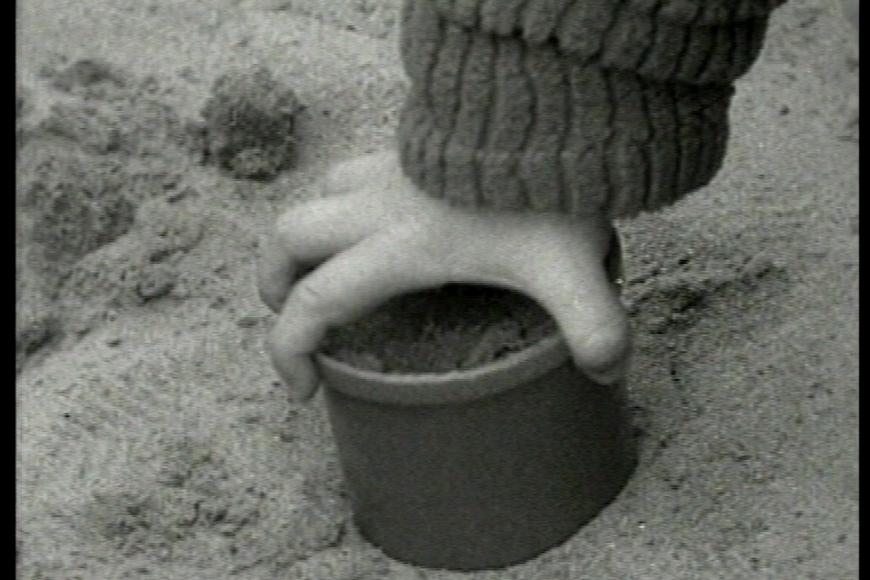
Everyday observations from Buenos Aires, shot on black-and-white 16mm film material, alternate with twenty-year-old Hi8 colour shots from New York. The perspective of a father who collects memories for his daughters. The perspective of a son who records his father’s reminiscences. Richard Shpuntoff’s multi-layered montage film is a clever essay on cultural identities, on cities and languages.
When we watch a subtitled film, we look, listen and read at the same time. We assume that the three levels are congruent or at least add up to form a whole. “Even the best subtitles suck”, the subtitles of this film announce, however, because “You are still reading instead of looking at the images.” Translating means rewriting. Therefore, “Everything That Is Forgotten in an Instant” tells parallel stories in images, words and writing: of urban development and power structures in two distant metropolises, of identity and its transgenerational transfer, of three continents and three languages which draw equally dividing and connecting lines through a family. The insecurity caused by the discrepancy between the filmic elements turns into a school of selective perception. Images, languages and texts are no dictate, after all: They leave us a choice.
Christoph Terhechte

Credits DOK Leipzig Logo

Director
Richard Shpuntoff
Cinematographer
Richard Shpuntoff
Editor
Richard Shpuntoff
Producer
Nadia Jacky
Sound
Luciana Foglio
Time to Act! 2022

Everything Wrong and Nowhere to Go

Sindha Agha
How does the climate crisis affect our mind? How to go on in the midst of disaster? A personal essay about “climate anxiety”, guilt-rage spirals and radical self-care.
Filmstill Everything Wrong and Nowhere to Go

Everything Wrong and Nowhere to Go

Everything Wrong and Nowhere to Go
Sindha Agha
Time to Act! 2022
Documentary Film
USA,
UK
2022
12 minutes
English
Subtitles: 
None
Heatwaves, melting polar caps, rising sea levels, mass extinction of species. The climate crisis is threatening life on earth, and our peace of mind, too, because if you become aware of where we stand, you’ll find it hard to sleep well. Sindha Agha, too, is suffering from “climate anxiety”, the all-consuming fear of the consequences of the climate emergency, and seeks out a climate psychologist to learn how to cope with it. This cinematic portrait shows how – representative of countless others – she is torn between panic, helplessness, guilt and rage, but still finds ways to overcome the paralysis to actively tackle the climate crisis.
Luc-Carolin Ziemann

Credits DOK Leipzig Logo

Director
Sindha Agha
Cinematographer
Lauren Guiteras
Editor
Matty Neikrug
Producer
Elizabeth Woodward, Elizabeth Woodward
Sound
Jackie Zhou
Score
Daniel Fox
Hommage: Lee Anne Schmitt 2025

Evidence

Lee Anne Schmitt
An autobiographically-informed look at the legacy of infamous American chemical company the Olin Corporation, whose profits funded the racist, classist Neoconservative movement.
Filmstill Evidence
Filmstill Evidence

Evidence

Evidence
Lee Anne Schmitt
Hommage: Lee Anne Schmitt 2025
Documentary Film
USA
2025
76 minutes
English
Subtitles: 
None
It’s hard to imagine a more thorough, trenchant and disturbingly compelling account of how the US arrived at its current state than Lee Anne Schmitt’s formidable fourth feature. Her starting point is personal: Her father worked for infamous American chemical company the Olin Corporation, the dolls he used to send her from his business trips forming one of the film’s leitmotifs. While wreaking environmental havoc across the nation, Olin also birthed its own foundation, whose deep pockets helped the racist, classist neoconservative movement gain the necessary traction. Sites of significance, archive material, intertitle quotes, shots of salient literature and snatches of domesticity: the building blocks of a comprehensive political takedown.
James Lattimer

Credits DOK Leipzig Logo

Director
Lee Anne Schmitt
Cinematographer
Lee Anne Schmitt
Editor
Lee Anne Schmitt
Producer
Lee Anne Schmitt
Sound
Sara Suarez
Score
Jeff Parker
Filmstill EX-tract

EX-tract

EX-tract
Marcel Barelli
International Competition Animated Film 2025
Animated Film
Switzerland
2025
3 minutes
French
Subtitles: 
English
“Can we be moved by the disappearance of rhinos if we have never experienced the feeling of a butterfly walking on our hand?” Marcel Barelli asks not without pathos, but hitting the mark, in his animated manifesto. He is quoting Daniel Pauly’s Shifting Baseline Syndrome Theory: We humans always measure normality by our own experience and not by historical changes and therefore tend to accept environmental destruction. This is not the only allusion in Barelli’s compact three-minute-film: He references the “sixth extinction”, the current human-caused extinction of the species, and the hourglass symbol of the Extinction Rebellion movement. His film, however, which should definitely be understood as a call for active resistance, embeds these reflections artistically.
With his evaporating water animation on paper, Barelli has chosen a simple and consistent animation technique whose ephemeral character perfectly captures species extinction and oblivion. Archive material is added. Unlike the “Cinétracts” pamphlet films from 1968 that he admires, but just as forceful, he has chosen a contemporary, personal approach. He touchingly weaves his theses into his own biography: Family pictures point to a time when Barelli himself “played with dinosaurs and ate chicken”.
Marie Ketzscher

Credits DOK Leipzig Logo

Director
Marcel Barelli
Producer
Nicolas Burlet
Animation
Marcel Barelli
Nominated for: mephisto 97.6 Audience Award
Retrospective 2023

Exit

Małgorzata Bieńkowska-Buehlmann
Refugees from the GDR in Warsaw, shortly before the fall of the Wall. Emotional fates, unfiltered. The interviews were forgotten and only re-discovered 20 years later.
Filmstill Exit
Filmstill Exit

Exit

Wyjście
Małgorzata Bieńkowska-Buehlmann
Retrospective 2023
Documentary Film
Poland
1991
29 minutes
Polish,
German
Shortly before the fall of the Wall, tens of thousands of GDR citizens fled to the West, most of them via Hungary. Many ended up stranded in the West German embassies in Prague and Warsaw. Refugees from the GDR were interviewed in Poland, speaking openly and emotionally of their fates. The footage was forgotten and only re-discovered 20 years later.
Katharina Franck, Andreas Kötzing

Credits DOK Leipzig Logo

Director
Małgorzata Bieńkowska-Buehlmann
Cinematographer
Andrzej Adamczak
Editor
Katarzyna Rudnik
Producer
Wytwórnia Filmów Dokumentalnych
Sound
Ryszard Krupa
Filmstill EXOMOON

EXOMOON

EXOMOON
Gudrun Krebitz
Animation Perspectives 2024
Animated Film
UK,
Austria
2015
7 minutes
English
Subtitles: 
None
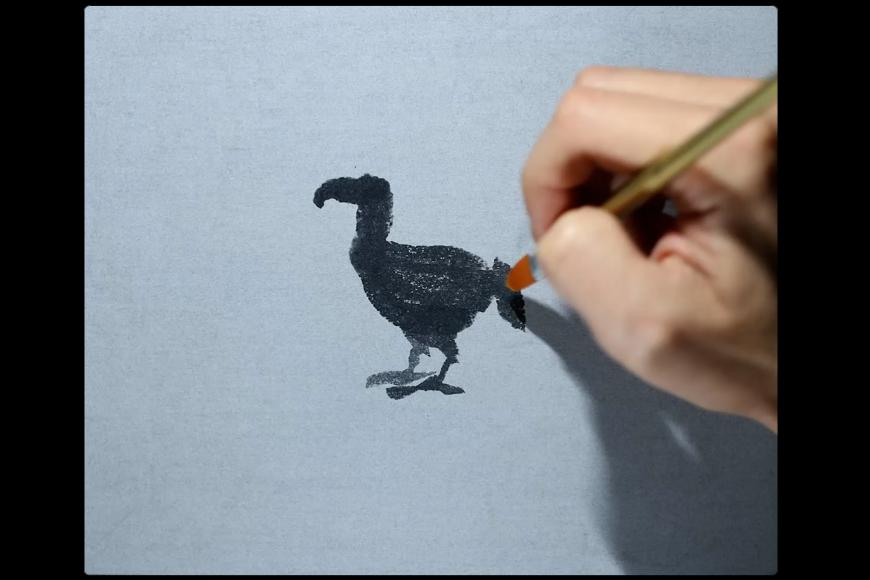
The longing for something to finally happen is fulfilled by a kiss. Not the romantic kind, however, but a monstrous one, a kiss the world will talk about. Thus Dodi plods vigilantly through everyday life and parties, in a cloud of other people’s voices. “EXOMOON” follows her confident path: like a kaleidoscope with creative fractures.
André Eckardt

Credits DOK Leipzig Logo

Director
Gudrun Krebitz
Sound Design
Marian Mentrup
Filmstill Extended Presences

Extended Presences

Cinzas e nuvens
Margaux Dauby
International Competition Documentary Film 2023
Documentary Film
Portugal,
Belgium
2023
12 minutes
Portuguese (Portugal)
Subtitles: 
English, German Subtitles for deaf and hard-of-hearing
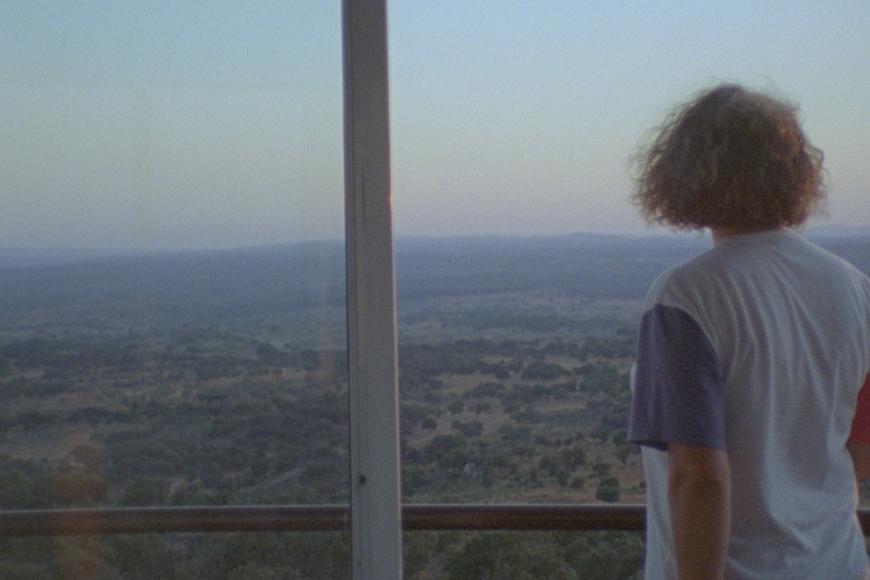
The gaze is firmly fixed on the horizon and distant tree lines, distinguishing natural from smoke clouds. Seasonal work for Portuguese women who observe the landscape from behind the glass panes of fire lookout towers, radio always in reach to report wildfires immediately upon discovery. While the boundary of the visible blurs in the grain of the analogue film stock, Dina, Adriana, Ana Paula, Helena, Luisa, Cristina, Dulce, Lídia, Inês, Fátima, Francisca and Vera emerge as agents of anticipation, modern-day seers whose gentle but persistent peering reaches beyond the burning world. Meanwhile, their male colleagues monitor the situation on computer screens. Poetical textures of waiting and wokeness. The female vision is sharpened and has expectations from the not yet visible future.
Jan Künemund

Credits DOK Leipzig Logo

Director
Margaux Dauby
Cinematographer
Margaux Dauby, Afonso Marmelo
Editor
Raul Domingues
Producer
Margaux Dauby
Co-Producer
Roxanne Gaucherand
Sound
Margaux Dauby
Sound Design
Margaux Dauby, Paulo Lima, Selia Çakir
Filmstill Extremely Short

Extremely Short

Totemo mijikai
Koji Yamamura
International Competition Animated Film 2024
Animated Film
Japan,
USA
2024
5 minutes
Japanese
Subtitles: 
English
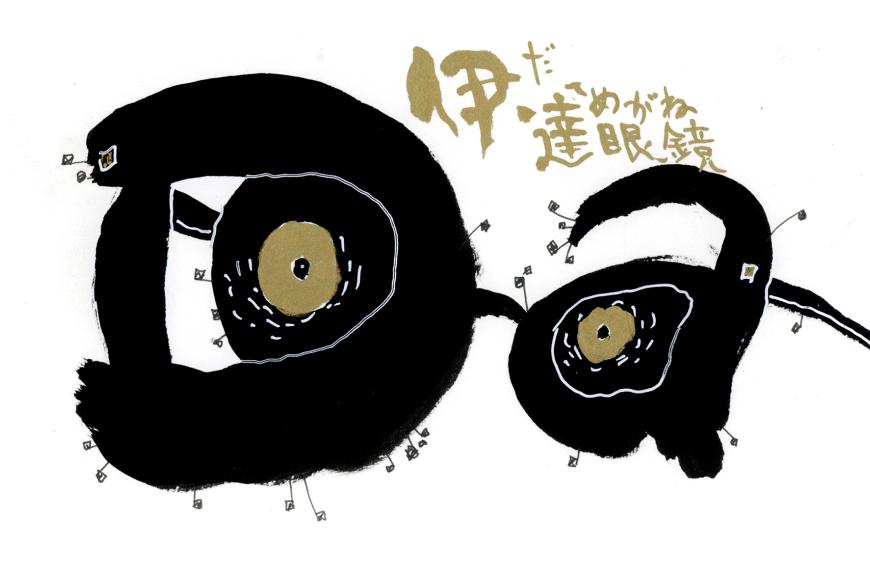
Life is short, extremely short. The time between birth and death seems to fly by. Snip your finger – and it’s all over. The last seconds are just long enough to pronounce the syllable “da”. It is precisely this syllable, spoken with someone’s last dying breath, that is picked up by a man who looks for the shortest of all things in the streets of Tokyo. The syllable whirls through his thoughts, triggering a torrent of reflections on the Japanese language that he gets more and more worked up about. In a dadaist manner, the “da” words hurtle at us like notes in jazz. Bold ink drawings move across the white background, sometimes fluidly, sometimes explosively. A last “da” completes the extemporisation and brings to a standstill all the energetic circling and vibrating that dominated the image before. The dying man closes his eyes. But the end is followed by a new beginning.
“Extremely Short” marks the start of the series “Bungaku Bideo” – literature videos – which, commissioned by the Yanai Initiative, makes innovative accomplices of contemporary Japanese literature and international animation. In this case, Koji Yamamura encounters a piece of prose by Hideo Furukawa, listens to the monologue recited by the author himself and translates his linguistic furor into an exciting visual form.
Franka Sachse

Credits DOK Leipzig Logo

Director
Koji Yamamura
Script
Hideo Furukawa
Cinematographer
Koji Yamamura
Editor
Koji Yamamura
Producer
Koji Yamamura
Sound
Sunao Isaji
Sound Design
Sunao Isaji
Animation
Koji Yamamura
Nominated for: mephisto 97.6 Audience Award
German Competition 2021

Everyman and I

Katharina Pethke
How close is too close? The attempt to produce the portrait of an actor turns into a struggle between closeness and distance and a balancing act between fiction and reality.
Media Name: 3e61062f-7f80-4f6f-ba01-2a62b41f8c29.JPG

Everyman and I

Jedermann und Ich
Katharina Pethke
German Competition 2021
Documentary Film
Germany
2021
65 minutes
German
Subtitles: 
English, German Subtitles for deaf and hard-of-hearing
Is it possible to get close to someone who sees their sole task in life in losing themself in the parts they play? How can a film portrait be created when every image only contributes to further fictionalization? Who is facing each other when the line between fact and fiction becomes blurred? Katharina Pethke looks back to dissect the past and her contradictory feelings for the celebrated actor Philipp Hochmair, following the lines of her own artistic and personal doubts.
The magnificent black and white images guide the eye from the surfaces to the details, whose meaning the director probes and questions in her subjective, tentative voiceover. The film preserves the rawness of unfinished reflections without getting mired in vagueness. Step by step, the honest assessment of a desire is achieved; a desire which could function only in the delicate balance between attraction and repulsion and from which Katharina Pethke frees herself by adopting a position of artistic distance. Her sometimes self-mocking commentary is supported by dramatic guitar riffs (provided by Hochmair’s band project “Die Elektrohand Gottes”) and underpinned by filmic references, all of which revolve around the making of images and the relationship between reality and imagination.
Luc-Carolin Ziemann

Credits DOK Leipzig Logo

Director
Katharina Pethke
Cinematographer
Katharina Pethke
Editor
Katharina Pethke
Producer
Katharina Pethke
Co-Producer
Fünferfilm UG, Julia Cöllen, Frank Scheuffele, Karsten Krause
Sound
Clemens Endreß
Score
Die Elektrohand Gottes