In 1940, two friends who grow up like brothers rescue horses destined for war in Sardinia. Only one of them will survive. An equally dark and poetic animation.
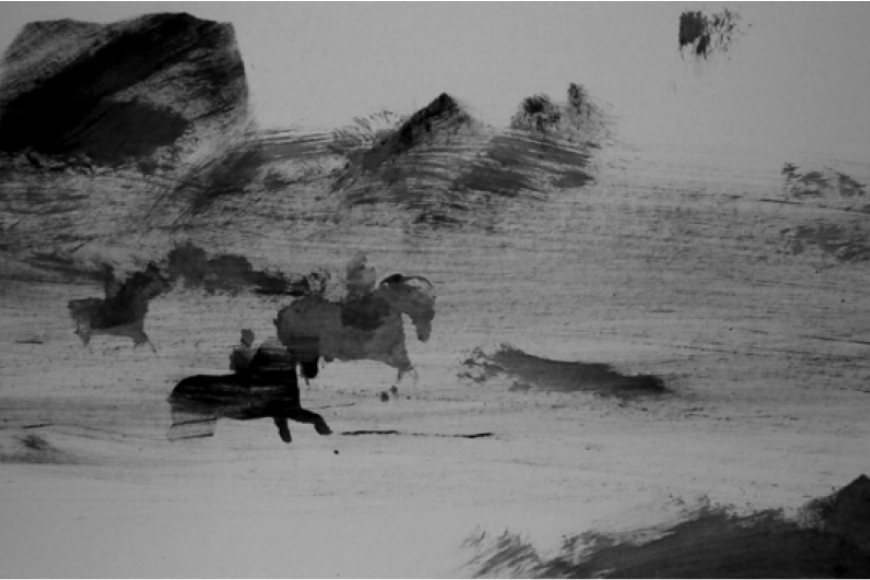
Sardinia, 1940. The harmless term “horsing around” takes on a very serious and ultimately tragic meaning for 14-year-old Michele and his 11-year-old friend Ventura. When they learn that the peasants have sold their best horses for serious money to the state and thus to the military for the approaching war, the two boys take a decision that is as naïve as it is intuitive: They free the herd in a daring nighttime operation. Their happiness is short-lived. Betrayed by a villager, they are caught on the way home and Ventura is shot dead. A senseless death? Or a sign of special bravery, as the ambiguous Sardinian film title suggests? Director Giovanni Columbu, a Sardinian himself, has dedicated his late animation debut to his grandmother who once told him the story. He took the liberty of adapting it with brushstrokes on paper, his style drawing primarily on the charms of historical painting schools, animation techniques and cinema genres. Columbu’s associative visual language, marked by shades of black, white, and grey, is animated by impulsive hatchings, countless dots, and generous elisions. The soundtrack, too, sets rather sparse nuances – subtle illustrations that draw on Sardinian cultural traditions while opening a space for universal metaphors.
Andreas Körner
Credits
Director
Giovanni Columbu
Script
Giovanni Columbu
Editor
Giovanni Columbu
Producer
Giovanni Columbu
Co-Producer
Flavia Oertwig
Score
André Feldhaus, Filippo Ripamonti, Alessandro Olla, Hans Zeller, Pietro Mascagni
Rimini – Sarajevo. Mirela, who grew up in Italian exile, returns to Bosnia with many unanswered questions. A sensitively captured search for identity and belonging.
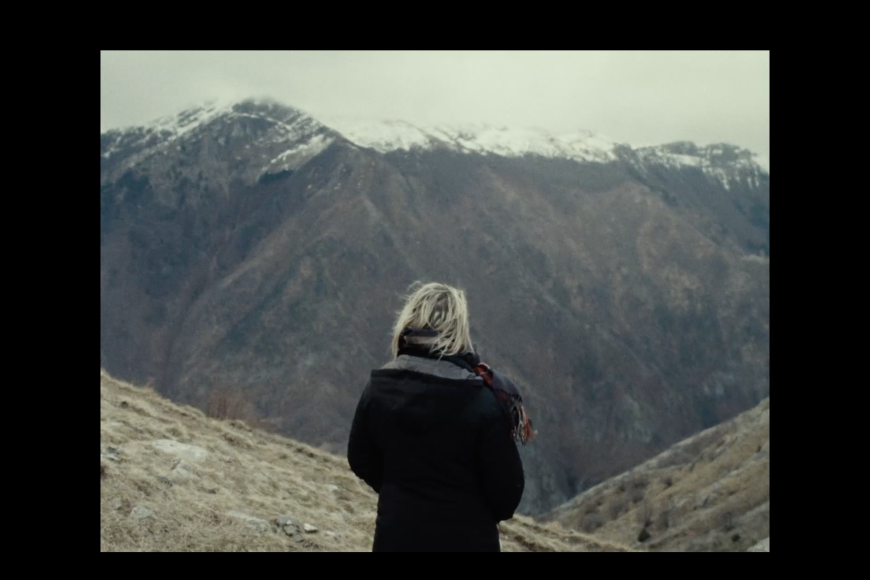
Sarajevo–Rimini. This route once took ten-year-old Mirela to safety from the Bosnian War in 1992, when she was evacuated to Italy by a United Nations convoy along with a group of other orphans. Their stay was to be temporary, but no one came to pick her up. So Mirela began a new life on the Adriatic coast. As an adult, she returns to her homeland in search of a mother whom she last saw as a four-year-old, a journey accompanied by many questions: Why was she among the few who were sent to exile? Would it have been better to have stayed in Sarajevo, free of guilt? Mirela finds no clear answers. But from the traces she gathers and the threads that cross in her life, “Dom” weaves a sensitive meditation about identity and belonging.
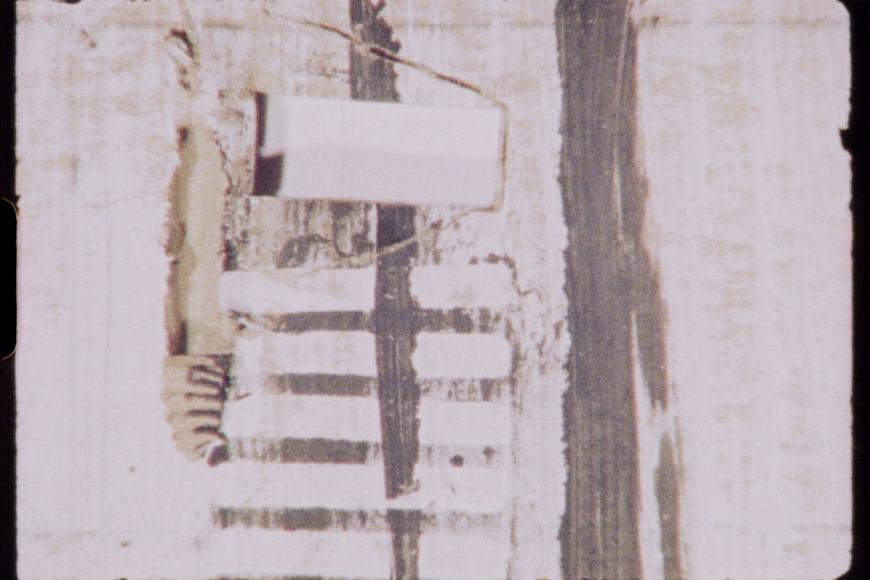
A cinematic daydream made of corrugated cardboard and paint, shot with a Super 8 camera. Both the soundscape and the shapes, colours, and transitions shift between tough and tender.
A cinematic daydream in corrugated cardboard and paint, shot with a Super8 camera. The soundscape consists of hills, some easily climbed, others requiring the last ounce of strength. The shapes, colouring, cross-fades and rhythms of this encounter with paper also shift between tough and tender and are made tangible both on the visual and the tonal level.