An emerging solidarity community on strike: In 1965, Mexican farm workers stood up against the unregulated capitalism in the agricultural sector and the racism of the white land owners.
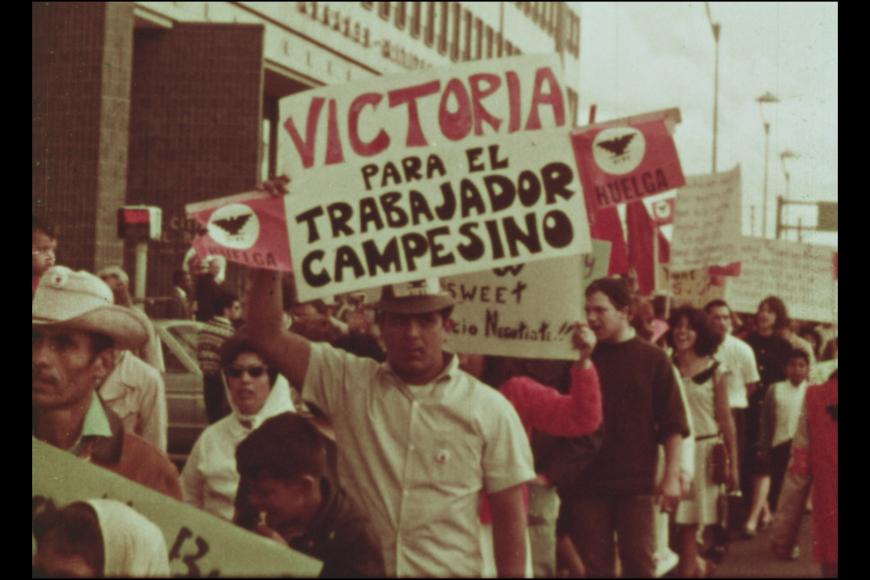
In 1965, the longest farm workers’ strike in US-American history unrolled in Delano, California. Led by Cesar Chavez, the as yet unorganised Mexican seasonal labourers fought successfully for better working conditions and the right to found a union of their own, the National Farm Workers Association (NFWA). “¡Huelga!” is the partisan portrait of an emerging solidarity group that not only stood up against the unregulated capitalism in the agricultural sector but also declared war on the racism of the white landowners. In addition to depicting the mechanisms of the strike, the mobile camera also makes a point of documenting the degrading living conditions of the people who kept one of the most powerful industries in the country going.
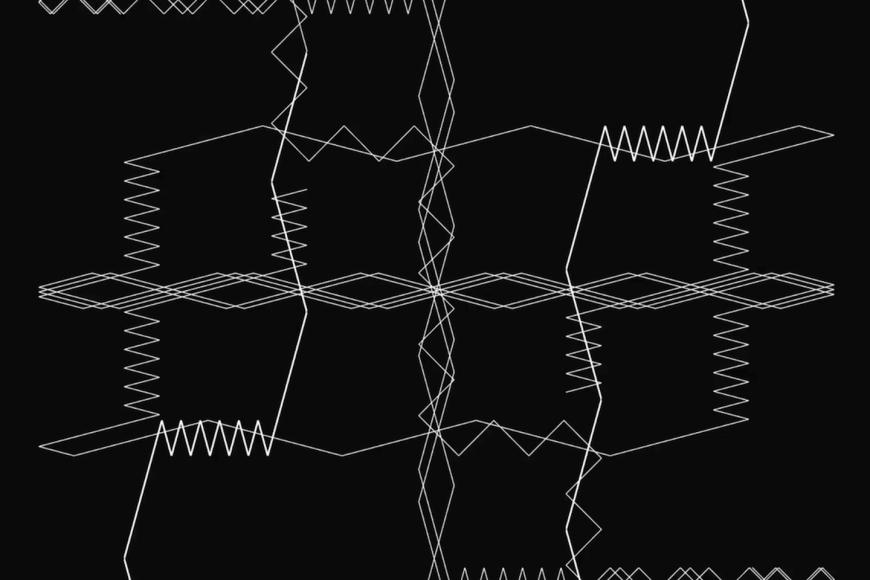
A generative algorithm propels a delicate ray of light forward until it bounces from the imaginary boundaries of the image. A study of reflection, refraction, and materiality.
A delicate white ray approaches the frame of a dark picture, bounces off and changes direction. The ray begins to ramify into a geometrical shape. Various algorithms became the co-authors of this generative work that explores the physical laws of reflection. The code-generated soundtrack reacts in real time to the gradually transforming sequences of figures.
Removed from its context, the M+ Museum building in Hong Kong becomes an aesthetic object. Its forms and textures tell of the elementary structures of our material world.
This film is inspired by the architecture of the M+ Museum in Hong Kong, questioning the conventional definition of a museum as such by taking it out of its context and regarding it as a pure object. A complex interplay of geometrical forms, inspired by the interior of the Hong Kong museum building, refers to the elementary structures that determine our material world.
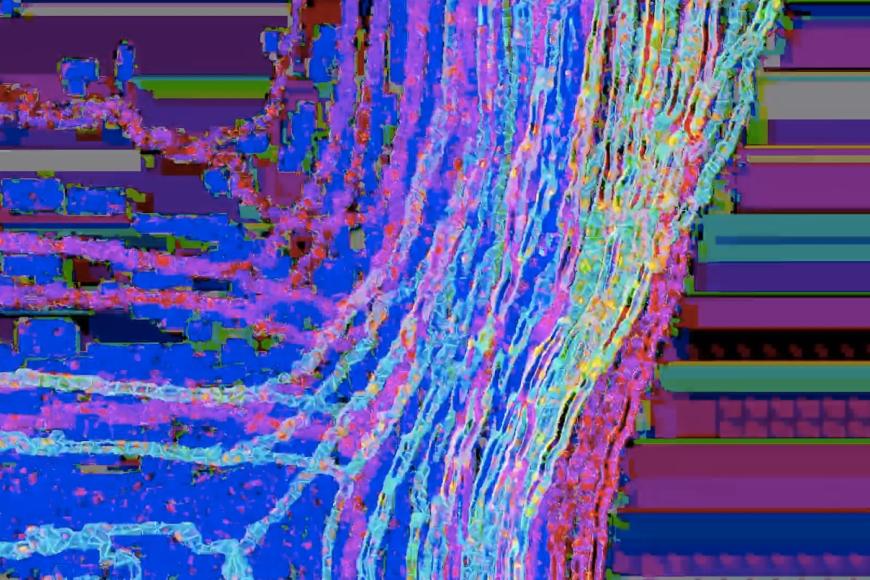
This film examines the question of the boundaries between analogue and digital images in a haunting, sometimes challenging way. Aesthetical elements of techno culture are reflected here.
Coarse pixelated lines burst into our field of vision. They seem to communicate, but in a strange language. A little later they explode in a blaze of colours, while old-fashioned test patterns sneak into the background. Memories of a not-too-distant era come to mind, when everything was analogue and pixels could only dream of their big future.
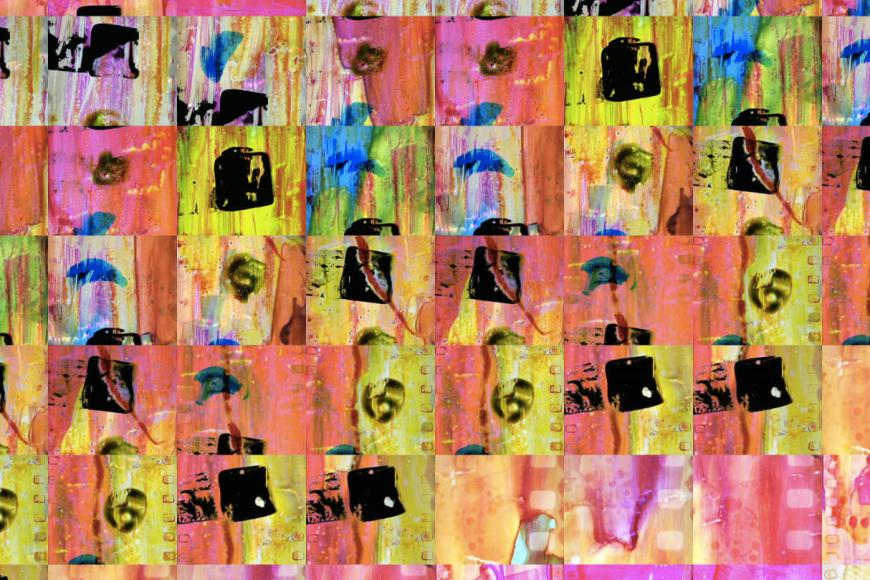
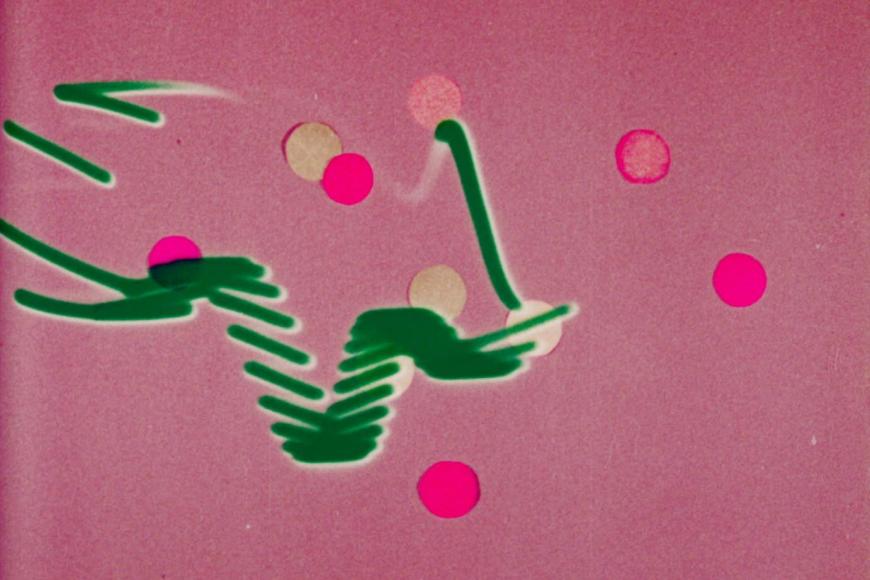
Twelve animated projection tiles combine to develop a rhythmic dialogue that, using 16 mm film, paint and a projector, examines the intrinsic relationship between sound and image.
Twelve image tiles merge in a rhythmic dance that explores the intrinsic relationship between sound and image. The elements in the tiles, created by painting and scratching directly on the 16mm film strip, respond to the hand-drawn soundtrack and engage in a surprising and surreal dialogue. Their language cannot be understood, only felt.
Single frames from a direct animation appear on the screen in staggered repetition. The shapes painted, printed and scratched on 35mm material evolve, with minimal time lapses, from one edge of the frame to the other. A trace is left, telling of time itself and asking: When exactly is “now”? The past, present and future are spinning in the chaos of moments.
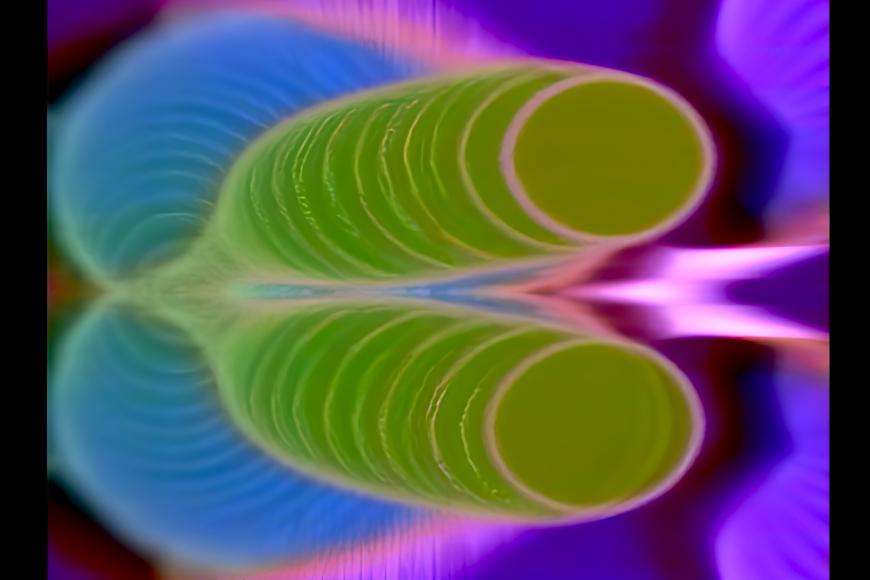
A universe of colourful and lively rhythmic forms created using a pioneering combination of traditional animation and electronic images from a specially designed oscilloscope.
Hand-coloured and from the mind of one of the 20th century’s most innovative abstract filmmakers, “Abstronic” combines abstraction and electronics to produce a playful flow of images reminiscent of an abstract painting in motion. Mary Ellen Bute, who was also a painter, created the film using electronic images generated by a specially designed oscilloscope in combination with traditional animation.
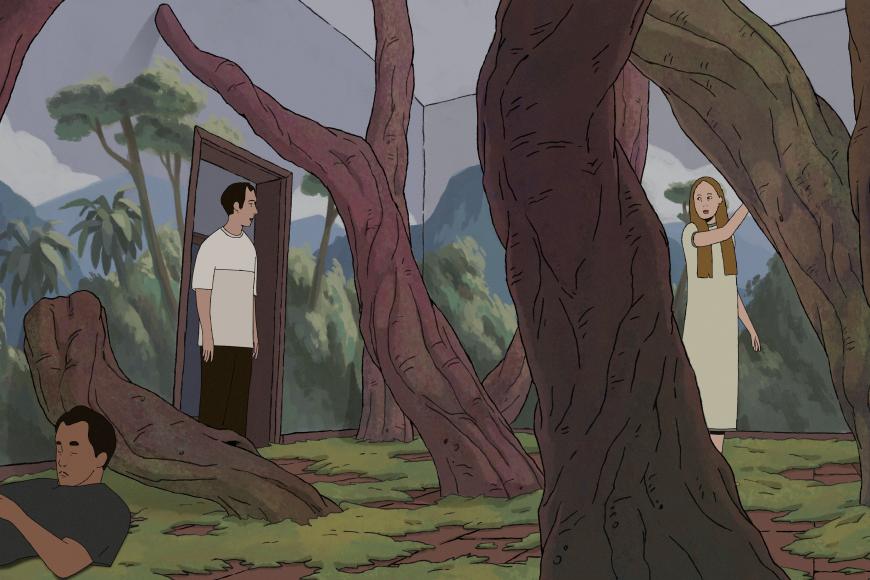
“Are you with us or against us?” A cult-like community in the neighbouring flat who displays ape-like behaviour and fanatical faith tries to convert a man after work.
“Are you with us or against us?” Nothing less lies in the air, unspoken. No nuances, no discussions, hardly any choice. Did the tired man expect such life decisions after work? Unlikely. He just wanted to chill out and watch mindless television when suddenly an alien world on the screen catches up with him in the comfort of his home: A cult-like community lives next door, their behaviour ape-like, their faith fanatical, determined to convert him. Their flat is decorated with forests and deserts. Anyone who tries to look behind the painted wallpaper, to separate scenery from reality, commits treason and deserves banishment or death. Plato’s Cave Analogy in a radicalised version for the 21st century. Freedom and truth or stability and a sense of belonging? Is the price of accepting a distorted reality just to be allowed to live too high? And most of all: Is there an alternative worth living? The world outside, behind the window, remains vague, its threats only implied. In this parable about passivity, curiosity and free choice, Alexandre Sousa touches on the urgent questions of our time: questions of isolation, echo chambers and the impossibility for humans to stay unpolitical. Do we even have a chance to resist?
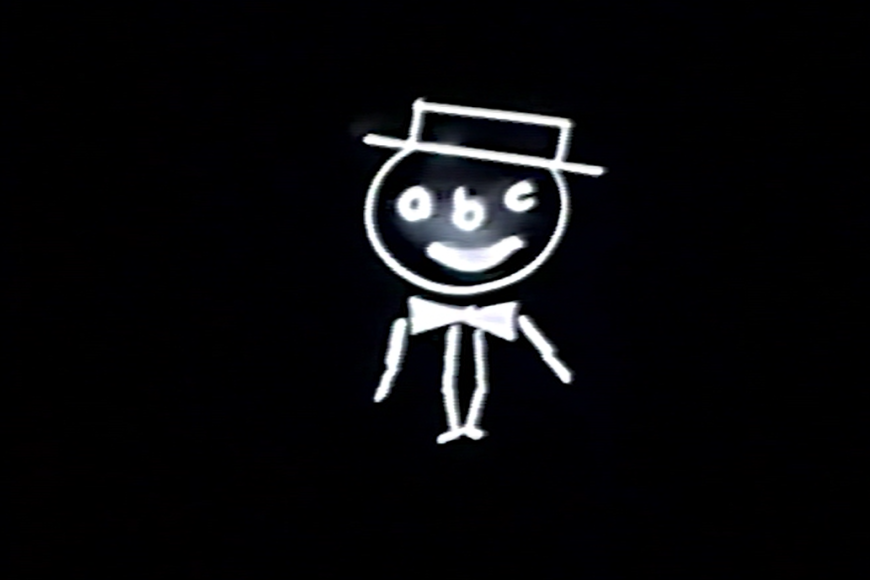
A block of films showing some of the earliest examples of video synthesis using analogue computers, in addition to some early examples of electronically designed and animated characters.
This compilation of four films demonstrates the capabilities of the ANIMAC analogue computer, the predecessor to the later Scanimate video synthesizer, which would kickstart a new era in motion graphics during the 1970s. The ANIMAC’s jaunty and fluid forms, created using manually controlled cathode rays which drew on screen in real time, give an early example of electronically designed and animated characters.

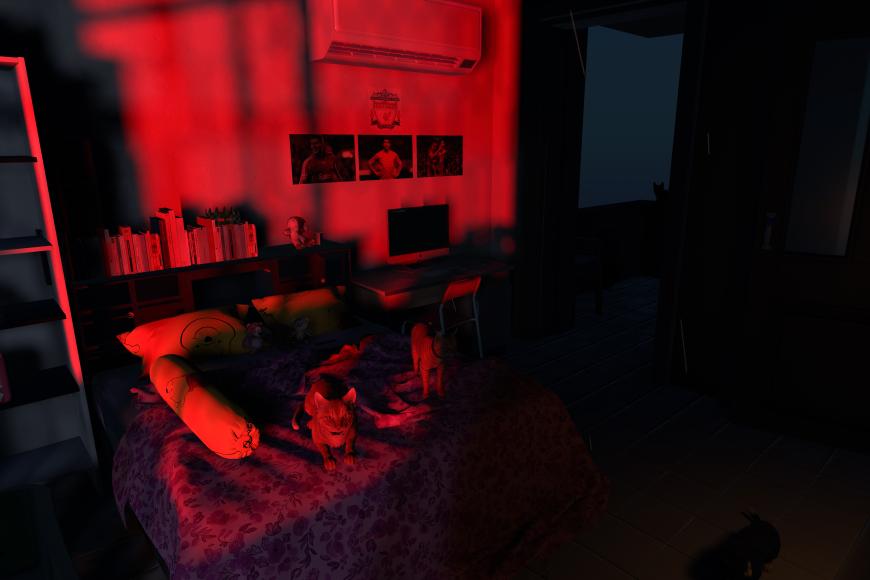
A nighttime journey through the streets of Paris with Renée, a trans asylum seeker from Thailand. Through the dark of night, her lightness of being shines brightly.
Renée, an asylum seeker from Thailand, walks the night-time streets of Paris. Suspended by the asylum system and invisible to passers-by, she is neither here nor there. For one night, viewers are invited to walk with her, in a cinematic VR experience led by light and shadow-play. “Another Place” was made in collaboration with Renée and is grounded in her experience.
Dana Melaver
Credits
Director
Domenico Singha Pedroli
Producer
Luc-Jérôme Bailleul
Production Company
Le Fresnoy – Studio national des arts contemporains
A dream team of talented artist engineers takes us on a psychedelic drift through synthesized new age landscapes made of vapourwave colours and swirling, fractal-like shapes.
Sorensen, DeWitt and Winkler were a dream team of artist engineers, a talented trio whose fluency in new media and technology won them numerous awards and accolades. Their skills in video synthesis and processing are deeply visible in this dreamy, psychedelic drift through synthesised New Age landscapes made of vapourwave colours and swirling, fractal-like shapes.
All creatures in Greenland are green, except Bluekid. In this partly animated handicraft world, Mwita Mataro reflects on experiences of racism in Austria with children and experts.
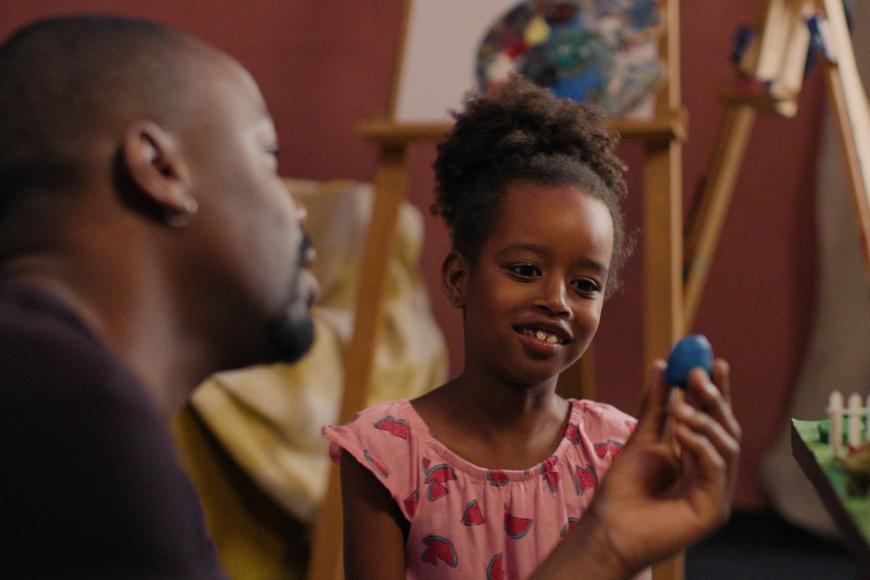
In his early twenties, Mwita Mataro set himself three big goals: become a rock star, make a film, and then found an art school in Tanzania. He has already accomplished the rock star part – he is the frontman of a band. And this film is his directorial debut. There was a choice of many subjects, something beautiful like friendship, for example. But there is one thing that bothers him more than his white film colleagues, and that is the colour of his skin. So what does it mean to grow up as a Salzburg native with Tanzanian roots, as a Black Person of Colour in predominantly white Austria? To investigate this, he has teamed up with young BPoCs to create the animated fantasy world Greenland: a place where all the potato creatures are green except Bluekid and his blue family. They paint themselves green to be less conspicuous, but since this does not always work out, Bluekid experiences rejection and marginalisation.
In his documentary essay, Mataro reflects on a daily reality based on colours: racism, alien attributions, otherness, blues experiences in Greenland. He listens to children and adults, lets the audience participate in talks with pedagogues, psychologists and politicians and opens up in front of the camera at home. With “Austroschwarz”, Mataro also comes one step closer to his third goal.
Tina Jany
Credits
Director
Mwita Mataro, Helmut Karner
Script
Mwita Mataro, Helmut Karner
Cinematographer
Jasmin Schwendinger
Editor
Christin Veith
Producer
Stephan Herzog, Andrea Elaiza Arnold
Sound
Cristi Iorga
Sound Design
Eli Frauscher
Score
Nicola Mpunga
Animation
Vladimir Savić
Nominated for:
Gedanken Aufschluss Prize,
Young Eyes Film Award,
Leipziger Ring
In 1940, two friends who grow up like brothers rescue horses destined for war in Sardinia. Only one of them will survive. An equally dark and poetic animation.
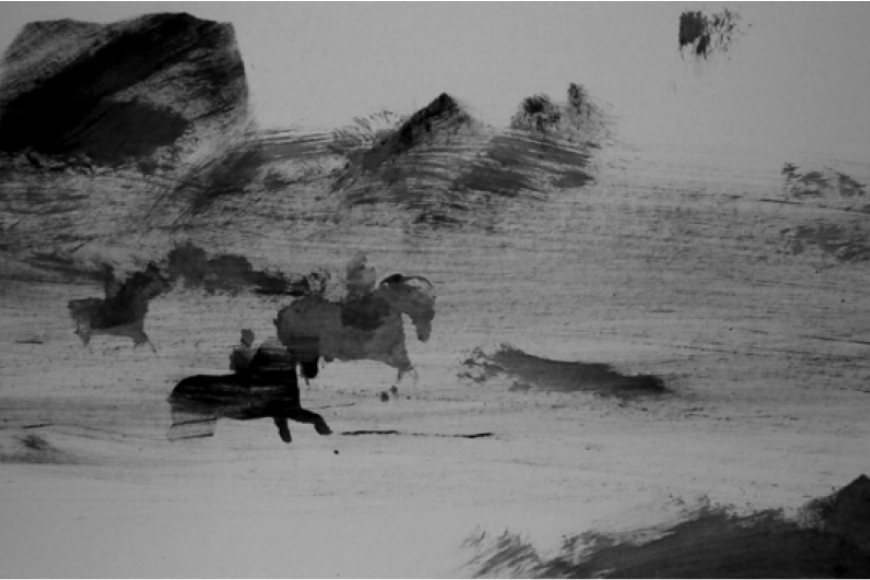
Sardinia, 1940. The harmless term “horsing around” takes on a very serious and ultimately tragic meaning for 14-year-old Michele and his 11-year-old friend Ventura. When they learn that the peasants have sold their best horses for serious money to the state and thus to the military for the approaching war, the two boys take a decision that is as naïve as it is intuitive: They free the herd in a daring nighttime operation. Their happiness is short-lived. Betrayed by a villager, they are caught on the way home and Ventura is shot dead. A senseless death? Or a sign of special bravery, as the ambiguous Sardinian film title suggests? Director Giovanni Columbu, a Sardinian himself, has dedicated his late animation debut to his grandmother who once told him the story. He took the liberty of adapting it with brushstrokes on paper, his style drawing primarily on the charms of historical painting schools, animation techniques and cinema genres. Columbu’s associative visual language, marked by shades of black, white, and grey, is animated by impulsive hatchings, countless dots, and generous elisions. The soundtrack, too, sets rather sparse nuances – subtle illustrations that draw on Sardinian cultural traditions while opening a space for universal metaphors.
Andreas Körner
Credits
Director
Giovanni Columbu
Script
Giovanni Columbu
Editor
Giovanni Columbu
Producer
Giovanni Columbu
Co-Producer
Flavia Oertwig
Score
André Feldhaus, Filippo Ripamonti, Alessandro Olla, Hans Zeller, Pietro Mascagni
Brothers in the Bohemian Forest: Franta and Ondra, twins with impressive full beards, in their early 60s, live in quarrelsome harmony on a remote farm in a rugged landscape.
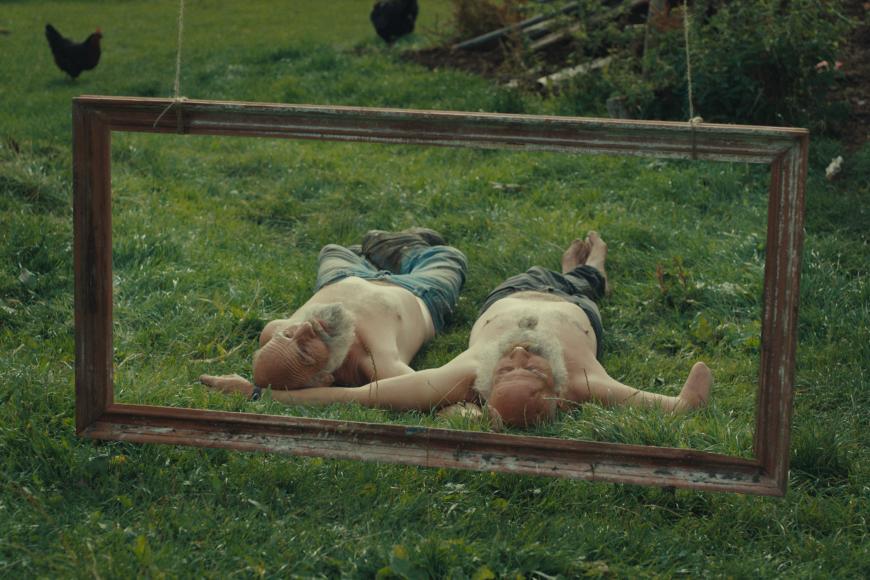
Two quarrelsome brothers with impressively full beards live on a remote farm in the Bohemian Forest, surrounded by a rugged landscape: At one point, Franta and Ondra themselves become aware that this setting has an almost Old Testament feel to it, but cannot agree on who might be Cain and who Abel in this scenario. They rarely agree in any case: Daily squabbles are the big constant in the life of the identical but otherwise dissimilar twins. When Franta embarks on another breakneck adventure, Ondra wants nothing more than to smoke in peace. Nonetheless, they occasionally exchange hugs and nose kisses. In their early 60s, Franta and Ondra spend their time working in the fields, playing jokes with the animals, or competing in left-hand arm-wrestling duels. The facts that Franta lost his lower right arm in an accident or that the twins took part in the 1989 revolution in Czechoslovakia belong to an apparently distant past. With a domestic cow as narrator, the leitmotif of a huge mirror, and a classical soundtrack, Miro Remo finds a wonderful form for the portrait of these idiosyncratic people.
Jan-Philipp Kohlmann
Credits
Director
Miro Remo
Script
Aleš Palán, Miro Remo
Cinematographer
Dušan Husár, Miro Remo
Editor
Máté Csupor, Šimon Hájek
Producer
Tomáš Hrubý, Tomáš Hrubý, Miro Remo, Pavla Janoušková Kubečková
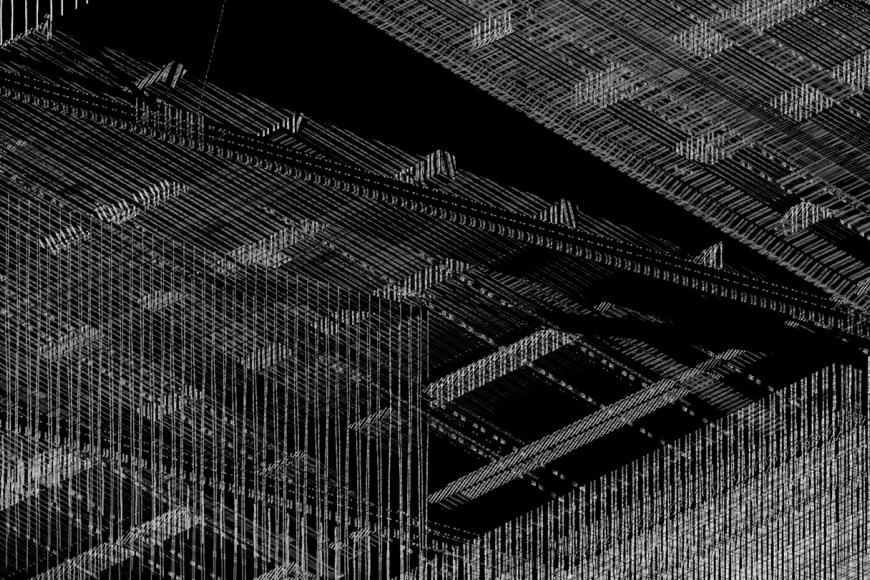
Shimmering lines interweave again and again to become a digital cloth. A 3D model of Kunsthaus Baselland disentangles itself from the lines only to disappear again in a moment.
Shimmering lines intertwine constantly to create ever new digital webs. The third dimension is added by diagonals. A moving camera allows us to finally recognise the secret that the visual elements have kept hidden so far: A 3D model of the Kunsthaus Basel creative centre disentangles itself – only to fade back into the luminous void.
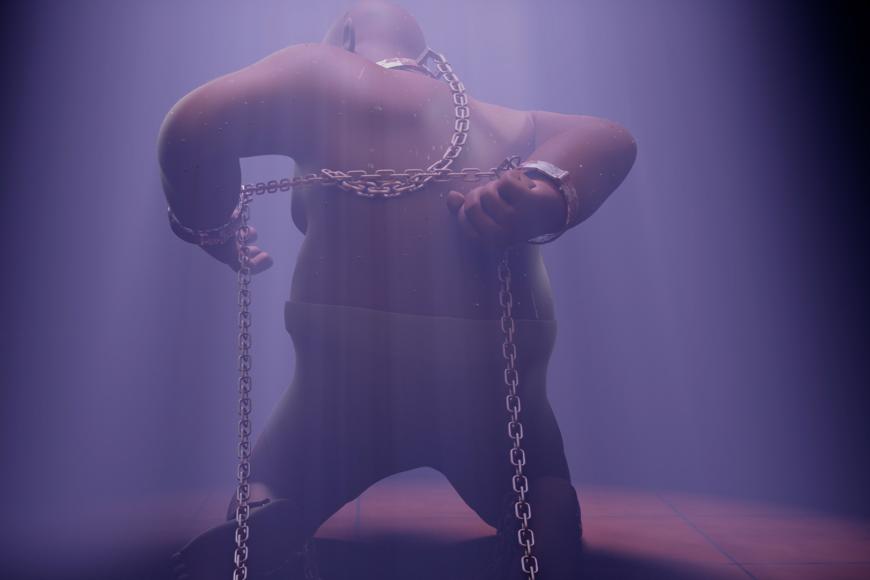
A man throws off the shackles of slavery, lays the traditional Kente cloth aside, puts on a business suit – and starts to walk towards the future. Or towards what he thinks is the future, because this is not a pleasant walk: To the cheers of the people, the man pushes into the backroom of an Asian restaurant where he flogs plots of land, moves to the next backroom, money case in hand, to bribe the pastor and ultimately ends up on stage to give a state-supporting speech as President – against corruption, of course. The career of our nameless protagonist – whose sunglasses-covered face, interestingly, we get to see only in the limelight – takes him right through the streets of an African metropolis, past protests being suppressed, through a dilapidated infrastructure, criminal gangs, and even natural disasters. Nobody has thrown off the shackles of slavery in Francis Yushau Brown’s relentlessly critical film. Instead, a few individuals have chained themselves to nepotism and keep the rest of the population poor and backwards. His film is a 3D indictment brimming with rage, including of the Western and Far Eastern (neo) colonizers. And far above hover the enraged gods, waiting for the people to put an end to this situation at last.
Marie Ketzscher
Credits
Director
Francis Yushau Brown
Script
Francis Yushau Brown
Editor
Charles Sam
Producer
Ruth Ojougboh
Sound
Gomez Beatx
Sound Design
Gomez Beatx
Score
Gomez Beatx
Animation
Francis Yushau Brown, Charles Seyi Kilanko, Kingsford Appiah, Jason Bonsu Sarpong