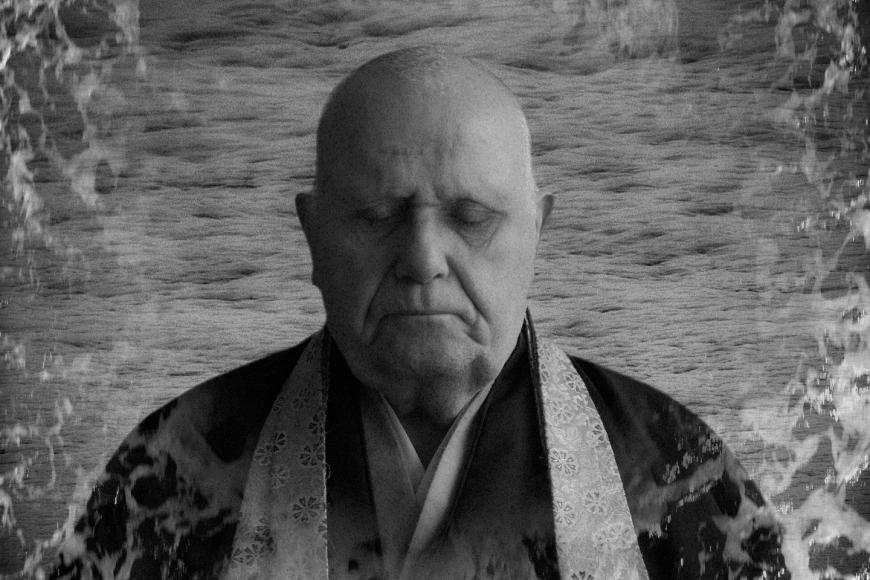
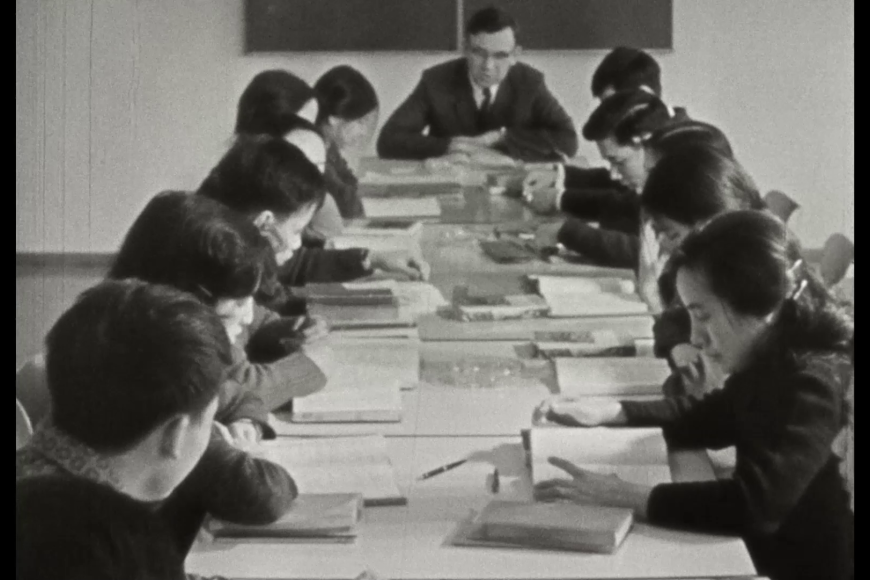
Eating together with chopsticks, forks, or cheese sandwiches: Heinz Toku-Zen Anneser and his students practice Buddhist rituals without pretension. In his study, which is as precisely measured as it is poetic, Thomas Köhling observes the daily routines of this small, quiet group in the German provinces and finds appealingly bizarre moments when Eastern religion and western culture overlap. The sky above the Velux window is the same as above Mount Fuji.
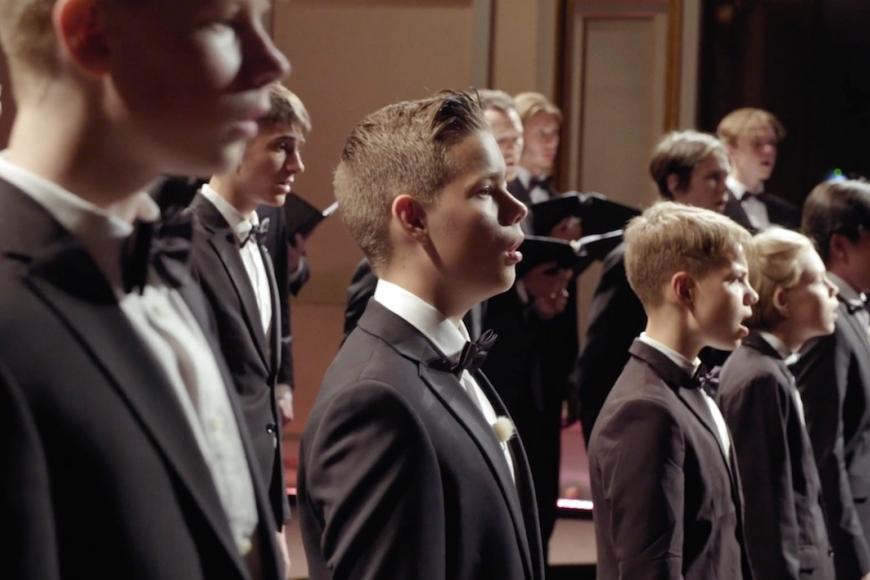
Boys who from earliest childhood have sung in a choir have now entered puberty. In the “Voice Break Choir” they wait until their changed voices can be relied on again.
Boys who from earliest childhood have sung in a choir have now entered puberty. They have to wait in the “Voice Break Choir” until their voices can be relied on again – in order to continue singing with the men. In interviews and impromptu songs, they describe personal changes and searches for identity. A film about the threshold between being a boy and becoming a man.
Lina Dinkla
Credits
Director
Ina Holmqvist, Martina Carlstedt
Cinematographer
Martina Carlstedt, Ina Holmqvist
Editor
Matti Kentrschynskyj, Ina Holmqvist, Martina Carlstedt
A US Navy satellite communication system on Sicily. Valentina lives here with her parents but wants to become more independent. A tender story of emancipation at a site of global politics.
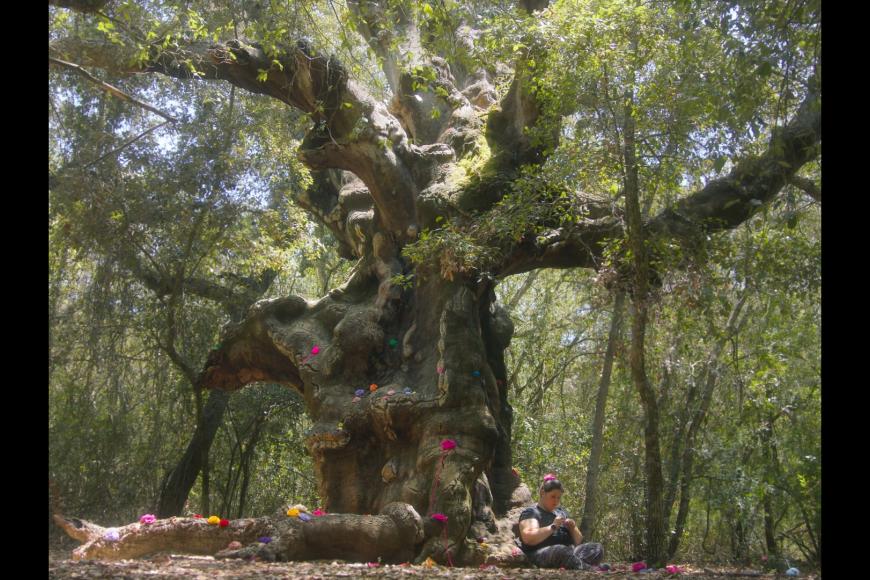
26-year-old Valentina still lives with her parents. She has always put their welfare before her own needs. The two, on the other hand, keep harping on how clumsy and unambitious she is. The sensitive young woman finds reassurance in the artful crocheting of woollen blossoms and among the thousand-year-old cork oaks of the nature reserve surrounding her hometown. The small Sicilian town of Niscemi is of the highest global political importance: Since 2016, the US Navy has been operating a ground station with huge parabolic antennas here for their satellite communication system MUOS. The system also serves to locate Russian military in the Ukraine and turns the region into a potential target for attacks. The locals have been protesting for years. Due to the strong electromagnetic waves the health risks are enormous. The remarkable sound design underlines the danger and conveys a sense of unease that grows with all the other threats: massive environmental destruction caused by intensive agriculture, drought, fires. Valentina is deeply shaken. Against her parents’ wishes, she takes part in anti-MUOS rallies, wants to become independent at last, drive a car, get a job. This tender story of emancipation is enchanting with its subtle narrative and dream-like interventions. Valentina will be remembered for a long time!
Annina Wettstein
Credits
Director
Francesca Scalisi
Script
Francesca Scalisi
Cinematographer
Stefania Bona
Editor
Marzia Mete
Producer
Mark Olexa
Co-Producer
Chiara Galloni, Ivan Olgiati
Sound
Balthasar Jucker
Sound Design
Adrien Kessler, Olga Kokcharova
Score
Olga Kokcharova
World Sales
Raluca Iacob
Nominated for:
FIPRESCI Prize,
Prize of the Interreligious Jury
Women look after a grave on an island cemetery. Observing this process triggers an experimental, visually inventive reflection on female bonding and vanished men.
Two women take the ferry to an island cemetery to tend to a gravesite. With the utmost care and perseverance, they remove moss and candle wax from the stone, wash and scrub every chink, trim flower arrangements and set up lights that flash in different colours at night.
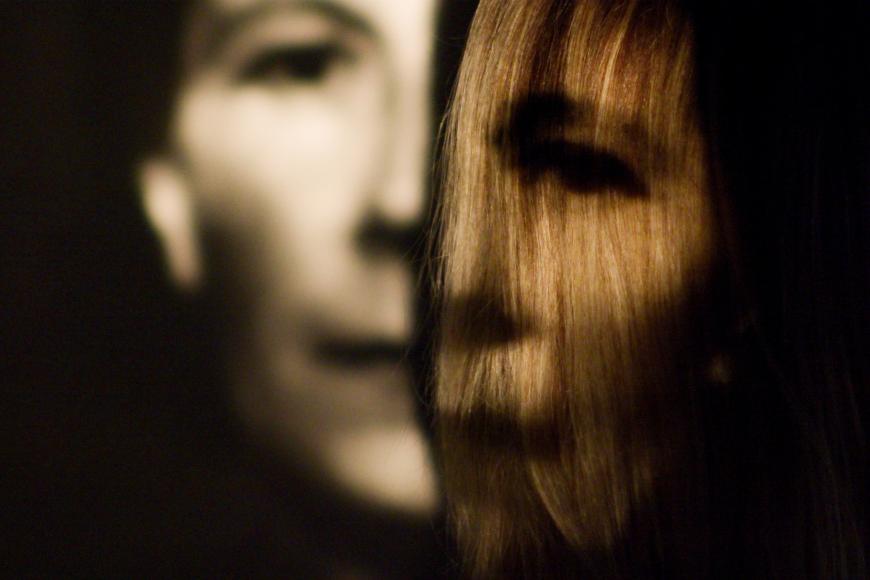
It is a work of mourning under special circumstances, as Sara Jurinčić makes plain in an early shot: She edits two picture galleries next to each other, one of male, the other of female portraits. The men suddenly vanish from their photos and thus from the island. The faces of the women remain. And it is these portraits, motifs chosen by themselves for their gravestones, that dominate the film, give a face to its experimental explorations of female genealogy. Jurinčić wraps them in visual metaphors of extraordinary intricacy, sometimes literally as in the spectacular finale, when the portraits of the dead women are superimposed on the faces of the living women – with an eerie effect that is as disturbing as it is sublime.
Observation of an important infrastructure in Amazonia: downstream on a cargo boat that brings passengers and goods to the isolated communities in the Peruvian rain forest.
The towns and villages along the Peruvian section of the Amazon can’t be reached by road. If you can’t afford to take the plane, you travel by cargo boat on the river for days. As a means of transport, the boats are part of an important infrastructure: While the steamships of the “rubber barons” used to travel this route during the brutal rubber boom, cargo boats now bring goods to the communities on the edge of the rain forest.
The observations of the Peruvian brothers Álvaro and Diego Sarmiento and the anthropologist Terje Toomistu are focused entirely on the occurrences on the boat: loading and unloading sugar, chickens, onions, lemonade and building material, the crew, the passengers travelling hammock to hammock on deck, and the people waiting on the banks of the river. The camera never glorifies either the landscape or the work; instead it is always in the midst of things, sometimes even in the way. The journey downstream is accompanied by tales of sinking ships, swimming animals and newfound faith. Observed with such reserve, a lot can still be inferred: about the tough jobs of the dockers, the lives of the women and children who come aboard to sell food, about the influence of the “Israelitas” and how important trading by boat is for the indigenous population of the tributaries.
Marie Kloos
Credits
Director
Álvaro Sarmiento, Terje Toomistu, Diego Sarmiento
Script
Álvaro Sarmiento, Terje Toomistu
Cinematographer
Terje Toomistu, Diego Sarmiento
Editor
Fabricio Deza, Diego Sarmiento, Álvaro Sarmiento, Alex Cruz
Producer
Álvaro Sarmiento, Diego Sarmiento
Co-Producer
Terje Toomistu
Sound
Cesar Centeno
World Sales
Pascale Ramonda
Nominated for:
Prize of the Interreligious Jury,
FIPRESCI Prize
A computer animated music clip to dark breakcore beats celebrates effects and mysticism. But suddenly the abrasions of a vulnerable digital DNA are revealed.
Celtic cult sites communicate effectively with the cosmos, the terrestrial darkness is churned by energy fields and sunrays. Even in one of his earliest works – a video clip for breakcore pioneer Venetian Snares – David OReilly dissects the myth of a homogenous CGI world, revealing the abrasions of a vulnerable digital DNA.
This cinematic search for traces takes us from silkworm breeding in a Leipzig allotment garden to the island of Crete. Idyll and war begin to converge – historical, scenic, complex, surprising.
What’s the parallel between a Leipzig allotment club and the Wehrmacht’s invasion of Greece? Alert to historical lines of connection, outstanding archive material and enchanting images of the austere Cretan landscape, the complex links between silkworm breeding here and German war crimes there are laid bare. The focus is less on settling questions of guilt than on depicting the inner dynamics of war, resistance and forgetting.
Luc-Carolin Ziemann
Credits
Director
Deborah Jeromin
Script
Deborah Jeromin
Editor
Deborah Jeromin, Sofia Hernández
Producer
Deborah Jeromin
Sound
Pedro de Sousa Pereira
Funder
Kulturstiftung des Freistaates Sachsen, Stiftung Maecenia
Plasticine figures re-enact the story of an imposition: the severely handicapped 16-year-old Laura is raped. The Argentinian state wants to force her to have the child.
A human tragedy on the backdrop of a legal and medical scandal which in 2007 lead to legal action against the Argentinean state before the UN Human Rights Commission and a verdict of guilty in 2011. The mentally and physically handicapped 16-year-old girl Laura had been raped by her uncle in 2006. But a legal abortion which had already been officially granted at the request of her mother, Vicenta, was opposed by lawyers and doctors.
“Vicenta” conveys the details of this truly incredible imposition in the form of a fable in which plasticine figures seem rooted to the spot in a Kafkaesque nightmare. Only the camera moves through this scenery, usually in travellings across the set-up. Very occasionally excerpts of newscasts, broadcast from small monitors on the stage of this “puppet show”, authenticate the narrative. And yet the whole spectrum of conceivable feelings between being openly paralysed with shock and proud self-empowerment of the mother who stubbornly fights for justice for herself and her daughter is conveyed and made comprehensible. In the above-mentioned UN ruling, the Argentinean state was accused of having fundamentally disregarded the recognised right to freedom from inhuman, cruel and degrading treatment in the case of Laura and her mother Vicenta.
Pensioner Lehmann, folk artist Köppe, engineer Krahnstöver and the famous painter Willi Sitte: Four GDR citizens explain their motives and actions for solidarity with Vietnam. The emphasis is on the global nature of the protests against the war in the Far East, also and especially in Western countries, and therefore the system-spanning character of the movement. An appeal to the audience to get involved.
Konstantin Wiesinger
Credits
Director
collective
Producer
Filmkollektiv VEB Elektrochemisches Kombinat Bitterfeld
DJ Vika is 84 and a star of Warsaw’s nightclubs. She refuses to grow old and sit at home. Instead, she wants to celebrate life, enjoy herself and music.
Imagine the last day of your life has dawned. What will stand up to review? What brings contentment? What brings regrets? “Vika!” is a film about the value of life and self-discovery, inspiring us to reflect on one’s chosen path and its forks and to stay true to oneself.
Vika, the 84-year-old main protagonist, a mother and grandmother several times over, looks back on a difficult childhood and many years of working in a “proper” job. When she retired, she seized the opportunity to reinvent herself. She became a DJ and star of the Warsaw nightclubs, who regularly drives her young audience wild. Super cool? Inappropriate for an elderly lady? Agnieszka Zwiefka’s portrait deconstructs the borders between the “acceptable” and “unacceptable” roles of a woman who refuses to acknowledge her age. Vika wants to live in the moment, with no ties to the past. Zwiefka combines elements of music and narrative documentary films and creates an enchanting, immediately accessible and utopian world. Dancing to Vika’s rhythms means freeing yourself from the limitations dictated by society, age and sometimes even one’s own children.
Victoria Leshchenko
Credits
Director
Agnieszka Zwiefka
Script
Agnieszka Zwiefka
Cinematographer
Monika Kotecka
Editor
Katarzyna Orzechowska, Michał Poddębniak
Producer
Katarzyna Ślesicka, Anna Stylińska
Co-Producer
Heino Deckert, Tina Börner, Outi Rousu, Elena Filippini
Once upon a time there was a young Moroccan man who had a dream, a big dream. And he wanted it to come true, so he thought, somewhere beyond the great sea, perhaps in Estonia. Meanwhile, beyond the sea, perhaps in Estonia, a decadent wedding was being celebrated at the Villa Antropoff. The guests look like Mafia and money-laundering.
Ralph Eue
Credits
Director
Vladimir Leschiov, Kaspar Jancis
Script
Kaspar Jancis, Vladimir Leschiov
Cinematographer
Līga Skirmane, Ere Tött
Editor
Kaspar Jancis, Vladimir Leschiov
Producer
Vladimir Leschiov, Kalev Tamm
Sound
Horret Kuus
Score
Kaspar Jancis
Animation
Marje Ale, Vladimir Leschiov, Tarmo Vaarmets, Karina Golovin, Ülle Metsur, Kristīne Zvirbule, Līga Skirmane
An Instagram user surface ripples, turns into a graceful feedback vortex and attempts to impress in virtual space. Its motif: the absence of a photographic object.
An Instagram user surface ripples, turns into a feedback vortex and attempts to impress in virtual space. Every segment is an aesthetically arranged repetition. We catch a brief glimpse of the alleged visual content: in a film studio, equipment and a white background are lurking for their photographic object. Absence is staged as a motif that feeds the vain social media channel.
Surrealist observations at the Italian Adriatic, where seasonal workers toil for the holidaymakers. An unvarnished look behind the façade of the “carefree” beach holiday.
German Subtitles for deaf and hard-of-hearing, English
Over the course of a season, the film follows the many manual operations behind the façade of a “carefree” beach holiday. A seaside resort, artificially constructed on Italy’s Adriatic coast, is the setting of this stoically surrealist observation. In the hotels’ canteen kitchens, meals are prepared without pause; sun loungers and umbrellas are put up in endless rows on the beach, illuminated letters polished to perfection. The holiday production workers are busy around the clock, tirelessly working in the name of the ultimate diversion. The goal: The guests are to regenerate in the best possible way and waste no thought on the conditions behind the scenes.
Even if everything here seems to revolve around the best time of the year, there is an obvious contradiction at the centre of the film. We see people whose job it is to amuse those who in turn are trying to recover from their jobs. An absurd undertaking, sure. The images of a demonstration for better working conditions disturb the perfect machinery only briefly. Rather, the march of this nameless army of employees looks like a staged and well-controlled break from a never-ending cycle. For if they do not do it, dozens of others are already standing by to secure a meagre income in the giant business of tourism.
Bells have long defined humanity’s rhythm. Their ringing still touches us to the marrow. Dagnija Osite-Krüger’s exploration is monumental, even eery in nature.
“Bells ring for victim and perpetrator alike, they ring for the master and the servant, the sounds falling into each other, beginning and end, life and death, sleep and awakening, work and prayer.” Helga Schütz’s lyrical verses are closely interwoven with Dagnija Osite-Krüger’s exploration of bells and their many shapes. Whether melted down as tools of war or warning of danger – “Vivos Voco”, which also teaches us about the craft of bell founding, envelops us in an eery, monumental and epochal way. In her auto-fictional biography, Schütz writes about the collaboration with Osite-Krüger: “The two of us and the film, we were a team, we and the co-determinant images.”
A dull underwater world floods a bright white hospital corridor. In this scenario, the main character tells the story of her rape and how she lost her voice.
A dull underwater world filled with eerie creatures floods a bright white hospital corridor. This scenario sets the stage for a tale about an abused woman. After the rape, she finds herself not only confronted with the standardised examinations, her boyfriend’s horror and the alienation from herself: She has also lost her voice.
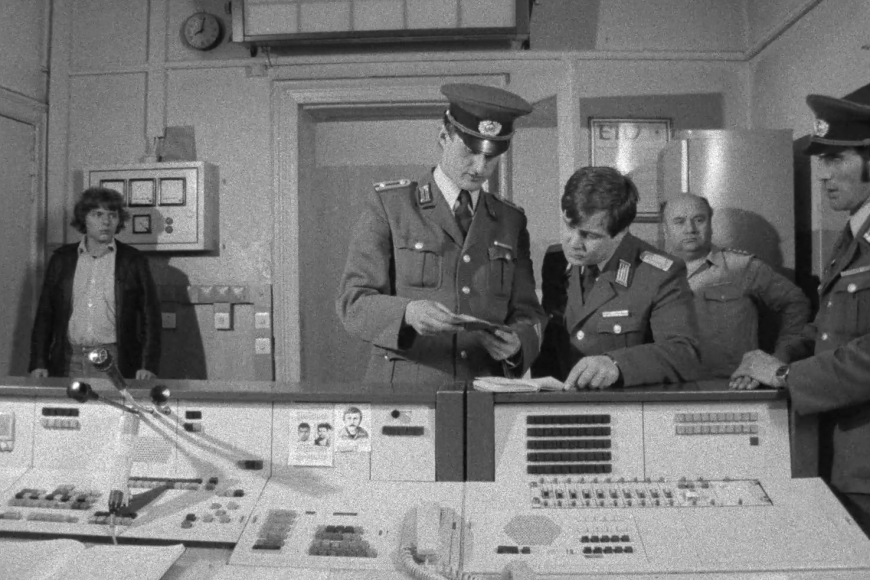
A typical workday at the East Berlin precinct 14, near the Wall, at the “interface to imperialism,” as one of the officers puts it. But soon the shooting is stopped.
A typical workday at the East Berlin precinct 14, Brunnenstraße, near the Wall, at the “interface to imperialism,” as one of the officers puts it. At first, Heise and Badel are free to film unhindered: car patrols, deployments to escalating disputes, criminal charges of “decadent appearance,” missing person reports. The director and cameraman appear to be authorised by the Ministry of the Interior and are allowed to shoot without restrictions. When they are eventually required to show their papers, which turn out to be nothing more than ordinary identity cards, the misdirection is noticed: Shooting is stopped, the footage disappears in locked cabinets. The film premiered at the 25th Duisburger Filmwoche in 2001.