Rectangular shapes in brilliant colours proliferate in a black void. The pioneer of computer animation uses 2D programming language to simulate strange fantastic galaxies.
Rectangular shapes in luminous colours proliferate in a black void. They resemble phosphenes, the subjective perceptions of lights that can appear when we rub our closed eyelids. Coloured round surfaces circle each other, even though they live in separate graphic worlds. Lillian Schwartz, pioneer of computer animation, uses the EXPLOR 2D programming language to simulate strange and fantastic galaxies.
What does it mean for our perception of the world when virtual duplicates of ourselves can be made to look so deceptively real that human being and avatar become indistinguishable?
Do computer-generated figures now look as “real” as “genuine” humans? For 26-year-old Lale, this question is not only exciting in theory, but in practice. She works as a model but would rather spare herself exhausting shoots by getting an avatar. But when she has taken the first steps towards “doubling” herself, she has second thoughts. What does it mean, in actual, legal and moral terms, to bring a virtual duplicate of oneself into the world?
Katharina Pethke accompanies her young protagonist on this process. The intellectual game turns into a test on the living subject, a weighing of possibilities and fears. What does it mean for our perception of the world (and for documentary film, too, of course) that the promise of reality of visual media has long since become a gradual one? In the age of omnipresent self-dramatization, deepfakes and extended reality, we are embarking on a journey to our joint (media) future. It’s no coincidence that it ends at a place that already inspired Plato’s ideas on reality and its shadows.
Luc-Carolin Ziemann
Credits
Director
Katharina Pethke
Script
Katharina Pethke
Cinematographer
Christoph Rohrscheidt
Editor
Daniela Kinateder
Producer
Christoph Rohrscheidt, Sven Michael Otto
Co-Producer
ZDF / 3sat
Sound
Michael Thäle
Sound Design
Kuan-Chen Chen, Christian Riegel
Animation
Vinzent Britz
Broadcaster
ZDF / 3sat
Commissioning Editor
Udo Bremer
Nominated for:
VER.DI Prize for Solidarity, Humanity and Fairness,
Young Eyes Film Award
An uncle you’re never sure you would like to have yourself but for whom you still shed hot tears when he will have died in the end. The essential material of this touching story – apart from the clay the figures are made of – is empathy. This melancholy farewell to a cranky old geezer deals with a small subject. But it’s about everything.
Ralph Eue
Credits
Director
Adam Elliot
Script
Adam Elliot
Editor
Adam Elliot
Producer
Victorian College of the Arts University of Melbourne
For the over eighty-year-old Vakho, the ice-covered mountainous region in the Georgian Caucasus is a self-chosen exile – out of deeply felt guilt about the death of his brother.
According to mythology, Prometheus was bound to the rocks of Mount Kazbek, more than 5,000 metres high and covered in ice. For Vakho, this mountainous region in the Georgian Caucasus is a self-chosen exile – out of deeply felt guilt. 48 years ago, he lost his brother in tragic circumstances that had previously come to him in a dream: “I couldn’t let go of the past”, the man, now in his eighties, explains in this visually impressive debut short film portrait.
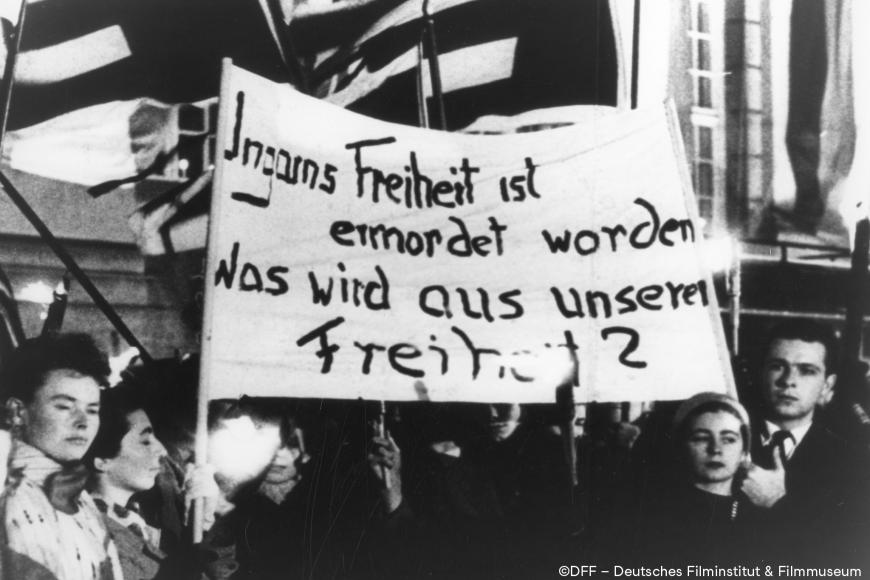
This taboo could not be broken until 30 years later: The Poznań protests of 1956, narrated as a collage of previously unpublished photos, footage and memories of participants.
Poznań, June 1956: For a long time, the “forgotten uprising” in which dozens of people lost their lives was a taboo in Poland. It was only in the mid-1980s, in a period of liberalisation, that Marek Drążewski could make this astonishingly frank review, in which he condenses the dramatic events using private photos, footage and memories of contemporary witnesses.
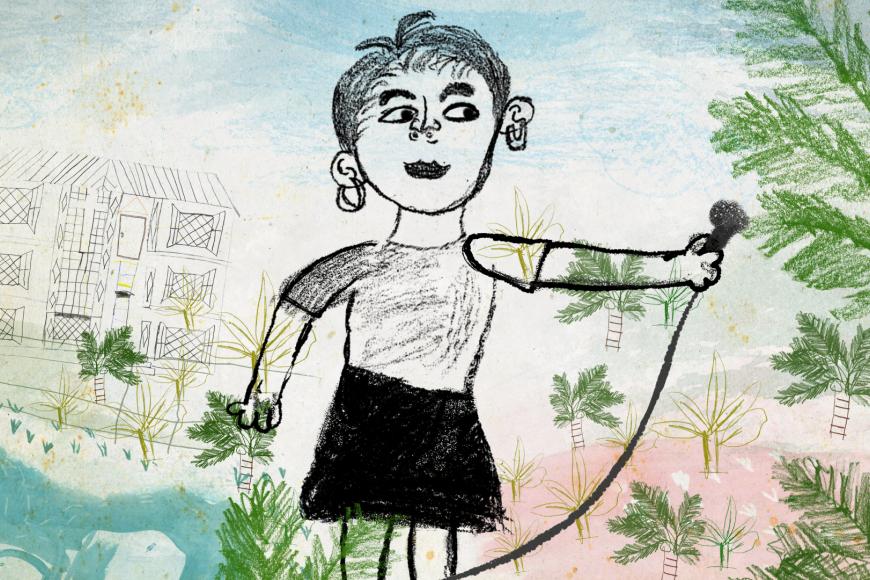
Animated children’s drawings depict the daily life of young HIV patients in India. The film, narrated by the children themselves, is a visual story filled with vitality and energy.
Animated children’s drawings depict the daily life of young HIV patients in a hospital in the Indian city of Tivim. Their daily routine is characterised by learning and playing together, by good food and taking medication, sometimes also by fighting tears and rage. Nonetheless, the film, narrated by the children themselves, is a picture story filled with playful liveliness and energy.
The suppression of the 1956 Hungarian Uprising from the point of view of those affected. Dramatic material and an urgent appeal which the filmmakers could only complete abroad.
A look back on Hungarian history ends in the bloody present of October 1956: The suppression of the uprising in Budapest, filmed from the point of view of those affected. The material was smuggled abroad and assembled there by refugee filmmakers. A direct contemporary document which at the end reflects the powerlessness of the West: Nobody came to help.
Katharina Franck, Andreas Kötzing
Credits
Director
Ferdinand Khittl, Stefan Erdélyi
Script
Viktor de Sztankovics, Rudolf Stölting, Stefan Erdélyi
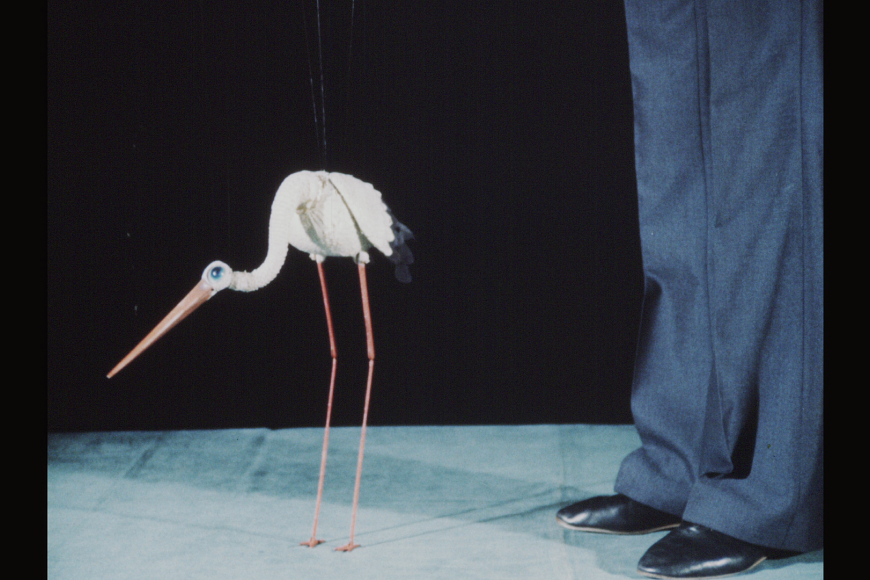
In 1984, people from forty countries convened in Dresden for a congress of UNIMA, the Union Internationale de la Marionnette. Impressions from the world of puppetry.
Around 1,500 people from more than forty countries met in Dresden for the 1984 congress of UNIMA, the Union Internationale de la Marionnette. Founded in 1929, UNIMA claims to be the oldest international theatre organisation and has been promoting the global development of puppet theatre to the present day. This Kinobox item offers affectionate impressions of the high art of puppetry.
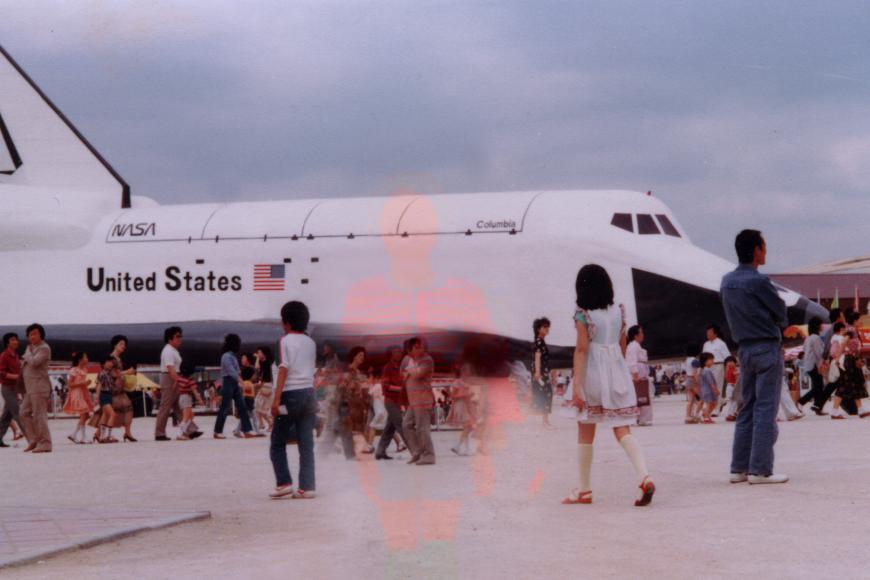
Our memory is not to be trusted; it is interwoven with wishful thinking, dreams, romanticisations or repressions, superimposed or replaced by accidentally glimpsed images. If you want to make sure of your history, you might seek out the places of your childhood or youth to embark on a journey into the past. But what if those places are long gone, themselves as fleeting as the memories of them?
Director Won Taewoong was born in 1981, at a time when the city of Seoul, devastated in the civil war, was rapidly developing. Under the South Korean military dictatorship rice paddies turned into business and residential areas, multi-storey department stores with long escalators and attractions for children were built. In front of the Universe Department Store in Cheonho-dong on the eastern outskirts of the city, a space shuttle was erected that made the children’s imaginations run wild. But while modernisation was picking up speed, most of these malls closed down again after a few years. “Universe Department Store” is an attempted reconstruction. In conversations with peers whose memories often show enormous discrepancies and in hypnosis sessions, the director gets to the bottom of what memory is and discovers a dazzling universe between fact and fantasy.
Our Little Sandman: The Journey to the Dream Sand Mill
Stefan Schomerus
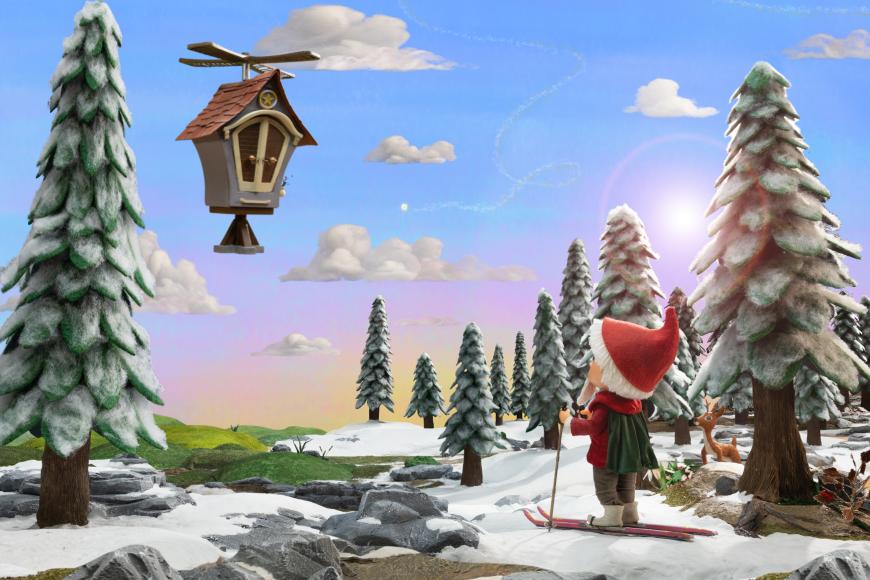
A brand-new anniversary episode: When the Sandman’s bag gets torn, all the dream sand trickles out – except for one grain, which helps him find his way to the dream sand mill.
Our Little Sandman: The Journey to the Dream Sand Mill
Unser Sandmännchen: Die Reise zur Traumsandmühle
Stefan Schomerus
Kids DOK 2024
Animated Film
Germany
2024
20 minutes
German
Subtitles:
None
We celebrate the Sandman’s 65th anniversary! To mark the occasion, a brand-new episode is released in which little Sandman travels the country in his multi-mobile. But there is a mishap when he gets out: The bag of dream sand gets torn and the sand trickles out. The way to the dream sand mill is not easy to find. Quite a number of stages must be negotiated to reach the destination.