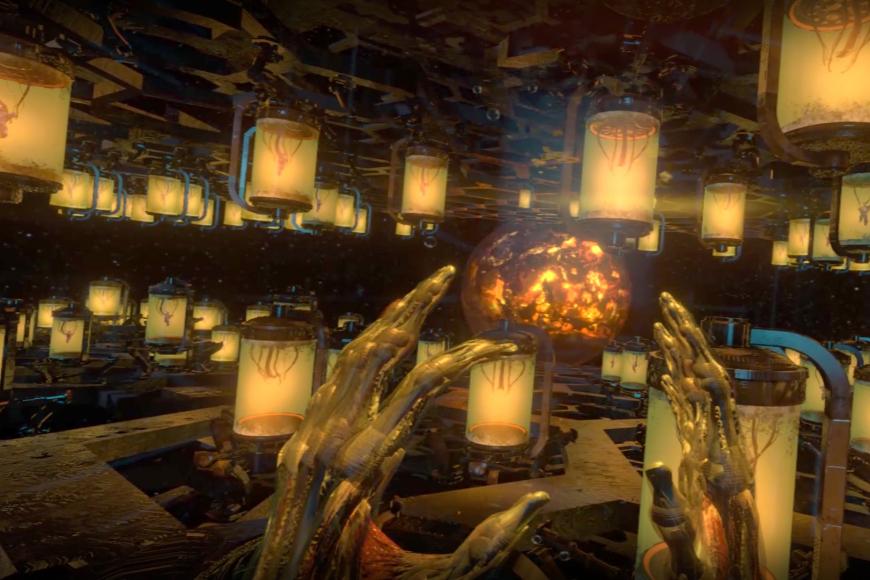
Earth is destroyed, time nothing but an illusion. In space we explore our new collective consciousness and assume forms not originally envisaged by our DNA.
What happens when we have to leave the destroyed earth? This VR experience takes us into space: Our consciousness becomes collective and our DNA is modified into new life forms. Time is nothing but an illusion here – past, present and future merge. We end up where we began, but in what form and when? A cycle of endless reincarnation.
Lars Rummel
Credits
Producer
Hsiao-Yue Tsau
Executive Producer
Chung-Hsien Chen
Production Company
Virtual and Physical Media Integration Association of Taiwan
“The world in one garden” – with this claim of omnipotence, the construction of the Botanical Garden in Dahlem began. The deeper one enters, the clearer the traces of imperialist thinking emerge.
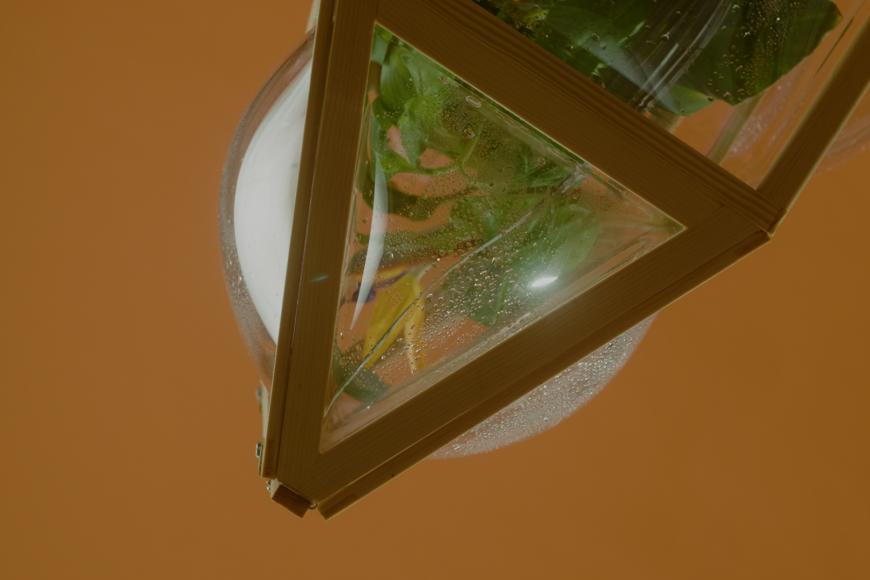
From a distance, the glass greenhouse looks like a spaceship which could have landed decades or only minutes ago. In any case, the Botanical Garden in Berlin seems to belong to another era. A group of young people are exploring, feeling plants, trees, and the building according to their very own criteria. Are they aliens? Are they imitating the expeditions of German explorers from the colonial period?
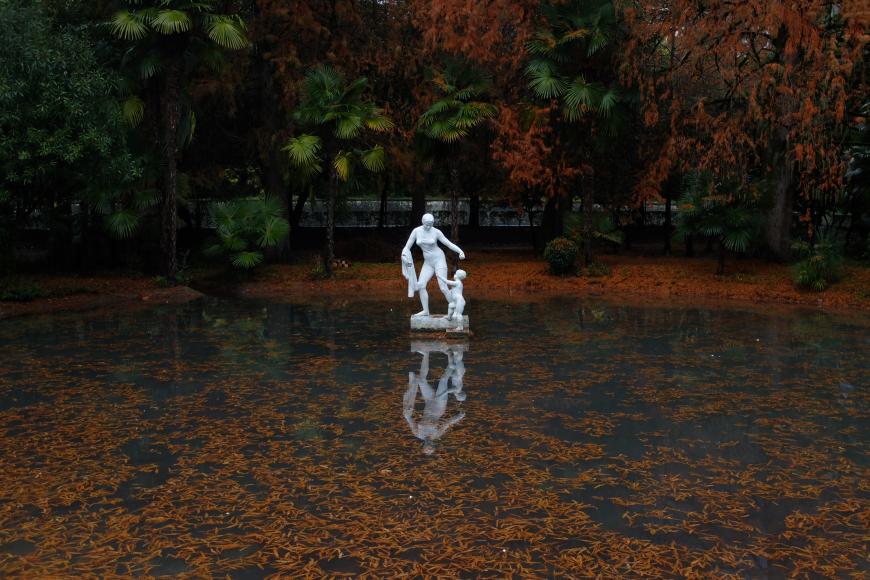
The commentary muses on the history of the place: at the end of the 19th century, work began on the construction of the new greenhouses of the Botanical Garden in Dahlem to bring the world to one garden. This idea formulated a claim of omnipotence, too. In the rambling park, the camera comes across the naturalistic statue of a semi-nude man sowing seeds. It was created by the sculptor Hermann Joachim Pagels, who was very successful under the Nazis. The deeper the film penetrates the thickets of this garden, the more traces of imperial and colonialist thinking come to light. But the Botanical Garden is also a utopian place. What if this greenhouse-spaceship were to take off to distant spheres again? Could the plants guarantee the survival of our species on other planets? But perhaps they have a different plan, a life of their own?
From the Argentinean pampa to the Bolivian highlands to the middle of Berlin: a trenchant critique of German history in its most visible manifestation, architecture.
An Argentinean builder who has built council halls, cemetery gates and abattoirs in the pampa as if from a modernist assembly line. Then a Bolivian architect, whose gaudy functional buildings in the highland defy description and imagination. Last, but not least, a new old palace in the middle of Berlin. Connections are plentiful, none of them edifying. Heinz Emigholz uses them for a pamphlet against stylistic amnesia and historical falsification.
The first film in Heinz Emigholz’s series “Photography and beyond” was released in 1983 and, including the two works screened by DOK Leipzig this year in the Camera Lucida section, there are now 35. But although “Slaughterhouses of Modernity” uses a number of sequences from the other two works, it has little in common with them in terms of form and ductus. While the aforementioned rather minimalist films do without commentary and partly without inserts, this one is characterised by its edgy monologues and courageous use of stylistic inconsistencies. Polemics and black humour are not unusual in Emigholz’s universe. But one has never seen him spoiling for a fight as gleefully as in this complex exploration of German history and its ugly manifestations. Not so much a late work as a new departure.
Christoph Terhechte
Credits
Director
Heinz Emigholz
Script
Heinz Emigholz
Cinematographer
Till Beckmann, Heinz Emigholz
Editor
Heinz Emigholz, Till Beckmann
Producer
Frieder Schlaich, Irene von Alberti
Co-Producer
Rolf Bergmann
Sound
Esteban Bellotto, Rainer Gerlach, Christian Obermaier, Jochen Jezussek
Score
Kiev Stingl
World Sales
Frieder Schlaich
Key Collaborator
Angel Cordero Siles
Narrator
Susanne Bredehöft, Heinz Emigholz, Kiev Stingl, Stefan Kolosko, Arno Brandlhuber
Nominated for:
VER.DI Prize for Solidarity, Humanity and Fairness
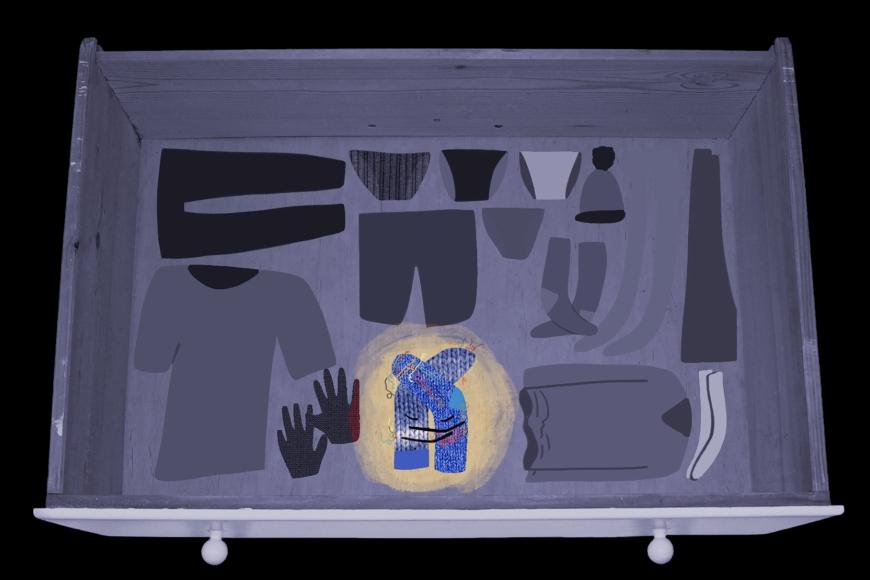
A pair of socks lose sight of each other during the spin cycle of the washing machine. Being suddenly alone gives rise to new encounters and puts the socks’ friendship to a tough test.
A pair of socks used to be inseparable and lived as soulmates in their drawer. But they lose sight of each other during the spin cycle in the washing machine. How awful to be suddenly alone, one of the socks thinks. But for the first time it becomes aware of the other clothes around it. These new encounters put the socks’ friendship to a tough test.
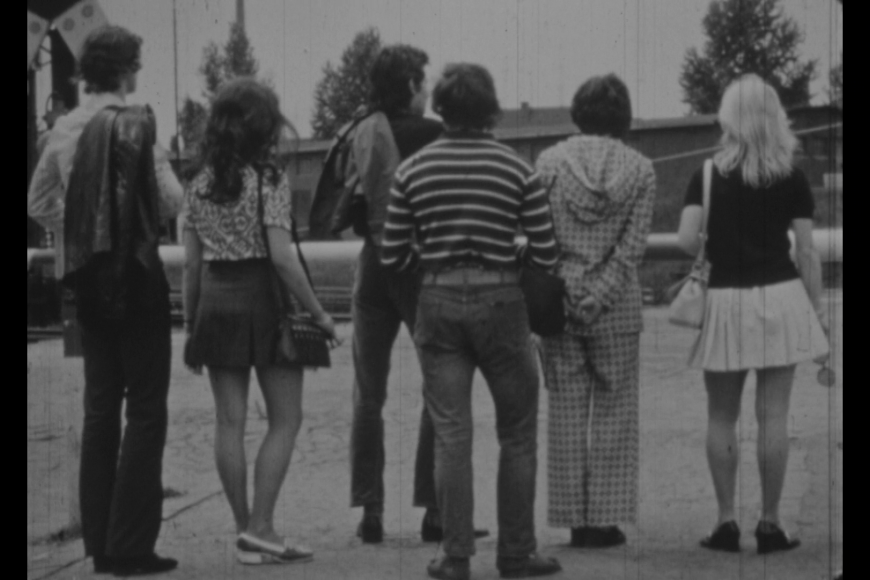
An ironic short film set to the music of Schlager singer Chris Doerk: The seemingly endless wait at railway crossings leads to the formation of couples and other fateful events.
The railway from the point of view of people who travel by bicycle, on foot or by car: A Schlager music recording of GDR singer Chris Doerk is re-cut many times to accompany the endless-seeming wait at a railway crossing. Meanwhile, young people find each other, couples form. Even the birth of a child finds a place in this ironic short film.
Mutated creatures wobble in the void, police voices strike like truncheons. The bodies fight back, generating an indelible energy field of radical feminist protest.
Four creatures wobble like marionettes in the black void. An alien power tries to subdue them, police voices strike like truncheons. Bent, with bulging or thread-thin limbs, their skin turned inside out – human anatomy has mutated. But these vulnerable bodies start to fight back … “Scum Mutation” takes us into the battle zone without protection, into an indelible energy field of radical feminist protest – and becomes a resounding beacon of reconquest.
André Eckardt
Credits
Director
Ov
Script
Ov
Editor
Ov
Producer
Le Fresnoy – Studio national des arts contemporains
Ship ahoy, the musifants are afloat again! Charlie and Grandpa Günter get mail from the small green cactus in New Zealand. They set sail, singing their special shanty.
Ship ahoy, the musifants are back! This time, Charlie and Grandpa Günter get mail from the small green cactus in New Zealand and set sail with Fox and Captain Krause. On the way, they fish the little wild sow Svenja from the sea and sing their special shanty. The waves rise when the retired circus elephant makes musical forays into 1920s and 1930s song collections.
Hanan thinks her little brother should know how to swim. When she came to Europe in a rubber dinghy she was terrified of water. Today she is a swimming instructor.
“Guess what we’re doing! We’re going to practice swimming.” Hanan accompanies her brother to classes in the public pool. The first swimming badge is called the Seahorse, their instructor explains, because it “stands” in the water and doesn’t drown. When Hanan’s family came to Europe in a rubber dinghy, she couldn’t swim. To forget this experience, she learned not to go under in the water – like a seahorse.
Nothing is closer to us than our skin. Its beautiful and less beautiful parts envelop the self, separate it from all else. A foray along naked parts of the body takes us from a shiny ridge via a rounded protuberance to a shady gorge. A neck. A belly…ear. A fellybear? Photos, videoclips and sounds form an irritating body collage.
Abkhazia, a place of memory and at the same time a blind spot for the director. Almost impossible to enter from Georgia, she chooses an associative and personal approach to the split-off territory.
Parts of the house director Anna Dziapshipa traces in her autobiographical roamings through the past look like straight out of a horror film: cobwebbed, dark, derelict. It is located in Abkhazia, the region officially off-limits to Georgians, protected by Russia and not recognised as an autonomous republic by the international community.
One half of Dziapshipa’s family comes from here, including a football player who once was a key player for Dinamo Tbilisi. The filmmaker edits footage of his sports activities into “Self-Portrait Along the Borderline,” but also shows the splendour of the former Soviet holiday paradise. It is a personal, associative approach in which Dziapshipa analyses and reflects on her own experiences as a child with both Georgian and Abkhazian family backgrounds. Discrimination plays a role, as do solemn and disturbing things. Time and again, spiders crawl through the frame, weaving their webs and thus connections.
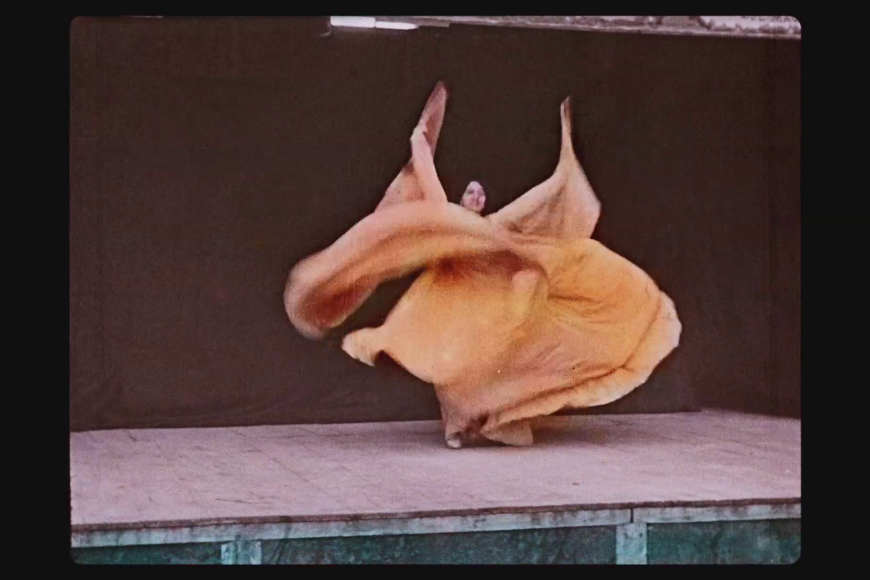
In the early days of cinema, audiences were hungry for pictures bursting with vitality. The serpentine dance with its graceful shifting patterns, and in colour, satisfied their wish.
Movement, movement: In the early days of cinema, audiences were hungry for pictures bursting with vitality. For many film pioneers, the subject par excellence was the serpentine dance, which produced graceful shifting patterns by means of ample veils. The Lumière brothers additionally had the film hand-coloured, frame by frame, reinforcing the vivid expression of the dynamic body geometries.
Our everyday digital life is unthinkable without mobile phones. But what natural and human resources does the tech industry require for this innovation?
Our everyday digital life is unthinkable without smartphones. Across the world, more than five billion such devices are in circulation. Each one of those is even touched more than 2,600 times per day. This AR experience takes us through the hidden history of this technology and thus into the Democratic Republic of the Congo. What natural and human resources does the tech industry require for its innovations?
A consensual union becomes a brutal assimilation that ends in death and a new beginning. Powerfully moving colours and fascinating sounds transport irritating emotions.
The two main characters of this film seem made for each other. They literally fit together, merge into each other, melt into a colourful, psychedelic, swirling whole. They function together, until one of them disconnects. The madness of this riot of colours turns into a dark nightmare when the one left behind re-absorbs the other by force. Against her will, the renegade must now be sewn to her partner. The once flourishing relationship degenerates into an irritating visual and audio chaos of aggressively twitching drawings and shattered sounds. Impaled on a gnarly tree, the couple’s bodies decay. As they are dying away, darkness turns into light and fresh blossoms open on the pale bones.
Franka Sachse
Credits
Director
Xu Yuan
Producer
Tomokazu Nomura
Sound Design
Nanami Sato
Animation
Xu Yuan
Nominated for:
Gedanken Aufschluss Prize,
mephisto 97.6 Audience Award
Magnificent works of art made of fruit once lent the Chinese restaurant business a radiant glamour. Today they are overshadowed by a heavily economised food culture.
A giant ginger mountain landscape that five cooks spent a week to make: Once magnificent culinary works of art were created in Chinese restaurants. Food was associated with a wealth of money and time. The world today is short-lived, customers have become few and far between. Chefs talk about the connection between food culture and socio-economic change in China.
Ricky is a boy from the Ashéninka tribe who lives with his family in the Peruvian Amazon Forest. He wants to overcome his fears and goes hunting for a huge catfish.
Ricky is a boy from the Ashéninka tribe who lives with his family deep in the Peruvian Amazon Forest. But even here, the children’s favourite pastime is watching videos on their mobile phones. One day, Ricky is faced with the task of overcoming his fears and going hunting for a huge catfish that can only be caught by hook. This is where his journey to adulthood begins.
Is ADHS the fashionable diagnosis of a society geared towards efficiency and Ritalin the perfect doping agent? A personal journey to the heart of chaos and back – from a deliberately female perspective.
In recent years, the number of diagnoses of attention-deficit hyperactivity disorder has skyrocketed. What are the reasons? Does a society geared towards efficiency use the label ADHS to weed out anyone who does not fit its frames? What are the consequences of the fact that medication treatment has become almost ubiquitous? Could Ritalin and the like have become the doping of the performance society?
In their very personal documentary, Gitti Grüter, diagnosed with ADHS since puberty, sets out to find answers. Grüter talks to five women who have been officially diagnosed with this disorder about lack of concentration, impulsive behaviour, overstimulation, relationship problems, depression and insomnia. The open conversations gradually reveal how hard life can be for women with ADHS, because social stereotypes of femininity often prevent or delay the right diagnosis. Through the calculated use of filmic means, Grüter manages to convey to the audience a sense of the permanent and overpowering inner and outer chaos. Skilfully and with a generous dose of irony, they focus on how people suffering from ADHS are stigmatised – and not least on the role of gender stereotypes in this process. The conclusion is surprising and encouraging.
Luc-Carolin Ziemann
Credits
Director
Gitti Grüter
Script
Gitti Grüter
Cinematographer
Lenn Lamster
Editor
Dan Gatzmaga
Producer
Christoph Holthof, Daniel Reich, Norman Bernien
Co-Producer
Sara Günter, ZDF Das kleine Fernsehspiel, Filmuniversität Babelsberg KONRAD WOLF
Sound
Simon Ferber
Sound Design
Larissa Kischk, Eva Perhácová, Simon Schüler
Score
Valeriia Khazan, Felix Römer
German Distributor
Luna Selle
Nominated for:
Goethe-Institut Documentary Film Prize,
Gedanken Aufschluss Prize,
DEFA Sponsoring Prize,
VER.DI Prize for Solidarity, Humanity and Fairness









![Filmstill Shape of Appetite [excerpt]](https://www.dok-leipzig.de/sites/default/files/styles/stepped_teaser_/public/fiona/films/stills/f9f67d36-b422-4576-91f4-91836e42e5ee.jpg?h=d1cb525d&itok=0hB_0_H1)



![Filmstill Shape of Appetite [excerpt]](https://www.dok-leipzig.de/sites/default/files/styles/film_stills_full_content_view/public/fiona/films/stills/f9f67d36-b422-4576-91f4-91836e42e5ee.jpg?h=d1cb525d&itok=W9TnQAfW)

