Cine film footage, transformed into magical visual worlds that unfold in the glistening drizzle of electronic sounds. A diary of awake dreaming observation.
Patrick Bokanowski subjects his own early cine film footage to a magical optical transformation. In the glistening drizzle of electronic sounds and the deep rumbling of drone waves by Michèle Bokanowski, light eruptions, sweeping colours and shadowy apparitions unfold while the original footage shines through. A diary of awake dreaming observation.
A visually and aurally outstanding film about the musician Marja Burchard, leader of the legendary band “Embryo”. An ode to hearing, experimentation and inspiration.
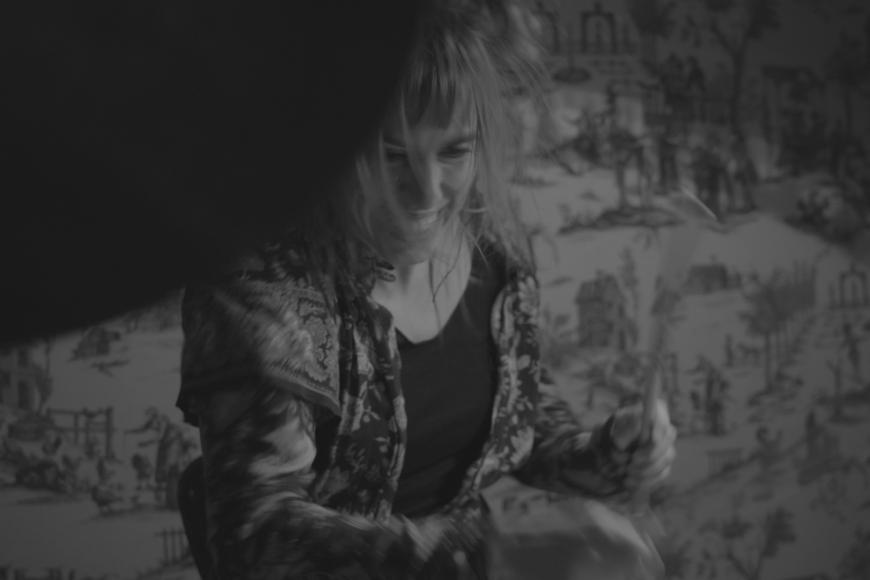
She first appeared on stage at the age of eleven with the legendary Krautrock band “Embryo”. Her father, Christian Burchard, founded the band in 1969 and led it until 2016. Today – in her mid-thirties – Marja Burchard is the bandleader in this project, which has become a kind of family for her. But what seems so simple and organic is far from self-evident in an extremely male-dominated sphere, as Rebecca Zehr shows in her precisely observed and designed film.
This strictly and yet lightly composed melange mixes archival footage, psychedelic animation sequences and everyday observations of the normal life of a female musician between organisation and inspiration. With the visual level restricted to black and white and thus deliberately restrained, all the more attention is focused at the sound. The – who wonders? – outstanding score never takes the music for granted but works robustly with our perception. It’s the lucid, calm images and the narrative that is always anchored in the here and now that let this film stay incredibly haptic despite its concentration on our sense of hearing. Rebecca Zehr is not interested in portraying a musical legend, but in showing us what it could look and feel like to not only make music but live in it.
Luc-Carolin Ziemann
Credits
Director
Rebecca Zehr
Cinematographer
Felix Press
Editor
Melanie Jilg
Producer
Rebecca Zehr, Katharina Rabl, University of Television and Film Munich (HFF)
Mati, a New York hospital chaplain in training, must watch herself and her own strength when she looks after patients. An intimate insight, up close and sensitive.
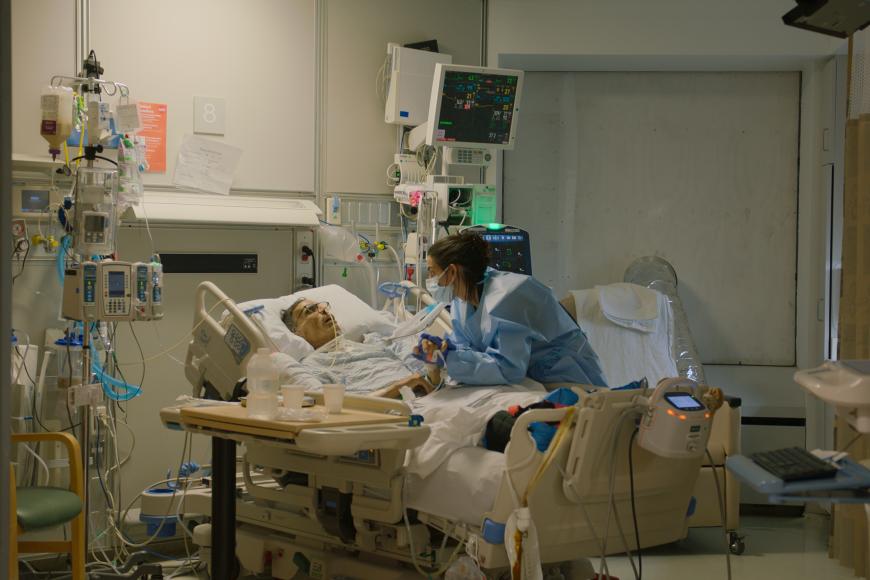
Mount Sinai Hospital in New York is one of the largest and oldest hospitals in the United States. Mati, an aspiring hospital chaplain, works here. She is about to complete her one-year residency in the department of “Spiritual Care,” a branch of palliative medicine. Patients struggling with insecurity, trauma and grief get emotional and spiritual support here. The film follows Mati and her colleagues through 2020 and 2021, the years with the highest number of deaths in the history of the USA. Mati herself must struggle daily to find her balance. Because, as her supervisor puts it, if one’s own bandwidth is used up, there is simply no room left for the tougher things. It is therefore an important part of the work of a counsellor to get support and guidance for oneself.
Luke Lorentzen observes this cosmos with great sensitivity and, despite being so close, with pleasant restraint. The calm camera often keeps its distance, especially in moments of doubt or when observing conflicts in the team. A film unafraid of intimacy that spans a thought-provoking arc: between questions of faith, loss and professional sustainability.
England, mid-19th century: children keep the flow of air going in narrow, sooty chimney flues. The report of a chimney sweep of the time is brought to life by pencil drawings.
In the mid-19th century, a massive fireplace was the centrepiece of every stately home in England. Children are agile enough to keep the flow of air going in the narrow and dark flues. Their young skin is scraped raw by the sooty stone walls. Their fear of falling is as strong as their fear of the master’s punishment. Black-brown-red cross hatching and unusual camera perspectives bring to life the report of a chimney sweep of the time.
Even after 1945, the Jewish resistance against the persecution and murder of the Jews in Europe by the Germans during the Second World War is not present in the collective memory.
After the Wehrmacht invaded Czechoslovakia in 1939, the Jewish population was disenfranchised and killed, as this etude, staged at the Terezín Memorial, recalls. The fact that there was successful Jewish resistance even in extermination camps like Sobibór did not fit in with the traditional image of the passive victims that is melodramatically re-enforced by this film.
Konstantin Wiesinger
Credits
Director
Josef Hovorka
Script
Josef Hovorka
Cinematographer
Rainer Hässelbarth
Producer
AmateurFilmClub “Energie” VEB Energiekombinat Berlin, Filmové Studio Odborový dům kultury pracujících Ústí nad Labem
The Most Beautiful in the World – Books of Today: International Book Art Exhibition Leipzig 1971 [excerpt]
Lotte Thiel
The 1971 Book Fair, from the initial idea to the opening and award ceremonies. Lotte Thiel, one of the few female directors of her time, captures everything for DEFA.
The Most Beautiful in the World – Books of Today: International Book Art Exhibition Leipzig 1971 [excerpt]
Die Schönsten der Welt – Bücher von heute: Internationale Buchkunst-Ausstellung Leipzig 1971 [Ausschnitt]
Lotte Thiel
Matinee Saxon State Archive 2025
Documentary Film
GDR
1971
5 minutes
German
Subtitles:
None
Commissioned by the German Book Traders’ Association, Lotte Thiel follows the preparations for the 1971 International Book Art Exhibition, prominently supported on screen and on the soundtrack. The tradition of this fair is recalled, from its predecessor BUGRA 1914 to the first IBA in 1927 and the subsequent events that took place every five to six years starting in 1959. Award-winning illustrations can be viewed in detail.
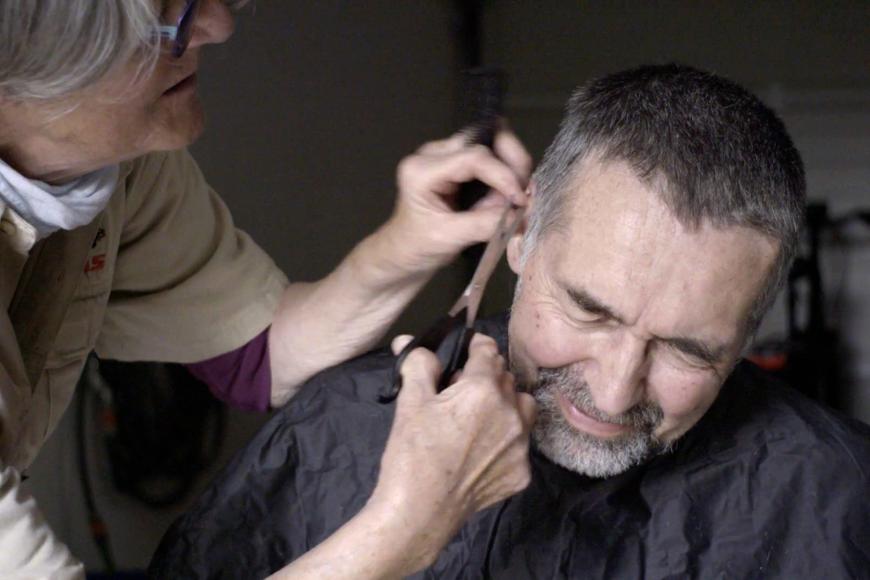
A man records words to preserve his voice. He finds it increasingly difficult to articulate. A film about voice and identity – and about
what exists between the words.
A man’s voice from offscreen. He lists individual words, has problems of articulation. At first these are abstract terms, the screen stays black. Sky, street, village and house, however, are accompanied by suitable images. They take us into the speaker’s life. It is his house. These are his automatic shutters. We look into the kitchen where his wife is preparing something. He exercises in a specially equipped room. Later he sits in front of the microphone again, obviously recording his voice to preserve it. Another dimension opens between the recorded words and sentences and beyond the images. There is an inevitability in the room – and a great love. The robot vacuum makes its rounds. Who will put the words stored on the computer into a meaningful context later?
Matches are out in the GDR! The workers threaten to go to the barricades. A harmless puppet animation? The satire was made just after the uprising of 17 June 1953.
The people, among them an astonishing number of workers, react with visible anger to the sudden lack of matches – and threaten to go to the barricades. The problem is solved, of course. But does it mean the population’s anger is placated? Puppet animation director Johannes Hempel created this satire based on a draft by Wolfgang Kohlhaase – at the same time as the uprising of 17 June 1953.
Katharina Franck, Andreas Kötzing
Credits
Director
Johannes Hempel
Script
Wolfgang Kohlhase, Johannes Hempel
Cinematographer
Rolf Sperling
Editor
Manfred Porsche
Producer
DEFA-Studio für populärwissenschaftliche Filme
Score
H. W. Wiemann
Animation
Johannes Hempel, Herbert K. Schulz, Rosemarie Küssner
“If you want to storm, you use stormer methods”, to quote a direct reference to the infamous anti-Semitic smear sheet of the Nazi era. Set to shrill trumpet sounds, this outraged film pamphlet dissects, or so it seems, the drastic jargon of the “West German monopoly press”, especially the publications of the Springer publishing house, in their coverage of the Six-Day War between Israel and the Arab coalition of Egypt, Jordan and Syria. At the same time, it uses the reviled style for its own argumentation. Under the auspices of the DEFA newsreel editors of “Der Augenzeuge” (The Eyewitness), a sweeping blow against the Bonn Republic arises from news images and superimposed newspaper articles.
The Leipzig S-Bahn was inaugurated in 1968/69 as a state-of-the-art mobility option for the population. The heart-shaped layout of the lines, recognizable even today, dates back to this time.
At the turn of 1968/69, the decision was taken to introduce a Leipzig City Express to “relieve inner city traffic as an attractive local passenger transport system”. A forward-looking measure of traffic policy which – at a time when the car-friendly city was still the dominant concept in urban planning – represented an appealing mobility option for the citizens of Leipzig.
“Only transgression will bring salvation!” Amichat Lau is a rabbi, drag queen, father and revolutionary. The long-term portrait of a man to whom his faith is as important as his freedom.
“Who are you to change anything!?” Yisrael Meir Lau, once Ashkenazi Chief Rabbi of Israel, rages against non-orthodox movements in Judaism. His nephew, queer activist Amichai Lau-Lavie, has an answer that packs a punch: born in 1961 on Israel’s Independence Day, 38 generations of rabbis in his family tree, son of a Holocaust survivor, drag queen, today also an ordained rabbi and spiritual leader of an interdenominational Jewish congregation in New York. Amichai wants to be a “virus inside the system” to break patriarchal traditions and make Judaism more humane, more open. His drag alter ego urges: “Redemption will only come through transgression!” Director Sandi DuBowski followed his protagonist over more than twenty years. The long production period enabled him to document different phases in Amichai’s life, to show him celebrating, crying, doubting and triumphant. Supporters and critics comment on every decision and life change. The result is a complex portrait that sensitively introduces not only Amichai but also his family and congregation. An inspiring story that gives us hope.
Daria Janke
Credits
Director
Sandi DuBowski
Script
Francisco Bello, Jeremy Stulberg, Sandi DuBowski
Cinematographer
Kirsten Johnson, Wolfgang Held, Dan Gold, Laela Kilbourn, Dror Lebendiger, Sandi DuBowski, Nadia Hallgren
Editor
Jeremy Stulberg, Francisco Bello, Jeremy Stulberg, Kyle Crichton, Philip Shane
Vuk Jevremović, Juan Camilo González, Cecilia Traslaviña, Isabel Herguera, José Belmonte, Carlos Santa, Richard Reeves, Kemei Cheng, Liming Wang, Koldo Almandoz
A shipwreck, the fog bells of a lighthouse, the changing tides. A film as the result of an inter-oceanic workshop: an intuitive narrative, generated by a collective act of creation.
Vuk Jevremović, Juan Camilo González, Cecilia Traslaviña, Isabel Herguera, José Belmonte, Carlos Santa, Richard Reeves, Kemei Cheng, Liming Wang, Koldo Almandoz
Hommage: Isabel Herguera 2024
Animated Film
Spain,
Colombia,
China,
Oman,
USA,
Singapore
2013
6 minutes
English
Subtitles:
None
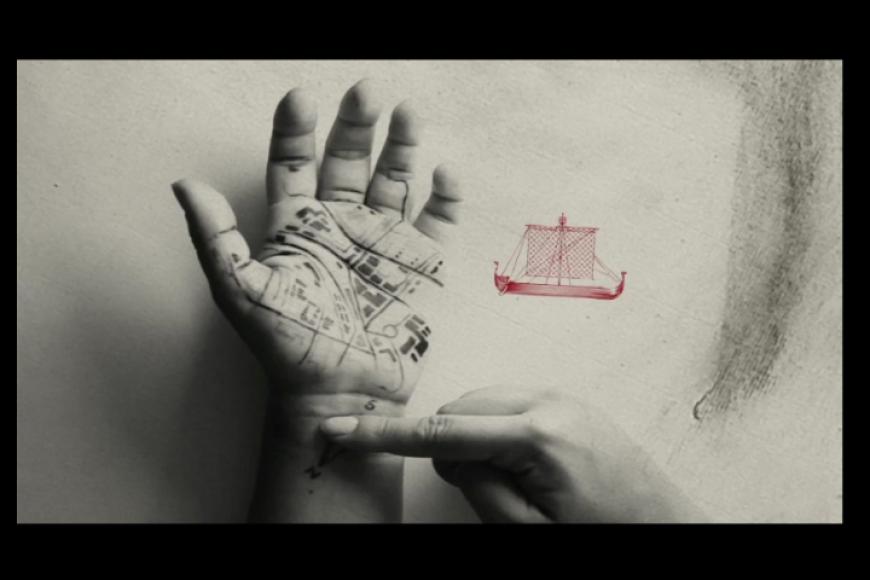
Tattooed skin, harbour music, the horror of a shipwreck, the fog bells of a lighthouse, the changing of the tides. This film about the glorious and deadly ocean, which pulls you down into the depths of the sea, is the result of an interoceanic workshop that uses the creative mechanisms of the cadavre exquis technique. An intuitive tale arises from a collective act of creation.
Franka Sachse
Credits
Director
Vuk Jevremović, Juan Camilo González, Cecilia Traslaviña, Isabel Herguera, José Belmonte, Carlos Santa, Richard Reeves, Kemei Cheng, Liming Wang, Koldo Almandoz
Cleveland, northern England: scene of a wave of abuse that went down in history as a scandal of false accusations. Ben Young explores the time and the place – strong-minded.
The starting point of this documentary exploration is a 1980s abuse scandal in Cleveland, northern England, which turned out to be a scandal of false accusations. In his uniquely personal and literarily remarkable way, Ben Young discusses this historical event from offscreen. What we see is surprising contemporary footage of the region. Image and sound unite in a strong-minded attempt to capture a piece of local history by cinematic means.
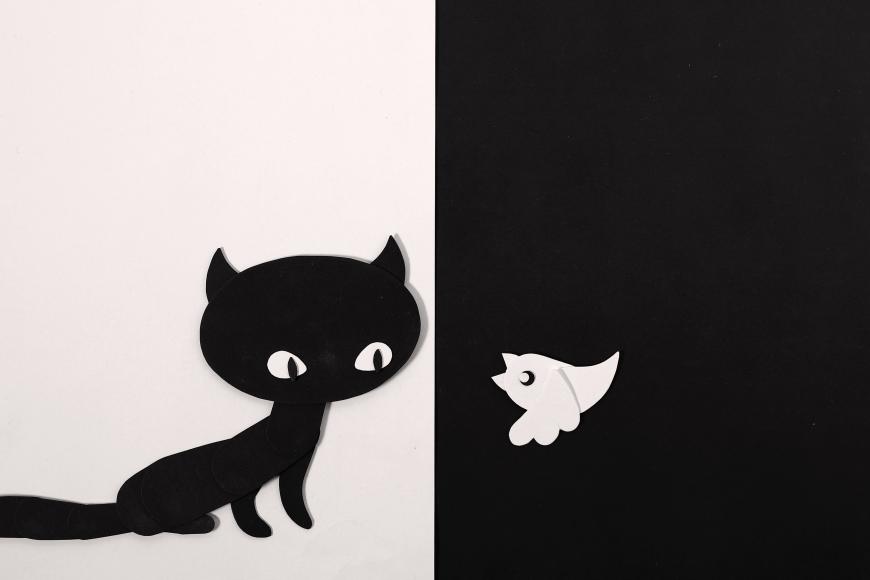
Black and white, white and black. At first everything seems well-ordered in this bicoloured world. The black cat lives in the white field, the white bird in the black one. Each in their place. But when the two venture into each other’s space, nothing stays the same and their world unravels. A fast-paced silhouette animation.
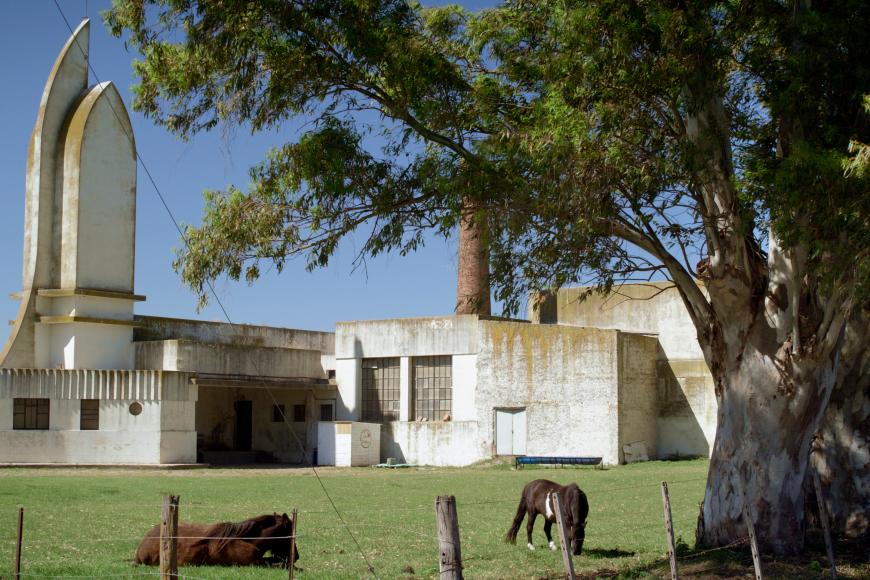
Slaughterhouses with concrete blades on top, monumental cemetery gates in the plains: Architect Francisco Salamone (1897–1959) shaped the image of the Argentinean pampa around Buenos Aires. In part 34 of his “Photography and beyond” series, Heinz Emigholz once more probes architecture for biographical traces. Salamone, who immigrated from Sicily as a child, realised his ideas between 1936 and 1940, when Mussolini’s Italy re-discovered architecture as an ideological craft.
Axes seem to be buried in the façade of the Coronel Pringles city hall. Elsewhere, stone tree fungi grow. And in front of the Saldungaray cemetery, viewed from the rear, a giant pancake or satellite dish forms, while in front the head of a suffering Jesus protrudes from the concrete. Monumental designs, occasionally incorporating elements of Art Deco or Italian Futurism, towering in the sky and advertising importance. Francisco Salamone worked in the years of the “Década infame”, that infamous decade followed shortly afterwards by the presidency of Juan Perón. The buildings seem inhospitable and full of hubris. They are supposed to herald modernity and progress and yet loomed terrifyingly over the peasantry of the country. Heinz Emigholz documents these intimidating buildings from every conceivable angle.
Carolin Weidner
Credits
Director
Heinz Emigholz
Script
Heinz Emigholz
Cinematographer
Heinz Emigholz, Till Beckmann
Editor
Till Beckmann, Heinz Emigholz
Producer
Irene von Alberti, Frieder Schlaich
Sound
Esteban Bellotto, Christian Obermaier, Jochen Jezussek
Competition for the Audience Award Short Film 2022
Animated Film
Croatia
2022
9 minutes
without dialogue
Subtitles:
None
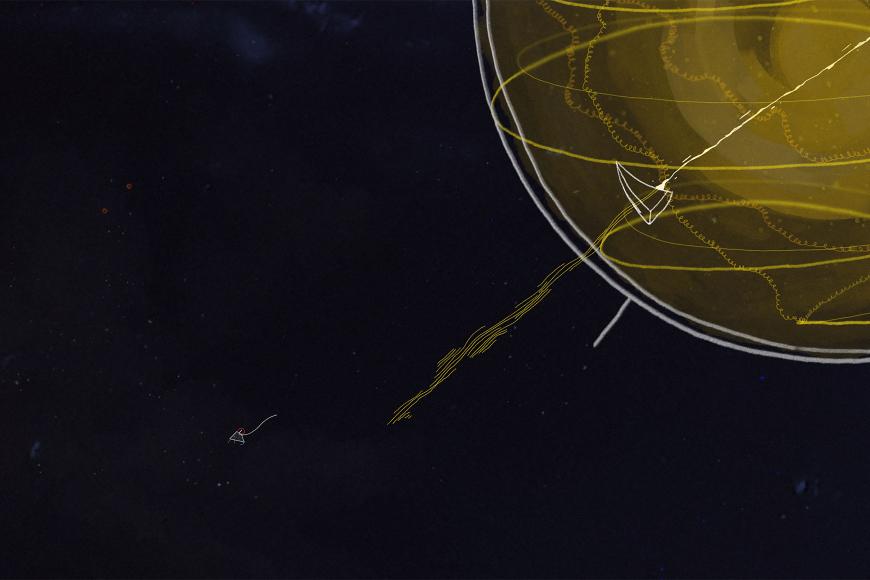
It’s lonely out in space and only the sun can warm you. In his imaginative 2D animation, Darko Masnec makes lines come alive and breathes life into abstract geometrical figures, as if Paul Klee and the Shadoks were celebrating a colourful banquet of metamorphoses. Stylised forms sprout luminescent organic compounds that tell a touching love story in outer space.






![Filmstill Die Schönsten der Welt – Bücher von heute: Internationale Buchkunst-Austellung Leipzig 1971 [Ausschnitt]](https://www.dok-leipzig.de/sites/default/files/styles/stepped_teaser_/public/fiona/films/stills/206e6ef8-7f88-4534-bfc5-0323814fb018.jpg?h=346bc062&itok=O72egkt9)








![Filmstill Die Schönsten der Welt – Bücher von heute: Internationale Buchkunst-Austellung Leipzig 1971 [Ausschnitt]](https://www.dok-leipzig.de/sites/default/files/styles/film_stills_full_content_view/public/fiona/films/stills/206e6ef8-7f88-4534-bfc5-0323814fb018.jpg?h=346bc062&itok=9777XKTt)


