You feel welcome on Güler Yücel’s terrace. The temperamental artist presents colourful paintings of the life she knows intimately. Yücel lives and paints on the Turkish Datça peninsula. Her paintings are a chronicler’s narrative. They capture the exuberance of a wedding, follow labourers during the olive harvest, show a flock of goats. They also tell of her marriage to Can, a politically persecuted poet now dead.
When Güler Yücel feels too hot, she laughingly hoses herself down. Even her latest works must withstand the water test. We meet an unconventional woman who, though old, explores her surroundings with a beautiful joy of life. Inspired by the conversations and by Yücel’s works, the camera goes on a journey of discovery, resting on other women who confidently look and talk into its lens, like the goat herd about her time in the city, where she felt other-directed. Now she has found herself. Later, at a wedding party, the young bride proudly strides towards her future. Güler Yücel, too, has lived her life and known love. One of her paintings shows Can and her sitting naked in the sun. She remembers her husband, the political battles they fought together.
Anke Leweke
Credits
Director
Helke Misselwitz
Script
Helke Misselwitz
Cinematographer
Ferhat Yunus Topraklar, Yunus Roy Imer, Thomas Plenert
The company and details of its machinery are presented. A montage from two different sources on the title, one of them tinted fragments, the other well-preserved black-and-white footage.
A tinted nitrate fragment of the company film “A. Gutberlet & Co., Leipzig-Mölkau, Spezialfabrik für Falzmaschinen und Faden-Buchheftmaschinen, gegründet 1901“ (specialist in the manufacture of folding machines and thread book stitching machines, established 1901) was an exceptional find. It could be restored in its original colour tones by analogue methods in 2024 and then digitised. Combined with the dupe negative of another version, it now offers insights into the factory halls and the work on the machines.
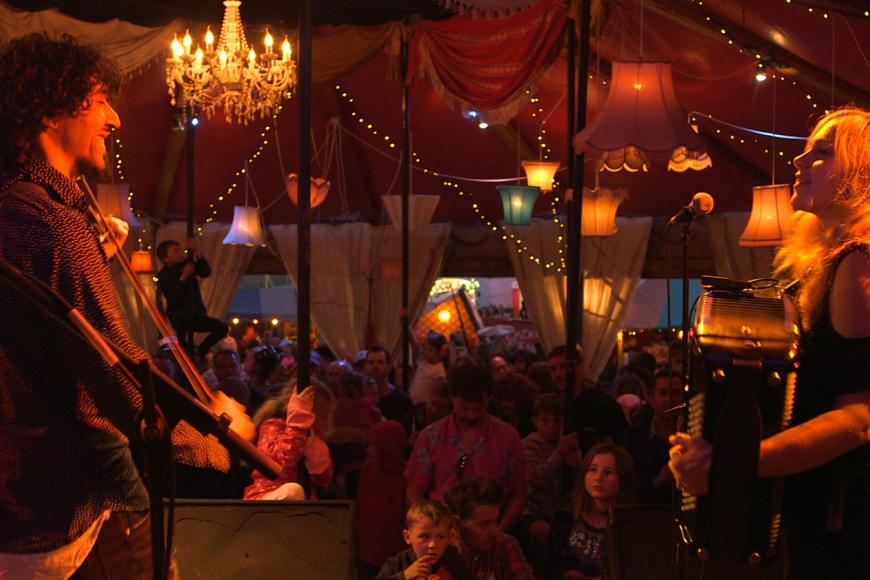
Faith loves music and Branko loves Faith. The two set out on a turbulent journey as a music duo and married couple. But alas, the first cracks in their romantic bliss soon appear.
It begins like a classic “girl meets boy” story: Faith, a charismatic accordion player from Great Britain, travels to Serbia to learn about Roma folk music. She meets the violinist Branko, who is instantly smitten. They quickly marry and form a band. But with musical success their love dwindles. A turbulent story of expectations, disappointments and the dream of happiness.
Faith enters into Branko’s life in an almost disturbingly casual way. She doesn’t seem to be bothered by the new country, the sceptical family and the cultural differences. Branko on the other hand adores his new wife and boldly enters a new world. They are a big hit as a duo – travelling around the world and playing bigger and bigger venues. But while Faith feels as happy as a lark, Branko seems like an uprooted tree. Instead of dealing with their differences they keep moving on rapidly, until one ruthless step follows the next. Catherine Harte has produced a captivating and very intimate portrait of this contradictory couple. Relentlessly close and yet compassionate, the film develops an impressive pull you don’t want to resist.
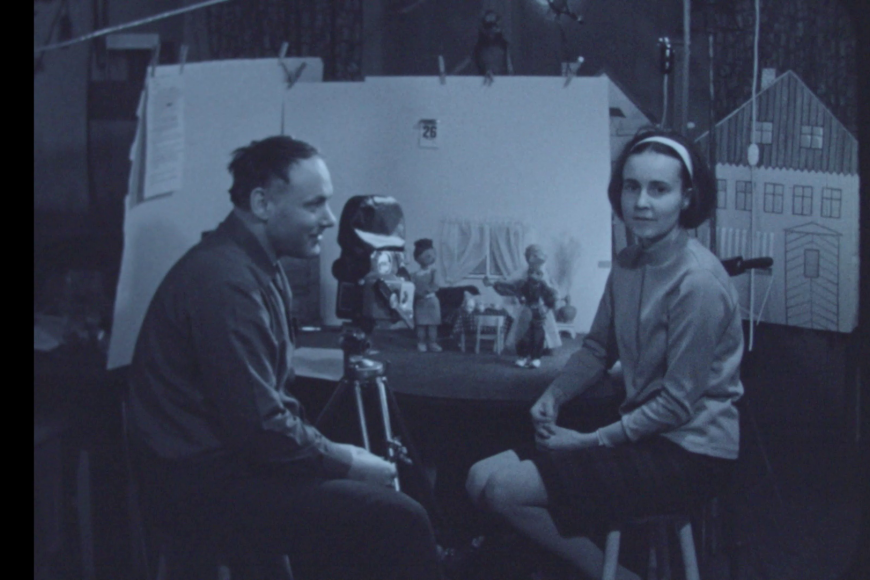
An entertaining vision for International Women’s Day as an admonition, inspiration and commentary about gender relations in GDR everyday life, in the form of a puppet animation.
The married couple Angelika and Horst Butter sum up successes and setbacks of their joint amateur filmmaking. They now produce elaborate puppet animations in their private rooms, under sometimes adverse conditions. They adapt fairy tale and fantasy sources, but also take up topical social issues, for example in an entertaining vision for International Women’s Day.
Competition for the Audience Award Short Film 2020
Animated Film
Germany
2019
4 minutes
English,
German
Subtitles:
English
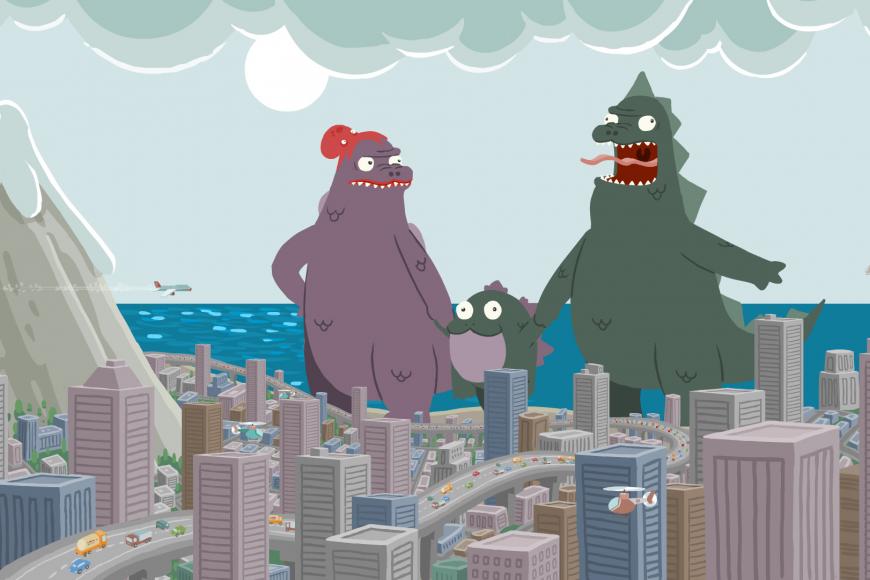
A cosy family picnic at the place they have been visiting since the Cretaceous period is what Mom, Dad and Go Zilla want. But first the big city that has annoyingly sprung up there must be flattened. In the father’s opinion, the performance of his offspring unfortunately leaves a lot to be desired: Too dreamy and still sucking on a pacifier, the little one just doesn’t wreak enough havoc. It’s an entertaining story in the almost normal everyday life of a family.
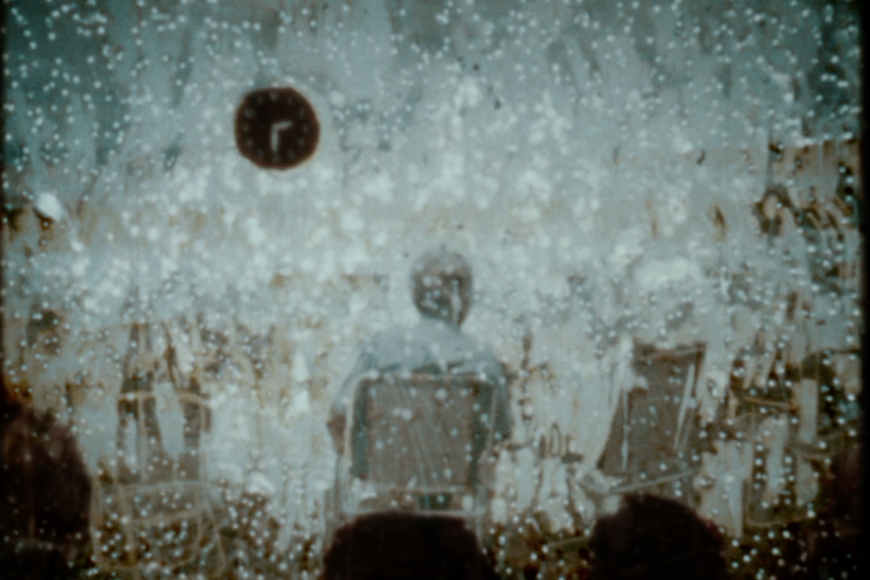
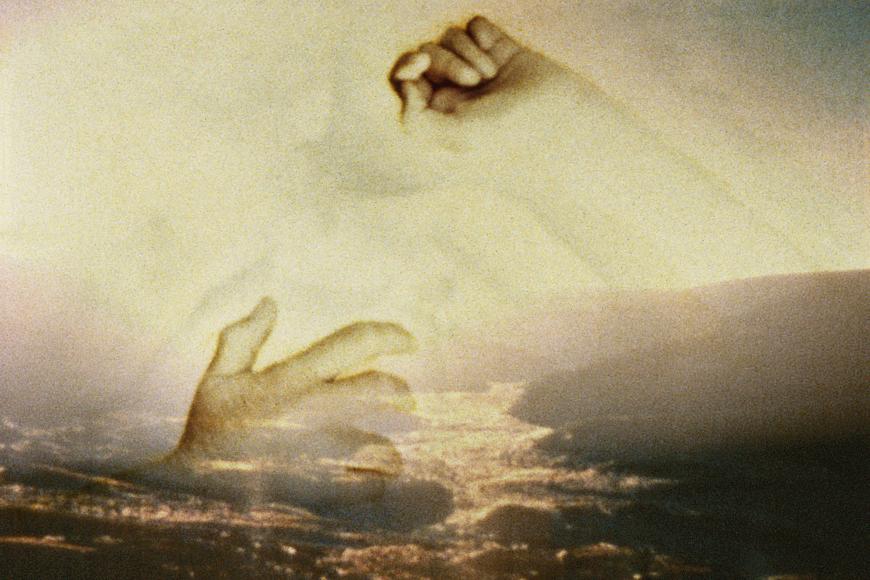
Images of blurred landscapes fade into each other. Apparent rock formations reveal themselves only at second glance as collages of human body parts. Browsing further through the family album uncovers something that is rather rarely found in such private pictorial chronicles: the backs of people’s heads. Grandparents, aunts and friends do not, as usual, look out of the album and the then at the viewer in the now but into the mysterious depths of a neon-lighted corridor. Its architectural elements form a filmic labyrinth behind whose closed doors animated collages of arms and hands perform everyday gestures in a ghost-like pantomime.
Moïa Jobin-Paré opens found private photo albums. The connections and stories between the pictures remain as abstract as that which the photographs show is concrete. Poetic spaces of interpretation open up. The Canadian artist offers a special reading. She scrapes individual elements or patterns off the analogue photographs and animates these “painterly” edits in a space of washed-out sounds. Scratches and white dots spread mushroom-like on the physically dissolving images.
Found private photo albums: The connections between the pictures remain as abstract as that which the photographs show is concrete. In this film, grandparents, aunts and children do not look out of the past at the viewer in the now but into the mysterious depths of a corridor or the vastness of a bay. Poetic spaces of interpretation open up.
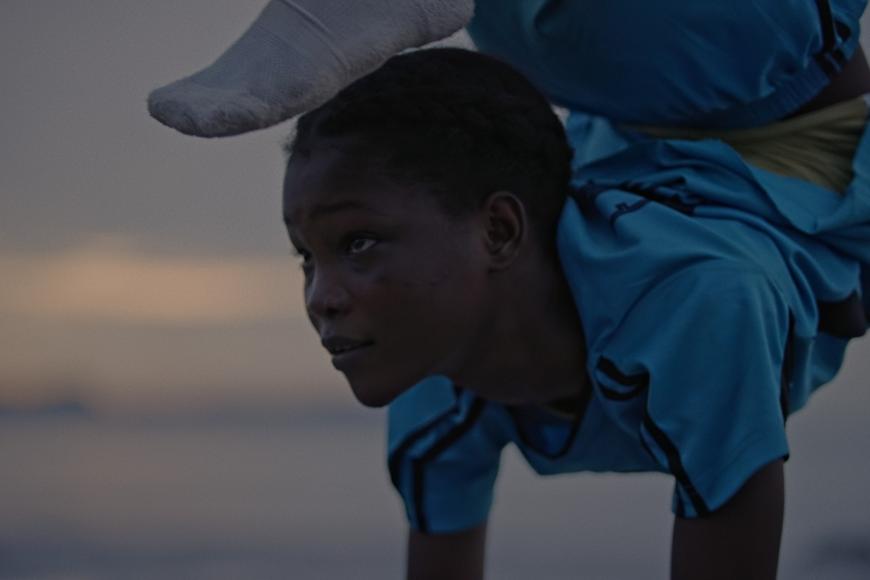
Fanta from Conakry in Guinea spends every free minute training at the acrobatics circus. Besides all her duties, her greatest dream is to go on tour with the Amoukanama Company.
Fanta is 14 years old and lives in Conakry, the capital of Guinea in West Africa. Besides school and her household chores, she spends every free minute training at the acrobatics circus. One day, the return of the country’s big star is announced. Balla Moussa Bangoura, founder of the Amoukanama Circus Company, is returning from an international tour and now plans to rehearse a new show with his troupe. Training gets harder, because only the best will be in it at the end. Of course, Fanta is determined to give everything to be one of the few girls travelling the country with Balla Moussa Bangoura. Every day, she is torn between caring for her sick mother, housework, schoolwork and what she thinks she loves best. Supported by her family on the one hand, striving to fulfil all expectations on the other, Fanta begins to doubt: What does she really want? Marjolijn Prins delivers the atmospherically dense portrait of an extraordinary girl, connected by rousing musical numbers, spectacular acrobatics and dream-like acting sequences.
Lina Dinkla
Credits
Director
Marjolijn Prins
Cinematographer
Johan Legraie
Editor
Ciska Slowack
Producer
Ellen De Waele, Mirna Everhard
Co-Producer
Florent Coulon, Felix Salgado, Ineke Kanters, Lisette Kelders, Anton Iffland Stettner, Eva Kuperman
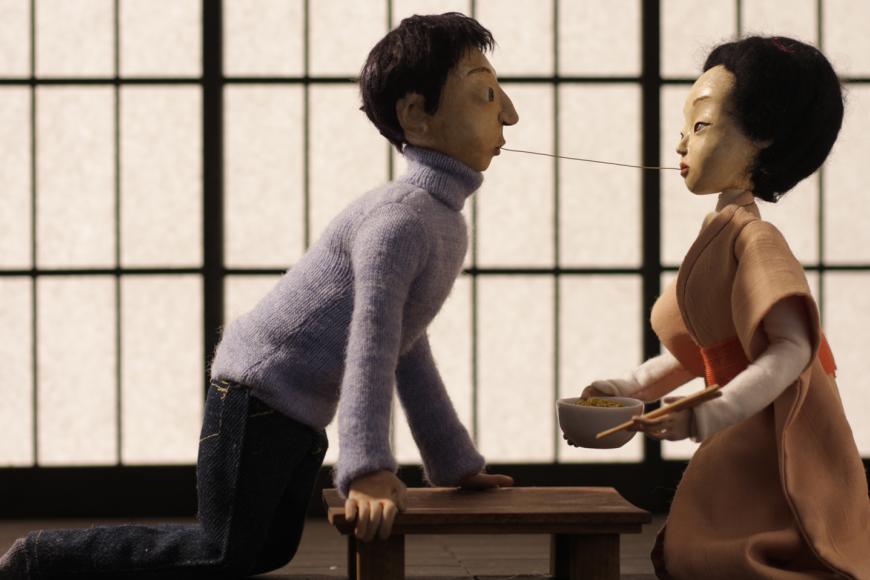
The Far East Film Festival in Udine is dedicated to popular Asian films. Špela Čadež’s trailer for its 11th festival edition is dedicated to the love of noodles that unites nations.
Since 1999, the Far East Film Festival, the biggest festival of popular Asian films in Europe, has been held annually in the Italian city of Udine. Špela Čadež was commissioned to design the trailer for its 11th edition in 2009 and delivered a crisp and short, wonderfully incisive puppet animation about the love of noodles – with or without cheese – that unites cultures and continent.
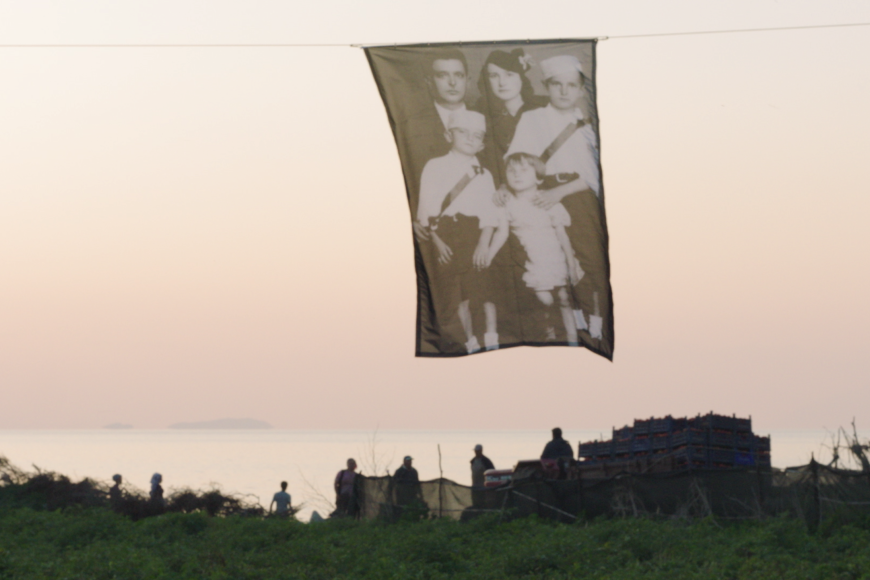
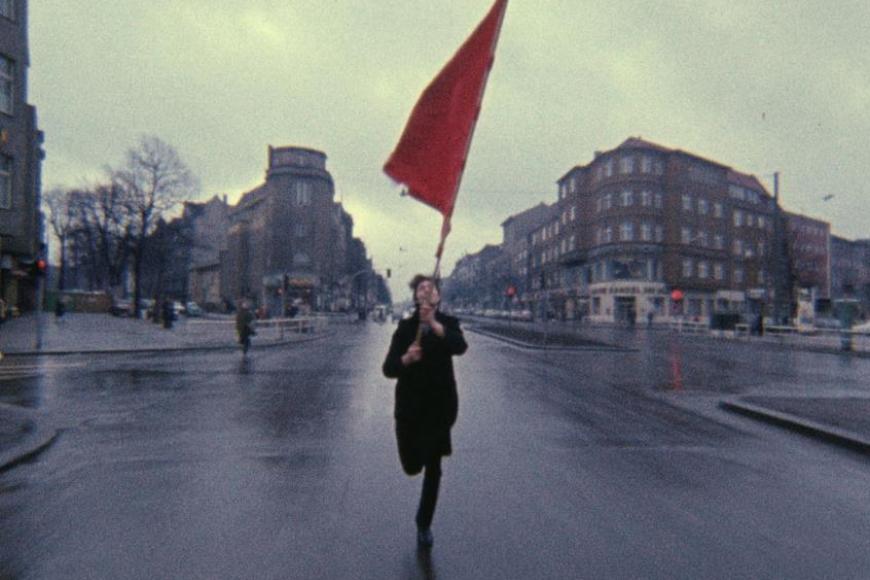
He carries a flag, and that flag is red: In 1968 Holger Meins takes part in this student flag run in West Berlin, in 1970 he joins the RAF and goes into hiding.
An exercise on “colour” in Michael Ballhaus’s class at the DFFB in West Berlin went down in the history of cinema and subversion. In retrospect, this silent miniature became the harried document of a movement of departure that was to grow criminal powers. It was shot on 18 January 1968, five years after JFK’s statement of bloc affiliation, “Ich bin ein Berliner,” just before the murder of Benno Ohnesorg, a few months before the assassination attempt on Rudi Dutschke. Director-in-training Gerd Conradt and fourteen fellow students and friends organised a relay race to the Schöneberg town hall to raise the red flag there. The final leg was run by cinematography student Holger Meins, who was to become a terrorist with the Red Army Faction and starved himself to death in Wittlich prison in 1974.
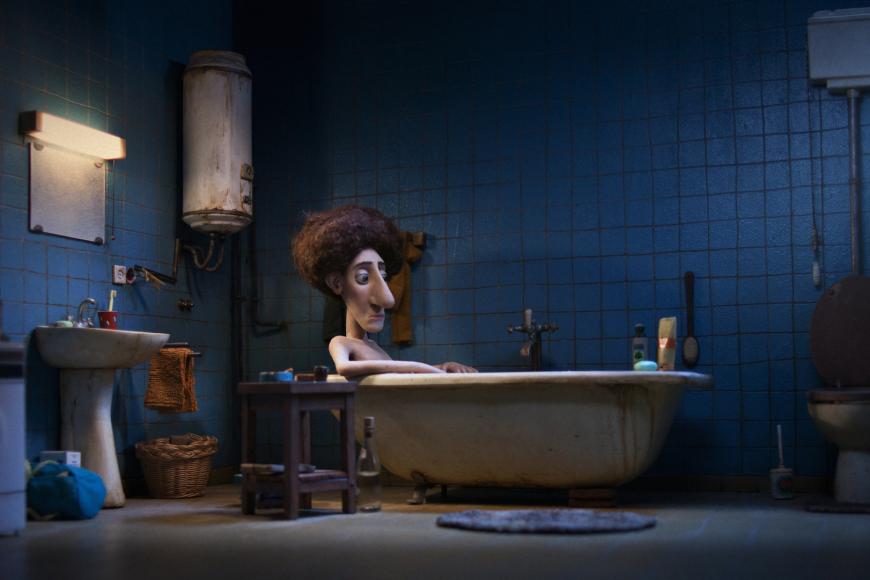
Lovro steps into the bathtub. A drop falls from the faucet and makes waves – into the past, back to the day he went fishing with his grandfather for the first time.
Lovro steps into the bathtub. A drop falls from the faucet and makes waves – into the past, back to the day he went fishing with his grandfather for the first time. Thoughts, sounds, bath utensils swirl memory and reality together … With this animated melancholia, Leon Vidmar, a student of Špela Čadež, continues in the vein of his teacher’s works in terms of craft and atmosphere.
Grandfather fortune teller, father developer, son filmmaker: A portrait of generations about tradition and change, violence and alienation in Chinese society.
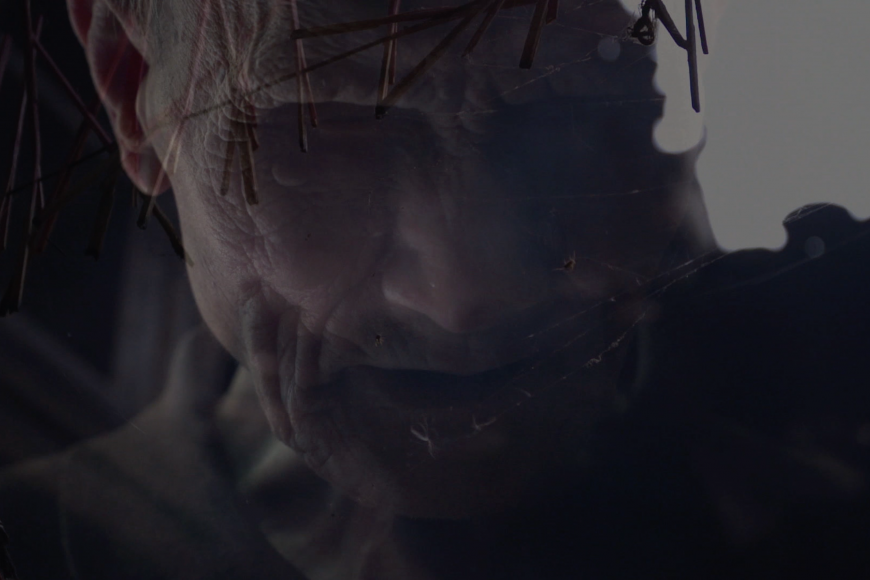
“After I die, show your film at my funeral!” Zuogui, the director’s grandfather, is 86 years old and has been blind since childhood. Becoming a fortune teller was a way out of poverty for him. People are still coming to him for advice, including his son Donggu, a developer: “Dad, how is my fortune next year?” In his portrait of generations about his father and grandfather, Wei Deng depicts tradition and change, violence and alienation in Chinese society.
Pale greys and dim lights create an atmosphere that seems to correspond to the dark memories of famine, dead siblings and the violently enforced one-child policy. The camera stays close to the grandfather as he feels his way along the walls of his flat. Orienting himself in his own environment has become harder since Donggu had the old house torn down and a new one built. Zuogui has little use for the modern China that claims to stand for economic boom and prosperity. Only when another of his son’s developments, which the fortune teller had warned against, threatens to fail does affection between the two seem possible again.
Jan-Philipp Kohlmann
Credits
Director
Wei Deng
Cinematographer
Wei Deng
Editor
Wei Deng
Producer
Wei Deng
Nominated for:
FIPRESCI Prize,
Prize of the Interreligious Jury
Winner of:
Golden Dove (International Competition)
A change of perspective on migration to Europe: Having returned because she missed her children, Fati meets with little understanding in her Ghanaian home village.
A beach reminds us of Fati’s recent past. She came to Italy by sea, without papers, pregnant for the fifth time. Longing for her children, she returned to Ghana six months later – without her husband. The people around her can’t understand this decision. “You’ve created a mess,” a friend says. “How do I tell people?” a sister asks. But Fati wants to provide for her family, even though she still has to liberate three of her children from the custody of her in-laws.
Numerous recent documentaries have been dedicated to the experiences of people who arrive in the EU and get caught in the degrading conditions of asylum politics, but this work by Ghanaian director Fatimah Dadzie offers a change of perspective. In Fati’s hometown, Europe is considered a paradise – and what fool would voluntarily run away from there? The decision has lost the returnee all prestige. Her social exclusion is shown here by relatives as talking heads, directly in front of the camera. But when the film overlays everyday images of care work or street hawking with Fati’s voiceover, it gives a voice to its steadfast protagonist.
Daughter, mother and grandmother in Covid lockdown in New York. Three strong characters at close quarters having outspoken arguments and hilarious verbal duels. Delightful!
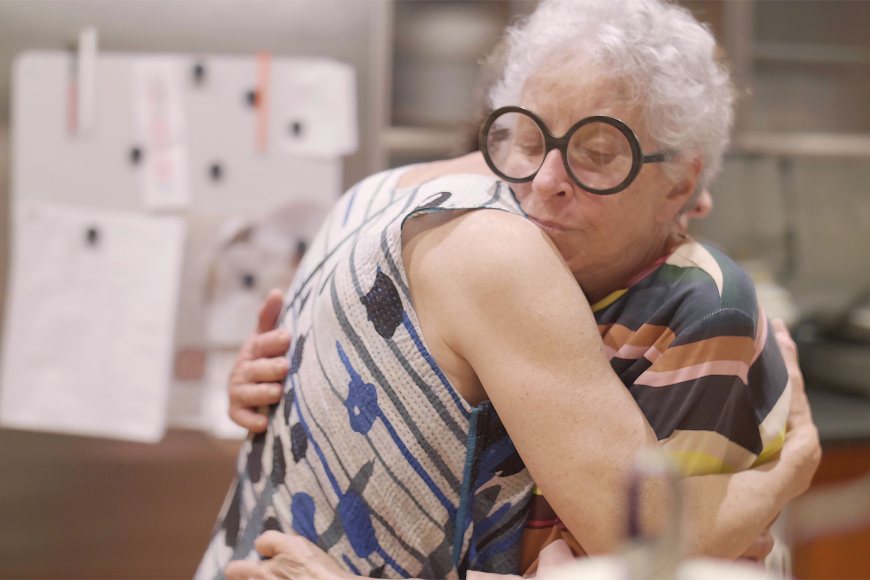
Take: three generations of women in Covid lockdown in New York, enough white wine, vodka and time to talk about the really important issues. Dana Reilly makes the best of the pandemic restrictions and films what happens when her mother Janet and 90-year-old grandmother Sylvia decide to move in together. The result is a funny and at the same time lovingly raw tribute to two strong personalities, their not uncomplicated closeness and completely different worlds.
In southern California, date palms from the Middle East grow, tales from One Thousand and One Nights are told and a volcanic eruption is expected. A document of enchanting simultaneity.
Not a single cloud ever seems to drift across this sky, the sun never ceases to send its powerful rays down. Here, in southern California, where the San Andreas Fault has created an unmistakable topography and invisible water currents run under the barren soil, date palms thrive best: feet in water, head on fire. Terra Long has looked around, traced the history of the plants which originally came to North America from the Middle East, and visited the parades and festivities dedicated to the sugary fruit. Layer by layer, she constructs her very own perspective on the landscape and the people, translates her haptic impressions into magnificent 16mm shots and designs a complex soundtrack.
Long manages to join the past and present and produce a concise, quasi sensual extract. The laborious manual pollination of the date palms plays a role in it, as do the collapsed ecosystem of the Salton Sea, archived dresses of Arabian Nights beauty queens and interviews that testify only to what is now historical; as do elderly white couples floating in their pools and walking across the lawns of golf courses. “Feet in Water, Head on Fire” is a document of simultaneity that captivates from the first minute to the last.
An old man and his granddaughter are sitting in a quiet square in the middle of the city. Suddenly he has a heart attack, falls to the ground – and time freezes.
An old man and his granddaughter are sitting in a quiet square in the middle of the city. Suddenly he has a heart attack, falls to the ground – and time freezes. This could be the famous second where you see your life flash before your inner eye. But in which direction is it moving? Forward into the past, backward into the future or sideways into the now?




![Filmstill Fa. Gutberlet & Co. [Ausschnitt]](https://www.dok-leipzig.de/sites/default/files/styles/stepped_teaser_/public/fiona/films/stills/94a765f0-53ce-4935-bc20-309db0abbb7f.jpg?h=346bc062&itok=5n_TqdCp)





![Filmstill Fa. Gutberlet & Co. [Ausschnitt]](https://www.dok-leipzig.de/sites/default/files/styles/film_stills_full_content_view/public/fiona/films/stills/94a765f0-53ce-4935-bc20-309db0abbb7f.jpg?h=346bc062&itok=0mNa-FNw)


