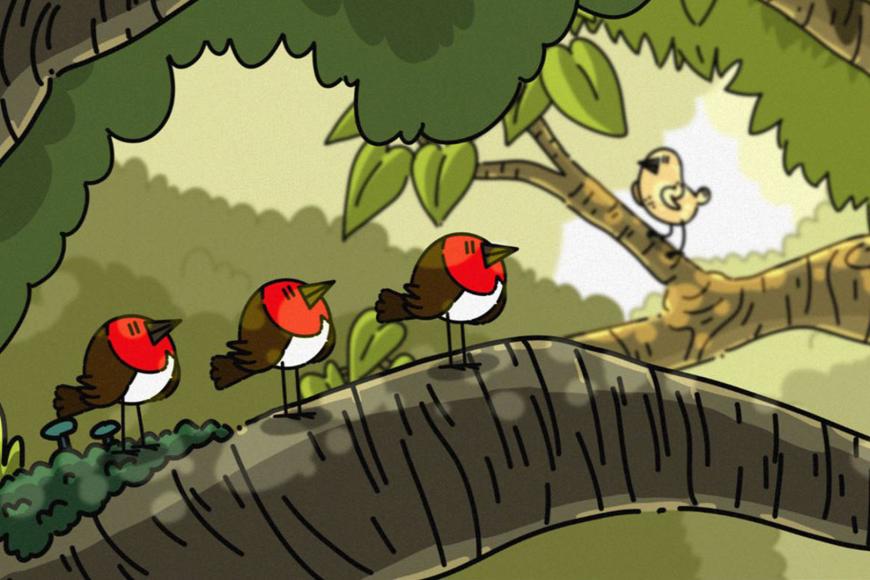
The featherless nightingale has the most beautiful voice in the forest. All the animals enjoy her singing. When autumn comes and she catches a cold, she suddenly can’t sing any more.
Oh dear, the nightingale has no feathers! The other birds are laughing at her because she can’t fly. Her singing, however, lulls the little bear to sleep. Even the squirrels stop fighting and listen. When autumn comes and the nightingale catches a cold, she feels much too sick to sing. The other animals will have to come up with something …
We encounter strange figures in the verse-like segments of this animated experiment. Text fragments from an interview distorted by static noise get tangled up in Xabier Erkizia’s music.
Insects of various species gather. They install a stage on which a frenzy of colours and textures unravels. We encounter strange figures in the verse-like segments of this animated experiment. The visual associations arise from a sound piece by Xabier Erkizia that he composed for an interview with the musician Santiago Irigoyen, who died in 2007.
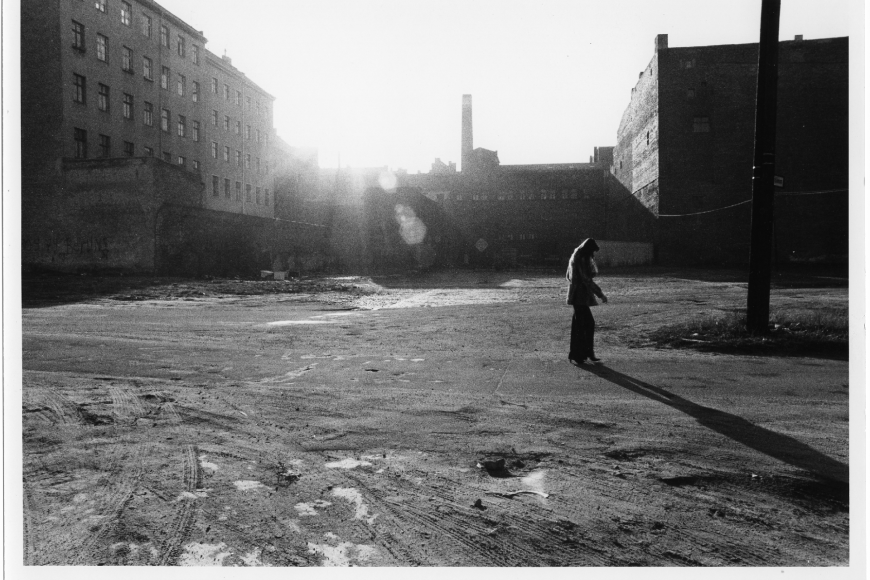
Long walks through almost deserted cityscapes which even in the late 1970s still bear the distinct scars of the Second World War: a Belgian filmmaker encounters West Berlin. She tries to re-adjust in this terrain saturated with European history and films this transformation in the first person singular. The images of twilight captured on grainy 16mm footage make Berlin look like a city that lies deep in the East, even though it sees itself as a Western city. But Annik Leroy mistrusts the mirror images: they don’t help if you want to see things more clearly.
Ralph Eue
Credits
Director
Annik Leroy
Script
Annik Leroy
Cinematographer
Annik Leroy
Editor
Eva Houdova, Daniel De Valck
Producer
Gamma Films, ZDF, Centre de l'Audiovisuel à Bruxelles (CBA)
A production of the State Film Documentation, which was set up to preserve uncensored GDR reality: Long-term residents look back on the German-Jewish history of “their” street.
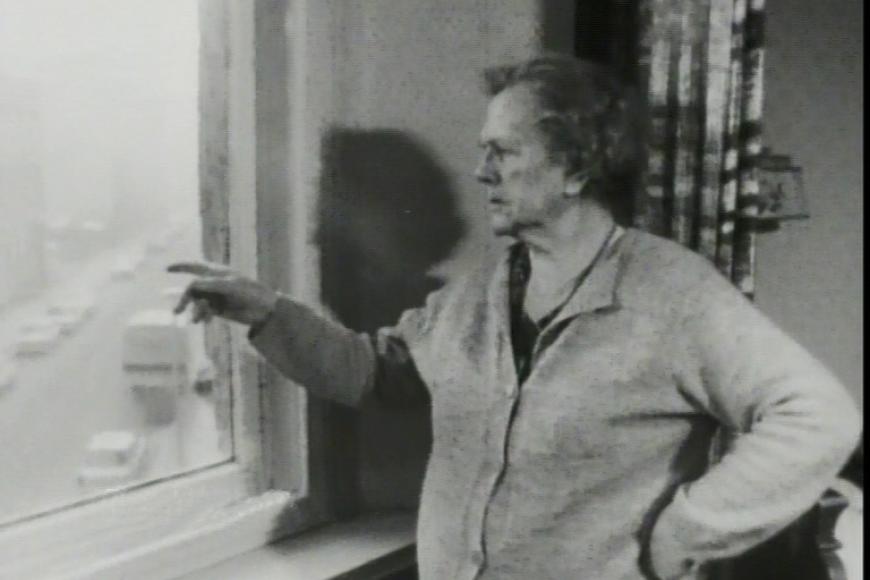
Why this film document about a street in East Berlin is the way it is, why it conveys an almost touching, basically unformed honesty and perplexity, is due to the specific institution it was made for. The State Film Documentation was founded to provide the GDR with uncensored testimonies of its own reality. Three long-time residents look, through notoriously draughty windows, at the notoriously chilly German-Jewish history: Herr Miegel, former pub owner, Frau Kramp, former cinema employee, Mischket Liebermann, writer and GDR cultural politician. They have been neighbours in their district forever. They will probably remain strangers to each other forever.
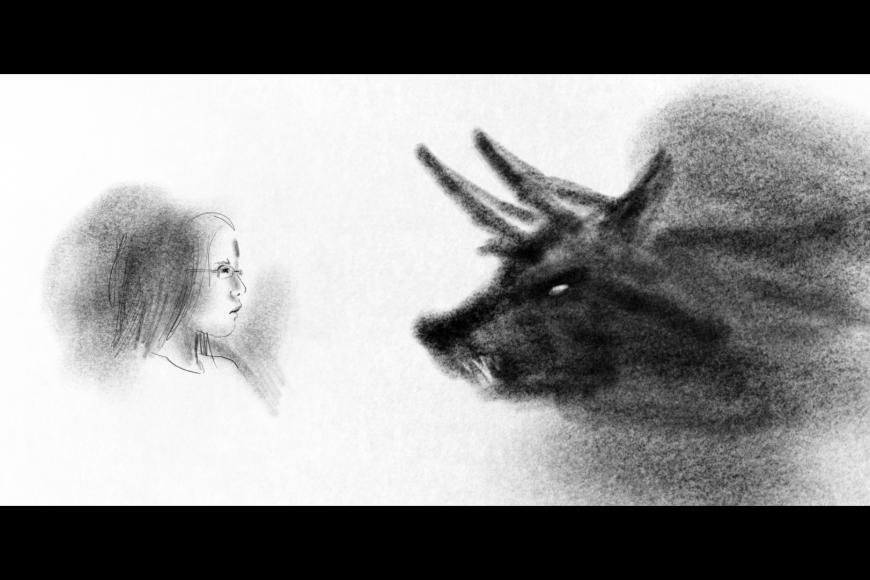
Bertha is determined to tame the wild wolves in her life. She counters her disease, which limits her in her daily life, with brushes, colour palettes and crayons.
Bertha loves to draw. She needs help in her daily life for she has a rare disease that impairs her vision. But Bertha refuses to be discouraged. She has organised an exhibition together with a well-known painter. The proceeds will go to research into her disease, the so-called Wolfram syndrome. Can Bertha tame the wild wolves in her life?
Brothers in the Bohemian Forest: Franta and Ondra, twins with impressive full beards, in their early 60s, live in quarrelsome harmony on a remote farm in a rugged landscape.
Two quarrelsome brothers with impressively full beards live on a remote farm in the Bohemian Forest, surrounded by a rugged landscape: At one point, Franta and Ondra themselves become aware that this setting has an almost Old Testament feel to it, but cannot agree on who might be Cain and who Abel in this scenario. They rarely agree in any case: Daily squabbles are the big constant in the life of the identical but otherwise dissimilar twins. When Franta embarks on another breakneck adventure, Ondra wants nothing more than to smoke in peace. Nonetheless, they occasionally exchange hugs and nose kisses. In their early 60s, Franta and Ondra spend their time working in the fields, playing jokes with the animals, or competing in left-hand arm-wrestling duels. The facts that Franta lost his lower right arm in an accident or that the twins took part in the 1989 revolution in Czechoslovakia belong to an apparently distant past. With a domestic cow as narrator, the leitmotif of a huge mirror, and a classical soundtrack, Miro Remo finds a wonderful form for the portrait of these idiosyncratic people.
Jan-Philipp Kohlmann
Credits
Director
Miro Remo
Script
Aleš Palán, Miro Remo
Cinematographer
Dušan Husár, Miro Remo
Editor
Máté Csupor, Šimon Hájek
Producer
Tomáš Hrubý, Tomáš Hrubý, Miro Remo, Pavla Janoušková Kubečková
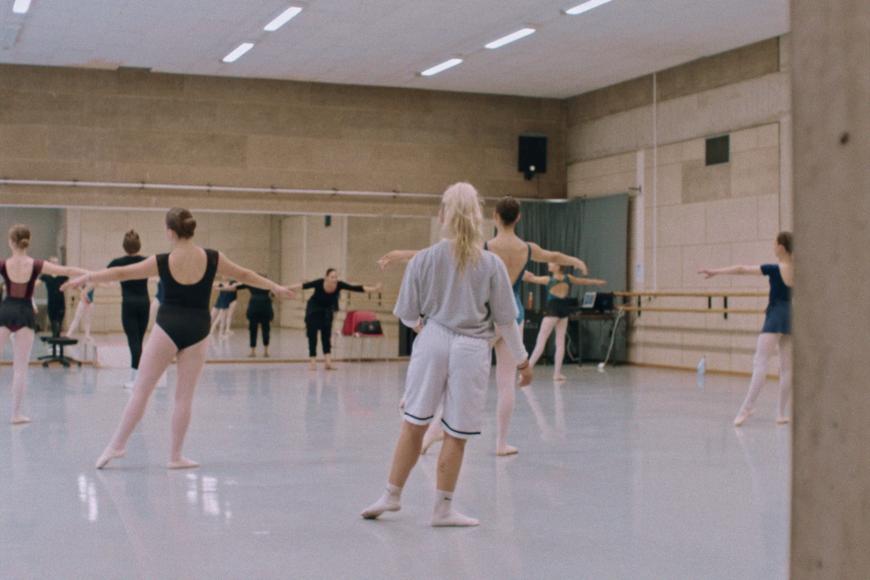
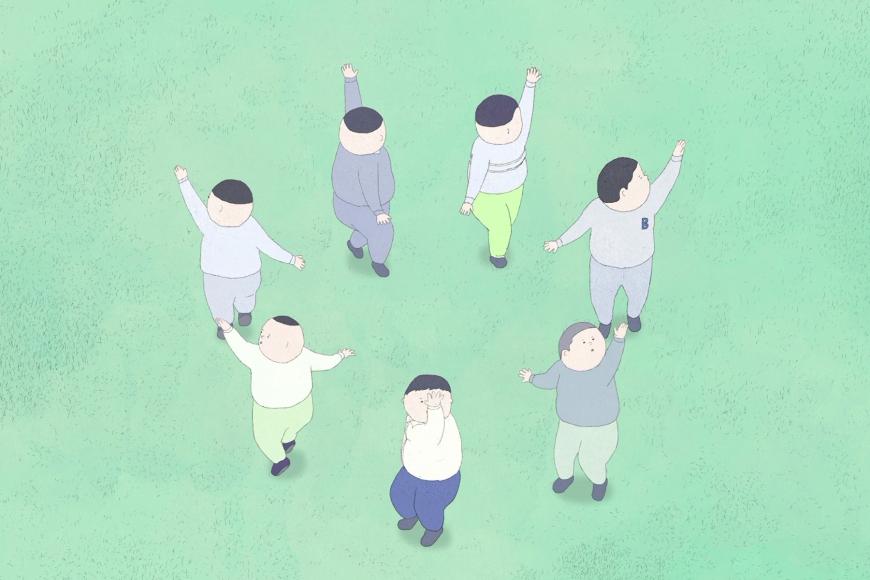
14-year-old Mali’s head is full of dancing. She is a b-girl and lives for breaking. She has just moved into a big city to live with her older sister – and to go to a new school where dancing is one of the main subjects. But can Mali handle the other dance styles? And will her body be able to stand the strain?
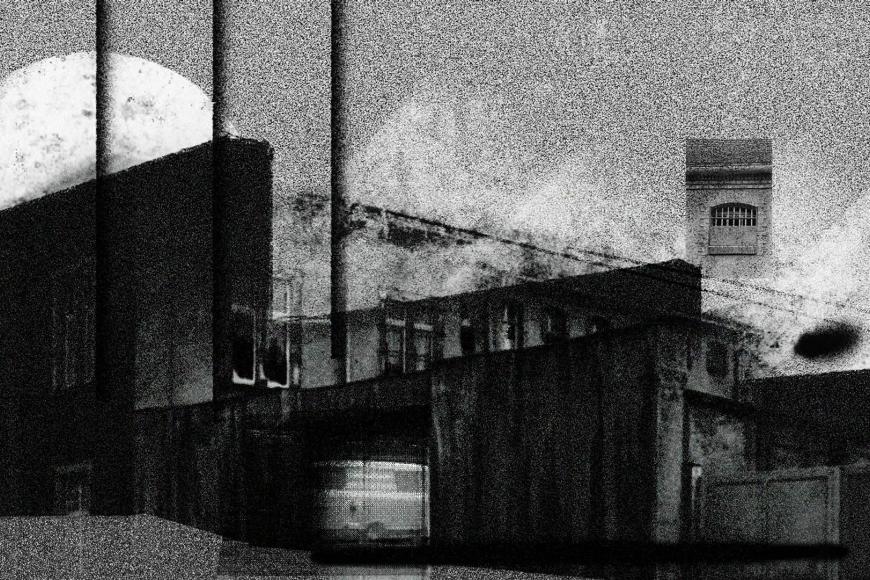
This animated documentary with reduced imagery portrays the protagonist’s traumatic experiences in the GDR’s residential care system and the Torgau Closed Juvenile Detention Centre.
Because his single mother criticised the state, Alex was sent to a special children’s home at the age of eleven, in order to shape him – like almost 500,000 children in the GDR – into a “socialist personality”. He escaped and ended up as a punishment at the Torgau Closed Juvenile Detention Centre, more prison than social institution. His life was now dominated by military drill and violence … Reduced rotoscope images follow Alex’s memories and show how the trauma affects him even today.
Luc-Carolin Ziemann
Credits
Director
Falk Schuster, Mike Plitt
Script
Mike Plitt
Cinematographer
Falk Schuster
Editor
Julian Quitsch
Producer
Max Mönch, Alexander Lahl
Sound
Hannes Schulze
Score
Hannes Schulze
Animation
Julian Quitsch, Alexander Schmidt, Falk Schuster
Nominated for:
Gedanken Aufschluss Prize,
mephisto 97.6 Audience Award
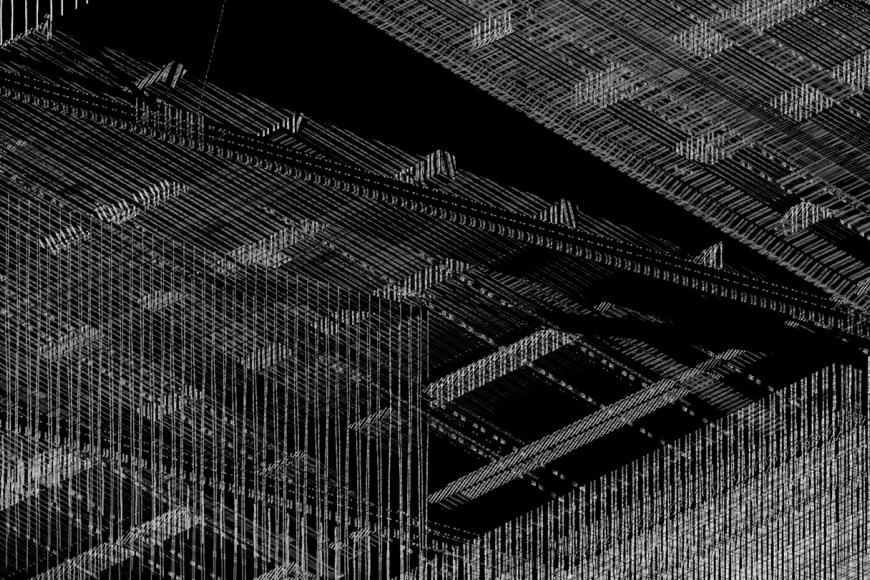
Shimmering lines interweave again and again to become a digital cloth. A 3D model of Kunsthaus Baselland disentangles itself from the lines only to disappear again in a moment.
Shimmering lines intertwine constantly to create ever new digital webs. The third dimension is added by diagonals. A moving camera allows us to finally recognise the secret that the visual elements have kept hidden so far: A 3D model of the Kunsthaus Basel creative centre disentangles itself – only to fade back into the luminous void.
Educational Attainment of West German Pupils in the 1950s
Jürgen Neven du Mont
Hitler sold badges to come to power? And really six million murdered Jews? A knowledge test among FRG secondary school pupils where it’s actually the parents that fail.
Educational Attainment of West German Pupils in the 1950s
Bildungsstand westdeutscher Schüler in den 50er Jahren
Jürgen Neven du Mont
Retrospective 2021
Documentary Film
FRG
1959
44 minutes
German
Subtitles:
None
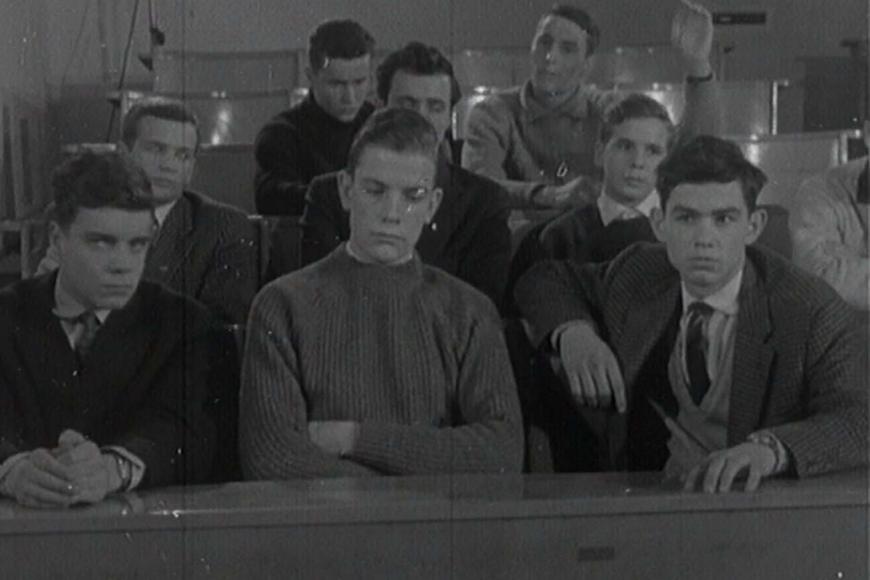
On 29 April 1959, Hessian Broadcasting transmitted an alarming survey of the Federal German school system. The first of three parts of the report “Focus on Our Youth” investigates the question of what has stuck in the minds of higher form students about Hitler’s and Ulbricht’s Germanies. Hesse under Polish administration? Hitler sold badges to come to power? At least they are about right concerning the number of murdered Jews – that is, the third who could think of anything to say about this at all. One television critic rightly pointed out that this represented the sum total of all parental table talk. But were these parents watching television on 29 April 1959?
A boy, a girl, a bird with a swan’s neck nestling in hands, a gently wooded peninsula of longing: Atsushi Wada’s almost speechless animation, mapped out in uniform and unicoloured chains of motifs and events, follows the dream and shame logic of a sexual awakening. There’s a sadness about the rounded and infantile figures, perhaps that of a first “little death”.
Sylvia Görke
Credits
Director
Atsushi Wada
Editor
Atsushi Wada
Producer
Emmanuel-Alain Raynal, Pierre Baussaron, Nobuaki Doi
The authorities decide on the future of Solidarność, the masses protest in the streets. A general strike is in the air. For a moment, political change seems possible.
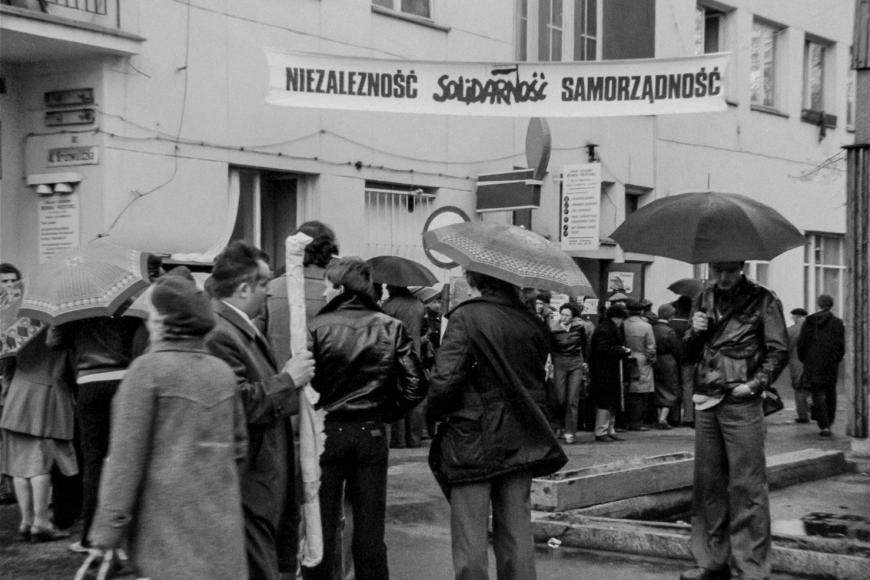
While the communist authorities decide the conditions for an official registration of the Solidarność movement inside, the masses demonstrate in front of the court outside. A contemporary document of the moment when the power of the people seemed to make a lasting cultural opening no longer just a promise but a possibility. At the time, “undesirable” at the Leipzig festival.
Why do we love to celebrate birthdays with cakes? A witty exploration of a specific culinary cultural history, with surprising parallels to fast food and propaganda.
Starting from the children’s party where Zhang Shengjia celebrated his ninth birthday at a KFC fast food restaurant in 2006, the Chinese artist and filmmaker’s essayistic archive film unfolds a cheerful cultural history of the birthday cake from a Chinese perspective. The convention reached China from Western Europe and North America in the early 20th century and merged with local birthday traditions. The constantly growing influence of Western consumer culture since Deng Xiaoping’s economic reforms of the 1980s was exemplified in 1990 when almost 13,000 customers were registered on the opening day of the country’s very first McDonald’s restaurant in Shenzhen. The laconically commented foray through a colourful selection of archival film, advertising and photo footage from several decades takes us from the first Chinese emperor eating birthday cake and early pioneers of cake design to the commercialisation and politicisation of cuisine and food culture.
Icelandic musician Björk composes electronic music from natural sounds. In the video clip for “Hunter”, her head morphs into that of an artificial polar bear.
Icelandic musician Björk has always merged natural and technoid creativeness. She samples and loops environmental sounds and transforms them by means of electronic effects. Paul White translates this approach and aesthetics in the video clip for “Hunter”, morphing the singing Björk’s head and human features into an artificial polar bear that seems to be made of liquid plastic.
Björk’s figure seamlessly transforms into fantastic organic shapes, while her singing wipes the slate clean: tabula rasa, a free space for children to blossom and make their own mistakes.
The figure of the singer Björk seamlessly transforms into petals, into underwater creatures with delicate tentacles and other fantastic organic manifestations impossible to classify. Accompanying Tobias Gremmler’s graceful computer animation, Björk’s singing wipes the slate clean: tabula rasa, a free, unencumbered space for later-born children to blossom and make their own mistakes.
A dog takes us into the interior of a lighthouse, where the history of seafaring and conquests rears its head: in hallucinated visual riddles full of cruelty.
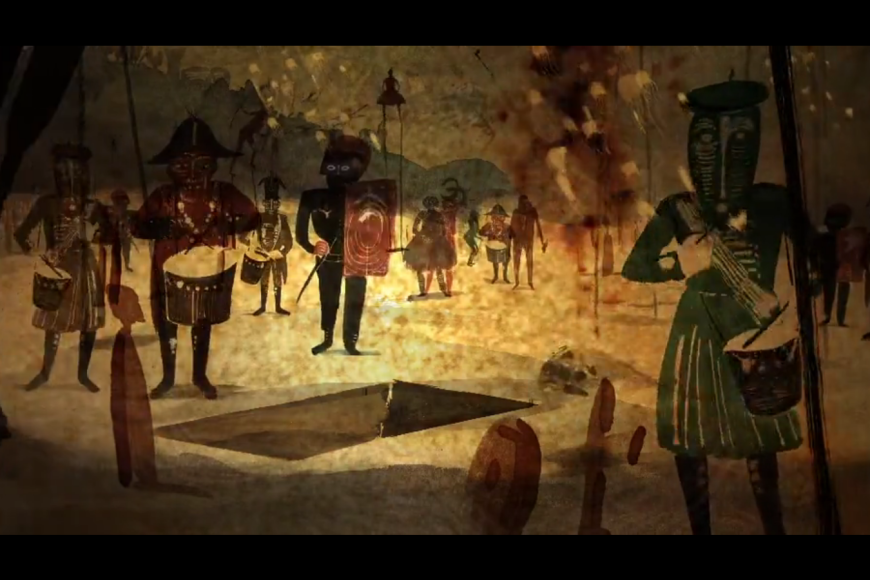
A van approaches the lighthouse of Monte Igueldo on the bay off San Sebastián. A woman and her dog live in the tower. The moving boxes are packed with files and paper. Before the driver can load them, we are given access to the unusual interior of the building, where the history of seafaring and conquests rears its head: in hallucinated picture puzzles full of cruelty.