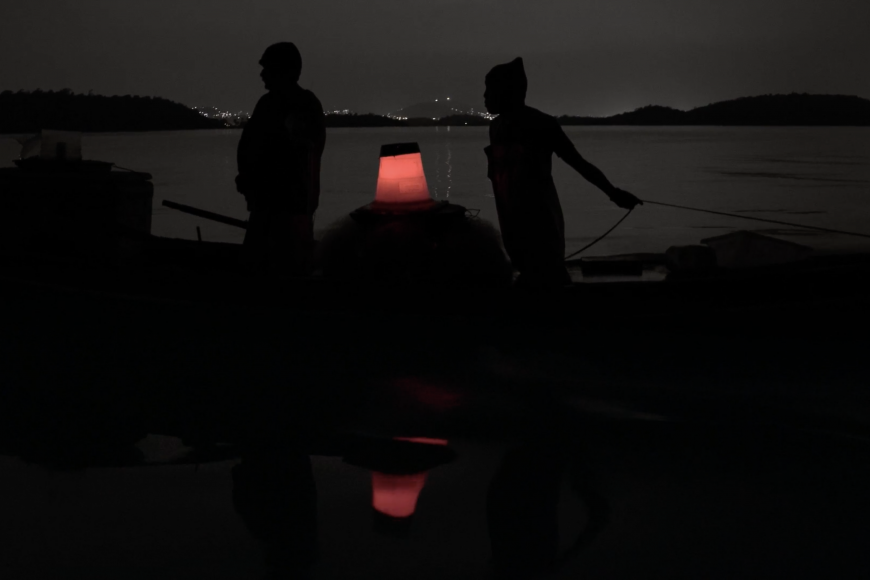
The Baía de Guanabara is not just any bay: the metropolitan area of Rio de Janeiro has sprawled around it. Its waste water threatens the rich ecosystem, planes roar along the approach corridors above. These filmic explorations on the margins of the megacity portray various environments that are all connected to the bay in a specific way. The people here are micro-wage earners making a modest living.
At night the lights of the city and the promises of capitalism shine in the distance. To the people living at the periphery, they seem out of reach. In eight chapters this documentary essay meditates on their habitats along the bay, following the repetitive and physically exhausting activities of humans and farm animals. Unusual perspectives, careful camera work and a poignant sound design elevate these observations to a commentary on the crisis in Brazil. Murilo Salles, who won a Silver Dove in Leipzig in 1978 for his debut “These Are the Weapons”, sheds light on the close link between geographical space and social inequality.
Annina Wettstein
Credits
Director
Murilo Salles
Script
Murilo Salles, Eva Randolph, Itauana Coquet
Cinematographer
Léo Bittencourt, Fabrício Mota
Editor
Eva Randolph
Producer
Murilo Salles
Sound
Felipe Luz
Score
João Jabace, Sarah Lelièvre
Nominated for:
FIPRESCI Prize,
Prize of the Interreligious Jury
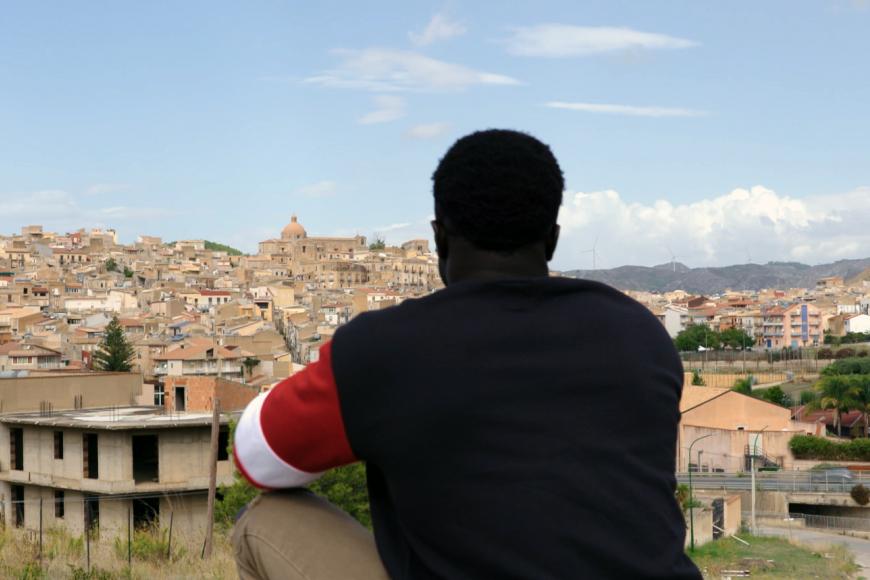
In the small Sicilian town of Siculiana, people place their fate in the hands of a black Christ, but do not totally trust the African refugees living nearby.
In Siculiana, a small Sicilian town full of flaking facades, religiosity is lived out as a matter of course. And of course the figure of Jesus Christ worshipped here is black, and always has been. However, some people cannot get used to their dark-skinned neighbours in the refugee camp. The camera accompanies locals and stranded people along their paths, which often lead to the church, but not necessarily together, and draws a kind of map of the city in black-on-black contrasts.
It’s become quiet in Siculiana, a local says. He’s not referring to the loud demonstrations against the Villa Sikania, now converted into a refugee reception camp. And certainly not to the colourful flurry of activity that grips the city every year as the faithful prepare for the feast of the Finding of the Cross. That’s when they hang up the “Benvenuti” sign. But who exactly is welcomed here? The pomp and circumstance of the festivities are at the centre of this filmic portrait of a community in which the alleged common ground is disintegrating into voice and skin tones: between the black people from abroad and the black man on the cross who – according to an elderly lady – was forced to “darken” himself in order to incorporate human sins. Between an aging city stylised to the point of becoming scenery and God’s newly arrived children who promise a future and who could bring new life into the alleys.
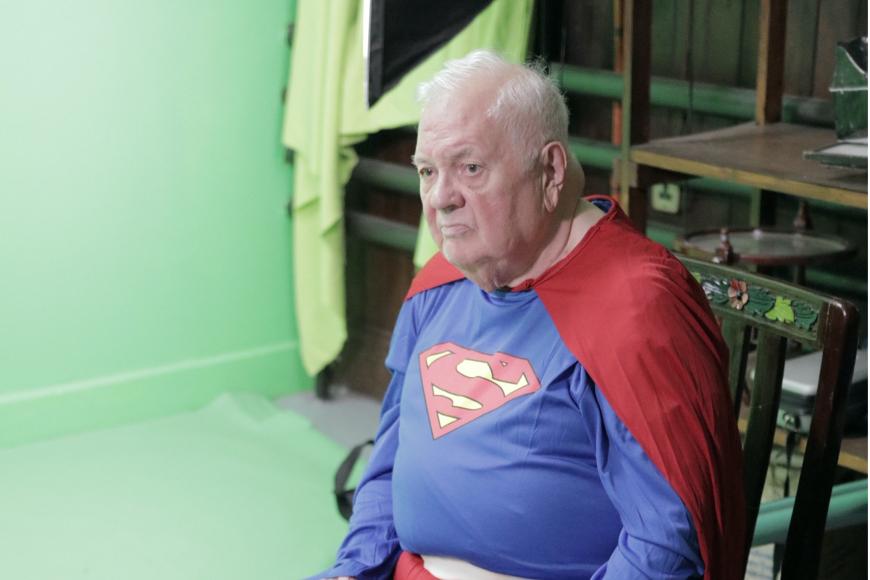
Dwindling membership, a crumbling club house, penniless coffers: The “Bradford Movie Makers” have seen better days. The funny and touching portrait of a band of film buffs.
Dwindling membership, a crumbling club house, penniless coffers: The “Bradford Movie Makers” have seen better days. The active club members, most of them fairly advanced in years, sit there, basking in blissful memories and not mincing their words when they pick at the others’ film ideas over multiple cups of tea. Cineastes have met here every Monday since 1932 and can be proud of a ninety-year history including countless amateur films of all genres.
The “club”, as insiders call it, is a typical British working class film club: watching films together on a regular basis and spending every free minute on elaborate shoots including stunt riders and green screens. But the old veterans are beginning to get frail, the occasional death must be mourned. And then the pandemic comes on top of all this, darkening the only bright spot of the week. But it also brings unexpected surprises … Kim Hopkins manages the feat, despite a number of tragic-sad occasions, of avoiding the tear-jerker trap and gives us equally astonishing and funny insights into this pastime that’s far more than just a hobby. This quiet, funny and touching portrait of a band of film buffs – male and female – pays tribute to the need we all have to spend time together.
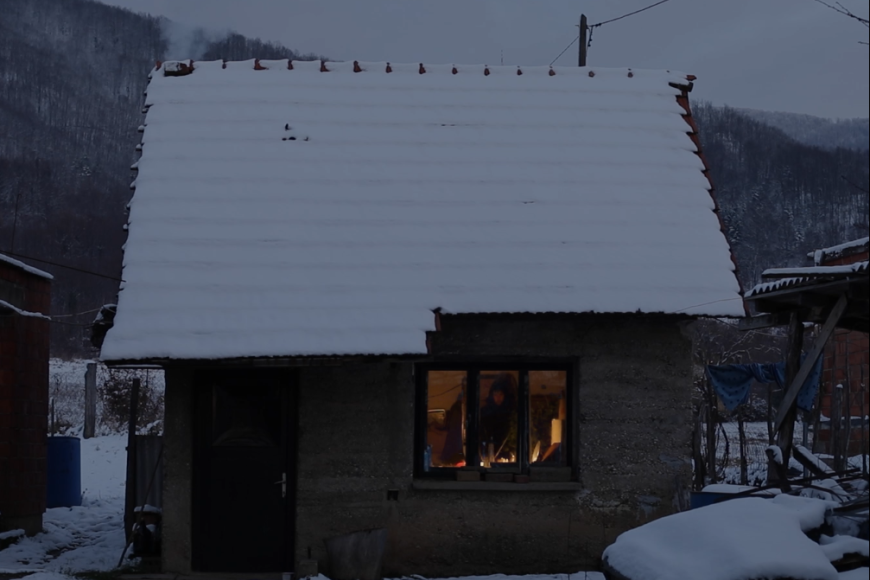
In this cinematic conjuring, Ante Zlatko Stolica remembers childhood fears triggered by a deaf woman in his grandmother’s village. The ghost of Janja, an allusion to the Slavic fairy tale character of Baba Yaga, haunts his dreams, lurks in dark places and joins forces with other horror characters. Still lifes, horror films and a gloomy soundscape evoke the unease that still disturbs the director, even after Janja’s death.
She cares for senior citizens at home for five euros an hour. At their bedsides the ticking clock counts down the working day and falters frighteningly when death comes.
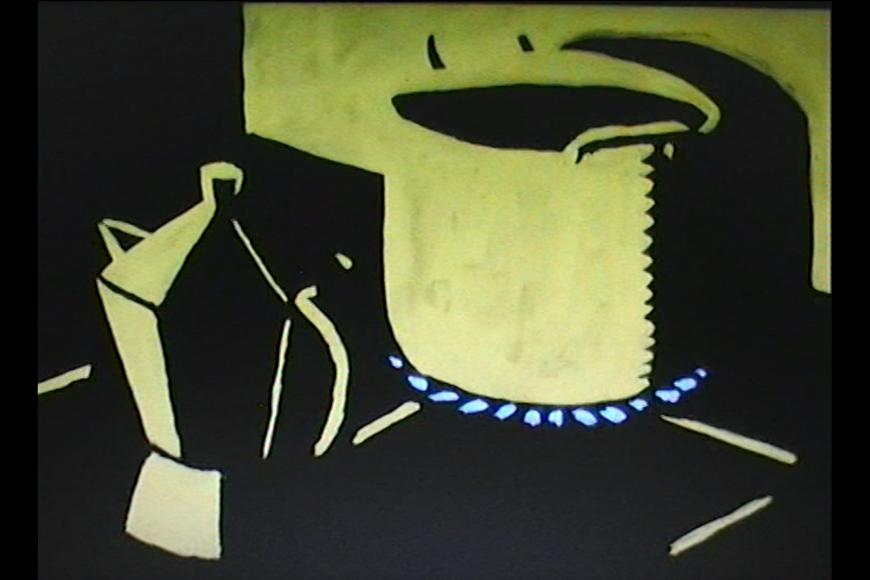
Between coming and going time feels leaden – a half-life in the light and dark contrasts of a linocut. The narrating voice’s mother cares for seniors in their homes for five euros an hour. At their bedsides the ticking clock counts down the working day, caught between the frightening sounds of the heavy breathing that comes with impending death and the roar of promises made by television. The dying are mother’s livelihood.
Punta, a moustachioed Maltese, weaves a traditional fish trap. As always, waves crash on the rocks, but the times when you could earn a living by fishing here are long gone.
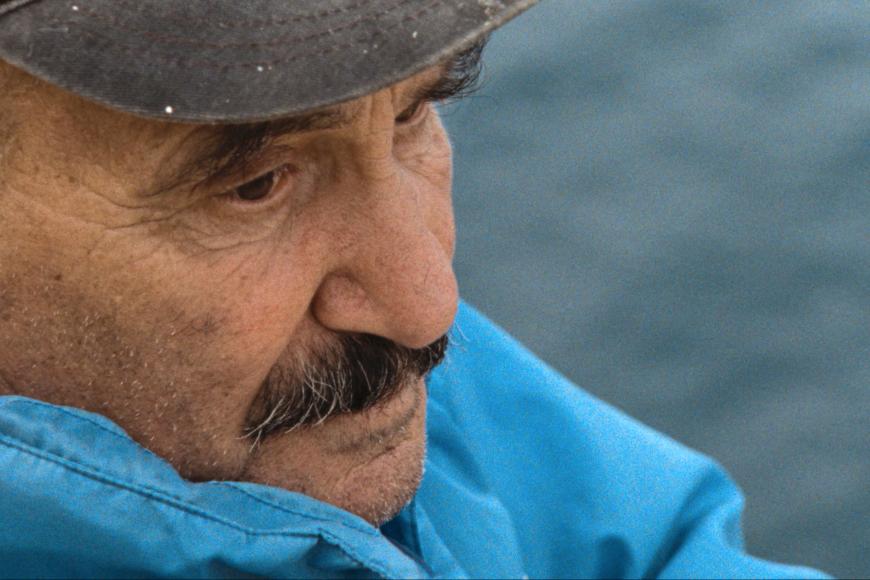
The camera calmly explores the holes and fissures of a cliff face, the traces of the ocean. The austere landscape seems to have fallen out of time. Only a few decades ago, fishermen threw their trap baskets into the water from here. Today, the sea around Malta has long been fished dry. Punta, a moustachioed islander, wants to have one more go. A weir is woven from the hairs of a horsetail, a forgotten craft is demonstrated. An intercut Super 8 film documents the diversity of marine life in the past; its grainy images radiate something irretrievable. An octopus curls around a foot, a jellyfish floats through the eternal blue. Punta gazes melancholically at the sea, far beneath him the waves are crashing against the rock as they have always done. And yet the sight is deceptive, because he and we know that no fish will ever stray into his weir. The rough singing of a woman’s voice begins.
In 1940, two friends who grow up like brothers rescue horses destined for war in Sardinia. Only one of them will survive. An equally dark and poetic animation.
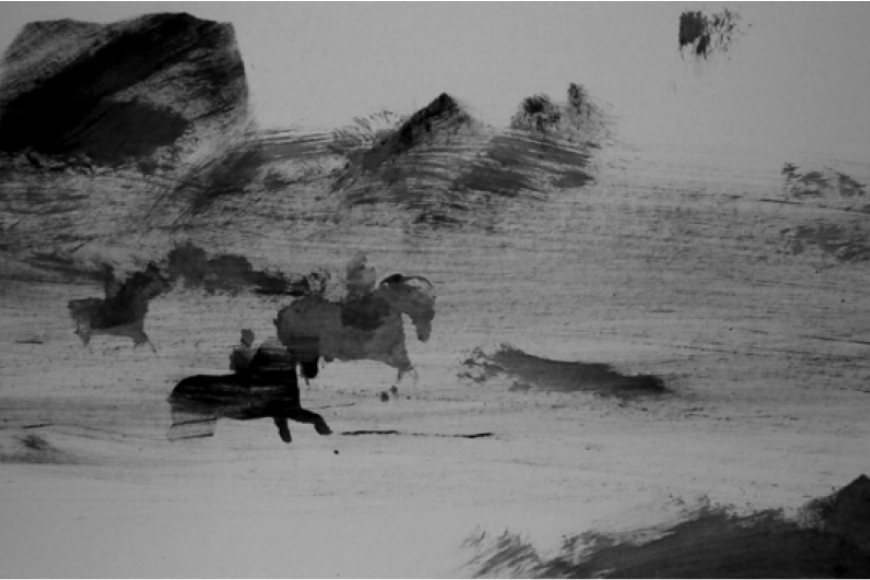
Sardinia, 1940. The harmless term “horsing around” takes on a very serious and ultimately tragic meaning for 14-year-old Michele and his 11-year-old friend Ventura. When they learn that the peasants have sold their best horses for serious money to the state and thus to the military for the approaching war, the two boys take a decision that is as naïve as it is intuitive: They free the herd in a daring nighttime operation. Their happiness is short-lived. Betrayed by a villager, they are caught on the way home and Ventura is shot dead. A senseless death? Or a sign of special bravery, as the ambiguous Sardinian film title suggests? Director Giovanni Columbu, a Sardinian himself, has dedicated his late animation debut to his grandmother who once told him the story. He took the liberty of adapting it with brushstrokes on paper, his style drawing primarily on the charms of historical painting schools, animation techniques and cinema genres. Columbu’s associative visual language, marked by shades of black, white, and grey, is animated by impulsive hatchings, countless dots, and generous elisions. The soundtrack, too, sets rather sparse nuances – subtle illustrations that draw on Sardinian cultural traditions while opening a space for universal metaphors.
Andreas Körner
Credits
Director
Giovanni Columbu
Script
Giovanni Columbu
Editor
Giovanni Columbu
Producer
Giovanni Columbu
Co-Producer
Flavia Oertwig
Score
André Feldhaus, Filippo Ripamonti, Alessandro Olla, Hans Zeller, Pietro Mascagni
A huge, glowing structure bearing the face of Rocky Balboa drifts through the night, mysterious and seemingly from out of this world. Its actual size is revealed only gradually. Sissel Morell Dargis tells the incredible story of the “baloeiros”, an underground culture in the heart of Brazil’s favelas. These loosely-knitted groups are dedicated to building, launching and chasing hot air balloons. This does not sound very spectacular? Anyone who sees the giant objects made of fine tissue paper, which often depict popular figures like Karate Kid or Superman, will be amazed! Such a balloon launch, sometimes preceded by years of welding and gluing in secret workshops, is not just a complex logistical endeavour. It is dangerous, too, for the “baloeiros” whose passion does not earn them one centavo, are prosecuted as a criminal organisation. It takes a while for Morell Dargis to win the trust of this secret community. The balloons also serve her as a metaphor for a country that finds itself in a politically fragile and deadlocked situation in which those who struggle at the margins of society can barely assert their rights. An intimate, multilayered and action-packed film that turns conventional notions of life in the favelas upside down.
The pioneer of electronic living-room pop works on her new album. Step by step, the intimate experiment goes public. Music becomes a shared safe space.
For the first time in six years, Barbara Morgenstern, pioneer of German-style electronic intimate pop, works on a new album. Her laptop sits on a shoebox, in the privacy of her home she finds first lines and harmonies: “I like to be alone,” one song begins. One by one, musicians join her. Intuitive ideas take shape. A window has opened. Arrangements, rehearsals, recordings follow. Step by step, the music enters public space, images are produced, videos, narratives. Questions arise: New beginning or back to the roots? New Biedermeier or tough political comment? The bigger the band, the riskier the booking. The more crisis-ridden the environment, the more comforting the music-making. Sabine Herpich shows the creation of a pop album as a working process. Her view is as unpretentious as her protagonist, her quiet observation not interested in story and glamour, but in closeness and comprehension. We understand why someone works as an artist, even if it is never explained. Barbara Morgenstern shares what moves her: “Labour of love / for the rest of the earth / I’m more than certain / that this still has worth.”
Jan Künemund
Credits
Director
Sabine Herpich
Script
Sabine Herpich
Cinematographer
Sabine Herpich
Editor
Sabine Herpich
Producer
Tobias Büchner
Sound
Sabine Herpich, Tobias Büchner
Sound Design
Dominik Avenwedde
German Distributor
Jürgen Pohl
Nominated for:
VER.DI Prize for Solidarity, Humanity and Fairness
The spy who came in from Mittenwalde: Berthold Barluschke, employed by both the East and West German secret service, arms dealer, family man and professional impostor in a psychogram about identity and morals.
Identity is a myth. Berthold Barluschke, an ambitious cog in the GDR foreign trade system, has changed names and roles multiple times. Thomas Heise follows him as he moves house. He once went from Mittenwalde to New York, now he is leaving his family in Paris. A polyglot secret agent with a petty bourgeois background. Barluschke worked for the GDR secret service and the West German Federal Intelligence Service, always anxious to get the most out of it for himself. “What should really be talked about?” the filmmaker asks. The impossible endeavour of getting to the professional impostor using the means of documentary film results in one of the freest, most fragmented works in Heise’s oeuvre. Awarded the Silver Dove at DOK Leipzig but rarely screened since.
In 2019, alliances between anarchic and civil resistance groups were formed in Dannenröder Forst in Hesse. Together they defended trees against the police.
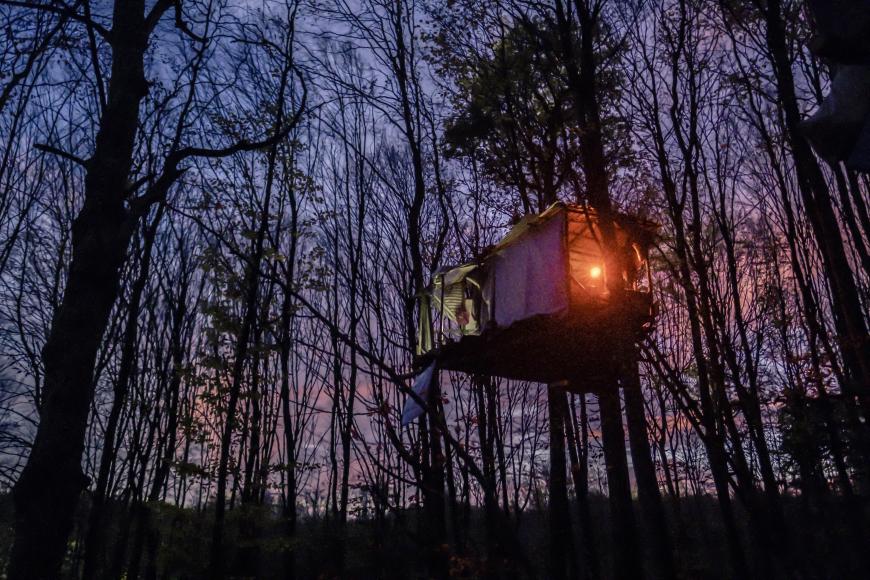
Tree sitting is an important part of climate activism. The “occupation” of Dannenröder Forst in 2019 was meant to prevent its clearance for a highway. The people holding out in the airy heights of their tree houses were dependent on support and supplies from the ground. This help came from locals who would never have dreamed of being part of a resistance movement before. David Klammer’s film shows how brand-new alliances are formed in the face of environmental and climate destruction while realising how powerless words are. These alliances could last – even if the trees, like those in the “Danni”, fall victim to the chainsaws in the end.
In heated, often hostile debates about homosexuality, trans and sex work, a young Armenian family tries to assert some kind of queer normality for themselves and others.
German Subtitles for deaf and hard-of-hearing, English
The film opens with the wedding of Garik and Hasmik and ends with a decorated tree for their son’s first Christmas in the new house that his father built himself. Between these fixed points of middle-class family life, nothing is as heteronormative as this bracket and above all the political and religious mainstream in Armenia would lead one to expect.
Hasmik is a lawyer who fights for LGBTQIA+ rights, her husband appears in the media as drag performer Carabina, does sex work and makes his life in a queer-phobic environment the subject of an autobiographical theatre performance. The film, which evolved out of close friendship and is always one step behind the wild energy of Garik/Carabina, takes a precarious, raw, but also utopian-tinted look at current social struggles. The longing for normality, emancipation and responsibility find themselves exposed – sometimes powerless and unprotected – to violent defamation. TV images show the zeal behind the attempted construction of homosexual and trans persons as “Un-Armenian.” Meanwhile Carabina, in a moment of rest from plastering the house, trowel in hand, plays a song by Charles Aznavour, whose family came from Armenia – “What Makes a Man?”
Jan Künemund
Credits
Director
Hovhannes Ishkhanyan
Cinematographer
Hovhannes Ishkhanyan
Editor
Wei-Yuan Song
Producer
Jean-Marie Gigon
Co-Producer
Hovhannes Ishkhanyan
Sound Design
Thomas Fourel
-
Hasmik Petrosyan, Garik Amolikyan
Winner of:
Silver Dove Feature-Length Film (International Competition Documentary Film)
Thinking about thwarted migration, exploitative systems, the threadbare glamour of mass tourism in lockdown. Cruise ships lie in the harbour, film footage fades.
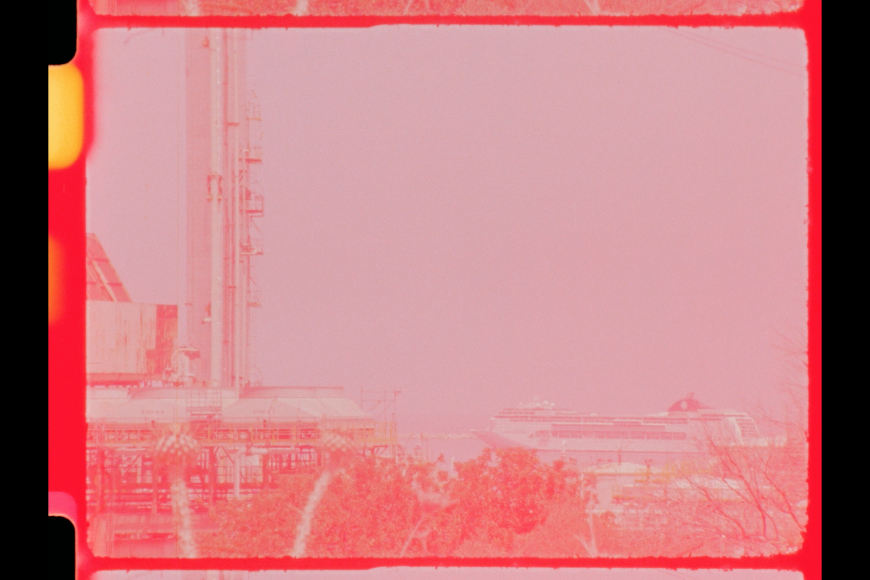
The world stands still. Gaudily painted cruise ships lie in the oil port of Augusta on the south-east coast of Sicily. Their lustre fades a little more every day. On the scorched, tinged 16mm film stock they seem as unfit for the future as the refineries visible behind them. When, if not in the early summer of 2021, would the time have ever been riper for reflection and reassessment?! Old, exploitative economic systems that keep people away from Europe and let only raw materials enter are in lockdown. Their future is unimaginable. But is there a way back? To the gentle sound of the waves, the birds and the insects, the smoke of the industrial plants wafts back into the chimneys. But the images have been damaged.
Lenin’s long shadow reaches until 1970: The citizens of the Soviet Union pay their respects to Lenin, the founder of their state – at the mausoleum on Moscow’s Red Square.
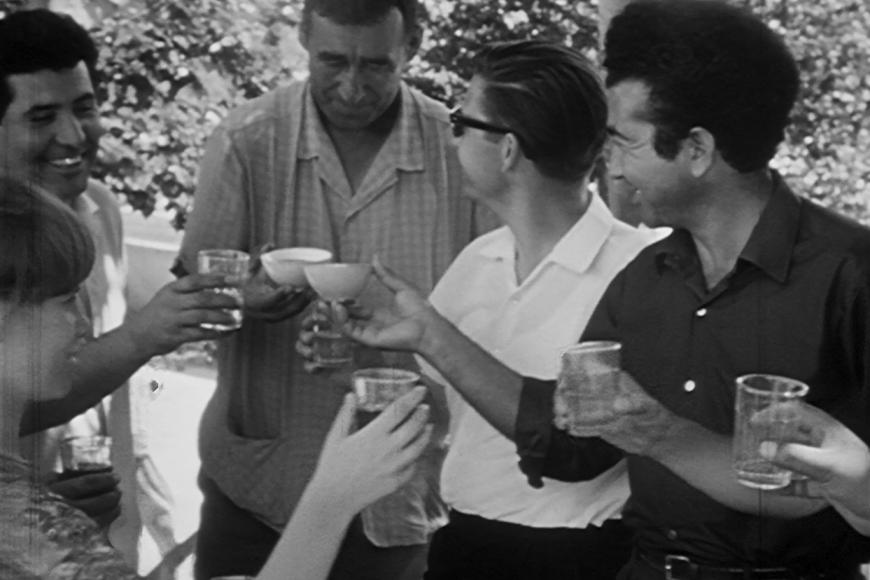
A quote by the Soviet futurist Vladimir Mayakovsky about Lenin frames the plot of this film: A dead man who is “more alive than the living” today. On a tour through the Union of Soviet Republics, the film team meet friends “in the full sense of the word” without mentioning their names: encounters with people in the Soviet Union in 1970.
Sorbian life in Lusatia, today. Encounters with a population who are reclaiming their identity, language and culture out of the local museums into present-day Federal Germany.
Bei uns heißt sie Hanka / Pla nas gronje jej Hanka / Pola nas rěka wona Hanka
Grit Lemke
German Competition Documentary Film 2023
Documentary Film
Germany
2023
92 minutes
German
Subtitles:
English
A green lawn like an unused carpet, encircled by a neat forest edge, in the background the steaming cooling towers of a coal power station – impressionistic camera images from Lusatia. They summarise in one pan how a used-up utilitarian landscape is trying to recultivate itself. Can ancient identity and language be re-discovered amid this strange artificiality? The director travelled through this region in search of her origins. She was born here, in Lusatia. This is her home and that of the smallest of all Slavic peoples: the Sorbs.
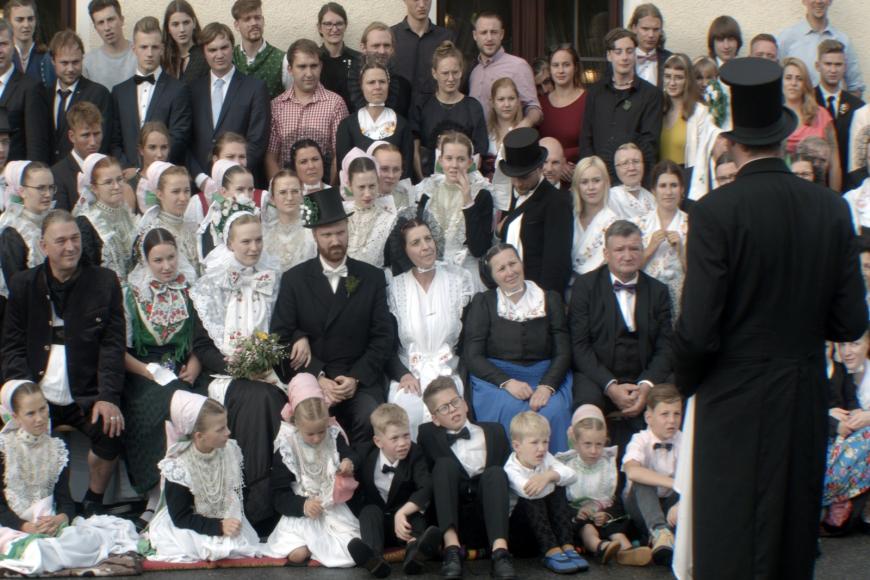
She thinks about the assimilation of this cultural and linguistic community with the indigenous people, about its history of oppression in the various German systems, about a region caught up in structural change and the identity-shaping power of words – even if one has to learn them anew first. She meets a German Anna who becomes a Sorbian Hanka. She encounters people dedicated to preserving the traditions. The younger folks especially see their Sorbian-ness as a commitment to a community spirit, if not – like the artist, Hella – as an alternative way of life. Accompanied by old and new Sorbian sounds, along the filmmaker’s offscreen reflections, the many-voiced portrait of a nation within the nation emerges who reclaims its culture out of the local museums back into its everyday life.
Sylvia Görke
Credits
Director
Grit Lemke
Script
Grit Lemke
Cinematographer
Uwe Mann, Martin Farkas, Reiner Nagel
Editor
Sven Kulik
Producer
Annekatrin Hendel
Co-Producer
Thomas Beyer, Roman Nuck, Rolf Bergmann
Sound
Oliver Prasnikar
Sound Design
Michael Kaczmarek
Score
Walburga Walde, Izabela Kałduńska
Nominated for:
Gedanken Aufschluss Prize,
Goethe-Institut Documentary Film Prize,
DEFA Sponsoring Prize,
VER.DI Prize for Solidarity, Humanity and Fairness
Saddled with one of the most generic names in the English language, British filmmaker John Smith takes a wry, deceptively straightforward look at how this has affected his life and career.
“What’s in a name? That which we call a rose by any other name would smell as sweet.” The Bard’s canonical quote looms large over British experimental filmmaker John Smith’s latest short; one of the film’s opening gags even has Smith assert that one of his schoolmates, a certain William Shakespeare Smith, was allegedly bullied as much as he was. Saddled with one of the most generic monikers in the English language, the director talks about how this has affected his life and career over the last seven decades, pairing his deadpan voiceover with photographs, documents, snippets from his films and other pertinent images to often hilarious effect. His wry cataloguing of name-related humiliations also takes great pleasure in the tangential, as class, the state of the world today and mortality come to the fore again and again, with the intertitles providing an extra layer of self-deprecation that pushes the whole endeavour towards autofiction. Political, bracingly witty and quietly moving, “Being John Smith” ultimately suggests that humour combined with rigour and intelligence can transcend even the most fixed of categories; what could be sweeter than that?