Motion is the art that binds the changing characters of this AR-project, which are drawn by exhibition visitors. An artwork created by all, always fluctuating.
Art is often in the unseen, and in this AR project art is in the motion. Motion is what brings together the changing characters, drawn by exhibition visitors and updated daily. By bringing anyone and everyone’s artwork to the Museum der bildenden Künste Leipzig, this piece challenges the notion of authorship in the art space. Come draw!
Nail polish, a general, a mule. John Smith recites from a text by the linguist Herbert H. Clark. The words evoke appropriate images, but mean something different.
It was only long after the end of the GDR that the Leipzig audiences had an opportunity to get to know the work of John Smith, the British master of the trenchant, short artist film that continues to expand enormously in the mind. The ideas of conceptual art and structural minimalism prevalent in the 1970s have influenced his works, which he sees as documentary films according to John Grierson’s definition, as “creative treatment of actuality.” In his view of the world details are highlighted which then cease to be taken for granted. In “Associations”, he recites a text by the linguist Herbert H. Clark. Words conjure up matching images, but mean something different. An experience that could also be had in the “actually existing socialism” of the GDR.
Punta, a moustachioed Maltese, weaves a traditional fish trap. As always, waves crash on the rocks, but the times when you could earn a living by fishing here are long gone.
The camera calmly explores the holes and fissures of a cliff face, the traces of the ocean. The austere landscape seems to have fallen out of time. Only a few decades ago, fishermen threw their trap baskets into the water from here. Today, the sea around Malta has long been fished dry. Punta, a moustachioed islander, wants to have one more go. A weir is woven from the hairs of a horsetail, a forgotten craft is demonstrated. An intercut Super 8 film documents the diversity of marine life in the past; its grainy images radiate something irretrievable. An octopus curls around a foot, a jellyfish floats through the eternal blue. Punta gazes melancholically at the sea, far beneath him the waves are crashing against the rock as they have always done. And yet the sight is deceptive, because he and we know that no fish will ever stray into his weir. The rough singing of a woman’s voice begins.
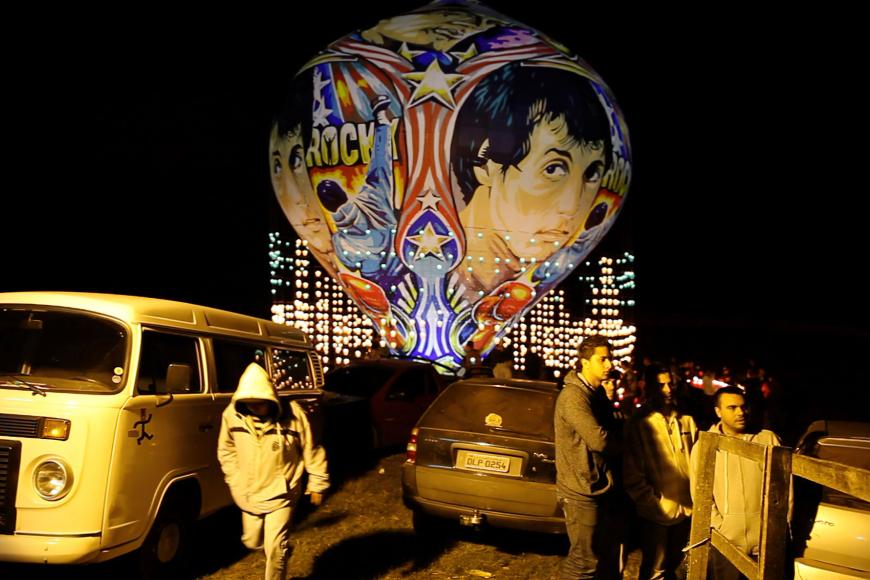
A huge, glowing structure bearing the face of Rocky Balboa drifts through the night, mysterious and seemingly from out of this world. Its actual size is revealed only gradually. Sissel Morell Dargis tells the incredible story of the “baloeiros”, an underground culture in the heart of Brazil’s favelas. These loosely-knitted groups are dedicated to building, launching and chasing hot air balloons. This does not sound very spectacular? Anyone who sees the giant objects made of fine tissue paper, which often depict popular figures like Karate Kid or Superman, will be amazed! Such a balloon launch, sometimes preceded by years of welding and gluing in secret workshops, is not just a complex logistical endeavour. It is dangerous, too, for the “baloeiros” whose passion does not earn them one centavo, are prosecuted as a criminal organisation. It takes a while for Morell Dargis to win the trust of this secret community. The balloons also serve her as a metaphor for a country that finds itself in a politically fragile and deadlocked situation in which those who struggle at the margins of society can barely assert their rights. An intimate, multilayered and action-packed film that turns conventional notions of life in the favelas upside down.
The pioneer of electronic living-room pop works on her new album. Step by step, the intimate experiment goes public. Music becomes a shared safe space.
For the first time in six years, Barbara Morgenstern, pioneer of German-style electronic intimate pop, works on a new album. Her laptop sits on a shoebox, in the privacy of her home she finds first lines and harmonies: “I like to be alone,” one song begins. One by one, musicians join her. Intuitive ideas take shape. A window has opened. Arrangements, rehearsals, recordings follow. Step by step, the music enters public space, images are produced, videos, narratives. Questions arise: New beginning or back to the roots? New Biedermeier or tough political comment? The bigger the band, the riskier the booking. The more crisis-ridden the environment, the more comforting the music-making. Sabine Herpich shows the creation of a pop album as a working process. Her view is as unpretentious as her protagonist, her quiet observation not interested in story and glamour, but in closeness and comprehension. We understand why someone works as an artist, even if it is never explained. Barbara Morgenstern shares what moves her: “Labour of love / for the rest of the earth / I’m more than certain / that this still has worth.”
Jan Künemund
Credits
Director
Sabine Herpich
Script
Sabine Herpich
Cinematographer
Sabine Herpich
Editor
Sabine Herpich
Producer
Tobias Büchner
Sound
Sabine Herpich, Tobias Büchner
Sound Design
Dominik Avenwedde
German Distributor
Jürgen Pohl
Nominated for:
VER.DI Prize for Solidarity, Humanity and Fairness
The spy who came in from Mittenwalde: Berthold Barluschke, employed by both the East and West German secret service, arms dealer, family man and professional impostor in a psychogram about identity and morals.
Identity is a myth. Berthold Barluschke, an ambitious cog in the GDR foreign trade system, has changed names and roles multiple times. Thomas Heise follows him as he moves house. He once went from Mittenwalde to New York, now he is leaving his family in Paris. A polyglot secret agent with a petty bourgeois background. Barluschke worked for the GDR secret service and the West German Federal Intelligence Service, always anxious to get the most out of it for himself. “What should really be talked about?” the filmmaker asks. The impossible endeavour of getting to the professional impostor using the means of documentary film results in one of the freest, most fragmented works in Heise’s oeuvre. Awarded the Silver Dove at DOK Leipzig but rarely screened since.
Thinking about thwarted migration, exploitative systems, the threadbare glamour of mass tourism in lockdown. Cruise ships lie in the harbour, film footage fades.
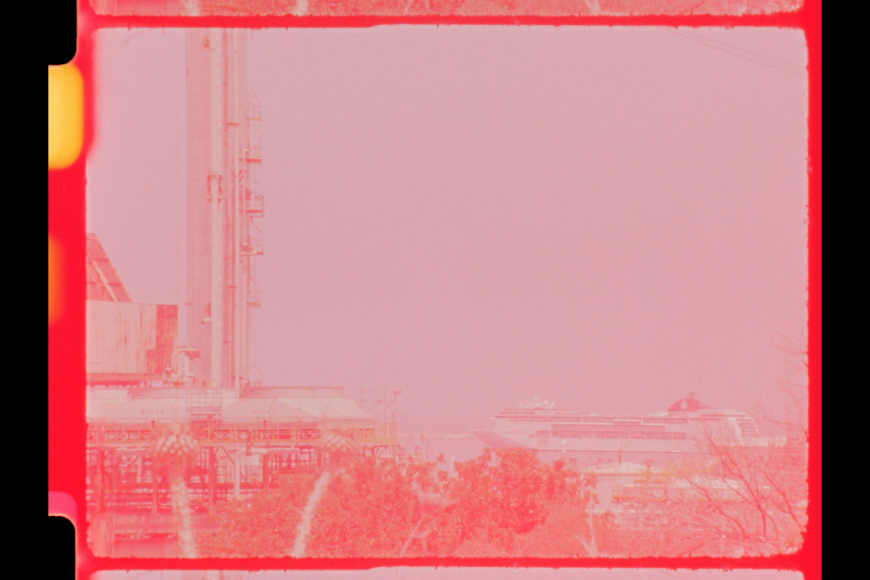
The world stands still. Gaudily painted cruise ships lie in the oil port of Augusta on the south-east coast of Sicily. Their lustre fades a little more every day. On the scorched, tinged 16mm film stock they seem as unfit for the future as the refineries visible behind them. When, if not in the early summer of 2021, would the time have ever been riper for reflection and reassessment?! Old, exploitative economic systems that keep people away from Europe and let only raw materials enter are in lockdown. Their future is unimaginable. But is there a way back? To the gentle sound of the waves, the birds and the insects, the smoke of the industrial plants wafts back into the chimneys. But the images have been damaged.
Saddled with one of the most generic names in the English language, British filmmaker John Smith takes a wry, deceptively straightforward look at how this has affected his life and career.
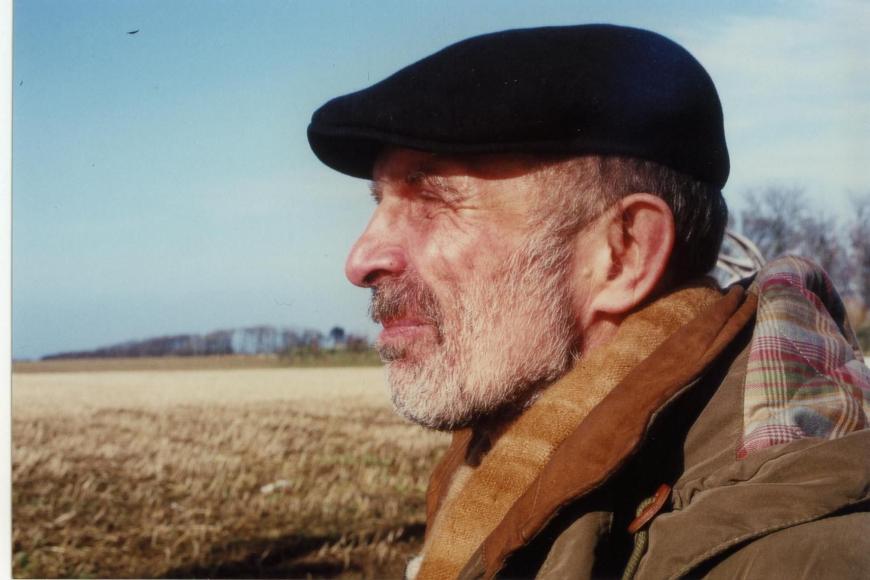
“What’s in a name? That which we call a rose by any other name would smell as sweet.” The Bard’s canonical quote looms large over British experimental filmmaker John Smith’s latest short; one of the film’s opening gags even has Smith assert that one of his schoolmates, a certain William Shakespeare Smith, was allegedly bullied as much as he was. Saddled with one of the most generic monikers in the English language, the director talks about how this has affected his life and career over the last seven decades, pairing his deadpan voiceover with photographs, documents, snippets from his films and other pertinent images to often hilarious effect. His wry cataloguing of name-related humiliations also takes great pleasure in the tangential, as class, the state of the world today and mortality come to the fore again and again, with the intertitles providing an extra layer of self-deprecation that pushes the whole endeavour towards autofiction. Political, bracingly witty and quietly moving, “Being John Smith” ultimately suggests that humour combined with rigour and intelligence can transcend even the most fixed of categories; what could be sweeter than that?
We encounter strange figures in the verse-like segments of this animated experiment. Text fragments from an interview distorted by static noise get tangled up in Xabier Erkizia’s music.
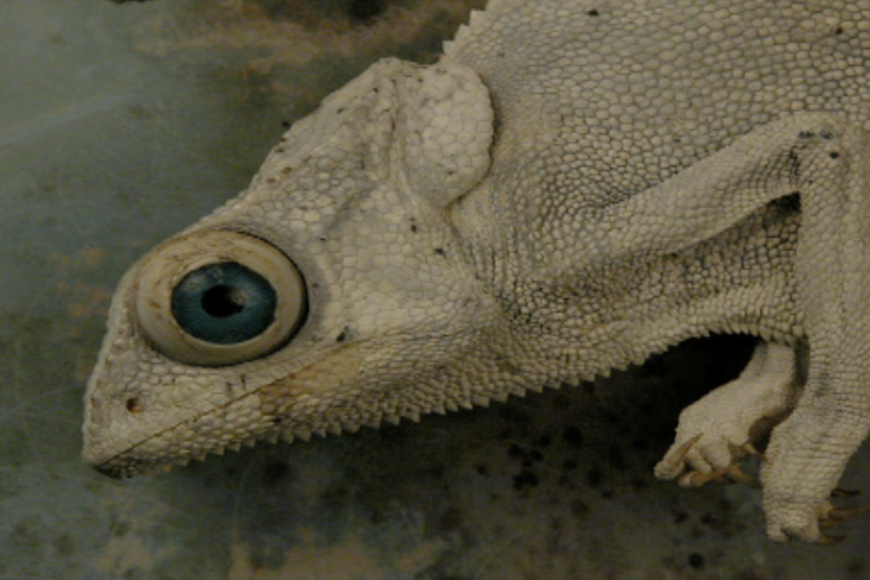
Insects of various species gather. They install a stage on which a frenzy of colours and textures unravels. We encounter strange figures in the verse-like segments of this animated experiment. The visual associations arise from a sound piece by Xabier Erkizia that he composed for an interview with the musician Santiago Irigoyen, who died in 2007.
Why do we love to celebrate birthdays with cakes? A witty exploration of a specific culinary cultural history, with surprising parallels to fast food and propaganda.
Starting from the children’s party where Zhang Shengjia celebrated his ninth birthday at a KFC fast food restaurant in 2006, the Chinese artist and filmmaker’s essayistic archive film unfolds a cheerful cultural history of the birthday cake from a Chinese perspective. The convention reached China from Western Europe and North America in the early 20th century and merged with local birthday traditions. The constantly growing influence of Western consumer culture since Deng Xiaoping’s economic reforms of the 1980s was exemplified in 1990 when almost 13,000 customers were registered on the opening day of the country’s very first McDonald’s restaurant in Shenzhen. The laconically commented foray through a colourful selection of archival film, advertising and photo footage from several decades takes us from the first Chinese emperor eating birthday cake and early pioneers of cake design to the commercialisation and politicisation of cuisine and food culture.
A dog takes us into the interior of a lighthouse, where the history of seafaring and conquests rears its head: in hallucinated visual riddles full of cruelty.
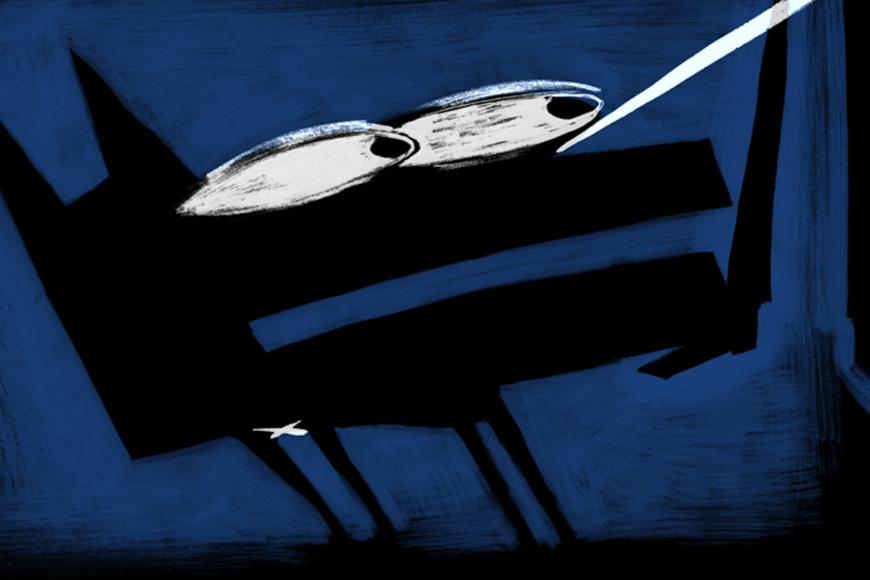
A van approaches the lighthouse of Monte Igueldo on the bay off San Sebastián. A woman and her dog live in the tower. The moving boxes are packed with files and paper. Before the driver can load them, we are given access to the unusual interior of the building, where the history of seafaring and conquests rears its head: in hallucinated picture puzzles full of cruelty.
One night, the filmmaker roams through Novi Sad, picks up homeless people and takes them home. A self-experimentation with a camera, somewhere between social reportage and activism.
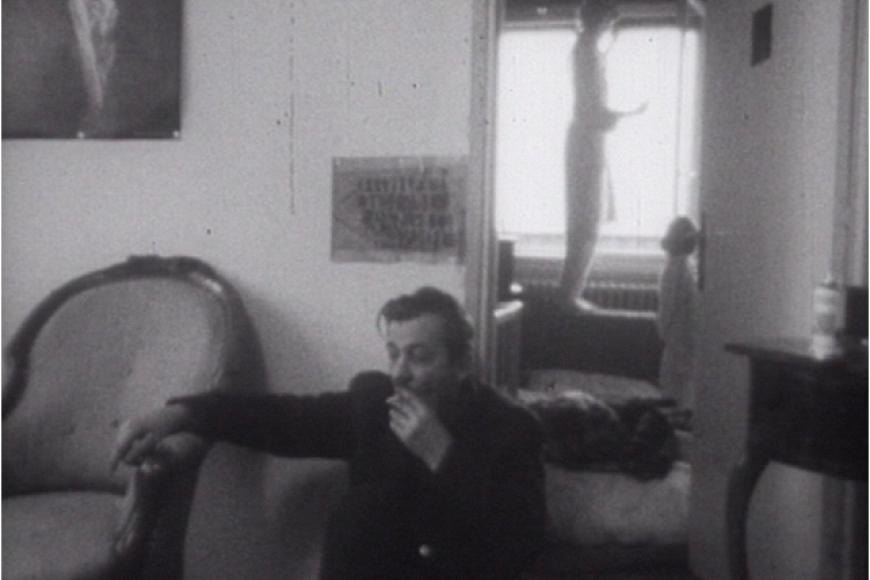
1971, Novi Sad, a winter’s night. The filmmaker meets six homeless men, is outraged by the negligent state and takes matters into his own hand. As shelter cannot be found at short notice, he invites the men to his apartment, turning his wife into the involuntary accomplice of his relief operation. The experiment fails, but the film is in the can. Želimir Žilnik is one of those representatives of the Yugoslavian Black Wave who won the hearts of the West. It is true that at home he found state-funded production opportunities for self- and bureaucracy-critical films like this one. He was even allowed to present them at domestic festivals. But he still experienced Yugoslavian censorship. Strangely enough, however, not with “Black Film“.
A blind person’s assistance dog breaks loose and disappears in the crowds of a buzzing city. Thus begins a journey where the senses face new challenges.
The ringing of a phone segues into the soundscape of a big city. The buzzing of cars mingles with the sounds of a football match. Provoked by a cat, a blind person’s assistance dog breaks free and carries us over into a world whose spatial dimensions are almost impossible to grasp. A journey begins in which the senses are faced with new challenges.
A family are struggling with their blueberry harvest in the mountains of Georgia. At the same time, current crisis spots bring back memories of the Russo-Georgian War – and worries about their own children’s future.
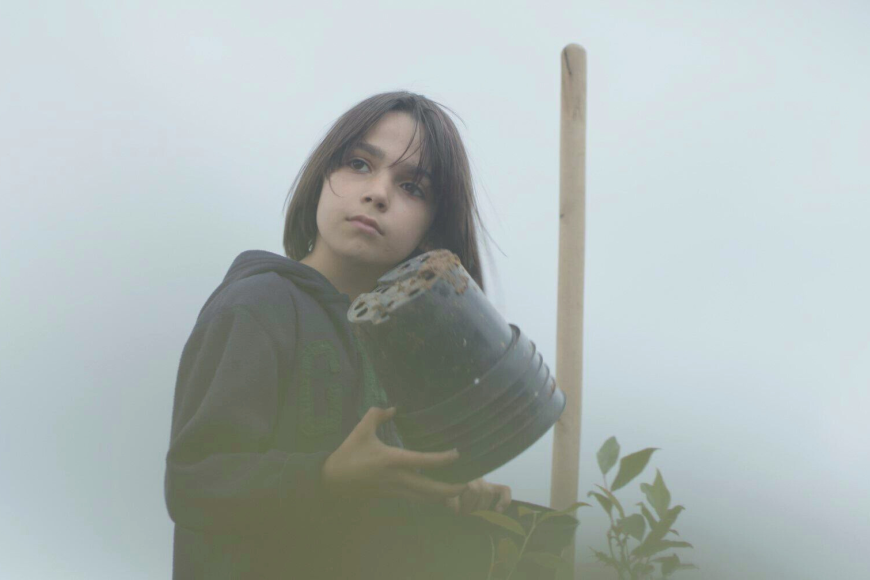
In the north of Georgia, twelve kilometres from the Russian-influenced region of Abkhazia, a family are realising their dream. Under the optimistic motto “Plant the Future,” the Georgian government has launched a funding programme that enabled the people in this state which has been shaken by wars and crises for years to make a fresh start on their own farmland. With this support Soso, a retired engineer, took the big step in 2021 with his wife and two young sons and began growing blueberries. Director Elene Mikaberidze and a dynamic camera follow the bold endeavour of the greenhorn farmers as they settle into their unfamiliar new life month by month. In the evenings, they pass the time with games and conversations, while the television is on in the background: images of a Ukraine under attack, news of the escalation in the Middle East remind the adults of the Russo-Georgian War sixteen years ago. Soso, the head of the family, contemplates his homeland in the midst of an escalating global situation. What dreams will still find a place there? Mother Nino is worried about her children’s future. She wants them to have the freedom to go their own way, to travel abroad and leave Georgia behind. Whether these ideas correspond with Soso’s remains to be seen.
Em Johrden
Credits
Director
Elene Mikaberidze
Script
Elene Mikaberidze
Cinematographer
Patrick Wendt
Editor
Yannick Leroy, Phillipe Boucq
Producer
Elene Margvelashvili
Co-Producer
Baptiste Brunner, Isabelle Truc
Sound
Elene Mikaberidze
Sound Design
Marco Pascal
Broadcaster
Al Jazeera Documentary, Tënk, RTBF, Georgian Public Broadcaster
In the middle of the night, Bobby is lured to the hospital by her mother, where terrifying horror bunnies anaesthetize her without her consent. A cryptic nightmare in sombre drawings.
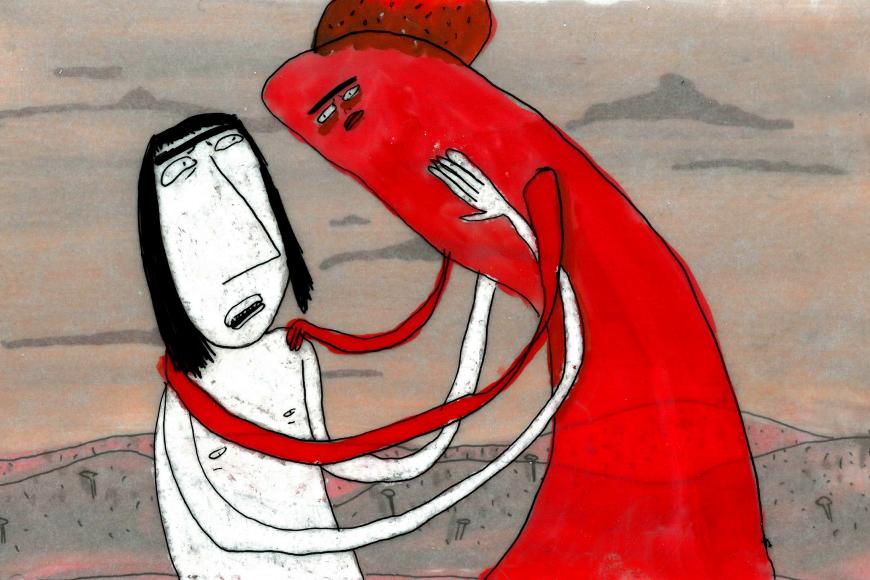
Bobby’s stomach is upset. She is ravenous. Normally, dinner should be on the table by now. But today everything is different. Mum lures her teenage daughter out of the house with a lie and takes her to hospital, where her relatives are already waiting. All dressed in black, with tears in their eyes, expressing their sympathy. But sympathy for what? Before Bobby realises what is going on, she is dragged into the endless corridors of the clinic by rude nurses, undressed and prepared for an operation she knew nothing about and never consented to. Behind the scenes of this nocturnal horror trip, a disturbing tale about the relationship of trust between parents and children is revealed. Mansi Maheshwari’s genre mix of thriller, scary vision and educational satire is fascinating. Its dynamic design, dramatic animation and mesmerising soundtrack send us deep into a terrifyingly exquisite nightmare that lingers on.
Franka Sachse
Credits
Director
Mansi Maheshwari
Script
Anna Moore, James Davis
Cinematographer
Adam Pietkiewicz
Editor
Kaupo Muuli
Producer
Ashionye Ogene
Sound
Alexander Faingold
Sound Design
Alexander Faingold
Score
Marcin Mazurek
Animation
Mansi Maheshwari, Ryan Power, Elizabeth Fraser, Paula Gonsalez, Kathryn Haddow, Beatrice Babbo, Lucas Fruen
Exiled Chilean Juan Forch and Dresden-based silhouette film specialist Jörg Herrmann call for battle against Pinochet and his imperialist allies: with singing and organ music.
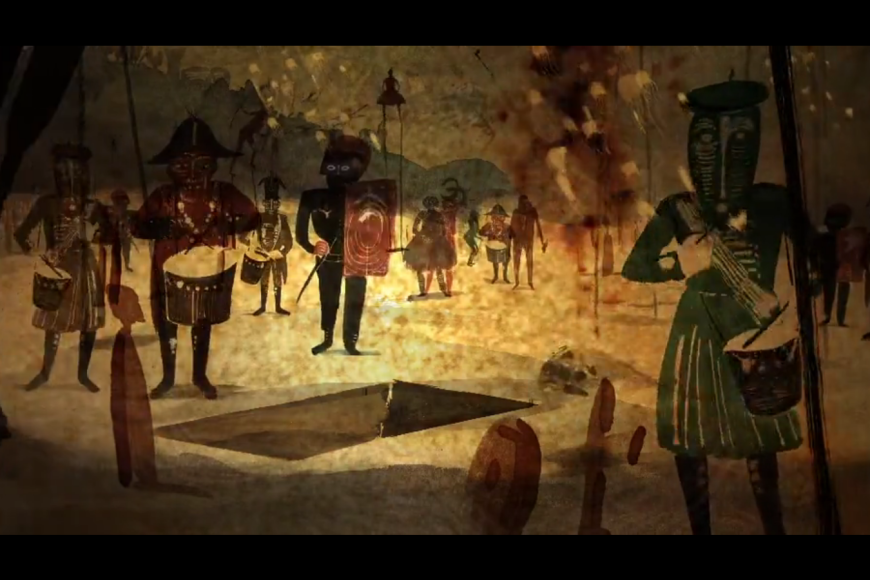
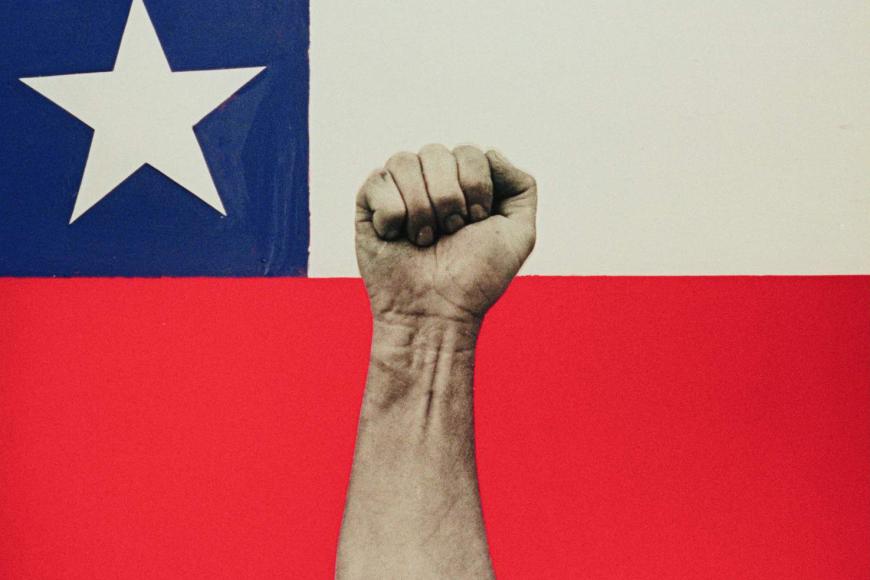
In 1973, General Pinochet, with the support of the US secret service, staged a coup against the democratically elected Marxist-Socialist President of Chile, Salvador Allende. Pinochet’s military junta murdered and tortured their way across the country. Juan Forch, Santiago-born journalist and filmmaker, managed to escape the terror via Mexico to the GDR and continued his opposition work from here until his return in 1979: as a director at the DEFA Studio for Animation Film in Dresden. With silhouette film specialist Jörg Herrmann he realised this animated agitation miniature, in which the dictator and his allies dance to the caustic artist’s tune – and to organ music.