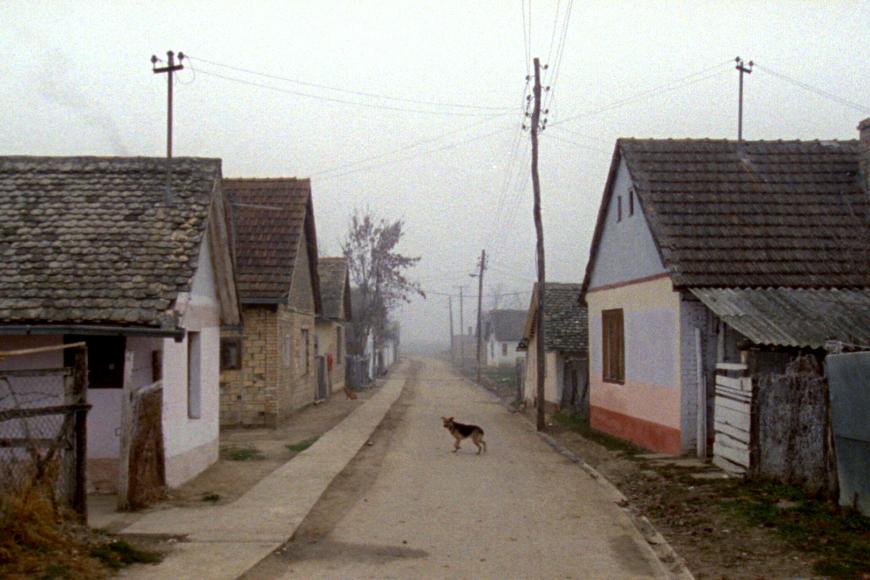
A young filmmaker takes his camera and makes the same journey in rural Serbia as his mentor forty years ago. A road movie about places, times and memories.
In 1971, Karpo Godina, then 28 years old, took his camera on a trip through the flatlands of Vojvodina and shot an unusual road movie. Only fragments of that footage have survived to this day. Forty years later, another camera undertakes the same journey, retracing the paths of the young Godina and imagining his impressions of the lives of ordinary people in this rural region. A new unusual road movie emerges. It is about places, times and memories. It is also paying homage to Karpo Godina, whose work flourished during the so-called Black Wave period of Yugoslav cinema.
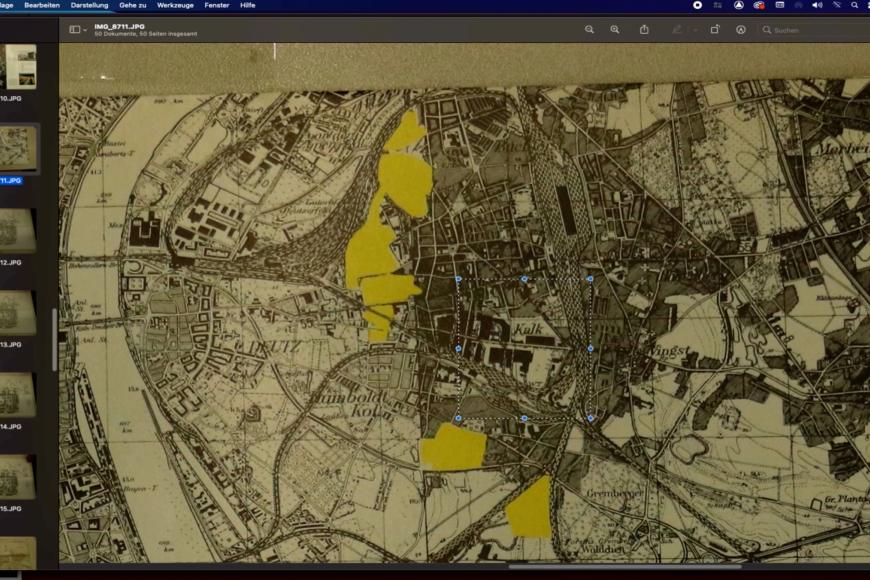
Three filmmakers research the history of a chemical factory in Cologne-Kalk. Off- and online archives teach them the art of weeding out and throwing away, the art of daring the gap.
Three directors prepare a film about the chemical factory in the Cologne district of Kalk, on whose former grounds a shopping mall has been built. With some self-mockery they talk about their investigation and search for sources, their capitulation to the resistance of the material. Meanwhile, an archivist struggles with a mis-spooled 16mm film. Historical images splutter across the monitor of his analogue editing table. The silhouette of the factory with its towering chimneys is discernible. Site plans are shown, chemicals are blithely mixed. In an album, the filmmakers discover faded photos of female forced labourers. Suddenly, questions arise: Which stories are kept, which forgotten? Throwing away is part of his job, after all, the archivist explains in the finest Rhenish accent. What does this statement mean for the directing trio?
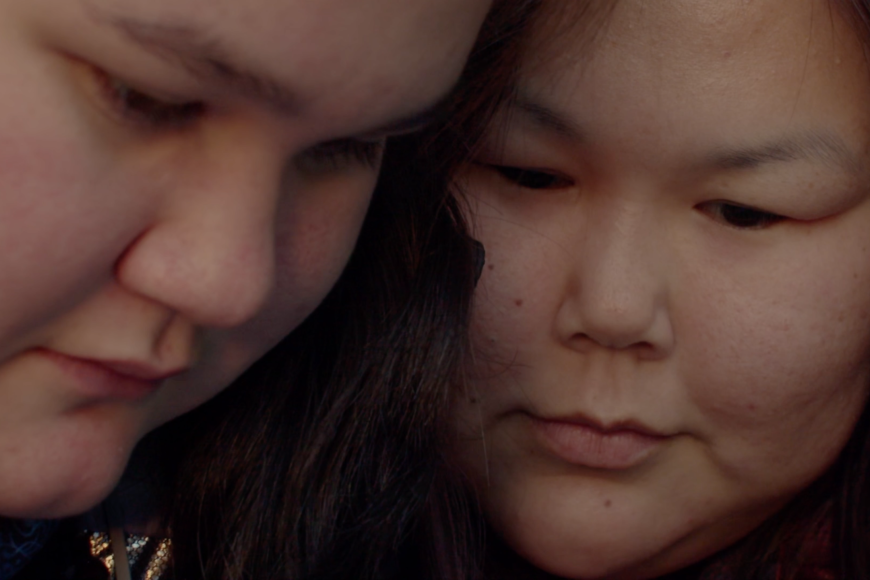
Two best friends are drifting through the city of Montreal. They come from a small Inuit settlement in northern Canada and share the same heritage, language and longings.
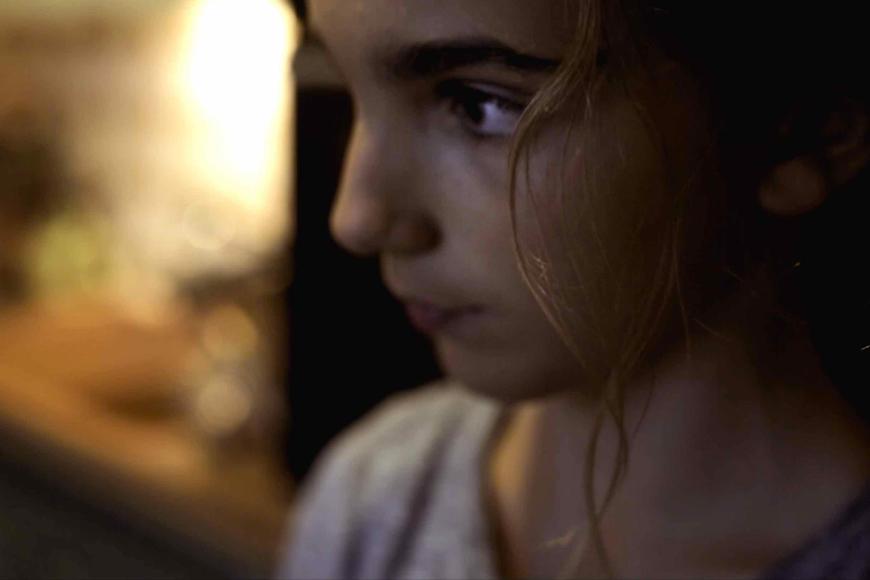
Two young girls are drifting in the water of a public swimming pool. The film adopts this drifting attitude as it follows them through nocturnal Montreal and their daily life. Sometimes the two speak English, sometimes Inuktitut. Kathy and Teresa come from a small Inuit settlement in northern Canada. They show each other smartphone pictures of seals and bears they killed themselves. They read about the special relationship between the Inuit and their sledge dogs, which has lost its importance today. Home assignments are done in a park – the scent of the trees reminds them a little of home. They close their eyes. With great tenderness, the camera captures the deep bond between the two best friends who share the same heritage and language. Kathy has written a moving song in Inuktitut. In simple, clear words, she sings of the feelings and yearnings of a young Indigenous woman.
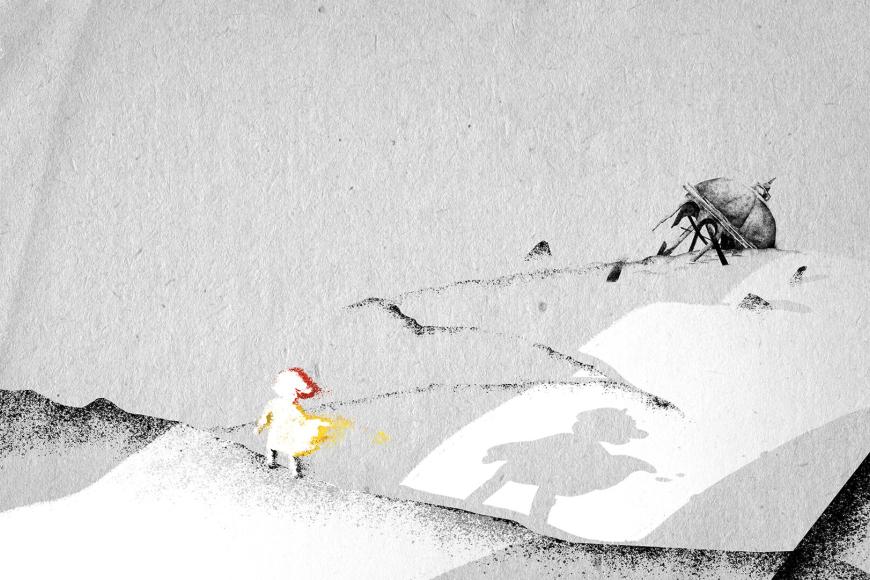
Countless chunks of stone are lying around. A red-haired boy assembles them to build many impressive towers. One by one, the towers are made to shine again.
So many stones are lying around. They used to belong to something whole that was broken. A red-haired boy sets about sorting, joining and stacking them. Little by little, the countless chunks turn into many impressive towers. We follow the boy’s path as he makes one tower after the other shine again.
Lina Dinkla
Credits
Director
Andrei Câmpan, Ramona Kristo
Script
Ramona Kristo
Cinematographer
Andrei Câmpan
Editor
Adèle Coulloudon, Horia Manolache
Producer
Anca Elena Manolache
Co-Producer
Ramona Kristo
Sound
Victor Mihailescu
Sound Design
Victor Mihailescu
Score
Victor Mihailescu
Animation
Adèle Coulloudon, Andrei Câmpan, Andrei Berculescu, Ana-Maria Trăistaru, Geo Dibu
A documentary film crew spends 963 hours in a video game interviewing gamers. Little by little, they drop their masks and give insights into their “real” lives.
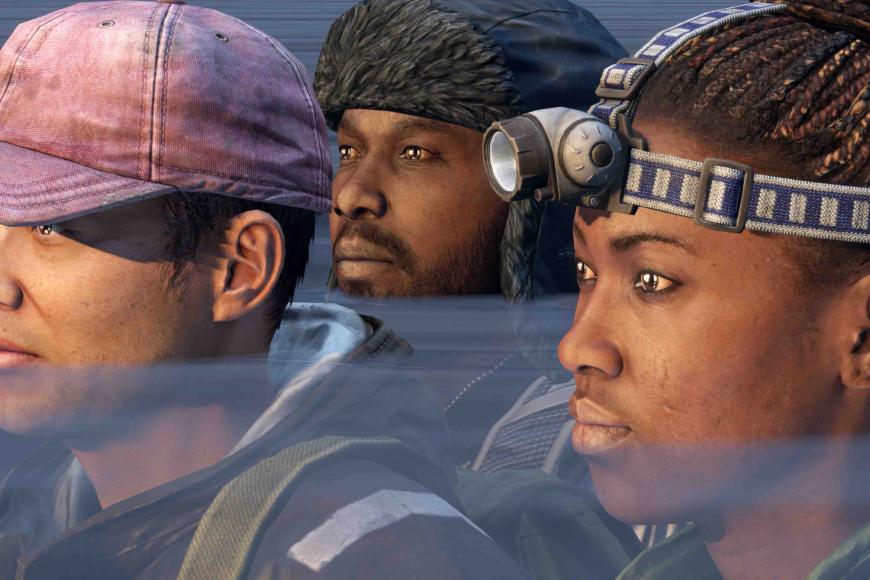
Running. Rapid breathing. A shot in the silence. The opening strikes the keynotes: caution, curiosity, thrills. A documentary film team spend 963 hours on the adventure playground of the video game DayZ. Online gamers explore the territory of a post-Soviet disaster province, permanently exposing themselves to the risk of being killed by hostile gamers. Despite their “press” badges, Guilhem, Ekiem and Quentin, as avatars, are subject to the same rules when they interview the gamers in their virtual world. The community is heterogenous: marauding gangs, cowboys with Samaritan ethics, curious wanderers.
Reality is never far away. The gamer “Feesh” is torn from her console during the interview because her IRL (in real life) child is crying. In the course of their conversation, “Iris” shoots her “toy”, a prisoner, before the eyes of the shocked documentary team – a conflict of documentary work opens up. “Knit’s Island” is a disturbing, melancholy to heartwarming tour of chance meetings and friendships of sleepless persons in the artificial world. Some avatars constantly twitch nervously and grotesquely because they act out darkest desires. Others “trick the game” and enter fascinating techno-psychedelic spheres. Game-playing and role-playing persona – sometimes they are one, sometimes two.
Transwoman Kristina earns her living as a sex worker. She arranges her life serenely and well-ordered, independent of the peculiarities of her profession. A semi-fictional documentary.
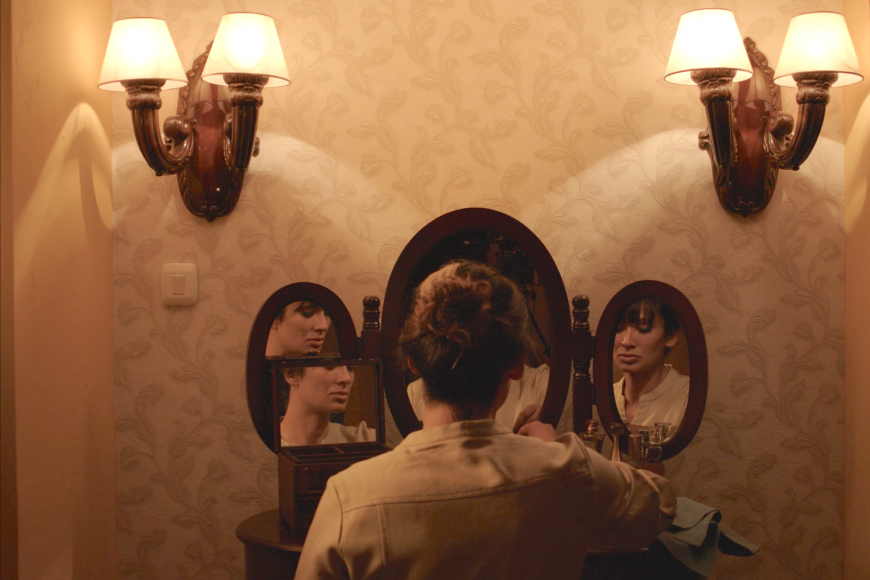
Director Nikola Spasić explains in an interview that in this film he was interested in the fluid boundaries between documentary and fiction, and that he found the perfect protagonist in Kristina: someone with an interesting personal story who can also act. And so she plays herself, Kristina, a transsexual sex worker in Serbia. She lives alone with her cat in a beautiful old house, collects antiques and practices ikebana on the terrace of her garden. She meets friends, visits a cloister, lives her religion, arranges a crucifix.
This idyll is regularly interrupted by the obtrusive ringtone of her work mobile. But the meeting with the client who appears at her door a short while later is well-orchestrated and no contradiction to Kristina’s elegant, graceful and serene existence, which she shapes according to her own ideas. All in all, these flawlessly framed and composed tableaus have an element of transcendence. But with his aesthetic directing, Spasić emphasises the incontrovertible freedom of this modern woman whom he captures in a portrait that is both intimate and daring.
A new Musifants episode! This time, Charlie bakes a birthday cake. No sooner is it on the table, smelling delicious, than someone takes a sneaky bite. Who is the cheeky rascal?
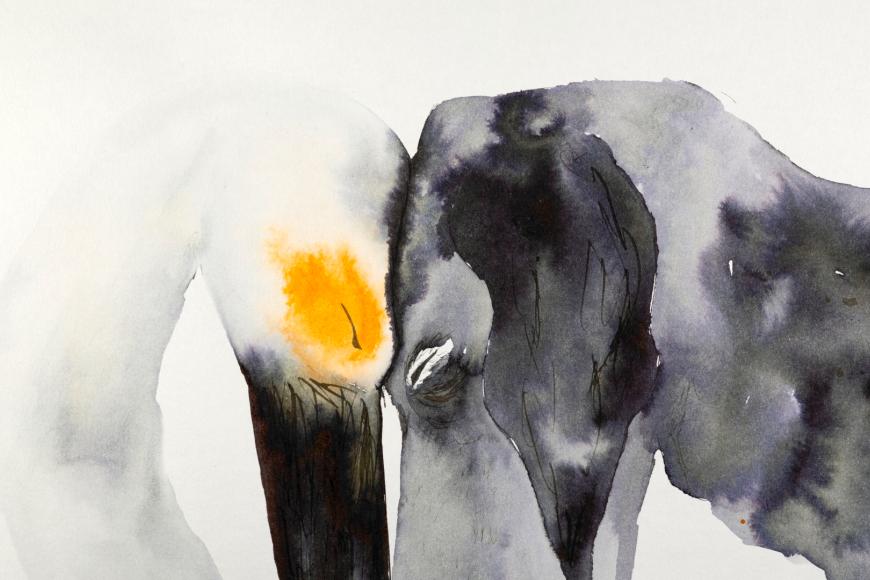
A new Musifants episode! Grandpa Günter – a retired circus elephant – and grandson Charlie take another musical excursion into the songbook of the 1920s and 1930s. This time, it’s the little green cactus’s birthday and Charlie bakes a cake. No sooner is it on the table, smelling delicious, than a bit is missing. Charlie wants to know who has been sneaking a bite …
Lina Dinkla
Credits
Director
Meike Fehre
Script
Geoffrey Schöning
Cinematographer
Sabine Dully
Editor
Thomas Schmidl
Producer
Meike Fehre
Co-Producer
Nina Paysen, NDR Norddeutscher Rundfunk / German TV ARD Network, Mitteldeutscher Rundfunk
The 1994 genocide in Rwanda has traumatised generations. The children of the time lack memories, their parents are struggling to speak about it to this day. In this film they break the silence.
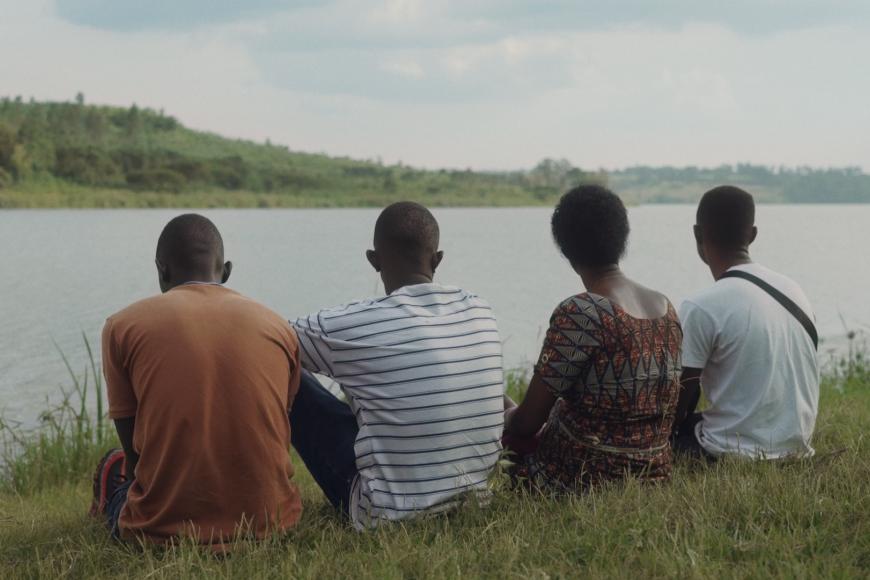
Quietly and discreetly, the French director Sarah Mallégol follows a group of thirty-something protagonists who survived the 1994 Rwanda genocide as children. They have no memory of the events – neither those whose fathers were murdered nor those whose parents were responsible. A confrontation begins: focused conversations between generations which, captured by a gentle camera, are meant to cautiously break the long silence – in order to be able to understand, process and mourn.
Sarah Mallégol herself grew up in Rwanda, before the genocide. She has no memories of her childhood either. But there are home movies shot on Super 8 that show carefree days in a still peaceful countryside – and her nanny from back then, Christine. She died in 1994, which is all the director knows. Her motivation for this filmic search is thus personal. But after the short introduction, she gives all the space to those who live in Rwanda today with the trauma that has spread over the country like a shroud. Grief is at the forefront and the film work contributes to a much-needed coming to terms – accompanied by chants and landscape shots added to the memories of the survivors that bear a different form of witness.
The breasts are in place, the feathers are smoothed, off to the date! Her daughter does not comprehend the ritual of desire yet … Erotically crude, with pointed beaks in the conflicts.
Breasts lifted, bottom tight, feathers smoothed. She is ready for her date. But her daughter clings and refuses to let her go to this as yet incomprehensible, repulsive ritual of desire. Very soon the fully-fledged adolescent will indulge in sexual lust herself … and experience disappointments. In the conflicted world of the two women, men evade partnership and fatherhood. The faithful bitch offers the only support.
As in her previous film, Carla Melo Gampert transfers her impressive but uncompromising analysis of family relationships to the lives of wading birds. Human traits show through in the anatomy, but the bird’s bodies including their feathers and sounds lend themselves perfectly to the apt exaggeration of emotions. Delicate strokes turn into cuttingly sharp movement lines of the animal characters, both in their erotically crude acts of love and their “hands-on” disputes. Soft splashes of watercolour glow incandescently in the heat of lust and warningly in the hopeless fury.
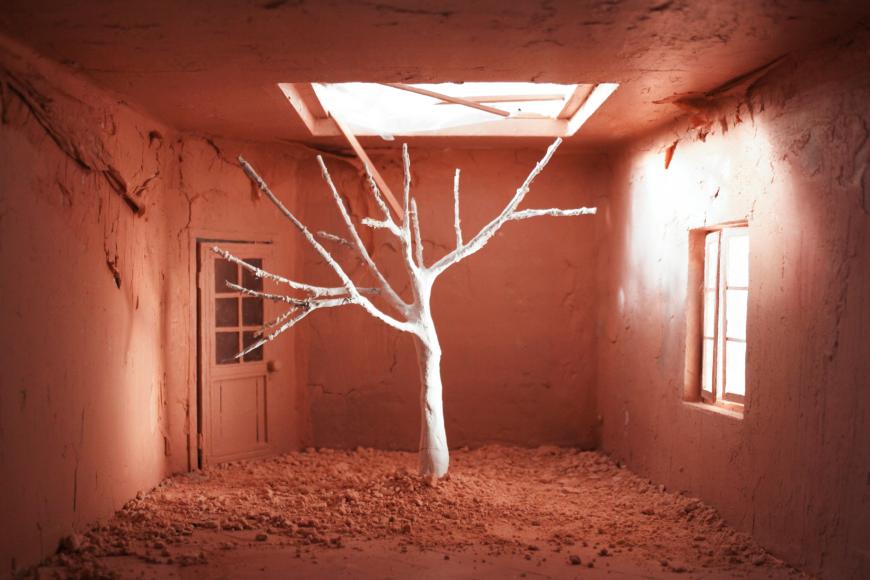
A memory dream of a place of childhood: Growing cracks in the wall, proliferating colour stains and crumbling pieces of furniture let the eyes and ears touch interior worlds.
A raven perches in the lemon tree near the house, giving away an egg. The narrator’s voice remembers childhood like a dream. Emotions from back then find physical expression in a constantly changing room. Growing cracks in the wall, proliferating colour stains and crumbling pieces of furniture let the eyes and ears touch interior worlds.
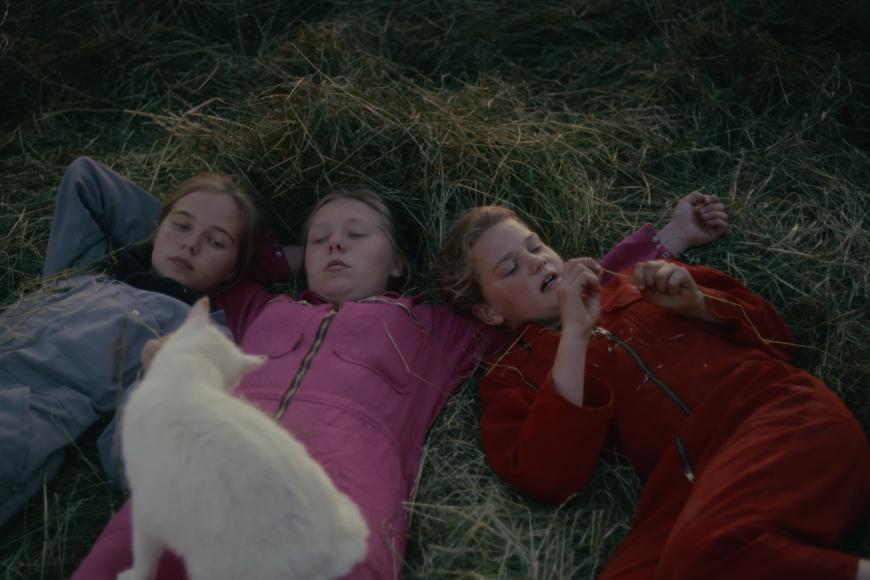
Leonie helps where she can on her parents’ farm. She wants to be a pig-farmer when she grows up. When they are forced to give up the farm, Leonie says goodbye to her dream.
Leonie’s greatest dream is to become a pig-farmer. She spends a lot of time with her cat Skeet on her parents’ farm and helps where she can: taking care of the piglets or loading the pigs onto the truck to the slaughterhouse. But new laws make her parents give up the farm. The last pigs disappear and Leonie must say goodbye to her dream.
Lina Dinkla
Credits
Director
Jip Heijenga
Script
Jip Heijenga
Cinematographer
Michael De Moor
Editor
Amber van Acker
Producer
Sofie Van Noten
Sound
Frans Wouters, Yannis Van Den Ecker, Stijn d'Alleine
A storm of queer norm-busting archive images. The creative arrangement is as sensual as the material, including purple colour explosions and a jazz music leitmotif.
“Folks, I’m telling you, birthing is hard and dying is mean – so get yourself a little loving in between.” This advice of the African-American civil rights activist and jazz poet Langston Hughes precedes Jyoti Mistry’s found footage storm of images and runs like a guiding line through the archive material, a panopticon of revelries: parties, boxing matches, visits to the beach and above all, time and again, testimonies of lived queer sexuality. Sometimes clandestine, sometimes quite public.
Mistry mirrors the uninhibitedness of her sources in the way she arranges them – not neatly staggered but boldly mixed. The associative editing often virtually leaps into the images, linking them with purple colour explosions and three-dimensional animations of shoals of fish. On the soundtrack, a spoken word performance joins multi-channel dubbed noises and countless variations of the jazz standard “Diga Diga Doo.” This is how the film wrests its testimonies from the past and returns them to their inherent liveliness and transgressive explosive power.
How do you restitute self-images? A lucid, thought-provoking essay about the Congo, the far-reaching dimensions of colonial power and the (re-)privatisation of identity.
In this documentary essay, Congolese artist David Shongo addresses the problems of knowledge production and asks the important question of how it was influenced permanently and systematically by colonialist power. Analysing historical photographs, he exposes the perfidious mechanisms of colonial historiography and contrasts them with conversations with traditional scholars. They represent an exploited culture confronted not only with the theft of economic goods. It was also robbed – in a historical dimension, too – of self-perception and self-determination.
The starting point of his analysis is the examination of the photo archive of the German ethnographer and anthropologist Hans Himmelheber at the Museum Rietberg in Zürich. But Shongo’s critique of colonial historical fictions – poetic and meticulously precise at the same time – goes far beyond this. Combining specially produced and expressive images of present-day Congo with staged scenes, an offscreen commentary and documentary recordings, he manages to penetrate extremely complex contexts. A film essay that denounces the “privatisation of memory” – and contributes a long overdue, extremely important political and aesthetic position to the virulent restitution debate.
An intimate conversation between father and daughter about a fermenting family secret amidst experimental image and sound recordings of work on a winery in southwest France.
An old family secret is fermenting in the father’s winery in southwest France. The grandfather had been executed by the Résistance in 1944 because he had collaborated with the Nazis. For decades, no one talked about it, daily work continued, from cultivation to harvest, from the wine press to maturation, an eternal cycle. The daughter comes to visit with a camera and a microphone. She remixes the sounds of farming, asks questions, builds openings in the experimental interstices between image and sound for the father to come to himself. Maybe what was buried and ploughed under can be reflected today – if they succeed in breaking the cycle for a moment.
The father has answers. He knows the patriarchal system of agriculture, where neighbours are envious and unpleasant things are quickly interred so they will not be passed on to the children. And yet what was interred has not dissolved completely, over generations. Insects buzz over the soil, something underneath attracts them. A small frog is caught in the wine press with the grapes. And the filmmaker’s daughter looks for a new tune on the old family piano.
Jan Künemund
Credits
Director
Lucie Dèche
Cinematographer
Lucie Dèche
Editor
Caro Beuret
Producer
Guillaume Bordier
Sound Design
Lucie Dèche
Nominated for:
Prize of the Interreligious Jury,
FIPRESCI Prize
A theatre in Paris becomes the stage of an impressive encounter: The aged composer Wang Xilin is naked – and exposes the cruelties of the communist regime in China.
Wang Xilin does not enter the stage in a suite, as the title might suggest, but completely naked. He stretches and bends, appears to familiarise himself with his surroundings, does some vocal exercises, sits down at the piano. Wang Xilin is one of China’s most important composers of contemporary music, having written his first symphonies in his youth. Wang Bing gives the 86-year-old more than a little space. For his portrait, he presents him with the entire Théâtre des Bouffes du Nord in Paris.
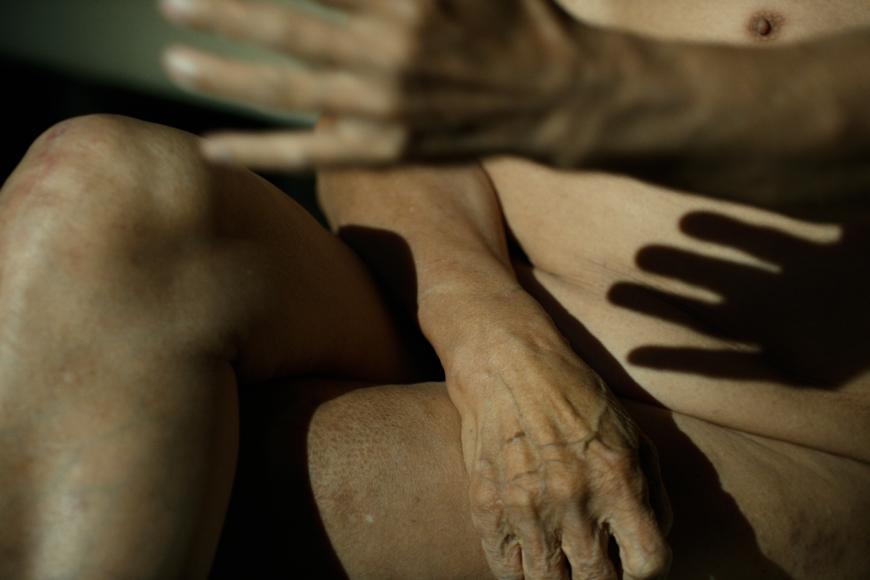
This is where Wang Xilin reviews his life of torture and oppression, recapitulates the tribulations in communist China, reports knocked-out teeth and nightmares, suicides among intellectuals. His testimony is frequently underlaid, sometimes even drowned out by grandiose musical arrangements. When an orchestra thunders from offscreen, Wang Xilin’s body rears up – “Man in Black” is also an exorcistic oral history. The composer turns himself into his own instrument, into the medium of a violent epoch, sharing his emotions literally unveiled.
Carolin Weidner
Credits
Director
Bing Wang
Cinematographer
Caroline Champetier
Editor
Claire Atherton
Producer
Lihong Kong, Sonia Buchman, Nicolas R. De La Mothe
Leipzig, 1989. A young punk, detained in a mental hospital, longs to be close to her boyfriend. A doomed love story in the midst of the collapse of the GDR.
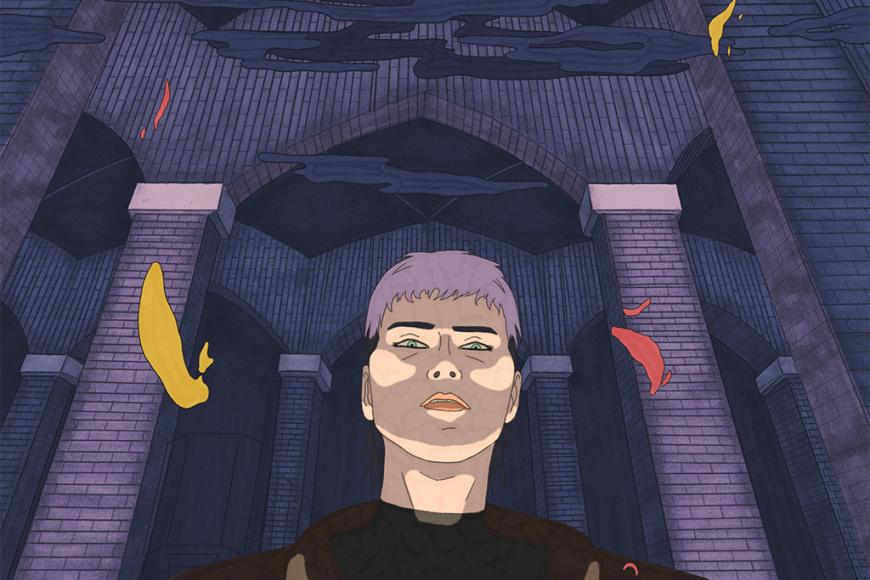
The end of real-socialist oppression, doomed love and tacit double morals unfold in colourful felt-pen images and clear lines. Leipzig, 1989. The city still belongs to the blue shirts of the Free German Youth, there is still talk of a flourishing country in festive speeches. Locked away in a mental hospital for belonging to the Leipzig punk scene and abused as “belonging to an enemy faction” that undermines the GDR from within: Margarethe can stand it. Ultimately, however, the lack of briquettes and the cold water in the communal shower make the young woman dream of being close to her boyfriend Heinrich. While the protests in the streets are growing, Heinrich and his band play church-organised punk concerts that hint at the prospect of freedom. But Stasi spies are more present than ever – until the newly gained freedom to travel scatters them to the winds along with the lights of the fireworks.
Jana Kraft
Credits
Director
Lucas Malbrun
Script
Lucas Malbrun, Marie Larrivé
Cinematographer
Lucas Malbrun
Editor
Clara Saunier, Vincent Tricon
Producer
Nicolas de Rosanbo, Céline Vanlint
Sound
Elodie Thevenin
Sound Design
Quentin Romanet
Score
Mael Oudin
World Sales
Miguel Español Celiméndiz
Artistic Design
Morgan Curt, Hippolyte Cupillard, Jean-Baptiste Peltier, Charlie Belin, Jonas Schloesing, Daria Skripka, Yehor Bondarenko, Angelina Dorozhinskaia