A man on an e-scooter on the outskirts of the city. Only the rifle over his shoulder irritates. The mood of high alert is deceptive. The disaster has already happened.
On the outskirts of the city, the new modern buildings are silent and the motorway bridge drones. Birds are circling in the sky, a young man, concealed by his hoodie, is riding his e-scooter along a park path. The only irritating element is the rifle over his shoulder.
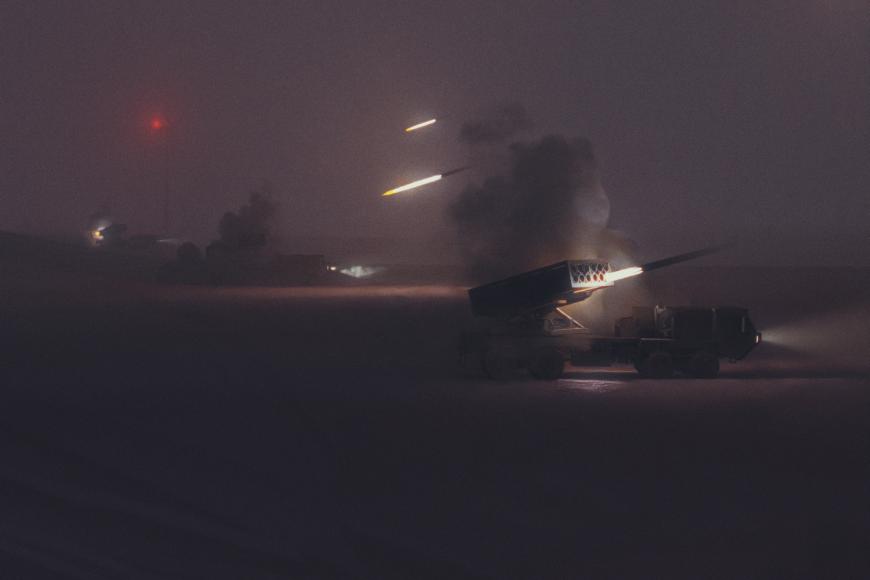
Anton Cla’s film depicts a mood of high alert, while the disaster has in fact already happened. Unexplainable scenes that could not be more disconcerting and grow increasingly drastic unfold calmly. The screaming silence is decisively enhanced by the imperceptibly accumulating mixed drone of the daily sounds of a mechanised world: motorway, tramway, clicking indicators, pulsating emergency signals. What the soundscape adamantly refuses to deliver is a loud discharge that would release the tension. The suburban landscape is steeped in a red theatrical warning light, blurs restrict the view. The 3D computer design masks neither the artificiality nor the computer-based deformations of the images of a normality that has become a combat zone – the machine matrix seems to rule already.
“It’s all over.” The worst possible fate for opponents of the regime, underlaid by a reference to “The Unkown Soldier” by The Doors. Radically simple and maximally impressive.
An execution illustrated from the point of view of the condemned man, with a musical reference to the song “The Unknown Soldier” by The Doors. Ferenc Rófusz’s film may not have been a direct statement about the roughly 200 death sentences issued against all manner of opponents of the regime in Hungary after the uprising, but its poignancy speaks for itself.
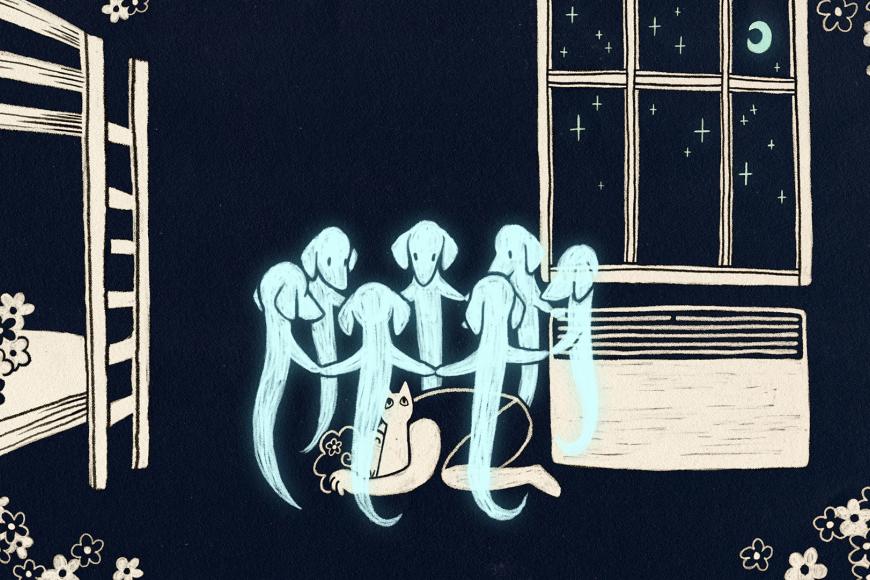
One day the dachshund lady Dede dies. The little boy mourns her and doesn’t know how to deal with this feeling. In the end he discovers that Dede is dead, but not completely gone.
The dachshund lady Dede has grown old and dies. We are aware that even the most beloved pet won’t live forever. But when it finally happens, it’s hard to take. The boy in this story has trouble dealing with his grief. In the end he discovers that Dede is dead, but not completely gone.
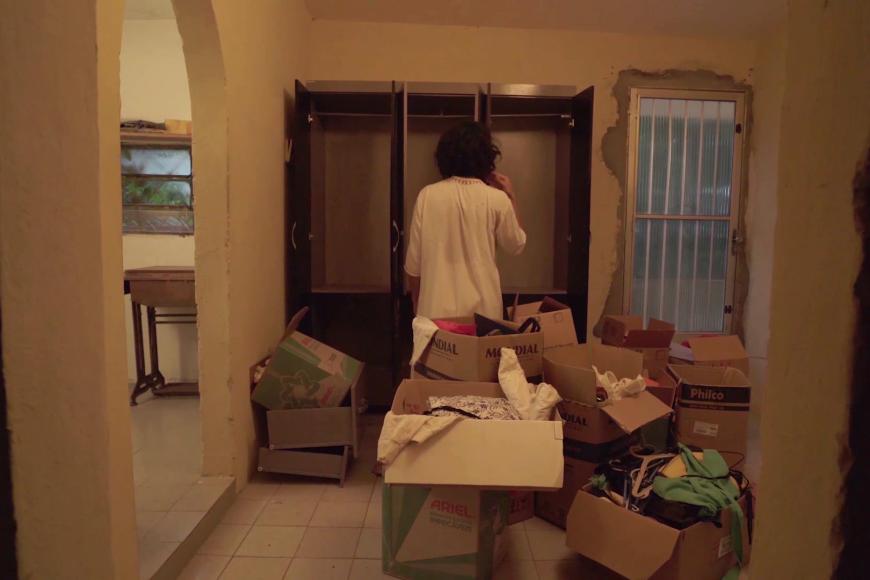
A young woman breaks up an ugly plywood wardrobe that reminds her of an act of violence in her past. An artefact of pain is destroyed – a powerful gesture.
A fairly shabby, dark, three-part wardrobe in a hallway: About ten years have passed since Joana Claude suffered sexual violence when it was assembled. Now the time has come to not only disassemble it. Instead, Joana sets out to destroy the artefact of pain completely. The gesture is made with fervour, tearing out the shelves and doors looks like retroactive resistance, what was pent up finds an outlet. At the same time, the ritual is characterised by gradual escalation: At first the director speaks of her relationship with her parents – a big sweat stain on her back already beginning to show –, in the end everything is in flames. The act is short, it lasts only a few minutes. And yet it allows an intimate insight that acquires a universal, strength-giving character as it unfolds.
When exactly did the GDR uprising happen? And the building of the Wall? A television report about a “holiday” in the Saarland whose cause hardly anyone remembers.
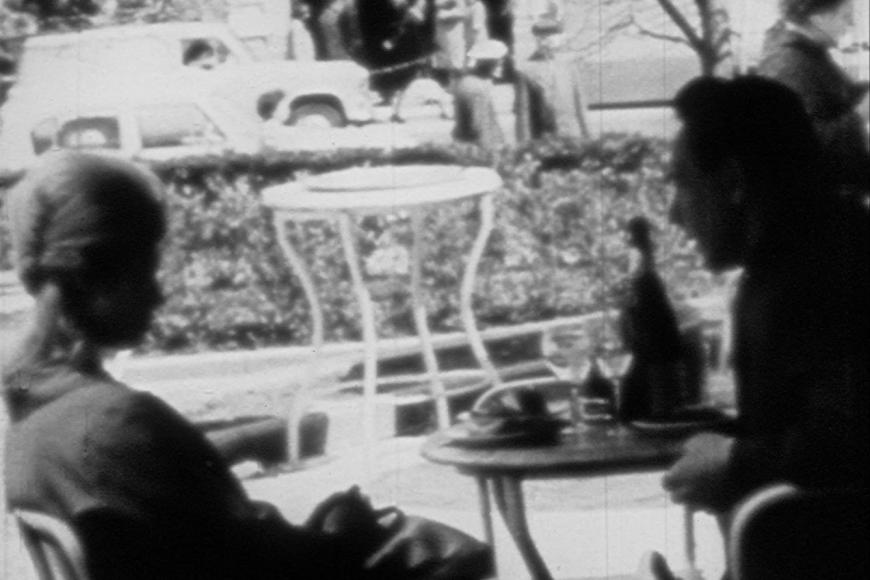
One of many commemoration ceremonies, eleven years after the GDR uprising. The report combines a Saarland politician’s thoughtful speech with idyllic shots of a high-spirited population: at open air swimming pools, playing cards or on camping sites. “Do you know what we commemorate today?” the reporter asks. The answers are deeply irritating.
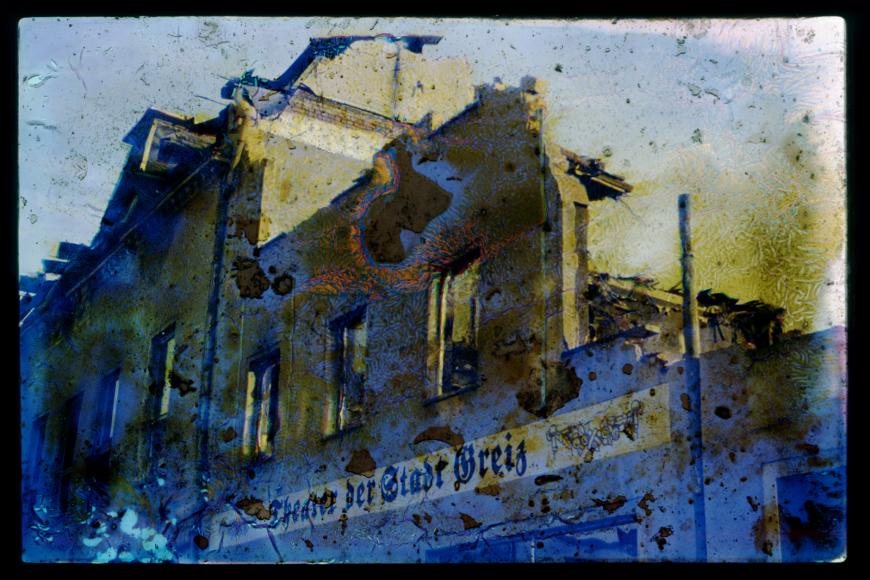
The theatre of the city of Greiz has been closed for years. A cultural home where visions were built with language is dissolving. A farewell echoes through the empty rooms.
The theatre of the city of Greiz was closed for years in 2011. For generations of spectators, worlds and visions were built with language here. Now this cultural home is dissolving. The long-silenced singing of local choirs echoes in the decrepit, empty rooms. Diapositives are slowly corroded by mould and chemicals. A farewell.
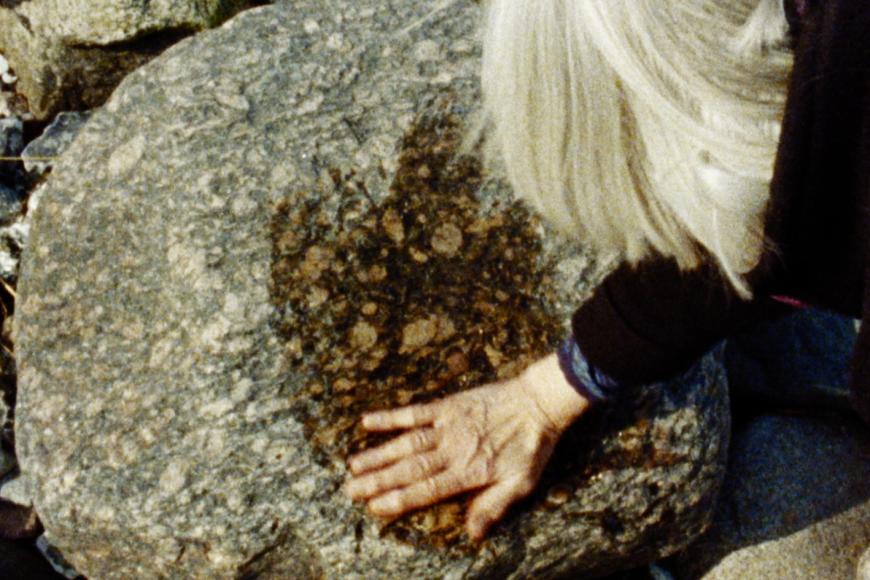
The big bang, tardigrades, humanity as a dying breed: A child researcher on a farm by the Baltic Sea has some astonishing thoughts about these things – and his curiosity about the present is infectious.
It is a stroke of luck when a film manages to simply observe the flow of life and almost casually show us the miracles found in life’s corners. Ann Carolin Renninger approaches people and things with great serenity and a palpable joy of searching for and finding images.
Rovin lives on a remote farm on the Baltic Sea and explores his surroundings with insatiable curiosity. He is interested in the universe, planets, unknown creatures – and in tardigrades, those tiny multicellular organisms that look like dust bags on legs and are real survival artists. Quite unlike humans, as Rovin points out, because the latter are sure to die out one day. He sees this as a logical fact, not a threat. And when you open yourself up to the grainy, earthy images and the calm narrative, you eventually stop wondering, too, why that should be a problem. After all, as long as the wind blows through the trees and scatters the tardigrades, everything is in good order. In addition to the captivatingly alert boy, Renninger meets Marie, who knows everything about rocks, and Christopher, who decorates a place with these rocks. They are all on a quest and every day find a piece of what one cannot hold onto: the present.
The objects in a film prop warehouse trigger stories in our minds. But what stories are told by African objects and racist figures? Which shelf do you put them in?
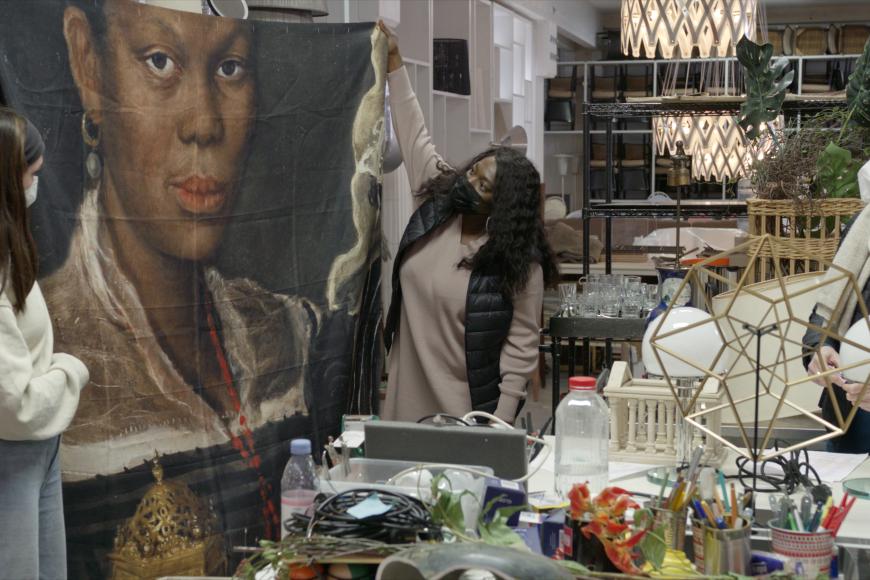
A tracking shot along the objects on the shelves of a film prop warehouse will trigger stories in our minds. The orange-coloured telephone takes us to the futuristic 1970s, plastic salmon canapés on artificial lemon slices invite us to a party, cut and thrust weapons herald mortal danger.
Experts from various prop companies explain their craft of storing and archiving. But under which keyword are folkloristic masks, African or pseudo-African objects to be catalogued? Enter Thelma Buabeng: The German actor and BIPoC activist slips into the documentary-like role of a doctoral student in Postcolonial Studies who does research for her thesis in the Prop Department Studio Babelsberg. From her perspective the objects take on a different context, enter into a dialogue and raise questions of their own. Meanwhile, a staff member is looking for a suitable frame for the Baroque painting “Portrait of an African Woman Holding a Clock” by Annibale Carracci. But can this frame even exist?
Anke Leweke
Credits
Director
Susanne Weirich, Robert Bramkamp
Script
Susanne Weirich, Robert Bramkamp
Cinematographer
Markus Koob
Editor
Janine Dauterich
Producer
Robert Bramkamp, Susanne Weirich
Co-Producer
Doris Hepp, Anne-Kathrin Brinkmann
Sound
Angelo Wemmje, Stefan Bück, David Jahn, Silvio Naumann, Robert Bramkamp
Sound Design
Silvio Naumann
Score
Georg Friedrich Händel
German Distributor
Inka Milke
Commissioning Editor
Doris Hepp
Funder
Medienboard Berlin-Brandenburg GmbH, MOIN Filmförderung Hamburg Schleswig-Holstein
Narrator
Thelma Buabeng
-
Janine Dauterich, Robert Bramkamp, Elena Friedrich, Susanne Weirich
Nominated for:
Goethe-Institut Documentary Film Prize,
VER.DI Prize for Solidarity, Humanity and Fairness
A sensitive examination of an abuse scandal in an evangelical children’s home in Baden-Württemberg. Victims’ testimonies are confronted with the shameful relativisations of the church.
In Korntal, a small town of 9,000 souls in Baden-Württemberg, hundreds of children were abused in the homes of the Evangelical Brethren since the 1950s. Forced labour, physical punishment and sexualised violence were the order of the day. To date, more than 150 former children have broken their silence, more than 80 perpetrators have been identified. Because the latter covered for each other and the neighbours looked away, the children were defenceless against the abuse for decades. When the scandal was exposed in 2013, the community and the village were hostile at first: That which must not be cannot be. It was only when the pressure from the outside grew that the community initiated a process of dealing with the scandal. But it is controversial: victims are re-traumatised, their statements doubted. To this day the children from Korntal are fighting for investigation and compensation.
The film focuses on the victims and avoids all dramatisation. What happened was dramatic enough, after all. When testimonies are only played as audio-recordings to protect the speakers, a simple animation fills the visual gaps. When those responsible today speak, the camera stays restrained and does not judge. That is not necessary anyway, because the inconceivable relativisation of the crimes speaks loudly enough – in Korntal as elsewhere.
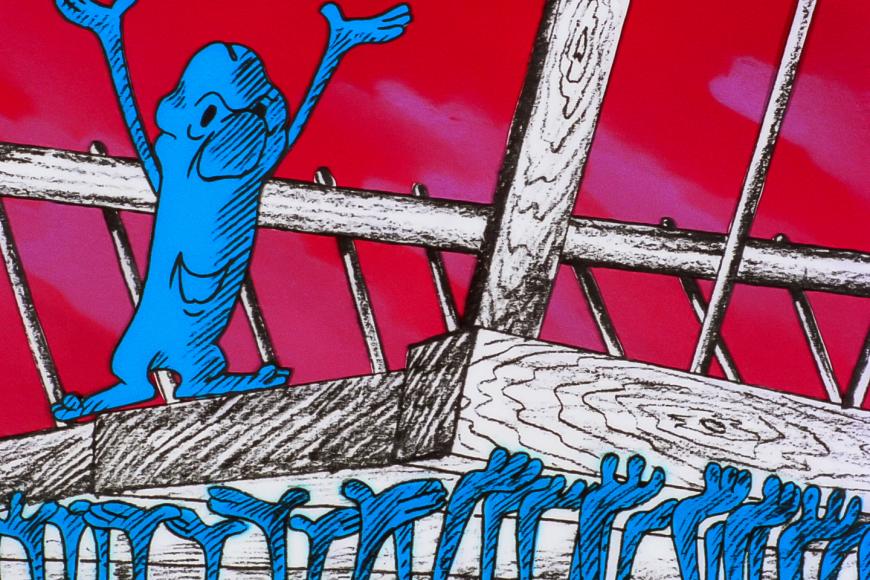
Matches are out in the GDR! The workers threaten to go to the barricades. A harmless puppet animation? The satire was made just after the uprising of 17 June 1953.
The people, among them an astonishing number of workers, react with visible anger to the sudden lack of matches – and threaten to go to the barricades. The problem is solved, of course. But does it mean the population’s anger is placated? Puppet animation director Johannes Hempel created this satire based on a draft by Wolfgang Kohlhaase – at the same time as the uprising of 17 June 1953.
Katharina Franck, Andreas Kötzing
Credits
Director
Johannes Hempel
Script
Wolfgang Kohlhase, Johannes Hempel
Cinematographer
Rolf Sperling
Editor
Manfred Porsche
Producer
DEFA-Studio für populärwissenschaftliche Filme
Score
H. W. Wiemann
Animation
Johannes Hempel, Herbert K. Schulz, Rosemarie Küssner
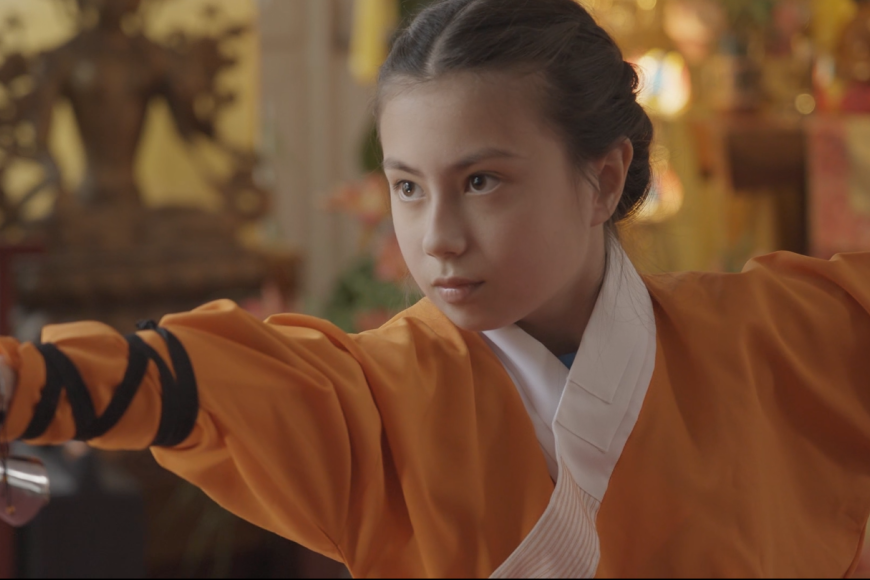
Mariella lives in Berlin with her family. Her father runs the Shaolin kung fu school there and prepares her and her sisters for the next tournament. Excitement runs high.
Mariella lives in Berlin with her family of seven. Her father was trained in kung fu martial arts at the Chinese Shaolin monastery. Today he runs the Berlin-Schöneberg kung fu school and prepares her and her sisters for the next tournament. This has been part of Mariella’s life for many years. But the nervousness before each competition never really gets better.
Due to Legal Reasons This Film Is Called Breaking Bert
Anne Isensee
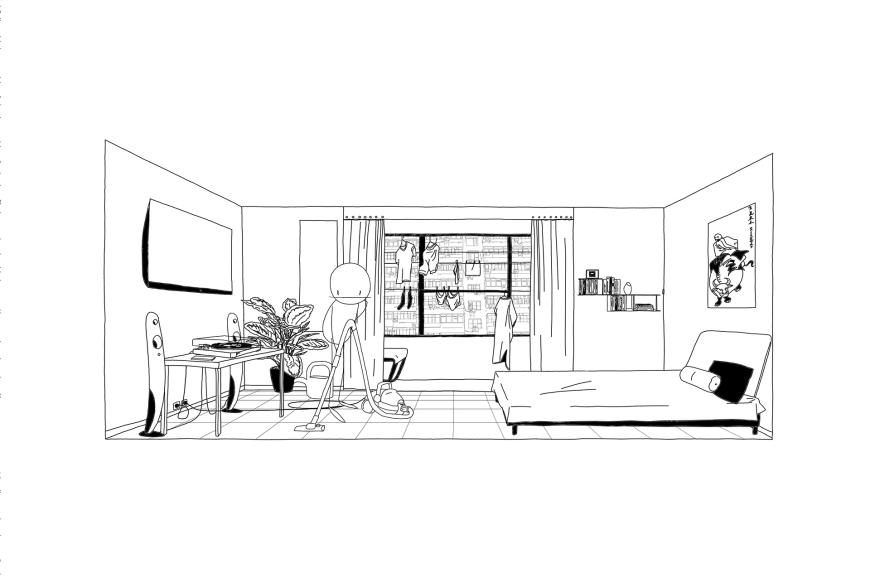
Most accidents happen at home, sometimes in the form of a text by Brecht that unexpectedly appeals to one’s own political responsibility. Something, anything must be done!
Due to Legal Reasons This Film Is Called Breaking Bert
Dieser Film heißt aus rechtlichen Gründen Breaking Bert
Anne Isensee
Animation Perspectives 2023
Animated Film
Germany
2020
5 minutes
German
Subtitles:
English
Most accidents happen at home. That is where a jazz-loving drawn figure is unexpectedly re-confronted with a text by Bertolt Brecht that brings an appeal to their own political responsibility. Something at least must be done to avoid ending up on the wrong side. A trenchant, tidy contemplation that shows some understanding for human indecision.
André Eckardt
Credits
Director
Anne Isensee
Script
Anne Isensee
Editor
Anne Isensee
Producer
Filmuniversität Babelsberg KONRAD WOLF, Lorena Junghans
Srećko, Mirza and Mejra are survivors of the 1995 Srebrenica massacre. Their fates are revealed in the contrast between innocent everyday moments today and archive images from that period.
Trucks crawl along the road, decorated with garlands of flowers, loaded with the mortal remains of people who were murdered at the Srebrenica massacre. The bereaved receive the coffins to bury the only recently exhumed and identified dead in the sprawling cemetery of the city which also doubles as a memorial. This is the overwhelming opening of a film that goes on to concentrate on three of the few survivors of this mass murder which claimed the lives of thousands, mainly men and boys, within a few days in that small town in Bosnia and Herzegovina in July 1995.
Srećko returned and now lives in the woods on a hill above the town. Mirza escaped by wandering through the mountains for days and now resides again with his wife in their old house. Mejra has lost her husband and sons and, aged 85 now, still supports herself only from her field. Their quietly observed everyday activities alternate with poignant archive material which shows the inconceivable events in minute detail. Shaky and blurry videos contrast with clear images of fieldwork and an enchantingly innocent nature. The past still weighs heavily, but the tenacity of the human spirit in bearing up under the most horrific circumstances emerges.
Today, numerous memorials in Saint Petersburg commemorate the almost 900-day Siege of Leningrad. The “road of life” plays a special role in collective memory.
Everyday life in casual street scenes in the Leningrad spring in the 1960s. A taxi driver suddenly remembers his transport missions on the so-called “road of life” during the German Wehrmacht’s 900-day blockade in World War Two. Iconographic images from the time of the Siege of Leningrad offer insights into how the people lived then.
Everything goes downhill. For whom? Marian Cholerek leaves that to the audience. After all, there was no way he could tell his story about a joint action of alleged oppositional forces in 1979 unequivocally. His years of work on animated series for children and his penchant for erotically charged humour, however, are unmistakeable. A cheerfully subversive children’s film for adults.
Maremoto is a young Mexican illustrator and visual creator, but first and foremost a sensible artist. We follow her daily fight against sexism, fear and anxiety.
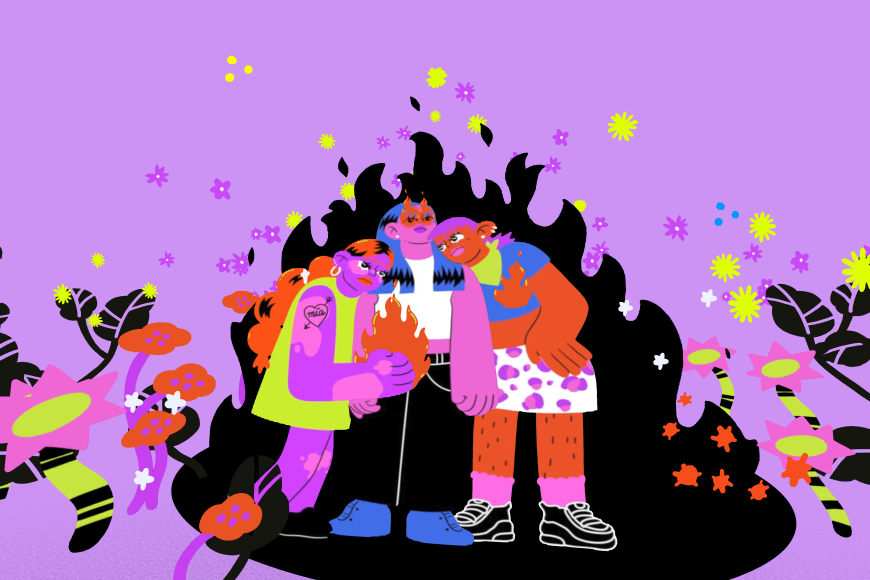
Femicides are daily in Mexico. We follow Maremoto in her fight against sexism, fear and anxiety. She is an illustrator and visual creator, but first and foremost a sensible artist. This VR experience is inspired by her art, her search for identity, her self-empowerment, her way of making herself and others aware of their own bodies and of finding allies in the struggle for change.
Lars Rummel
Credits
Concept
Mariana Cadenas Sangronis
Producer
Evelien De Graef, Hanne Phlypo, Michel Denis, Kris De Boeck, Patrick Vandenbroeck
Production Company
Clin d’oeil films, Castar, Benuts Flanders
Animation
Camille Chailloux, Eline Mollet, Daaf Wouters
VR Developer
Nicolas Corson, Jonathan Massin, Milan Gerard, Pierre Lacasse