Competition for the Audience Award Short Film 2022
Animated Film
Switzerland
2022
3 minutes
without dialogue
Subtitles:
None
A lovingly designed mini-drama about a droll puppet with a button nose and jug ears in scary situations we all remember from our childhood. The horror on the one-metre board under which a bottomless abyss is yawning. The panic when the door of a public toilet won’t open. Every scene illustrates children’s fears, and we don’t laugh about a little man in distress but about ourselves.
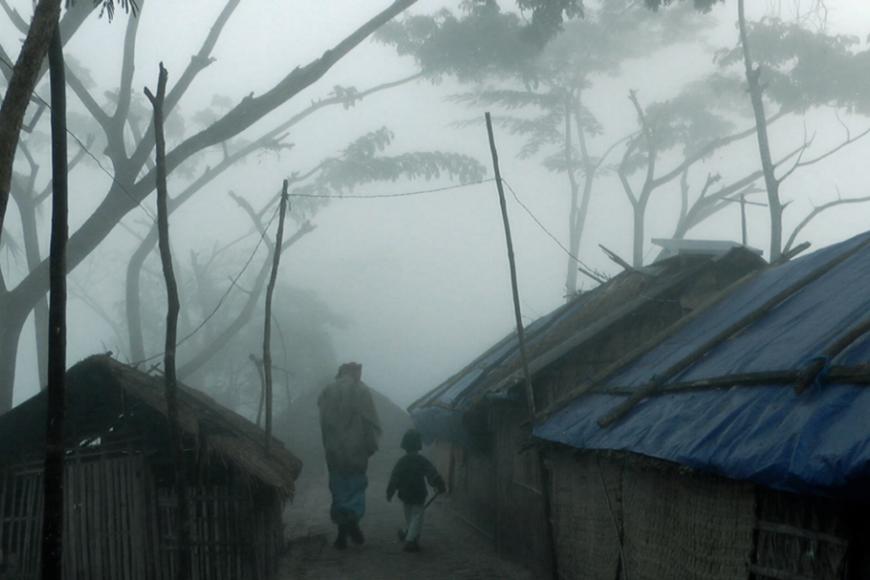
This warm-hearted portrait of a village stricken by flood in Bangladesh opened DOK Leipzig ten years ago and has lost nothing of its bitter topicality.
Ten years after its premiere, Kamar Ahmad Simon’s film has lost nothing of its bitter topicality. In 2022, too, millions of people are fleeing floods after heavy rainfall in Bangladesh, hundreds of villages are flooded or completely cut-off. On 27 May 2009, cyclone Aila hit the Bangladeshi coast. The community portrayed in “Are You Listening!” has settled in a makeshift home on an old dyke and keeps stubbornly waiting for the new one to be built. With a fine sense for absurd situations, the filmmaker documents a daily life marked by the determination to return one day against all odds.
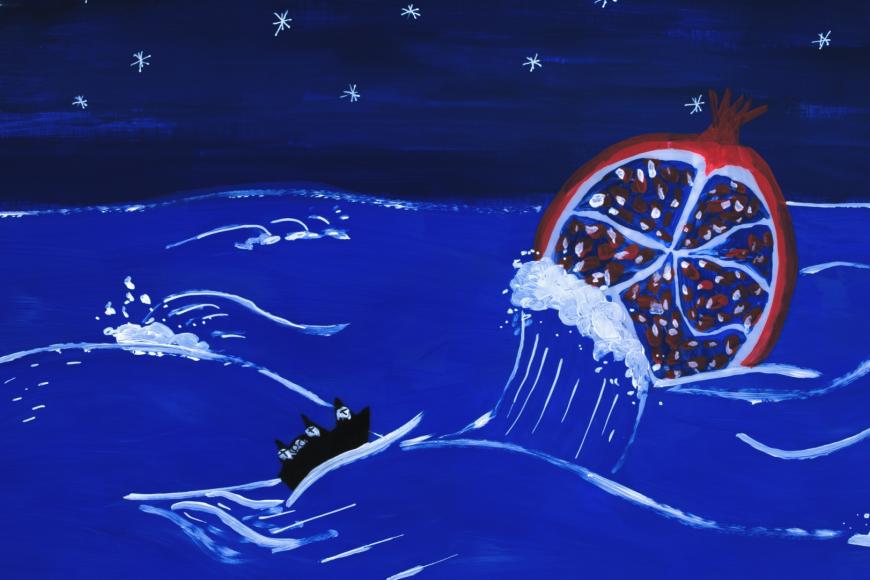
A young Swiss woman searches for her Armenian roots. A wooden wardrobe roaming through night-blue landscapes forms the leitmotif of her critical feminine family historiography.
A young Swiss woman searches for her Armenian roots. Various lovingly animated drawers of the simultaneously accumulating family archive open. This very personal examination of collective traumas of post-migrant communities finds images and words for racism and the difficulties of talking about feelings with male family members. Its leitmotif is a wardrobe roaming through night-blue landscapes which – despite the cracks – holds everything and everyone together.
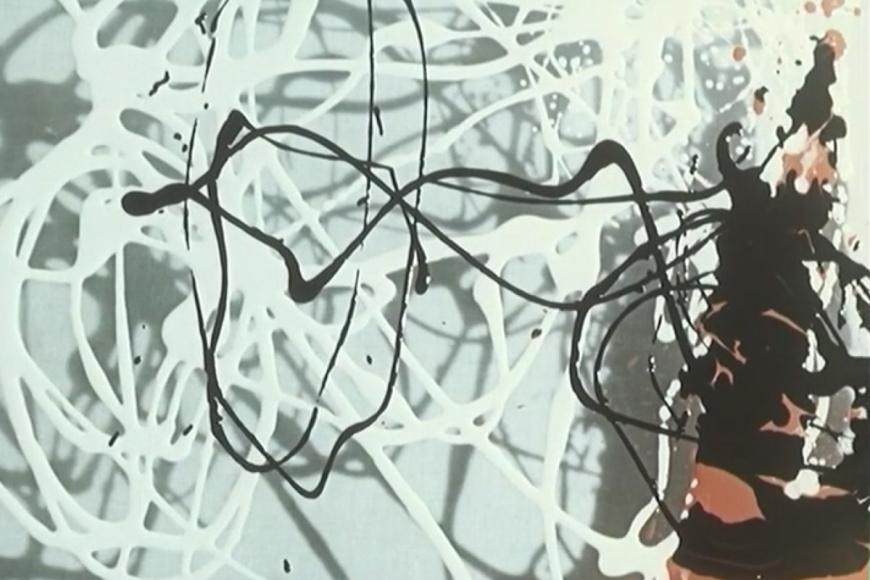
Originally intended as a documentation of Tadeusz Kantor’s “informal painting”, the film develops a life of its own: The abstract form-finding itself becomes the movie star.
Intended as a documentation of Polish artist and theatre-maker Tadeusz Kantor’s “informal painting”, Mieczysław Waśkowski’s film develops a hectic experimental life of its own. The gestural application of paint is staged on changing spatial levels by means of glass plates, camera movements and lighting, making not the painter but the abstract form-finding the movie star.
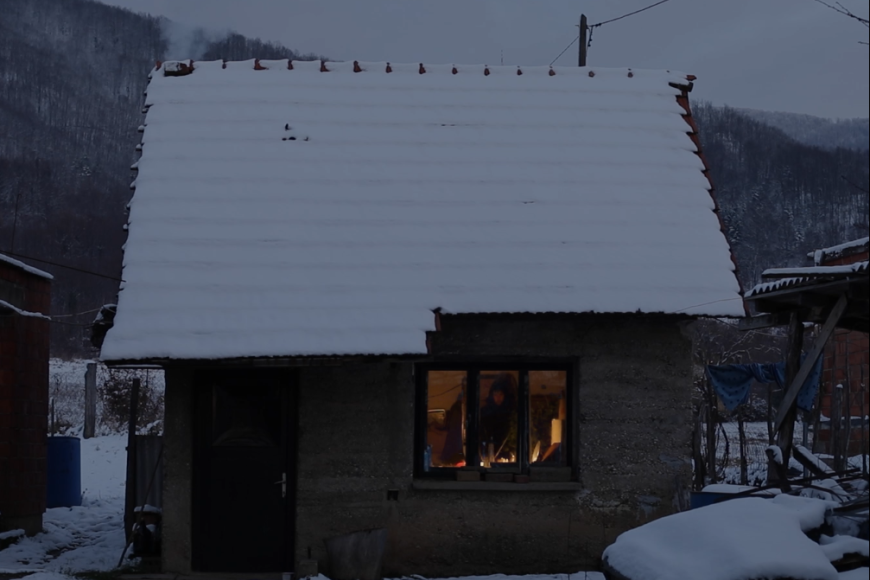
In this cinematic conjuring, Ante Zlatko Stolica remembers childhood fears triggered by a deaf woman in his grandmother’s village. The ghost of Janja, an allusion to the Slavic fairy tale character of Baba Yaga, haunts his dreams, lurks in dark places and joins forces with other horror characters. Still lifes, horror films and a gloomy soundscape evoke the unease that still disturbs the director, even after Janja’s death.
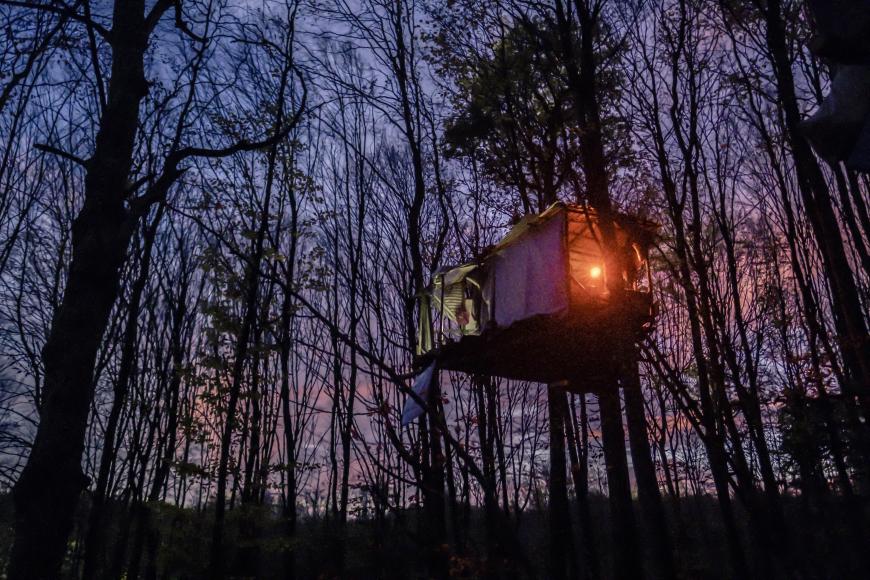
In 2019, alliances between anarchic and civil resistance groups were formed in Dannenröder Forst in Hesse. Together they defended trees against the police.
Tree sitting is an important part of climate activism. The “occupation” of Dannenröder Forst in 2019 was meant to prevent its clearance for a highway. The people holding out in the airy heights of their tree houses were dependent on support and supplies from the ground. This help came from locals who would never have dreamed of being part of a resistance movement before. David Klammer’s film shows how brand-new alliances are formed in the face of environmental and climate destruction while realising how powerless words are. These alliances could last – even if the trees, like those in the “Danni”, fall victim to the chainsaws in the end.
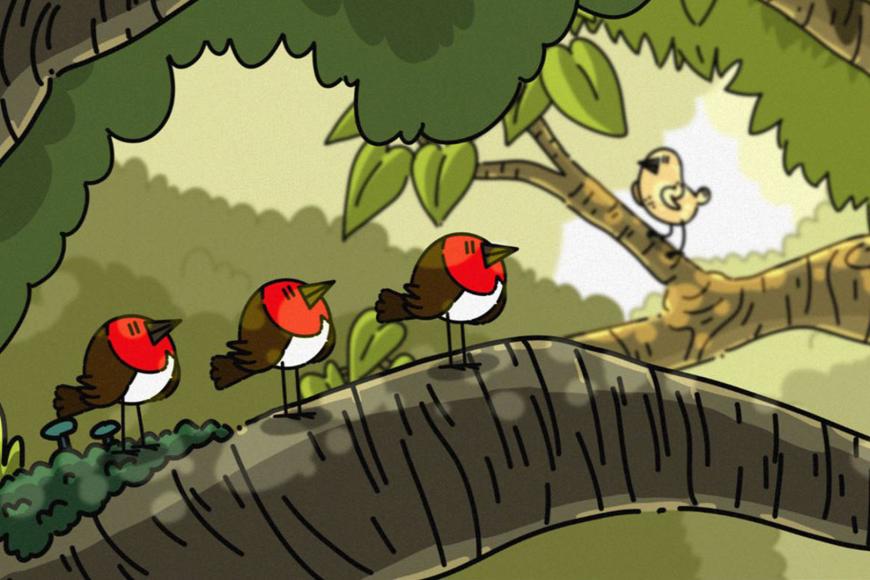
The featherless nightingale has the most beautiful voice in the forest. All the animals enjoy her singing. When autumn comes and she catches a cold, she suddenly can’t sing any more.
Oh dear, the nightingale has no feathers! The other birds are laughing at her because she can’t fly. Her singing, however, lulls the little bear to sleep. Even the squirrels stop fighting and listen. When autumn comes and the nightingale catches a cold, she feels much too sick to sing. The other animals will have to come up with something …
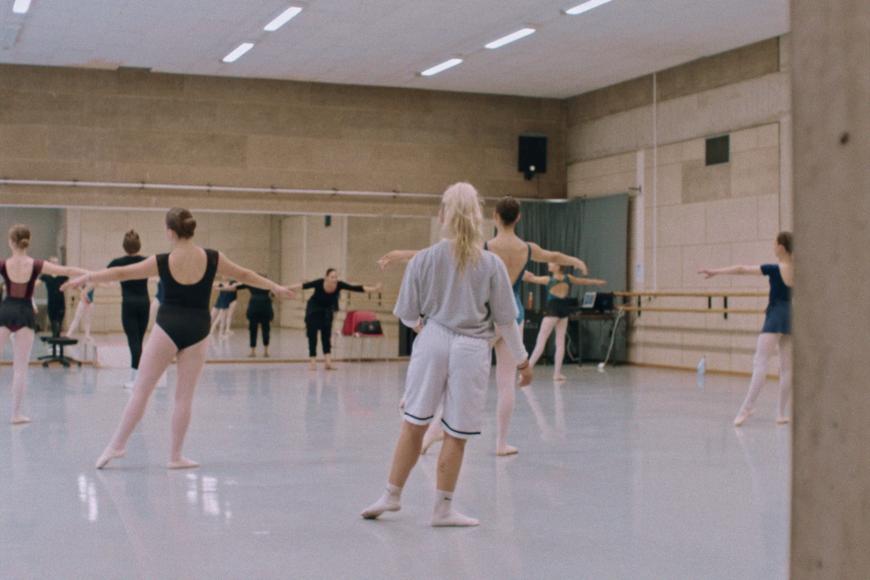
14-year-old Mali’s head is full of dancing. She is a b-girl and lives for breaking. She has just moved into a big city to live with her older sister – and to go to a new school where dancing is one of the main subjects. But can Mali handle the other dance styles? And will her body be able to stand the strain?
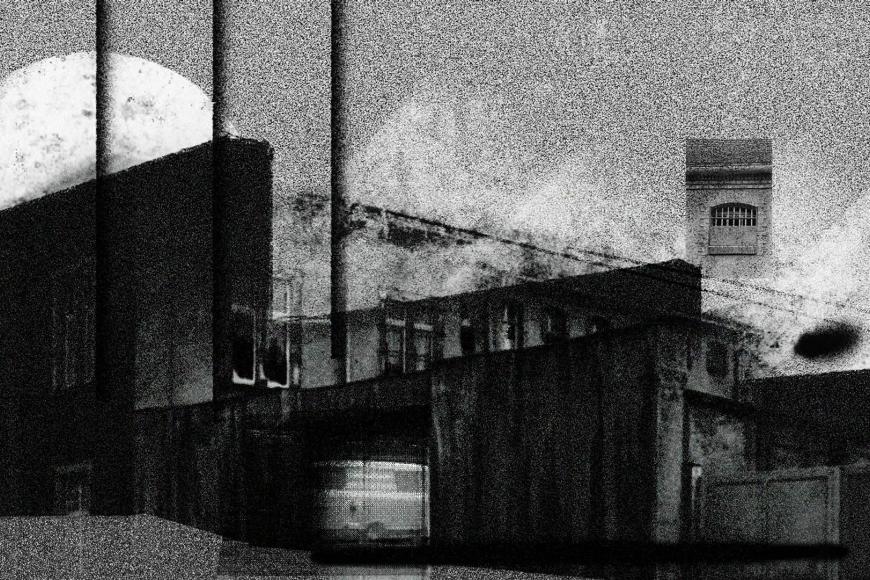
This animated documentary with reduced imagery portrays the protagonist’s traumatic experiences in the GDR’s residential care system and the Torgau Closed Juvenile Detention Centre.
Because his single mother criticised the state, Alex was sent to a special children’s home at the age of eleven, in order to shape him – like almost 500,000 children in the GDR – into a “socialist personality”. He escaped and ended up as a punishment at the Torgau Closed Juvenile Detention Centre, more prison than social institution. His life was now dominated by military drill and violence … Reduced rotoscope images follow Alex’s memories and show how the trauma affects him even today.
Luc-Carolin Ziemann
Credits
Director
Falk Schuster, Mike Plitt
Script
Mike Plitt
Cinematographer
Falk Schuster
Editor
Julian Quitsch
Producer
Max Mönch, Alexander Lahl
Sound
Hannes Schulze
Score
Hannes Schulze
Animation
Julian Quitsch, Alexander Schmidt, Falk Schuster
Nominated for:
Gedanken Aufschluss Prize,
mephisto 97.6 Audience Award
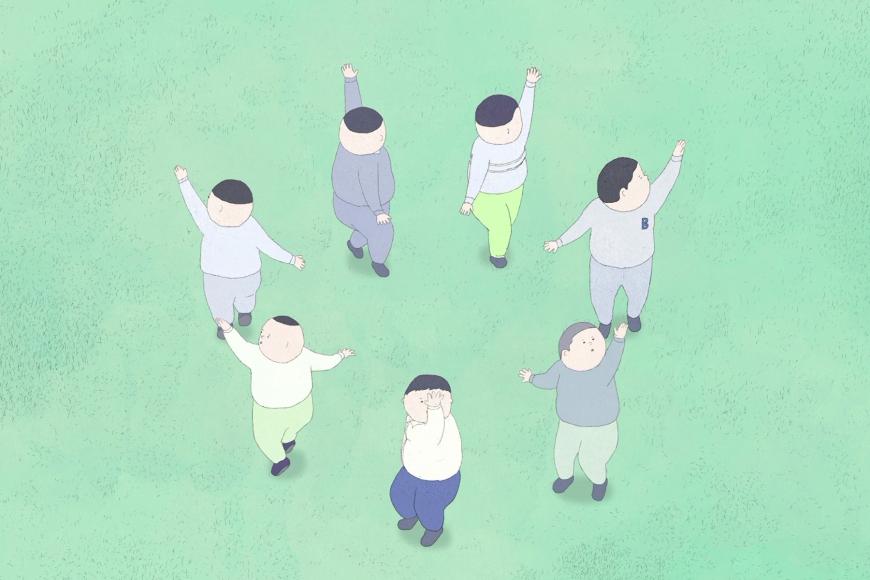
A boy, a girl, a bird with a swan’s neck nestling in hands, a gently wooded peninsula of longing: Atsushi Wada’s almost speechless animation, mapped out in uniform and unicoloured chains of motifs and events, follows the dream and shame logic of a sexual awakening. There’s a sadness about the rounded and infantile figures, perhaps that of a first “little death”.
Sylvia Görke
Credits
Director
Atsushi Wada
Editor
Atsushi Wada
Producer
Emmanuel-Alain Raynal, Pierre Baussaron, Nobuaki Doi
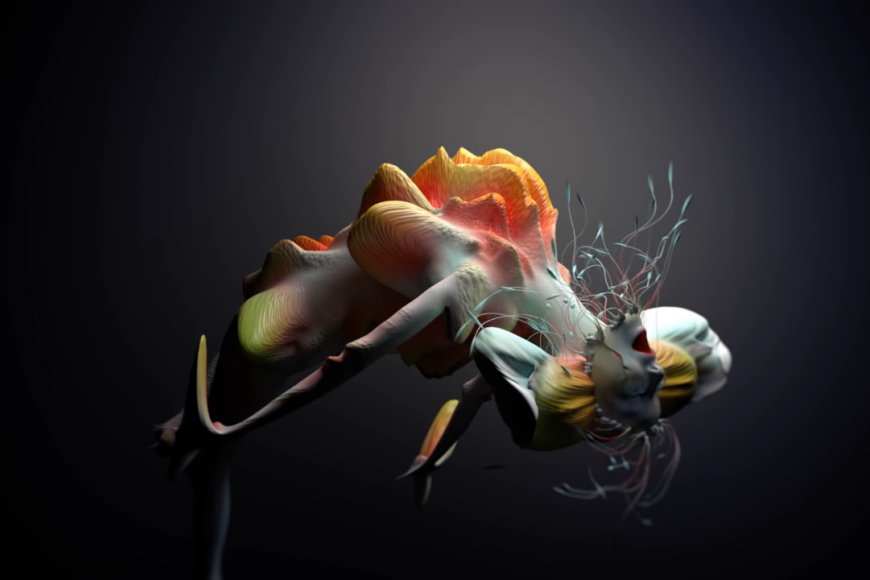
Björk’s figure seamlessly transforms into fantastic organic shapes, while her singing wipes the slate clean: tabula rasa, a free space for children to blossom and make their own mistakes.
The figure of the singer Björk seamlessly transforms into petals, into underwater creatures with delicate tentacles and other fantastic organic manifestations impossible to classify. Accompanying Tobias Gremmler’s graceful computer animation, Björk’s singing wipes the slate clean: tabula rasa, a free, unencumbered space for later-born children to blossom and make their own mistakes.
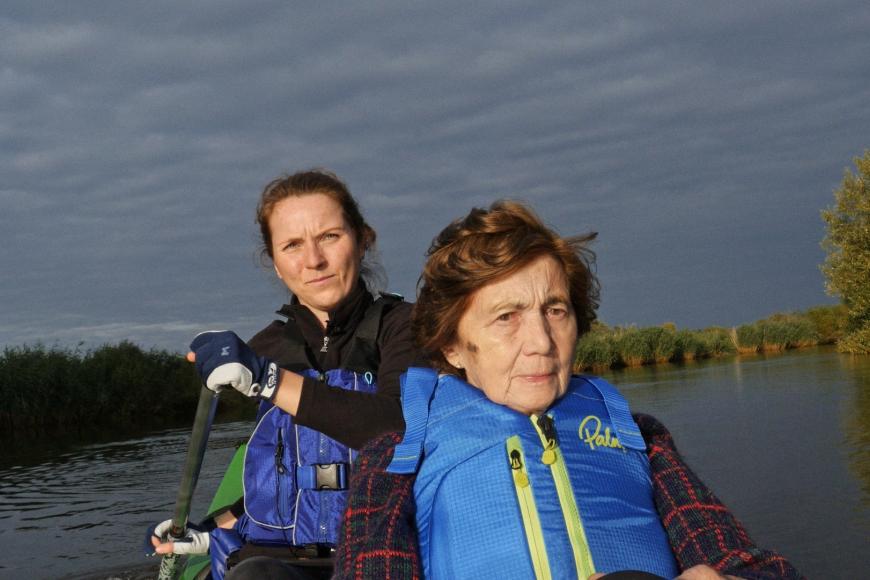
A ten-day canoe trip on northern German waters is a test for granddaughter Astrid, her brother and her dementia-suffering grandmother. The prerequisite: re-adjusting every single minute.
Grandma has become a little doddery. And since the death of her husband, called E.O., ever bigger gaps have opened in her memory, and her disorientation has increased. Director Astrid Menzel makes a decision: to take a ten-day canoe trip on northern German waters with her brother and the 86-year-old lady. An adventure whose outcome is uncertain and which the three travellers have to face anew at every stage.
Looking at the sky, watching the changing cloud formations, being all there. Things that Astrid Menzel’s grandmother finds easier as her dementia progresses. Horses and beds are recognisable up there, and sometimes there are thoughts of the late E.O. A chain of disintegration has been set in motion: The beloved house has become confusing, a home for grandma is being searched, the relatives feel nagging guilt. The granddaughter Astrid feels the need for action. Gently and with endless patience, she involves the elderly lady in the preparations and organisation of a canoe trip that would be a challenge for any beginner: Travelling on the river day in and day out, a different sleeping place almost every night. Old and young are trying to find strategies of interaction. Rummikub matches and writing a travel diary anchor them, but emotional breakdowns, too, are part of the endeavour.
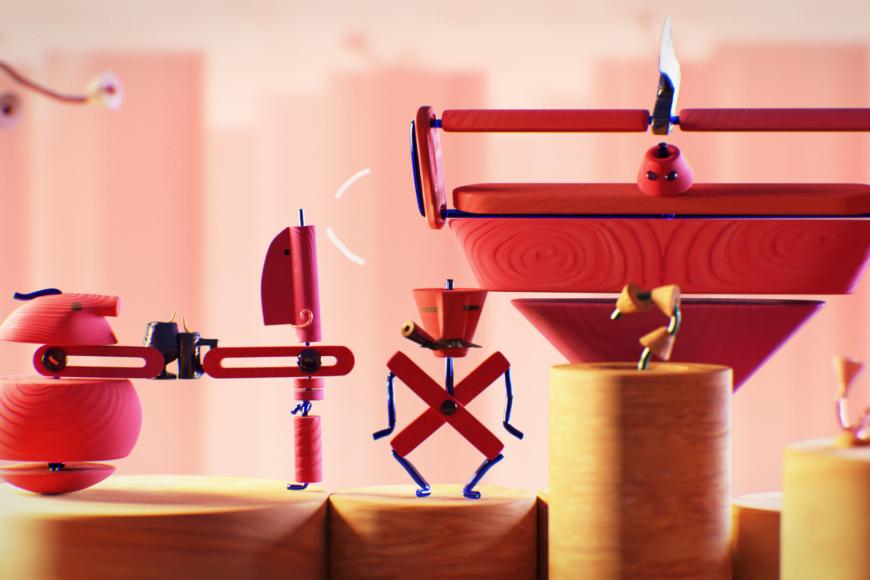
A group of figures made of beads and building blocks move to the same rhythm – until the little green figure is to wear beads, too. Everything gets out of sync.
The little green figure runs up the mountain to the other figures made of beads and small building blocks. All move to the same rhythm, right, left, up, down. One day the little green figure, too, is supposed to decorate itself with beads. But this throws everything out of sync. The gears come to a standstill.
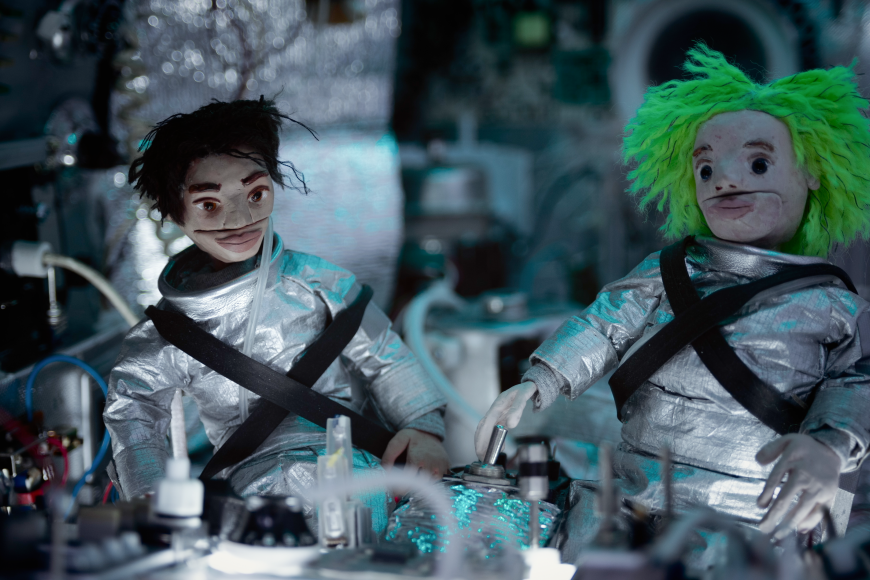
A wild stop motion animadoc trip through the glittering dreams of an astronaut who gathers all his courage to show himself to the world as he is. Set course for star date LGBTQAI+.
A marvellously wild stop motion animadoc trip to unknown worlds, in which 18-year-old astronaut Fatu sets himself a challenge that’s as nerve-racking to him as a lunar expedition. He wants to go shopping at the supermarket – for the first time as he sees himself: in full glam make-up. How will his family with their Kosovar roots react to these new coordinates? Will his self-perception and the others’ perception clash? Set course for star date LGBTQAI+.
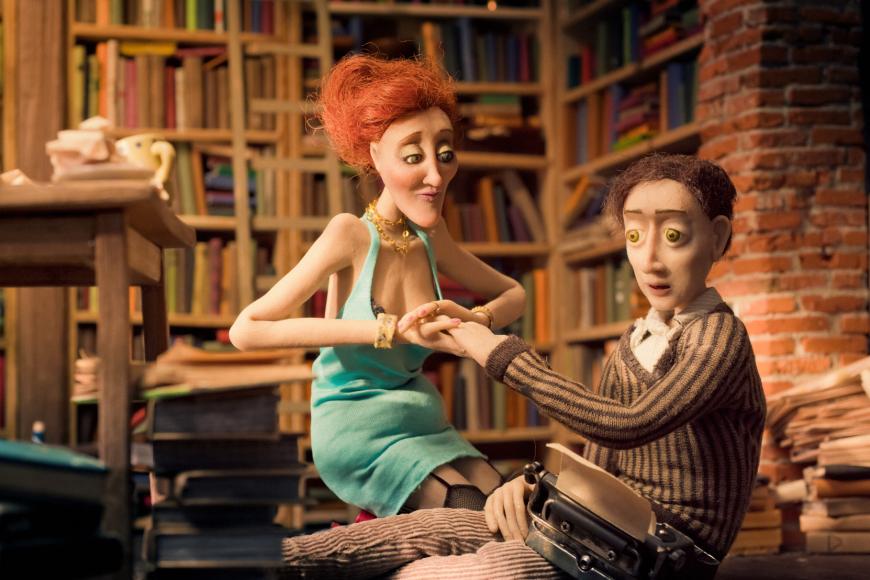
Filip and Tereza have little in common except for the wall between their apartments. Loosely based on Gorky, Špela Čadež makes the puppets dance: a pas de deux of neighbouring lonelinesses.
Filip lives next to Tereza, he is a blocked writer, she is an ageing prostitute. They have little in common, except for the wall separating their apartments. One day Tereza asks him to write a letter to her fiancé. But that’s only the beginning … Špela Čadež makes the puppets dance, loosely based on Maxim Gorky: a pas de deux of neighbouring lonelinesses.
In 2014, Russian separatists destroyed homes and families in Toretsk in eastern Ukraine. War followed coal in leaving deep marks on the landscape – and became normality.
Toretsk in eastern Ukraine is marked by the decline of the coal industry: wasteland, rubble, scrap metal. In 2014, Russian separatists brought war into the region, destroying homes and families, including Nastya’s. The girl and her friends, all on the brink of adulthood, accept the decaying outskirts, gone to seed in the face of threat and depression, as normal. Taras Tomenko observes their small danced or sung escapes, their moments of obliviousness, sometimes their tears.
Sylvia Görke
Credits
Director
Taras Tomenko
Cinematographer
Misha Lubarskyi
Editor
Viktor Malyarenko
Producer
Volodymyr Filippov, Andriy Suyarko, Alla Ovsyannikova