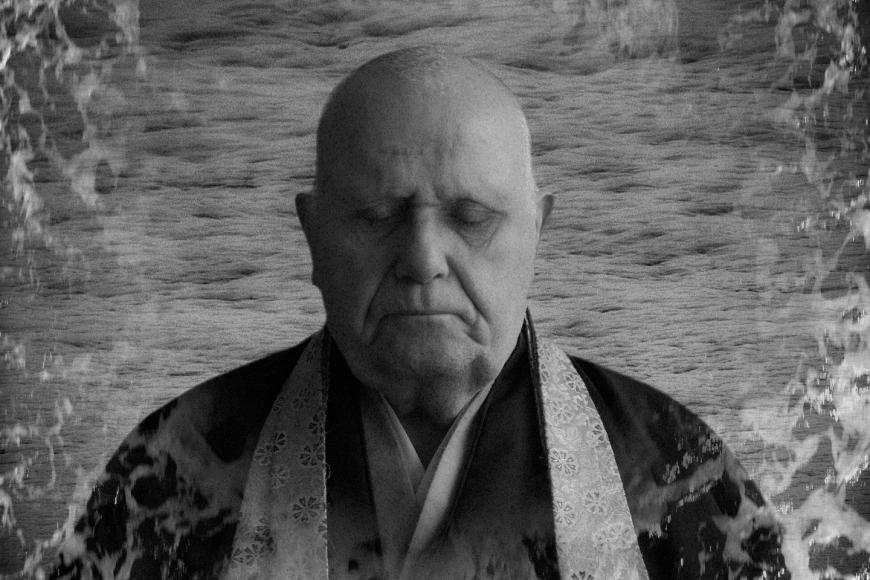
Eating together with chopsticks, forks, or cheese sandwiches: Heinz Toku-Zen Anneser and his students practice Buddhist rituals without pretension. In his study, which is as precisely measured as it is poetic, Thomas Köhling observes the daily routines of this small, quiet group in the German provinces and finds appealingly bizarre moments when Eastern religion and western culture overlap. The sky above the Velux window is the same as above Mount Fuji.
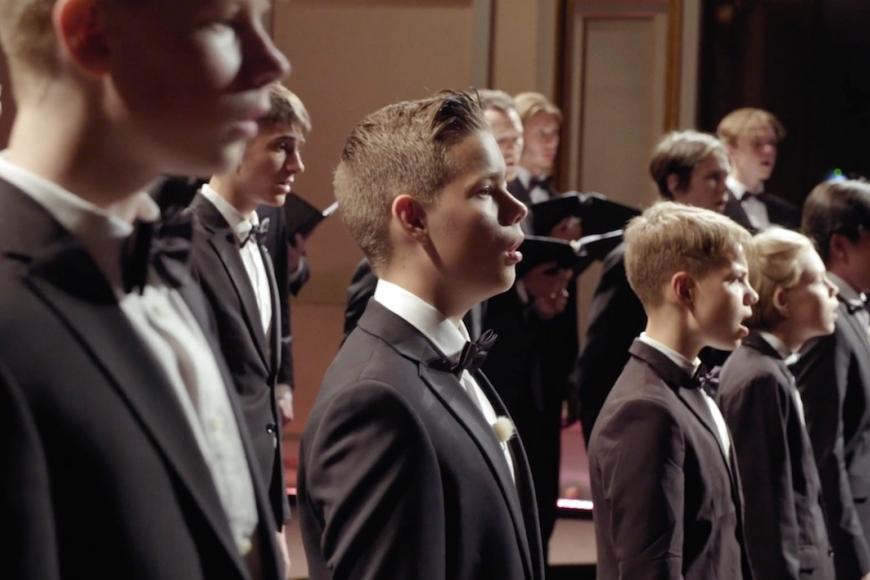
Boys who from earliest childhood have sung in a choir have now entered puberty. In the “Voice Break Choir” they wait until their changed voices can be relied on again.
Boys who from earliest childhood have sung in a choir have now entered puberty. They have to wait in the “Voice Break Choir” until their voices can be relied on again – in order to continue singing with the men. In interviews and impromptu songs, they describe personal changes and searches for identity. A film about the threshold between being a boy and becoming a man.
Lina Dinkla
Credits
Director
Ina Holmqvist, Martina Carlstedt
Cinematographer
Martina Carlstedt, Ina Holmqvist
Editor
Matti Kentrschynskyj, Ina Holmqvist, Martina Carlstedt
Observation of an important infrastructure in Amazonia: downstream on a cargo boat that brings passengers and goods to the isolated communities in the Peruvian rain forest.
The towns and villages along the Peruvian section of the Amazon can’t be reached by road. If you can’t afford to take the plane, you travel by cargo boat on the river for days. As a means of transport, the boats are part of an important infrastructure: While the steamships of the “rubber barons” used to travel this route during the brutal rubber boom, cargo boats now bring goods to the communities on the edge of the rain forest.
The observations of the Peruvian brothers Álvaro and Diego Sarmiento and the anthropologist Terje Toomistu are focused entirely on the occurrences on the boat: loading and unloading sugar, chickens, onions, lemonade and building material, the crew, the passengers travelling hammock to hammock on deck, and the people waiting on the banks of the river. The camera never glorifies either the landscape or the work; instead it is always in the midst of things, sometimes even in the way. The journey downstream is accompanied by tales of sinking ships, swimming animals and newfound faith. Observed with such reserve, a lot can still be inferred: about the tough jobs of the dockers, the lives of the women and children who come aboard to sell food, about the influence of the “Israelitas” and how important trading by boat is for the indigenous population of the tributaries.
Marie Kloos
Credits
Director
Álvaro Sarmiento, Terje Toomistu, Diego Sarmiento
Script
Álvaro Sarmiento, Terje Toomistu
Cinematographer
Terje Toomistu, Diego Sarmiento
Editor
Fabricio Deza, Diego Sarmiento, Álvaro Sarmiento, Alex Cruz
Producer
Álvaro Sarmiento, Diego Sarmiento
Co-Producer
Terje Toomistu
Sound
Cesar Centeno
World Sales
Pascale Ramonda
Nominated for:
Prize of the Interreligious Jury,
FIPRESCI Prize
The director – or more precisely, her alter ego – sets out in search of traces of her family history in Silesia. What she finds are dinosaurs. Including a few made of plastic.
German Subtitles for deaf and hard-of-hearing, English
Silesia: a contested region marked by migrations. Animosities between the peoples have a long tradition here, not only since the Second World War. But the National Socialist tyranny left clear lesions behind. The director’s grandfather comes from this region, was the organist in a church in Krasiejów – a place which was once also called Krascheow and, for a while, Schönhorst.
The filmmaker Juliane Henrich – or more precisely, her alter ego, the writer Nannina Matz – sets out in search of her family history. What she finds are bizarre ways of representing the history of humanity – and the history of earth. She comes across all kinds of traces of dinosaurs. Some may only be made of plastic, but others are not: A certain species of this genus, whose fossils were found in Silesia, was christened “Silesaurus opolensis” by the Polish palaeontologist Jerzy Dzik. That’s why there is a Dinosaur Park in Krasiejów. And a local museum, of course. But also many people with different individual memories. They do not necessarily lead to ground-breaking discoveries regarding the looked-for family past, but they broaden the view: of the complex history of this region and the way it is thought together, represented and codified.