Cine film footage, transformed into magical visual worlds that unfold in the glistening drizzle of electronic sounds. A diary of awake dreaming observation.
Patrick Bokanowski subjects his own early cine film footage to a magical optical transformation. In the glistening drizzle of electronic sounds and the deep rumbling of drone waves by Michèle Bokanowski, light eruptions, sweeping colours and shadowy apparitions unfold while the original footage shines through. A diary of awake dreaming observation.
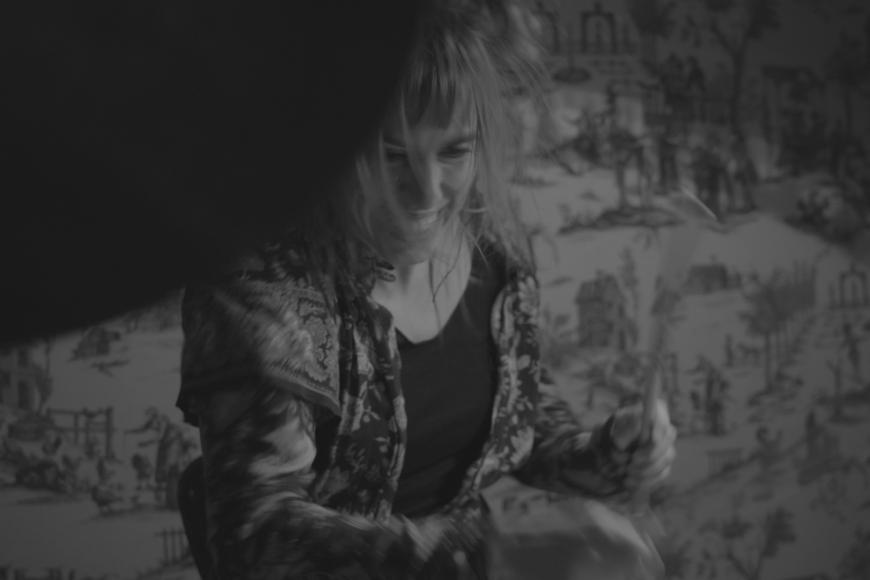
A visually and aurally outstanding film about the musician Marja Burchard, leader of the legendary band “Embryo”. An ode to hearing, experimentation and inspiration.
She first appeared on stage at the age of eleven with the legendary Krautrock band “Embryo”. Her father, Christian Burchard, founded the band in 1969 and led it until 2016. Today – in her mid-thirties – Marja Burchard is the bandleader in this project, which has become a kind of family for her. But what seems so simple and organic is far from self-evident in an extremely male-dominated sphere, as Rebecca Zehr shows in her precisely observed and designed film.
This strictly and yet lightly composed melange mixes archival footage, psychedelic animation sequences and everyday observations of the normal life of a female musician between organisation and inspiration. With the visual level restricted to black and white and thus deliberately restrained, all the more attention is focused at the sound. The – who wonders? – outstanding score never takes the music for granted but works robustly with our perception. It’s the lucid, calm images and the narrative that is always anchored in the here and now that let this film stay incredibly haptic despite its concentration on our sense of hearing. Rebecca Zehr is not interested in portraying a musical legend, but in showing us what it could look and feel like to not only make music but live in it.
Luc-Carolin Ziemann
Credits
Director
Rebecca Zehr
Cinematographer
Felix Press
Editor
Melanie Jilg
Producer
Rebecca Zehr, Katharina Rabl, University of Television and Film Munich (HFF)
“If you want to storm, you use stormer methods”, to quote a direct reference to the infamous anti-Semitic smear sheet of the Nazi era. Set to shrill trumpet sounds, this outraged film pamphlet dissects, or so it seems, the drastic jargon of the “West German monopoly press”, especially the publications of the Springer publishing house, in their coverage of the Six-Day War between Israel and the Arab coalition of Egypt, Jordan and Syria. At the same time, it uses the reviled style for its own argumentation. Under the auspices of the DEFA newsreel editors of “Der Augenzeuge” (The Eyewitness), a sweeping blow against the Bonn Republic arises from news images and superimposed newspaper articles.
Cleveland, northern England: scene of a wave of abuse that went down in history as a scandal of false accusations. Ben Young explores the time and the place – strong-minded.
The starting point of this documentary exploration is a 1980s abuse scandal in Cleveland, northern England, which turned out to be a scandal of false accusations. In his uniquely personal and literarily remarkable way, Ben Young discusses this historical event from offscreen. What we see is surprising contemporary footage of the region. Image and sound unite in a strong-minded attempt to capture a piece of local history by cinematic means.
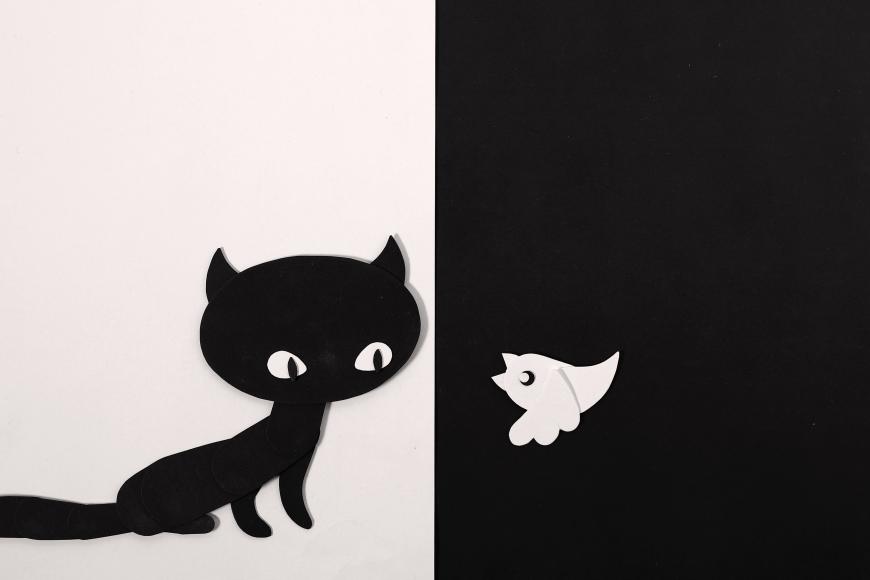
Black and white, white and black. At first everything seems well-ordered in this bicoloured world. The black cat lives in the white field, the white bird in the black one. Each in their place. But when the two venture into each other’s space, nothing stays the same and their world unravels. A fast-paced silhouette animation.
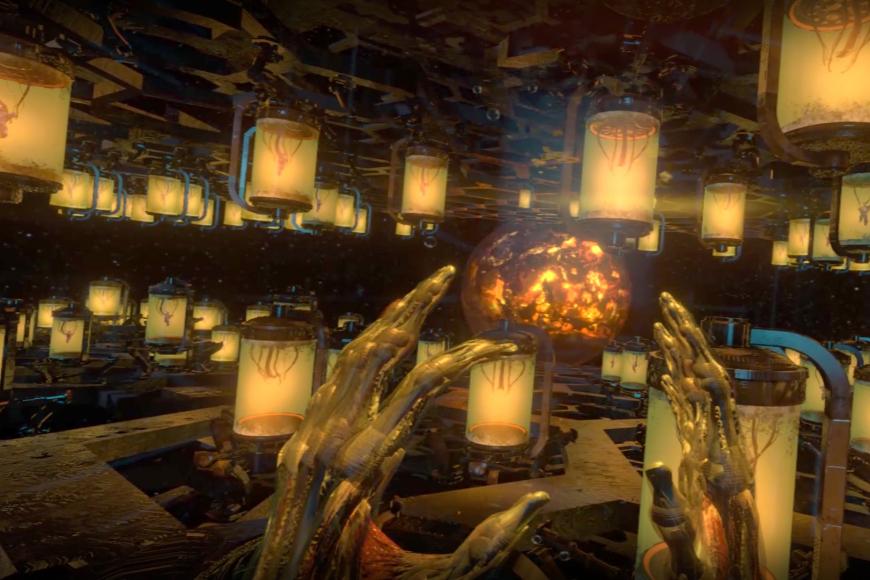
Earth is destroyed, time nothing but an illusion. In space we explore our new collective consciousness and assume forms not originally envisaged by our DNA.
What happens when we have to leave the destroyed earth? This VR experience takes us into space: Our consciousness becomes collective and our DNA is modified into new life forms. Time is nothing but an illusion here – past, present and future merge. We end up where we began, but in what form and when? A cycle of endless reincarnation.
Lars Rummel
Credits
Producer
Hsiao-Yue Tsau
Executive Producer
Chung-Hsien Chen
Production Company
Virtual and Physical Media Integration Association of Taiwan
Mutated creatures wobble in the void, police voices strike like truncheons. The bodies fight back, generating an indelible energy field of radical feminist protest.
Four creatures wobble like marionettes in the black void. An alien power tries to subdue them, police voices strike like truncheons. Bent, with bulging or thread-thin limbs, their skin turned inside out – human anatomy has mutated. But these vulnerable bodies start to fight back … “Scum Mutation” takes us into the battle zone without protection, into an indelible energy field of radical feminist protest – and becomes a resounding beacon of reconquest.
André Eckardt
Credits
Director
Ov
Script
Ov
Editor
Ov
Producer
Le Fresnoy – Studio national des arts contemporains
Nothing is closer to us than our skin. Its beautiful and less beautiful parts envelop the self, separate it from all else. A foray along naked parts of the body takes us from a shiny ridge via a rounded protuberance to a shady gorge. A neck. A belly…ear. A fellybear? Photos, videoclips and sounds form an irritating body collage.
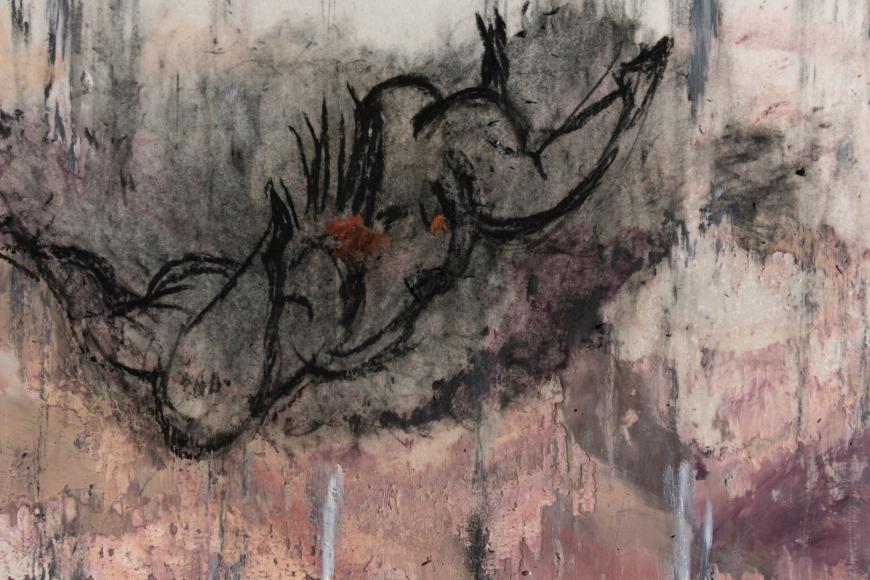
Using different techniques and materials – from charcoal pencils via watercolour to oil paints, against the backdrop of a photo – Chinese-American animation artist Renee Zhan has created a sensual, impressive and extremely original visualization of a well-known piece of wisdom: “Sex with an ex is the best.” The chance encounter of two former lovers at a station seems to trigger not only memories but also unsuppressible lust: anima porn in top form!
The daily routine in the life of a young couple: getting up, eating soup, daydreaming … Surreal animated photo collages and electro-acoustic sounds turn the inside out.
The daily routine in the life of a young couple: getting up, squeezing blackheads, eating soup, daydreaming … Zbigniew Rybczyński reworks real-life images to create surreal collages in order to visually turn the inside out. He is supported by the Polish composer Eugeniusz Rudnik, whose great electro-acoustic inventiveness shifts playfully back and forth between naturalism and alienation.
In short sequences of images pointedly set to music by Louis Armstrong, we follow the pleasurable triumph of young life over the obstacles of setting out into the world.
In short sequences of images pointedly set to music by Louis Armstrong, the film follows the pleasurable triumph of young life over the obstacles of setting out into the world. As short as the film is and as curious its contents, the chequered story of its working and release titles is just as interesting. In 1987, the industry magazine “Film und Fernsehen” presented it simply as “A DEFA film by”. The text printed there ends with a sentence in brackets: (And many a viewer may marvel at the courage of the little ducklings and feel encouraged themselves.)
A gaudily coloured twisty slide takes us into emotional shallows. A squeaky voice complains about its inadequacies. It belongs to an animated figure which serves as a catch bowl for a soul that’s not doing well. Its creator has pieced it together, but something holistic does not pop out of the demiurgic mush. Tulapop Saenjaroen uncovers the beginnings of Thai animation and takes a critical look at the future promise of media placebos.
Observing documentary about the attempt to use art to come to terms with past trauma – or at least not to pass it on. A theatre workshop is supposed to help.
The opening scene shows the anger: It’s about rape. The observing documentary by Aïssata Ouarma is more composed, though, focused on dealing with the trauma and the attempts to come to terms with it through art. The heavily pregnant Mariam attends a theatre education workshop. The camera follows her and her empathetic trainer in moments of mental and physical exertion designed to free her soul – and that of her unborn child – for good.
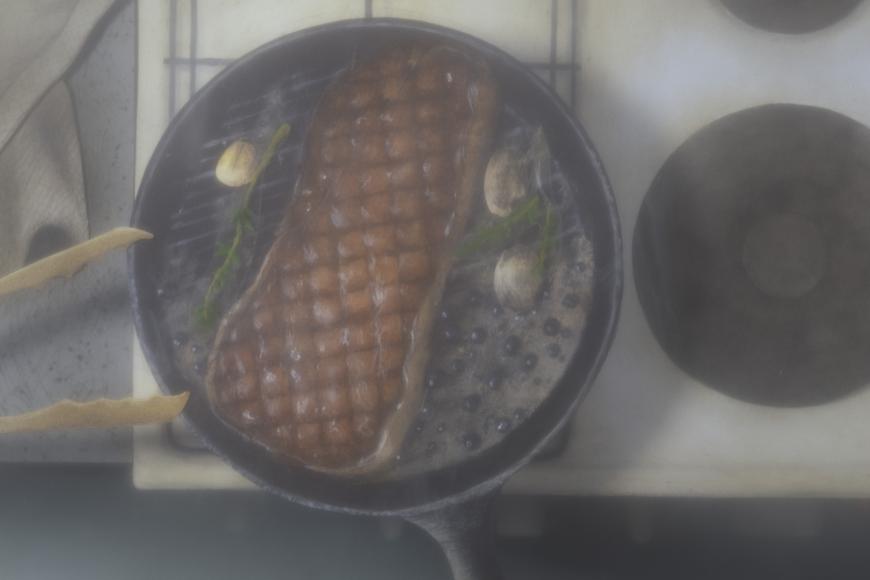
He and she are a good team. What was intended as a pleasant evening for two becomes overshadowed by an acrid cloud of roast fumes and ends civilized, but bloody. Black humour, “well done”.
Coupledom has its own dynamics. Her professional obligations do not tick by the clock, his cooking and love are extraordinary, but, alas, precisely timed. This all too familiar incompatibility is condensed into murky, acrid roast fumes and ends civilized, but bloody. Špela Čadež gradually slows down the pace, creating a space for the absurd goings-on to penetrate deeper and deeper. Black humour, “well done”.
André Eckardt
Credits
Director
Špela Čadež
Script
Gregor Zorc
Cinematographer
Špela Čadež
Editor
Iva Kraljevic
Producer
Tina Smrekar, Špela Čadež
Co-Producer
Emmanuel-Alain Raynal, Pierre Baussaron, Fabian Driehorst
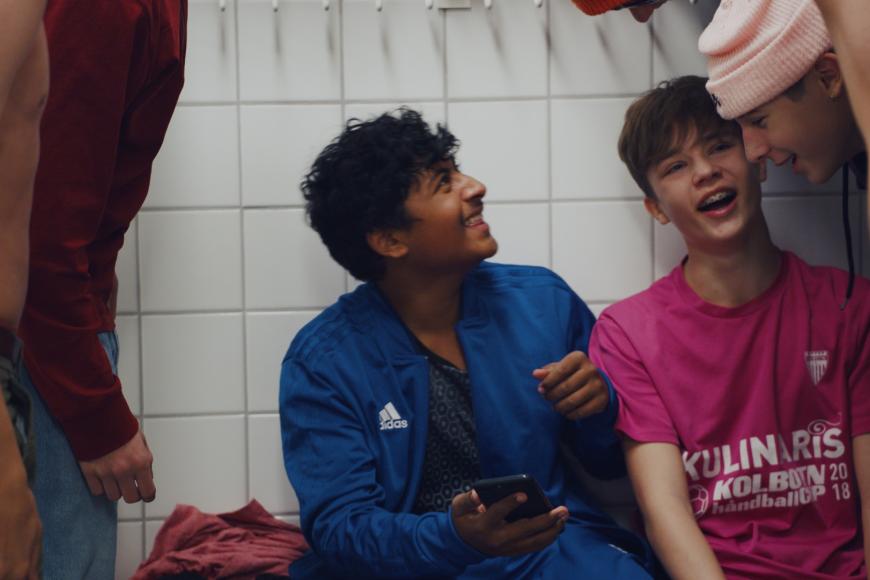
The gym locker room is the epitome of awkward moments in every teenager’s life. Every week the same questions comes up: Shower today, or can I do without?
The gym locker room is an unavoidable chapter in the life of teenagers and the epitome of awkward moments. Happy the person who has a relaxed relationship with their body. Teresia Fant’s documentary gives the floor to those who are forced to enter this place every week and ask themselves: Shower today, or can I do without?
“Stripsody” is based on a score of onomatopoetic elements and cartoon language quotes. The solo voice swings on a liana: past the “achoo” to the “boinnnggg”.
The musical piece “Stripsody” for solo voice was created in a collaboration between mezzo-soprano Cathy Berberian and comic book author and illustrator Roberto Zamarin. The score unites onomatopoetic elements, cartoon language and action sequences. Berberian’s magnificent voice takes up the dynamics of the images, swinging on a liana: past the “achoo” to the “boinnnggg”.