In the small Sicilian town of Siculiana, people place their fate in the hands of a black Christ, but do not totally trust the African refugees living nearby.
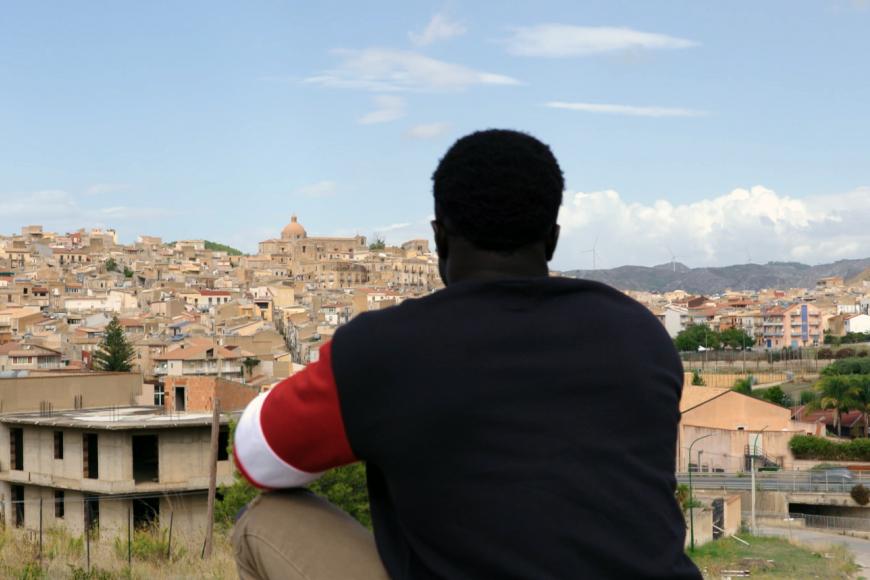
In Siculiana, a small Sicilian town full of flaking facades, religiosity is lived out as a matter of course. And of course the figure of Jesus Christ worshipped here is black, and always has been. However, some people cannot get used to their dark-skinned neighbours in the refugee camp. The camera accompanies locals and stranded people along their paths, which often lead to the church, but not necessarily together, and draws a kind of map of the city in black-on-black contrasts.
It’s become quiet in Siculiana, a local says. He’s not referring to the loud demonstrations against the Villa Sikania, now converted into a refugee reception camp. And certainly not to the colourful flurry of activity that grips the city every year as the faithful prepare for the feast of the Finding of the Cross. That’s when they hang up the “Benvenuti” sign. But who exactly is welcomed here? The pomp and circumstance of the festivities are at the centre of this filmic portrait of a community in which the alleged common ground is disintegrating into voice and skin tones: between the black people from abroad and the black man on the cross who – according to an elderly lady – was forced to “darken” himself in order to incorporate human sins. Between an aging city stylised to the point of becoming scenery and God’s newly arrived children who promise a future and who could bring new life into the alleys.
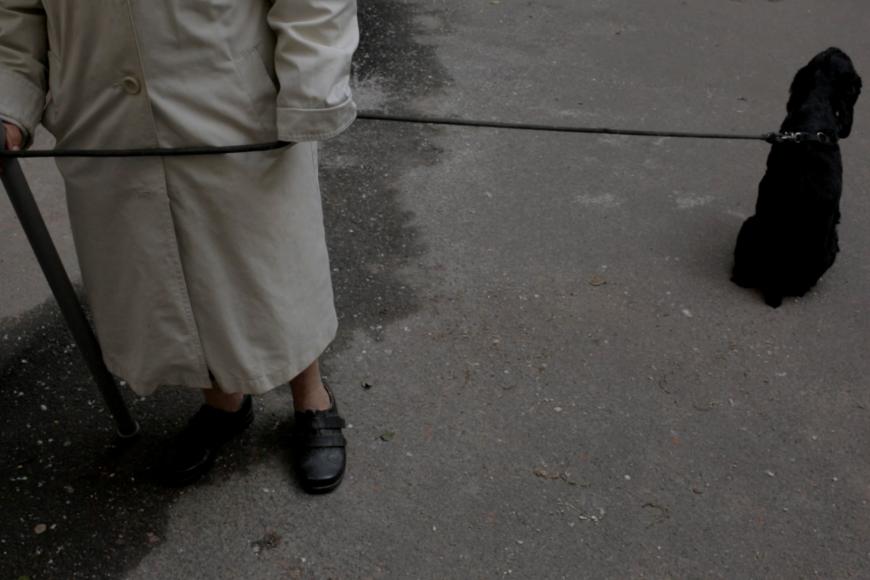
She cares for senior citizens at home for five euros an hour. At their bedsides the ticking clock counts down the working day and falters frighteningly when death comes.
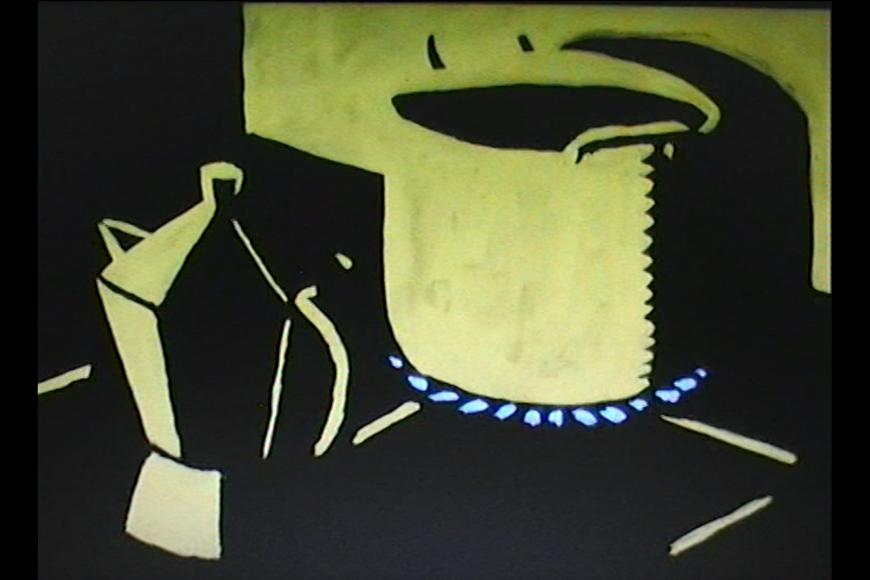
Between coming and going time feels leaden – a half-life in the light and dark contrasts of a linocut. The narrating voice’s mother cares for seniors in their homes for five euros an hour. At their bedsides the ticking clock counts down the working day, caught between the frightening sounds of the heavy breathing that comes with impending death and the roar of promises made by television. The dying are mother’s livelihood.
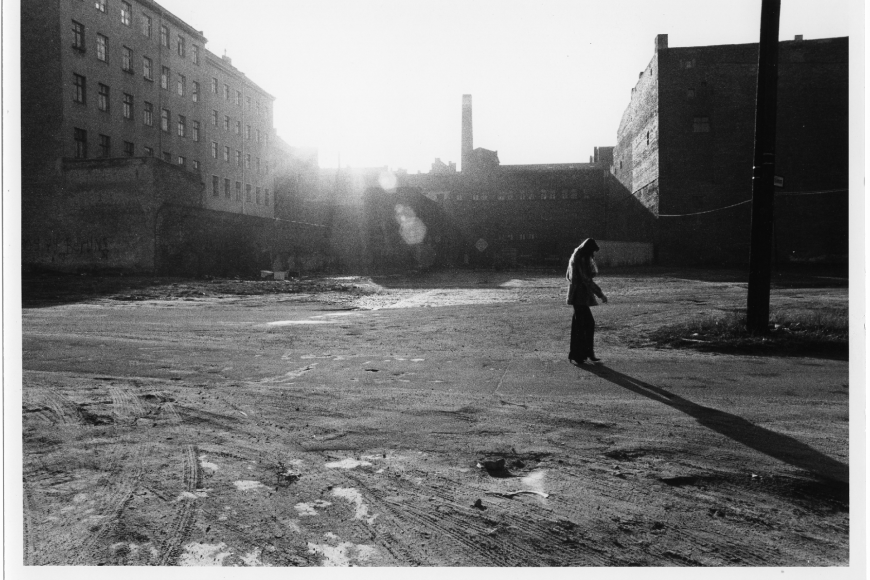
Long walks through almost deserted cityscapes which even in the late 1970s still bear the distinct scars of the Second World War: a Belgian filmmaker encounters West Berlin. She tries to re-adjust in this terrain saturated with European history and films this transformation in the first person singular. The images of twilight captured on grainy 16mm footage make Berlin look like a city that lies deep in the East, even though it sees itself as a Western city. But Annik Leroy mistrusts the mirror images: they don’t help if you want to see things more clearly.
Ralph Eue
Credits
Director
Annik Leroy
Script
Annik Leroy
Cinematographer
Annik Leroy
Editor
Eva Houdova, Daniel De Valck
Producer
Gamma Films, ZDF, Centre de l'Audiovisuel à Bruxelles (CBA)
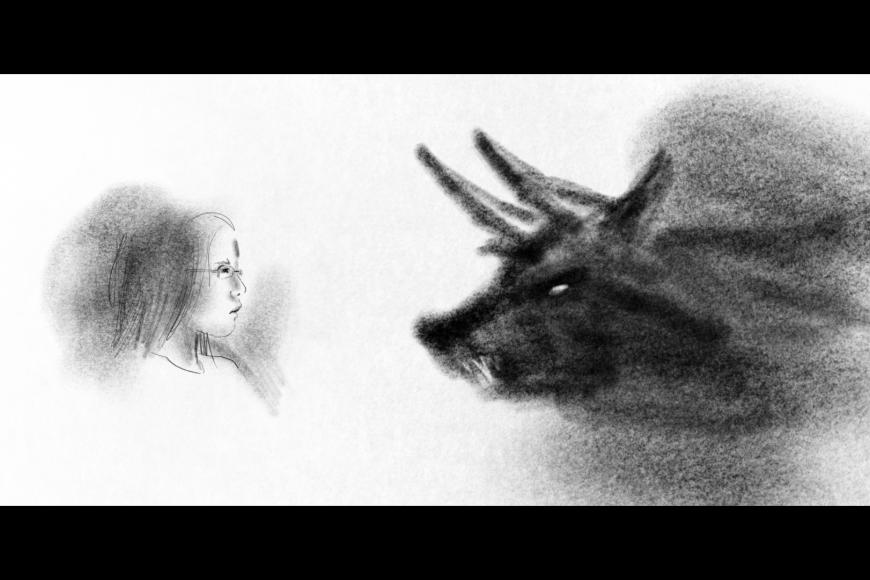
Bertha is determined to tame the wild wolves in her life. She counters her disease, which limits her in her daily life, with brushes, colour palettes and crayons.
Bertha loves to draw. She needs help in her daily life for she has a rare disease that impairs her vision. But Bertha refuses to be discouraged. She has organised an exhibition together with a well-known painter. The proceeds will go to research into her disease, the so-called Wolfram syndrome. Can Bertha tame the wild wolves in her life?
During the Corona lockdown in Saint Petersburg recorded calls to a help hotline reflect a dilapidated system in which the weak and elderly suffer the most.
Competition for the Audience Award Short Film 2020
Documentary Film
Poland
2020
30 minutes
Russian
Subtitles:
English
Against the backdrop of Saint Petersburg’s back courtyards during the Corona lockdown, Tatyana Chistova fuses recordings of the almost empty city and calls to a municipal hotline tasked with offering help and advice, but topics range from the banal to existential questions. Elderly people in particular are affected by poverty, hunger and loneliness. Chistova highlights that in a system that neglects its weakest members, the virus is not the only threat.
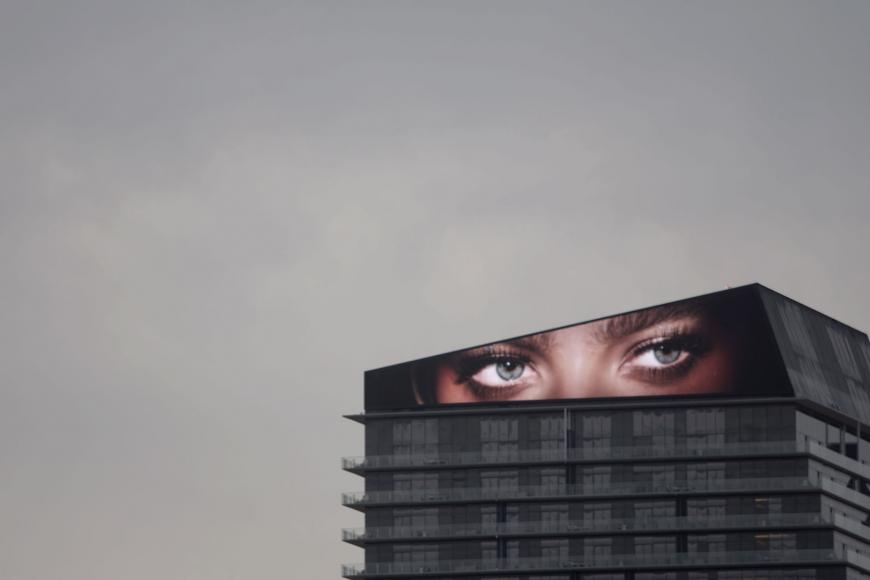
At American high schools, the threat of school shootings has become omnipresent. In addition to regular drills of how to act in case of assault, security forces and metal detectors are now part of everyday life in the schools. In the name of security, a whole industry is busy developing bulletproof hoodies and blackboards, arming teachers and installing ever more surveillance devices. Is this prevention? Or a self-fulfilling prophecy?
While cheerleaders rehearse, basketball teams play and homecoming queens are crowned, adults in the background prepare for the emergency: What to do if a school is attacked – from inside or outside? Behaviour and meditation training to prevent violence in the first place are one thing. More money, however, is spent on armament. The so-called security industry has long entered the school market. Todd Chandler’s restrained observation takes a look at the arms and service industries and the media, at social psychologists as well as teachers. He cleverly focuses not on individual schools and incidents but rather on how a whole system responds to a threat.
Eating dirt and burping with relish – an earthworm refuses to be satisfied with this embarrassing evolutionary outcome for his species. He sets out to learn better things.
Competition for the Audience Award Short Film 2020
Animated Film
USA
2019
10 minutes
without dialogue
Subtitles:
None
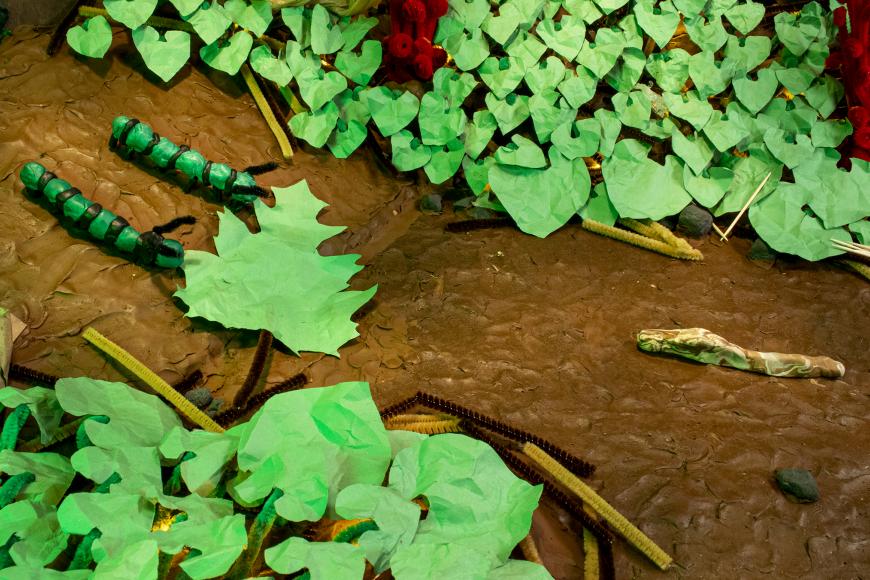
Eating dirt and burping with relish – an earthworm refuses to be satisfied with this embarrassing evolutionary outcome for his species and sets out to learn better things. But imitating many-legged and winged insects does not result in distinguished behaviour but rather leads to mortal danger. Ethan Barrett demonstrates magnificently that clay is the pinnacle of the evolutionary pyramid of animation, especially when it is set to such a light and poignant score.
An unappreciated filmmaker wants to be part of the big industry, sell himself and be bought. A torrent of buzzwords from the beginner’s guide to self-marketing.
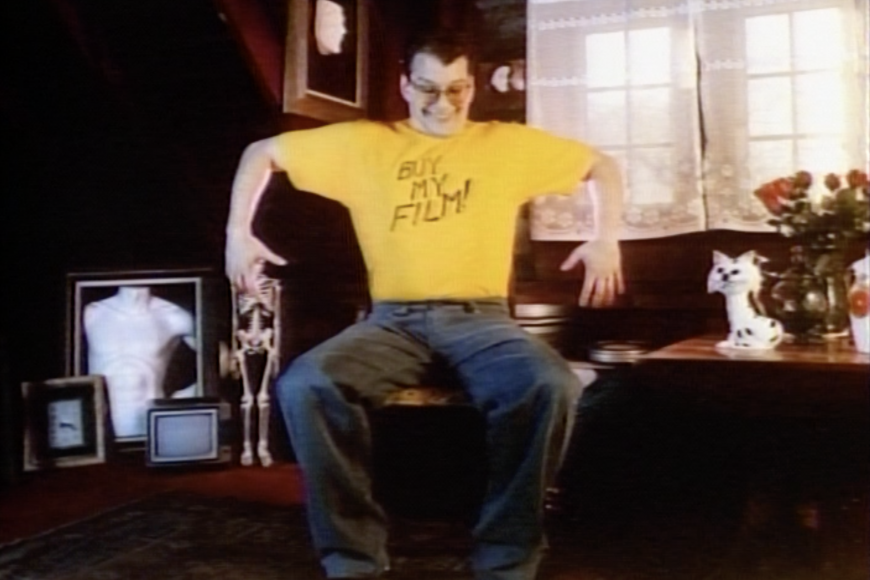
A genius of independent cinema looks back on his hitherto unrecognized work. From now on he will leave this unprofitable art well alone, be part of the big business, sell himself and be bought. A brilliant future seems within reach. A torrent of buzzwords from the beginner’s guide to self-marketing. Burning ambition. Caustic sarcasm. Biting irony.
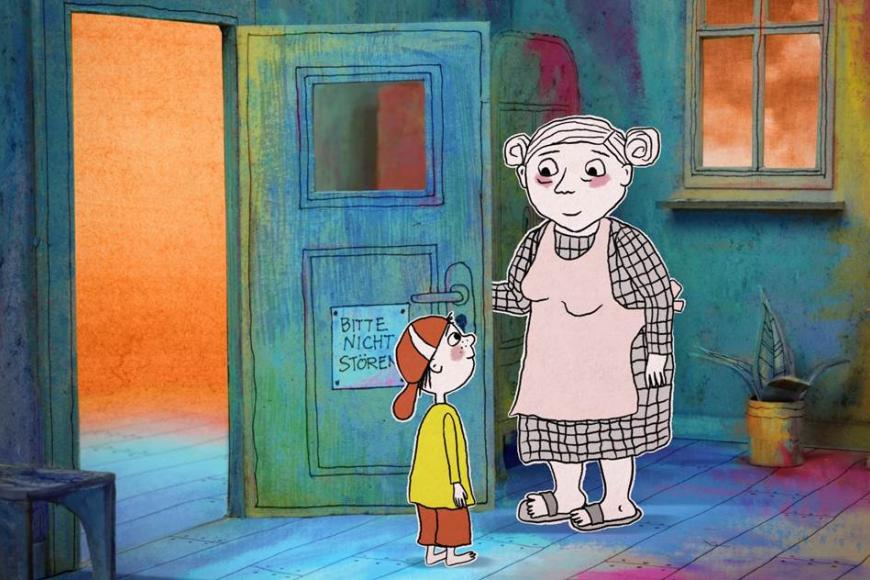
Elise is a timid woman. She’s even afraid of trees. When one day a paper plane sails through her window, she’s so agitated that she hardly sleeps a wink that night. The next morning Emil, a boy in a baseball cap, knocks on her door. He’s looking for his plane and also needs to go to the loo. Suddenly Elise’s life changes in a wonderful way.
Cinematic genealogy: A grandson sets out to document his grandparents’ boundless love but upon closer inspection of the myth is unable to overlook the family rifts.
A young man meets a young woman and both fall for each other. A house is built, children are born, the fairy tale story of boundless love takes its course. A grandson sets out to explore the myth of his grandparents’ romance and tries to honour his deceased grandfather on film, assisted by all the surviving relatives. Not an easy undertaking when things may not have been exactly as the family tradition would have it …
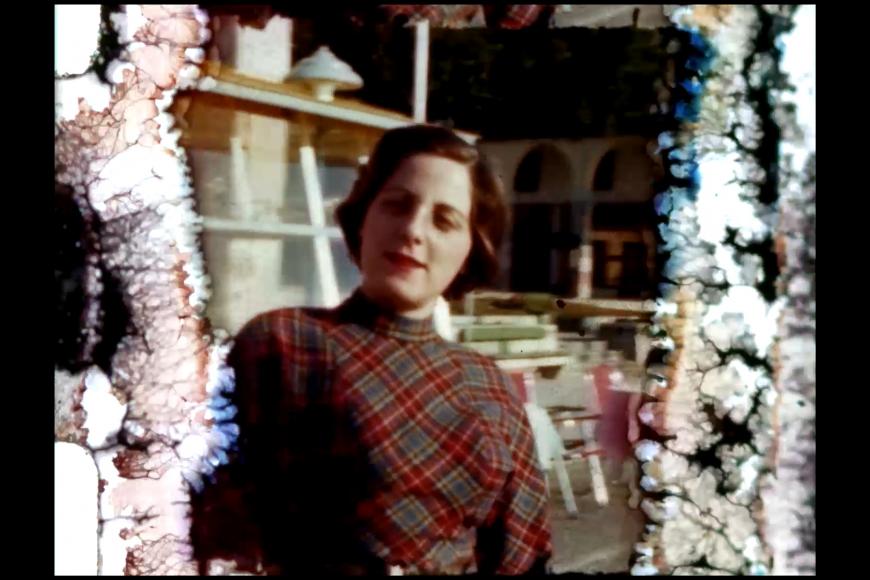
In his search Rocco Di Mento unearths old 8mm home movies, an unpublished novel, various love letters and a whole host of long-suppressed feelings. It’s hardly surprising that this mixture begins to develop a dynamic of its own. Suddenly the issue is no longer only the search for the love of one’s life but also the questions of what holds people together above and beyond their relationship status and degree of kinship and how forgiveness is possible even though you have long since lost faith in it. An ingeniously constructed family constellation full of Italian temperament, in which tension, emotion and truthfulness are inextricably linked. Because: “Even if you leave you will always be part of your family.”
Luc-Carolin Ziemann
Credits
Director
Rocco Di Mento
Cinematographer
Sabine Panossian
Editor
Antonella Sarubbi, Valentina Cicogna, Rocco Di Mento