Film Archive

Filmstill A Year in the Life of the Country

A Year in the Life of the Country

Rok z życia kraju
Tomasz Wolski
Panorama: Central and Eastern Europe 2024
Documentary Film
Poland
2024
85 minutes
Polish,
English
Subtitles: 
English
In the early 1980s, Poland is in a state of emergency. The country’s democracy movement, represented by the free Solidarność trade union, is to be suppressed. To this end, President Wojciech Jaruzelski declares martial law on 13 December 1981. In collusion with the Soviet Union a threatening scenario is staged to justify the “stan wojenny”. As a result, Western nations like Great Britain and the USA impose economic sanctions on the Eastern Bloc state. This produces a complex field of tension in which the Polish population are confronted with existential shortages on the one hand but continue their struggle underground on the other – despite curfews, telephone surveillance and a media system controlled by the military.
In his found footage film, Tomasz Wolski brings the explosive, the everyday and the iconic together to provide an insight into a situation that is as absurd as it is dangerous. The extremely dynamic (and musical) montage illustrates the rapid and convoluted succession of events while at the same time intervening through comments, quite often with a notable sense of humour, for example, when Wolski helps a British news correspondent not always on top of events to a bit of retroactive glory: “Most fundamental is the … Hang on, sorry, sorry, could you … Photography and filming will be widely controlled …”
Carolin Weidner

Credits DOK Leipzig Logo

Director
Tomasz Wolski
Script
Tomasz Wolski
Cinematographer
Tomasz Wolski
Editor
Tomasz Wolski
Producer
Anna Gawlita
Sound
Marcin Lenarczyk
Score
Jerzy Rogiewicz
Nominated for: Leipziger Ring, MDR Film Prize
Filmstill Duck Broth

Duck Broth

Rosół z kaczki
Maria Dakszewicz
International Competition Animated Film 2024
Animated Film
Poland
2024
5 minutes
Polish
Subtitles: 
English
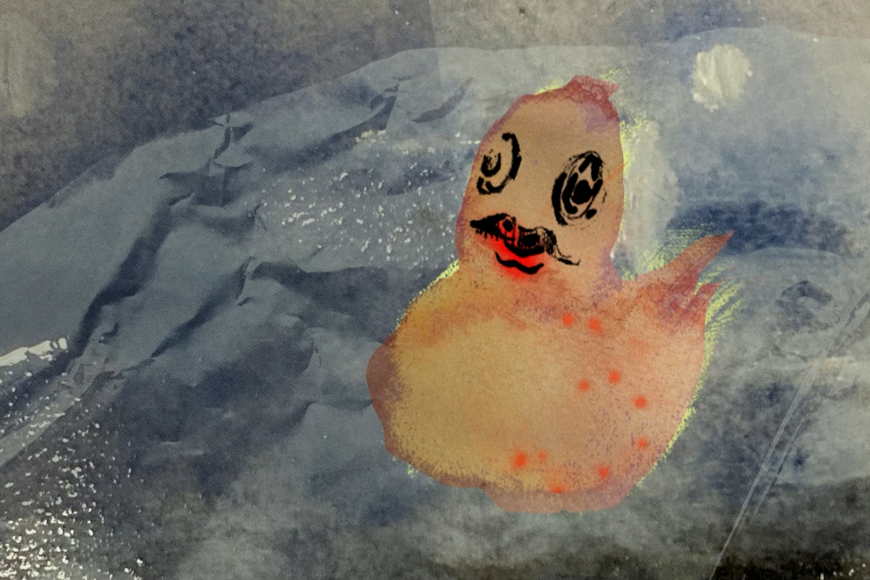
Tunnel vision, dark circles under the eyes and breathlessness – a warm bath will help against the traces of an exhausting night out. If it wasn’t for the small rubber duck, who starts to interrogate you in your hallucinating fatigue. Your crumbled memories return one by one, spiked with accusations. The conversation slips away towards an overwrought, darkly poetic lament about the filth of the night you passed.
Maria Dakszewicz not only invents highly original and apt linguistic images in which “drops of sweat are floating like kebab grease” on the bathwater. Her watercolour-spotted drawings with their rough black lines also bring the taste, smell and seediness of the food stalls you frequented on the way home into the supposedly cleansing domestic hygiene idyll. A darkly humorous hangover where you have to share the bathtub with yourself.
André Eckardt

Credits DOK Leipzig Logo

Director
Maria Dakszewicz
Script
Maria Dakszewicz
Producer
Agata Golańska
Sound Design
Jakub Krzyszpin
Score
Maria Dakszewicz
Animation
Maria Dakszewicz
Production Company
Katarzyna Lipińska
Nominated for: mephisto 97.6 Audience Award
Filmstill Flowers of Ukraine

Flowers of Ukraine

Kwiaty Ukrainy
Adelina Borets
International Competition Documentary Film 2024
Documentary Film
Poland,
Ukraine
2024
70 minutes
Ukrainian
Subtitles: 
English
Surrounded by high-rises, Natalia has created her own, not-so-small paradise: Goats roam free, shrubs and fruit trees bloom, the chickens busily lay eggs. Natalia meets repeated attempts to buy the plot with brusque derision. Even when the city and country are attacked by Russia in the wintry February of 2022, she retains her apparent carefree resistance: While all the lights around go out at night, there is a warm and cozy glow from Natalia’s house. Only Kitty, with whom she lives, expresses concern, organises his flight from Ukraine and prophylactically shows the spots that would be safest in an air raid.
Adelina Borets’ portrait of an incorruptible woman finds its own unique tone, shows a simple everyday life throughout the seasons that presents itself as self-determined and buoyant despite the worsening situation. Borets adopts Natalia’s manner as natural, gives her space. The dimensions of the war unfold step by step, at Natalia’s own pace and by skilful cuts and pans. “Flowers of Ukraine” is a film about a disaster. But it is also a love song to life – and pickled tomatoes.
Carolin Weidner

Credits DOK Leipzig Logo

Director
Adelina Borets
Script
Adelina Borets, Marta Molfar, Glib Lukianets
Cinematographer
Bohdan Rozumnyi, Bohdan Borysenko
Editor
Agata Cierniak, Mateusz Wojtynski, Ganna Iaroshevych
Producer
Natalia Grzegorzek, Glib Lukianets
Co-Producer
Jedrzej Sablinski, Rafal Golis
Sound
Denys Kashchei
Sound Design
Oleg Kulchytskyi, Volodymyr Dubas
Nominated for: FIPRESCI Prize, Prize of the Interreligious Jury, Leipziger Ring, Silver Dove, MDR Film Prize
Doc Alliance Award 2024

In Limbo

Alina Maksimenko
Ukraine, February 2022. The filmmaker flees to her parents’ house on the outskirts of Kyiv, where they live in an unbearable and inherently self-destructive limbo.
Filmstill In Limbo
Filmstill In Limbo

In Limbo

W zawieszeniu
Alina Maksimenko
Doc Alliance Award 2024
Documentary Film
Poland
2024
71 minutes
Russian,
Ukrainian
Subtitles: 
English
February 2022, the beginning of the Russian war of aggression on Ukraine. When the fighting comes closer, director Alina Maksimenko flees from the district capital of Irpin north-west of Kyiv to her parents’ home in the countryside, where she gets stranded with her cat and her camera. It would be better to move even farther away, beyond the border, to be really safe, the daughter urges. Nonetheless, they decide to stay – hoping for the situation to get calmer on the one hand, trusting in the remoteness of their village refuge on the other.
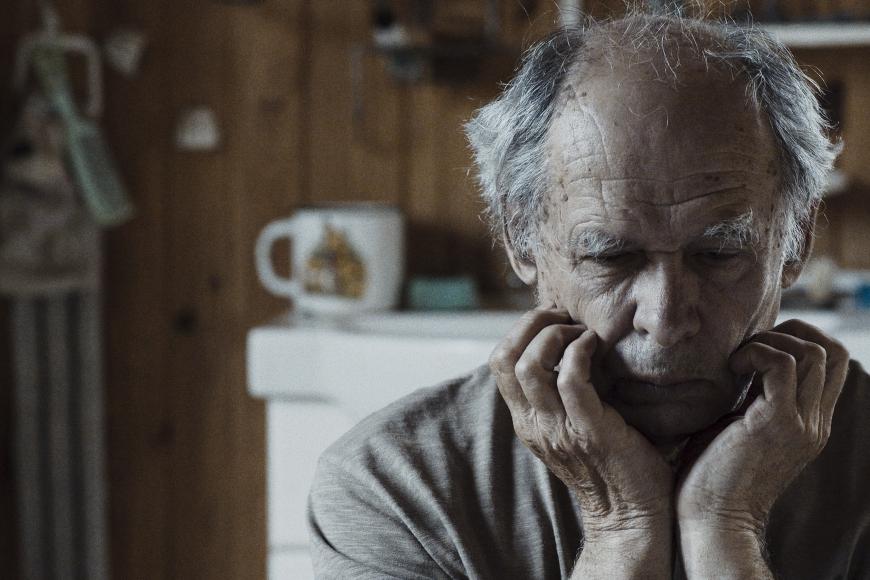
The three of them hold out in an increasingly empty village. Fear spreads, tiredness. The parents refuse to change anything about their usual routines. It is an unbearable limbo that is inherently self-destructive. They try to hold on to their everyday life as best they can. Father Tolya takes care of the animals in the neighbourhood; dozens of abandoned cats gather at the front door every day. Meanwhile, mother Tetyana gives piano lessons over the phone, unless the mains is down again. And Alina, the daughter, makes a film. She is not interested in the fighting. Rather, her documentary of those first weeks of war is a minutely detailed portrait of waiting. The eye is on a microcosm where survival is in question, which makes it universal.
Lina Dinkla

Credits DOK Leipzig Logo

Director
Alina Maksimenko
Script
Alina Maksimenko
Cinematographer
Alina Maksimenko
Editor
Feliks Mamczur
Producer
Katarzyna Madaj-Kozłowska
Sound
Joanna Napieralska, Siergyi Chegodayev
Sound Design
Joanna Napieralska
Score
Vladimir Tarasov
Nominated for: MDR Film Prize
DOK Neuland 2024

Minitourism

Jan Grabowski
See the Sphinx, Ancient Rome and the Eiffel Tower all in one day. This 360° film plays with scaling and engages with our ideas of world-building and virtual reality as a medium.
2023
Filmstill Minitourism

Minitourism

Minituryzm
Jan Grabowski
DOK Neuland 2024
XR
Poland
2023
8 minutes
Polish
Subtitles: 
English
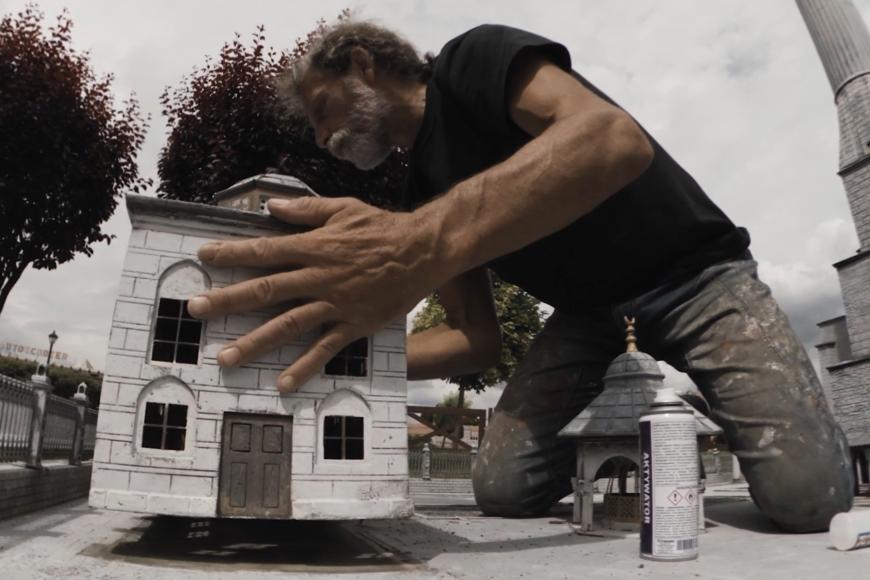
See the Sphinx, Ancient Rome and the Eiffel Tower – all in one day! This 360° film is a visit to a miniature park and to the work of the Creator who builds it. By toying with our sense of scale, “Minitourism” engages with ideas of world-building and virtual reality as a medium. Both playful and contemplative, it invites us to consider the ways we build our world.
Dana Melaver

Credits DOK Leipzig Logo

Director
Jan Grabowski
Editor
Jan Grabowski
Producer
Jan Grabowski
Sound
Zuzanna Kofta, Jan Piasecki
Concept
Jan Grabowski
Key Collaborator
Robert Gadziński, Zofka Kofta
Retrospective 2024

Refrain

Krzysztof Kieślowski
Even in death, you can’t get rid of bureaucracy! In the day-to-day business of a Warsaw funeral parlour, mourning is mired in paperwork, routine and triviality.
Filmstill Refrain
Filmstill Refrain

Refrain

Refren
Krzysztof Kieślowski
Retrospective 2024
Documentary Film
Poland
1972
11 minutes
Polish
Subtitles: 
English
It is said of Krzysztof Kieślowski that he did not see himself as a political filmmaker. At least this early documentary casts doubt on this, for it depicts the cold stranglehold of bureaucracy. The setting is a municipal funeral home in Warsaw. Phone calls are made, documents checked and stamped. Business runs like clockwork, from the cradle to the grave.
Leipzig naturally maintained ties with older Polish documentarists like Jerzy Bossak, even after he relocated to Denmark. The fact that Kieślowski and other notable Polish film artists of his generation did not appear in the programmes before 1990 fits into the image of a life consumed by pettiness painted here. The real issue was probably animosities with the festival in Cracow.
Sylvia Görke

Credits DOK Leipzig Logo

Director
Krzysztof Kieślowski
Cinematographer
Witold Stok
Editor
Maryla Czolnik
Producer
Wytwórnia Filmów Dokumentalnych
Sound
Michał Żarnecki, Małgorzata Jaworska