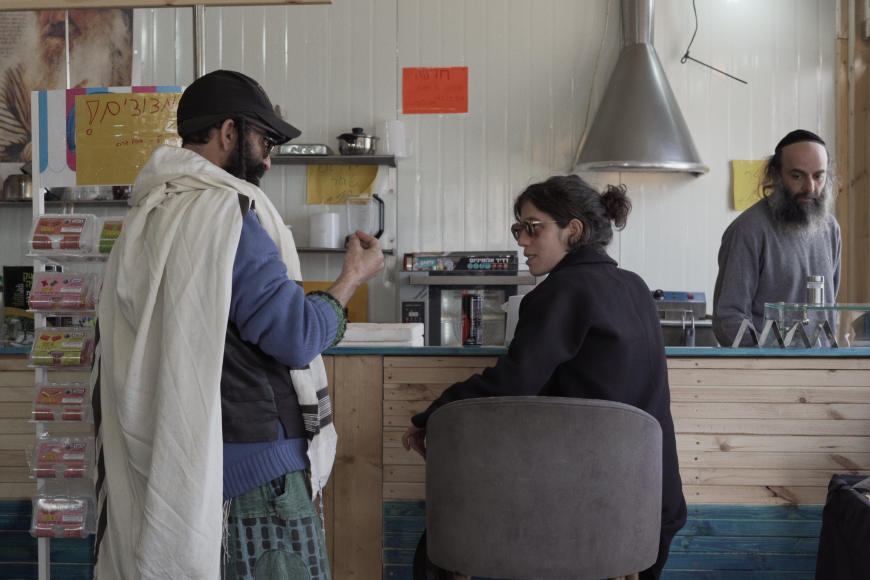
Maya Steinberg is a secular Israeli. Her father, however, had a late religious awakening. He will not appear in her film. Instead, the young director approaches his faith and her lack of understanding for it through a visit to the gravesite of rabbi Shimon bar Yochai in Galilee, where she spends a few weeks, observing believers, Orthodox and ultra-Orthodox, and wondering: Is there a place here for women? And can there be a place for queer women?
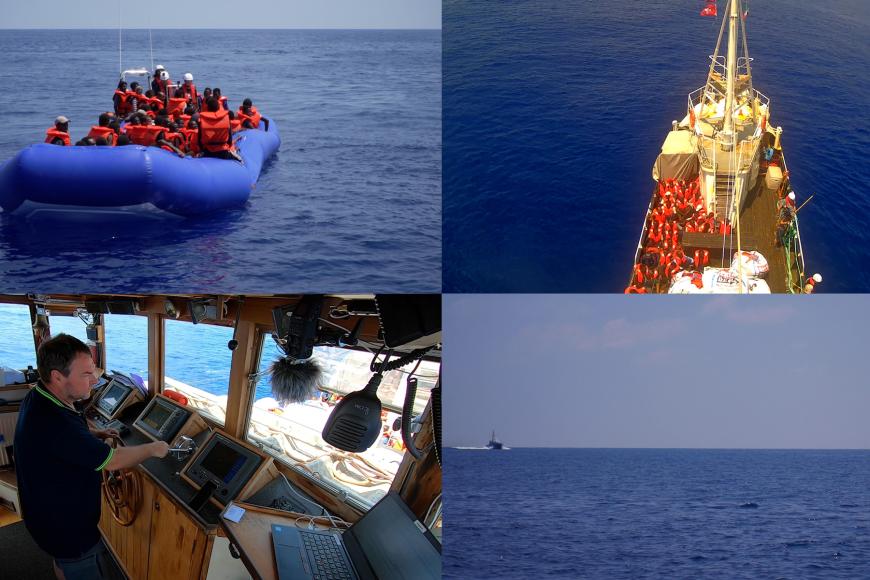
The rescue of 104 castaways in the Mediterranean, person by person, step by step, in a real time documentary. Help against the clock – and the organised ignorance of the authorities.
The deadliest refugee route in the world claims thousands of lives every year. In the first half of 2023 alone, almost 2,000 people died in the Mediterranean because the European Union’s border policy systematically violates existing laws. Instead of helping shipwrecked persons, Frontex practices illegal pushbacks, finances the violent operations of the Libyan coast guard and takes massive action against private sea rescue missions that act where the EU fails. All this has been documented in the media and yet remains incomprehensible to all who were never forced to live through this situation themselves: How can one deny assistance to hundreds of people in peril of life, even threaten and criminalise the civilian helpers?
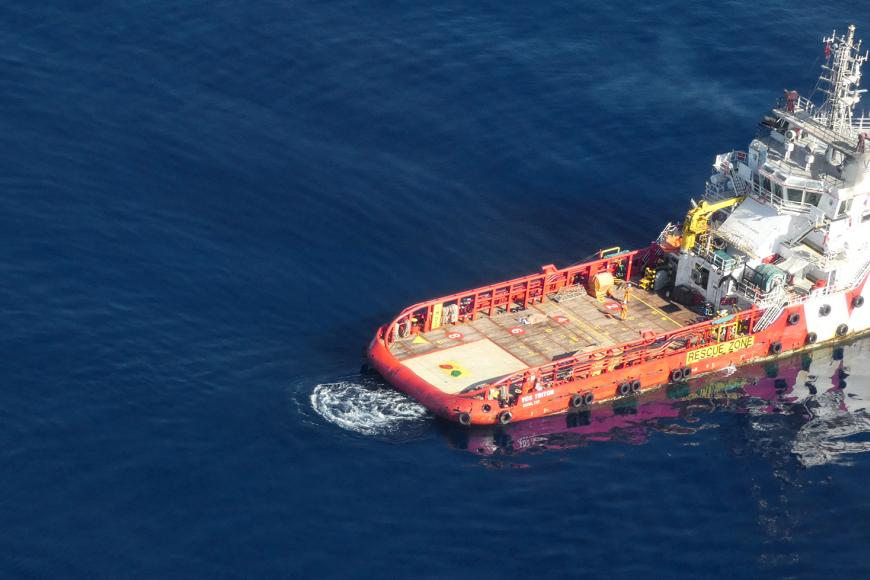
Jonathan Schörnig was concerned with this dilemma of lack of perception and decided to bring a sea rescue to the screen as a real time documentary to show how agonisingly long it takes to rescue 104 persons from a sinking rubber boat. One by one, step by step, the film follows the action with several parallel cameras. When the Libyan coast guard turn up, the situation comes to a head. The rescued persons and the crew are stuck on the high seas for days because no Mediterranean country gives them permission to dock. It is only after a heavy storm that one port takes pity on them. What sounds like a bad script is actually – daily – reality.
Luc-Carolin Ziemann
Credits
Director
Jonathan Schörnig
Cinematographer
Jonathan Schörnig, Johannes Filous
Editor
Jonathan Schörnig, Moritz Petzold
Producer
Uwe Nitschke
Co-Producer
Adrian Then
Winner of:
Goethe-Institut Documentary Film Prize,
Golden Dove Feature-Length Film (German Competition),
Leipziger Ring,
ver.di Prize for Solidarity, Humanity and Fairness
A tour of a computer-generated desert landscape and a story of failure: The first casino in Palestine opened in 1998, only to close down again very soon.
A virtual tour of a computer-generated desert landscape and a story of failure: In 1998, the “Oasis”, Palestine’s first casino, opened. The peace-making idea associated with this development project lost out against political reality. Game over – the oasis becomes a multifaceted fata morgana of interviews with employees, operators and guests.
A camera roams incessantly through an apartment and a life without any particular hallmarks. Sound and animated interventions portray family bliss and unhappiness, quarrels and separation, age and death. Radio news open the window a little to what is going on in the world outside. The constantly changing interiors tell of people who were at home here without ever showing them.
A gloomy filmic contribution to sea rescue and a concentrated revelation of the mechanisms of systematic flight prevention in the Mediterranean and the people responsible for it.
A person swims for their life in the open sea. A European merchant vessel starts its engines and sails away from them. The pilot of a civilian aerial reconnaissance plane admonishes the captain and appeals to his conscience. The Libyan coast guard and the swimming person reach the decks of the European merchant vessel at the same time. Outcome unknown. The world turns in circles. This is not a film about the alleged refugee problem but one about the problem called Europe.
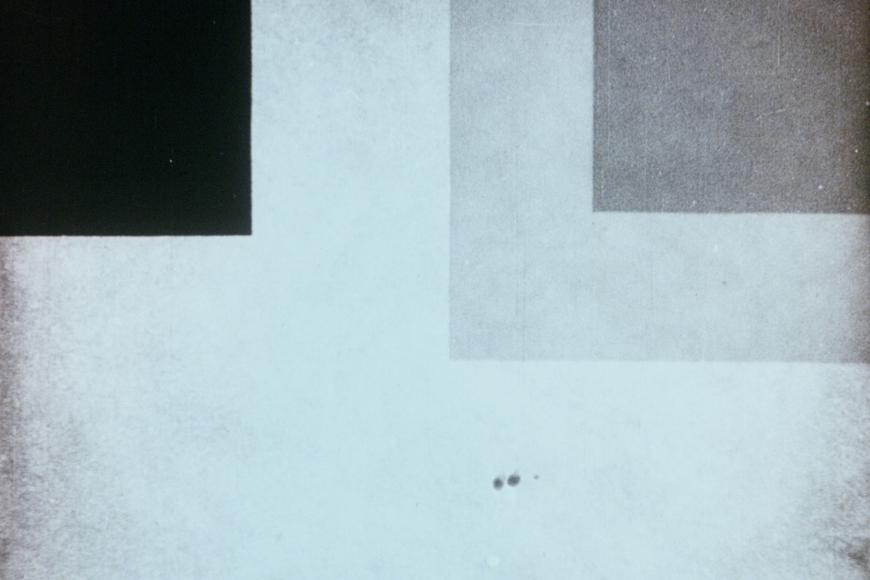
The painter Ruttmann takes out a patent for a process to produce moving image: glass sheets mounted on top of each other are painted with oil paints and photographed from above with a camera.
Like many artists of his time, Walter Ruttmann discovered film as a medium of experimentation with revolutionary forms of expression. He gave up easel painting in 1918 and acquired the first German patent for an animation stand in 1920, thus creating the technical prerequisites for his “Opus” series: abstract elements of painterly gestures and cardboard moved by stop-motion.
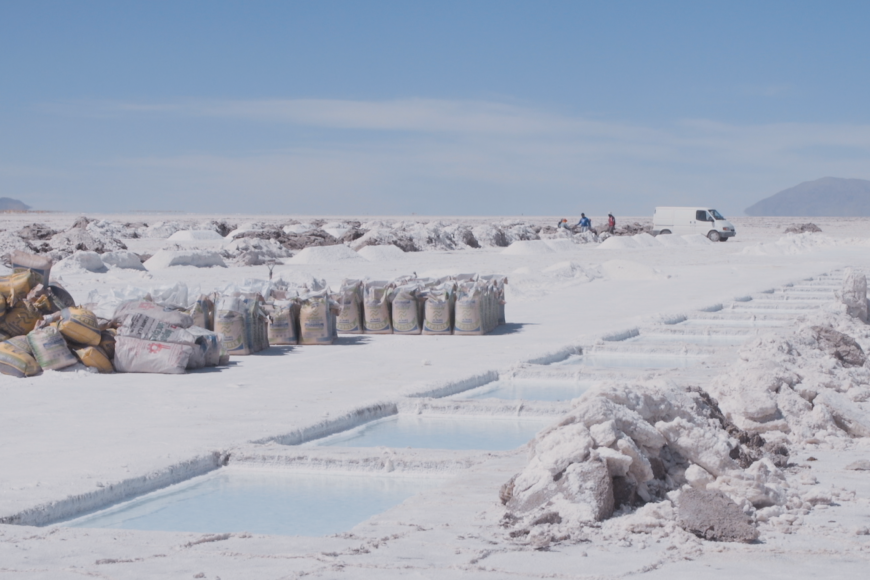
The downside of e-mobility: Because big corporations are mining lithium for batteries in the Argentinian salt deserts, the indigenous population have no water to live.
The vast expanses of the Argentinian salt deserts hold one of the greatest lithium deposits in the world. International corporations are mining the “white gold”, robbing the indigenous groups who, since time immemorial, have bred llamas and lived on traditional salt-mining in this area, of precious ground water. In magnificent images and with a narrative approach that combines poetry and agitprop, “Oro Blanco” shows how the indigenous population are fighting against the exploitation and destruction of “pacha mama”. Their resistance needs some heightened awareness on the other side of the world, where lithium batteries are all too often regarded as the cure-all against the use of fossil fuels.
A video game takes some entertaining and philosophical wrong turns: the tennis player slides from the centre court into a parallel world. A search for identity outside the rules of the game begins.
Competition for the Audience Award Short Film 2020
Animated Film
Germany
2020
15 minutes
English
Subtitles:
English
A video game takes some entertaining and philosophical wrong turns: the tennis player figure slides from the centre court into a parallel world and is robbed of his racket. The quirky “Pong” setting gradually evolves into the course of a desperate search for identity outside the rules of the game. The pathetic polygonal Roger Federer stumbles over glitches. Rowdy supporting characters offer first harassment, then help. The design, this undead relic from the past of games, is a subversive fellow player.
Our Little Sandman: The Journey to the Dream Sand Mill
Stefan Schomerus
A brand-new anniversary episode: When the Sandman’s bag gets torn, all the dream sand trickles out – except for one grain, which helps him find his way to the dream sand mill.
Our Little Sandman: The Journey to the Dream Sand Mill
Unser Sandmännchen: Die Reise zur Traumsandmühle
Stefan Schomerus
Kids DOK 2024
Animated Film
Germany
2024
20 minutes
German
Subtitles:
None
We celebrate the Sandman’s 65th anniversary! To mark the occasion, a brand-new episode is released in which little Sandman travels the country in his multi-mobile. But there is a mishap when he gets out: The bag of dream sand gets torn and the sand trickles out. The way to the dream sand mill is not easy to find. Quite a number of stages must be negotiated to reach the destination.
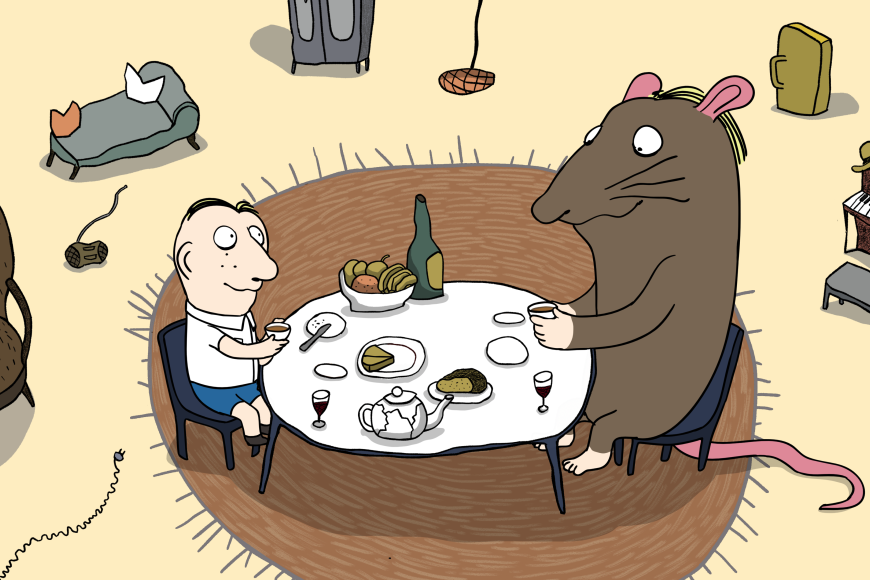
A huge, cheeky rat has moved in with the little man and makes itself at home. One day he angrily throws it out. But then he realises how empty and lonely everything is without it.
A huge, cheeky rat has moved in with the little man. It whistles to the music from the radio, helps itself from the fridge without asking, splashes in the bathtub and is simply everywhere – loud, annoying, just too much. When it suddenly disappears, the little man realises that the apartment has never been so quiet – and so empty. A heart-warming adaptation of Nadia Budde’s eponymous picture book.