In the small Sicilian town of Siculiana, people place their fate in the hands of a black Christ, but do not totally trust the African refugees living nearby.
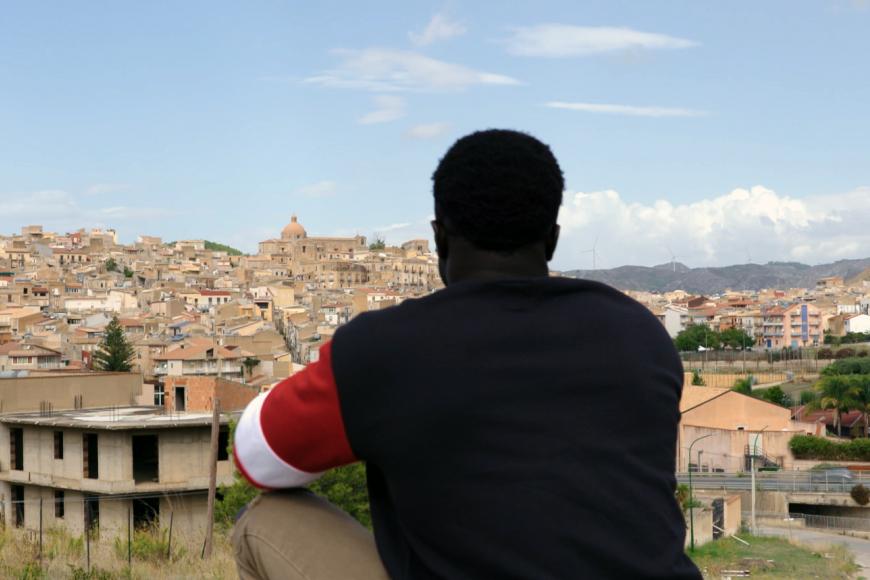
In Siculiana, a small Sicilian town full of flaking facades, religiosity is lived out as a matter of course. And of course the figure of Jesus Christ worshipped here is black, and always has been. However, some people cannot get used to their dark-skinned neighbours in the refugee camp. The camera accompanies locals and stranded people along their paths, which often lead to the church, but not necessarily together, and draws a kind of map of the city in black-on-black contrasts.
It’s become quiet in Siculiana, a local says. He’s not referring to the loud demonstrations against the Villa Sikania, now converted into a refugee reception camp. And certainly not to the colourful flurry of activity that grips the city every year as the faithful prepare for the feast of the Finding of the Cross. That’s when they hang up the “Benvenuti” sign. But who exactly is welcomed here? The pomp and circumstance of the festivities are at the centre of this filmic portrait of a community in which the alleged common ground is disintegrating into voice and skin tones: between the black people from abroad and the black man on the cross who – according to an elderly lady – was forced to “darken” himself in order to incorporate human sins. Between an aging city stylised to the point of becoming scenery and God’s newly arrived children who promise a future and who could bring new life into the alleys.
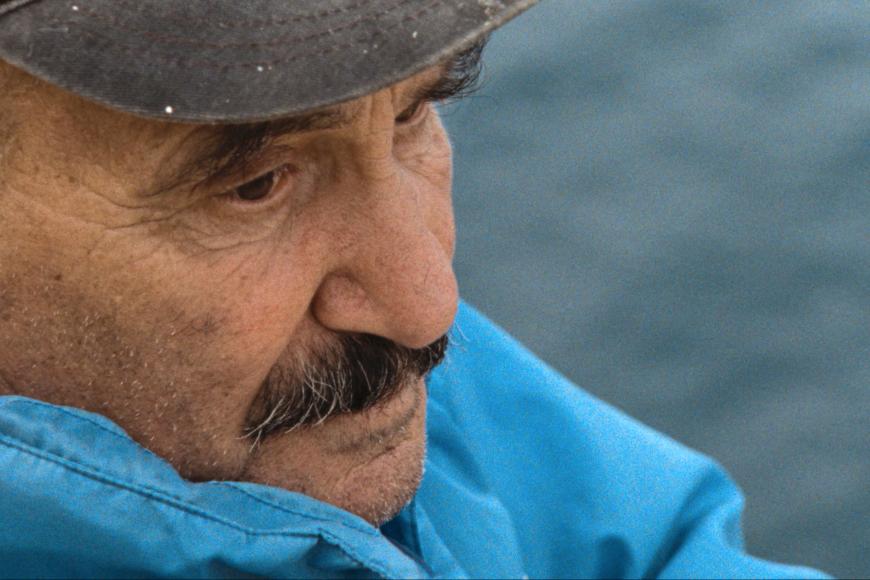
Punta, a moustachioed Maltese, weaves a traditional fish trap. As always, waves crash on the rocks, but the times when you could earn a living by fishing here are long gone.
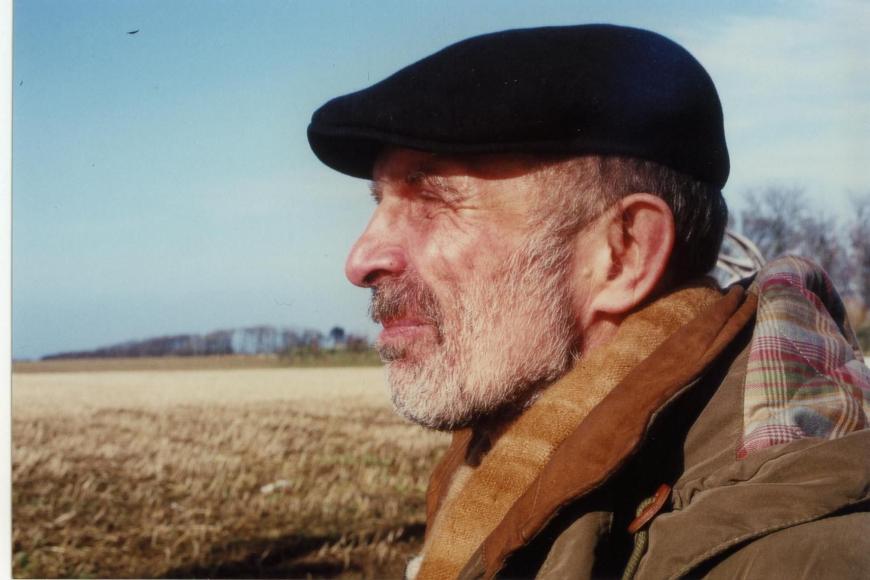
The camera calmly explores the holes and fissures of a cliff face, the traces of the ocean. The austere landscape seems to have fallen out of time. Only a few decades ago, fishermen threw their trap baskets into the water from here. Today, the sea around Malta has long been fished dry. Punta, a moustachioed islander, wants to have one more go. A weir is woven from the hairs of a horsetail, a forgotten craft is demonstrated. An intercut Super 8 film documents the diversity of marine life in the past; its grainy images radiate something irretrievable. An octopus curls around a foot, a jellyfish floats through the eternal blue. Punta gazes melancholically at the sea, far beneath him the waves are crashing against the rock as they have always done. And yet the sight is deceptive, because he and we know that no fish will ever stray into his weir. The rough singing of a woman’s voice begins.
In 1940, two friends who grow up like brothers rescue horses destined for war in Sardinia. Only one of them will survive. An equally dark and poetic animation.
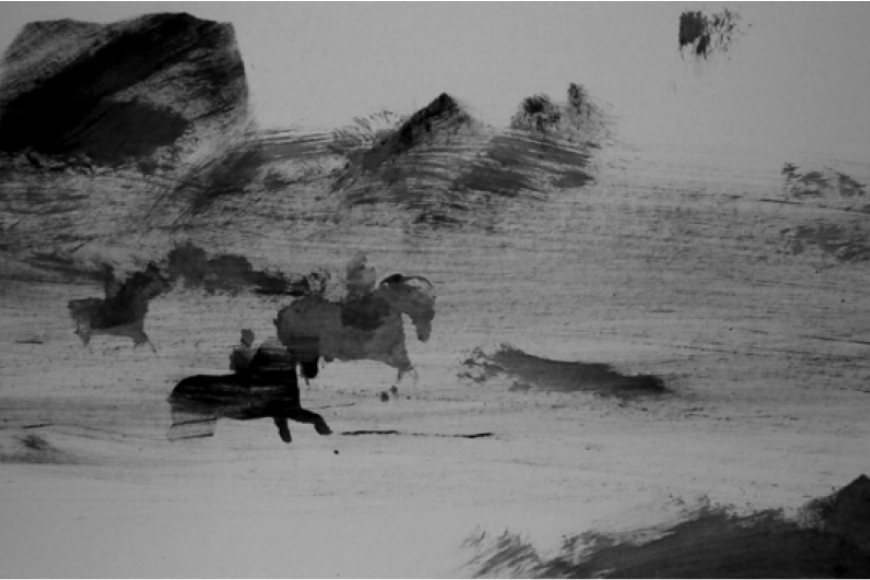
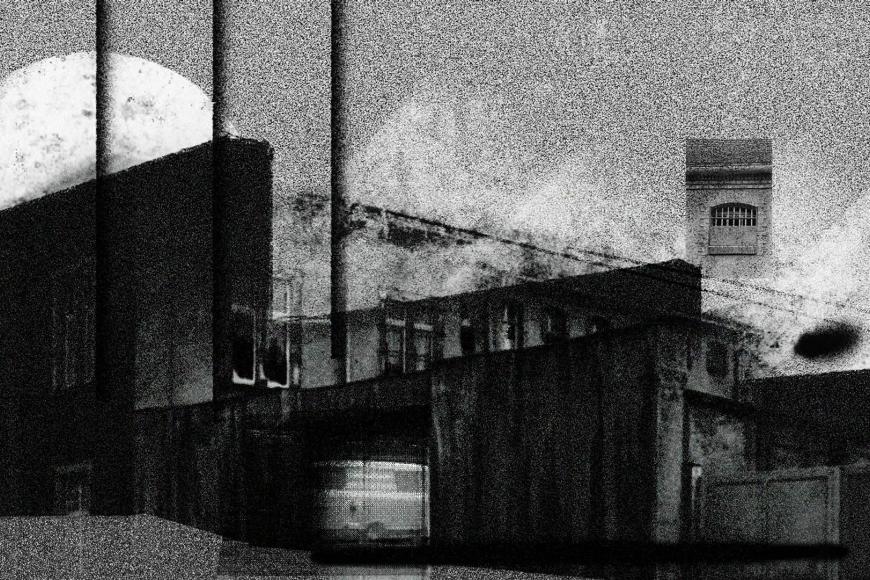
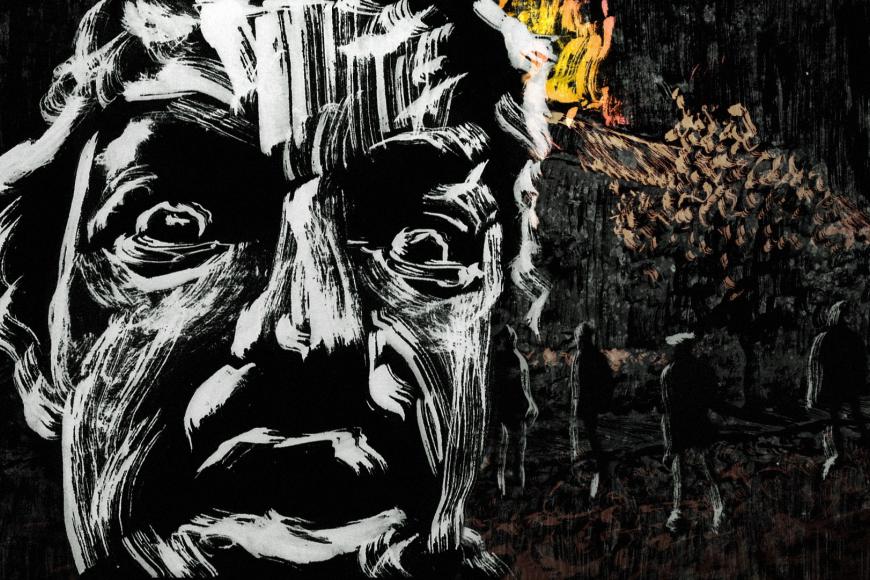
Sardinia, 1940. The harmless term “horsing around” takes on a very serious and ultimately tragic meaning for 14-year-old Michele and his 11-year-old friend Ventura. When they learn that the peasants have sold their best horses for serious money to the state and thus to the military for the approaching war, the two boys take a decision that is as naïve as it is intuitive: They free the herd in a daring nighttime operation. Their happiness is short-lived. Betrayed by a villager, they are caught on the way home and Ventura is shot dead. A senseless death? Or a sign of special bravery, as the ambiguous Sardinian film title suggests? Director Giovanni Columbu, a Sardinian himself, has dedicated his late animation debut to his grandmother who once told him the story. He took the liberty of adapting it with brushstrokes on paper, his style drawing primarily on the charms of historical painting schools, animation techniques and cinema genres. Columbu’s associative visual language, marked by shades of black, white, and grey, is animated by impulsive hatchings, countless dots, and generous elisions. The soundtrack, too, sets rather sparse nuances – subtle illustrations that draw on Sardinian cultural traditions while opening a space for universal metaphors.
Andreas Körner
Credits
Director
Giovanni Columbu
Script
Giovanni Columbu
Editor
Giovanni Columbu
Producer
Giovanni Columbu
Co-Producer
Flavia Oertwig
Score
André Feldhaus, Filippo Ripamonti, Alessandro Olla, Hans Zeller, Pietro Mascagni
The pioneer of electronic living-room pop works on her new album. Step by step, the intimate experiment goes public. Music becomes a shared safe space.
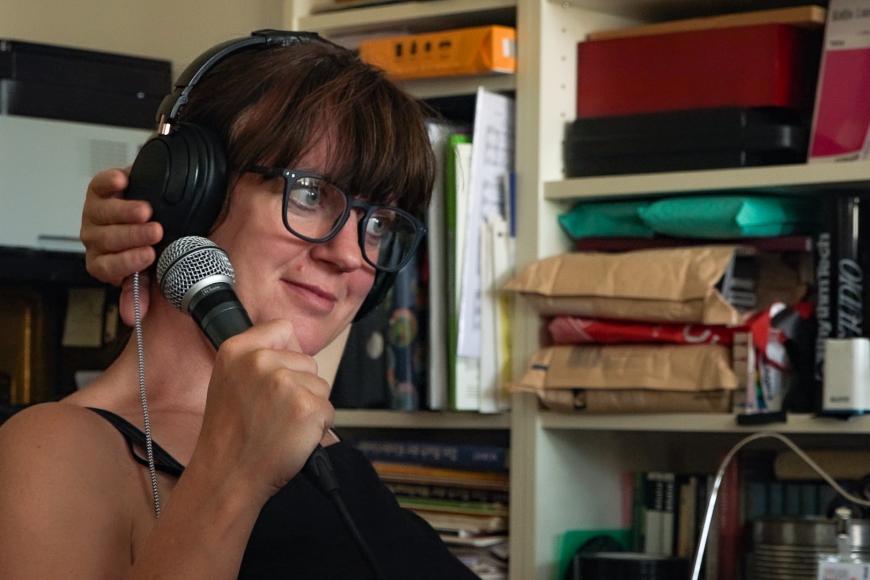
For the first time in six years, Barbara Morgenstern, pioneer of German-style electronic intimate pop, works on a new album. Her laptop sits on a shoebox, in the privacy of her home she finds first lines and harmonies: “I like to be alone,” one song begins. One by one, musicians join her. Intuitive ideas take shape. A window has opened. Arrangements, rehearsals, recordings follow. Step by step, the music enters public space, images are produced, videos, narratives. Questions arise: New beginning or back to the roots? New Biedermeier or tough political comment? The bigger the band, the riskier the booking. The more crisis-ridden the environment, the more comforting the music-making. Sabine Herpich shows the creation of a pop album as a working process. Her view is as unpretentious as her protagonist, her quiet observation not interested in story and glamour, but in closeness and comprehension. We understand why someone works as an artist, even if it is never explained. Barbara Morgenstern shares what moves her: “Labour of love / for the rest of the earth / I’m more than certain / that this still has worth.”
Jan Künemund
Credits
Director
Sabine Herpich
Script
Sabine Herpich
Cinematographer
Sabine Herpich
Editor
Sabine Herpich
Producer
Tobias Büchner
Sound
Sabine Herpich, Tobias Büchner
Sound Design
Dominik Avenwedde
German Distributor
Jürgen Pohl
Nominated for:
VER.DI Prize for Solidarity, Humanity and Fairness
The spy who came in from Mittenwalde: Berthold Barluschke, employed by both the East and West German secret service, arms dealer, family man and professional impostor in a psychogram about identity and morals.
Identity is a myth. Berthold Barluschke, an ambitious cog in the GDR foreign trade system, has changed names and roles multiple times. Thomas Heise follows him as he moves house. He once went from Mittenwalde to New York, now he is leaving his family in Paris. A polyglot secret agent with a petty bourgeois background. Barluschke worked for the GDR secret service and the West German Federal Intelligence Service, always anxious to get the most out of it for himself. “What should really be talked about?” the filmmaker asks. The impossible endeavour of getting to the professional impostor using the means of documentary film results in one of the freest, most fragmented works in Heise’s oeuvre. Awarded the Silver Dove at DOK Leipzig but rarely screened since.
In 2019, alliances between anarchic and civil resistance groups were formed in Dannenröder Forst in Hesse. Together they defended trees against the police.
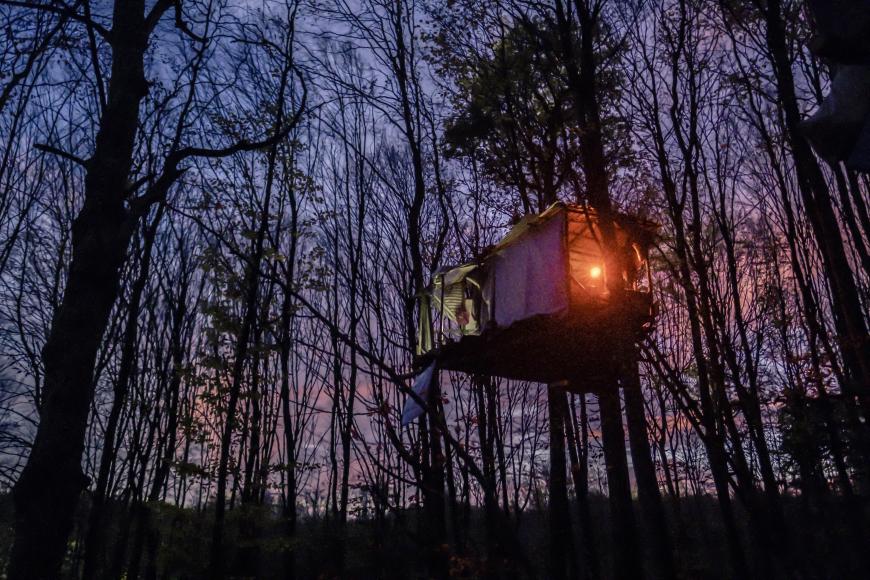
Tree sitting is an important part of climate activism. The “occupation” of Dannenröder Forst in 2019 was meant to prevent its clearance for a highway. The people holding out in the airy heights of their tree houses were dependent on support and supplies from the ground. This help came from locals who would never have dreamed of being part of a resistance movement before. David Klammer’s film shows how brand-new alliances are formed in the face of environmental and climate destruction while realising how powerless words are. These alliances could last – even if the trees, like those in the “Danni”, fall victim to the chainsaws in the end.
Thinking about thwarted migration, exploitative systems, the threadbare glamour of mass tourism in lockdown. Cruise ships lie in the harbour, film footage fades.
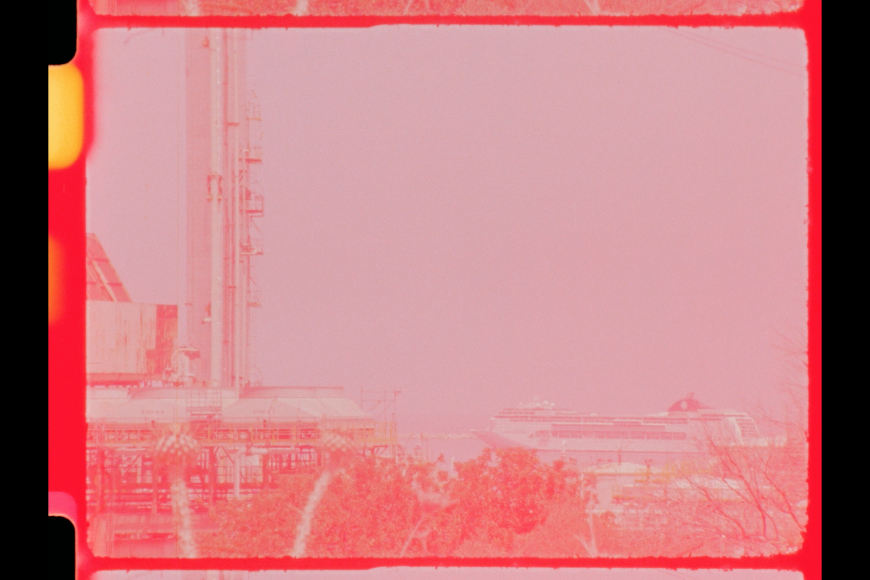
The world stands still. Gaudily painted cruise ships lie in the oil port of Augusta on the south-east coast of Sicily. Their lustre fades a little more every day. On the scorched, tinged 16mm film stock they seem as unfit for the future as the refineries visible behind them. When, if not in the early summer of 2021, would the time have ever been riper for reflection and reassessment?! Old, exploitative economic systems that keep people away from Europe and let only raw materials enter are in lockdown. Their future is unimaginable. But is there a way back? To the gentle sound of the waves, the birds and the insects, the smoke of the industrial plants wafts back into the chimneys. But the images have been damaged.
Sorbian life in Lusatia, today. Encounters with a population who are reclaiming their identity, language and culture out of the local museums into present-day Federal Germany.
Bei uns heißt sie Hanka / Pla nas gronje jej Hanka / Pola nas rěka wona Hanka
Grit Lemke
German Competition Documentary Film 2023
Documentary Film
Germany
2023
92 minutes
German
Subtitles:
English
A green lawn like an unused carpet, encircled by a neat forest edge, in the background the steaming cooling towers of a coal power station – impressionistic camera images from Lusatia. They summarise in one pan how a used-up utilitarian landscape is trying to recultivate itself. Can ancient identity and language be re-discovered amid this strange artificiality? The director travelled through this region in search of her origins. She was born here, in Lusatia. This is her home and that of the smallest of all Slavic peoples: the Sorbs.
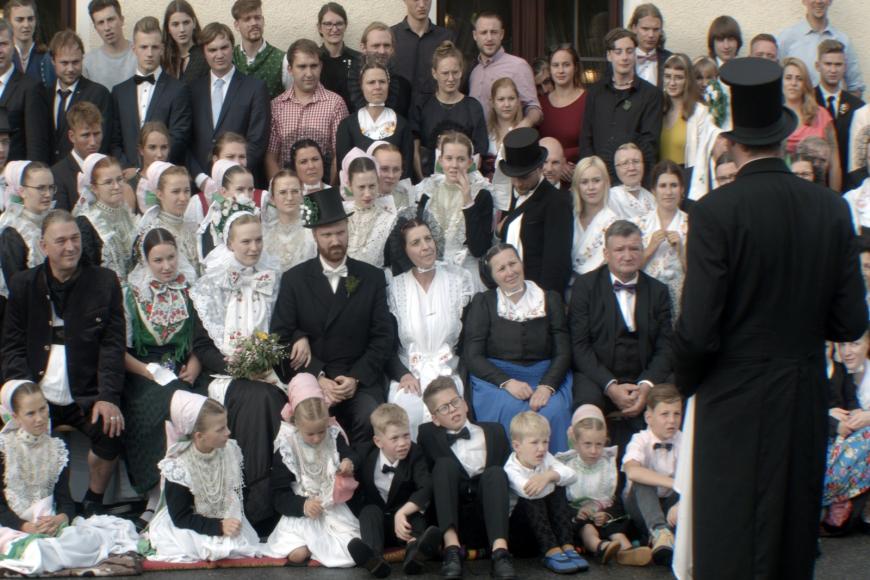
She thinks about the assimilation of this cultural and linguistic community with the indigenous people, about its history of oppression in the various German systems, about a region caught up in structural change and the identity-shaping power of words – even if one has to learn them anew first. She meets a German Anna who becomes a Sorbian Hanka. She encounters people dedicated to preserving the traditions. The younger folks especially see their Sorbian-ness as a commitment to a community spirit, if not – like the artist, Hella – as an alternative way of life. Accompanied by old and new Sorbian sounds, along the filmmaker’s offscreen reflections, the many-voiced portrait of a nation within the nation emerges who reclaims its culture out of the local museums back into its everyday life.
Sylvia Görke
Credits
Director
Grit Lemke
Script
Grit Lemke
Cinematographer
Uwe Mann, Martin Farkas, Reiner Nagel
Editor
Sven Kulik
Producer
Annekatrin Hendel
Co-Producer
Thomas Beyer, Roman Nuck, Rolf Bergmann
Sound
Oliver Prasnikar
Sound Design
Michael Kaczmarek
Score
Walburga Walde, Izabela Kałduńska
Nominated for:
Gedanken Aufschluss Prize,
Goethe-Institut Documentary Film Prize,
DEFA Sponsoring Prize,
VER.DI Prize for Solidarity, Humanity and Fairness
This animated documentary with reduced imagery portrays the protagonist’s traumatic experiences in the GDR’s residential care system and the Torgau Closed Juvenile Detention Centre.
Because his single mother criticised the state, Alex was sent to a special children’s home at the age of eleven, in order to shape him – like almost 500,000 children in the GDR – into a “socialist personality”. He escaped and ended up as a punishment at the Torgau Closed Juvenile Detention Centre, more prison than social institution. His life was now dominated by military drill and violence … Reduced rotoscope images follow Alex’s memories and show how the trauma affects him even today.
Luc-Carolin Ziemann
Credits
Director
Falk Schuster, Mike Plitt
Script
Mike Plitt
Cinematographer
Falk Schuster
Editor
Julian Quitsch
Producer
Max Mönch, Alexander Lahl
Sound
Hannes Schulze
Score
Hannes Schulze
Animation
Julian Quitsch, Alexander Schmidt, Falk Schuster
Nominated for:
Gedanken Aufschluss Prize,
mephisto 97.6 Audience Award
A ten-day canoe trip on northern German waters is a test for granddaughter Astrid, her brother and her dementia-suffering grandmother. The prerequisite: re-adjusting every single minute.
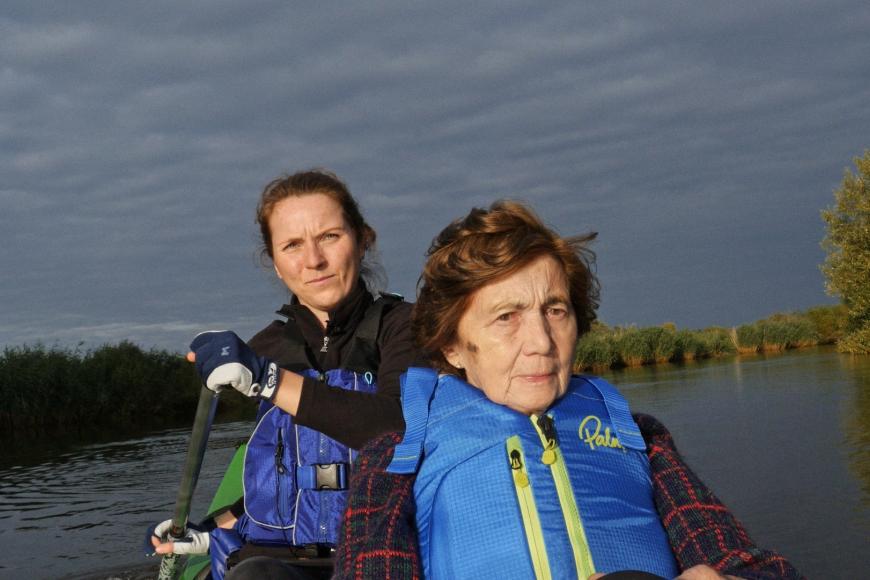
Grandma has become a little doddery. And since the death of her husband, called E.O., ever bigger gaps have opened in her memory, and her disorientation has increased. Director Astrid Menzel makes a decision: to take a ten-day canoe trip on northern German waters with her brother and the 86-year-old lady. An adventure whose outcome is uncertain and which the three travellers have to face anew at every stage.
Looking at the sky, watching the changing cloud formations, being all there. Things that Astrid Menzel’s grandmother finds easier as her dementia progresses. Horses and beds are recognisable up there, and sometimes there are thoughts of the late E.O. A chain of disintegration has been set in motion: The beloved house has become confusing, a home for grandma is being searched, the relatives feel nagging guilt. The granddaughter Astrid feels the need for action. Gently and with endless patience, she involves the elderly lady in the preparations and organisation of a canoe trip that would be a challenge for any beginner: Travelling on the river day in and day out, a different sleeping place almost every night. Old and young are trying to find strategies of interaction. Rummikub matches and writing a travel diary anchor them, but emotional breakdowns, too, are part of the endeavour.
A group of figures made of beads and building blocks move to the same rhythm – until the little green figure is to wear beads, too. Everything gets out of sync.
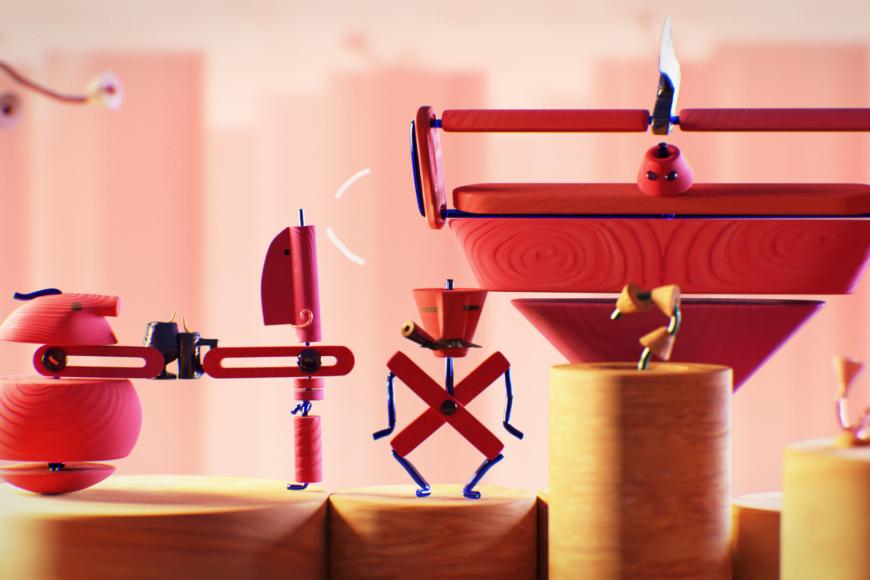
The little green figure runs up the mountain to the other figures made of beads and small building blocks. All move to the same rhythm, right, left, up, down. One day the little green figure, too, is supposed to decorate itself with beads. But this throws everything out of sync. The gears come to a standstill.
Filip and Tereza have little in common except for the wall between their apartments. Loosely based on Gorky, Špela Čadež makes the puppets dance: a pas de deux of neighbouring lonelinesses.
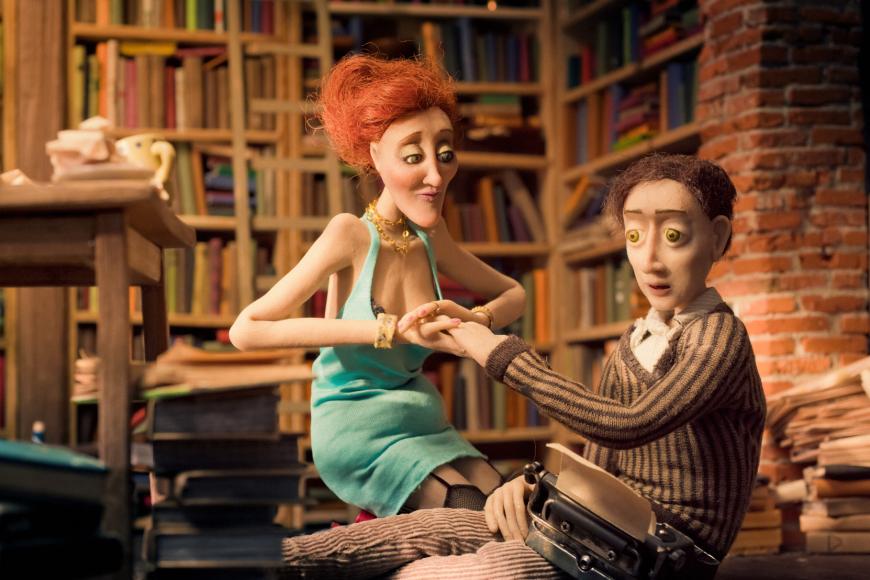
Filip lives next to Tereza, he is a blocked writer, she is an ageing prostitute. They have little in common, except for the wall separating their apartments. One day Tereza asks him to write a letter to her fiancé. But that’s only the beginning … Špela Čadež makes the puppets dance, loosely based on Maxim Gorky: a pas de deux of neighbouring lonelinesses.
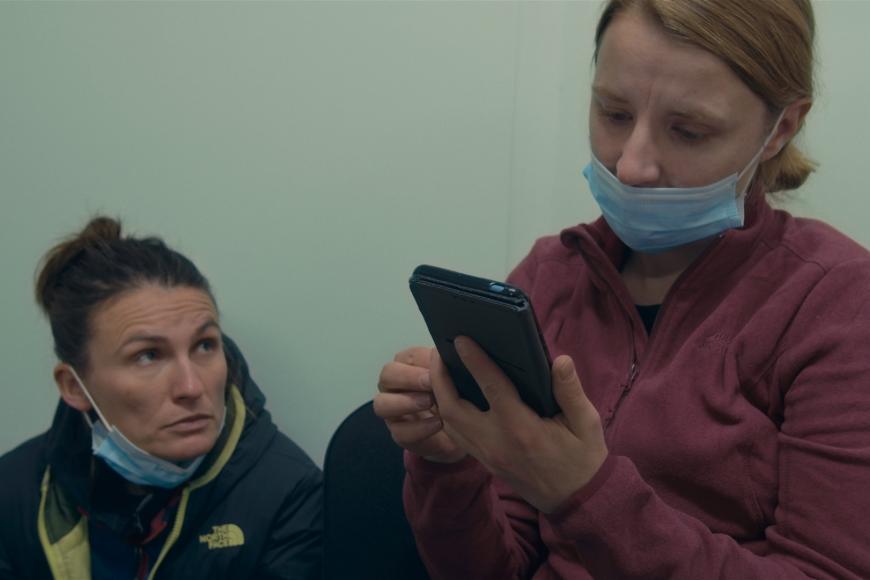
If you want to enter the EU, you will come up against borders. So do those who want to help. A stirring film about the “jungle” between Belarus and Poland which turned into a human trap in the winter of 2021.
In November 2021, people tried to enter the EU via Belarus and Poland, but the route turned out to be a death trap. All access points to the border region were blocked in order not to create an escape corridor. Men, women and children were stuck in no man’s land – in the middle of winter, in the middle of the forest, for weeks. The film follows Polish activists on their mission. They learn that humanitarian aid, just like the refugees themselves, comes up against borders.
Luc-Carolin Ziemann
Credits
Director
Jonathan Brunner
Cinematographer
Marie Scholjegerdes
Editor
Samuel Albert
Producer
Tristan Schneider
Sound
Marc Lehnert
Score
Frederic Hellmann
Animation
Fee Fuchs
Winner of:
Silver Dove (German Competition Short Film)
2015, the rejection of refugees by the residents of Middle German Tröglitz escalates in violence. Drawings and 3D animations make tangible how hatred corrodes the life of the community.
Tröglitz in 2015: The mayor organises a shelter for refugees. He and his family become homeless themselves, because many residents believe that strangers do not belong in their Middle German home. With an interview with the mayor on the soundtrack, the drawings and 3D animations make tangible how the immense hatred corrodes the fabric of the community and tears the people apart.
A look back at a GDR childhood by the sea, where boundaries and freedoms were always close to each other: a poetic autobiography, condensed in hundreds of watercolours.
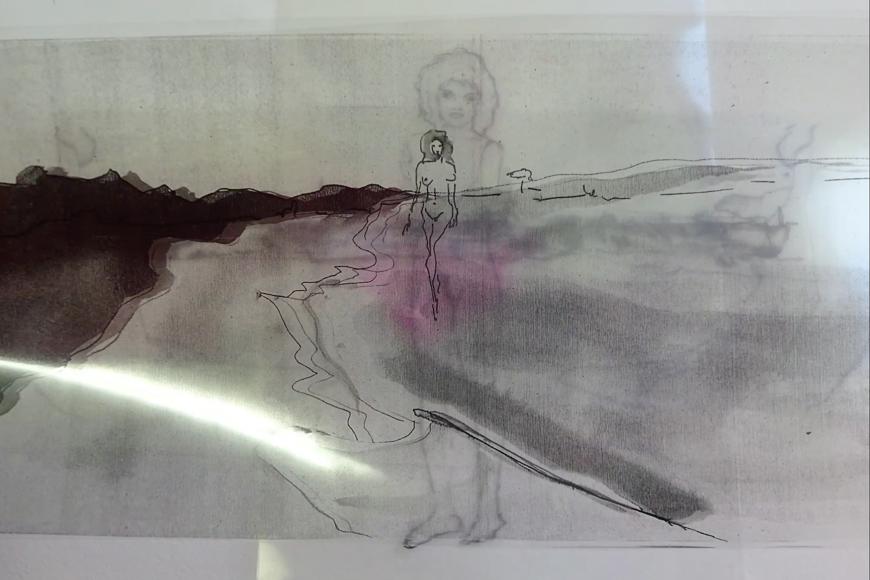
Siren-like singing and rhythmic light reflections segue into a lyrical text and sketched silhouettes of coastlines and waves. Delicate lines and soft shadings on superimposed transparent foils form many-layered networks of shapes and structures. What is offscreen creeps into the frame through reflections and blends in with the visual design of the film. Then and now meet and merge into a poetic narrative about a childhood in Stralsund, at a time when the city was still part of the GDR. A fenced-in, circumscribed childhood, framed by nocturnal floodlights, the bawling of drunk sailors and the crumbling plaster of facades and walls gone grey. The narrator manages to leave this oppressive fortress behind, but she can never escape completely. The memories that have settled like grey dust on her interior will stay with her forever.
An outcry, a free-roaming paper dog and enduring pain: This experimental stop motion animation takes us into the emotional depths of a personal story of loss.
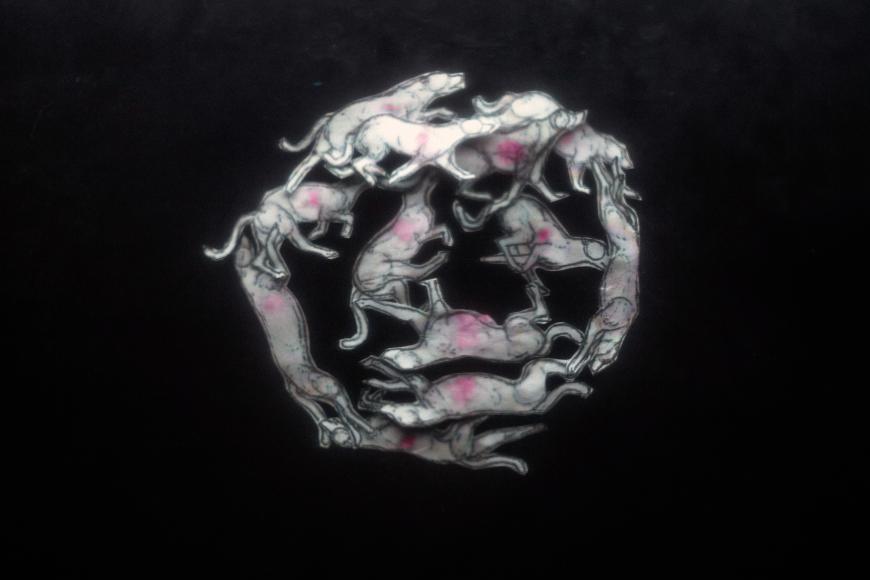
In only ninety seconds Marcus Grysczok tells a touching personal story of loss and takes us to great emotional depths. Tune in: an electronically distorted outcry. The protagonist talks to himself and to someone who no longer lives in this world, but all the more in his heart. He looks for a way out of this state of powerlessness, assuming a stranger’s role, a free-roaming paper dog that runs between real shelves and across tables, races past people on black-and-white photographs and everyday objects, chases himself on a plate rim. The images convey a feeling of home – a home for memory and for life. Tune out? As soon as the dog stops, reality puts an end to this restless racket and brings the awareness of enduring loss. Poetic in language and design, the film formulates a moving but clear-eyed farewell to a brother.