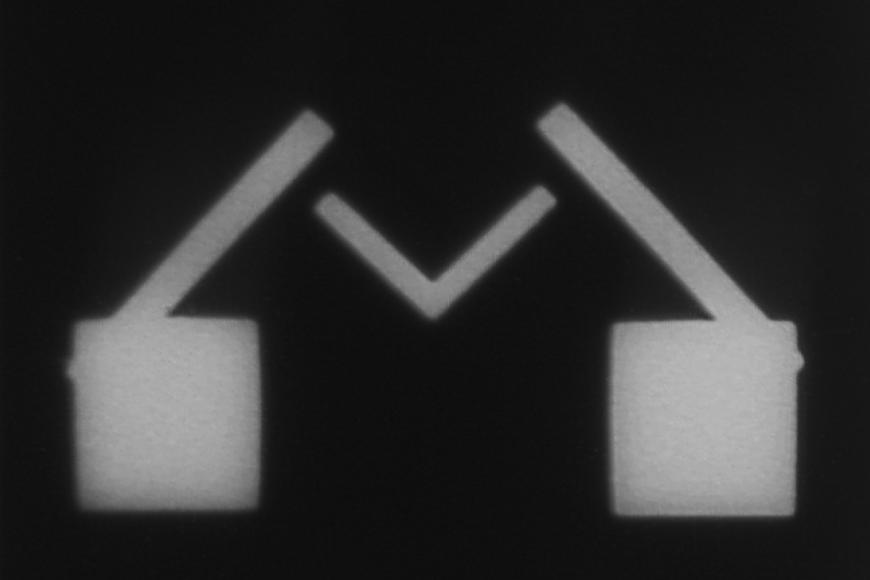
This originally soundless film generates sound in our mind: Geometrical forms break free from their strict paths of movement and arrange themselves into a complex rhythm.
Delicate lines complement the rectangles that dominate Hans Richter’s film experiment “Rhythmus 21”. It almost seems as if a nod to Viking Eggeling had sneaked into the visual worlds of this important masterpiece. The shapes break free from their rigid paths of movement, boldly slanting away from their right angles. The rhythm of the visual elements is impetuous and self-determined.
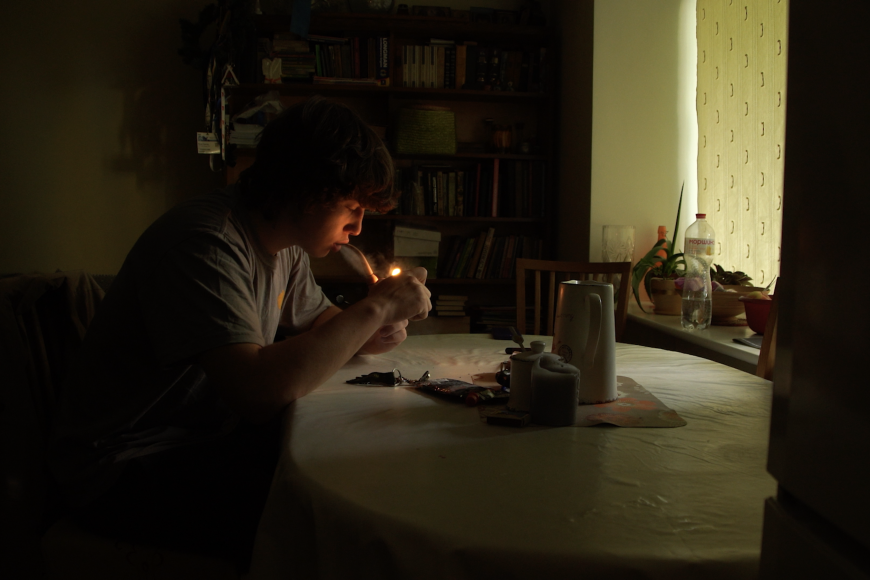
On 9 February 2022, four friends in Kyiv discuss the situation: There are 120,000 Russian soldiers at the borders – what will happen? An equally historical and private moment.
In the evening of 9 February 2022, four young men sit around a table in Kyiv. The friends are discussing the situation: 120,000 Russian soldiers are stationed right at the Ukrainian border. What is going to happen? In “The Birds Are Silent”, director and cinematographer Leo Dzhyshyashvili captures an equally private and historical moment. What is striking is the clarity with which Andriy, Olexandr, Ivan and Sasha assess the consequences of the imminent attack: Potential decisions about their own future are mixed with concerns about relatives and the bewilderment at being thrown into a situation that provokes both helplessness and disgust. But there is a glimmer of hope – perhaps the imagined horror scenarios are nothing but a waste of energy? Cut. Some of the debaters have become soldiers; one has barricaded himself in the bathroom with a narrow mattress and a meal. Within eight minutes, Dzhyshyashvili has tied together a before and after that make you shudder.
Film sketches compete for the filmmaker’s attention, scenarios push each other out of the way. Too much distraction, all the time. A feverishly associative animation about a neurodivergent mind.
Grandfather’s hands making pottery, the vertical linearity of a tower, a train crashing into a car – all of these are fragile, newly born film sketches that crowd each other out in a survival game for the filmmaker’s attention. The sceneries fight against each other, intertwine to form new strands, sink into an endless flood of information, shatter in a sea of open browser tabs. With his authentic voice-over and a mesmerising collection of moving images, director Konstantin von Sichart’s alter ego offers us a deep insight into his creative process. Marked by his neurodivergence, he learns before our eyes to cope with his inability to concentrate on one thing – and to weave meaning from these strands, remain true to his film idea. But how can this ever result in a film? Toxically coloured images, naively drawn and finely crafted, AI-generated, filmed from a monitor, collaged, worked-on – a wealth of tools and aesthetic approaches translates the described mental overload into the language of design. The film thus becomes more than a self-reflection of modern filmmaking: It is the portrait of a new generation – caught between the compulsion to take everything in and have a position on everything and the urge to stand still or even run away.
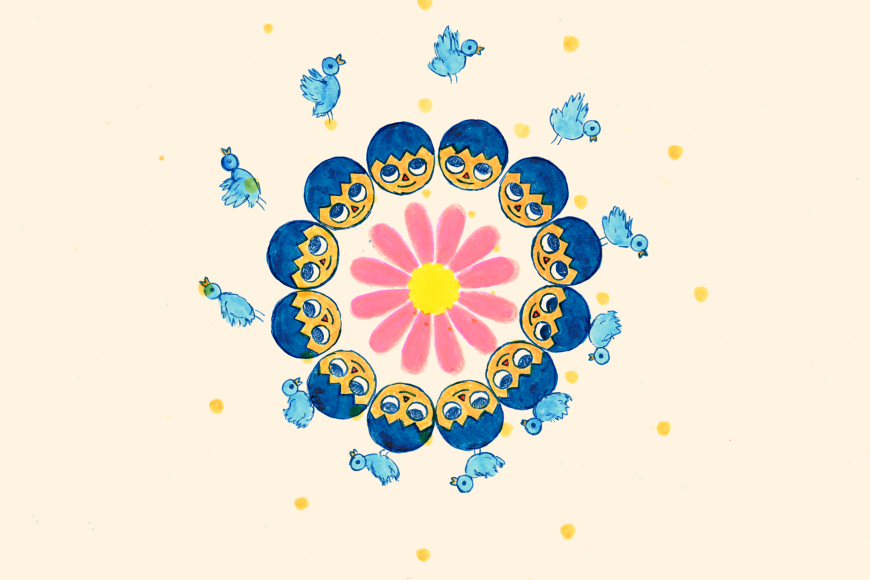
To a lively tune, blossoms unfold, eggs and chicks fly, the sun goes up and down, until everything starts all over again. Everything goes round and round in this mini film about the cycle of life.
The figures in this experimental short film for cinema greenhorns seem to be spinning on a turntable. Houses, plants, birds, and a face pass before our eyes. To a lively tune, blossoms unfold, eggs and chicks fly, the sun goes up and down, until everything starts all over again. A small, tongue-in-cheek story that also tells of the early days of animation.
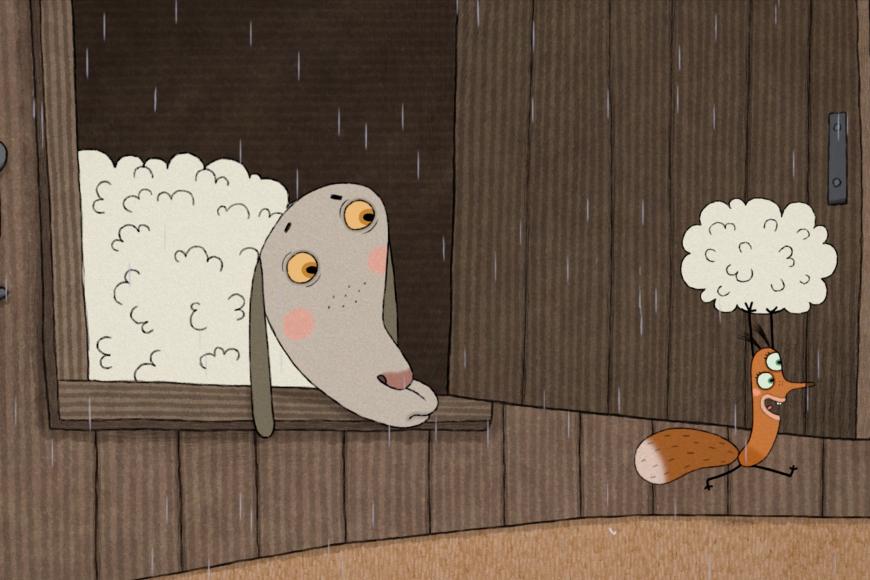
Winter is coming and it gets cold on Lena’s farm. The squirrel pinches something warm from all corners to pad its drey until it is nice and cosy. Rain floods all the meadows and the mice flee from the forest: “Squeak, squeak, where are we to go?” The squirrel quickly recognises the danger and shares its cosy loot with them. A new episode in the KiKA series.
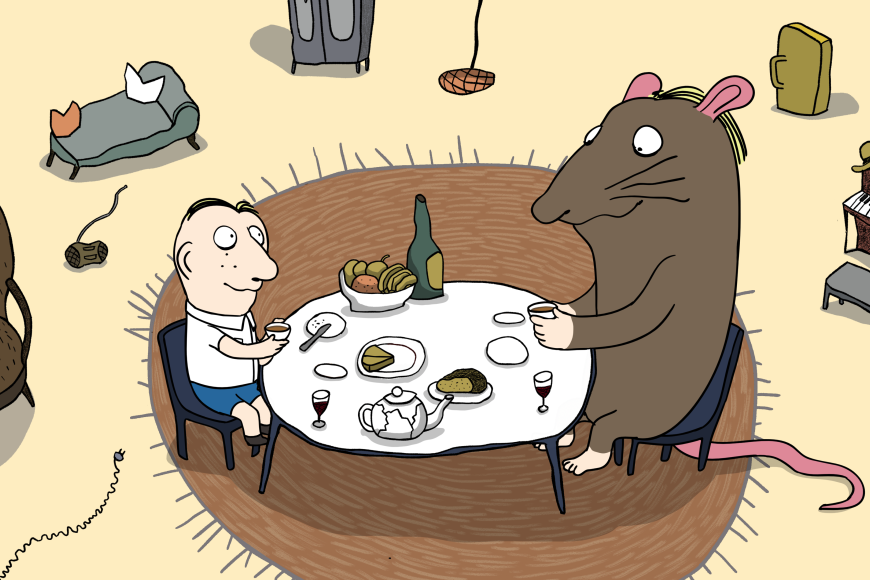
A huge, cheeky rat has moved in with the little man and makes itself at home. One day he angrily throws it out. But then he realises how empty and lonely everything is without it.
A huge, cheeky rat has moved in with the little man. It whistles to the music from the radio, helps itself from the fridge without asking, splashes in the bathtub and is simply everywhere – loud, annoying, just too much. When it suddenly disappears, the little man realises that the apartment has never been so quiet – and so empty. A heart-warming adaptation of Nadia Budde’s eponymous picture book.