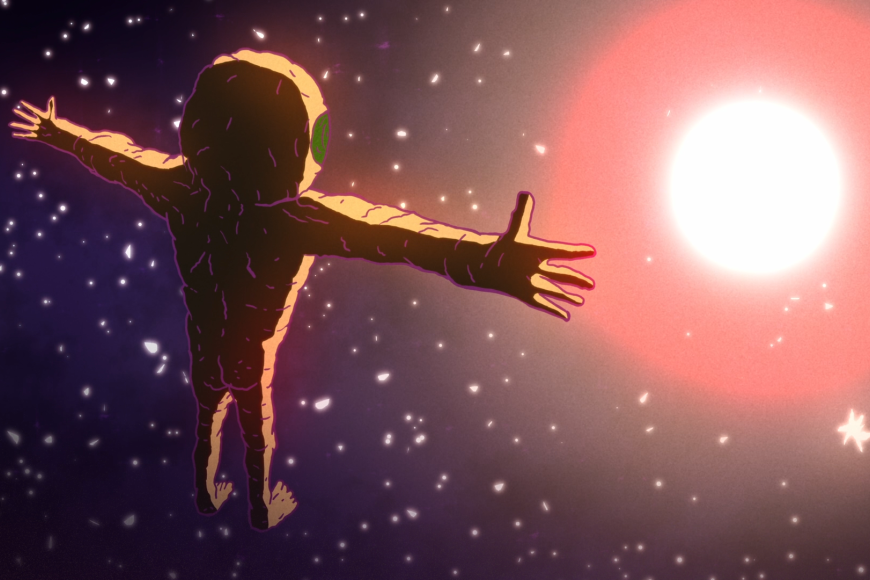
Frankie feels terminally ill, but nobody cares. Then his body transforms into a wild planet where evolution fast forwards from creation to destruction.
Contemplating your naked body, drenched in tomato sauce, on a frozen pizza – that is the epitome of alienated wage work. Especially if it is the mass product whose quality has to be checked hundreds of times a day at the assembly line. Is it this alienation, the multiple daily consumption of precisely this meal or simply the absence of significant human relationships that make Frankie feel terminally ill and ready to say goodbye to an existence he feels is worthless and empty? Nobody cares, until his body transforms into a wild planet where evolution happens in fast-forward mode: the genesis of life, miniature Frankies performing absurd penis dances, cannibalism, Darwinism, mutual destruction, the eradication of other species – and finally the Frankie planet itself burning out. Levi Stoops makes us laugh out loud – and yet we feel the bitter taste of self-destruction on our tongue. Will Frankie have the courage to risk a change of life after this apocalyptic experience? Or does the system have him so firmly in its claws that wholesome nature documentaries of exotic flowers are comfort enough – instead of cooking shows where the stone-baked pizzas are tossed into the air with verve?
Irina Rubina
Credits
Director
Levi Stoops
Script
Levi Stoops
Editor
Levi Stoops
Producer
Annemie Degryse
Sound
Paulo Rietjens
Sound Design
Paulo Rietjens
Score
Wiet Lengeler
Animation
Camiel Hermans, Sarah Menheere, Karolien Raeymaekers, Neyrouz Jemour, Jana Leeuwerck
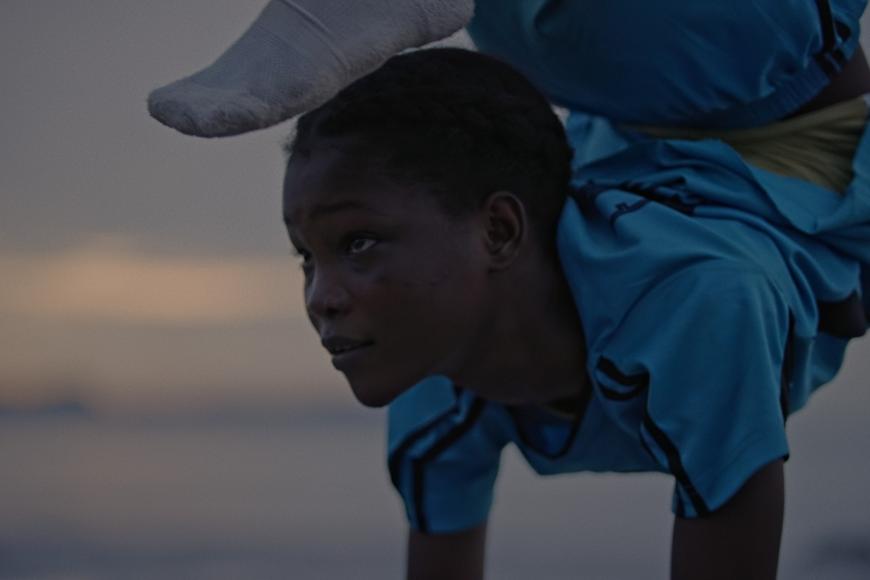
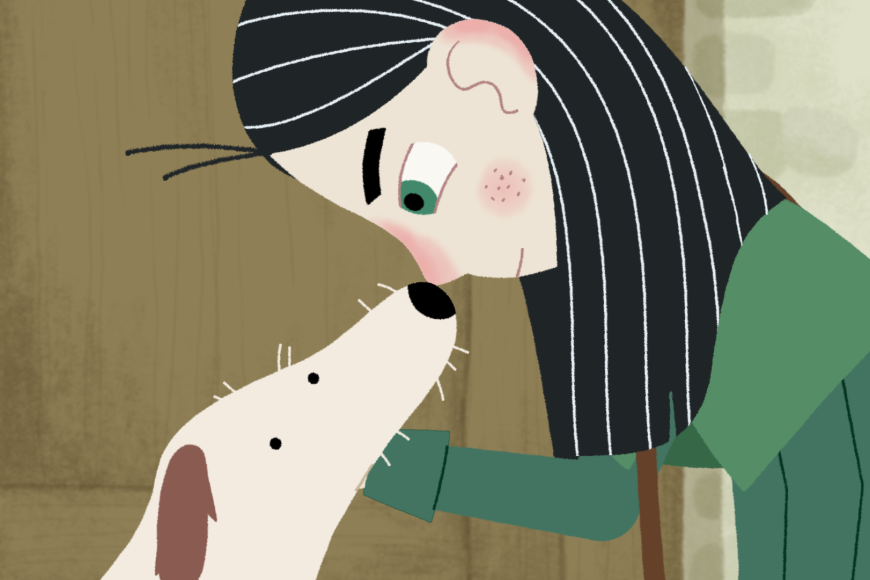
Fanta from Conakry in Guinea spends every free minute training at the acrobatics circus. Besides all her duties, her greatest dream is to go on tour with the Amoukanama Company.
Fanta is 14 years old and lives in Conakry, the capital of Guinea in West Africa. Besides school and her household chores, she spends every free minute training at the acrobatics circus. One day, the return of the country’s big star is announced. Balla Moussa Bangoura, founder of the Amoukanama Circus Company, is returning from an international tour and now plans to rehearse a new show with his troupe. Training gets harder, because only the best will be in it at the end. Of course, Fanta is determined to give everything to be one of the few girls travelling the country with Balla Moussa Bangoura. Every day, she is torn between caring for her sick mother, housework, schoolwork and what she thinks she loves best. Supported by her family on the one hand, striving to fulfil all expectations on the other, Fanta begins to doubt: What does she really want? Marjolijn Prins delivers the atmospherically dense portrait of an extraordinary girl, connected by rousing musical numbers, spectacular acrobatics and dream-like acting sequences.
Lina Dinkla
Credits
Director
Marjolijn Prins
Cinematographer
Johan Legraie
Editor
Ciska Slowack
Producer
Ellen De Waele, Mirna Everhard
Co-Producer
Florent Coulon, Felix Salgado, Ineke Kanters, Lisette Kelders, Anton Iffland Stettner, Eva Kuperman
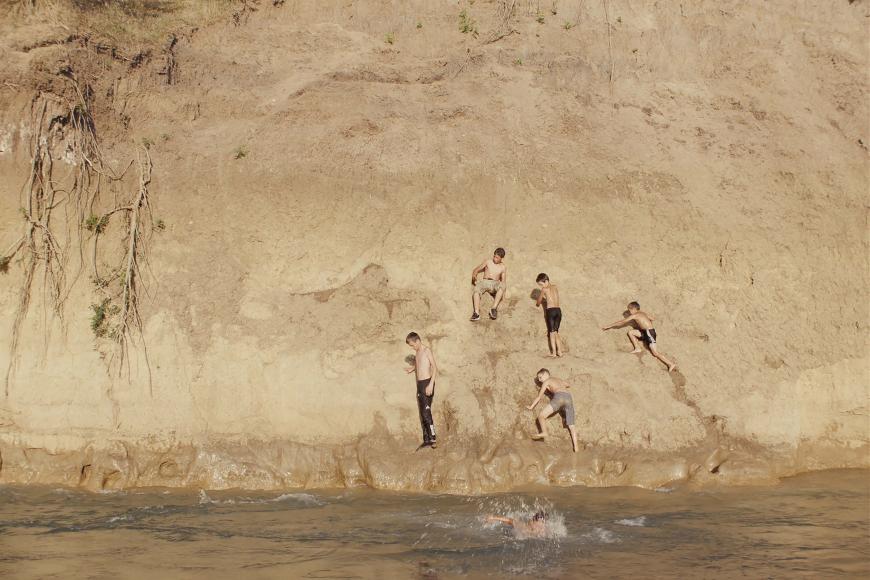
Déni’s mother has bought him a piece of land in the Chechen settlement in Georgia. He could at last build a treehouse there, but he is expected to marry. Can he start a new life here?
A piece of land awaits Déni Oumar Pitsaev in the Pankisi Gorge, a Chechen enclave in the Georgian part of the Caucasus. His mother bought it for him, hoping to bring her son, who was socialised in Western Europe, back to his Chechen roots. When he arrives, he realises that the gift comes with strings attached: Relatives and friends from the neighbourhood constantly ask when the 40-year-old Déni with his receding hair intends to start a family. When he counters with his own vision – building a treehouse for adults ten metres from the ground, a childhood dream – he triggers complex debates about the relationship between the individual and society and what historical conditions it is subject to: The region is deeply scarred by the effects of the Chechen War, the wounds extending even to his estranged relationship with his father. In all this, Pitsaev’s manner of confrontation is always extremely delicate, never turning into an attack. With expert curiosity, he approaches a world that is both completely alien and home to him.
Felix Mende
Credits
Director
Déni Oumar Pitsaev
Cinematographer
Sylvain Verdet, Joachim Philippe
Editor
Laurent Sénéchal, Dounia Sichov
Producer
Alexandra Mélot
Co-Producer
Anne-Laure Guégan, Géraldine Sprimont
Sound
Marie Paulus, André Rigaut, Joseph Squire
Sound Design
Marie Paulus, André Rigaut, Joseph Squire, Hélène Clerc-Denizot, Emmanuel De Boissieu
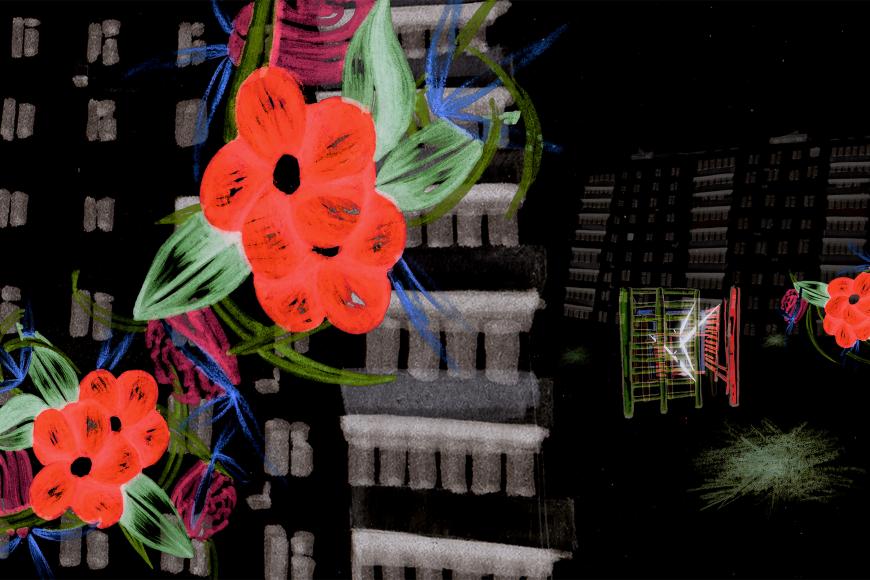
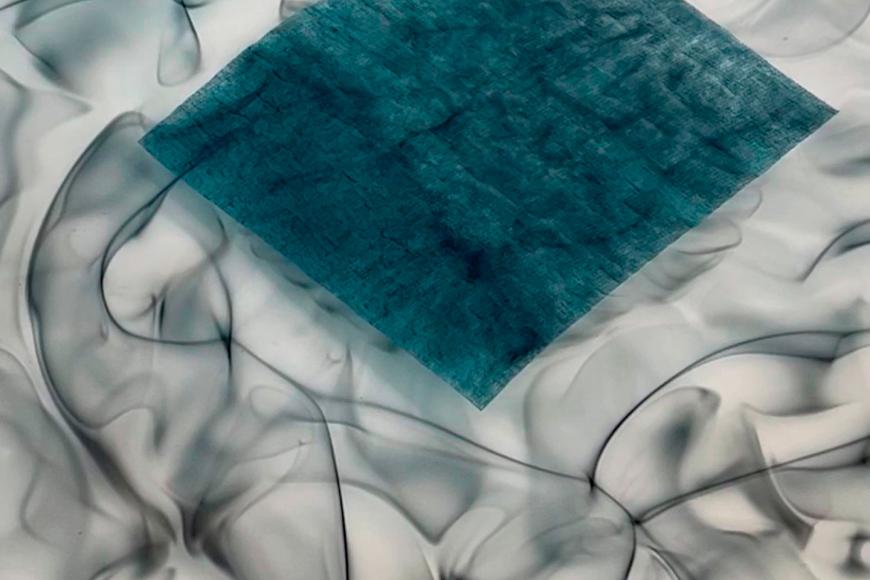
White drawings on light-sensitive material. This film about the ambivalence of memory builds a bridge to our childhood ability to find everyday magic in the smallest objects.
Only light lifts the outlines of the world from darkness. In cyanotype, light-sensitive material is used to make white drawings materialize on a blue background. Tata Managadze challenges the light-sensitivity of our mind. She uses reflections and mirrors to expose the sensitive, gossamer-thin material of association in ways that make ephemeral memories and emotions visible. The poem at the beginning tells us how soothing and at the same time brutal her protagonist – light – can be. Like children in a playground, we are seduced by and forever searching for the dance of lights. Flower patterns on the dishes in the sink begin to spin when our eyelids grow heavy and sleep is approaching. Everything moves. In the transitory state between waking and dreaming, a different kind of life stirs in the prefabricated building estate: The stars of the restaurant leap from the sign and scratch traces into the wall. Or are these scars that must still heal? Perhaps scars from the Soviet era? Again and again, well-known fragments are re-assembled. This non-narrative animated documentary takes us on a spiral of remembrance to an untraceable origin, building a bridge to our childhood ability to find magic in the most mundane things.
Mary is a 12-year-old girl living in the 19th century: inquisitive, persistent and fascinated by fossils. An entertaining and warm-hearted biopic about one of the first female palaeontologists.
We are travelling back in time to the early 19th century on the south coast of England. This is where Mary Anning lives, a 12-year-old girl who is inquisitive, persistent and fascinated by fossils. She spends every free minute at the beach to look for the fossilised remains of long extinct animal species in the strata of her hometown’s coastal cliffs. Her father, too, is an enthusiast and earns a little extra for his family by selling fossils. When he disappears after the collapse of a cliff, Mary’s life is shaken. All that her father leaves behind is a mysterious drawing whose meaning Mary only gradually makes out. She is determined to uncover the secret together with unexpected allies. An entertaining and warm-hearted biopic about one of the first female palaeontologists.
A gorgeous collection of tiny moving image moments full of wisdom, wit, and poetry. Viewed through a magnifying glass, the small things offer room for surprises – and great insights.
A brilliant and highly poetic collection of tiny moving image moments which offers aesthetic delights through cleverly chosen camera angles, framing, lighting, montage and the materials used. This archive of trifles remains silent. The eyes begin to hear, the sound is generated in the mind. Simply enchanting.
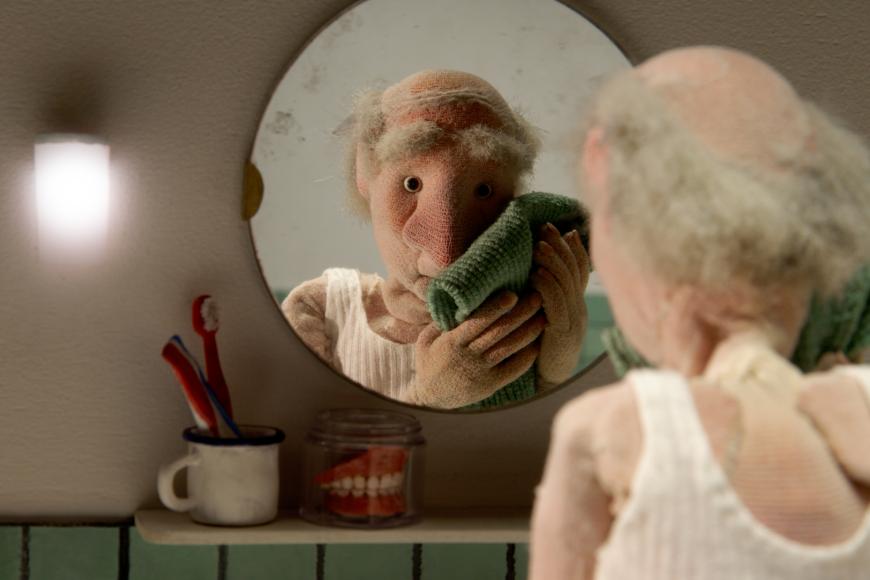
Starlings circle in flocks above the retirement home. What does the end of life feel like? A man grows the first feathers and senses that he is gradually drifting from this world.
Flocks of starlings are circling above the retirement home. These impressive natural spectacles are called murmurations because from a distance they sound like collective murmuring. Not everyone hears or sees them, but the old man notices. Sometimes the starlings send a single twittering messenger to his window. Often, the birds are more present to him than his fellow humans, more present than the old demented fellow resident who regularly waters a still life of flowers, more present than his neighbours in the amateur choir. And then it happens: The old man finds a first feather in his hair, then a second, then several. Soon he grows a beak so that instead of singing he can only caw. The last phase of life we witness here is lovingly animated: The puppet animation was created with gauze bandages, a beautiful approach to the vulnerability that comes with aging. The farewell to life shown here is devoid of pathos, not even that over-produced grief we know from many narratives of dying. Even the retirement home is a completely mundane place, neutrally portrayed. Instead, we follow this feathered farewell as a quiet but growing alienation from the world, a no-longer-belonging. And one day we will all grow the wings that go with it.
Marie Ketzscher
Credits
Director
Janneke Swinkels, Tim Frijsinger
Script
Janneke Swinkels, Tim Frijsinger
Cinematographer
Janneke Swinkels, Tim Frijsinger
Editor
Janneke Swinkels, Tim Frijsinger
Producer
Peter Lindhout
Co-Producer
Annemie Degryse, Janneke Swinkels, Tim Frijsinger, Ben Tesseur
Sound
Corinne Dubien
Sound Design
Corinne Dubien
Score
Roos Rebergen, Sjoerd Bruil
Animation
Rosanne Janssens, Mirjam Plettinx, Geertrui de Vijlder