Film Archive

Jahr

Sections (Film Archive)

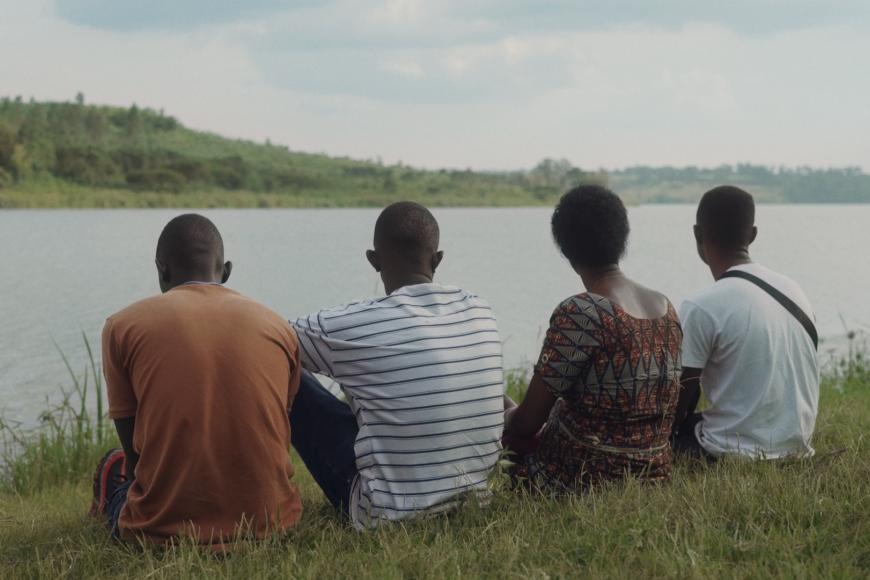
Filmstill Kumva – Which Comes from Silence

Kumva – Which Comes from Silence

Kumva – Ce qui vient du silence
Sarah Mallégol
International Competition Documentary Film 2023
Documentary Film
France
2022
108 minutes
French,
Kinyarwanda
Subtitles: 
English
Quietly and discreetly, the French director Sarah Mallégol follows a group of thirty-something protagonists who survived the 1994 Rwanda genocide as children. They have no memory of the events – neither those whose fathers were murdered nor those whose parents were responsible. A confrontation begins: focused conversations between generations which, captured by a gentle camera, are meant to cautiously break the long silence – in order to be able to understand, process and mourn.

Sarah Mallégol herself grew up in Rwanda, before the genocide. She has no memories of her childhood either. But there are home movies shot on Super 8 that show carefree days in a still peaceful countryside – and her nanny from back then, Christine. She died in 1994, which is all the director knows. Her motivation for this filmic search is thus personal. But after the short introduction, she gives all the space to those who live in Rwanda today with the trauma that has spread over the country like a shroud. Grief is at the forefront and the film work contributes to a much-needed coming to terms – accompanied by chants and landscape shots added to the memories of the survivors that bear a different form of witness.
Borjana Gaković

Credits DOK Leipzig Logo

Director
Sarah Mallégol
Cinematographer
Arnaud Alain
Editor
Marie Beaune
Producer
Louise Hentgen
Sound
Eugène Safali, Pierre George, Jocelyn Robert
-
Ugo Casabianca
Winner of: Prize of the Interreligious Jury
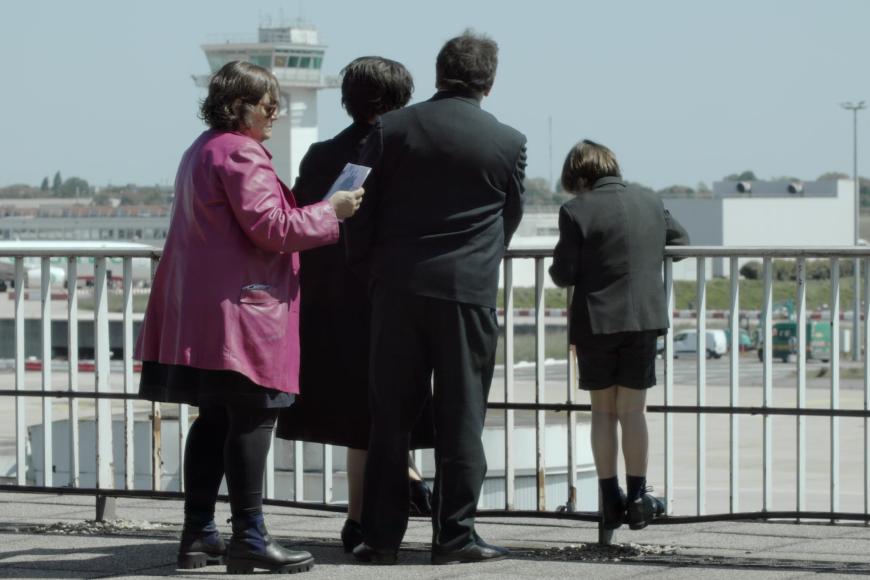
Filmstill La Jetée, the Fifth Shot

La Jetée, the Fifth Shot

Le cinquième plan de La Jetée
Dominique Cabrera
International Competition Documentary Film 2024
Documentary Film
France
2024
104 minutes
French
Subtitles: 
English
Many people probably know Chris Marker’s story of a time trip from a dystopian future back to the present, in which the hero experiences a traumatic event again, only through Terry Gilliam’s extroverted remake “12 Monkeys”. The original, Marker’s experimental science fiction classic “La Jetée”, however, was groundbreaking rather because of its minimalist narrative form: The 28-minute black and white photo novel with a single moving shot has made film history.
Dominique Cabrera now takes a very personal approach to putting the influential work in a historical context: The year of its creation, 1962, was also the year when Algeria gained independence from French colonial rule and hundreds of thousands of French people with roots in Algeria, the so-called Pieds-noirs, left their homeland to enter exile via Orly airport. In France, a new, uncertain existence awaited them – including Cabrera’s family. Six decades later, her cousin, who happened to be present on the pier of Paris-Orly when Marker took photos for his film, is convinced that he recognises himself in the fifth shot of “La Jetée”. This is the prelude to one of the most thrilling and at the same time loving time trips one can imagine – and the beginning of a detective and cinephile research with ever more astonishing twists.
Christoph Terhechte

Credits DOK Leipzig Logo

Director
Dominique Cabrera
Cinematographer
Karine Aulnette
Editor
Sophie Brunet, Dominique Barbier
Producer
Edmée Doroszlaï
Sound
François Waledisch, Nathalie Vidal, Elias Boughedir
Score
Béatrice Thiriet, Oscar Turbant, Élise Bertrand
Nominated for: Prize of the Interreligious Jury, FIPRESCI Prize
Winner of: Golden Dove (International Competition)
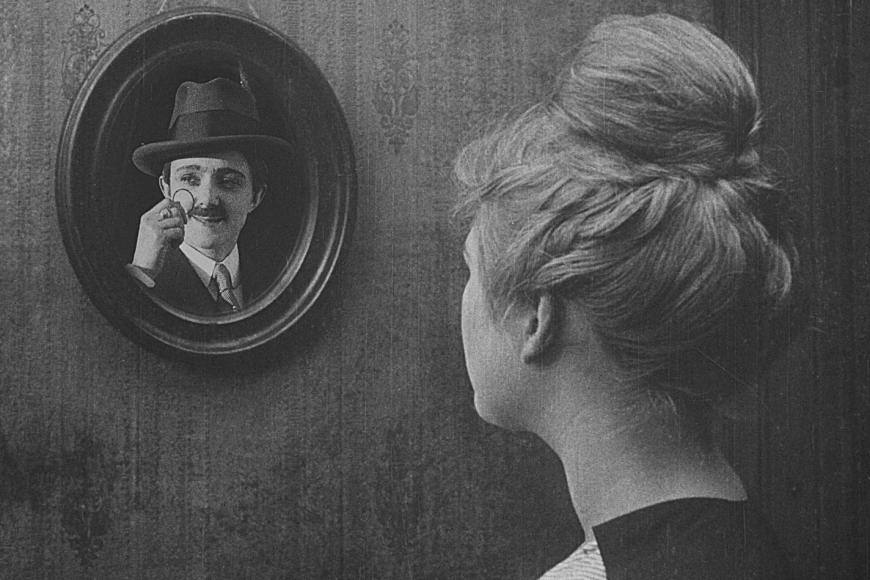
Filmstill Loving in Between

Loving in Between

Loving in Between
Jyoti Mistry
International Competition Documentary Film 2023
Documentary Film
Austria,
South Africa
2023
18 minutes
English
Subtitles: 
None
“Folks, I’m telling you, birthing is hard and dying is mean – so get yourself a little loving in between.” This advice of the African-American civil rights activist and jazz poet Langston Hughes precedes Jyoti Mistry’s found footage storm of images and runs like a guiding line through the archive material, a panopticon of revelries: parties, boxing matches, visits to the beach and above all, time and again, testimonies of lived queer sexuality. Sometimes clandestine, sometimes quite public.

Mistry mirrors the uninhibitedness of her sources in the way she arranges them – not neatly staggered but boldly mixed. The associative editing often virtually leaps into the images, linking them with purple colour explosions and three-dimensional animations of shoals of fish. On the soundtrack, a spoken word performance joins multi-channel dubbed noises and countless variations of the jazz standard “Diga Diga Doo.” This is how the film wrests its testimonies from the past and returns them to their inherent liveliness and transgressive explosive power.
Felix Mende

Credits DOK Leipzig Logo

Director
Jyoti Mistry
Script
Jyoti Mistry, Napo Masheane, Kgafela oa Magogodi
Editor
Nikki Comninos
Producer
Florian Schattauer
Sound Design
Peter Cornell
Score
Nishlyn Ramanna
Animation
The Kinetic
World Sales
Gerald Weber
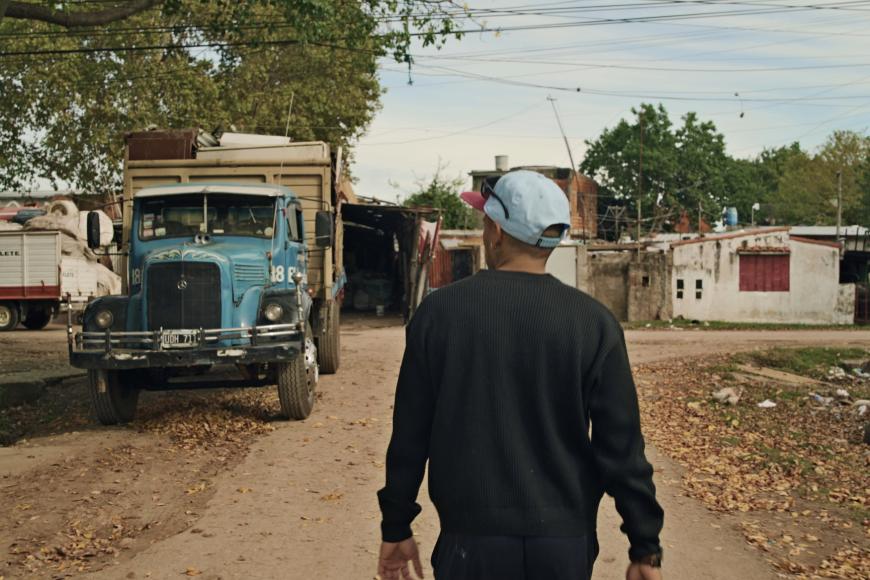
Filmstill Luciano

Luciano

Luciano
Manuel Besedovsky
International Competition Documentary Film 2024
Documentary Film
Argentina
2024
95 minutes
Spanish
Subtitles: 
English
Luciano cuts a slight figure as he wanders through the narrow streets of the improvised Barrio Tablada on the edge of Rosario, taking care of his mother and sister and the makeshift home they share, finding occasional work on building sites as the search for a proper job continues, lifting weights at the gym. Manuel Besedovsky lays out the different episodes of this precarious, if not atypical existence with such deliberate deemphasis that it feels almost like a plot twist when Luciano meets with a consultant to talk about the various options for constructing a penis. And yet this part of Luciano’s experience has actually been there all along – another thread woven often imperceptibly into the fabric of the film with gentleness and care.
Handing CVs out, hormone injections, smoking joints with buddies from the neighbourhood, talking to his mother about the daughter that is no longer there, some slightly awkward rapping, thinking about having children – the most radical thing about this portrait is how each challenge, each diversion, each encounter is presented with the same sense of normality with which Luciano experiences it. Class, gender identity and their seldom-seen intersection shown as nothing more than getting on with life.
James Lattimer

Credits DOK Leipzig Logo

Director
Manuel Besedovsky
Script
Manuel Besedovsky
Cinematographer
Tomás Pasini
Editor
Marina Sain (EDA)
Producer
Pablo Romano, Juan Diego Kantor, Guillermo Willy Berman, Nicolás Capola, José Salvia
Sound
Verónica Brunello, Jimena Chaves
Sound Design
Fernando Romero de Toma (ASA)
Score
Guillermo Pesoa
World Sales
Alfredo Calvino
Nominated for: Silver Dove, Prize of the Interreligious Jury, FIPRESCI Prize
Filmstill Lumene : Privatisation

Lumene : Privatisation

Lumene : Privatisation
David Shongo
International Competition Documentary Film 2023
Documentary Film
DR Congo
2022
30 minutes
French,
Lingala
Subtitles: 
English
In this documentary essay, Congolese artist David Shongo addresses the problems of knowledge production and asks the important question of how it was influenced permanently and systematically by colonialist power. Analysing historical photographs, he exposes the perfidious mechanisms of colonial historiography and contrasts them with conversations with traditional scholars. They represent an exploited culture confronted not only with the theft of economic goods. It was also robbed – in a historical dimension, too – of self-perception and self-determination.

The starting point of his analysis is the examination of the photo archive of the German ethnographer and anthropologist Hans Himmelheber at the Museum Rietberg in Zürich. But Shongo’s critique of colonial historical fictions – poetic and meticulously precise at the same time – goes far beyond this. Combining specially produced and expressive images of present-day Congo with staged scenes, an offscreen commentary and documentary recordings, he manages to penetrate extremely complex contexts. A film essay that denounces the “privatisation of memory” – and contributes a long overdue, extremely important political and aesthetic position to the virulent restitution debate.
Borjana Gaković

Credits DOK Leipzig Logo

Director
David Shongo
Script
David Shongo
Cinematographer
Peter Miyalu
Editor
Derek Simba, David Shongo
Producer
David Shongo
Co-Producer
Nanina Guyer
Animation
Derek Simba
Filmstill Mamie 44

Mamie 44

Mamie 44
Lucie Dèche
International Competition Documentary Film 2023
Documentary Film
France
2023
55 minutes
French
Subtitles: 
English
An old family secret is fermenting in the father’s winery in southwest France. The grandfather had been executed by the Résistance in 1944 because he had collaborated with the Nazis. For decades, no one talked about it, daily work continued, from cultivation to harvest, from the wine press to maturation, an eternal cycle. The daughter comes to visit with a camera and a microphone. She remixes the sounds of farming, asks questions, builds openings in the experimental interstices between image and sound for the father to come to himself. Maybe what was buried and ploughed under can be reflected today – if they succeed in breaking the cycle for a moment.

The father has answers. He knows the patriarchal system of agriculture, where neighbours are envious and unpleasant things are quickly interred so they will not be passed on to the children. And yet what was interred has not dissolved completely, over generations. Insects buzz over the soil, something underneath attracts them. A small frog is caught in the wine press with the grapes. And the filmmaker’s daughter looks for a new tune on the old family piano.
Jan Künemund

Credits DOK Leipzig Logo

Director
Lucie Dèche
Cinematographer
Lucie Dèche
Editor
Caro Beuret
Producer
Guillaume Bordier
Sound Design
Lucie Dèche
Nominated for: Prize of the Interreligious Jury, FIPRESCI Prize
Filmstill Miralles

Miralles

Miralles
Maria Mauti
International Competition Documentary Film 2024
Documentary Film
Spain,
Mexico
2024
90 minutes
Spanish
Subtitles: 
English
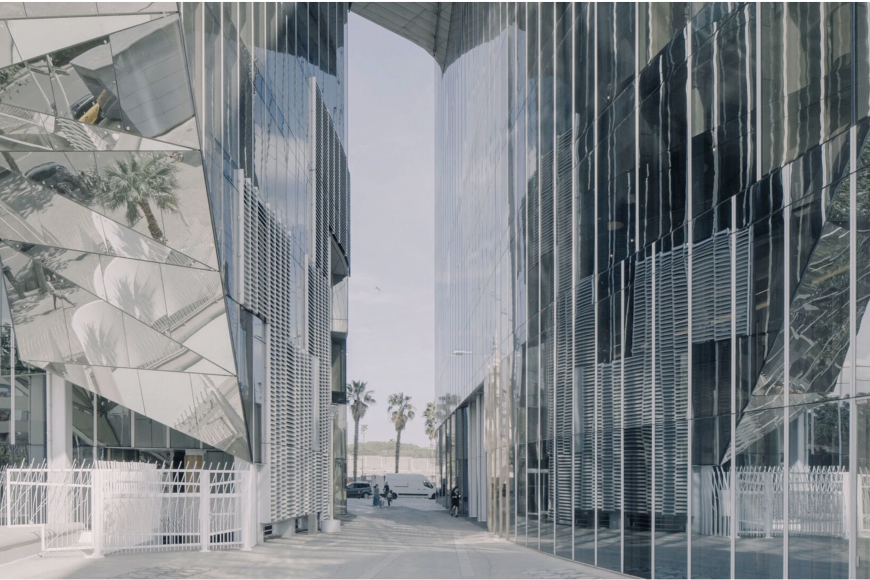
More than twenty years have passed since the death of Catalan architect Enric Miralles. He left iconic traces with his buildings, not just in and around Barcelona – the Scottish parliament in Edinburgh is also based on his designs. Maria Mauti chooses a poetic approach to her impressive protagonist, in eleven variations. They take us from the Igualada cemetery to a community centre in Hostalets de Balenyà, a gym in Huesca or the Torre Marenostrum office skyscraper in Barcelona. The architect’s home with its open and at the same time labyrinthine character is given a major role, becoming the starting point and epicentre of a unique mind.
Maria Mauti carefully scans the still lively architectures, stages them. In Huesca, the smell of a sweating soccer team seems to mingle with the omnipresent cool raw concrete, while a group of Spanish cowboys and cowgirls shake their leather boots in the futuristic community centre. Despite the tragic note that comes from the work of the prematurely deceased, “Miralles” is not without a certain wit. This poised essay which combines personal and theoretical statements achieves a multi-layered quality that is in itself evocative of a Miralles design: airy and dense, abrupt and fluid, always idiosyncratic.
Carolin Weidner

Credits DOK Leipzig Logo

Director
Maria Mauti
Cinematographer
Ciro Frank Schiappa
Editor
Núria Esquerra
Producer
Antonio Chavarrías, Alba Bosch
Sound
Eva Valiño, Bernat Fortiana, Leo Dogan, Lucía Herrera
World Sales
Yvette De los Santos
Nominated for: Silver Dove, Prize of the Interreligious Jury, FIPRESCI Prize
More to watch
Filmstill Morichales

Morichales

Morichales
Chris Gude
International Competition Documentary Film 2024
Documentary Film
USA,
Colombia
2024
83 minutes
Spanish
Subtitles: 
English
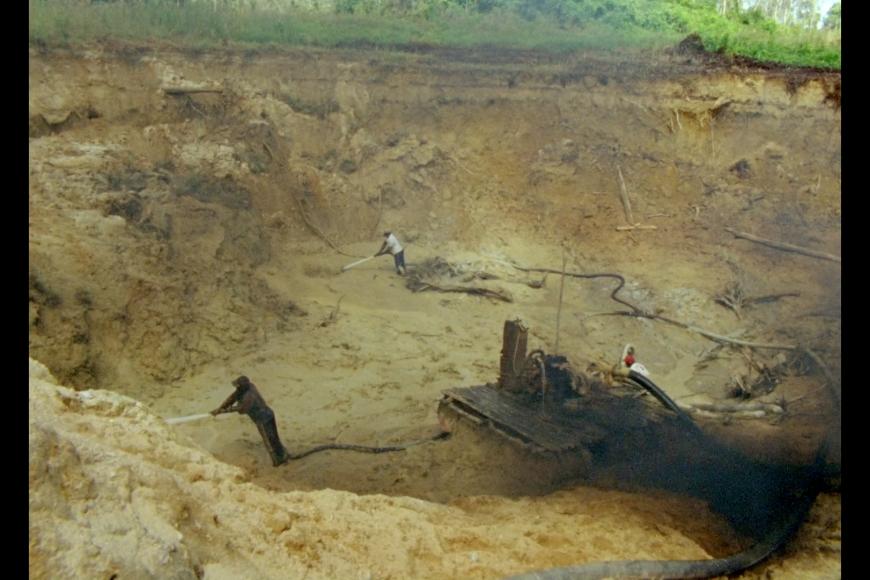
In the deliberately chosen style of an old-fashioned field report, a fictional explorer describes his observations on gold-mining in Venezuela. His mission takes him along the Orinoco, from remote jungle mines to industrial zones. His focus stays on the workers and their environment. The titular Moriche palm tree, an edible and crop plant growing along the river, serves as an example for the relationship between humans and nature and their use of raw materials. Paradoxically, the gold-diggers live in harmony with Mother Earth as their nourisher and healer, but at the same time destroy her. As in so many other places in the world, their very survival depends on an economic system inherited from colonialism. The rapid pace of capitalism is in glaring contradiction to the arduous extraction of the gold dust, produced only by slow processes of erosion.
As the narrator drifts along the river and meditates on different contexts, the images work their way through the layers of the complex subject. The immersive poetic journey alternates between observational Bolex shots, hand-drawn illustrations and abstract visualisations of photochemical reactions. Accompanied by a sound design both distinct and elaborate, the lustre of the gold literally glitters from the screen.
Annina Wettstein

Credits DOK Leipzig Logo

Director
Chris Gude
Script
Chris Gude
Cinematographer
Chris Gude
Editor
Felipe Guerrero, Chris Gude
Producer
Chris Gude, Felipe Guerrero, Maite Bermúdez, Adriana Agudelo
Sound Design
Felipe Guerrero, Chris Gude
Score
Maximilian Gude
World Sales
Michaela Čajková
Narrator
Jorge Gaviria
Nominated for: Prize of the Interreligious Jury, FIPRESCI Prize, Silver Dove
Filmstill My Therapist Said, I Am Full of Sadness

My Therapist Said, I Am Full of Sadness

My Therapist Said, I Am Full of Sadness
Monica Tedja
International Competition Documentary Film 2024
Documentary Film
Indonesia
2024
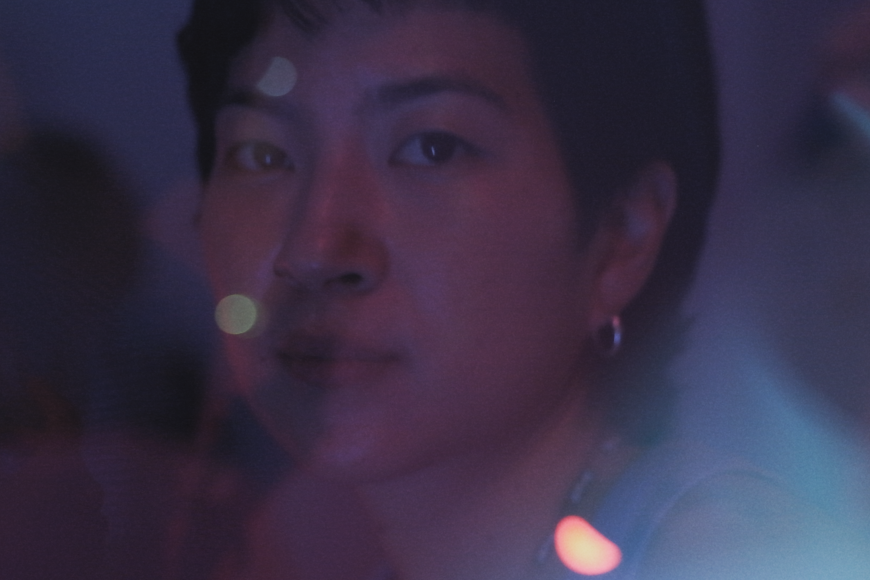
22 minutes
Indonesian,
English
Subtitles: 
English
“My therapist said it’s like an Abschied,” Monica Vanesa Tedja says. Monic embarks on a journey from Berlin to Indonesia to return to the bosom of the family for a short while. The camera is in the luggage, and an important question: Can the devout Christian parents who are so happy about the visit accept their child’s non-binary, queer concept of life and identity instead of blocking it out?
In the beginning we see private archival footage of a supposedly perfect childhood. Monic talks about their own dreams and fears. We listen to tense phone calls with the mother and exchanges with friends, we learn details from therapy sessions. This film is not about harsh confrontations but rather about a quiet departure, about changing relationships, the significance of biological and chosen families, about letting go and arriving – perhaps where you least expect it.
Seggen Mikael

Credits DOK Leipzig Logo

Director
Monica Tedja
Script
Monica Tedja
Cinematographer
Monica Tedja, Charmaine Poh, Asarela Orchidia Dewi, Jonas Römmig
Editor
Monica Tedja
Producer
Monica Tedja, John Badalu, Astrid Saerong, Gugi Gumilang
Sound
Monica Tedja
Sound Design
Satrio Budiono
Score
Gardika Gigih, Zeauxi
Performer
Annessia Cassandra Stefanowski
Filmstill Nine Easy Dances

Nine Easy Dances

Nine Easy Dances
Nora Rosenthal
International Competition Documentary Film 2024
Documentary Film
Canada
2023
20 minutes
English
Subtitles: 
English
Director Nora Rosenthal brings a very specific focus to this portrait of her parents, Heidi and Alan: She shows them dancing. But these are far from “easy dances.” Rosenthal realises quickly that her own inflated expectations threaten to make her ambitious project fail. She hires two professional dancers – mirror images and, as it were, interaction partners for Heidi and Alan – to spread the enormous pressure on robust shoulders and with whom they can waltz or even do a disco number.
Abstractly playful, yet empathetic, “Nine Easy Dances” addresses heavyweight subjects like transience and illness, opens the door to the family archive and tries to tell a story whose end already hangs in the air. A multilayered endeavour, associative, free and intelligent.
Carolin Weidner

Credits DOK Leipzig Logo

Director
Nora Rosenthal
Script
Nora Rosenthal
Cinematographer
Michail Miroshnik
Editor
Kyle Gregory Sanderson
Producer
Nora Rosenthal
Sound
Grant Edmonds
Performer
Alan Rosenthal
Filmstill Nowhere Near

Nowhere Near

Nowhere Near
Miko Revereza
International Competition Documentary Film 2023
Documentary Film
Philippines
2023
95 minutes
Filipino,
English
Subtitles: 
English, German Subtitles for deaf and hard-of-hearing
How does an undocumented individual document themself? This is the question the Filipino filmmaker who grew up illegally in Los Angeles asks himself. His extended family live scattered across the USA and the Philippines. Now he embarks on a journey to his estranged native country, driven by the desire to overcome a curse that has profoundly disturbed the family history over generations. The colonial past is a heavy burden even today, even in the diaspora. Filipino itself, the official language with its countless loanwords from Spanish and English, is nothing but a linguistic by-product of the colonial era.

By re-locating Miko Revereza tries to come to terms with the experience of distance and loss of identity with a remarkably idiosyncratic and creative approach. His psychogeographical filmic journey is dense and meandering, the camera sometimes literally destabilised as if by the curse. By means of superimpositions and improvised music a melancholic but never accusing memoir is created that lingers in our minds. The filmmaker, who showed “The Still Side” at DOK Leipzig in 2021, lives in Mexico today.
Annina Wettstein

Credits DOK Leipzig Logo

Director
Miko Revereza
Script
Miko Revereza
Cinematographer
Miko Revereza
Editor
Miko Revereza
Producer
Shireen Seno
Sound Design
Miko Revereza, Kevin T. Allen
Score
Vincent Yuen Ruiz
Nominated for: Prize of the Interreligious Jury, FIPRESCI Prize
Filmstill The Standstill

The Standstill

Stillstand
Nikolaus Geyrhalter
International Competition Documentary Film 2023
Documentary Film
Austria
2023
137 minutes
German
Subtitles: 
English
The film opens with the image of an elderly individual in a hospital, hooked to a machine: assistance is needed to slowly breathe in and out. This existential moment of physical precariousness is followed by Nikolaus Geyrhalter’s typical long shots, though in this case they do not document work processes but look like a prequel to his fantastic science fiction documentary “Homo Sapiens” (2016): deserted airports, swimming pools, playgrounds.

The filmmaker sets out with his identifiable aesthetic tools to tackle the documentation of the first three waves of the Covid-19 pandemic, from March 2020 to December 2021. In Vienna, a major city with a relatively well-functioning health system, he looks at institutions that are in a “flexible learning mode”: intensive care units, emergency shelters, schools, cinemas. Time and again he visits a flower shop that is not system-relevant but, by its own definition, sells food. Lockdown followed by eased restrictions followed by lockdown. The camera registers how paralysis in the face of a natural disaster is superseded in some people by anger at the restrictions. Meanwhile, cases of Long Covid are being treated in the hospitals. Topical, only a little later, these images cut across the repression of what has been experienced.
Jan Künemund

Credits DOK Leipzig Logo

Director
Nikolaus Geyrhalter
Cinematographer
Nikolaus Geyrhalter
Editor
Gernot Grassl
Producer
Nikolaus Geyrhalter, Michael Kitzberger, Wolfgang Widerhofer, Markus Glaser
Sound
Sergey Martynyuk, Lenka Mikulova
Sound Design
Nora Czamler, Manuel Meichsner
World Sales
Andrea Hock
Nominated for: FIPRESCI Prize, Prize of the Interreligious Jury
Filmstill Suzanne from Day to Day

Suzanne from Day to Day

Suzanne jour après jour
Stéphane Manchematin, Serge Steyer
International Competition Documentary Film 2023
Documentary Film
France
2023
88 minutes
French
Subtitles: 
English
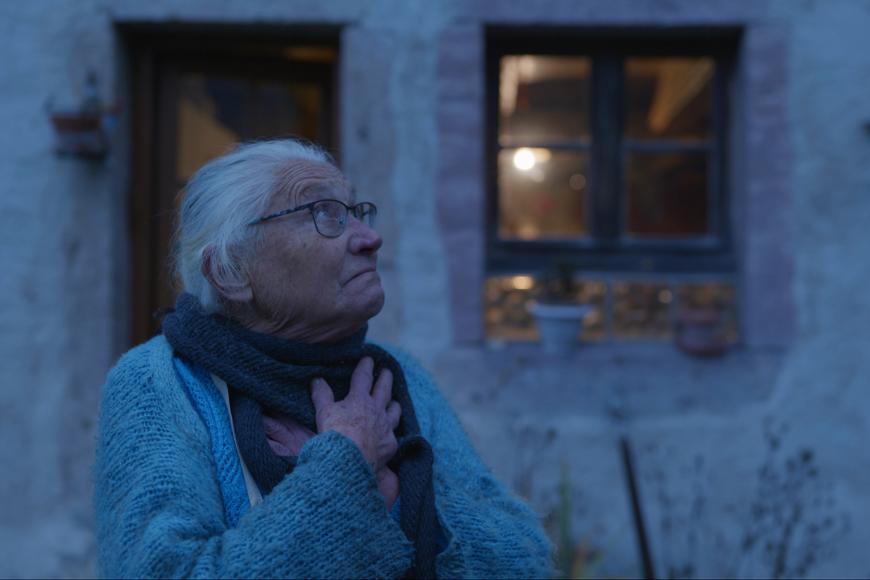
For a year, over all four seasons, Stéphane Manchematin and Serge Steyer keep returning to the Vosges where Suzanne lives. By now she looks back on more than nine decades of life, an old lady who stoically clings to the self-sufficiency of the house where she was born. The place lacks all comfort, neither electricity nor water supply help with cooking or heating. Nonetheless, Suzanne wants for nothing: When the indoor temperature drops to single digits in winter, she simply takes a hot-water bottle to bed and adds another layer of blankets. In the bathroom, water reliably flows from a groove, and if the light hits the surrounding glass carafes, it soon dances through the room.

Manchematin and Steyer know how to stage everyday procedures and conditions alertly and sensitively – their film’s meanderings are as casual as they are focused. And Suzanne, too, becomes more and more approachable. After a very short time, one develops a sense of her habits, registers with amusement her eternal twirling of the telephone cord, or discovers a quite assertive person behind the wheel. All this happens without romanticisation or kitsch. Instead, the observation is characterised by abundant laconic wisdom.
Carolin Weidner

Credits DOK Leipzig Logo

Director
Stéphane Manchematin, Serge Steyer
Cinematographer
Gautier Gumpper, Philippe Viladecas
Editor
Stéphane Manchematin, Serge Steyer
Producer
Sylvie Plunian, Milana Christitch
Sound
Stéphane Manchematin, Marc Namblard
Sound Design
Lionel Thiriet
Nominated for: FIPRESCI Prize, Prize of the Interreligious Jury
Filmstill Tale of the Three Flames

Tale of the Three Flames

As três chamas
Juliette Menthonnex
International Competition Documentary Film 2023
Documentary Film
Portugal,
Hungary,
Belgium,
Switzerland
2023
21 minutes
Portuguese (Portugal),
Spanish,
Dutch
Subtitles: 
English
“See you next year!” a Portuguese fire warden says as he dismantles his control equipment at the end of the season. Humans and nature in southern Europe may be used to forest fires, but that does not change the facts: The ever more massive conflagrations are caused by climate change. We have long been living in the age of fire.

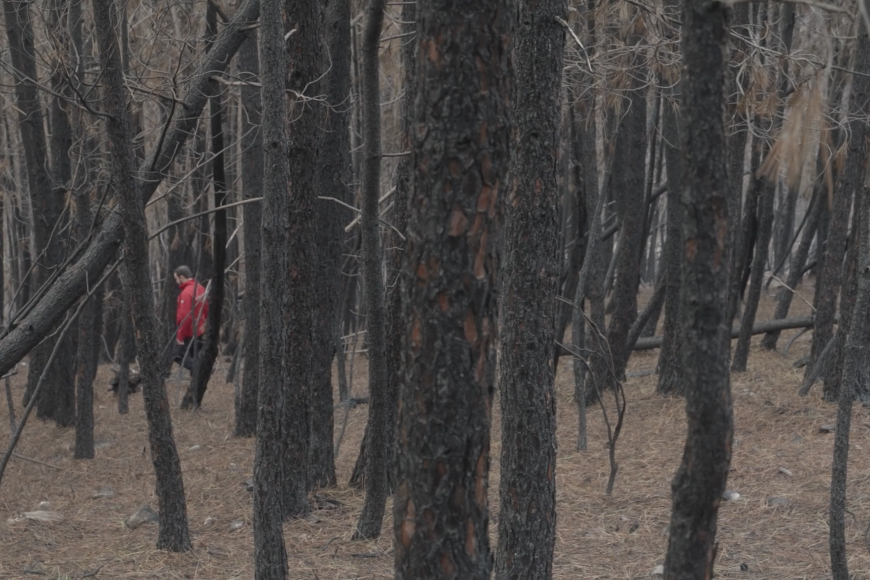
In the Portuguese interior, a forest fire has just devastated a large area. Wounded nature is silent, not a single bird is heard, only the wind that makes the charred tree trunks rustle. But the vegetation recovers astonishingly fast. Where all life seemed to be gone, greenery soon sprouts from the ruined trees. The residents of the affected region are engaged in the reconstruction with great respect for their natural environment. Because plants, too, are sentient creatures. In quiet, almost melancholic, but also hopeful images, the film pays tribute to the strength of the trees and illustrates how essential it would be for humanity to learn to live in harmony with nature again.
Annina Wettstein

Credits DOK Leipzig Logo

Director
Juliette Menthonnex
Cinematographer
Ilona Szekeres, Sergio da Costa
Editor
Antoine Flahaut, Juliette Menthonnex
Producer
Véronique Vergari, Victor Candeias, Agnès Boutruche
Sound
Juliette Menthonnex
Sound Design
Yatoni Roy Cantu
Filmstill Tales from the Source

Tales from the Source

Tales from the Source
Léonard Pongo
International Competition Documentary Film 2024
Documentary Film
Belgium
2024
39 minutes
without dialogue
Subtitles: 
None
For ten years, Belgian photographer and artist Léonard Pongo has been documenting the landscapes of the Democratic Republic of Congo. In his latest work, he enters into a sensual dialogue with them. The precise camera often focuses on light reflections that literally draw us into the moving images, while at the same time revealing the cinematographic apparatus behind them. In combination with the elaborate sound design and the restrained, beautiful music of “Bear Bones, Lay Low”, the solo project of the Belgium-based Venezuelan Ernesto González, the portrait of a landscape emerges which the captivating montage composition turns into a visual, auditive and meditative pleasure.
Nonetheless, “Tales from the Source” is not a traditional “nature film” but an aesthetic positioning inspired by Congolese traditions, art and philosophy which – as the artist himself emphasises – represents the Congolese landscape “as a source rather than a resource.” The result is best described as an experience rather than a representation.
Borjana Gaković

Credits DOK Leipzig Logo

Director
Léonard Pongo
Script
Léonard Pongo
Cinematographer
Léonard Pongo
Editor
Léonard Pongo, Fairuz Ghammam
Producer
Marie Logie, Auguste Orts
Co-Producer
Twenty Nine Studio & Production
Sound
Cédrick Mbongo Mbulu, Léonard Pongo
Sound Design
Laszlo Umbreit
Score
Bear Bones, Lay Low
World Sales
Auguste Orts
Nominated for: Silver Dove
Filmstill The Wages of John Pernia

The Wages of John Pernia

The Wages of John Pernia
Ben Young
International Competition Documentary Film 2023
Documentary Film
UK
2023
8 minutes
English
Subtitles: 
German
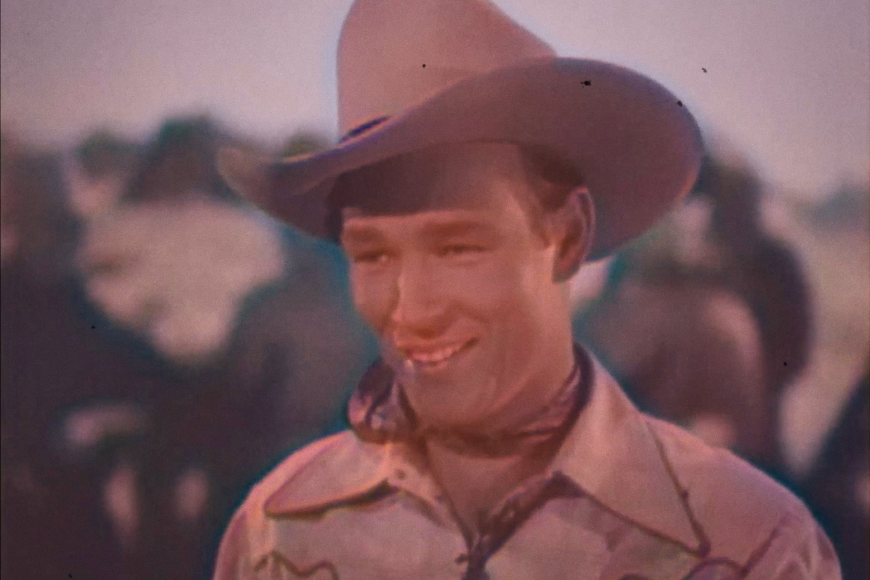
Before photography and film were invented and constructed the “Wild West”, the famous explorer Meriwether Lewis, whose travels made the westwards expansion of the still young USA possible, died under mysterious circumstances. The present-day narrator of this film, a distant descendant, portrays him as the tragic hero of a speculative gay love story. The potential lover, Meriwether’s “Louisiana Creole” servant John Pernia, is historically documented. But the archive material, which favoured the white folklore of the so-called age of pioneers, lays no trail to this romance.

Ben Young wilds the early Western imagery and queers the nationalist historiography from the perspective of people who are missing in the tales of glory and whose originally free space was occupied by the settler movement and its subsequent legend formation. He uses associative montage and gossip to rehabilitate John and Meriwether, the undocumented romantic couple, as the real pioneers. And they have a score to settle with the U.S.
Jan Künemund

Credits DOK Leipzig Logo

Director
Ben Young
Script
Ben Young
Editor
Theo Watkins
Producer
Ben Young
Sound
Andrew Ludbrook
Sound Design
Theo Watkins, Andrew Ludbrook
Score
Blessed are the Hearts that Bend