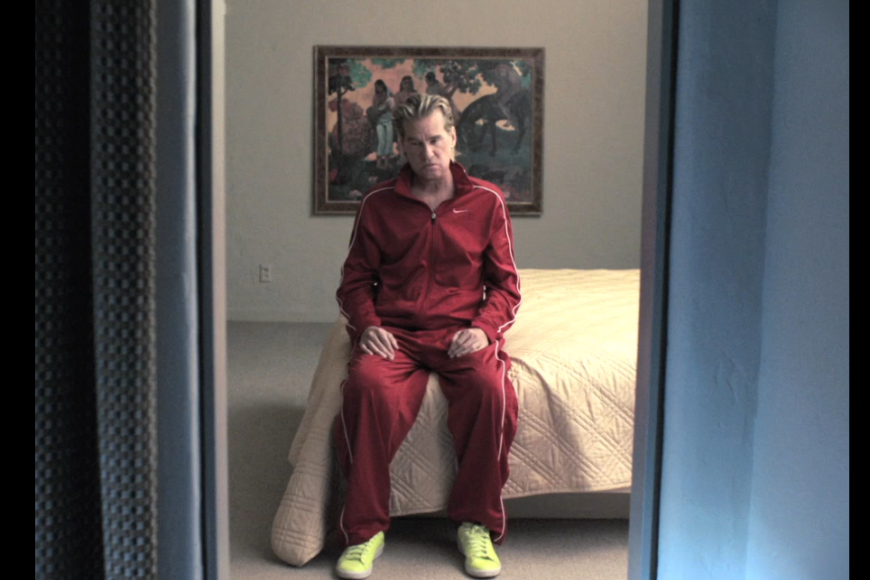
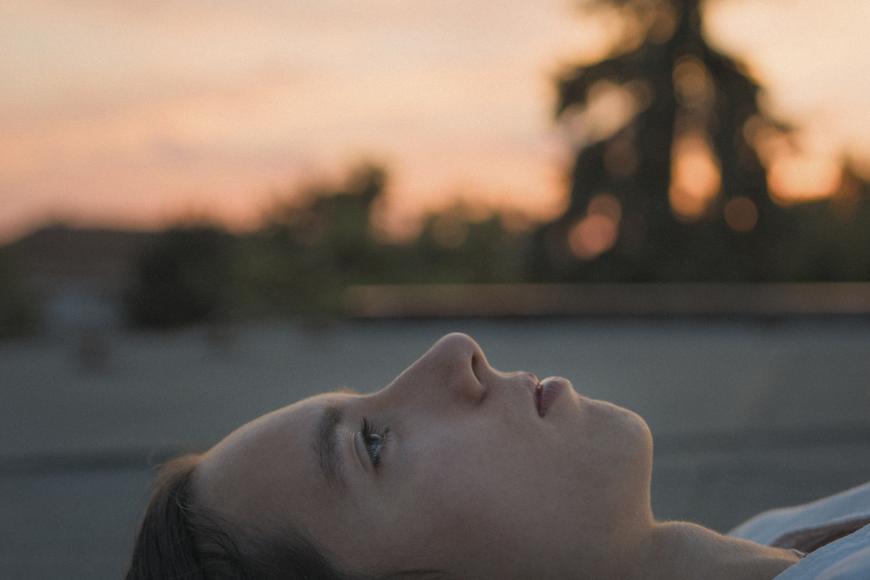
A ghostly voice sings about transience while the camera glides past closed curtains, capturing the expressive, lived-in face of a dozing Val Kilmer. Rick Alverson’s disconcerting stroboscopic video editing makes the dozing body twitch. The inner turmoil of a troubled soul and restless memories rise to the surface.
Calm and focussed, Elleni Sclavenitis brings to light a historical crime forgotten by hegemonic historiography: cinematic history writing in perfection.
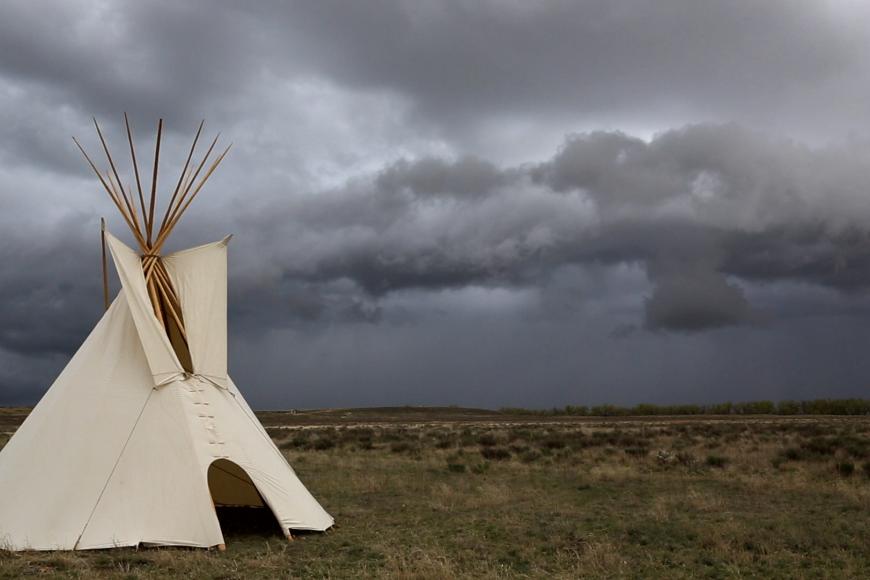
The Sand Creek Massacre on 29 November 1864: More than 200 Cheyenne and Arapaho were murdered by the U.S. Cavalry. Ignorant hand-downs from the past and the omnipresence of statues glorifying murderers are juxtaposed with an empty museum of indigenous history for which there is no funding. This film against forgetting by a white female director also examines its own position: she talks frankly with descendants of the survivors – many of whom are choosing a scientific approach to history.
Paper and colour pigments lead a life of their own. The material awakens and opens its mouth. The colours begin a subtle dialogue about the difficulties of human interaction.
Paper and colour pigments lead a life of their own. The material awakens and begins to talk, opening its mouth. The colours speak to each other, their substances add up to form a multi-layered tale about the strains of dialogue and interaction. The texture of the hand-painted individual frames is closely interwoven with a sonic tapestry of human sounds and minimalist electronic resonances.
A gloomy filmic contribution to sea rescue and a concentrated revelation of the mechanisms of systematic flight prevention in the Mediterranean and the people responsible for it.
A person swims for their life in the open sea. A European merchant vessel starts its engines and sails away from them. The pilot of a civilian aerial reconnaissance plane admonishes the captain and appeals to his conscience. The Libyan coast guard and the swimming person reach the decks of the European merchant vessel at the same time. Outcome unknown. The world turns in circles. This is not a film about the alleged refugee problem but one about the problem called Europe.
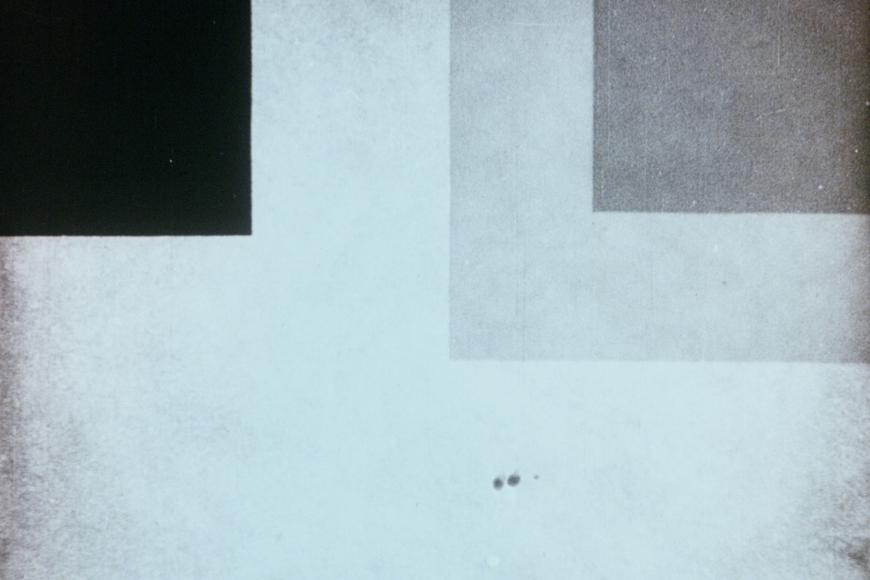
The painter Ruttmann takes out a patent for a process to produce moving image: glass sheets mounted on top of each other are painted with oil paints and photographed from above with a camera.
Like many artists of his time, Walter Ruttmann discovered film as a medium of experimentation with revolutionary forms of expression. He gave up easel painting in 1918 and acquired the first German patent for an animation stand in 1920, thus creating the technical prerequisites for his “Opus” series: abstract elements of painterly gestures and cardboard moved by stop-motion.
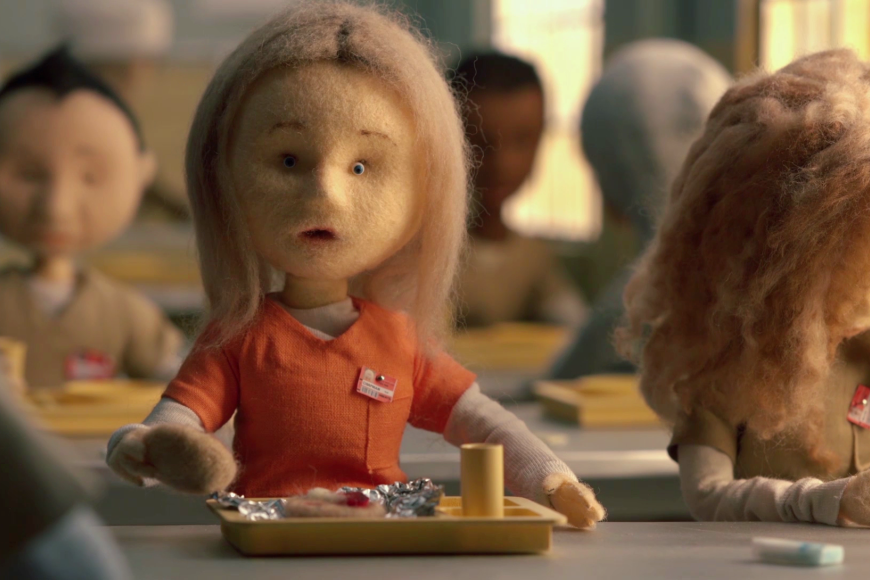
A commissioned work: Špela Čadež’s summary of the legendary comedy drama show set in a women’s prison, “unravelled” in soft and scratchy wool, yellow as urine and red as blood.
To promote the start of season five, Špela Čadež summarises the first four seasons of the legendary US comedy drama show for Netflix. From the streaming provider’s logo to the canteen food through to vomit – Čadež “unravels” her condensed version of the stories from the women’s prison in soft and scratchy wool, yellow as urine and red as blood.
As we watch individual details and their interplay as a whole, presented on rotating discs, we get a spark of insight into the interactions of flora and fauna on earth and the elemental power of our central star, the sun. Temporality, rhythm and the functioning of film are hinted at. A look at the origins of life and the moving image.
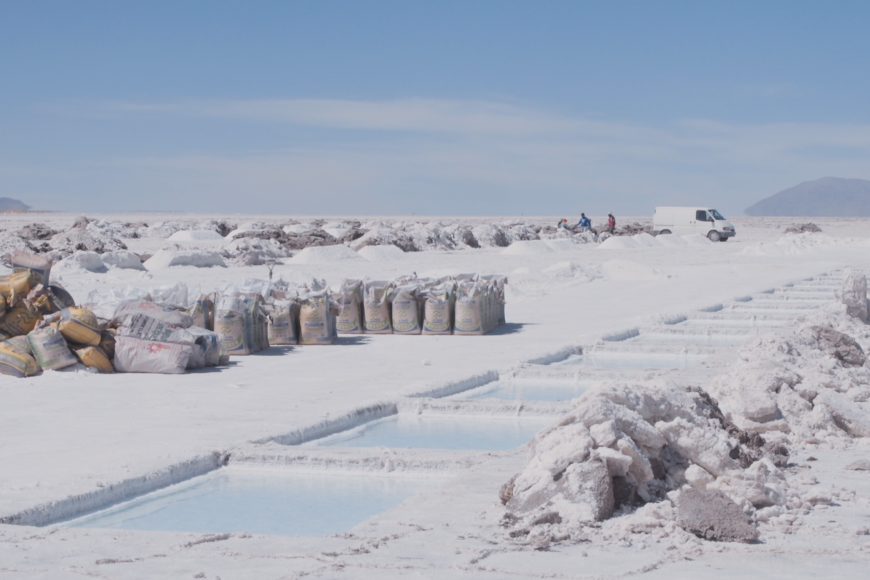
The downside of e-mobility: Because big corporations are mining lithium for batteries in the Argentinian salt deserts, the indigenous population have no water to live.
The vast expanses of the Argentinian salt deserts hold one of the greatest lithium deposits in the world. International corporations are mining the “white gold”, robbing the indigenous groups who, since time immemorial, have bred llamas and lived on traditional salt-mining in this area, of precious ground water. In magnificent images and with a narrative approach that combines poetry and agitprop, “Oro Blanco” shows how the indigenous population are fighting against the exploitation and destruction of “pacha mama”. Their resistance needs some heightened awareness on the other side of the world, where lithium batteries are all too often regarded as the cure-all against the use of fossil fuels.
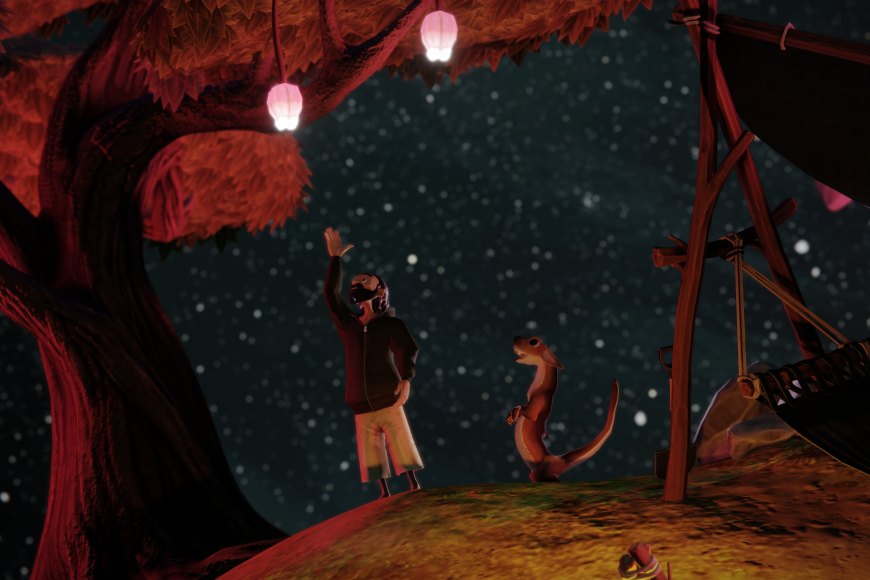
Oto lives a quiet life on his planet until one day a spaceship crashes down. Out comes Exo, who claims half the planet as his own. A lighthearted story painted with dark humor, “Oto’s Planet” mirrors our own planet. As the story unfolds, the viewer can spin and rotate the planet to see it from all different perspectives. Oto’s planet is in your hands.
Dana Melaver
Credits
Director
Gwenael François
Producer
Julien Becker, Nicolas S. Roy, Vincent Guttmann, Voyelle Acker
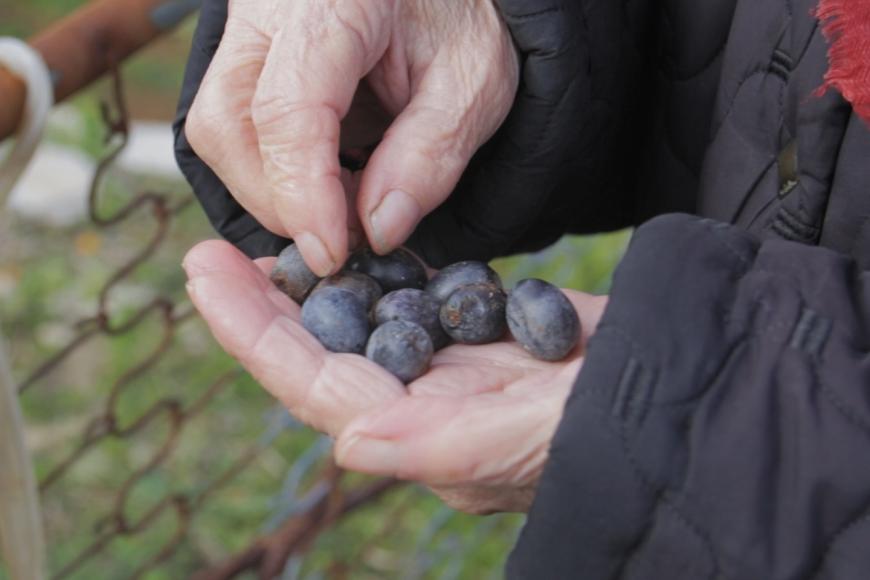
An elderly couple, a few olives on the ground that nobody collects any more. Once they were the livelihood of a family now scattered to the four winds.
Shaking his head, Michele looks at the olives lying on the ground. Nobody collects them now. He once planted the olive trees. They were his pride and fed the family. Now he sits by the fireplace with his wife. Their hands show the years of hard field work. With a tender gaze, their grandson watches his grandparents cook, argue, take walks. Moving snapshots that coalesce into a life lived, a chronicle of the rural exodus in Italy.
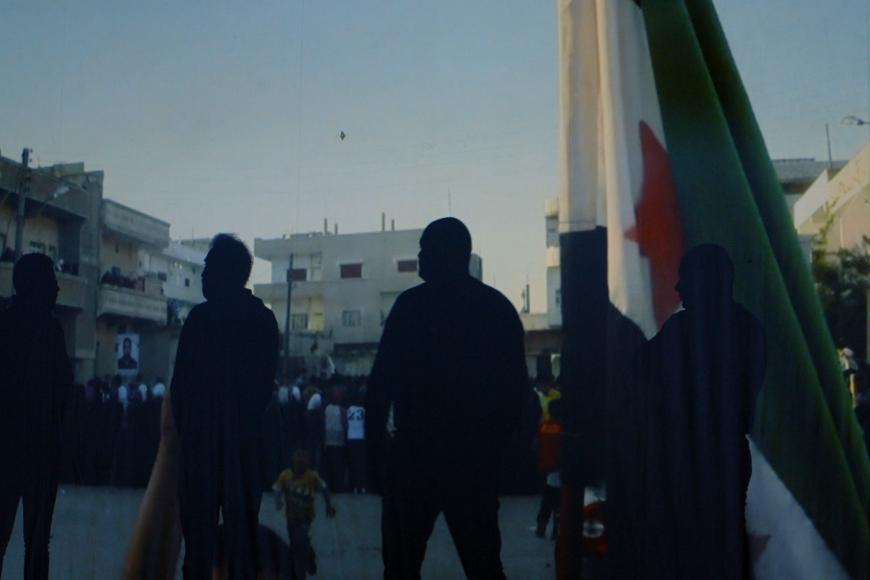
In the midst of a cruel conflict, Syrian activists place their hopes in the production of images. What stories do their recordings tell? What role do they play as testimonies?
Frihed, håb og andre synder – Den syriske revolution 10 år senere
Rami Farah, Signe Byrge Sørensen
Competition for the Audience Award 2021
Documentary Film
Denmark,
France
2021
90 minutes
Arabic
Subtitles:
German Subtitles for deaf and hard-of-hearing, English
The most valuable thing Yadan carries with him on his flight is a hard drive. It contains almost 13,000 videos recorded in 2011 and 2012 by him and other insurgents in Daraa, the “cradle” of the Syrian revolution. Eight years later, Yadan and two of his fellow travellers meet in a theatre in Paris to (re)confront the material. In the dialogue between the men and the images, a piece of the country’s history begins to take shape.
When peaceful protest turns into brutal war, a small group of civilians become the voice of Daraa. They film where there is no official coverage: at first in order to help the revolution into actual existence by their media representation, later to bear witness in an urgent plea for help to the international community. Against the human rights crimes of the government troops, against shelling and bombs – the camera is their weapon. The cinematic set-up becomes the starting point for a reflection about the meaning of images, then and now, and at the same time triggers a conversion of personal into collective memories. The protagonists’ reactions reveal how painful this process is: “Is the collection of the story worth all the violence that memory brings back?” is asked from offscreen. The film gives a decisive answer.
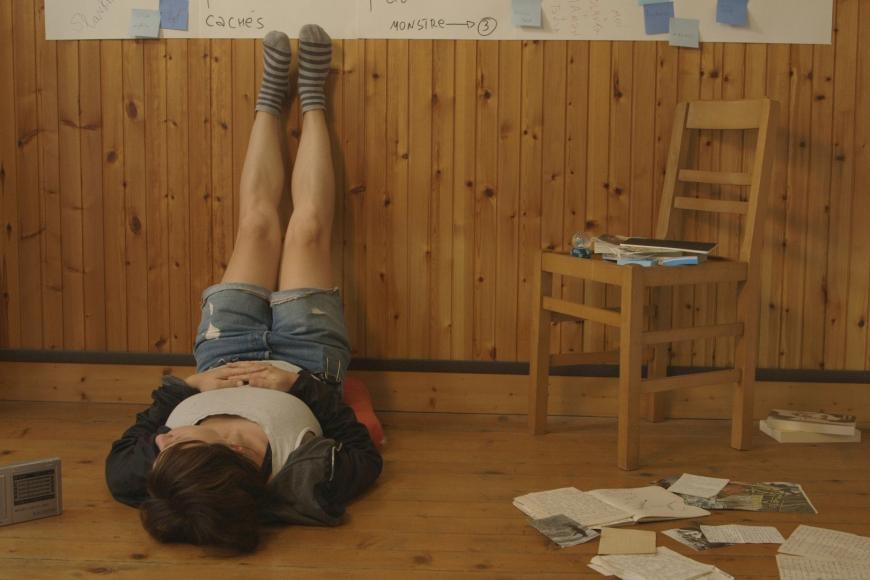
Adopting a foreign language enables a Belarusian woman living in France to gain access to her mysteriously vanished father. Brittle memories become literature.
English, German Subtitles for deaf and hard-of-hearing
By adopting the French language, Belarusian writer Aliona Gloukhova has found a way to write about her vanished father. Director Elitza Gueorguieva follows this process, which culminates in the publication of a book. At the same time, the lives of two women cross paths who ended up in Western Europe partly to gain distance from their home countries, Belarus and Bulgaria.
Using the coordinate system of a foreign language to express what would feel dramatic or pathetic otherwise: Aliona Gloukhova chose this method to write down the story of her father, a quiet dissident and Chernobyl expert who suddenly disappeared in the mid-1990s. The memories of him are sketchy, and perhaps even what masquerades as memory isn’t real. Aliona immerses herself in fiction and the French vocabulary that gives her the freedom to formulate her own version of what happened. Elitza Gueorguieva follows this cautious approach to the biographical-linguistic complex, which also appeals to her own memories. Because on the streets of Minsk, which she walks with Aliona, she immediately feels the familiar childhood fear. It overwhelms her like biting into a madeleine she had better not tasted.
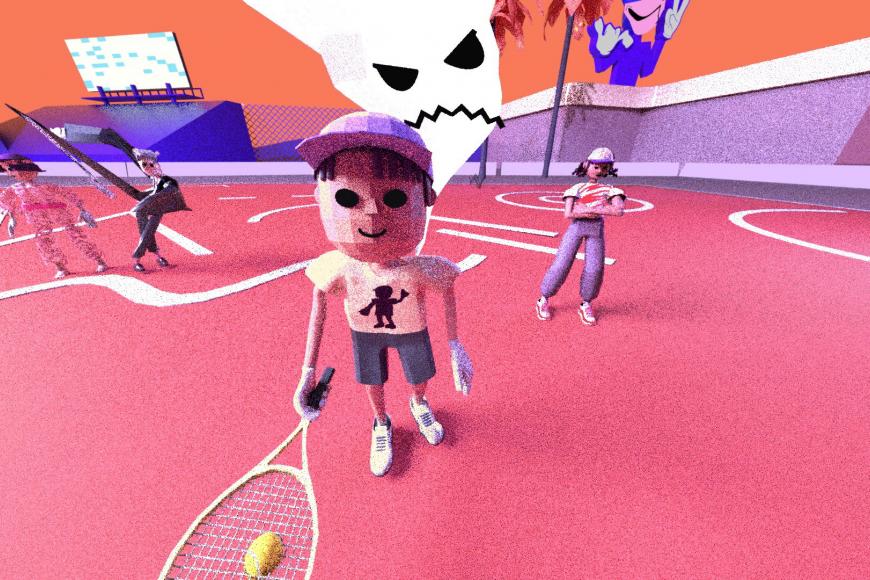
A video game takes some entertaining and philosophical wrong turns: the tennis player slides from the centre court into a parallel world. A search for identity outside the rules of the game begins.
Competition for the Audience Award Short Film 2020
Animated Film
Germany
2020
15 minutes
English
Subtitles:
English
A video game takes some entertaining and philosophical wrong turns: the tennis player figure slides from the centre court into a parallel world and is robbed of his racket. The quirky “Pong” setting gradually evolves into the course of a desperate search for identity outside the rules of the game. The pathetic polygonal Roger Federer stumbles over glitches. Rowdy supporting characters offer first harassment, then help. The design, this undead relic from the past of games, is a subversive fellow player.
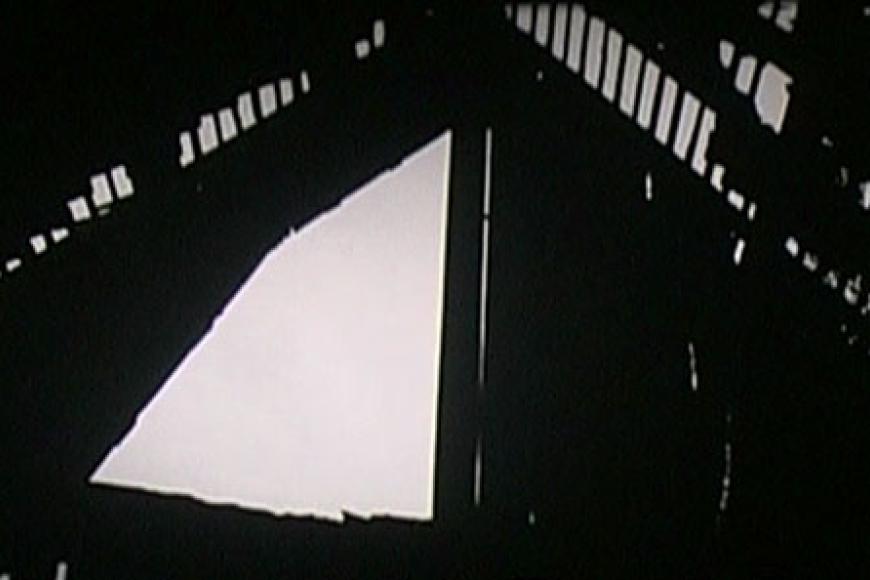
Inside a barn the camera catches daylight filtering through the gaps in the crooked walls. The flashing rays seem like the heartbeat of this fragile building.
Inside a barn the camera catches the daylight filtering into the fragile building through the irregular gaps and crevices in its wooden skin. It chases them with whip pans or ambushes the slowly creeping sunlight with time-lapse shots. The flashing, blazing rays seem like the heartbeat of this chamber of light. There is no outside view.
Can a dwarf be dangerous? When martial law is imposed, a protest movement forms in Poland that undermines the order of the regime with subversive artistic interventions.
“No freedom without dwarves!” What form of oppositional logic can take hold when nothing is logical anymore? “The Orange Alternative” has answers. When living conditions in communism reach the threshold of the surreal, the protest movement that sprang from student circles decides to subvert the order of the regime by Dadaist artistic interventions.
Family obligations, her autistic sister’s needs and her own dream of studying psychology – 18-year-old Johanna must find the courage to take a life-changing decision
There is something very subtle about the moment when children become adults that it can hardly be put into words. In fact, hidden, almost imperceptible changes suddenly appear that act like tectonic shifts in the human psyche. In her documentary debut, Marie-Magdalena Kochová has managed to capture this subtle move. She documents the life of 18-year-old Johana, who lives with her parents and her younger sister in a small town in the Czech Republic. The sister has autism. Her health condition is severe and unpredictable. Her hysterical fits and aggressive outbursts dictate the life of the whole family. All the schedules are synchronised so that someone is always with the youngest. The well-practised routine is threatened when Johana decides to apply for a study programme in psychology at the university after her school exams. This means that she will soon have to move to another city, leaving the entire burden on the parents. Kochová shows us a transitional period in anticipation of massive changes, which requires everyone involved to have firm confidence in their own decisions. The mental tension is palpable, but the camera maintains an equalising distance. Step by step, the beauty of a challenged life unfolds, where courage becomes the only measure.
Vika Leshchenko
Credits
Director
Marie-Magdalena Kochová
Script
Marie-Magdalena Kochová
Cinematographer
Ludvík Otevřel, Kristina Kůlová, Marie-Magdalena Kochová
Editor
Simona Donovalová
Producer
Vít Poláček, Petr Kubica, Aleš Hudský, Barbora Drtílková
Co-Producer
Matej Sotník, Veronika Slámová, Tomáš Šimon, Lenka Medová