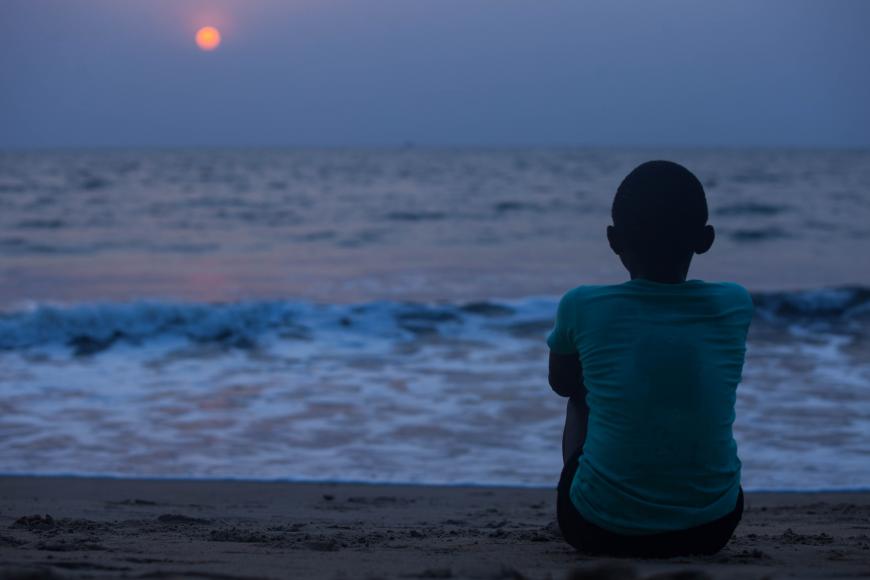
Manuela was four years old when her parents went abroad to work. She is growing up with her grandparents in Cameroon and has learned to cope with absence.
Manuela lives in Cameroon and was four years old when her parents went abroad to work. She’s eleven now and preparing for her first graduation. She is growing up with her grandparents and, despite leading a good life, had to struggle with grief for a long time. Now she has learned how to cope with absence and how to be together despite the long distance.
After the graduation ceremony, Ba, a young musician, leaves the hall with his tuba over the shoulder. At the door he meets his teacher who makes him promise something: report back as soon as he has found a job. As nobody picks him up at the student residence, Ba makes his own way through the barren rural area. Home at last, he discovers that his father has found a new wife who now lives with him. There is no more room for Ba. He leaves his former home and sets out to look for a job. Various futile attempts to find employment follow, first as a musician, then unrelated to his training. All efforts fail in the face of the absurd requirements of potential employers. Ba would first have to buy an expensive suit and could expect to get wages only after an unpaid initial phase, as he was still a beginner. Ba can only fend off his teacher’s intrusive questions by inventing white lies.
This world, where there is not a shred of green landscape left, where the plaster crumbles from the walls, where everything is falling apart, has no use for the musician Ba. His daily expenses consume his last bit of money. Hopes of happiness and being able to earn his living fade away. Ba’s tuba falls silent.
Franka Sachse
Credits
Director
Xu Jingwei
Producer
Yang Leiting, Yang Xintong
Animation
Yang Leiting
World Sales
Shuting Li
Winner of:
Golden Dove Feature-Length Film (International Competition Animated Film)
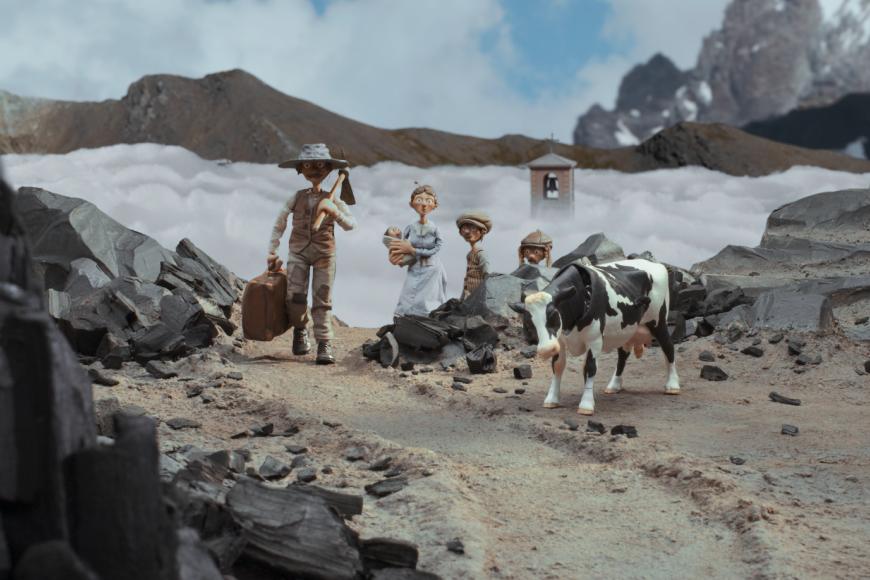
Alain Ughetto has erected a warm-hearted monument to his grandparents with this family chronicle, imaginatively directed as a puppet animation and spanning half a century.
Hunger and hardship ruled the Piemontese mountain village of Ughettera at the beginning of the 20th century. The meek peasants complained neither about the parasitic priests nor the tough seasonal winter work in neighbouring France – not even when the Italian state called them to arms and sent them first to Libya, then into the World War. Only when the Fascists arrive did the Ughetto family trade its home for new deprivations and new hopes across the border.
With this imaginatively directed puppet animation, Alain Ughetto has created a warm-hearted memorial to his Italian grandparents Cesira and Luigi. With subtle humour, tenderness and empathy he tells of generations who lived in poverty, but also of happiness and love, fortunes and misfortunes. “You don’t come from a country, you come from your childhood”, Cesira teaches him. The director finds himself in this family chronicle, recognises his predilection for working with his hands. Soon the film becomes a reflection on telling stories with what these hands shaped. They are frequently present in the frame – piling charcoal into a mountain, making forests from broccoli or simply getting handed a cup of damn strong espresso by Cesira.
Hands grasp emptiness or for bundles of lines. Their everyday movements are turned into a ghostlike play of gestures, because the devices they operate are erased from the frames.
Hands grasp emptiness. Sometimes they get hold of bundles of lines. Their everyday movements are turned into a ghostlike play of gestures, because the objects they handle and the devices they operate are erased from the frames. The sense of touch takes centre stage – in the actions themselves, but no less in the scratches on the material which dance to creaky, grating sounds.
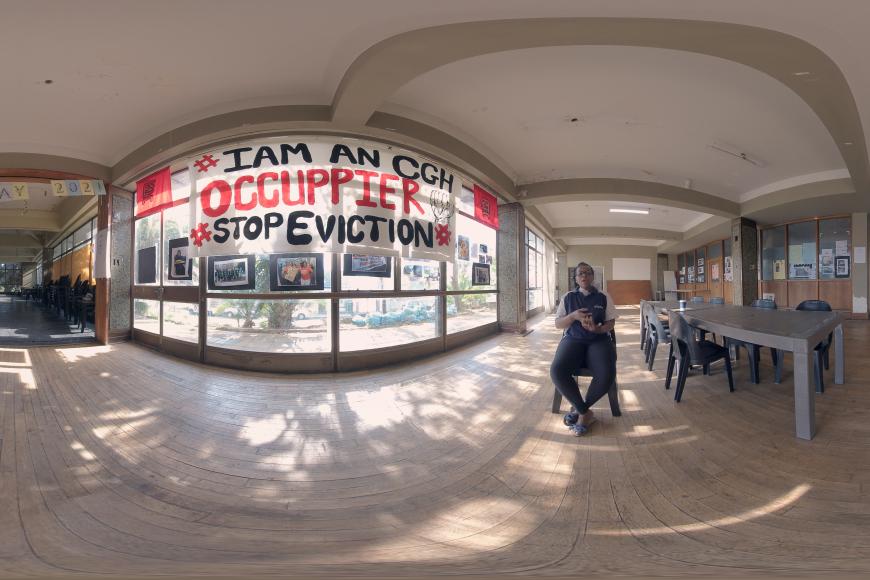
In 2017, the “Reclaim the City” initiative occupied an unused hospital in Cape Town. Their symbolic protest against the housing shortage became a new home for hundreds of people.
In 2017, the “Reclaim the City” initiative occupied an empty hospital in the Woodstock district of Cape Town. Their symbolic protest against the housing shortage became a new home for hundreds of people: the “Cissie Gool House”. The work conveys intimate insights into an unusual housing project that combats criminalisation by politics and the public.
Lars Rummel
Credits
Producer
Dylan Valley, Annie Nisenson, Alex Hendricks, Valentia Fisher
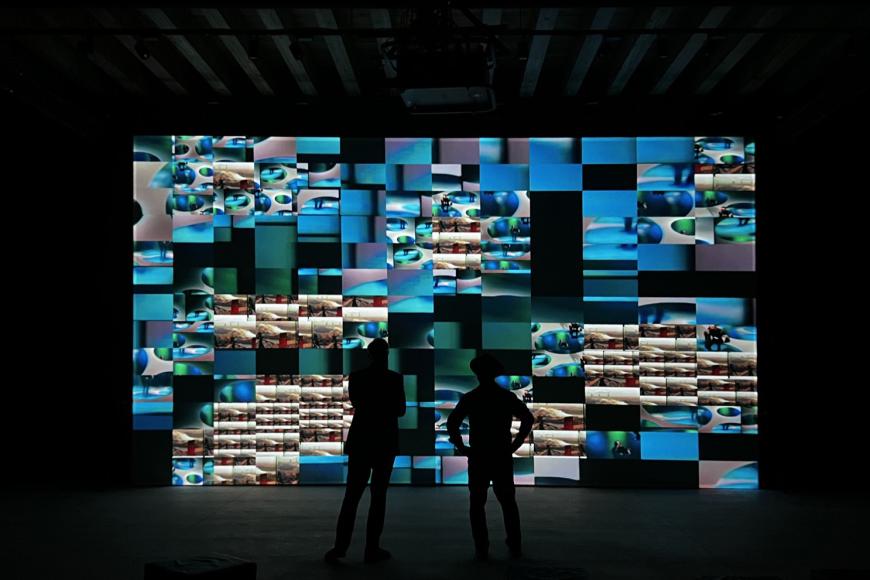
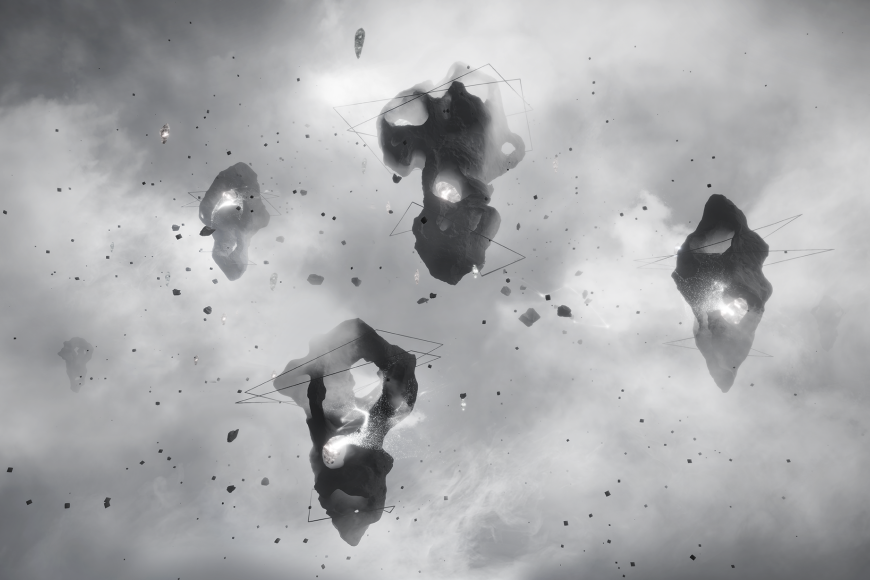
A collaboration between artists and machine, this continuously-running generative film is based on the visual archive and music of Brian Eno, as well as new interviews.
This film can go on forever. Or at least until we shut it off. A collaboration between a filmmaker, an artist and a machine, this generative film spans the length of the festival. Based on the visual archive and music of Brian Eno, as well as new interviews, this meditative audiovisual experience is created in real time through the imagination of a machine.
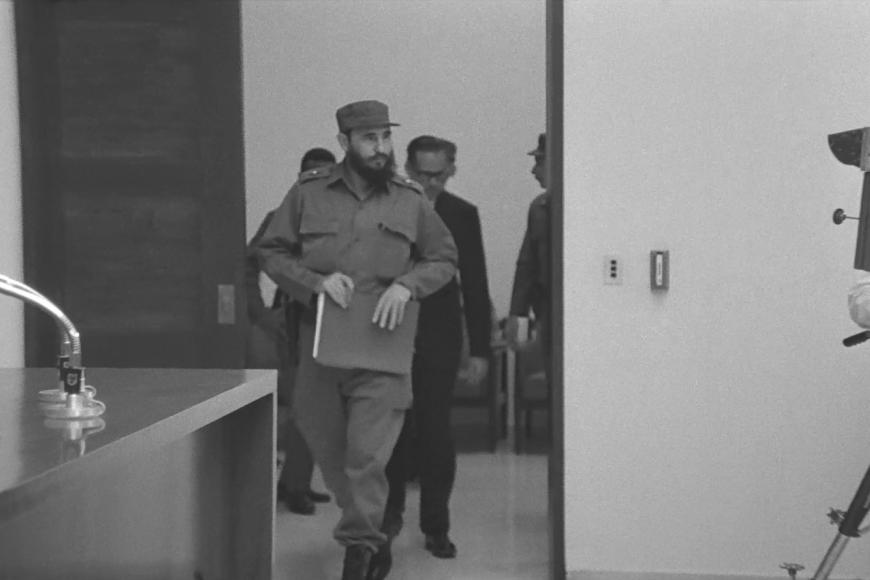
Fidel Castro comments on the events of the Prague Spring – in surprisingly critical terms. This newsreel report was withdrawn from the Leipzig festival programme in 1968.
In September 1968, Fidel Castro comments on the suppression of the Prague Spring in surprisingly critical terms. He opens his thunderous speech with the statement that it could endanger Cuba’s safety. Although Santiago Álvarez was the guest of honour at the Leipzig festival, this newsreel report was withdrawn from the programme. After long research it will be shown for the first time in Leipzig in this Retrospective.
Katharina Franck, Andreas Kötzing
Credits
Director
Santiago Álvarez
Producer
Instituto Cubano de Arte e Industria Cinematográficos ICAIC
Women should be financially independent so they don’t have to spend their life in the kitchen, her mother taught. Her daughter pays tribute to her cooking skills.
Cooking is a wonderful occasion to think, reminisce and talk. And if you have never learned to cook, if you’ve spent your life seeing the place at the stove as a feminist step backwards, then you can only have braised pork ribs while reflecting on your distant first home, your mother. How fortunate then that one can also reminisce in animated form and do it so impressively that the fragrant images make our mouth water.
The director, a stateless Filipino, returns to his native country. For more than twenty years, he lived without papers in the USA and feels trapped in a world full of borders.
English, German Subtitles for deaf and hard-of-hearing
How does an undocumented individual document themself? This is the question the Filipino filmmaker who grew up illegally in Los Angeles asks himself. His extended family live scattered across the USA and the Philippines. Now he embarks on a journey to his estranged native country, driven by the desire to overcome a curse that has profoundly disturbed the family history over generations. The colonial past is a heavy burden even today, even in the diaspora. Filipino itself, the official language with its countless loanwords from Spanish and English, is nothing but a linguistic by-product of the colonial era.
By re-locating Miko Revereza tries to come to terms with the experience of distance and loss of identity with a remarkably idiosyncratic and creative approach. His psychogeographical filmic journey is dense and meandering, the camera sometimes literally destabilised as if by the curse. By means of superimpositions and improvised music a melancholic but never accusing memoir is created that lingers in our minds. The filmmaker, who showed “The Still Side” at DOK Leipzig in 2021, lives in Mexico today.
Annina Wettstein
Credits
Director
Miko Revereza
Script
Miko Revereza
Cinematographer
Miko Revereza
Editor
Miko Revereza
Producer
Shireen Seno
Sound Design
Miko Revereza, Kevin T. Allen
Score
Vincent Yuen Ruiz
Nominated for:
Prize of the Interreligious Jury,
FIPRESCI Prize
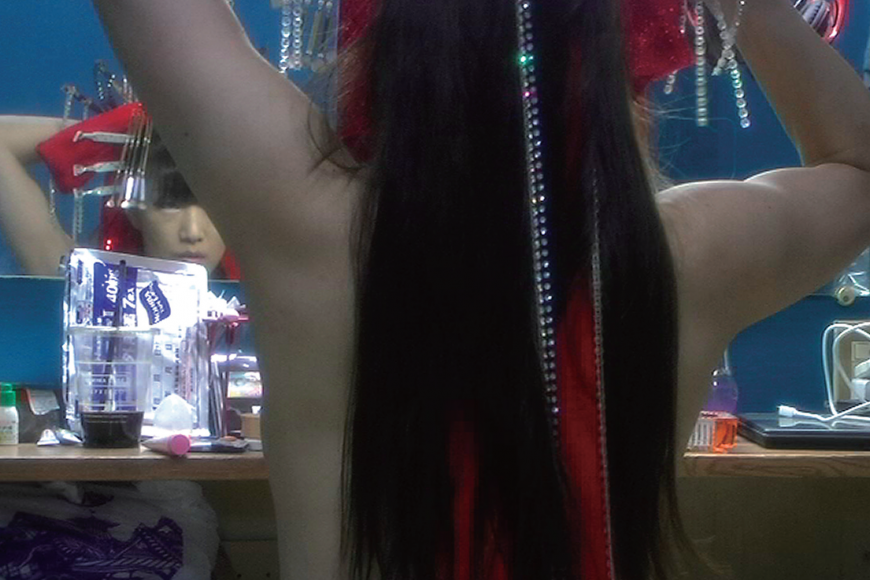
A background study of a dying amusement culture, filmed in slovenly dressing rooms in front of badly polished make-up mirrors. – That’s how far editor Mary Stephen follows director Yoichiro Okutani’s montage interpretation of his own footage about the Japanese strippers called Odoriko. But Stephen’s editor’s cut begins fully dressed: a tastefully lit stage overture in costume, starting from which she rearranges or rather sheds the material, reintegrating image and sound sequences originally discarded by Okutani, for example the titular statement of an Odoriko explaining her choice of profession: “It was about being nude at heart.”
Paul Celan, creator of the “Death Fugue”, shaped the West German reception history of Resnais’ film with the lyrical rhythm and tense switches of his translation.
“Le sang a caillé, les bouches se sont tues,” Jean Cayrol writes. Paul Celan translates: “The blood has congealed, the mouths have fallen silent.” Alain Resnais’ archive film about the National Socialist concentration camps set new standards for the essayistic form. The score by Hanns Eisler had nothing to fear from changes to another language version. But the words of Jean Cayrol, more elegy than commentary? Paul Celan, creator of the “Death Fugue” and already associated with Cayrol as his translator, was asked to translate it into German. His lyrical rhythm, his tense switches deviating from the original text have shaped the West German reception history of Resnais’ film.
Henryk Keisch’s new translation for DEFA made up for Paul Celan’s omissions. In his version of the text, the Soviet Union, left out of the FRG version, returned to the circle of Nazi victims.
“Le sang a caillé, les bouches se sont tues,” Jean Cayrol writes. Henryk Keisch translates: “The blood has dried, the mouths have fallen silent.” When Resnais’ film was to be licensed for theatrical release in the GDR, it seemed obvious to resort to the West German dubbed version. But Celan’s translation failed to meet the approval of DEFA. They found fault with elisions that, for example, omitted the deportees from the Soviet Union. The official correspondence ended on an apodictic note: The acquisition was considered “irresponsible”. The writer and translator Henryk Keisch, loyal to the party line, was commissioned to write a new version – and of course made up for Celan’s omissions.
An abstract world, drawn in digital ink, inspired by Taoist philosophy. This interactive experience allows the visitor to fly, swim and soar as something other – and maybe more – than human.
Fly through an abstract world, drawn in by digital ink. Inspired by Taoist philosophy and the writings of Zhuang Zhou, this interactive experience allows the visitor to fly, swim and soar as something other – and maybe more – than human. The game is controlled by moving on a custom-built balance ball controller, which heightens the corporeal experience.
On the eve of the wedding Mother Nyurka heats up the sauna, and the household spirit makes sure that the whole wedding company get their long-deserved thrashing.
A folk tale from the Urals: on the eve of the wedding old Mother Nyurka heats up the sauna. A steam bath is obligatory and it’s a matter of honour for the respective household spirit to give the whole wedding company their long overdue thrashing. After the wild chase, Nyurka calms the goblin, feeds him and wishes the bridal couple a happy future.