Over three decades, Uwe Walter from Gelsenkirchen has become part of the Japanese village community of Miyama. This moves him at last to say goodbye to the past.
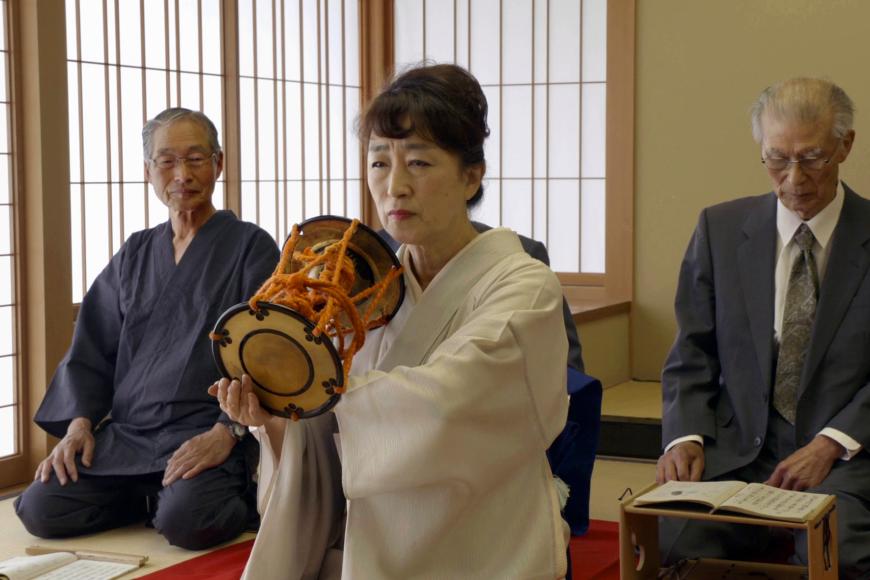
There’s probably no other citizen of Gelsenkirchen who has ever mastered Nō singing and playing the Shakuhachi flute as authentically as Uwe Walter. He has lived in the mountain village of Miyama north of Kyoto for three decades and emulates the local residents, whether they earn their living on the fields, breeding cattle or hunting. People tend their gardens, repair fences to keep away the macaques and grow their own rice. Uwe has become perfectly Japanese, at one with his environment.
However well-suited his Ruhr area wit makes him as a figure of identification, the camera keeps a respectful distance, more reserved than Uwe himself. Only at one point does it come touchingly close: When he is forced to say goodbye to an essential part of his past in the interest of the village community. But the real subject of this film is not the German with his greyish blonde curls but rather that very community, portrayed by Rainer Komers in bittersweet polyphony. It emerges in the children’s games, the adults’ pursuits and the old people’s tales, in the summer downpours of the rainy season, the white moon over the nocturnal village and the blood-red leaves of autumn.
Christoph Terhechte
Credits
Director
Rainer Komers
Script
Gregor Bartsch
Cinematographer
Rainer Komers
Editor
Gregor Bartsch
Producer
Rainer Komers
Sound
Uwe Walter, Yuki Morimoto, Michel Klöfkorn, Oscar Stiebitz
Score
Uwe Walter, Yuki Morimoto
World Sales
Joachim Kühn
Broadcaster
Doris Hepp
Key Collaborator
Hiroko Inoue
Nominated for:
VER.DI Prize for Solidarity, Humanity and Fairness
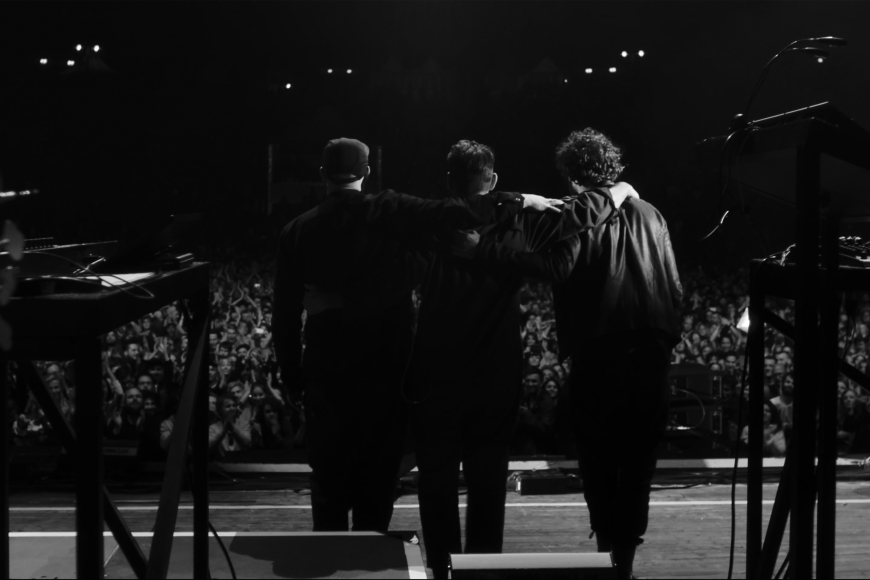
Just before a five-year creative break as “Moderat”, the members of the band speak freely about interpersonal matters and the dynamics of their electrifying cooperation.
Competition for the Audience Award Short Film 2022
Documentary Film
Germany
2022
21 minutes
German
Subtitles: 
English
After years of touring together, the Berlin supergroup “Moderat” decided in 2017 to go on a (recently terminated) hiatus. “The Last Days” portrays the three protagonists of “Intelligent Dance Music” at their most human. Black and white images taken around their last concert tour serve as a projection surface for off-screen interviews in which Sascha, Szary and Gernot describe each other, allowing deep insights into their artistic dynamics.
Please note:Stroboscopic effects are used in this film.
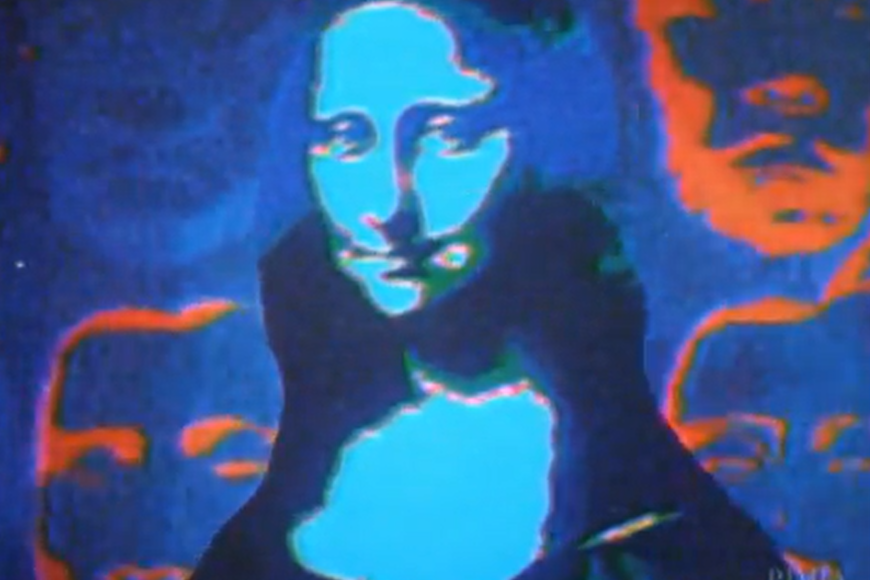
In the first ever use of the Scanimate video synth in Japan, Matsumoto takes the Mona Lisa on a journey through surreal landscapes, animating her into a shimmering psychedelic vision.
Using the Scanimate video synthesizer, da Vinci’s portrait of Lisa del Giocondo embarks on a surreal journey through real and artificial landscapes. In doing so, Toshio Matsumoto projects a kind of fantasy world of electronic images, exploding colour and movement onto his subject, animating Mona Lisa into a shimmering psychedelic vision accompanied by an abstract electronic soundtrack.
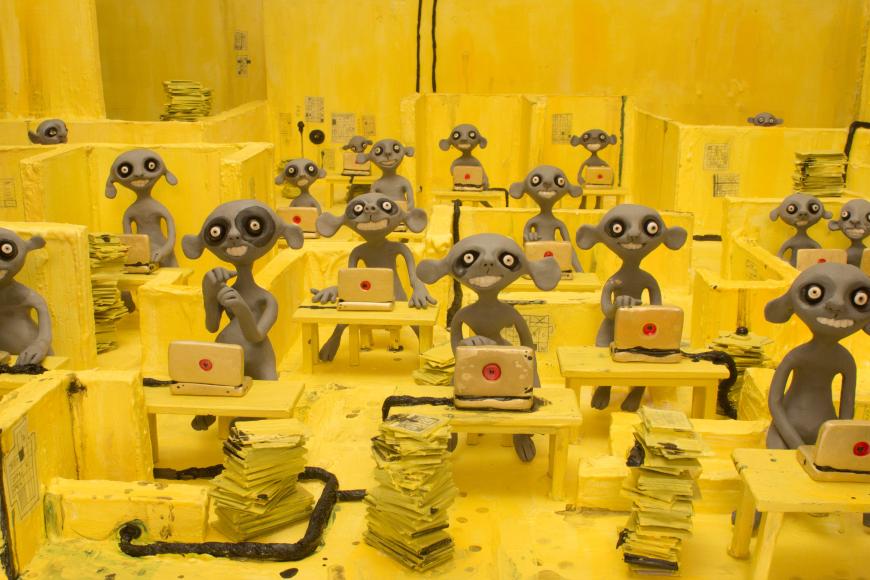
In Hamsterland, everybody is 100 percent happy and stress-resistant. An entertaining polemic on hyper capitalist, neoliberal societies that makes you smile.
Competition for the Audience Award Short Film 2022
Animated Film
Serbia,
Slovenia,
Slovakia
2022
10 minutes
English
Subtitles: 
English
In Hamsterland, everybody is 100 percent happy. Their religion is statistics and the perfect employee is young, a team player and stress-resistant. Even the most mindless computer jobs and piece work drudgery are fun, without exception. Until one day something goes wrong after all and the mantras “think positive” and “follow your dreams” are temporarily silenced. An entertaining polemic on hyper capitalist, neoliberal societies that makes you smile.
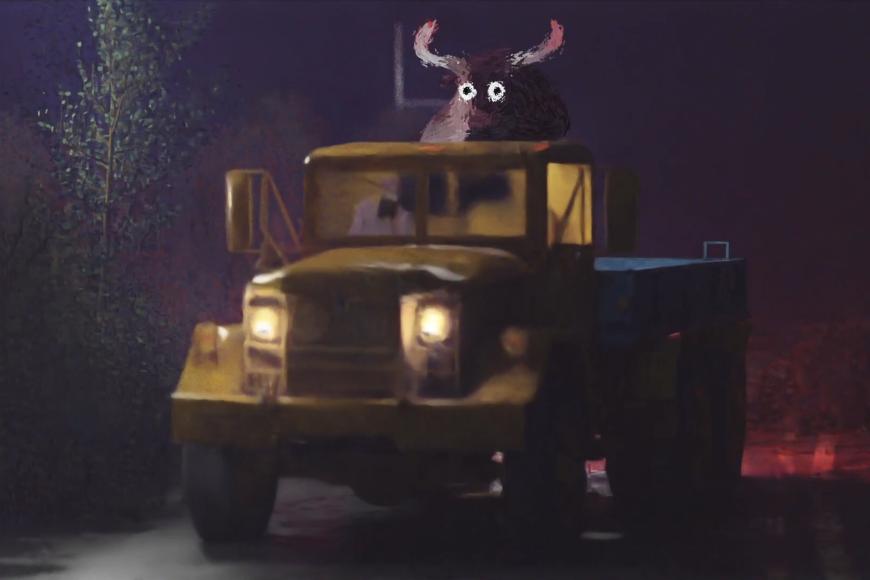
People wonder about the disappearance of the moon. Meanwhile, a bull escapes from his herd and takes a poetic trip through the night – with a surprising finale.
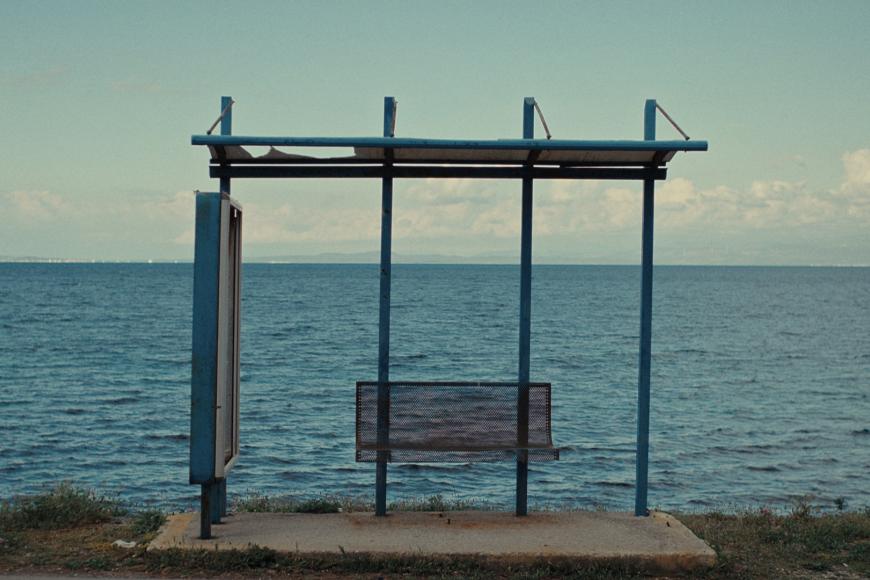
On a moonless night, a cheeky bull escapes from his herd. He dashes through fields and over hills until he finally stops at a pond, where a piece of paper on which a poem is emerging attaches itself to him. The bull shakes off the paper and sneaks into town, where he watches people at their nocturnal business. He witnesses a police investigation, listens in on two truck drivers and observes the theft of a bus stop shelter. All these experiences are accompanied by the narrator’s poetic comments and culminate in a hilarious singing sequence, complete with a dance and performance number by the bull.
Meanwhile, the people in the town are in an uproar about the undetectable moon. They search, discuss and protest. But the moon stays missing – until the bull transforms himself at the end of his journey.
Six youths were sentenced for the fire at Camp Moria on Lesbos in 2020. A look back exposes the questionable proceedings of the judiciary and the EU’s political stance on refugees.
There was an eery silence after a fire had destroyed the Moria camp completely in September 2020. Not just locally, but in public discourse. The world did not seem particularly concerned with the inhumane conditions in other camps on Europe’s external borders or the countless pushbacks in the Mediterranean. Nor did the arrest of six adolescents who were accused of arson resonate in any audible way – though even a second glance at the circumstances of the investigation and the criminal proceedings revealed the actions of the Greek judiciary to be questionable. Not to mention the underlying refugee policy of the European Union. Jennifer Mallmann dares to take this second glance with her film. At its centre is her correspondence with Hassan, one of the convicted youths, who tells her of his everyday life, his desires and fears from prison. Calm, precisely framed images document “normality” on the fringes of Fortress Europe. They show how strategical isolation and the ensuing structural exclusion work. If you want to know how our community of nations imagines its future you only need to look at the newly-built futuristic high-security camps, where new arrivals are treated like people who have committed serious crimes.
Luc-Carolin Ziemann
Credits
Director
Jennifer Mallmann
Cinematographer
Sina Diehl
Editor
Maxie Borchert
Producer
Matthias Drescher
Co-Producer
Max Brunner, Svenja Vanhoefer
Sound
Vincent Egerter
Sound Design
Timo Kleinemeier
Score
Clemens Gutjahr
Nominated for:
VER.DI Prize for Solidarity, Humanity and Fairness,
Gedanken Aufschluss Prize,
DEFA Sponsoring Prize,
Leipziger Ring
A fictitious explorer reports on gold-mining and its commercialization in Venezuela. Paradoxically, the gold diggers live off nature – and destroy it at the same time.
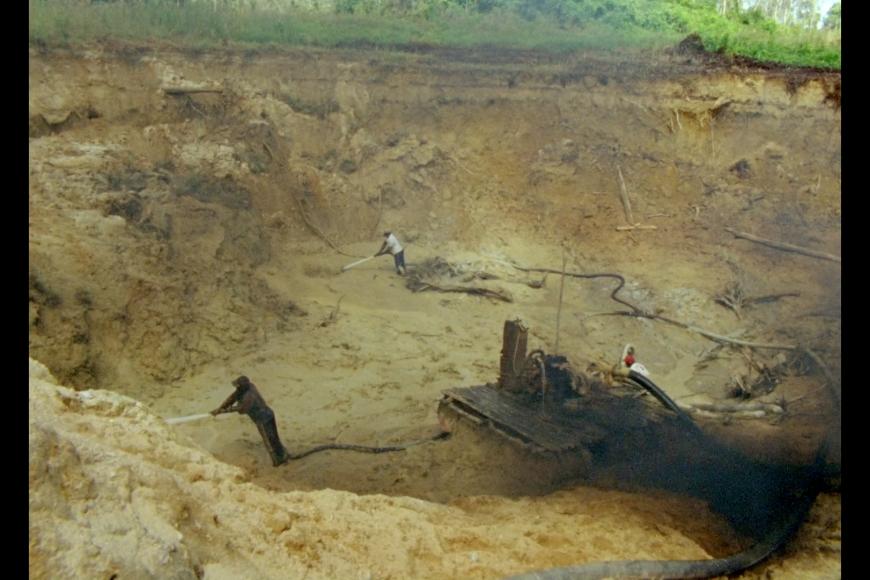
In the deliberately chosen style of an old-fashioned field report, a fictional explorer describes his observations on gold-mining in Venezuela. His mission takes him along the Orinoco, from remote jungle mines to industrial zones. His focus stays on the workers and their environment. The titular Moriche palm tree, an edible and crop plant growing along the river, serves as an example for the relationship between humans and nature and their use of raw materials. Paradoxically, the gold-diggers live in harmony with Mother Earth as their nourisher and healer, but at the same time destroy her. As in so many other places in the world, their very survival depends on an economic system inherited from colonialism. The rapid pace of capitalism is in glaring contradiction to the arduous extraction of the gold dust, produced only by slow processes of erosion. As the narrator drifts along the river and meditates on different contexts, the images work their way through the layers of the complex subject. The immersive poetic journey alternates between observational Bolex shots, hand-drawn illustrations and abstract visualisations of photochemical reactions. Accompanied by a sound design both distinct and elaborate, the lustre of the gold literally glitters from the screen.
Annina Wettstein
Credits
Director
Chris Gude
Script
Chris Gude
Cinematographer
Chris Gude
Editor
Felipe Guerrero, Chris Gude
Producer
Chris Gude, Felipe Guerrero, Maite Bermúdez, Adriana Agudelo
Sound Design
Felipe Guerrero, Chris Gude
Score
Maximilian Gude
World Sales
Michaela Čajková
Narrator
Jorge Gaviria
Nominated for:
Prize of the Interreligious Jury,
FIPRESCI Prize,
Silver Dove
In the summer of 1957, the talented amateur filmmaker Alfred Dorn travelled to Moscow for the 6thWorld Youth Games and wandered the Soviet metropolis with his camera in amazement.
Moscow, summer 1957: The famous amateur filmmaker Alfred Dorn takes us to the 6th World Festival of Youth and Students, which was intended to promote encounters and exchange between young people from all over the world as a reaction to the Second World War. Curious and amazed, the camera explores the metropolis Moscow with its iconic buildings and squares, complete with numerous festival visitors.
“A kinematographic image of the Dutch-Indies 1912 – c.1933”, assembled from silent footage commissioned by the colonial rulers, learns to speak: in the stories of the colonized.
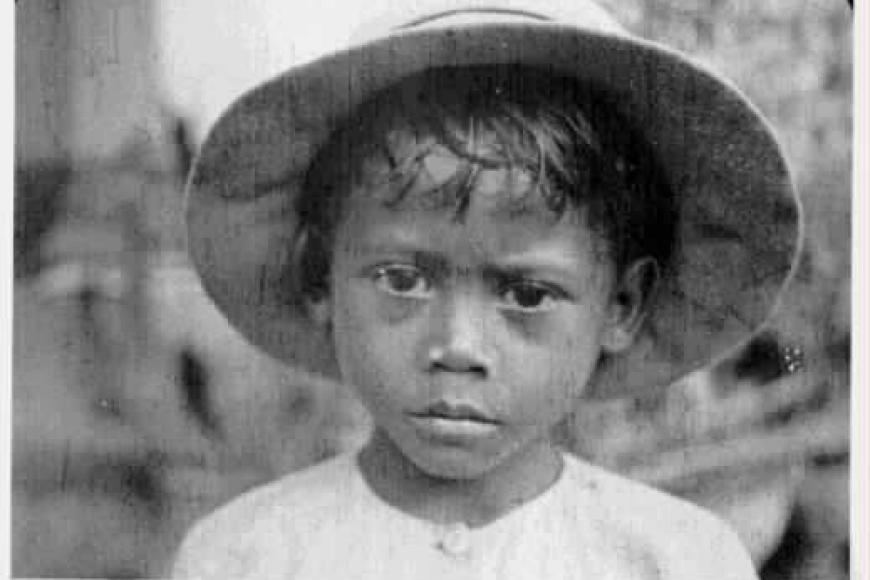
Vincent Monnikendam calls his archive film “a kinematographic image of the Dutch-Indies 1912 – c. 1933” in the subtitle, echoing the ponderous bureaucratic language of the Dutch authorities who at the time commissioned the footage he re-edited. He condensed some 280,000 metres of nitrate film, shot by professionals but left largely uncut, into a compilation about indigenous people and their immigrant rulers in the former colony. The originally silent footage begins to speak – not in an explanatory voiceover, but in the songs and stories of the colonized. The images are unchanged. But they have to be read in a new way.
A rural life in western Serbia that demands the utmost from Dragica. Cows need to be milked, tomatoes harvested. The daily tasks leave almost no time to pause
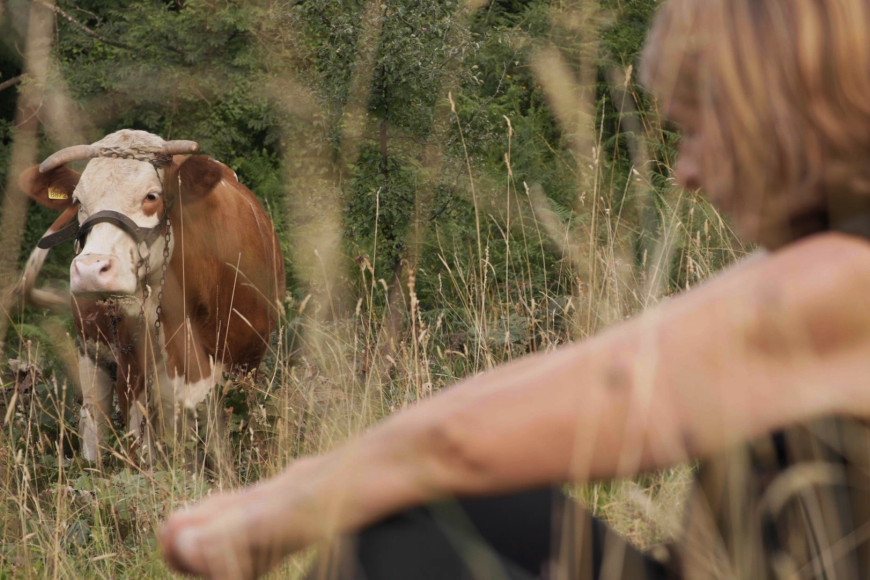
Dragica does not lack for work. The house and cattle in western Serbia demand toil from dawn to dusk. She milks, harvests, prepares porridge for her handicapped daughter. Her own mother recently passed away. Now Dragica wears black and shaves her old father. Can there be an alternative to this daily self-sacrifice? Almost casually, Isaac Knights-Washbourn leaves space for such reflections: While chopping tomatoes, the woman opens up to a guest from town.
In northern Colombia Dolly takes the railway to drive people from village to village every day – with a “Motorrodillo”, a surrogate train equally ingenious and improvised.
In rural northern Colombia, where the railway has long been discontinued, people help themselves with a fleet of “Motorrodillos” – motorcycle-driven miniature trains. Every day, Dolly and her colleagues take school kids, goods and travellers on rugged routes from village to village. If you meet oncoming traffic on the way, you get off the rails. If you find holes in the rails, you mend them yourself. The affectionate portrait of a self-organised transport system.
Marie Kloos
Credits
Director
Alba Jaramillo
Cinematographer
David Horacio Montoya
Editor
Francine Lemaître
Producer
Qutaiba Barhamji, Marie-Odile Gazin, Alba Jaramillo
Four paramedics in a mountain village at the beginning of the Covid pandemic go from house to house. They form the emotional core of this kaleidoscopic look at stories and tragedies.
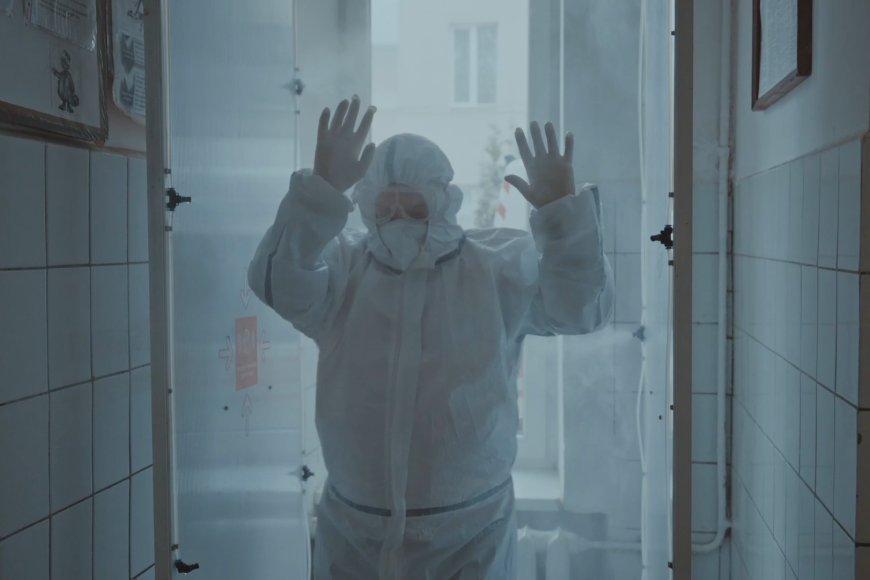
Four paramedics in a distant mountain village at the beginning of the Covid pandemic go from one house to another, from measurements to diagnoses, from tired older women to drunk middle-aged men. Hreshko watches them closely: They get baptised, married and buried. Yet the ambulance team stays the same, does its job, and ultimately provides the emotional core of this kaleidoscopic view of people’s stories and tragedies.
Two mice discover a wheel of cheese. One of them flees from the cat, the other finds a way into this paradise. Every bite brings it closer to the collapse of its house …
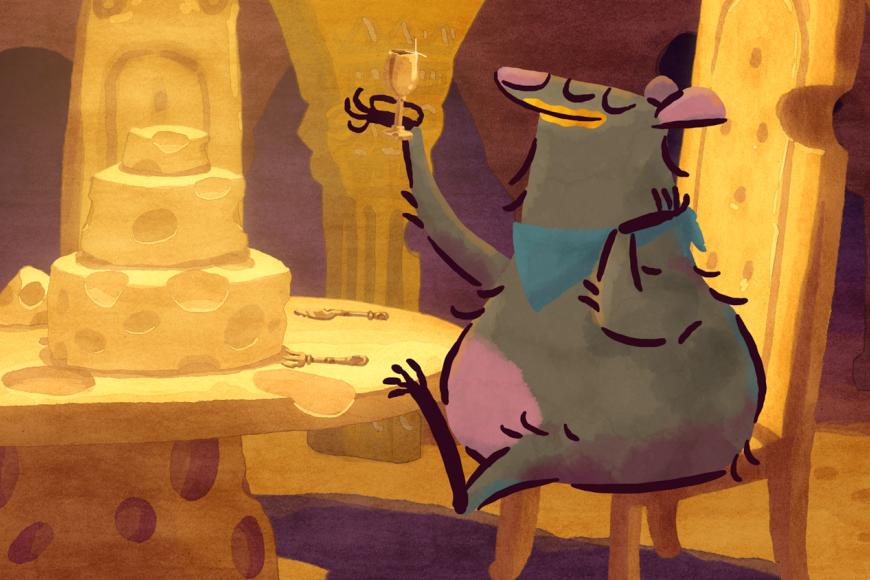
Two mice discover a big wheel of cheese. Paradise, no less! But how to get in? One mouse has made it, its little brother is outside on his own and must watch out for the hungry cat. Inside the cheese wheel, the mouse lives like a king, eating its way through the yellow treat. But every bite brings it closer to the collapse of its house …
A gorgeous collection of tiny moving image moments full of wisdom, wit, and poetry. Viewed through a magnifying glass, the small things offer room for surprises – and great insights.
A brilliant and highly poetic collection of tiny moving image moments which offers aesthetic delights through cleverly chosen camera angles, framing, lighting, montage and the materials used. This archive of trifles remains silent. The eyes begin to hear, the sound is generated in the mind. Simply enchanting.
When the spring in the forest dries up, the child sets off on an adventurous journey on the back of the otter. They cross deserts, mountains and valleys to find the water again.
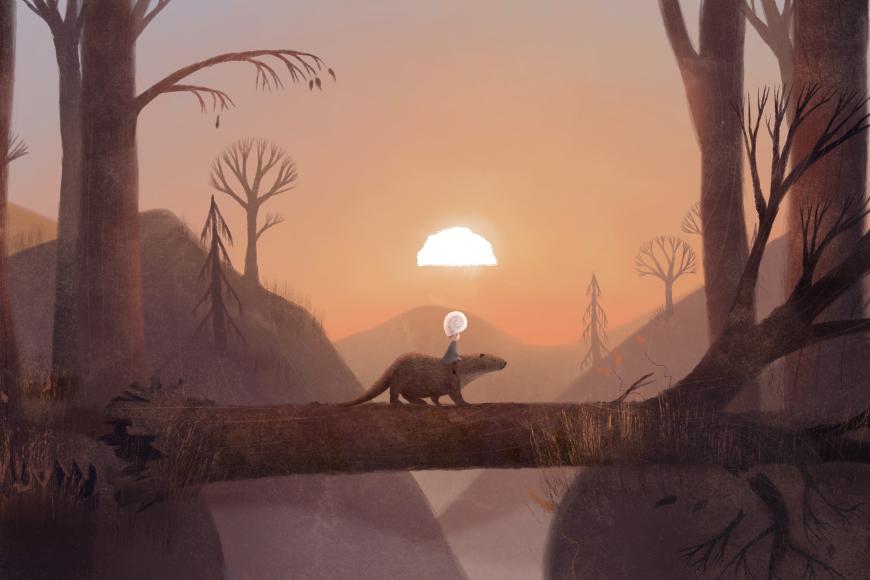
The child and the otter live in a small cottage in the woods. Their water source has dried up a while ago. In their distress they set out together to the snow-covered mountains to bring back a supply from the icy summits … With her first animated film, illustrator Malin Neumann delivers a poetic tale in warm colours about the vital importance of water.
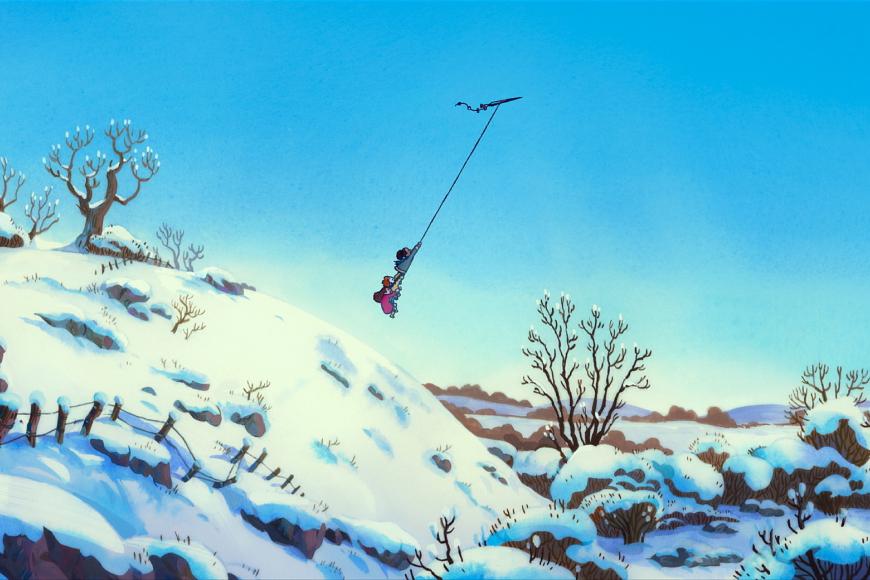
Jane’s mother is going through hard times and informs her that she will have to spend Christmas with her grandmother “Onion” in the country this year. No argument. Jane doesn’t feel like it at all: how boring! Against all odds, the holidays turn out to be a real adventure. Jane meets new friends and begins to open up to others.