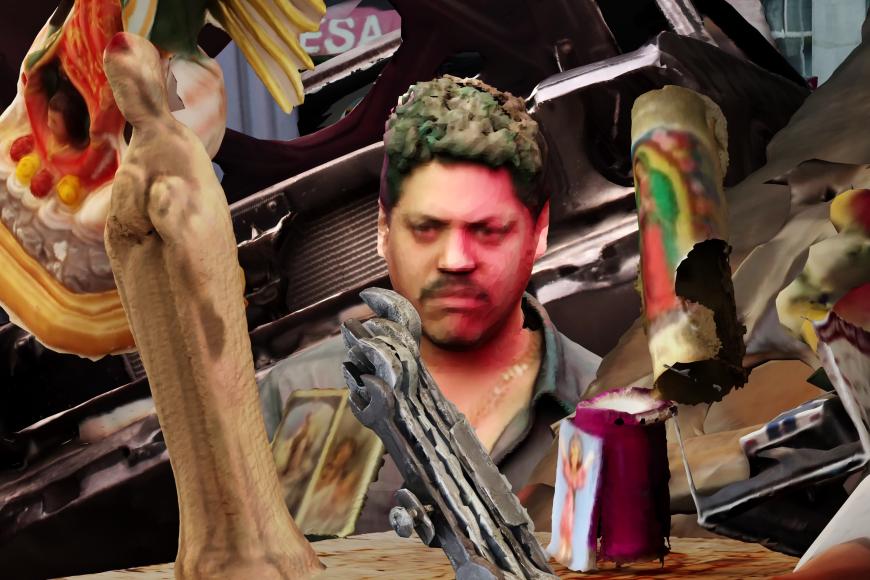
Joel repairs engines, but now his own is overheating because of his side job as a gangster’s henchman. He must take a decision. A breathless ride through Mexico City begins.
At some point years ago, Joel’s life took a wrong turn. He let himself be drawn in by the energy of unscrupulous gangsters to run criminal errands for a pittance. He has known his way around envelops and guns ever since. But now the day has come when he wants to leave the sinister night shifts behind and follow his actual destiny: repairing motors, keeping his car repair shop in Mexico City afloat and getting people moving. But the gang boss chooses the birthday of Joel’s beloved nephew of all days to direct him to a last job. Joel must debate this with himself and, above all, make a decision. Director Esteban Azuela stages this debate in a space of passage between this world and the next, where decisions can no longer be revised, only relived. With an intricately composed mix of memory fragments, car body parts and existential junk he adequately brings his protagonist’s breathless existence to the big screen. Jagged 3D scans animated in single-frame captures as well as camera angles and plotlines from the early days of ego shooter games stylishly evoke the urban Mexico of the 1990s: heated, threatening, refusing to stand still.
Andreas Körner
Credits
Director
Esteban Azuela
Script
Esteban Azuela
Editor
Pedro G. Garcia
Producer
Daniel Cabrera Guzmán Belmont, Esteban Azuela
Sound Design
José Miguel Enríquez
Score
Héctor Ruiz, Raúl Topete Torre, María Bonita, Álvaro Lamadrid Isoar
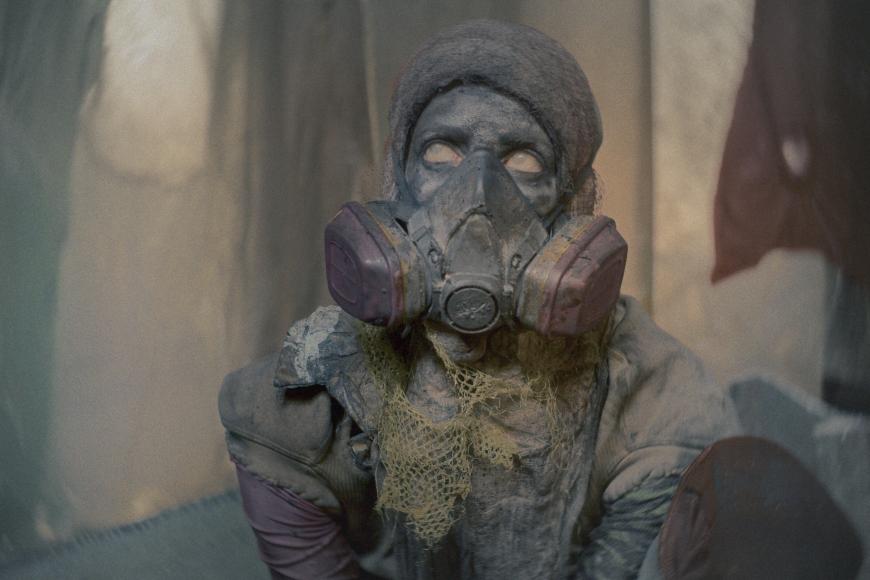
A human-amphibian hybrid creature wriggles through a post-apocalyptic world. A masterful avant-garde balancing act between dance, performance and puppet theatre.
A slight body, wrapped in dusty rags. The gas mask on the face reveals only a tired pair of eyes with almost extinguished pupils. The figure slowly winds its way through a grey landscape of crumbling concrete and rusty iron parts. The human-amphibian hybrid contorts itself so bizarrely in this post-apocalyptic world that the laws of physics seem suspended. It is unclear what is up and down, almost impossible to determine on which planet the action is taking place. Observed by other fantastic chimeras, the creature sneaks out of its hiding place again and again to find water for a modest bath. This avant-garde balancing act between documentary remnants of civilisations, found footage, dance, performance, puppetry and pantomime finds fascinating ways to push familiar definitions of animation to the limit – and beyond. With superbly staged movement choreographies, clever visual ideas and outstanding audio design, Niles Atallah makes a different kind of tale shine brightly.
In the middle of the night, Bobby is lured to the hospital by her mother, where terrifying horror bunnies anaesthetize her without her consent. A cryptic nightmare in sombre drawings.
Bobby’s stomach is upset. She is ravenous. Normally, dinner should be on the table by now. But today everything is different. Mum lures her teenage daughter out of the house with a lie and takes her to hospital, where her relatives are already waiting. All dressed in black, with tears in their eyes, expressing their sympathy. But sympathy for what? Before Bobby realises what is going on, she is dragged into the endless corridors of the clinic by rude nurses, undressed and prepared for an operation she knew nothing about and never consented to. Behind the scenes of this nocturnal horror trip, a disturbing tale about the relationship of trust between parents and children is revealed. Mansi Maheshwari’s genre mix of thriller, scary vision and educational satire is fascinating. Its dynamic design, dramatic animation and mesmerising soundtrack send us deep into a terrifyingly exquisite nightmare that lingers on.
Franka Sachse
Credits
Director
Mansi Maheshwari
Script
Anna Moore, James Davis
Cinematographer
Adam Pietkiewicz
Editor
Kaupo Muuli
Producer
Ashionye Ogene
Sound
Alexander Faingold
Sound Design
Alexander Faingold
Score
Marcin Mazurek
Animation
Mansi Maheshwari, Ryan Power, Elizabeth Fraser, Paula Gonsalez, Kathryn Haddow, Beatrice Babbo, Lucas Fruen
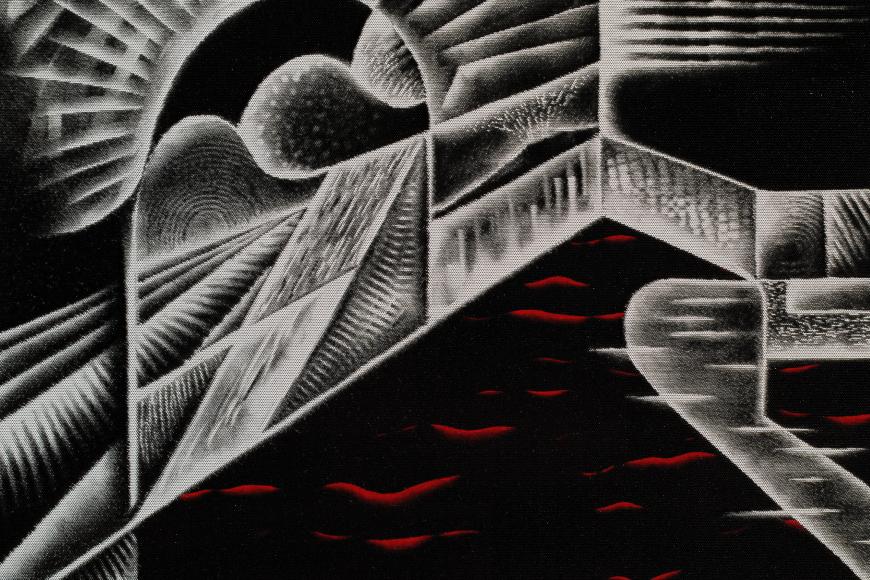
Dark spots eat their way into graphically idealised images of home. With unsparing objectivity, Rubina describes why Russian can no longer be the language of security for her.
How brutal is it when your own language casts you out of your home because it has been turned into the language of crimes against other people? In her autobiographical animation, Irina Rubina analyses why Russian can no longer be the language of security for her and why German – historically riddled with guilt and therefore insecure – does not offer a new home yet. The stark factuality of the director as narrator is enormously unsettling because it describes the irreversibility of this emotional state precisely. On the visual level, dark spots eat into idealised images of home, until the planes become deadlocked in abstraction. The pictures were created on a so-called pinscreen. Reliefs can be “painted” and animated by the pins’ shadows on this screen on which around 200,000 pins are arranged in lines. The alternation of light and shadow and their immediate proximity lend drastic expression to the inner turmoil and ambivalence.
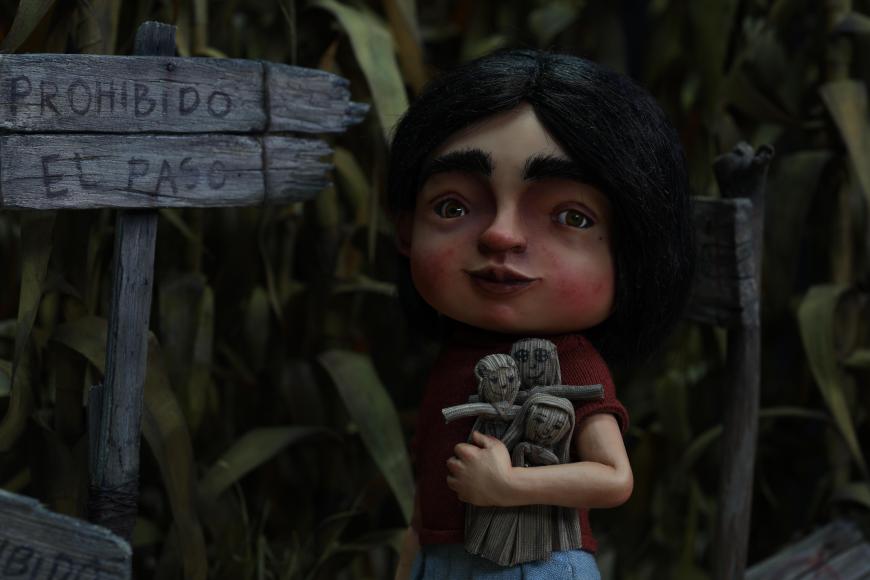
When Dolores falls into a deep hole while playing in a cornfield, the boundaries between this world and the next blur. A magical and dark puppet animation oscillating between reality and dream.
A fire breaks out in the cornfield where Dolores plays a game of hide and seek. As she flees, the little girl tumbles into a deep hole in the ground. When she regains consciousness, it turns out that she is not alone in the darkness. Two spooky old women are trying their best to keep Dolores in the cave. A small clay armadillo sees through the creepy old women’s plan and helps Dolores escape. She makes it back to the top but must still find the path out of the cornfield. It is not only the outstanding stop motion animation, the expressive puppets and the fantastic sets that give the audience some pleasant thrills here. In perfect harmony with the background music, this film puts us in a trance – almost as if we were sharing a magic potion with Dolores and the two ghostly creatures and dancing around a fire until the borders between reality and dream, between this world and the hereafter begin to blur. While out in the cornfield the rain sets in.
Franka Sachse
Credits
Director
Cecilia Andalón Delgadillo
Script
Cecilia Andalón Delgadillo
Editor
Arturo Tornero Aceves
Producer
Cecilia Andalón Delgadillo, Rafael Ruiz Espejo, Angélica Lares, Carlos Raúl Martínez Barba
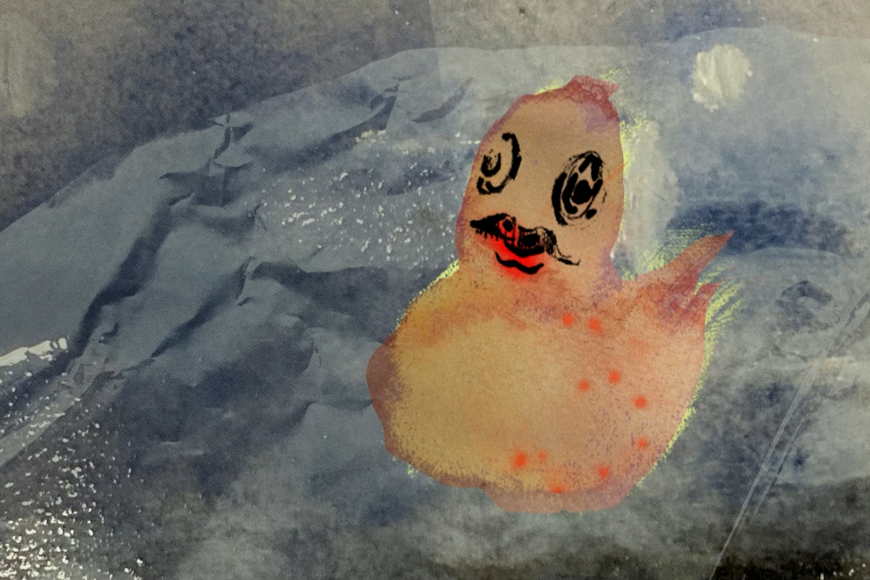
Tunnel vision, dark circles under the eyes and breathlessness – a hangover in the bathtub. The conversation with the small rubber duck turns into a darkly poetic lament about last night’s filth.
Tunnel vision, dark circles under the eyes and breathlessness – a warm bath will help against the traces of an exhausting night out. If it wasn’t for the small rubber duck, who starts to interrogate you in your hallucinating fatigue. Your crumbled memories return one by one, spiked with accusations. The conversation slips away towards an overwrought, darkly poetic lament about the filth of the night you passed. Maria Dakszewicz not only invents highly original and apt linguistic images in which “drops of sweat are floating like kebab grease” on the bathwater. Her watercolour-spotted drawings with their rough black lines also bring the taste, smell and seediness of the food stalls you frequented on the way home into the supposedly cleansing domestic hygiene idyll. A darkly humorous hangover where you have to share the bathtub with yourself.
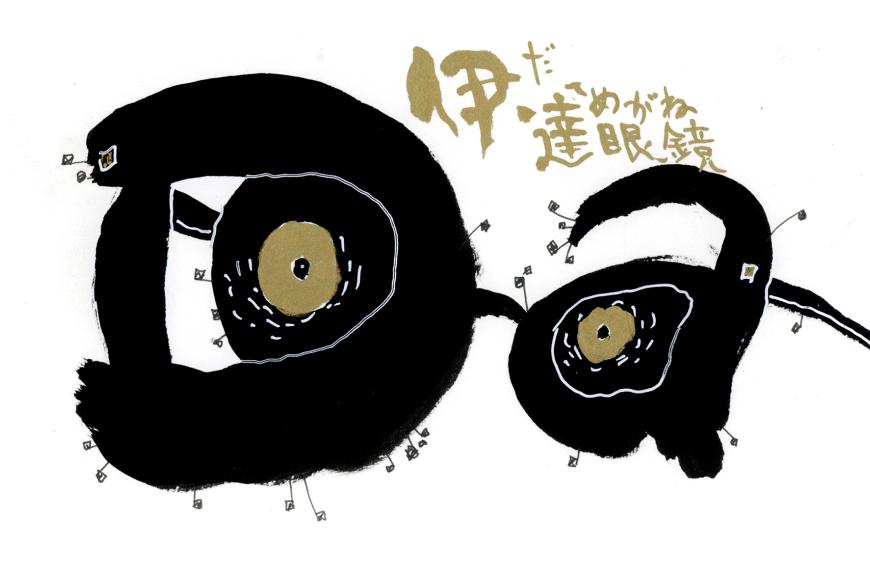
The last syllable on the lips of a dying man is “da”. Koji Yamamura translates a short story by author Hideo Furukawa into a thrilling and highly dynamic film.
Life is short, extremely short. The time between birth and death seems to fly by. Snip your finger – and it’s all over. The last seconds are just long enough to pronounce the syllable “da”. It is precisely this syllable, spoken with someone’s last dying breath, that is picked up by a man who looks for the shortest of all things in the streets of Tokyo. The syllable whirls through his thoughts, triggering a torrent of reflections on the Japanese language that he gets more and more worked up about. In a dadaist manner, the “da” words hurtle at us like notes in jazz. Bold ink drawings move across the white background, sometimes fluidly, sometimes explosively. A last “da” completes the extemporisation and brings to a standstill all the energetic circling and vibrating that dominated the image before. The dying man closes his eyes. But the end is followed by a new beginning. “Extremely Short” marks the start of the series “Bungaku Bideo” – literature videos – which, commissioned by the Yanai Initiative, makes innovative accomplices of contemporary Japanese literature and international animation. In this case, Koji Yamamura encounters a piece of prose by Hideo Furukawa, listens to the monologue recited by the author himself and translates his linguistic furor into an exciting visual form.
Left alone by her father, eleven-year-old Karin makes friends with a talking monster cat. This launches a wild and fantastic tour de force through fabulous and hellish worlds.
Eleven-year-old Karin is spending the summer in the country, where she makes friends with a giant talking cat. So far, so cute. But there is more to come. Her father has run up debts with gangsters who will beat him half to death. The god of poverty stalks Karin. He will take her to hell, where her deceased mother is spending eternity as a cleaning lady. Does this still sound cute? If “Ghost Cat Anzu” is meant to be a children’s film, it is the most merciless one you can imagine. The cat demon, or Bakeneko, is a well-known character in Japanese mythology. And there are other familiar patterns in Takashi Imashiro’s manga on which this film is based: the portal to a parallel world, the mythical creatures in the forest … But the devil is in the details, for comic and adaptation handle the traditions with an astonishing degree of irreverence; humans and ghosts often behave like unmitigated louts, and the entrance to hell is through a toilet bowl. First-time director Yôko Kuno and the renowned Nobuhiro Yamashita, who has co-directed an animated film for the first time here, work with rotoscoping. The quirky, cartoon-like figures and painterly backgrounds contrast so harmoniously, the highlights are so lovingly placed that one can feel, taste, smell and grasp the sultry summer atmosphere.
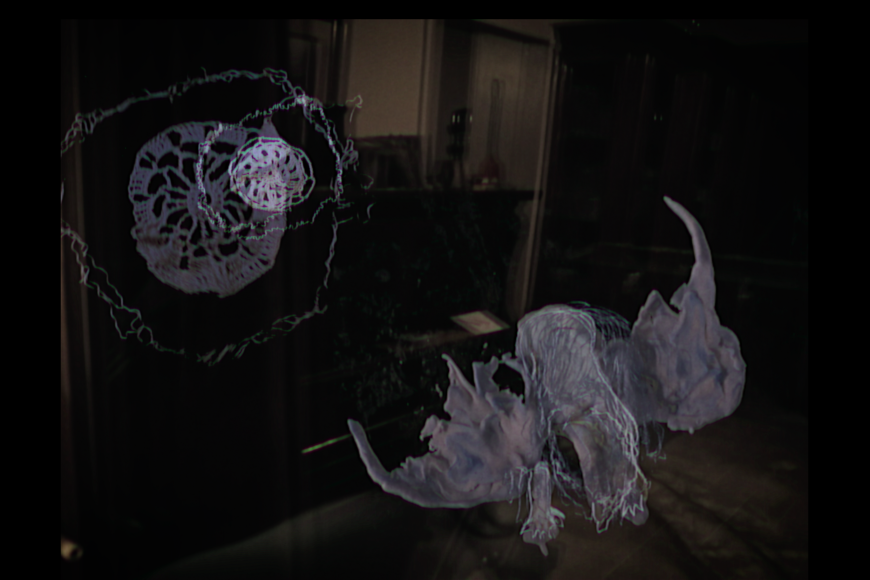
The dark confines of a flat, light still burning in the kitchen. Ghostlike apparitions mingle with old video recordings. This was the home of a loved one who lived in two worlds.
Memories of a loved one: The camera explores the dark confines of a flat. Light is still burning in the kitchen; objects are scattered haphazardly on the living room tables. The eyes follow into the labyrinthine self, now turned into space, of a once familiar and now absent person. The narrator’s voice begins by asserting that everything in this place is true. It “shows” the places where the remembered person learned to crochet and where she shelled peas. The narrative remains factual, but a gap begins to open. Ghost-like apparitions intrude in the old video images, phantom voices populate the noise-like echo sounds. Just like the crocheting and the peas, a naked murderer and other unpleasant shadows are part of the house inspected here. As things progress, individual threads are spun together to form the symbolic crocheted doily of a home. Incredibly poetic and very personal, Ayden Lamb’s “Haunted House” brings to life on film a person who during their lifetime was present – had to be present – in two worlds.
An encounter with the King of Chaos: Hun Tun drives you on, Hun Tun gives you the strength for countless hours of overtime and all-nighters – and in return robs you of your sleep and changes you.
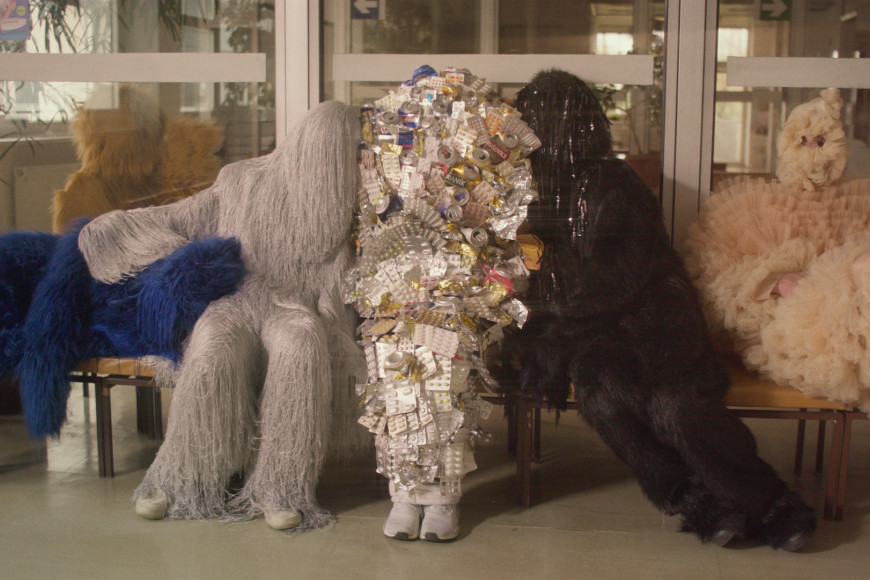
In a fantastic sphere somewhere between animation, live-action film and performance, a tale of Hun Tun, King of Chaos, unfolds. Hun Tun cheers you on, Hun Tun drives you forward, Hun Tun keeps you awake. He gives you strength for countless hours of overtime and endless leisure activities. But in return, Hun Tun robs you of your sleep and transforms you. Fragments of everyday life – cups, bottle caps, pill packages – speak of sleepless nights and complete exhaustion, of wanting to sleep and being unable to. Superimpositions of elegantly animated, delicate sand elements introduce rhythm and texture. Danced narrative moments in expressive costumes bring lightness and at the same time convey intense moods, with a precise overarching sound design weaving the various levels into a gripping reflection on a very personal conflict.
Franka Sachse
Credits
Director
Magdalena Hejzlarová
Script
Magdalena Hejzlarová
Cinematographer
Zdena Sýkorová
Editor
Alexander Kashcheev
Producer
Karolína Davidová
Co-Producer
Romain Bent
Sound
Alexander Kashcheev
Sound Design
Alexander Kashcheev
Score
Gosheven
Animation
Eliška Kerbachová, Magdalena Hejzlarová, Anna Belova
A Prague food stall has run out of beer. Regular Hurikán takes matters into his own hands. An epic parkour in the drowsy but steep side streets of the city begins.
Beer is out in Prague … well, actually only at a food stall away from the touristy Old Town. But that doesn’t make the death rattle of the spigot less dramatic for Hurikán, a regular who spends his days and much of his nights at these haunts of lost souls. With a crush on the stall manager, Hurikán takes matters into his own hands. Things get rolling, just like the empty barrel he wants to have filled. An epic parkour begins, starting with small mocking gestures and rapidly expanding into a breakneck chase through the drowsy but steep side streets of Prague’s Žižkov neighbourhood. With brilliant timing and tongue-in-cheek humour, Jan Saska weaves typical genre elements from comics and action movies together, all revolving around a guy whose life is not easy. This time he needs luck if he does not want to die of thirst.
André Eckardt
Credits
Director
Jan Saska
Script
Jan Saska, Václav Hašek
Editor
Jan Saska
Producer
Kamila Dohnalová, Martin Vandas
Co-Producer
Antoine Lietout, Ivan Zuber, Juraj Krasnohorsky, Mladen Đukić, Alena Vandasová
Sound Design
Jiří Gráf
Animation
Marek Pokorný, Michaela Večerková, Jan Saska, Camille Chao, Hugo de Faucompret, David Štumpf, Jean-Christophe Lie, Félicia Gillibert, Delphine Grelet
Rwanda, 1994: Like hundreds of thousands of Tutsis, the Rutikara family is persecuted by Huti militias. They are rescued by chance – because a soldier was moved by their baby as they fled.
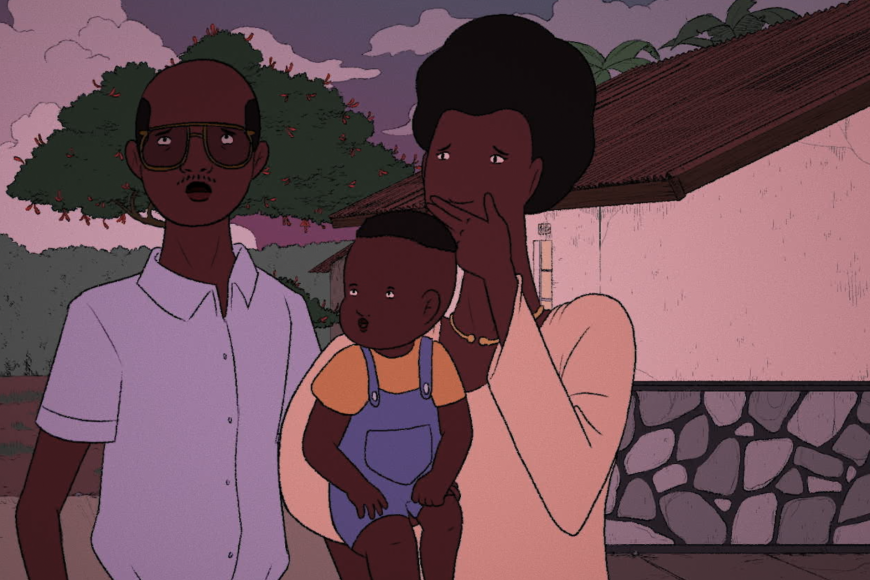
Maybe it really was the innocent hand of an infant clasping a soldier’s index finger that was to determine the course of three lives. Lives that did not end in early death after all, but continued in the asylum of a foreign country. The Rutikaras reside on the outskirts of the capital of Rwanda and call their newborn child Justice, because justice is really becoming scarce in their country. In the spring of 1994, when the little boy is six months old, the political situation is getting increasingly tense, the Tutsi ethnic minority is being hunted, abused and murdered by the Hutu militias. In the summer of that year, the world learned of the extent of the violence: a genocide with hundreds of thousands killed. The Rutikaras are affected, too. But with luck, chance and their unperturbable baby they manage to save themselves in the care of the United Nations. Director Justice Rutikara, born in Kigali and grown up in Quebec, is the son of Valentine and Jean-Claude, who report from offscreen. His first animated film, carried by broadly coloured images, an impressive factuality and mild poetry, is a memento that rises above the individual and takes on a universal note in the chorus of human sounds, all the unifying and threatening ones.
Two colour surfaces battle, taking up more and more space in their contest to outdo each other, causing breathlessness. An abstract and yet physically tangible cinematic event – large and loud.
Breathing is vital and needs space. A small blue square appears out of nowhere, vibrating nervously and growing into a narrow line. Its red mirror image follows suit. Both take up more and more room in a contest to outdo the other, while a growing shortness of breath is wedged between them. Martin Schmidt pulls off an astonishing feat: He generates a physically tangible cinematic experience from abstraction. He choreographs smooth surfaces in the cold, technical logic of their skirmish and electronically deconstructs the sounds of gasping. As the battle is getting fiercer, things are visually and acoustically compressed and stretched, twisted and filtered, until a heavy monster of tension emerges. “Lines” is big and loud; it can be read metaphorically, but also understood only in terms of its aesthetic power.
1945. The Red Army are moving into Germany. A child, a Soviet soldier, a Nazi officer and a Hitler Youth have been stuck in a hotel ever since, which binds them together for years in bizarre ways.
In 1945, the Red Army are advancing on German territory, the Second World War is drawing to an end. Families are still trying to escape to America, but many plans fail. Five-year-old Sophie also loses her father and mother during the flight. They are killed by Nazi officer Scharf and a Soviet soldier named Vasily, with Hitler Youth Beckmann as a witness. The gruesome event takes place in an extremely strange hotel which henceforth will bind the four survivors to its premises in bizarre ways, no matter which rooms of the truly scary building they find themselves in. Up in the lounge, where the new customers arrive one by one, down in the kitchen, where the now grown-up Sophie prepares food, or even in an alcove near the elevator shaft, where Beckmann hides with the rats. The involuntary permanent guests age but never tire of courting Sophie. Heinrich Sabl has built an excitingly disturbing dollhouse decorated with quotes from reality for the German-Soviet history of guilt and coping. In his first feature-length animated film, on which the director worked for more than twenty years, he sends extraordinary characters on an equally extraordinary visual and acoustic time journey through the war-damaged suites of the 20th century.
A film about the complexity of human relationships and overlapping love stories – narrated in a variety of ways: stop motion technique, cartoon animation and experimental film.
The ghost of a former lover lives under Olivia’s bed. Barbara invents fantastic stories to cope with Mauricio’s rejection. Mauricio sinks into the ground with remorse. Ramón develops a deep affection for a talking houseplant that bears Olivia’s features. This film approaches its thematic core in circles as we are invited to ponder the complexity of human relationships from different perspectives. The twists of glances and emotions of the characters entangled in this round dance are not only reflected in the episodic, cleverly intertwined dramaturgy, but also in the visual design. “Olivia & the Clouds” explores a rich garden of artistic techniques. Figures and places we first encounter as drawings go through transformations and reappear as cardboard collages, watercolours or oil paintings. A multilayered narrative of attraction and revulsion unfolds, revealing new facets of form and content with every change of style. Music light as clouds, brilliant sound design, vibrant colours and not least the occasional digressions towards experimental film enchant us and carry us deep into this surreal story that couldn’t be closer to life.
Franka Sachse
Credits
Director
Tomás Pichardo Espaillat
Script
Tomás Pichardo Espaillat
Producer
Amelia del Mar Hernández, Fernando Santos Díaz
Sound
Homer Mora, Denis Godoy
Sound Design
Homer Mora, Denis Godoy
Score
Cem Misirlioglu
Animation
Tomás Pichardo Espaillat, Nika Zhukova, Vicky Medina, Freddy Guerrero, Martina Zena, Joery Santos Gomez, Randy Morales, Carmela Peña, Gia Zapata, Erik Alfredo Martínez, Samuel Zapata, Ottmar Suero
A tiny girl made of delicate porcelain observes the onset of winter, which freezes the natural paradise where she lives and everything in it. Nobody escapes its frosty grip.
A tired sun creeps across the horizon for the last time. A cold wind is already blowing over the lake. The migrant birds depart for warmer climes and leave the Nordic natural paradise. Heavy snow showers cover the land with a white coat. The animals condemned to stay – fragile creatures of delicate porcelain – cling to branches, looking for shelter. None of them will escape the frosty grip of the spreading winter. They are observed by a tiny girl, also made of wafer-thin, translucent white ceramics, who is the only one left in the freezing landscape in the end. Anu-Laura Tuttelberg’s symbolic story is touchingly beautiful and at the same time full of inspiring irritations, because she makes her art run up against the reality of nature. She did not animate her puppets in a warm studio but exposed them to the elements, on location in northern Estonia and an island in the Norwegian Sea. In her film, cruel forces, disturbing fragility and the renewing force of the cold meet – ambivalently and elegantly.
Franka Sachse
Credits
Director
Anu-Laura Tuttelberg
Script
Anu-Laura Tuttelberg
Cinematographer
Anu-Laura Tuttelberg, Francesco Rosso
Editor
Daniel Irabien Peniche, Silvija Vilkaitė
Producer
Marianne Ostrat
Co-Producer
Agnė Adomėnė
Sound Design
Olga Bulygo
Score
Maarja Nuut
Animation
Anu-Laura Tuttelberg
World Sales
Flavio Armone
Nominated for:
mephisto 97.6 Audience Award
Winner of:
Golden Dove Short Film (International Competition Animated Film)