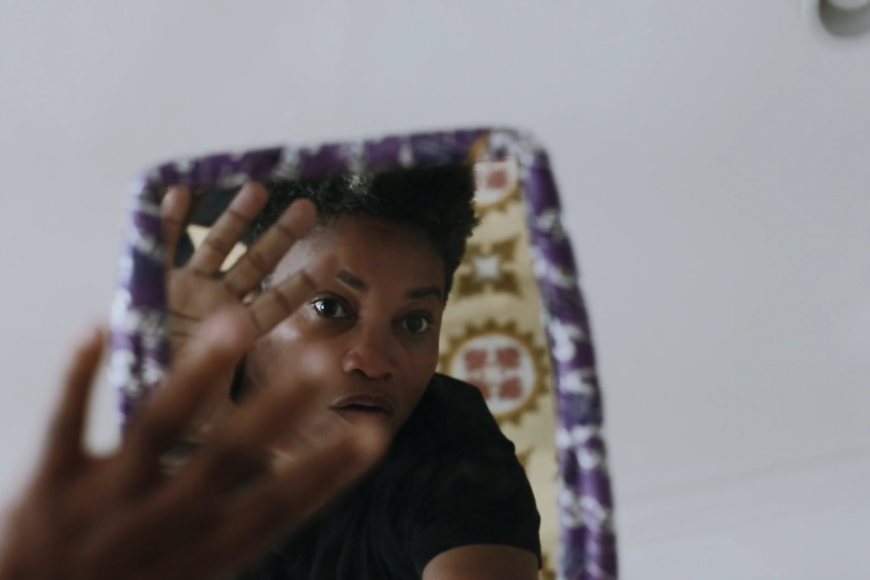
A radically personal video diary that deals with Cabrera’s fears and joys but always remains universally valid: autobiography, not self-centred but society-centred.
The 1990s were the heyday of the lightweight and affordable Hi8 cameras, a time that brought forth many first-person documentaries. Unlike most of these films, Cabrera’s diary, shot in 1995, is not a purely introspective work. She focuses primarily on the others: her adolescent son, her ex-husband and her new love, her mother and the strangers on the train and in the streets. Her form of autobiography is always collective, social, polyphonic. It is only the other’s gaze, the returned gaze, that makes understanding and insight possible. The camera serves as a catalyst of communication, creating trust and distance at the same time, opening eyes and ears.
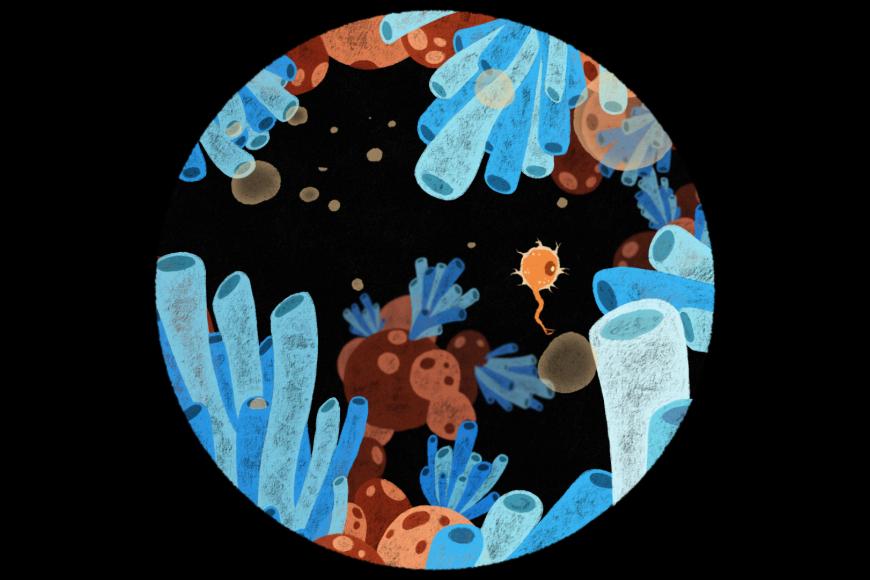
Two friendly cells explore the organism they live in. They grow up together, meet other creatures, until they are separated by an accident. From now on, they will each go their own way.
Two cells observed under the microscope. They grow up together and meet many different creatures on their outings. One day they are separated by an accident and it takes a long time before they find each other again. After the first outburst of joy, they realise that they have changed and no longer fit together. A colourful and profound animation.
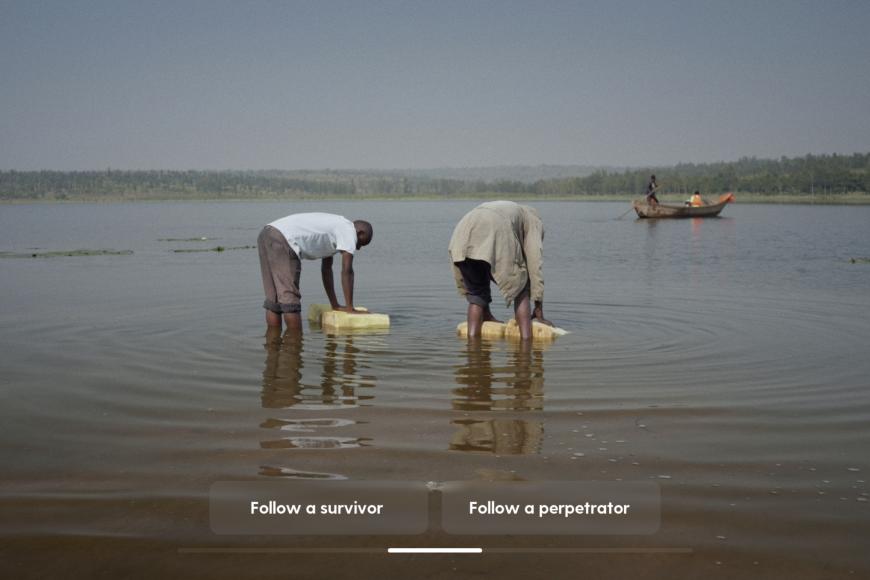
Rwanda, 30 years after the genocide. Using an app, viewers vote what happens next, democratically electing the following scene. Every voice matters, both in the cinema and on the screen.
Peeling away layers of pain, layers of perspectives, passing by both trauma and hope, this film dives into Rwanda thirty years after the genocide. Covering such a topic has always presented itself as a challenge to documentarians. While Claude Lanzmann’s “Shoa” (1985) is over nine hours long, “Traces of Responsibility” unfolds its eight potential hours as innumerable 85 to 110-minute screenings. In allowing different viewing experiences, this film does not commit to a single version of Rwanda, but rather accentuates its multifaceted, and, yes, complex history. The audience may vote to visit genocide memorials and hear survivor testimonies or to follow a theatre troupe educating children about tolerance. They might choose to visit a market or an art museum, to go to a karaoke bar or to just go home. “You could a write a 1,000-page book just from our [two] stories,” says Semana Jumapili, a survivor we might encounter. When one considers this, even this film of many paths seems limited. There are countless stories to be told. The genocide in Rwanda was horrifying, and yet there is so much solace in the people we encounter throughout the film. They inspire us to fight injustice and heal wounds which seem too big to overcome.
After securing your ticket, please make sure you download the CtrlMovie app in advance. If you require assistance, please arrive 15 minutes early to the screening. Our team and volunteers will be happy to assist you.
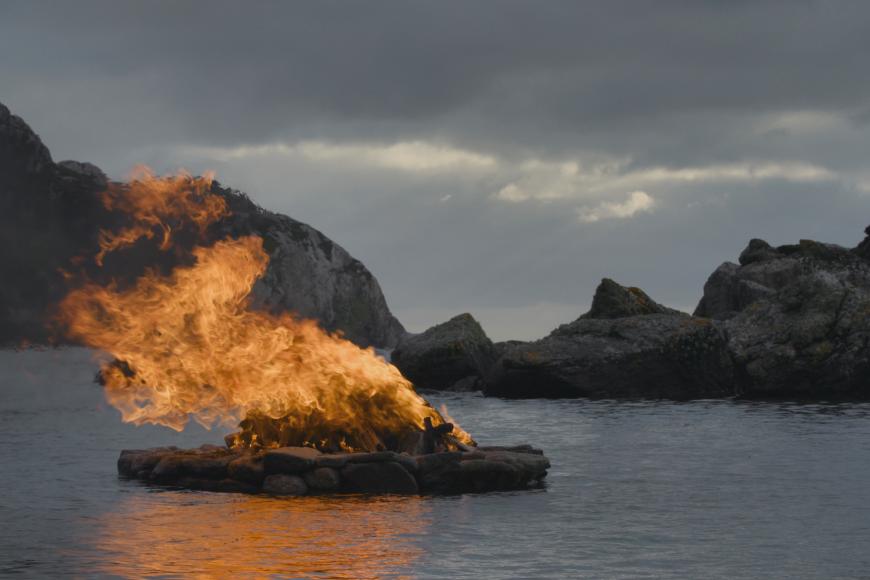
Without light, there would be no cinema – and no life. Searching for the origin of images, this film delves into two worlds that explore the magic of light: physics and art.
Light is a fascinating phenomenon. Without light, there would be no cinema, no film – and no life. So light is at the origin of everything, and yet it remains invisible to the eye until it hits matter. This moment is – quite literally – the starting point of Thomas Riedelsheimer’s latest work, for the springtime spectacle of rainbow shreds in the cinematographer and documentary filmmaker’s flat became the starting point of a search for the origin of the images we form of this world. For this quest he dived deep into two spheres that seem to follow different laws but always strive to fathom the magical: physics and art. An intellectual and poetic ping pong game evolves between researchers from the Max Planck Institute in Erlangen and the “Extreme Light Group” of the University of Glasgow as well as internationally renowned artists such as Ruth Jarman, Joe Gerhardt, Julie Brook, Johannes Brunner and Raimund Ritz. In its course, the various perspectives on light lead to new insights on all sides that would hardly have been achieved without this methodical cross-over: about laser power and colour pigments, about black holes and floating sculptures. In brief moments, the uninitiated may even get some idea of the laws of quantum physics, generally considered impossible to visualise.
Luc-Carolin Ziemann
Credits
Director
Thomas Riedelsheimer
Cinematographer
Thomas Riedelsheimer
Editor
Thomas Riedelsheimer
Producer
Sonja Henrici, Stefan Tolz, Leslie Hills
Sound
Hubertus Rath
Sound Design
Christoph von Schönburg
Score
Fred Frith, gabby fluke-mogul
World Sales
Elina Kewitz
German Distributor
Piffl Medien GmbH
Broadcaster
3sat
Nominated for:
VER.DI Prize for Solidarity, Humanity and Fairness
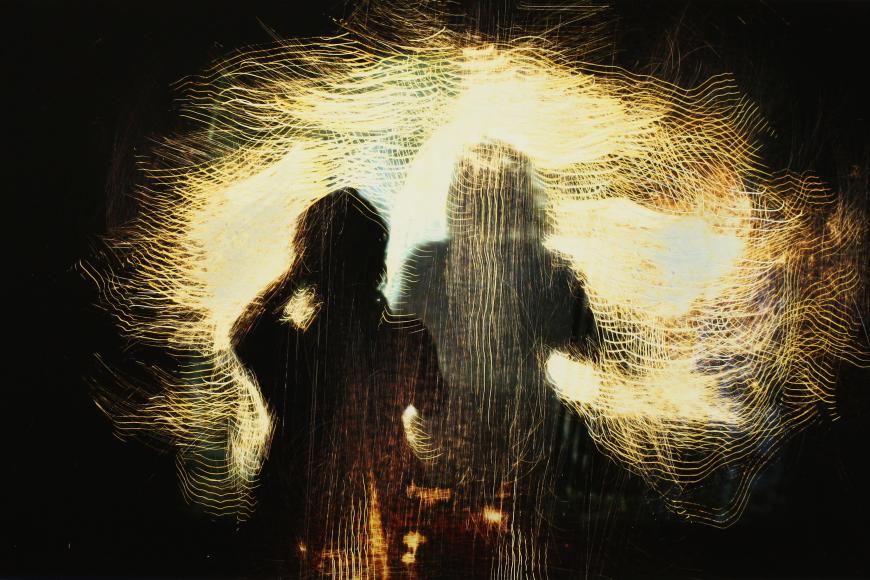
A film projection shows a woman sitting by the water. In “her back” is the shadow of a female figure who conjures radiant golden clouds of dots and balls of lines into the frame with her hands.
A film projection shows a woman sitting by the water. In “her back” is the shadow of a female figure who conjures radiant golden clouds of dots and balls of lines into the frame with her hands and is even able to blot it out. The magical trailer for the “Tricky Women” festival was made by manually editing the image and sound sequences recorded by Moïa Jobin-Paré when she was artist-in-residence in Vienna.
Sex-positive encounters, post-lockdown. A group of people explore their non-binary lust, find out where their boundaries are, with no erotic zone taken for granted. Care & curiosity, right now.
The camera glides through a nocturnal, inanimate Berlin, documenting disembodied dance floors where the spotlights illuminate emptiness. Tales of longing and desire on the soundtrack. A brief visual reminiscence of lockdowns and retreats into bourgeois privacy, threatening a sex-positive culture that demands the consensual, open encounter of bodies. But people, curiosity and lust reconquer cinema. Exploring softness together, finding out where the bodies lead, allowing skin cells and nerve endings to get to know each other – and asking at every step where the boundaries are. This is the agenda of three couples and a group of sex-positive persons who meet here. “Truth or dare” is played, an age-old excuse to override taboos. What Maja Classen explores with them, without trying to pin it down, is the question of how consensus makes a new sexuality possible. Even the protection from sexually transmitted diseases is part of the game, personal responsibility in the darkrooms, the images of femininity, masculinity and love dragged in from one’s socialisation that need to be defamiliarised again. Nothing we see transgresses boundaries. Nothing that happens happens without consensus. And yet none of it is taken for granted. “The joy of being there – and exactly there.”
The 1937 “Parsley Massacre” in the border region between Haiti and the Dominican Republic has traumatised the islanders. An attempt to come to terms with it by artistic means.
In 1937, Dominican dictator Rafael Leónidas Trujillo ordered the murder of the Haitian population of the Dominican Republic. Tens of thousands were brutally killed. A language test made the difference between life and death: The Creole-speaking Haitians who could not pronounce the Spanish word “perejil” had to die, which is why this genocide went down in history under the innocuous name of “Parsley Massacre.” Until today, the region is marked by deep traumatisation, racism and classism, which are linked to the colonialist past of this two-state island. Haitian filmmaker Pierre Michel Jean approaches this rarely examined subject with great delicacy and succeeds in creating a history lesson that combines different historiographies – from factual research to problematic narrative constructions through to the haunting testimonies of the last survivors – in a kind of montage of knowledge. At the same time, his documentary addresses the complexity of collective guilt and the important question of who can and should say “mea culpa” today, more than eighty years later. A performance workshop organised by theatre director Daphné Ménard, which brings together artists from both states, and the memories of the elderly Henry Noncent form the heart of this filmic monument whose empathy makes it compelling.
Borjana Gaković
Credits
Director
Pierre Michel Jean
Cinematographer
Pierre Michel Jean, Louvenson Saint Just, Réginald Louissaint Jr
Editor
Marie Bottois
Producer
Maud Martin, Lysa Heurtier Manzanares
Sound
Jeannis Bazelais, Macaisse Bellegarde
Sound Design
Brice Kartmann, Marie Moulin
Nominated for:
Prize of the Interreligious Jury,
FIPRESCI Prize,
Leipziger Ring,
Silver Dove
Winner of:
Prize of the Interreligious Jury,
Silver Dove Feature-Length Film (International Competition Documentary Film)