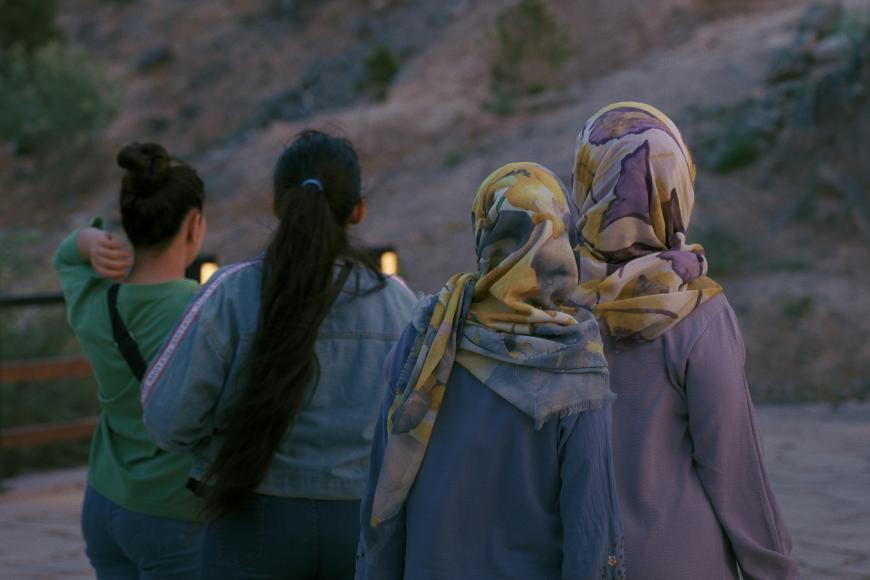
Family discussions flare up against the backdrop of the “Woman, Life, Freedom” protest movement in Iran: Elahe does not want to wear a hijab. An intimate and honest discussion.
Filmmaker Elahe returns to her hometown of Mashhad in Iran to help her parents move house. Boxes must be packed, old stuff must be rummaged through together. Meanwhile everyone involved discusses what Elahe should wear at the upcoming big party, because Mr. Hossein, the respected and devout patriarch of the extended family, has invited his relatives to his garden. Elahe will not wear a headscarf, nor a hat, not even a borrowed baseball cap for this occasion. On previous visits, she was willing to make a lot of compromises in order not to shame anybody at home. But those days are over. The “Woman, Life, Freedom” movement encourages her to force a change. In Hossein’s garden the director has intimate and moving conversations with sisters and cousins. They have all had similar experiences with hijab and chador but found different ways of dealing with it. Elahe boldly confronts her family’s fears and wishes and films the honest discussions.
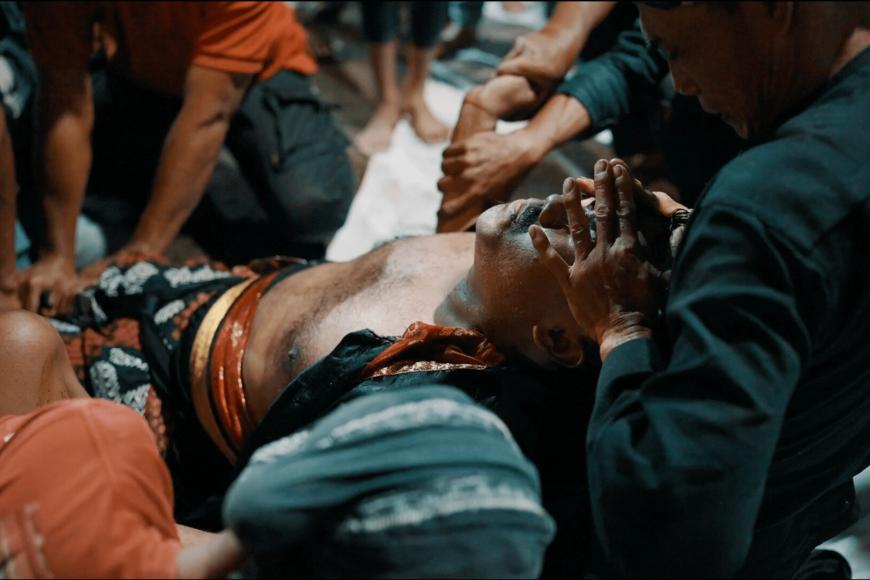
From ritual dance performances on the Indonesian island of Java, to colonialist film images, to an intervention at the Amsterdam Rijksmuseum: T.A. Kusno settles the score with colonialism.
The powerful interventions of the Indonesian artist, cultural studies scholar and filmmaker Timoteus Anggawan Kusno are internationally renowned. What distinguishes them are the empowering attitude and the breathtaking aesthetics he employs to re-interpret in different media the cultural traditions passed on in his homeland. With “Afterlives”, he delivers another unequivocal reckoning with the representations of history shaped by colonial annexation. The opening sequence is already a declaration: On the soundtrack we hear screaming, in which both pain and its liberating relief are manifest and united. On screen we see an explosion of colours: Jathilan, a ritual Javanese war game, is being performed. Men are dancing on horses made of plaited bamboo until they fall into a trance or the evil spirits are driven away. The impressive precision of the editing to tribal trance music by Setabuhan makes the colonialist archive images expose themselves – and fade. Those of (dance) performances in which the Javan tiger, killed multiple times in historic rituals, is symbolically reanimated come to the fore. In the Rijksmuseum Amsterdam, it now guards – in the shape of a re-interpreted colonial sculpture – the empty frames that once gave (representative) power to the governors-general of the Dutch East Indies.
Borjana Gaković
Credits
Director
Timoteus Anggawan Kusno
Script
Timoteus Anggawan Kusno
Cinematographer
Aditya Kresna, Krisna E. Putranto, Timoteus Anggawan Kusno