A young filmmaker takes his camera and makes the same journey in rural Serbia as his mentor forty years ago. A road movie about places, times and memories.
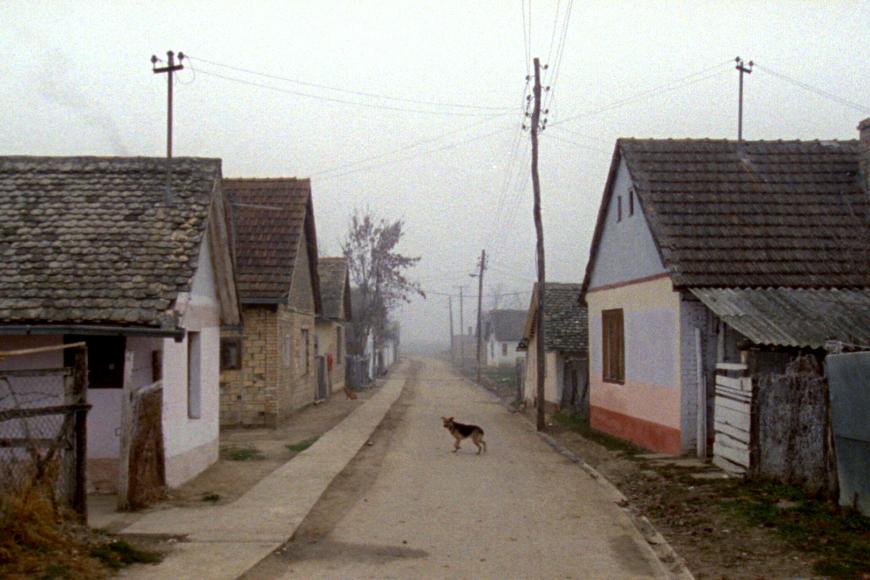
In 1971, Karpo Godina, then 28 years old, took his camera on a trip through the flatlands of Vojvodina and shot an unusual road movie. Only fragments of that footage have survived to this day. Forty years later, another camera undertakes the same journey, retracing the paths of the young Godina and imagining his impressions of the lives of ordinary people in this rural region. A new unusual road movie emerges. It is about places, times and memories. It is also paying homage to Karpo Godina, whose work flourished during the so-called Black Wave period of Yugoslav cinema.
Two best friends are drifting through the city of Montreal. They come from a small Inuit settlement in northern Canada and share the same heritage, language and longings.
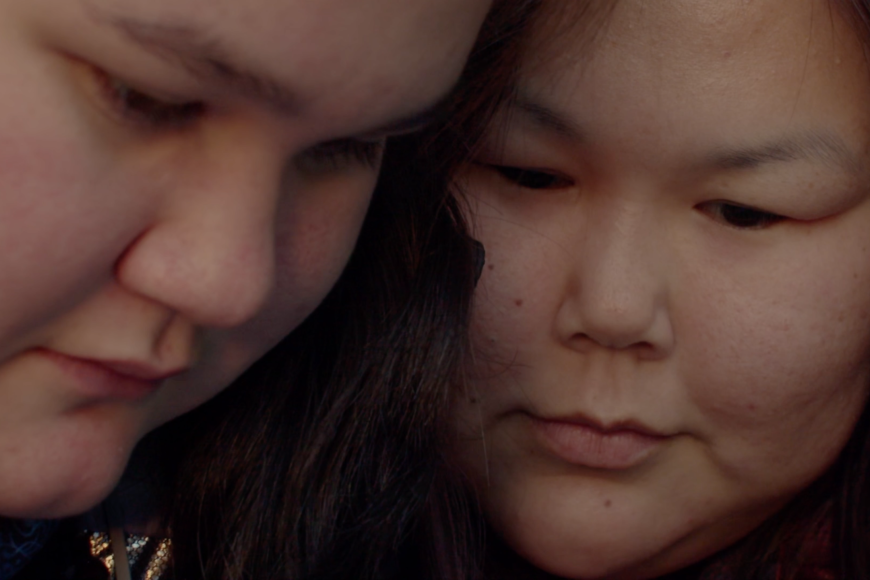
Two young girls are drifting in the water of a public swimming pool. The film adopts this drifting attitude as it follows them through nocturnal Montreal and their daily life. Sometimes the two speak English, sometimes Inuktitut. Kathy and Teresa come from a small Inuit settlement in northern Canada. They show each other smartphone pictures of seals and bears they killed themselves. They read about the special relationship between the Inuit and their sledge dogs, which has lost its importance today. Home assignments are done in a park – the scent of the trees reminds them a little of home. They close their eyes. With great tenderness, the camera captures the deep bond between the two best friends who share the same heritage and language. Kathy has written a moving song in Inuktitut. In simple, clear words, she sings of the feelings and yearnings of a young Indigenous woman.
Countless chunks of stone are lying around. A red-haired boy assembles them to build many impressive towers. One by one, the towers are made to shine again.
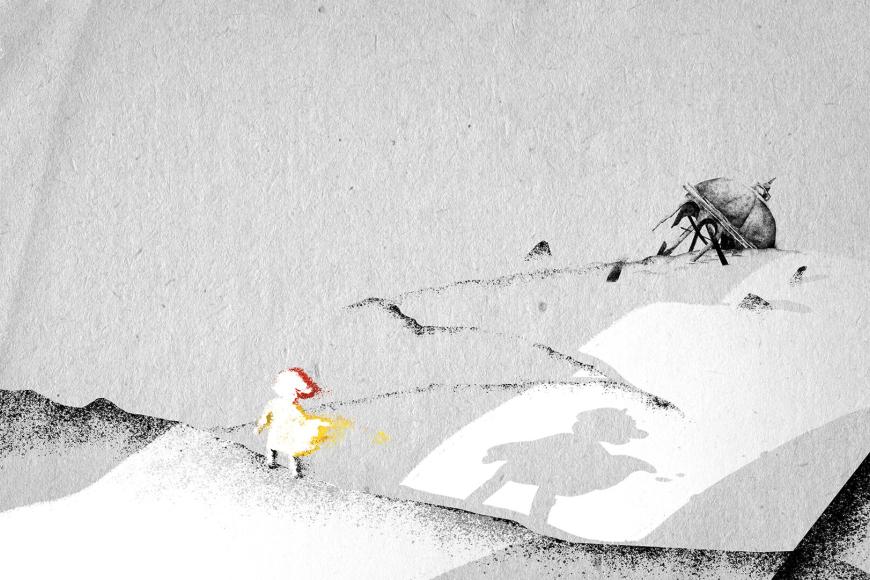
So many stones are lying around. They used to belong to something whole that was broken. A red-haired boy sets about sorting, joining and stacking them. Little by little, the countless chunks turn into many impressive towers. We follow the boy’s path as he makes one tower after the other shine again.
Lina Dinkla
Credits
Director
Andrei Câmpan, Ramona Kristo
Script
Ramona Kristo
Cinematographer
Andrei Câmpan
Editor
Adèle Coulloudon, Horia Manolache
Producer
Anca Elena Manolache
Co-Producer
Ramona Kristo
Sound
Victor Mihailescu
Sound Design
Victor Mihailescu
Score
Victor Mihailescu
Animation
Adèle Coulloudon, Andrei Câmpan, Andrei Berculescu, Ana-Maria Trăistaru, Geo Dibu
A documentary film crew spends 963 hours in a video game interviewing gamers. Little by little, they drop their masks and give insights into their “real” lives.
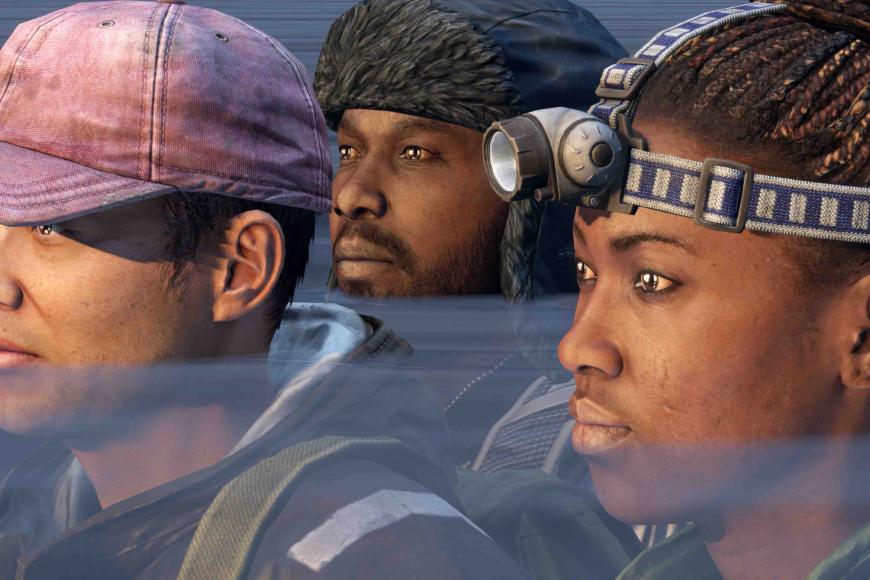
Running. Rapid breathing. A shot in the silence. The opening strikes the keynotes: caution, curiosity, thrills. A documentary film team spend 963 hours on the adventure playground of the video game DayZ. Online gamers explore the territory of a post-Soviet disaster province, permanently exposing themselves to the risk of being killed by hostile gamers. Despite their “press” badges, Guilhem, Ekiem and Quentin, as avatars, are subject to the same rules when they interview the gamers in their virtual world. The community is heterogenous: marauding gangs, cowboys with Samaritan ethics, curious wanderers.
Reality is never far away. The gamer “Feesh” is torn from her console during the interview because her IRL (in real life) child is crying. In the course of their conversation, “Iris” shoots her “toy”, a prisoner, before the eyes of the shocked documentary team – a conflict of documentary work opens up. “Knit’s Island” is a disturbing, melancholy to heartwarming tour of chance meetings and friendships of sleepless persons in the artificial world. Some avatars constantly twitch nervously and grotesquely because they act out darkest desires. Others “trick the game” and enter fascinating techno-psychedelic spheres. Game-playing and role-playing persona – sometimes they are one, sometimes two.
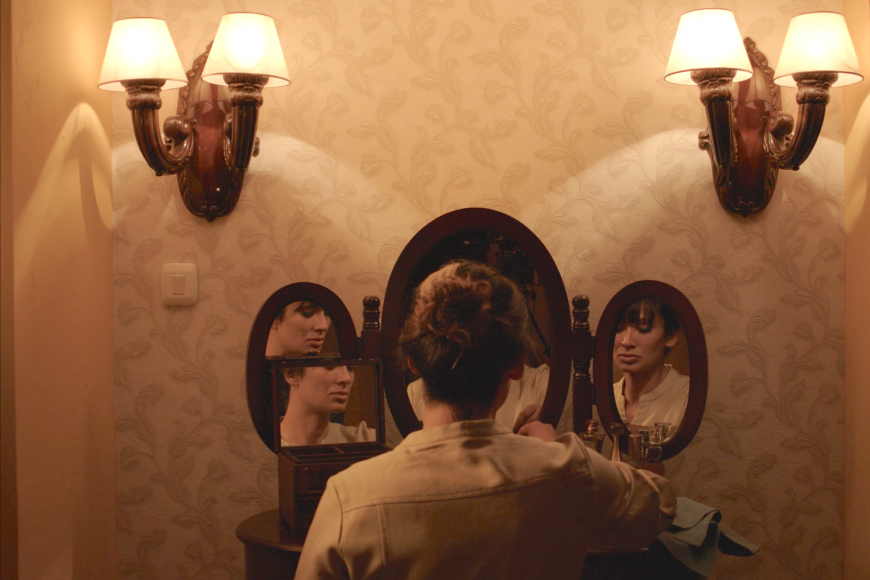
Transwoman Kristina earns her living as a sex worker. She arranges her life serenely and well-ordered, independent of the peculiarities of her profession. A semi-fictional documentary.
Director Nikola Spasić explains in an interview that in this film he was interested in the fluid boundaries between documentary and fiction, and that he found the perfect protagonist in Kristina: someone with an interesting personal story who can also act. And so she plays herself, Kristina, a transsexual sex worker in Serbia. She lives alone with her cat in a beautiful old house, collects antiques and practices ikebana on the terrace of her garden. She meets friends, visits a cloister, lives her religion, arranges a crucifix.
This idyll is regularly interrupted by the obtrusive ringtone of her work mobile. But the meeting with the client who appears at her door a short while later is well-orchestrated and no contradiction to Kristina’s elegant, graceful and serene existence, which she shapes according to her own ideas. All in all, these flawlessly framed and composed tableaus have an element of transcendence. But with his aesthetic directing, Spasić emphasises the incontrovertible freedom of this modern woman whom he captures in a portrait that is both intimate and daring.
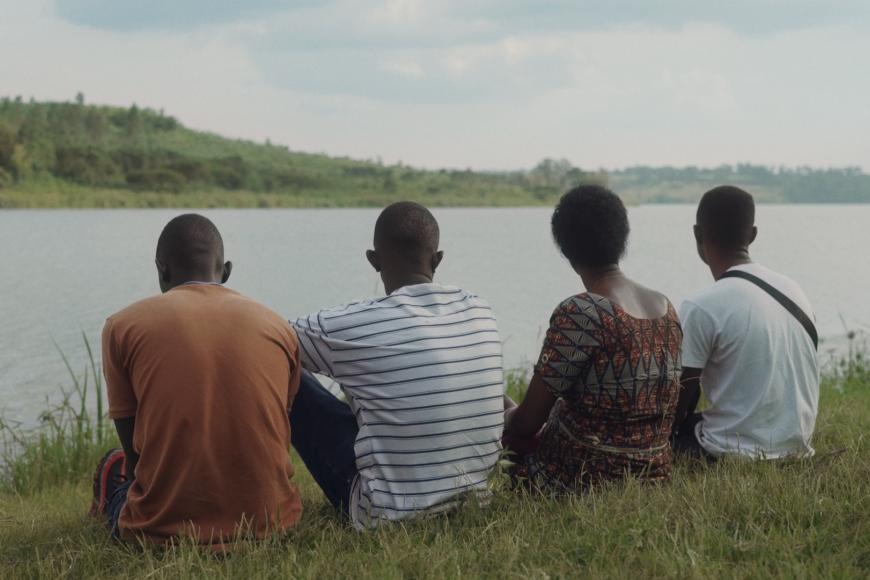
The 1994 genocide in Rwanda has traumatised generations. The children of the time lack memories, their parents are struggling to speak about it to this day. In this film they break the silence.
Quietly and discreetly, the French director Sarah Mallégol follows a group of thirty-something protagonists who survived the 1994 Rwanda genocide as children. They have no memory of the events – neither those whose fathers were murdered nor those whose parents were responsible. A confrontation begins: focused conversations between generations which, captured by a gentle camera, are meant to cautiously break the long silence – in order to be able to understand, process and mourn.
Sarah Mallégol herself grew up in Rwanda, before the genocide. She has no memories of her childhood either. But there are home movies shot on Super 8 that show carefree days in a still peaceful countryside – and her nanny from back then, Christine. She died in 1994, which is all the director knows. Her motivation for this filmic search is thus personal. But after the short introduction, she gives all the space to those who live in Rwanda today with the trauma that has spread over the country like a shroud. Grief is at the forefront and the film work contributes to a much-needed coming to terms – accompanied by chants and landscape shots added to the memories of the survivors that bear a different form of witness.