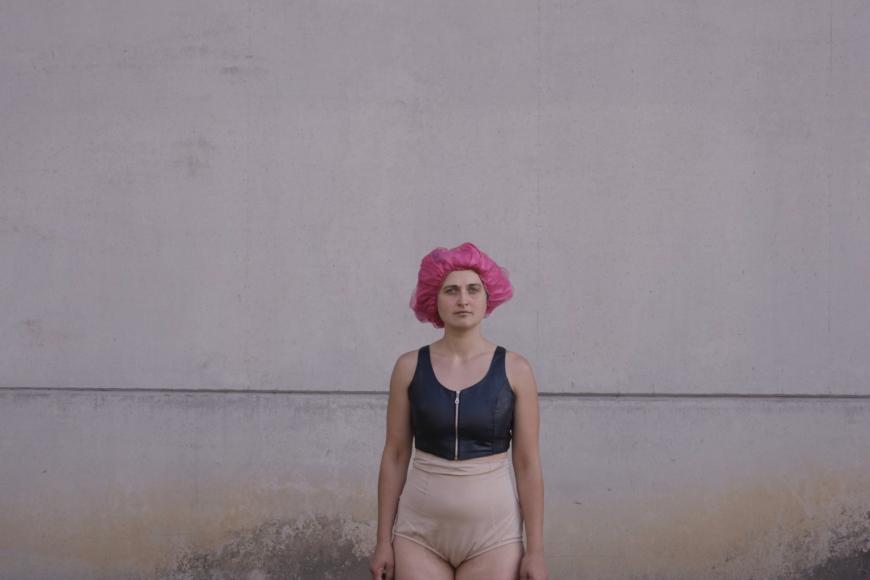
Clowning around with a red nose? No way! Clown*esses challenge the patriarchal society with anarchy and subversion and cultivate the fun of creative resistance.
Clown*esses are more than jesters; they hold a mirror up to society. They move between the worlds and like to break rules, albeit with a wink. At the same time, clown*esses are contradiction experts by nature, because they know on the one hand that life is far too short to be sad, and on the other hand use their art not only to entertain us but to make oppression and violence visible and attackable.
The artists portrayed in this film, for example, look closely at patriarchal structures and learned social behaviours. When Gözde in her unerring performances questions and satirises the images of women still prevalent in Turkey, this critique is rooted in her own experience – and that is precisely what makes it so funny. Lokke from Germany, on the other hand, emphasises the transformative aspect of clowning that allows them to try out different identities and characters, to refuse being pinned down and to ridicule stereotypes. Jana Rothe’s cogent short portrait presents these and other clownesque attitudes towards the world. It makes you wonder how in the world we ended up sacrificing fun and subversion to rationality in our daily lives.
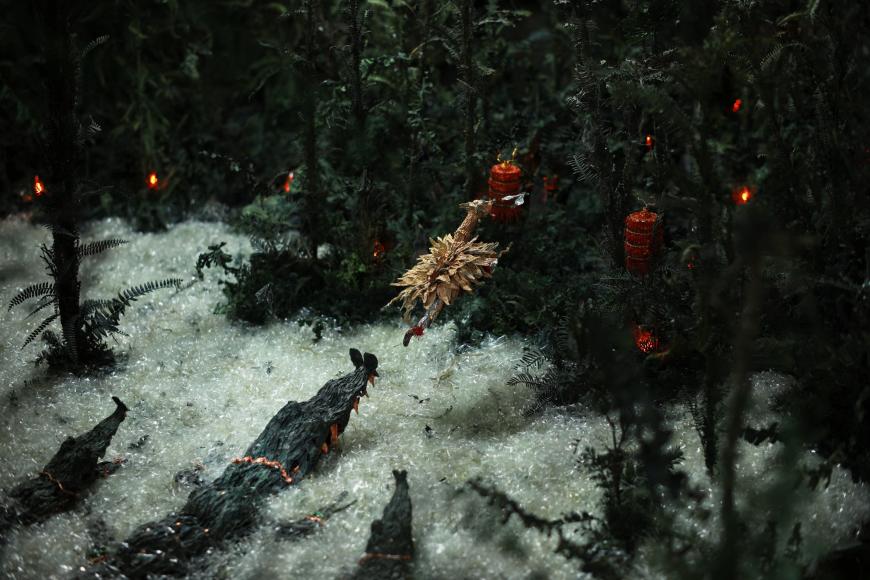
A shaman, half human, half animal, performs a breakneck dance in the jungle. Ingeniously, he tries to fool the crocodiles in the river to reach the other bank.
A Malay fairy tale tells of Sang Kancil, the wily mouse deer that crosses a river by persuading the crocodiles in it to form a bridge for him. Inspired by this story, Zhang Xu Zhan, one of Taiwan’s most distinguished young artists, in his latest stop-motion animation depicts the crossing of the river as a breakneck shaman dance in the deep jungle where acrobatic skill replaces cunning. Spurred on by drummers on the bank, guided by ringing bells, the costumed creature, half human, half animal, leaps from crocodile back to crocodile back, always in danger of losing more than feathers.
Despite the overwhelming complexity of the animated scenery, the hand-made papier-mâché figures recall the seductive power of traditional Javanese Wayang shadow theatre. Its fixed backdrops are transformed here into an extremely fluid world of continuous transformation and metamorphosis reflected in oddly shaped mirror shards, giving us an idea of what it would be like to see through compound eyes.
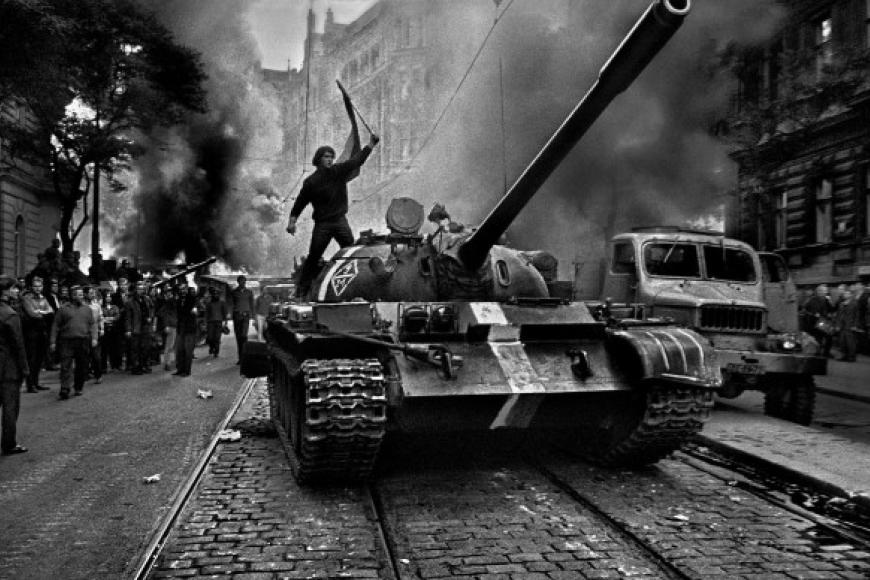
Secretly filmed footage of the suppression of the Prague Spring: hidden in archives for decades and screened 22 years later to the beat of Tchaikovsky.
No images of value but “confused material.” For decades, footage secretly filmed in August 1968 in Prague was hidden in archives under this label. Evald Schorm recovered the illegal material and composed it to the beat of Tchaikovsky recordings, in keeping with its expressive nature. The film could finally be publicly shown in 1990.
Katharina Franck, Andreas Kötzing
Credits
Director
Evald Schorm
Cinematographer
Stanislav Milota, Jaromír Kallista, Jiří Macák, Ivan Vojnár, Jozef Ort-Šne, Jozef Ort-Šnep
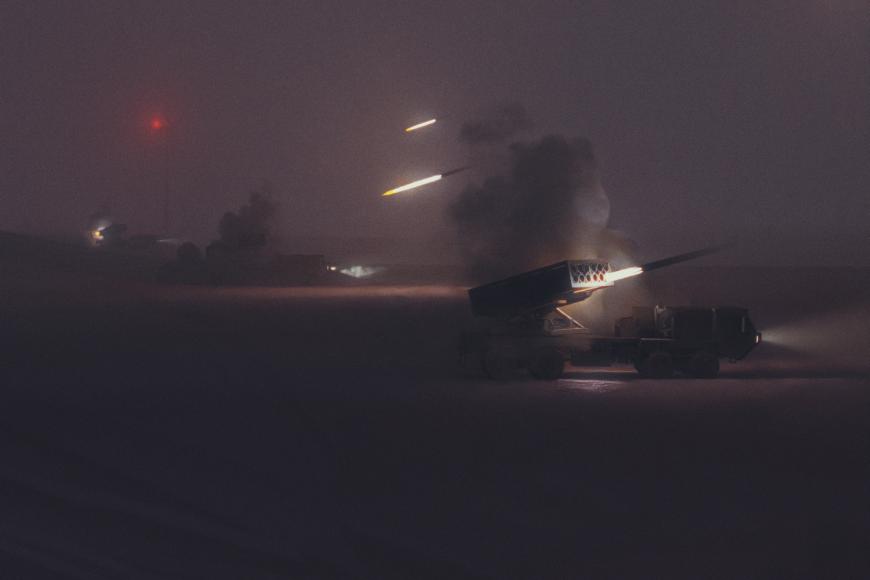
A man on an e-scooter on the outskirts of the city. Only the rifle over his shoulder irritates. The mood of high alert is deceptive. The disaster has already happened.
On the outskirts of the city, the new modern buildings are silent and the motorway bridge drones. Birds are circling in the sky, a young man, concealed by his hoodie, is riding his e-scooter along a park path. The only irritating element is the rifle over his shoulder.
Anton Cla’s film depicts a mood of high alert, while the disaster has in fact already happened. Unexplainable scenes that could not be more disconcerting and grow increasingly drastic unfold calmly. The screaming silence is decisively enhanced by the imperceptibly accumulating mixed drone of the daily sounds of a mechanised world: motorway, tramway, clicking indicators, pulsating emergency signals. What the soundscape adamantly refuses to deliver is a loud discharge that would release the tension. The suburban landscape is steeped in a red theatrical warning light, blurs restrict the view. The 3D computer design masks neither the artificiality nor the computer-based deformations of the images of a normality that has become a combat zone – the machine matrix seems to rule already.
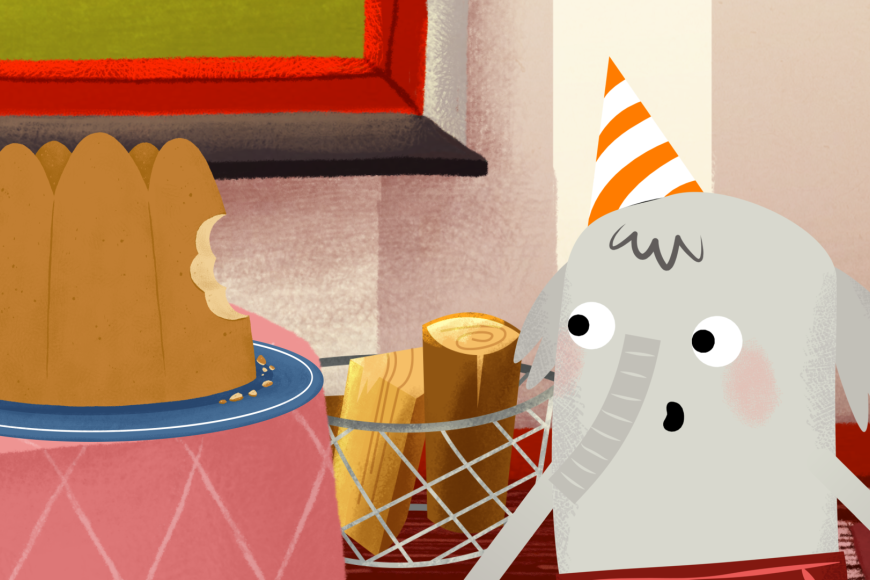
A new Musifants episode! This time, Charlie bakes a birthday cake. No sooner is it on the table, smelling delicious, than someone takes a sneaky bite. Who is the cheeky rascal?
A new Musifants episode! Grandpa Günter – a retired circus elephant – and grandson Charlie take another musical excursion into the songbook of the 1920s and 1930s. This time, it’s the little green cactus’s birthday and Charlie bakes a cake. No sooner is it on the table, smelling delicious, than a bit is missing. Charlie wants to know who has been sneaking a bite …
Lina Dinkla
Credits
Director
Meike Fehre
Script
Geoffrey Schöning
Cinematographer
Sabine Dully
Editor
Thomas Schmidl
Producer
Meike Fehre
Co-Producer
Nina Paysen, NDR Norddeutscher Rundfunk / German TV ARD Network, Mitteldeutscher Rundfunk