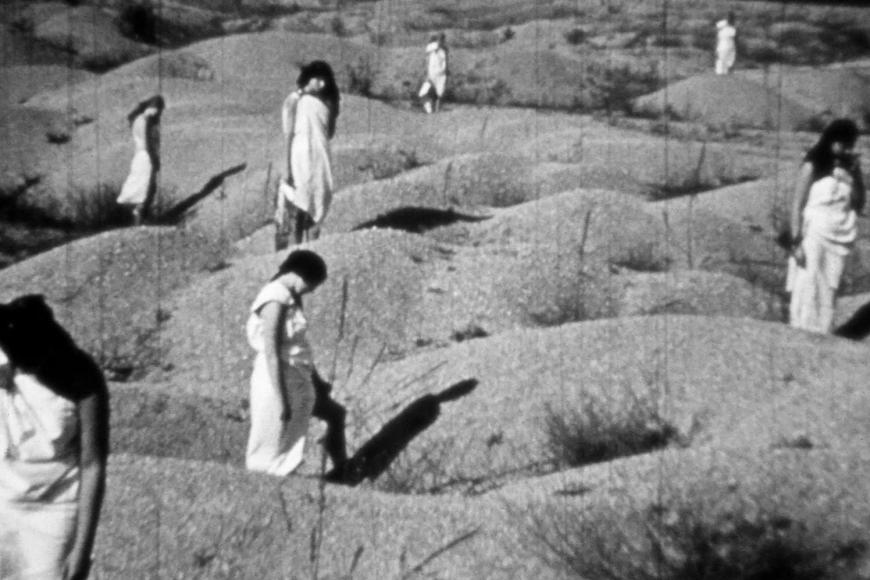
SOS – help! A clear and simple visual language to disturbing sounds. The distinguished Lithuanian film and theatre director Vladislovas Algimantas Blinstrubas condenses the violent, centuries-long history of the Baltic in timeless metaphors. The naked, vulnerable human being is at the centre of this filmic exploration. The space opens up to pain and grief.
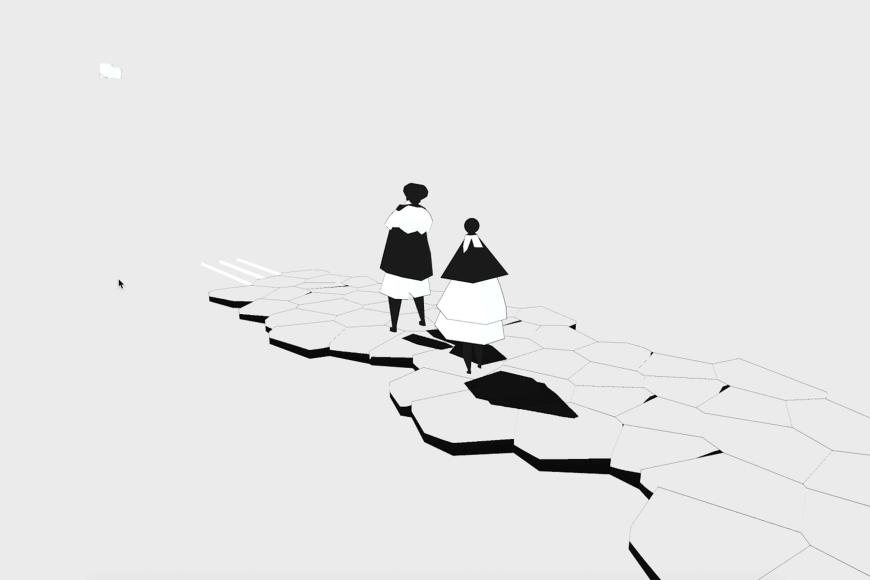
A journey into the vast expanse of the void: If you engage with the game and do not take too long a break, you can uncover hidden secrets and find your own path in the middle of nowhere.
In this indie game we embark on a journey into the vast expanse of the void. If you like, you can contemplate, rest, observe yourself. If you feel like moving, you can navigate the white space step by step – or just take a break … But not for too long! Or you will miss the chance to uncover hidden secrets and find your own path in the middle of nowhere.
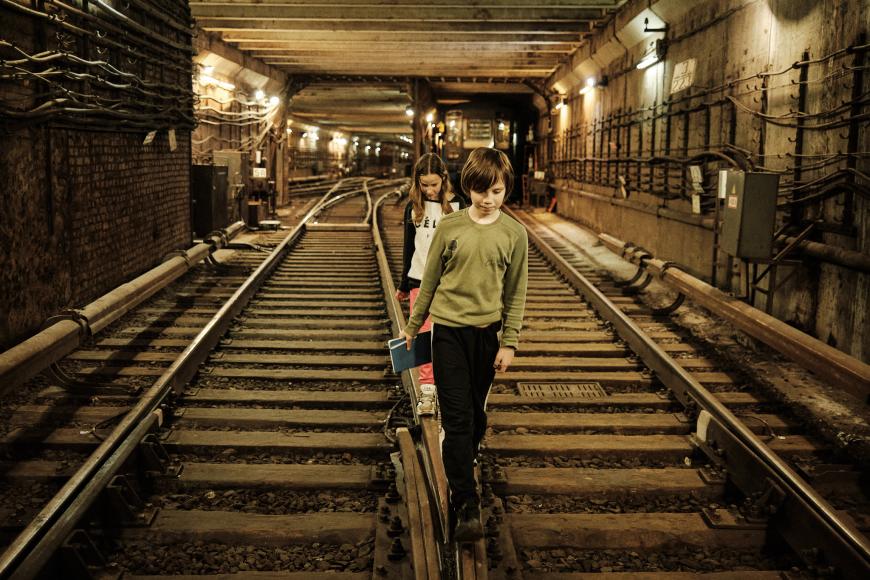
When the war starts, 12-year-old Niki finds refuge in a Kharkiv underground station. Monotonous, oppressive days – until Vika enters his life. The tender connection gives new courage.
12-year-old Nikita and his family have been staying in an underground station in Kharkiv for weeks. The place promises protection from Russian attacks, but there is not much distraction down here. The glaring lights and provisionally furnished carriages create a surreal to dreary atmosphere, pets roam the aisles, an aging musician plays songs on his guitar.
Ivan Ostrochovský and Pavol Pekarčík condense the first months of the war in Ukraine into an oppressive but not hopeless narrative, because the station is also a place of encounters. Niki soon meets Vika, who is his age and who coaxes the lethargic boy out of his shell. Together they roam the underworld, but while Vika is permitted to go to the surface at least once in a while, Niki’s radius of movement ends at the stairs on which sunlight falls occasionally. And yet an outside exists which the two directors make visible by Super 8 shots scattered in between. They show a damaged Kharkiv: destroyed vehicles, a charred bed, provisionally protected monuments. “Photophobia” is a hybrid, introspective film that manages to find something like tender romance in an unreal situation.
Carolin Weidner
Credits
Director
Ivan Ostrochovský, Pavol Pekarčík
Script
Marek Leščák, Ivan Ostrochovský, Pavol Pekarčík
Cinematographer
Ivan Ostrochovský, Pavol Pekarčík
Editor
Ivan Ostrochovský, Pavol Pekarčík, Martin Piga
Producer
Ivan Ostrochovský, Albert Malinovský, Katarína Tomková, Tomáš Michálek, Kristýna Michálek Květová
Co-Producer
Helena Osvaldová, Denis Ivanov, Jakub Mahler, Pavol Pekarčík
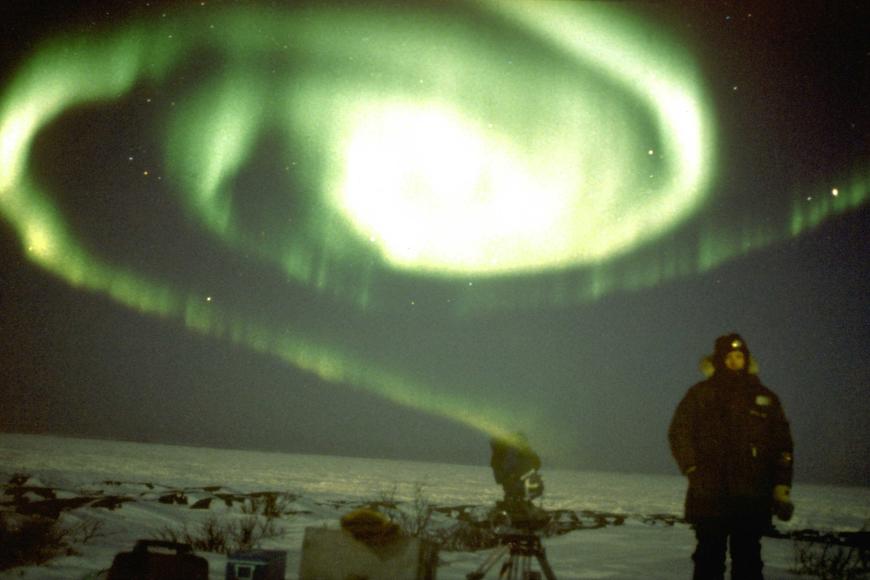
The film crew sets out to look for the northern lights. Equipped with an ingenious special camera, they surrender themselves to waiting, the conditions and the people they meet.
Peter Mettler sets out to look for northern lights with photographer Andreas Züst and a small film crew. In order to be able to capture this miracle of nature on film in the first place, the team has built a special camera that has to withstand the extreme climate conditions. On location, they patiently surrender to the state of waiting. They are in the border region between the geographical north and the populated south. The formal structure of the film, on the other hand, shifts between trance-like essay and analytical research trip. And the filmmaker is left with the fundamental question of whether the experience of this spectacular natural phenomenon can be filmed at all.
Annina Wettstein
Credits
Director
Peter Mettler
Script
Peter Mettler
Cinematographer
Peter Mettler
Editor
Peter Mettler, Mike Munn
Producer
Andreas Züst, Peter Mettler, A. Gill
Sound Design
Peter Mettler, Peter Bräker, A. Gill, Leon Johnson, Gaston Kyriazi
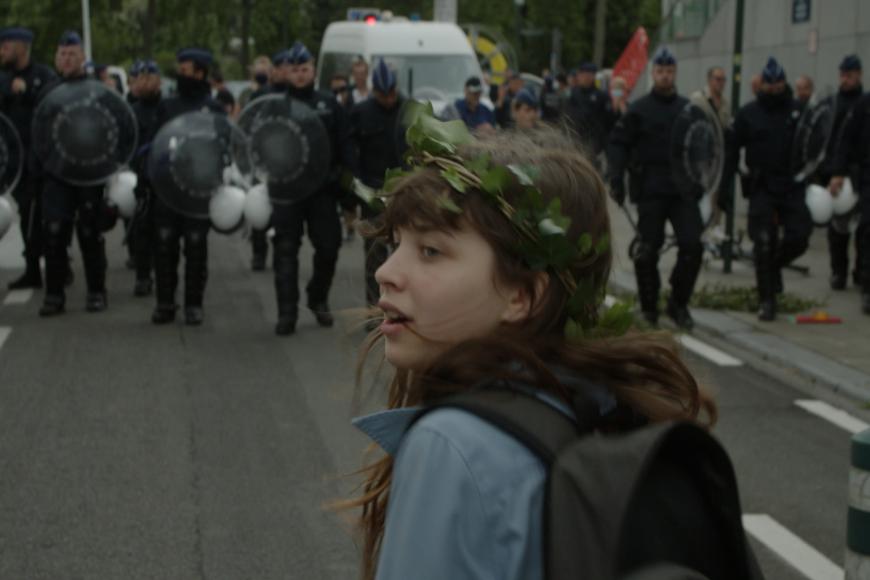
How do you grow up on a planet that is being destroyed by humanity? The two friends Bo and Luca are enthusiastic climate activists whom the film follows for four years.
How do you grow up on a planet that is being destroyed by humanity? This film looks for answers to this urgent question and introduces us to Bo and Luca. The close friends are enthusiastic climate activists, connected by their commitment. We follow the two teenagers for four years on their contradictory and surprising path to adulthood.
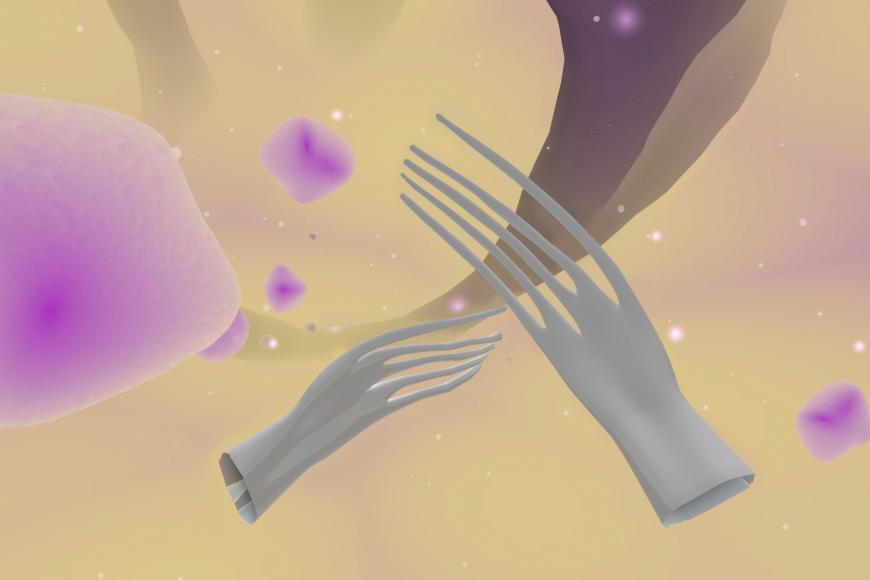
In this “surreal eco-fiction” we merge with plastic to become hybrid creatures whose identity and DNA were restructured. We become the material that unites us all.
Microplastics are everywhere: in the air, the soil, and the water. In this “surreal eco-fiction,” plastic and the environment live in peaceful coexistence. They invent a comforting world in which we merge with plastics to become hybrid creatures, endowed with a new identity and DNA. In the plastisphere we become the material that unites us all – if only it were finally allowed to re-shape us.
Diabetes: Matthew Lancit lives in constant fear of the complications of his disease, so he simply anticipates the body horror himself. The result is equally funny and disturbing.
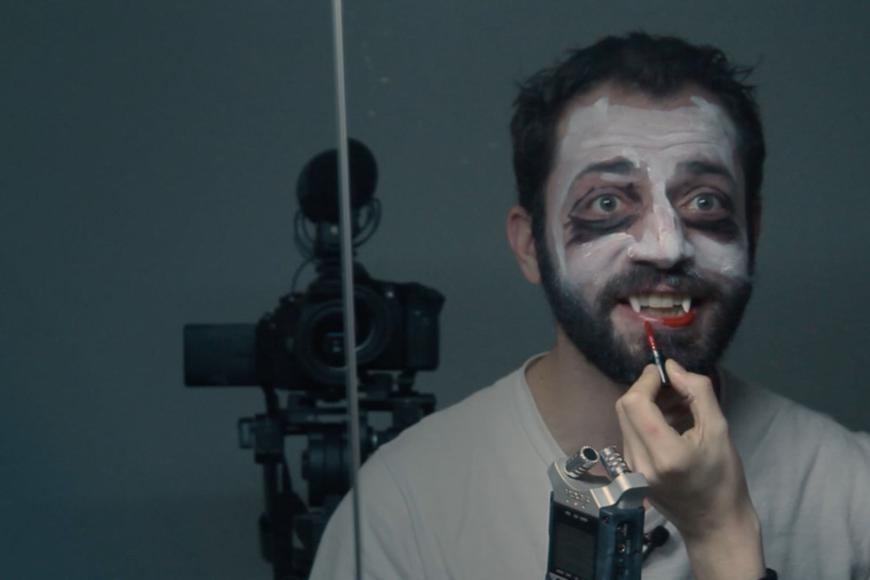
If there is one person Matthew Lancit can’t get out of his mind, it is his uncle Harvey. Dark rings around his eyes, pale, blind, his legs amputated. Like Harvey, the filmmaker also suffers from diabetes. He has the disease under control, but one question is always nagging at him: How much longer? His long-term (self-)observation reliably revolves around fears of infirmity and mutilation. He translates the feared body horror into film, stages himself as a zombie, vampire, a desolate figure. Lancit playfully anticipates his potential decline, serving up a whole arsenal of effects which – as video recordings prove – go back to his youth. It is not for nothing that the “dead” in the title is also reminiscent of “dad.” Because “Play Dead!” also negotiates his own role as a father.
Lancit deeply involves his family in his fantasies, letting them become demons and lurch through the living room together. The documentation of his own diabetes also allows us a look at a modern Paris family life with two small children and a partner who usually plays along sympathetically with her husband’s carryings-on. Lancit’s approach deliberately transgresses borders, opens body, soul and front door. The result is a humorous and occasionally disturbing self-testimony.
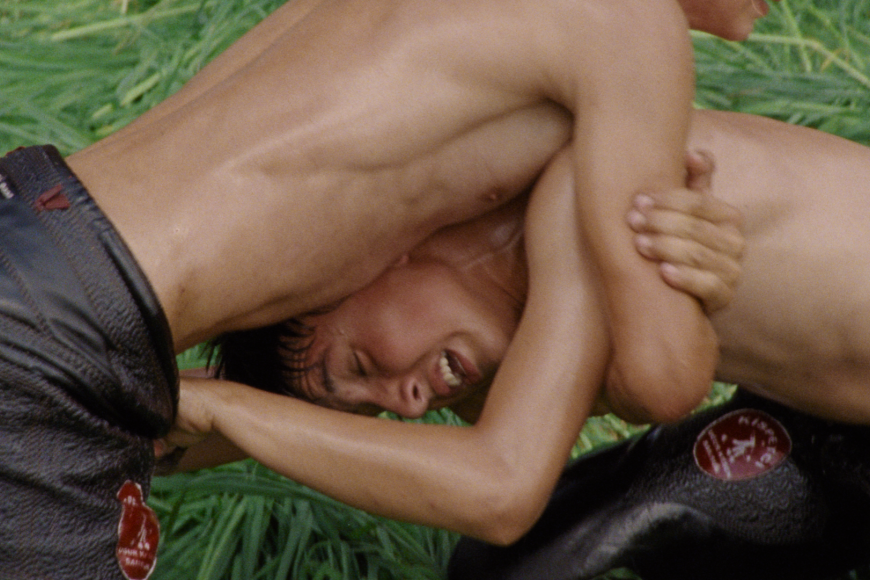
Men and their games, somewhere in the Mediterranean region. Wrestling oily bodies, hooking fingers, rolling a wheel of cheese. A film about a major creative block, too.
A film about men and games, somewhere in the Mediterranean, directed by a Slovenian master of the playful, somewhere between speculative and pseudo-documentary form. Oily bodies in a wrestling match, hooking fingers, a wheel of cheese rolled through a village – all these are archaic occupations of the utmost importance. The filmmaker meticulously captures the events until he is overcome by a major creative block. From now on, he will experience his surroundings as part of the game. Childhood memories and the footage of the unfinished film project merge seamlessly into an ode to the absurdity of the gesture.
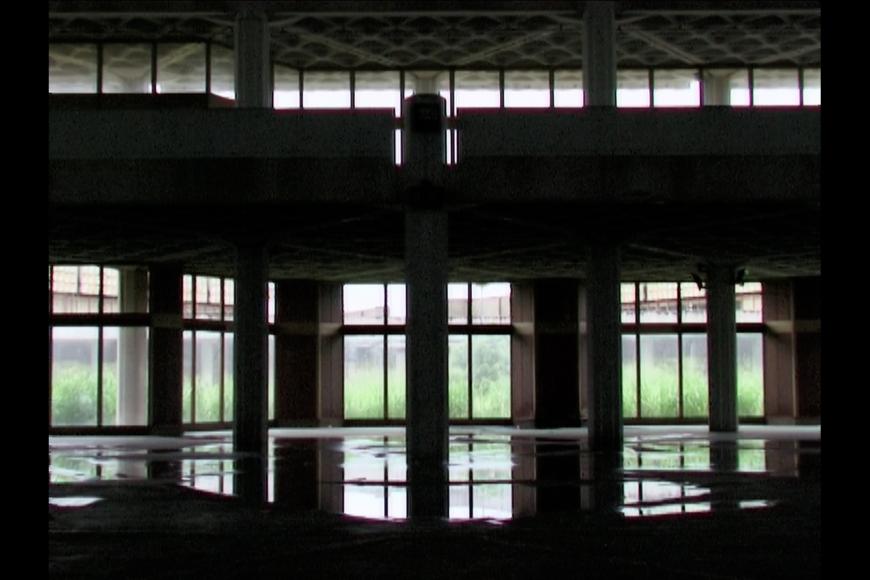
From 1974 to 1977, a huge trade fair centre was built in Lagos. Today nature and humans are reclaiming the ruins. Plants proliferate, small crafts flourish – a trans-historical site visit.
A brief historical summary to begin with: The Lagos International Trade Fair centre was built in the mid-1970s, intended to serve as a marketplace for the non-aligned states. Archival footage and inserts alternate abruptly. While the news images of the time are rather propagandistic in tone, the inserts supply the sober facts.
Some fifty years later, vast tracts of the exhibition halls are under water – an ideal place for ferns and other humidity-loving plants. The initially static camera begins to move. Young craftsmen have converted one tract of the giant complex into workshops: they hammer, carpenter, repair bicycles, prepare meals. There is also a lot of activity outside the rambling site with its artificial lake; people are still trading; everyone is busy with something. A woman’s voice remembers bygone days while two young men ride a bicycle through an empty exhibition hall. A building may have lost its original purpose, but new and independent life has moved in. An open, trans-historic space in the making.
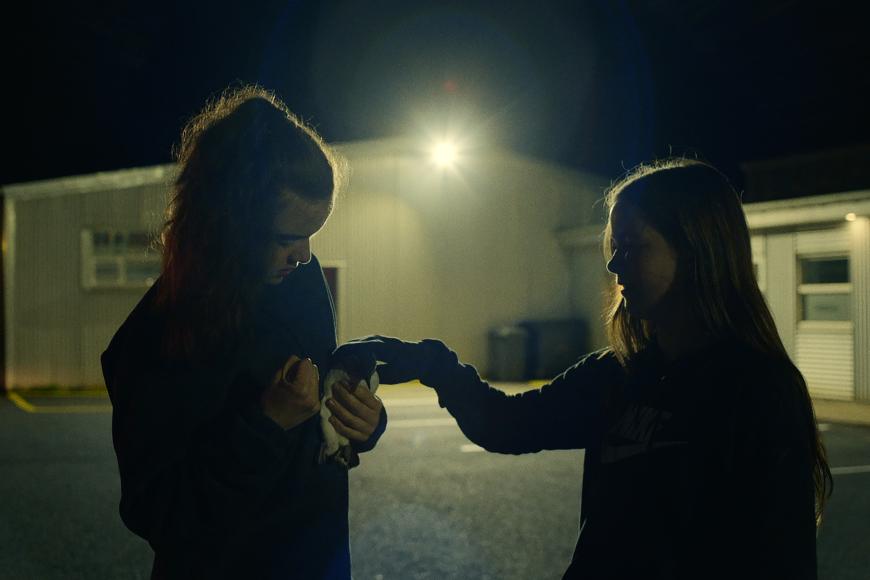
When puffins leave their nest on Vestmannaeyjar, they often get lost. Birta and Selma have made it their mission to bring the fledglings back to the cliff.
When puffins on Vestmannaeyjar leave their nest, they often get lost in the village, irritated by all the lights. Birta and Selma live on this small island a few kilometres off the coast of Iceland. Together with other young people, they have made it their mission to find the little fledglings and bring them back to the cliff the next day, where they will take their first flight.