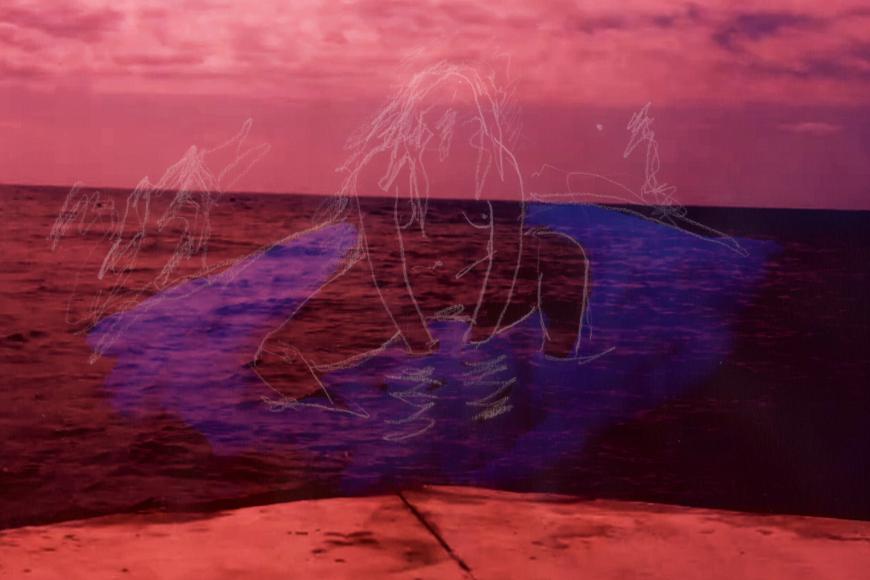
A young woman asks a hyena to take her place at a dinner and dance given in her honour. The plan requires skill and some violence, too. The posh company is portrayed in bold calligraphic brush-strokes, the vibrant animation is supplied by the heroine’s temperament. This mischievous farce confronts a class frozen in tradition and etiquette with a scavenging animal that gleefully celebrates anarchy.
The life of an official of the Canadian Immigration Service. What sounds prosaic means an up and down lifestyle constantly on one’s toes for daughter Sofía and her family.
For thirty years, Sofía Brockenshire’s father travelled the world as an official of the Canadian Immigration Service, his family always by his side. Diaries and other contemporary documents show the numerous relocations, the destinations in South Korea, India, in South and Central American countries. The result is a detailed mosaic of memories and audiovisual snippets that tries to take not only the civil servant’s perspective, but also that of his wife and children.
When asked where they originally came from, the Brockenshire kids answer cleverly: from the suitcases. Because they travel with them year after year, always prepared to have to leave a place they just moved to. The life of the family is determined by the Canadian authorities, they seem to have practically no say in the matter. Neil Brockenshire’s views on his professional career are ambivalent: full of gratitude and certain to have helped people, but also thoughtful and occasionally resentful. In her film, Sofía Brockenshire re-assembles what was scattered across the globe over the decades: photos, thoughts, desires. “The Dependents” is a personal portrait and something of a reflection about the existence as a professional expat in a world that has no borders for some and nothing but obstacles for others.
Carolin Weidner
Credits
Director
Sofía Brockenshire
Cinematographer
Sofía Brockenshire
Editor
Sofía Brockenshire
Producer
Sofía Brockenshire
Sound
Julian Flavin
Sound Design
Julian Flavin
Nominated for:
Leipziger Ring,
Prize of the Interreligious Jury,
FIPRESCI Prize
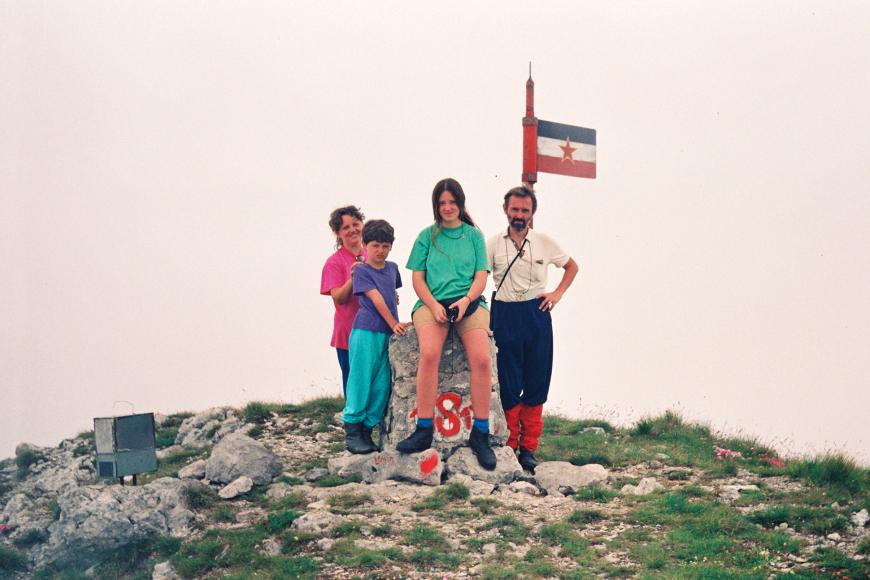
When Nataša Urban finds her father’s hiking diary, she takes it as a starting point for an enchantingly beautiful film about how she grew up during the Yugoslav War.
She left Serbia a long time ago and never looked back. But then Nataša Urban discovered her father’s hiking diary and began to connect his entries to the events of the Yugoslav Wars of the 1990s. The 1999 total eclipse of the sun is the central motif, employed by Urban as a metaphor for the way a dark past remains part of the present.
Kitted out with analogue film equipment, the director travels back to find the stories of her family, intimate friends and acquaintances. She listens to memories of inconceivably cruel acts; she watches the wind blow through leaves of grass. Her father, a lean, grey-haired man, hikes through the forest, striding again through the places he once visited. Dreamlike scenes meet sober descriptions of almost unbearable atrocities. Urban skilfully combines 16 mm and Super 8 film with archive material to explore the blurred boundaries between the individual and the collective, the private and public spheres, the personal and the political, resulting in an enchantingly beautiful work of art, a poetic reflection on growing up during the war.
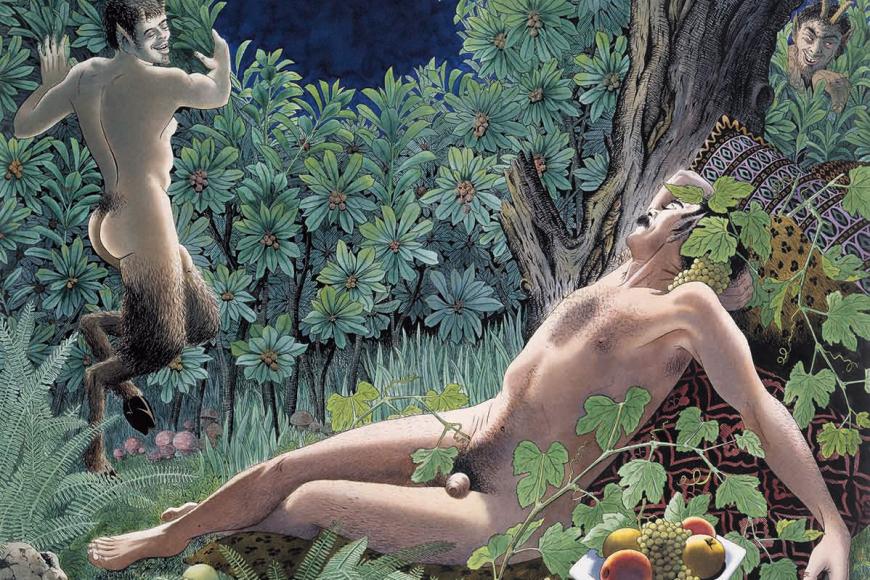
Nazario, founder of the Spanish underground comics movement and pioneer of the gay graphic novel, looks back on his eventful life, his flamboyant and explicit works.
Nazario, founder of the Spanish underground comics movement and pioneer of the gay graphic novel, looks back on his eventful life, his flamboyant and explicit works. 16mm films, photos, illustrations and paintings document the spirit of departure of a counter culture, but also recount Nazario’s great love for Alejandro with whom he was together until the latter’s death. Profession and passion merge in this artist.
Sarah’s father Eulidio was one of 20,000 contract workers who came to the GDR from Mozambique. The fall of the Wall tears the family apart, but step by step his daughter weaves the ties together again.
Hammer and compass in Mozambique. We see a GDR flag waved at a rally in Maputo, carried by “Madgermanes”, contract workers who once toiled in eastern Germany. Some of them founded families there, like Eulidio. His daughter Sarah grows up with her mother in Berlin. The relationship with her “second home” is slow in growing, partly thanks to Luana, Sarah’s baby, whose father Eduardo is also from Mozambique.
Eulidio still remembers the Lubmin nuclear power plant. Today he fries chips in Springs, South Africa. Meanwhile, Sarah only knew her father from a photo for the longest time: rather cool-looking, wearing a cap. She met him for the first time when she was eleven and felt how comfortable she was surrounded by people whose skin is as dark as hers. As an adult woman she decides to spend some time in Mozambique – and meets Eduardo. On the flight back she’s pregnant. This documentary observation by Brenda Akele Jorde deals with Sarah’s attempt to weave together and spin out threads that were torn by the fall of communism. And it shows the challenges this brings: While Sarah is confronted with racism in Germany, in Africa she’s regarded as a German. While once her father Eulidio was expelled after the fall of the Berlin Wall, now it’s Eduardo who sees his daughter only sporadically.
Carolin Weidner
Credits
Director
Brenda Akele Jorde
Script
Brenda Akele Jorde
Cinematographer
David-Simon Groß
Editor
Laura Espinel
Producer
Florian Schewe, Miriam Henze
Co-Producer
Filmuniversität Babelsberg KONRAD WOLF, RBB Rundfunk Berlin-Brandenburg
Sound
Till Aldinger, Brenda Akele Jorde, André Bahule
Sound Design
Jakob Mäsel
Score
Lenna Bahule
Commissioning Editor
Rolf Bergmann
Funder
Medienboard Berlin-Brandenburg GmbH
Co-Director
Malte Wandel, David-Simon Groß
Nominated for:
Leipziger Ring,
VER.DI Prize for Solidarity, Humanity and Fairness,
DEFA Sponsoring Prize,
Young Eyes Film Award
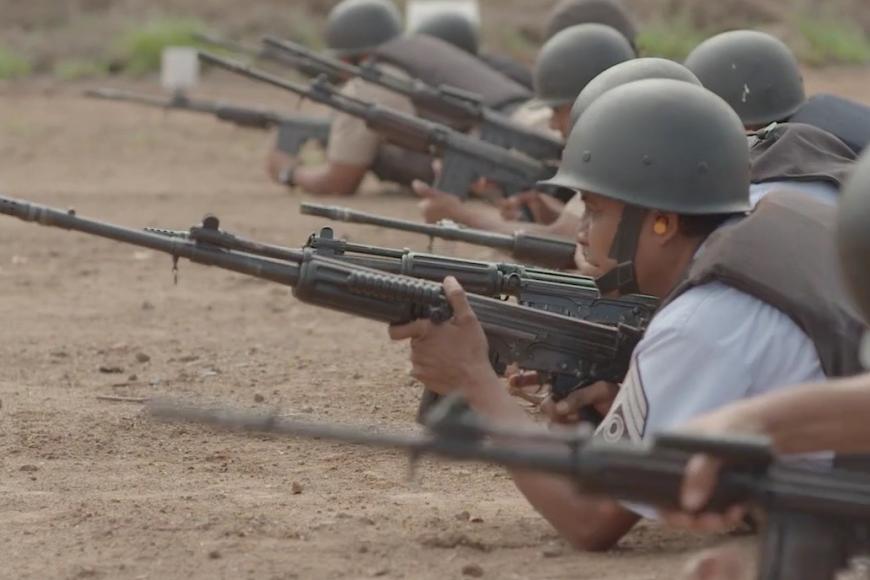
On an island paradise in the Pacific, Mexican military personnel are on duty. Nothing happens. And yet they can’t forget the violent reality of their country.
On an uninhabited island off the Mexican Pacific coast, members of the army do their uneventful duty. The film watches drills and everyday routines, but mainly the breaks which they spend playing board games in the shade of trees, in hammocks, swimming, flying kites or doing karaoke. The peaceful environment, however, does not hide the violent reality of their country which they are always confronted with, even out here.
In this paradisiacal seeming island landscape, the life marked by gang wars which these young men and women escape for an indeterminate time is visible only in metaphorical images, for example when the calm ocean surges up or when an octopus caught at the beach is slaughtered with bare hands. But in the conversations, the self-descriptions of the military men and women, everything revolves around the reality they grew up in: the brief moment that determines which side you’re on, the constant game of hide-and-seek, kin liability, the cruel consequences of wrong decisions. In her first feature-length documentary film, which is carried by the tension between the visible and the invisible, Mariana Flores Villalba wisely chose not to show the event but its effect.
Christoph Terhechte
Credits
Director
Mariana Flores Villalba
Cinematographer
Claudia Becerril Bulos
Editor
Astrid Rondero, Mariana Flores Villalba
Producer
Carlos Hernández, Gabriela Gavica Marrufo
Co-Producer
Centro de Capacitación Cinematográfica, A.C., Imcine Foprocine
Sound
Eduardo Hernández, Israel Hernández, Adriá Campany, José Luis “Checho” Bravo
Score
Federico Schmucler
Nominated for:
Prize of the Interreligious Jury,
FIPRESCI Prize
She opens her arms wide: Crossing from an unbearable reality to the world of magic sometimes takes only the snap of a finger, sometimes several press-ups.
She opens her arms wide: “I want to go home, do my dreaming.” Crossing from an unbearable reality to the world of magic sometimes takes only the snap of a finger, sometimes several press-ups. Gudrun Krebitz’s poetic combination of video and animation recommends pushing the gravestone aside and descending into one’s subconscious.
Incel culture is the expression of a current understanding of masculinity. López’s essay investigates the echo chamber effect on the internet and the feeling of loneliness in the age of algorithms.
In 2018, a user called AnathematicAnarchist published a suicide note in an online forum for incels – a subculture of heterosexual men whose self-pity, misogyny and fantasies of violence dominate the internet in many places and trigger offline actions in some. Did he really take his own life? Is America responsible for his death, as he claims in his text? A search for clues in the darkest corners of the net, an essay about pain and loneliness in the age of algorithms.
Marie Kloos
Credits
Director
Gala Hernández López
Script
Gala Hernández López
Cinematographer
A. Pol Camprubí
Editor
Gala Hernández López, Alberto Dexeus
Producer
Lucas Le Postec, Thibault de Gantes, Ninon Chapuis
The carelessness of Western consumer society follows the absurd conviction that humans can live independently of nature. The earth’s resources are being used up without asking how they can be replenished. This VR parable tells of a past in harmony with what sustains, surrounds and nourishes us. We find not only devastation and destruction, but also hope.
In a complex montage of archive material and conversations with her mother, Mila Turajlić ponders the emergence and decline of the multi-ethnic state of Yugoslavia.
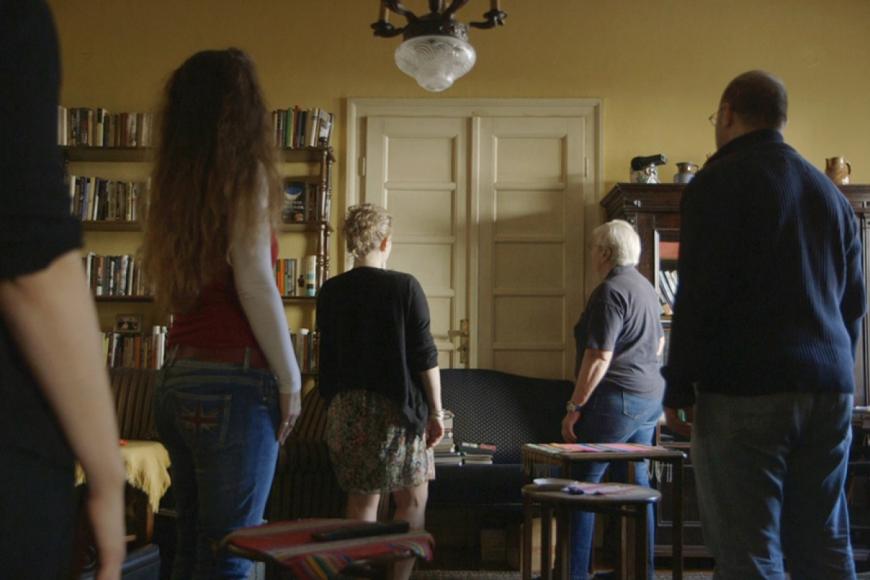
A door that has been closed for seventy years serves as a MacGuffin in Mila Turajlić’s double portrait of her mother and her mother country of Yugoslavia. That very door has divided the bourgeois family apartment ever since Tito’s communists assigned several rooms to proletarians in need of shelter. Srbijanka Turajlić never cared a fig for her neighbours. But when Serbian nationalists began to threaten the unity of her country, she turned into a fierce opponent of the Milošević regime. In a virtuoso montage of archive material and conversations with her mother, the filmmaker recaps the latter’s development while gaining a new perspective on the time of her own youth.
The once thriving pawnshop in the Polish city of Bytom is facing bankruptcy. What could help? Drying tears, ladling out soup, marketing drives, giving away presents?
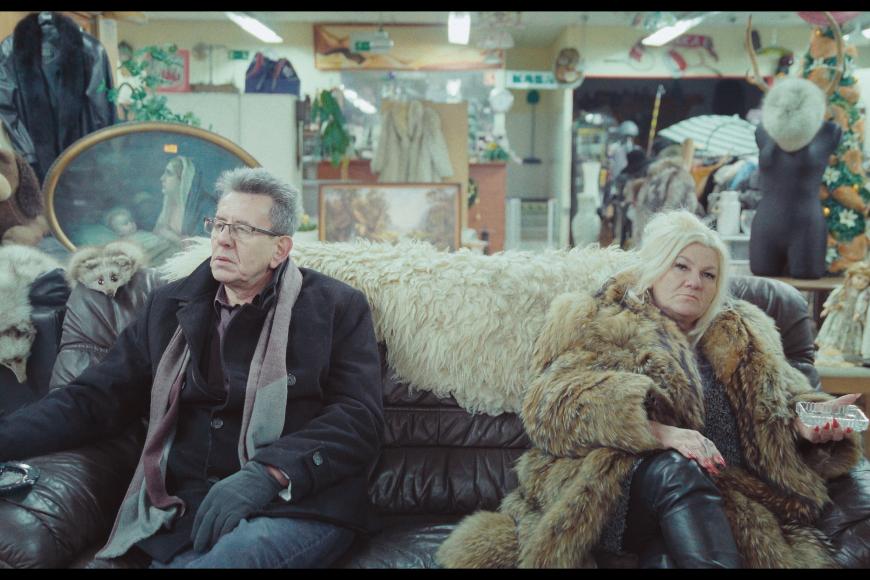
The Bytom area was once known for its coal mines, but structural change has caught up with it, too. The decline of the region is vividly demonstrated by the pawnshop of the Silesian city. Probably the biggest of its kind in Poland, the shop has seen better days. Jola and Wiesiek, the idiosyncratic operators, are each trying in their own way to cope with the crisis and revive business.
The closing of the mines and the resulting unemployment in Bytom left behind all those who were unable to adapt to the new age. In the huge hall, they put increasingly absurd and worthless objects on the counter. The once lucrative trade in jewellery, electric devices and furniture has dwindled and however hard the employees work, the till stays empty. The wiring is unsound, nerves are raw and the tone between them gets rougher. Before they know it, the small business has turned into a kind of counselling centre: drying tears, ladling out soup and giving away goods instead of selling them. Jola in her voluminous fur coat always has an open ear and a warm blanket ready. Wiesiek devises one marketing scheme after the other. But will it be enough to save their business? A documentary report from the “Polish Detroit”, observed with delicacy and pitch-black humour.
Lina Dinkla
Credits
Director
Łukasz Kowalski
Script
Łukasz Kowalski
Cinematographer
Stanislaw Cuske
Editor
Adriana Fernández Castellanos, Filip Kowalski, Jakub Darewski, Kosma Kowalczyk
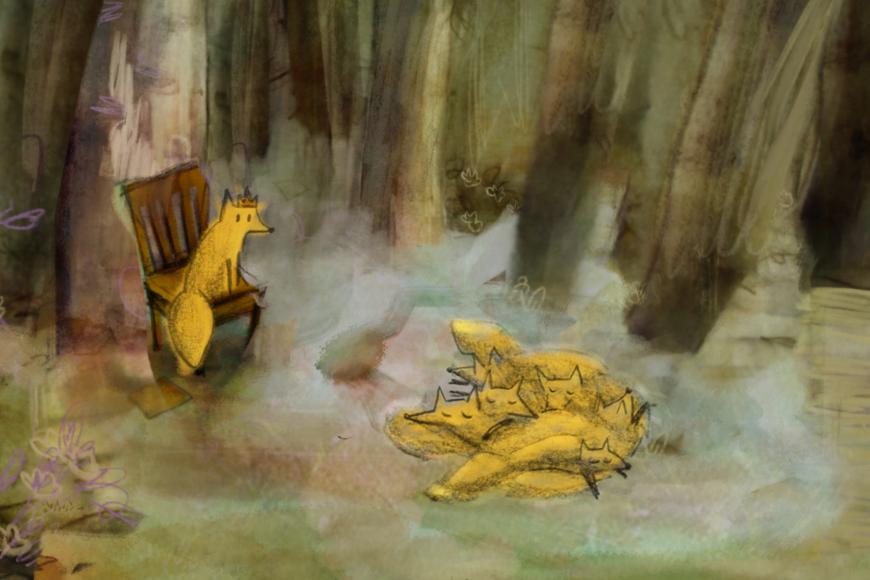
The queen of the foxes is sad. To cheer her up, the other foxes look for discarded human love letters. But there’s nothing about beautiful red fur in them …
The foxes of the pack roam through the city every night to cheer up their sad queen. They search the people’s rubbish for unsent love letters. But those ignoramuses write nothing rapturous about furry ears and bushy red coats! The queen stays sad and the foxes must think of something else.
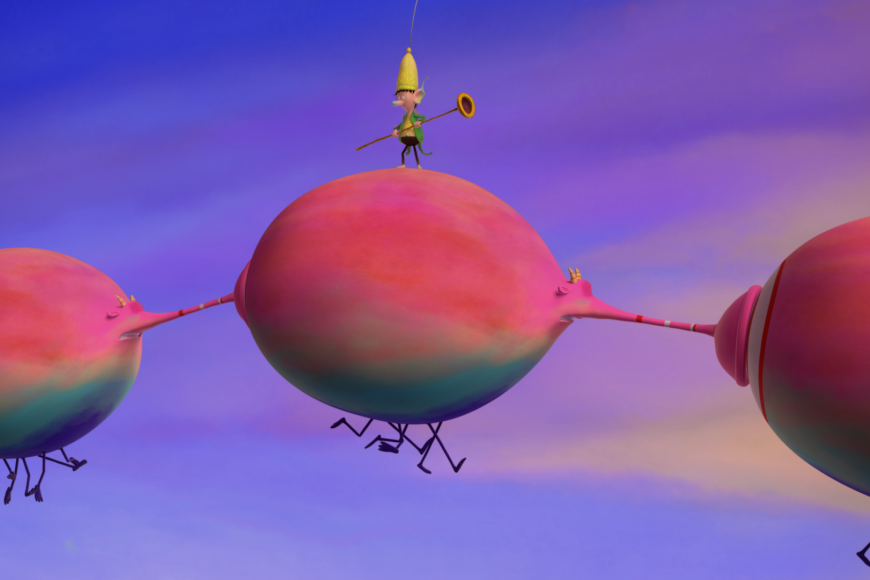
The Smortlybacks are peaceful, fantastic-looking creatures, riding through the desert with the leader of their pack: no water, no shrub, no tree in sight! They are all desperate because their water supplies are running out. After a while they reach the shore of a vast sea. A mysterious creature and their magic fish help them cross the ocean.
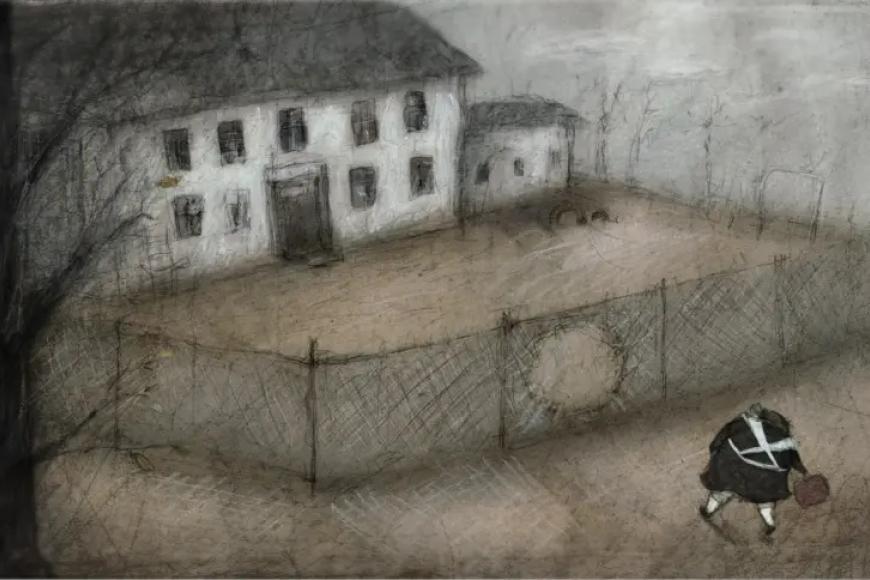
A girl affected by ostracism angrily creates a little demon that is to follow her forever from now on, comforting her in moments of disappointment, but also keeping her locked in her loneliness. In Budanova’s beautiful animation, mental pain takes the shape of an identity figure that seems impossible to get rid of.
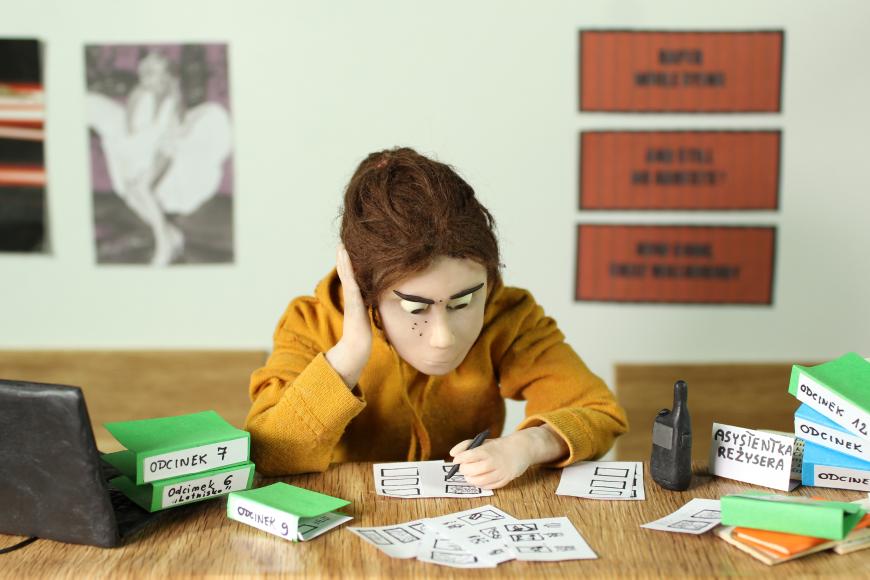
A successful young animation filmmaker works on her graduation film – and has second thoughts. An affectionate film-in-film puppet animation with a surprising end.
Competition for the Audience Award Short Film 2022
Animated Film
Poland
2022
8 minutes
Polish
Subtitles:
English
Our heroine’s previous film was invited to multiple festivals and awarded a number of prizes. Maybe the success went to her head a little. She was so busy working that she spent four years without a single day off. Now she sits in her parents’ garage and works on her graduation film. Its heroine is the animation film student Julita who is working on her graduation film. An affectionate film-in-film puppet animation with a surprising end.
Mahardika Yudha, Robin Hartanto Honggare, Perdana Roswaldy
This comprehensive essay, impressively edited from images of the former Dutch colonial power in Indonesia, investigates the plantation as the foundation of colonialism.
Mahardika Yudha, Robin Hartanto Honggare, Perdana Roswaldy
International Competition 2022
Documentary Film
Indonesia,
Netherlands
2022
59 minutes
English
Subtitles:
English
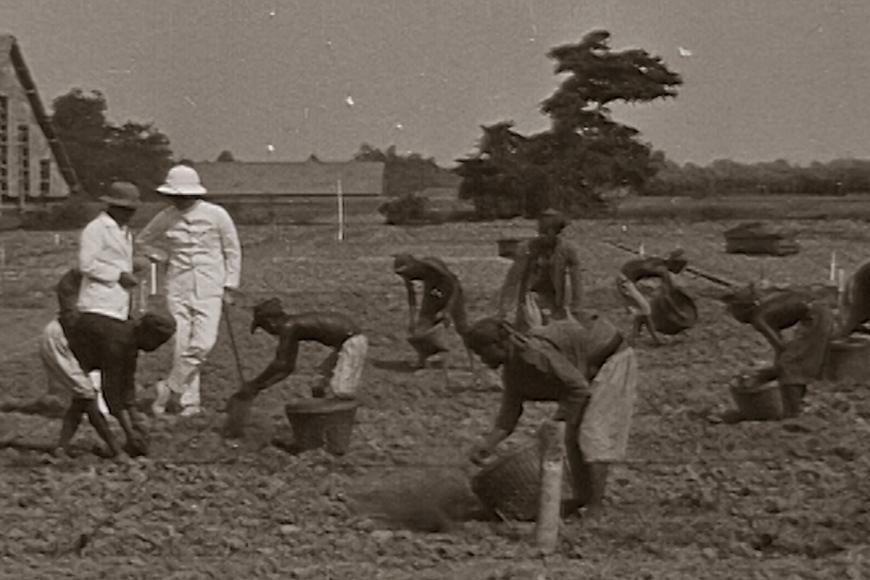
The semi-autobiographical account of a European plantation manager on Sumatra during Dutch colonial rule becomes a starting point for reflections on the structure of the plantation itself. An essay about local tobacco and rubber cultivation, the construction of skin colour as a social category and the "tropic fever” which rises slowly but inexorably, edited from archive material dating from 1890 to 1930.
Very few films have made use of the extensive material shot by the colonists in the Dutch East Indies, now Indonesia. Those who took up the task, like “Mother Dao” or recently “They Call Me Babu”, did so from a Dutch perspective. “Tropic Fever” is the first feature-length film from Indonesia that appropriates that stock, using photos, documentary silent film footage, home movies and feature films as well as development plans from the archives of the former colonial power, along with the report of a Hungarian who managed a plantation on Sumatra in the 1920s. Mahardika Yudha, Robin Hartanto Honggare and Perdana Roswaldy impressively demonstrate how forests and swamps turned into rigidly organised agricultural areas and how the plantation and its structure became the foundation of the colonial project as such. Suddenly the assumption that “tropic fever” arises from the heat seems doubtful.
Marie Kloos
Credits
Director
Mahardika Yudha, Robin Hartanto Honggare, Perdana Roswaldy
Script
Perdana Roswaldy, Robin Hartanto Honggare
Cinematographer
Mahardika Yudha, Syaiful Anwar
Editor
Mahardika Yudha
Producer
Robin Hartanto Honggare
Sound
Mahardika Yudha
Score
Mahardika Yudha
Key Collaborator
Het Nieuwe Instituut, EYE Filmmuseum, Marinus Plantema Foundation
Nominated for:
Prize of the Interreligious Jury,
FIPRESCI Prize