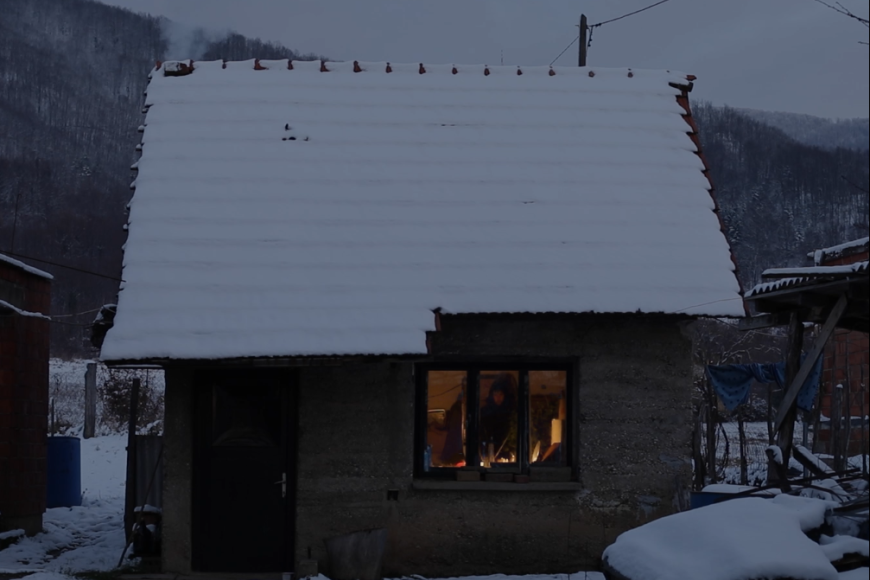
In this cinematic conjuring, Ante Zlatko Stolica remembers childhood fears triggered by a deaf woman in his grandmother’s village. The ghost of Janja, an allusion to the Slavic fairy tale character of Baba Yaga, haunts his dreams, lurks in dark places and joins forces with other horror characters. Still lifes, horror films and a gloomy soundscape evoke the unease that still disturbs the director, even after Janja’s death.
In 2019, alliances between anarchic and civil resistance groups were formed in Dannenröder Forst in Hesse. Together they defended trees against the police.
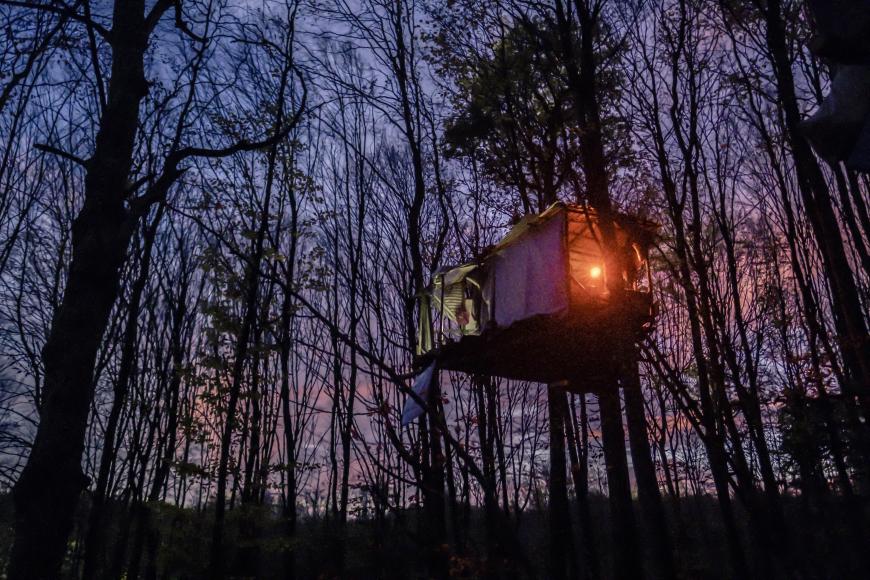
Tree sitting is an important part of climate activism. The “occupation” of Dannenröder Forst in 2019 was meant to prevent its clearance for a highway. The people holding out in the airy heights of their tree houses were dependent on support and supplies from the ground. This help came from locals who would never have dreamed of being part of a resistance movement before. David Klammer’s film shows how brand-new alliances are formed in the face of environmental and climate destruction while realising how powerless words are. These alliances could last – even if the trees, like those in the “Danni”, fall victim to the chainsaws in the end.
The featherless nightingale has the most beautiful voice in the forest. All the animals enjoy her singing. When autumn comes and she catches a cold, she suddenly can’t sing any more.
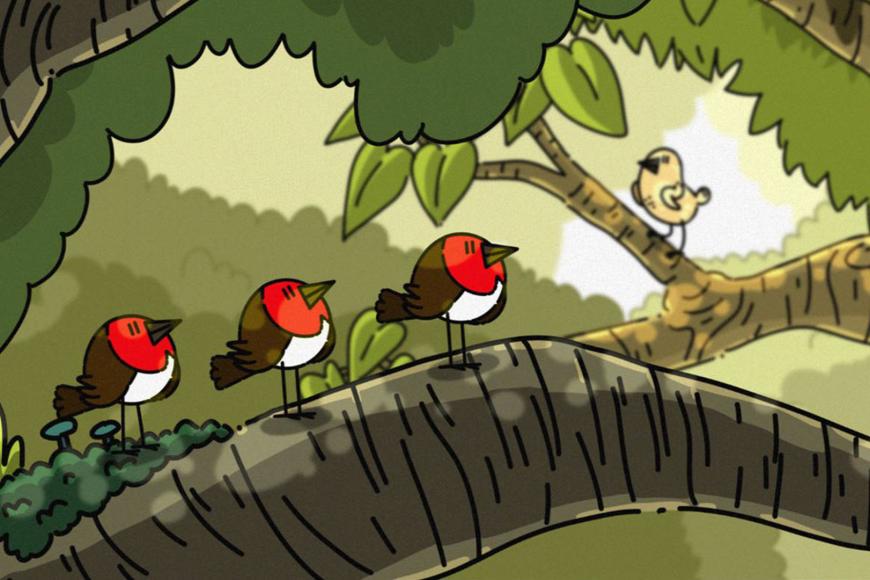
Oh dear, the nightingale has no feathers! The other birds are laughing at her because she can’t fly. Her singing, however, lulls the little bear to sleep. Even the squirrels stop fighting and listen. When autumn comes and the nightingale catches a cold, she feels much too sick to sing. The other animals will have to come up with something …
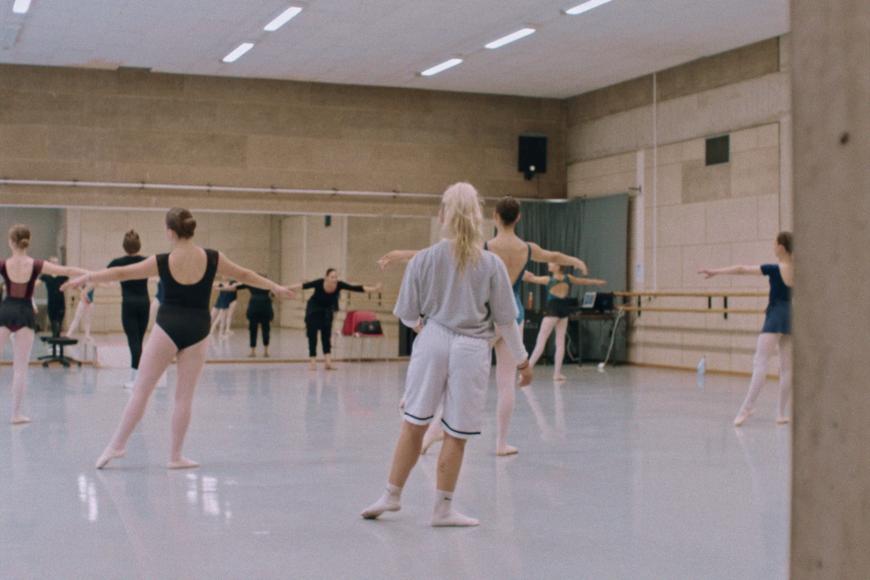
14-year-old Mali’s head is full of dancing. She is a b-girl and lives for breaking. She has just moved into a big city to live with her older sister – and to go to a new school where dancing is one of the main subjects. But can Mali handle the other dance styles? And will her body be able to stand the strain?
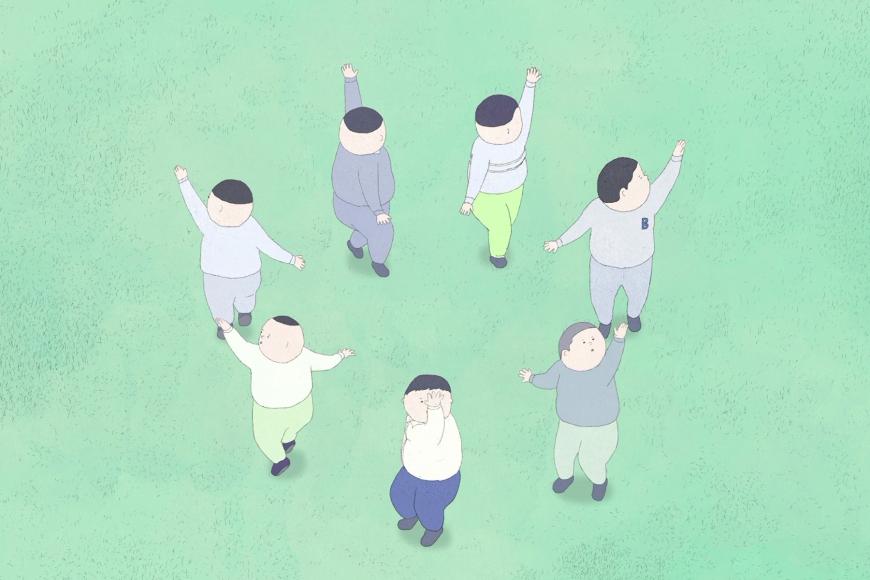
A boy, a girl, a bird with a swan’s neck nestling in hands, a gently wooded peninsula of longing: Atsushi Wada’s almost speechless animation, mapped out in uniform and unicoloured chains of motifs and events, follows the dream and shame logic of a sexual awakening. There’s a sadness about the rounded and infantile figures, perhaps that of a first “little death”.
Sylvia Görke
Credits
Director
Atsushi Wada
Editor
Atsushi Wada
Producer
Emmanuel-Alain Raynal, Pierre Baussaron, Nobuaki Doi
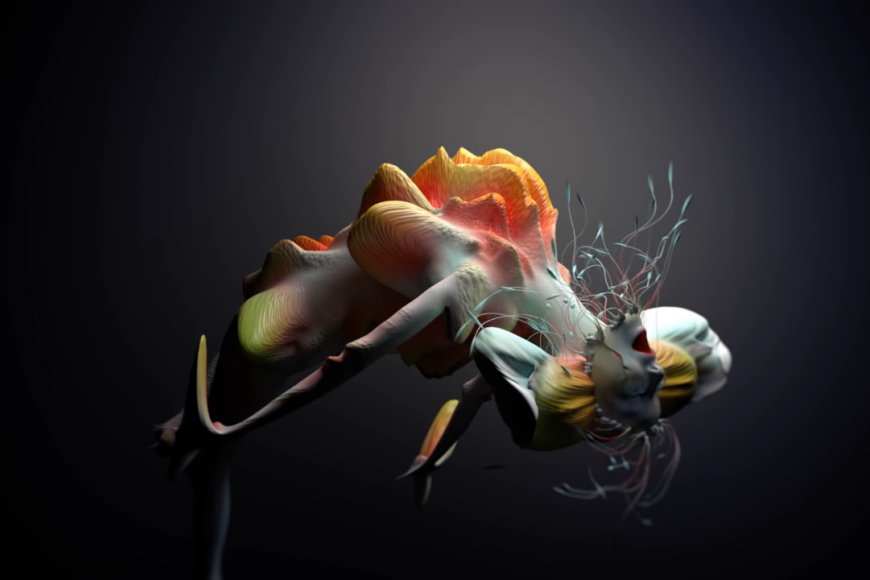
Björk’s figure seamlessly transforms into fantastic organic shapes, while her singing wipes the slate clean: tabula rasa, a free space for children to blossom and make their own mistakes.
The figure of the singer Björk seamlessly transforms into petals, into underwater creatures with delicate tentacles and other fantastic organic manifestations impossible to classify. Accompanying Tobias Gremmler’s graceful computer animation, Björk’s singing wipes the slate clean: tabula rasa, a free, unencumbered space for later-born children to blossom and make their own mistakes.
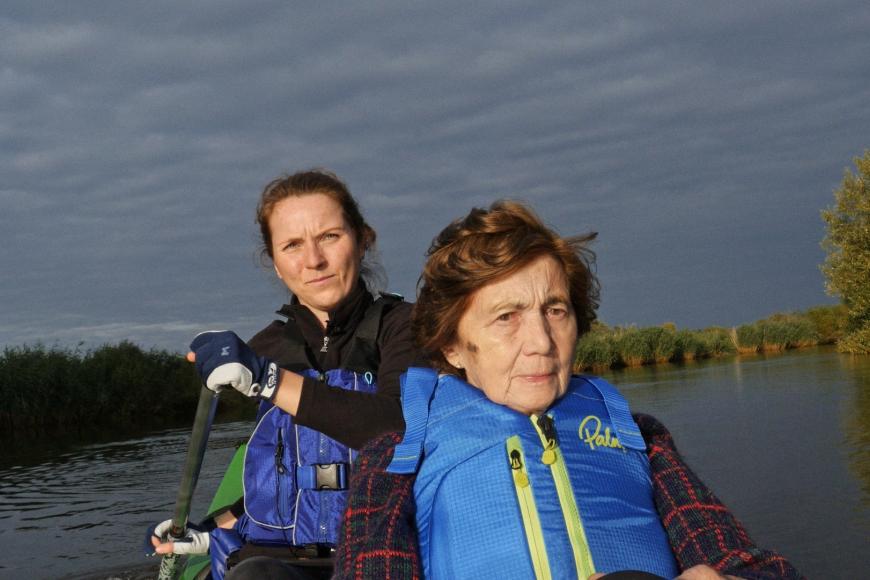
A ten-day canoe trip on northern German waters is a test for granddaughter Astrid, her brother and her dementia-suffering grandmother. The prerequisite: re-adjusting every single minute.
Grandma has become a little doddery. And since the death of her husband, called E.O., ever bigger gaps have opened in her memory, and her disorientation has increased. Director Astrid Menzel makes a decision: to take a ten-day canoe trip on northern German waters with her brother and the 86-year-old lady. An adventure whose outcome is uncertain and which the three travellers have to face anew at every stage.
Looking at the sky, watching the changing cloud formations, being all there. Things that Astrid Menzel’s grandmother finds easier as her dementia progresses. Horses and beds are recognisable up there, and sometimes there are thoughts of the late E.O. A chain of disintegration has been set in motion: The beloved house has become confusing, a home for grandma is being searched, the relatives feel nagging guilt. The granddaughter Astrid feels the need for action. Gently and with endless patience, she involves the elderly lady in the preparations and organisation of a canoe trip that would be a challenge for any beginner: Travelling on the river day in and day out, a different sleeping place almost every night. Old and young are trying to find strategies of interaction. Rummikub matches and writing a travel diary anchor them, but emotional breakdowns, too, are part of the endeavour.
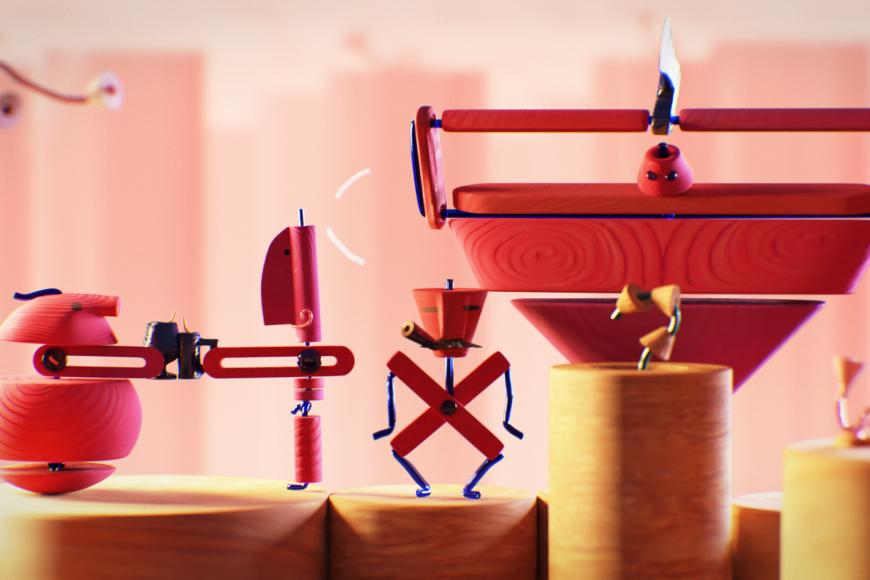
A group of figures made of beads and building blocks move to the same rhythm – until the little green figure is to wear beads, too. Everything gets out of sync.
The little green figure runs up the mountain to the other figures made of beads and small building blocks. All move to the same rhythm, right, left, up, down. One day the little green figure, too, is supposed to decorate itself with beads. But this throws everything out of sync. The gears come to a standstill.
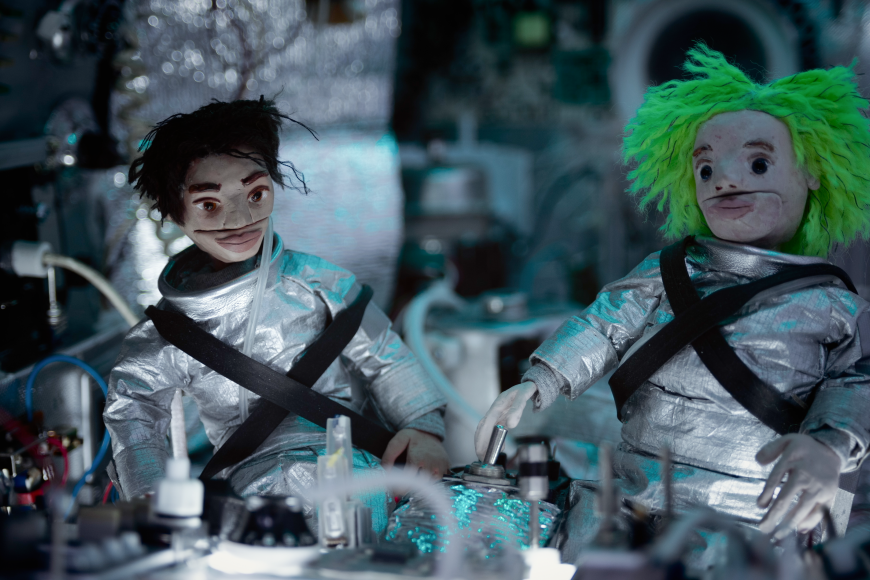
A wild stop motion animadoc trip through the glittering dreams of an astronaut who gathers all his courage to show himself to the world as he is. Set course for star date LGBTQAI+.
A marvellously wild stop motion animadoc trip to unknown worlds, in which 18-year-old astronaut Fatu sets himself a challenge that’s as nerve-racking to him as a lunar expedition. He wants to go shopping at the supermarket – for the first time as he sees himself: in full glam make-up. How will his family with their Kosovar roots react to these new coordinates? Will his self-perception and the others’ perception clash? Set course for star date LGBTQAI+.
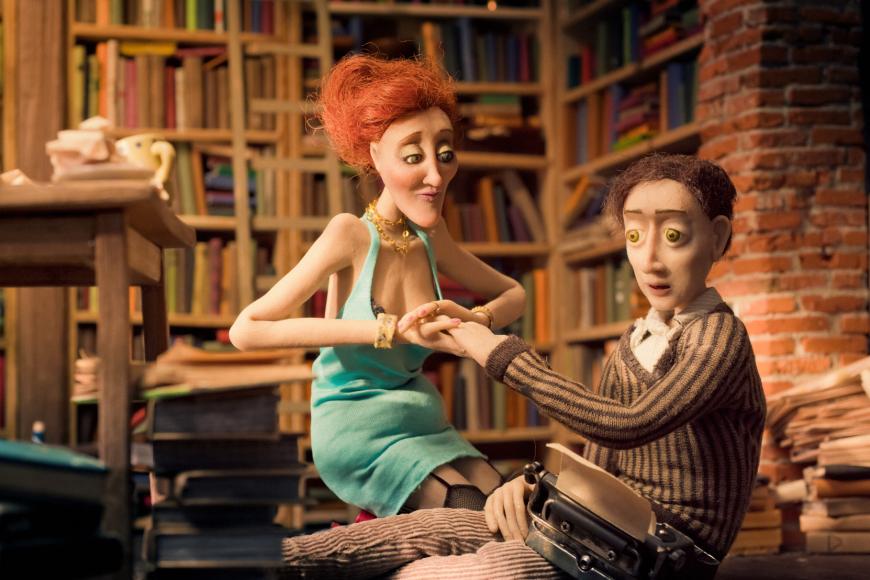
Filip and Tereza have little in common except for the wall between their apartments. Loosely based on Gorky, Špela Čadež makes the puppets dance: a pas de deux of neighbouring lonelinesses.
Filip lives next to Tereza, he is a blocked writer, she is an ageing prostitute. They have little in common, except for the wall separating their apartments. One day Tereza asks him to write a letter to her fiancé. But that’s only the beginning … Špela Čadež makes the puppets dance, loosely based on Maxim Gorky: a pas de deux of neighbouring lonelinesses.
In 2014, Russian separatists destroyed homes and families in Toretsk in eastern Ukraine. War followed coal in leaving deep marks on the landscape – and became normality.
Toretsk in eastern Ukraine is marked by the decline of the coal industry: wasteland, rubble, scrap metal. In 2014, Russian separatists brought war into the region, destroying homes and families, including Nastya’s. The girl and her friends, all on the brink of adulthood, accept the decaying outskirts, gone to seed in the face of threat and depression, as normal. Taras Tomenko observes their small danced or sung escapes, their moments of obliviousness, sometimes their tears.
Sylvia Görke
Credits
Director
Taras Tomenko
Cinematographer
Misha Lubarskyi
Editor
Viktor Malyarenko
Producer
Volodymyr Filippov, Andriy Suyarko, Alla Ovsyannikova
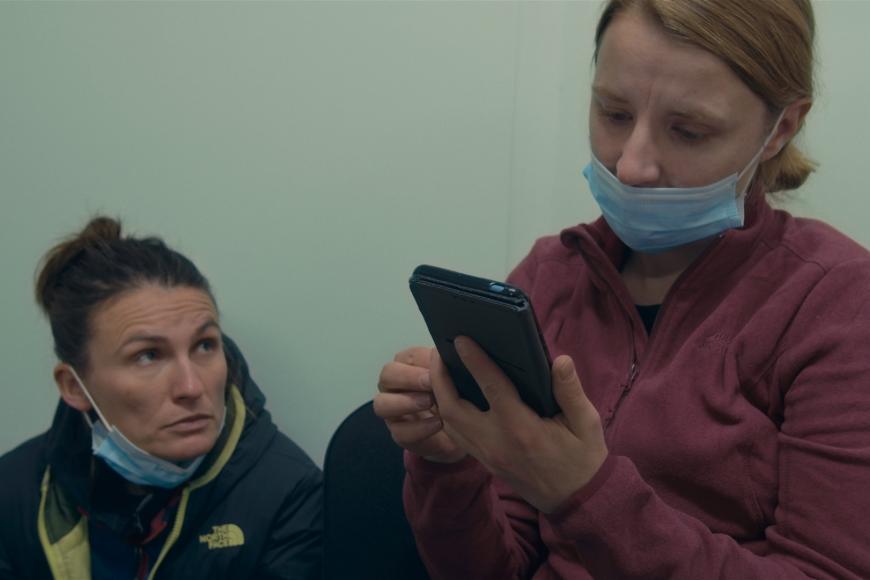
If you want to enter the EU, you will come up against borders. So do those who want to help. A stirring film about the “jungle” between Belarus and Poland which turned into a human trap in the winter of 2021.
In November 2021, people tried to enter the EU via Belarus and Poland, but the route turned out to be a death trap. All access points to the border region were blocked in order not to create an escape corridor. Men, women and children were stuck in no man’s land – in the middle of winter, in the middle of the forest, for weeks. The film follows Polish activists on their mission. They learn that humanitarian aid, just like the refugees themselves, comes up against borders.
Luc-Carolin Ziemann
Credits
Director
Jonathan Brunner
Cinematographer
Marie Scholjegerdes
Editor
Samuel Albert
Producer
Tristan Schneider
Sound
Marc Lehnert
Score
Frederic Hellmann
Animation
Fee Fuchs
Winner of:
Silver Dove (German Competition Short Film)
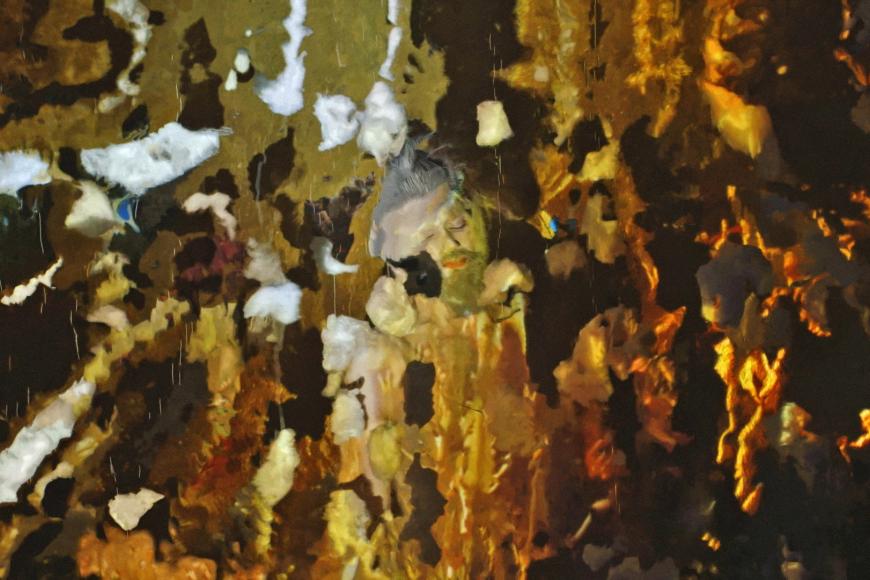
The director’s mother starts drinking when he is eight years old. Coming to terms with trauma through dancing pixels and bodies that question gender norms.
His mother starts drinking when he is eight years old. Jan Koester projects photos from his childhood on his own body that tell of loneliness and helplessness in toxic relationships. These Rorschach-like superimposed images put physical abstractions in relation to their violent and alienated surroundings. Shifting between fluid and halting movements, telescoped pixels tugging at each other deconstruct predominant gender norms.
Three married couples from different milieus, united behind the windows of the same Potsdam high-rise – and in Petra Tschörtner’s interview film about longing, crisis and family.
It’s only after the separation from her husband that another man tells her how valuable she is: the Chladek family, she’s a teacher, he’s a student. The first few years were nothing but quarrels: the Surau family, he’s a plumber, she’s a postal worker. Should she really intend to get further education at evening school, he won’t accept this: the Lehmann family, he’s a locksmith, she’s a lecturer. Three thirtysomething couples live in the Potsdam high-rise behind whose windows Petra Tschörtner looked for her graduation film. Long interviews that pierce the surface at once, equally revealing and oppressive. Promptly awarded a prize at the West German Short Film Festival in Oberhausen.
Seven-year-old Robert from Erfurt struggles against his excess weight and everything this entails: teasing, tempting cake bazaars. Christiane Hein empathises, asks questions.
“Everyone says fat people eat too much. But it’s not that simple”, Christiane Hein states at the beginning of her film which follows seven-year-old Robert Becher from Erfurt in his struggle against excess pounds. The stages include a dieting sanatorium complete with “juice day”, humiliating physical education lessons at school and a visit to relatives in the country where Robert experiences a life without teasing and self-punishment. This is where the boy lets go – not easy when thoughts of weight fence one’s life in. Again and again, director Hein inserts scales as a symbolic image reminiscent of a guillotine-like torture instrument. A compassionate portrait.